To promote the AI NAS ecosystem, Intel's purpose is actually not complicated.
Not long ago, our team at 3eLife analyzed in advance the upcoming Panther Lake processor family from Intel through the article "The Debut of the 18A Process and the Blaze of New Architectures: An Analysis of the 2025 Intel Tech Tour". We also "tested" the newly exposed engineering sample platform in the article "Exclusive First Test of Intel's New Processor: Not Full-Spec, but with Decent IPC".
Meanwhile, we also mentioned in related content Intel's plan to launch an "AI all-in-one" with the Arrow Lake-H, and disclosed some performance parameters of the "NPU6" to be equipped in their next-generation high-performance desktop platform, "Nova Lake".
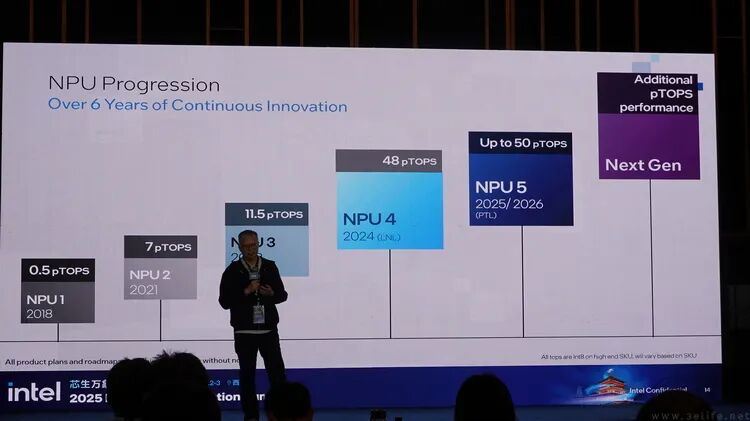
In fact, in today's entire PC industry, Intel may be the company with the most comprehensive AI computing power product line, if not the only one. They are simultaneously advancing four to five generations of CPU architectures, four different generations of NPU designs, and also have FPGA and GPU product lines. More importantly, different from the so-called "fragmented" AI development systems of their competitors, Intel also has One API, which enables their software stack to achieve heterogeneous collaboration among all the above-mentioned hardware and maximize the AI performance potential of different devices while ensuring their software compatibility.

Therefore, while competitors are still struggling to fully implement AI functions on PCs, Intel already has the capacity to expand to other devices. Recently, our team at 3eLife participated in an event held by Intel, and the theme of this event was AI NAS.
What's So Good about AI NAS? It Solves the Performance Problem First
Actually, when it comes to NAS, perhaps many friends are no longer unfamiliar with it. Since a large number of public clouds (cloud storage services) encountered content censorship and privacy leakage issues many years ago, more and more home and enterprise users have started to pay attention to this product form.
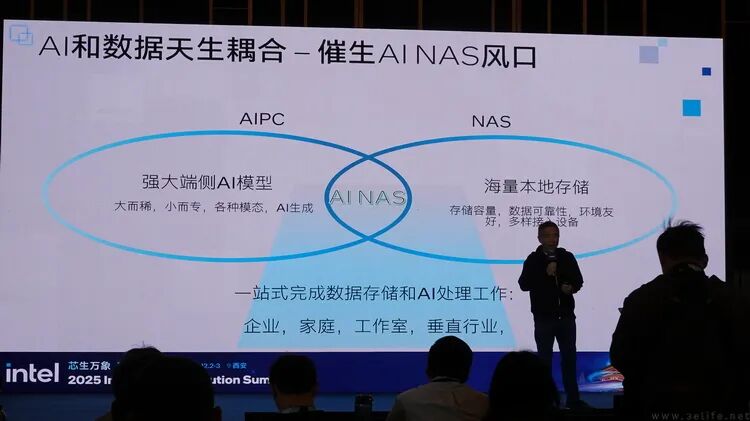
In essence, NAS can be regarded as a kind of low-power, "user-friendly" small storage server. Home users can use it to back up photos, download videos as a home media center, and enterprise users can also use NAS for simple data backup and as a storage pool for team collaboration.
However, for many years in the past, most small NAS devices have overemphasized "low power consumption", to the extent that their processor performance may not even be better than some WiFi routers or knock-off tablets. As a result, such NAS devices can basically only achieve the most basic data storage function. They are not only very laggy to use, have slow transfer speeds, but also make it extremely difficult to search for data. Moreover, they cannot meet the data exchange efficiency required for internal team collaboration in enterprises, and their extremely low performance actually makes these products difficult to be "user-friendly" and "intelligent". In fact, they have raised the usage threshold of NAS, making it difficult for more consumers to accept.
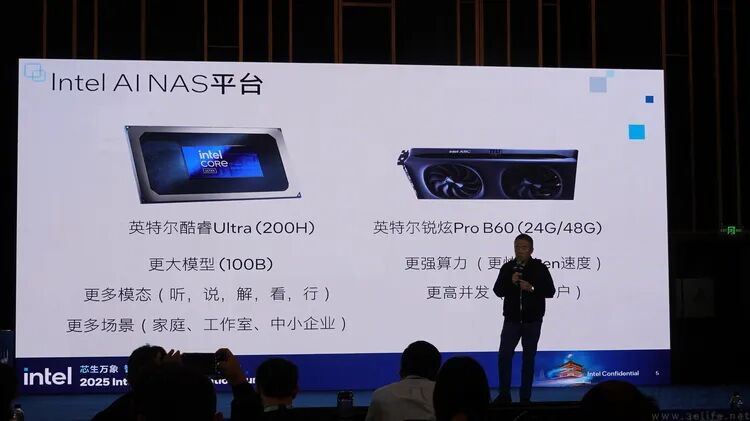
So, when we saw the AI NAS launched by Intel and its partners, what excited us most was its revolutionary performance improvement compared to previous NAS devices. These AI NAS devices are equipped with mobile Arrow Lake processors, providing computing power dozens or even hundreds of times that of previous products at a power consumption level of just a few dozen watts. Thanks to this improvement, they can use an operating system interface closer to that of consumer PCs, support more user-friendly remote control, meet the high network throughput required for team collaboration, or complete the transfer and backup of dozens or even hundreds of gigabytes of data in just a few seconds via Thunderbolt interfaces.
There's a Lot You Can Do with AI on NAS
Of course, in addition to the huge leap in computing power, localized AI computing ability is obviously the core competitiveness of AI NAS.
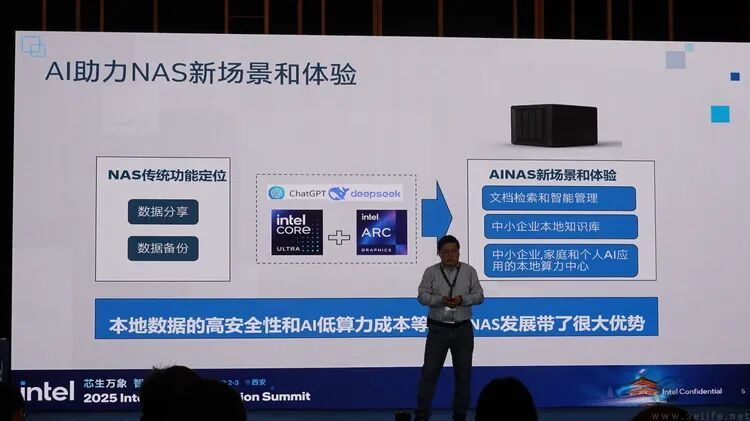
What does this mean? First of all, for many modern AI applications, they often rely on the computing power of cloud servers. For example, when you use an "AI assistant" on your computer to proofread an article or use an AI file manager to search for a photo of someone, it usually means that the relevant files have been uploaded to the server for analysis.
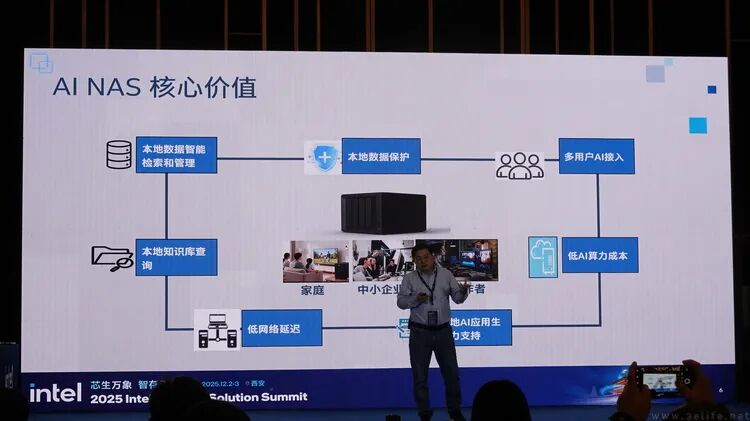
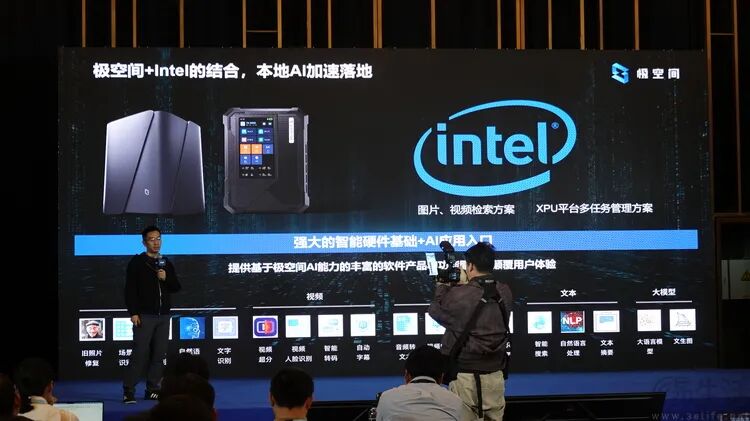
Obviously, this may lead to privacy risks, and AI NAS can help users eliminate these concerns. Relying on Intel's XPU (CPU + NPU + GPU) hardware and the software support of AI SDKs, AI NAS can achieve complete localized file analysis and intelligent retrieval. This not only makes users feel that AI NAS is "more useful" than regular products, but also solves the privacy risks of traditional PC-side AI assistants.
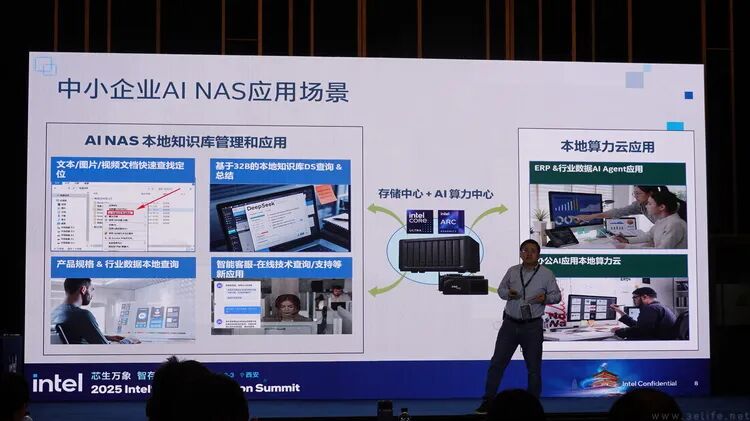
For enterprise users, the functions of AI NAS can be even more powerful. Thanks to the addition of the single-card dual-core Intel ARC PRO professional graphics card, enterprise-level AI NAS can not only achieve much higher data throughput than before, but also transform the NAS into a small AI hub integrating storage and computing, providing more imaginative uses such as enterprise local knowledge bases and local AI computing power centers.
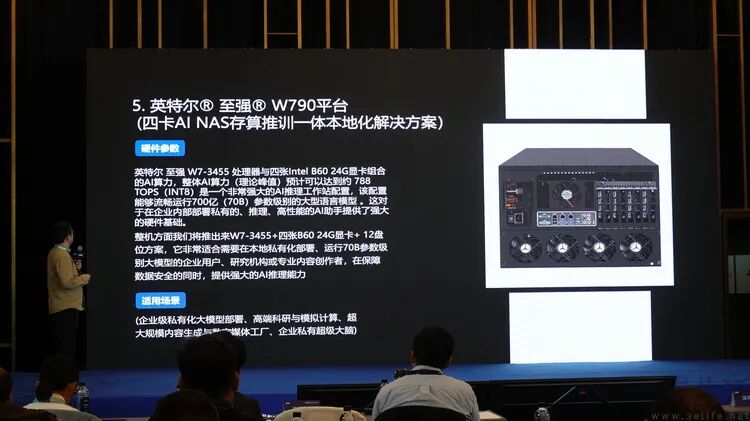
Even on-site, we saw an ultra-high computing power AI NAS solution based on the Intel Xeon W790 platform + multiple ARC graphics cards. For them, traditional local storage and backup scenarios are obviously "overkill". The real significance of such AI NAS lies in being able to complete the storage, computing, and inference training of enterprise internal data in a single machine, realizing the "AI transformation" of local data without the need for remote servers. Especially for some enterprises that are involved in sensitive businesses and hope to use AI to gain insights into internal data and improve operational efficiency, such AI NAS may be the only feasible "way out" at present.
Intel's Push for AI NAS Isn't Just about "Selling Chips"
In fact, Intel's investment in AI NAS didn't start recently. It was launched shortly after they introduced their first-generation processors with NPUs.
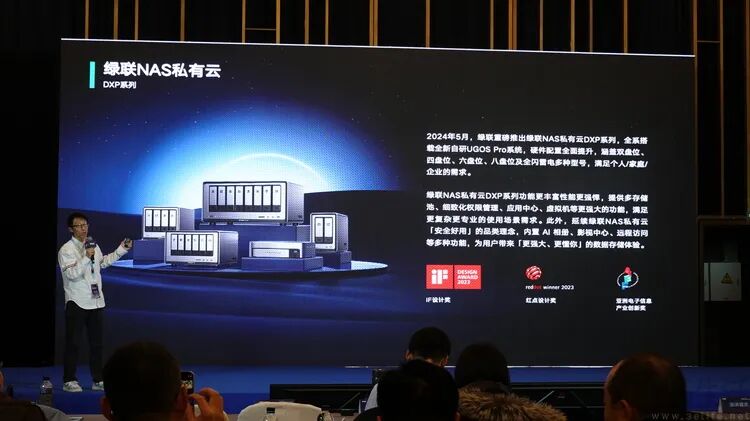
In other words, the reason why Intel is vigorously promoting the AI NAS product form is probably not just to increase the "sales channels" of its products. Looking at Intel's partners during this event, it's not hard to find that there are both traditional enterprise-level NAS manufacturers, "new force" home storage brands, and upstream NAS system solution providers or NAS hardware ODMs.
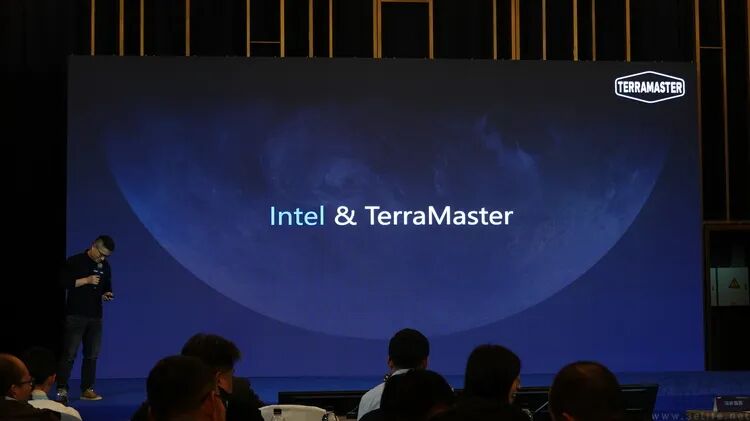
Obviously, this means that rather than simply "selling processors and graphics cards", leading the organization of an industry ecosystem and even defining a cross-brand technical standard may be the real purpose of Intel's continuous efforts in AI NAS.
Why is it Intel, rather than other processor manufacturers, doing this? Naturally, it still comes down to product strength. After all, compared with traditional PCs, NAS still places more emphasis on stability, network performance, and power consumption control under low load. With the addition of the AI attribute, it also places requirements on relevant software development resources.
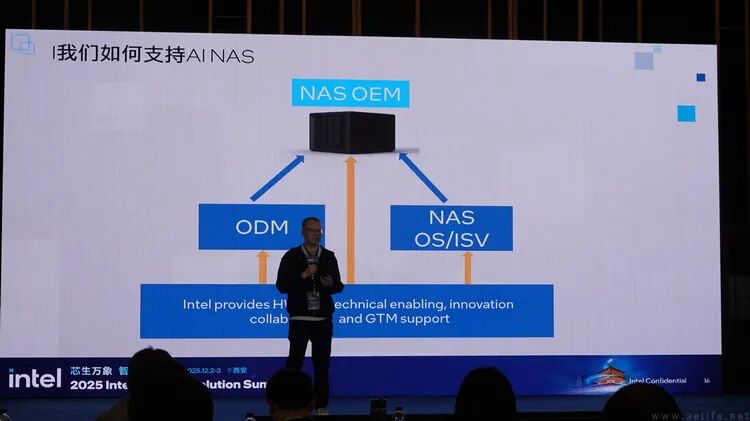
Compared with its competitors, Intel does happen to have more advantages in the above areas. So, it's only natural that they become the "core" leading the development of AI NAS.
This article is from the WeChat official account "3eLife" (ID: IT-3eLife), author: 3eLife Team. It is published by 36Kr with authorization.