Accumulated 230,000 hours in orbit with zero failures, a dark horse emerges in the space-borne optoelectronics track | 36Kr Exclusive
Text | Azhi
Cover source | Pexels
The spaceborne combined fiber amplifier, a "hidden track" in the satellite laser communication terminal, is quietly heating up as the large - scale deployment of domestic low - orbit constellations approaches the countdown.
36Kr learned that Tianjin Huanyu Xingtong Technology Co., Ltd. (hereinafter referred to as "Huanyu Xingtong"), a supplier of core optoelectronic components for spaceborne applications, recently completed a Pre - A+ round of financing worth tens of millions of yuan. The investment was exclusively led by Chuzhou Qijin Yixin, and later received additional investment from listed company Jinchun Co., Ltd. The funds from this round will be mainly used for the expansion of the production line of spaceborne combined fiber amplifiers, the on - orbit verification of spaceborne three - axis fiber optic gyroscopes, and the R & D of multiple new products, further accelerating the localization process of core optoelectronic components for spaceborne applications.
Huanyu Xingtong was established in 2021. The core team members are from Nankai University, and it is one of the earliest domestic industry - university - research transformation projects engaged in the independent R & D of spaceborne fiber amplifiers. The founder, Dai Wutao, graduated from Nankai University with a master's degree in optical science. He has more than 20 years of experience in the optoelectronic field, and has long been engaged in the introduction of advanced foreign optoelectronic technologies and the promotion of their localization. He is a serial entrepreneur.
In terms of technological evolution, Liu Bo, the chief scientist of Huanyu Xingtong, is a professor and doctoral supervisor at Nankai University and an expert in the field of domestic laser communication. The spaceborne fiber amplifier developed by his team was launched into orbit with a Beidou - 3 satellite in 2019 and has been operating stably in orbit for more than 6 years, making it the spaceborne fiber amplifier with the longest on - orbit operation time in China.
As a startup company, in the past five years, Huanyu Xingtong has rarely made public statements. The team has mainly focused on product R & D and on - orbit verification.
After all, the space environment is extremely special, and many working conditions cannot be fully reproduced in ground laboratories. Once a spaceborne product is in orbit, it cannot be physically repaired. To prove the reliability of a technical solution, "flight experience" is the most powerful evidence—passing 200 - hour or even 2000 - hour ground tests does not mean the technical solution is feasible. Only stable on - orbit operation for 5 - 7 years qualifies a product to enter the supplier list.
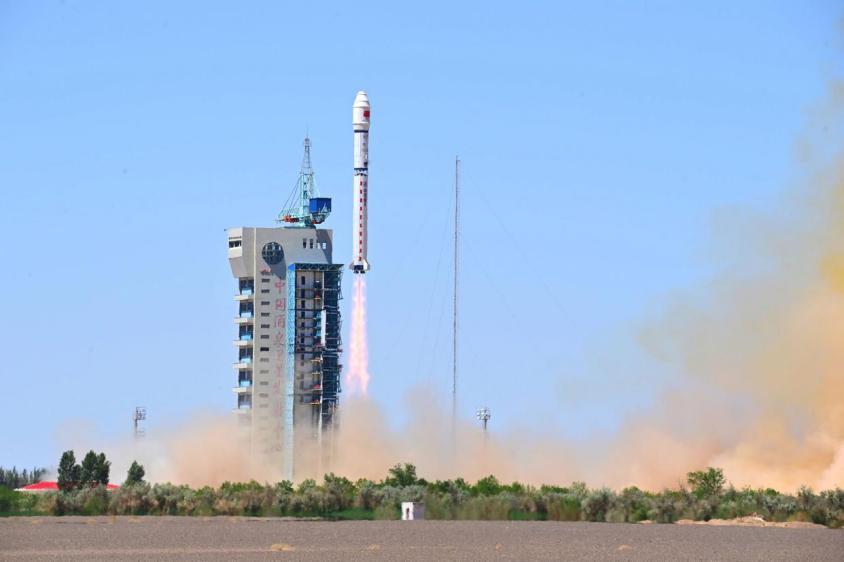
On May 14, 2025, the first batch of satellites for the "Trisolaris Computing Constellation" were launched at the Jiuquan Satellite Launch Center.
According to Dai Wutao, Huanyu Xingtong has delivered nearly a hundred flight - qualified models of spaceborne combined fiber amplifiers so far, and 21 products have been successfully put into on - orbit service. They have successfully completed the distance - pulling tests of satellite - to - ground and inter - satellite laser links, with a cumulative on - orbit stable operation time of more than 25 years. As of now, Huanyu Xingtong has been deeply involved in many major space projects, such as the Weihai No. 1 01 - 02 satellites, the first - launch satellite of Helium Starlight Link, the Helium Star Liangxi Twin Stars, the first batch of satellites for the Trisolaris Computing Constellation, and the test satellite of the Star Network Innovation Institute.
Inter - satellite and satellite - to - ground laser communication is not only a technological trend but also an important part of realizing the value of satellites. Its industrialization process is gradually accelerating. However, in Dai Wutao's view, the curtain of the high - speed development of China's commercial space industry has just begun.
The "Hidden" Pain Points under the Wind
In 2020, China submitted a spectrum application for the GW constellation to the International Telecommunication Union (ITU). In the following year, China Star Network was officially established. As China's first giant low - orbit satellite Internet project, the GW constellation plans to launch a total of 12,992 satellites. At that time, the main narrative of the domestic commercial space industry was still focused on rockets and satellite platforms, and the issue of localization of upstream core components had not yet entered the public view.
Dai Wutao chose to start a business in 2021 with spaceborne optical amplifiers as the entry point because he saw the hidden pain points under the commercial space wind at that time—the lack of localization of upstream core optoelectronic components.
To understand why it is important, we need to clarify a technical logic first: For the low - orbit satellite Internet to form a network, inter - satellite laser communication is a must - have option, and the spaceborne fiber amplifier is the core component of the laser communication terminal.
A low - orbit satellite constellation consists of thousands of satellites. Satellites must be interconnected through high - speed links to form a "space Internet". Laser communication is recognized as the optimal solution for inter - satellite communication due to its advantages of high speed, large bandwidth, and low latency.
In the laser communication link, the transmitting end needs a high - power optical amplifier to amplify the signal power to the watt - level for transmission over thousands of kilometers, and the receiving end needs a low - noise optical amplifier to purify and restore the nanowatt - level weak signal for perfect reception. Without optical amplifiers, the signal cannot be sent out or received, and the laser communication link cannot be established. This is the strategic value of spaceborne optical amplifiers.
In reality, many aerospace - grade products and upstream components have long been subject to foreign export controls. If the spaceborne optical amplifier link is blocked, it will be difficult to scale up the downstream laser communication terminals.
"As long as the words 'radiation - resistant' are involved, it was a sensitive product at that time, and imports were restricted. Importing radiation - resistant special optical fibers, optoelectronic devices, and electronic chips was a painful process for each component, not to mention the whole radiation - resistant fiber amplifier." Dai Wutao mentioned. "In front of everyone, technical problems are equal. We have to step on all the pitfalls and solve all the problems. It won't change because of differences in seniority or funds. The accumulation of technology needs to start from scratch, improve from existing, and be verified repeatedly. The process is arduous and long."
In his view, for the domestic science and technology field to develop, it must be self - reliant and independently controllable. "Spaceborne optical amplifiers are what we should do and are worth doing."
The successful launch of the spaceborne optical amplifier independently developed by Liu Bo's team into orbit was an important signal for the choice of the startup time.
Dai Wutao mentioned, "The project of the Beidou - 3 spaceborne fiber amplifier that Professor Liu Bo participated in was successfully launched in 2019 and is still working normally. This shows that a breakthrough was achieved in core technology at that time, the scientific and technological achievements were initially verified, and there was a basis for commercialization. Based on this, we hit it off in 2021 and started forming a team to start a business."
It is reported that Huanyu Xingtong has completed the verification of the 100% localization technical solution for spaceborne fiber amplifiers and small - batch mass production.
Dai Wutao also mentioned that the more important factor behind promoting localization is industrial chain collaboration, rather than the effort of a single company. "Many domestic units are working on technological breakthroughs. We are in a process of mutual promotion. If we don't develop independently controllable domestic spaceborne fiber amplifiers, our suppliers will find it difficult to understand the specific demand information."
This is also a microcosm of the domestic commercial space industry chain: The system - level demand drives the localization investment in components, and the breakthrough of components in turn supports the improvement of system capabilities. The role that Huanyu Xingtong hopes to play is that of an "interpreter of demand" and a "system integration verifier" that connects the upper and lower parts of the industry chain.
The Bigger Test Comes After "Going into Space"
After the technological breakthrough, implementation is an even greater test.
The commercial space industry has extremely high requirements for product reliability because once a product is launched, it is almost impossible to repair or replace. If a spaceborne fiber amplifier fails in orbit, it will not only cause malfunctions in the laser communication terminal but also affect the normal operation of the entire satellite.
This means that if a product fails in orbit, the reliability of the design will be questioned, and the technical solution may have to be restarted. The cost of trial and error is extremely high.
"Transforming scientific research results into products and products into commodities is a rather painful process," Dai Wutao admitted. Once the product is mass - produced, problems that did not surface in the small - sample stage will break out concentratedly—issues such as the consistency of raw material batches, standardization of the production process, and whether front - line operations can meet the standards at the first attempt are all new challenges.
Dai Wutao summarized the sources of product strength into three aspects:
First, a deep understanding of the product. A spaceborne optical amplifier is not simply a matter of transplanting ground - based fiber amplifier technology into the space environment. The commercial space industry has extremely strict requirements for products: in extreme environmental conditions, while ensuring high reliability, it is necessary to pursue the ultimate cost - performance ratio and mass - production capabilities. This is a brand - new topic.
Second, the integration of multi - disciplinary technologies. There should be technical and engineering experts with a space background who can deeply understand what the low - orbit operating environment means and design highly reliable products. There should also be R & D and production personnel in the high - power laser field who have experienced the implementation of kilowatt - level or even megawatt - level products and have rich engineering, mass - production, and commercialization experience. The former ensures product reliability, and the latter helps to reduce costs and increase efficiency.
Third, the accumulation of industry know - how. "Simply put, we have to step on all the pitfalls. The thicker the error log, the more problems are solved, and the more perfect the designed product will be. If problems can be solved in the laboratory or before the product leaves the production line, they will not occur to users, let alone in orbit."
Currently, the expansion of Huanyu Xingtong's core products is generally promoted in three lines, following the rhythm of "mass - producing one, verifying one in orbit, and researching and developing one."
"During the mass - production stage, it mainly relies on industrial workers and the supply chain. During the on - orbit verification stage, it mainly involves the market and technical personnel in communication and negotiation with cooperation units. During the R & D stage, it mainly involves R & D personnel. We are still in a period of rapid development. The R & D rhythm of spaceborne products is intense and orderly, and we will take it step by step. There are people busy at each stage, so that the team can operate smoothly." Dai Wutao added.
The spaceborne combined fiber amplifier is the main revenue - generating product of Huanyu Xingtong. It has completed the delivery of multiple flight - qualified models and on - orbit verification in batches. It is also the current main technical and commercial foundation.
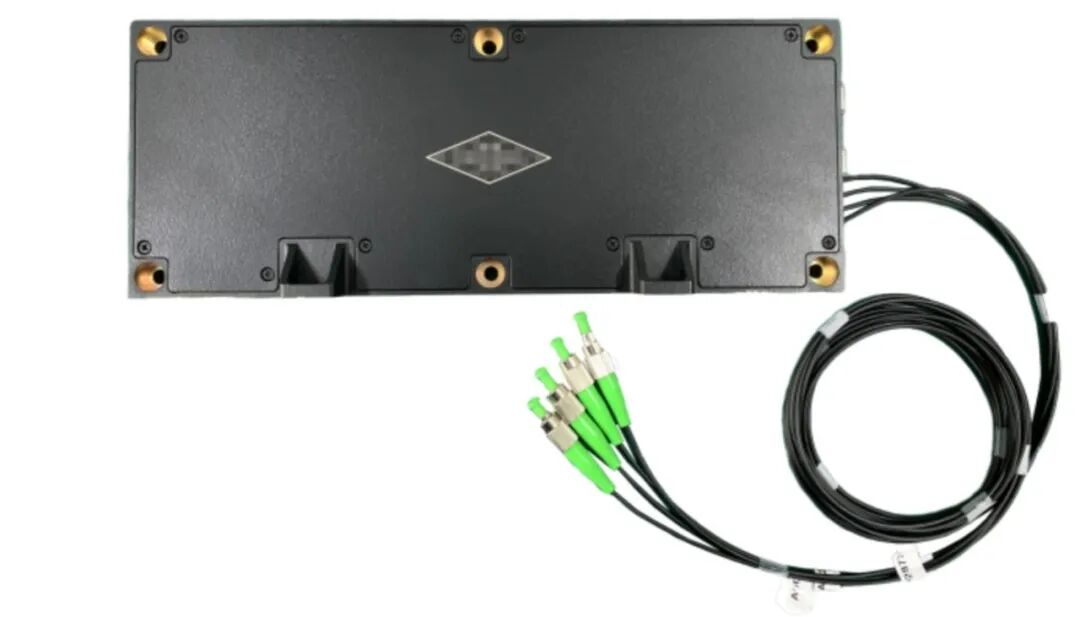
Spaceborne combined fiber amplifier (for inter - satellite laser communication)
In terms of technical parameters, the current spaceborne combined optical amplifier of Huanyu Xingtong can output high - power signal amplification from 2W to 5W and can also receive and amplify small signals in the - 60dBm—nanowatt level. A more vivid explanation is that this device can "shout loudly" and "hear whispers", which is also the technical foundation for inter - satellite laser communication to operate in long - distance, high - bandwidth, and high - reliability scenarios.
Dai Wutao mentioned that in May 2025, the first group of satellites for the "Trisolaris Computing Constellation" was successfully launched. All 15 spaceborne optical amplifiers used in the laser communication terminals of the "12 - satellite launch" were from Huanyu Xingtong.
"This is also the first batch - delivery and launch of spaceborne optical amplifiers in the domestic commercial space industry, which requires us to have both the ability to control product quality and the ability to deliver in batches. As of now, these 15 products have been operating stably in orbit for more than a year."
Another set of data shows that the 21 spaceborne optical amplifier products of Huanyu Xingtong currently in on - orbit service have accumulated more than 230,000 hours of stable operation.
The spaceborne three - axis fiber optic gyroscope is the second product line of Huanyu Xingtong extending from its core optoelectronic capabilities. So far, 9 flight - qualified models have been delivered. Dai Wutao expects that at least 4 spaceborne three - axis fiber optic gyroscopes will complete on - orbit verification in 2026, which is a key task that the team must complete this year.
In addition to the above two main products, Huanyu Xingtong is also integrating resources and investing in R & D in the directions of spaceborne narrow - linewidth laser modules, 100G coherent transceiver modules, and laser chips. Overall, Huanyu Xingtong's product line is clearly structured, with optoelectronic technology as the core, gradually building a product matrix of spaceborne optoelectronic components.
In terms of the commercialization strategy, a notable detail is that while accelerating the implementation of spaceborne applications, Huanyu Xingtong will also extend to the ground and airborne markets using its unified technical platform capabilities.
In Dai Wutao's view, this is a necessary move. "At present, the quantity of spaceborne products is not large enough. Expanding ground and airborne applications can further increase output, which will be of great help to the unified management of future materials and the bargaining power in procurement. The ground, airborne, and spaceborne products share the same production line. The higher the output value, the lower the amortized cost, which further improves our cost control ability and price competitiveness."
In terms of revenue, currently, Huanyu Xingtong has more than ten million yuan in hand orders for ground and airborne optoelectronic products, and the framework intention orders for spaceborne products reach the ten - million - yuan level. The company expects to achieve a revenue target of 40 million yuan in 2026.
In terms of the industrial rhythm, the real explosion of the application of core spaceborne optoelectronic components depends on the large - scale deployment of downstream constellations—and this is still a curtain that has not been fully opened.
Dai Wutao's judgment is clear. Taking the application and deployment rhythm of the GW constellation as an example, there will be a large number of orders released in 2027, and the intensive launch stage will begin in 2028.
From the industrial perspective, the test progress of large - thrust rockets, the increase in the number of commercial launch sites, the official implementation of the technical specifications for the second - generation satellites of the Star Network Innovation Institute, and the major breakthrough in on - satellite laser communication verification are all signals worthy of attention, which will accelerate the development of the industrial process.
"The curtain of the commercial space industry has opened a crack, and it is not far from opening wide." Dai Wutao mentioned that with the completion of Huanyu Xingtong's new round of financing, in addition to promoting the on - orbit verification of new products and expanding the production line at the Tianjin headquarters, the company will also build a new production and R & D base in Chuzhou, Anhui.
In such a track dominated by grand narratives, Dai Wutao hopes that Huanyu Xingtong can focus on in - depth development, stand firm and take root in the upstream key links, polish products and data, and make preparations in terms of products, production capacity, and supply chain before the demand explodes. When the domestic low - orbit satellite Internet constellation truly moves from the test satellite stage to the mass - production stage of network construction, it can build long - term barriers and development space with "flight - tested