Under Pareto Optimality, the Boundaries and Costs of Midea Group's Personnel Iteration
In the framework of microeconomics, "Pareto optimality" refers to a type of resource allocation state: once the system reaches this state, there is no longer room for win - win optimization among multiple parties. Any adjustment aimed at improving the benefits of one party will inevitably cause damage to the interests of other entities. All optimization behaviors are essentially zero - sum games.
This set of theories is very suitable for interpreting the talent management logic of Midea Group today. After more than a decade of continuous organizational upgrades, the internal personnel arrangement, power and responsibility division, resource allocation, and the efficiency of matching people with positions in Midea have reached the highest level at the current stage.
Considering the existing business volume, industry structure, and growth status, the internal talent allocation in Midea has long reached the efficiency ceiling of Pareto optimality.
Theoretically, on the premise that the total amount of existing internal resources in the enterprise is fixed, there is no room for positive optimization by simply relying on personnel adjustments to continue to improve efficiency.
However, in reality, Midea has not stopped at the optimal balance point. It still adheres to high - frequency personnel iterations and continuous adjustments to the management, always trying to dig out more operational efficiency through talent reconstruction.
In the early years, Midea actively stepped out of the warm - hearted management model of traditional manufacturing. From the peak of the air - conditioning business to the diversified layout of all product categories, every strategic breakthrough relied on personnel innovation to break the organizational inertia and activate the team's vitality.
Even when the overall growth of the industry has slowed down, Midea still maintains a high - intensity team renewal rhythm. In May this year, several senior executives with real power successively left their positions, which is a continuous manifestation of this management style.
The market - oriented competition mechanism that does not rely on seniority and does not practice lifelong employment once helped Midea completely get rid of the bloated and rigid ills of traditional large enterprises, maintain a sensitive market response ability for a long time, and support the enterprise's high - speed expansion for decades.
However, after entering the stage of stock competition, there is no new incremental efficiency to be tapped within the enterprise, and it is no longer possible to achieve a benign improvement where the enterprise can improve efficiency without harming the employees.
In a system where resources and efficiency have reached the peak, if the enterprise wants to maintain its performance and obtain a slight improvement in efficiency, it can only re - divide the internal stock resources. By sacrificing the job stability, promotion space, and job rights and interests of some employees, the enterprise can exchange for unilateral performance stability and marginal benefits.
For this reason, Midea's current high - frequency personnel adjustments will transform from the early benign organizational optimization into an internal zero - sum game.
The Only Constant is Change: Personnel Iteration Becomes Normalized
In the past five years, the high - frequency iteration of Midea's management has changed from a phased organizational adjustment to a normalized internal metabolism.
This personnel renewal covers the whole area, spanning core businesses, the top - level of the group, the domestic market, and overseas tracks. The adjustment intensity and iteration frequency are highly representative in the domestic home appliance industry.
In the past two years, the rhythm of Midea's personnel iteration has significantly accelerated.
On May 29, 2026, Midea Group issued an announcement that Wei Chang, the vice - president and chief technology officer, resigned from all positions in the company for personal reasons. In October 2025, Berlin, the vice - president, completed a job rotation adjustment. He no longer served as the vice - president of the group and was transferred to the president of the Americas region, fully responsible for the business development in the American market, which is a normal job transfer within the group.
Personnel iteration at the business unit level is also frequent. Xu Minfeng, the former president of the household appliances business unit, took office in March 2022 and officially left in September 2024. Before leaving, he gradually resigned from the management positions of twelve Midea - affiliated enterprises.
Fu Yongjun, a senior executive with 26 years of service experience, resigned as an executive director in March 2025 and stepped down as the vice - president at the end of that year, withdrawing from the core management of the group.
The top - level directors and executive teams of the group have also been continuously updated. In 2026, Midea completed the reshuffle of the board of directors: Qiu Lili, an independent director, left for personal career planning, and Zhang Ya took over as an independent director; He Jianfeng and Yu Gang did not renew their terms as directors, and Zhao Jun and Guan Jinwei were newly appointed as non - independent directors.
The changes of Midea's senior executives are not concentrated in one sector but cover the main business, new businesses, and overseas sectors comprehensively. The position of the chief financial officer has changed three times in two years. In 2019, a foreign expert, Helmut Zodl, was hired. In April 2021, Cai Weiding was hired. After serving for only about 9 months, Cai Weiding resigned for family reasons, and Midea immediately promoted Zhong Zheng to take over. In terms of overseas business, the president of Midea America was replaced in 2024, and Berlin, the former head of the Chinese region, was transferred to the president of the Americas region in 2025.
Midea Group continues to promote personnel streamlining and organizational integration, breaking the long - accumulated inertia, and there is no longer a lifelong employment mechanism.
In emerging businesses and overseas markets, the rhythm of personnel iteration is more stringent. In new tracks such as robotics and building technology, as well as regional markets around the world, job tenures are highly linked to performance targets, and the tolerance for mistakes is extremely low.
New businesses face great growth pressure, and overseas markets have high requirements for breakthroughs. Once the performance fails to meet expectations, personnel adjustments will be quickly implemented, creating an organizational atmosphere that emphasizes results and has zero inertia.
This top - down full - scale and normalized refresh has shaped Midea's unique organizational characteristics. All managers are always in a high - pressure competition state. There are no stable and unchanging positions, only continuous competitive career tracks.
Therefore, in Midea, the only constant is change.
Deep - seated Motivation: The Survival Algorithm under High - pressure Red Ocean
Midea's management style of frequent personnel changes is not formed in the short term but is a survival logic precipitated by long - term industry competition and enterprise development, supported by three core motivations.
Firstly, the extreme pressure in the stock market forces the change. The domestic home appliance industry has long bid farewell to incremental expansion and entered the stage of stock competition or even shrinking competition. After the market dividends faded, the performance growth of each business unit can only be achieved by seizing market shares and improving efficiency. Midea takes strong performance as the core orientation, and the performance targets are rigidly implemented. Once the targets are not met for consecutive periods, personnel adjustment becomes the most direct and efficient way to restart the organization, forcing all businesses to always focus on short - term market performance and business results.
Secondly, the fully implemented professional manager mechanism. Different from some traditional enterprises that value seniority, sentiment, and long - term training, Midea completely follows the market - oriented competition logic. Past seniority and past achievements do not represent permanent speaking rights. Job suitability and current contributions are the only criteria for evaluating managers. No matter how long they have served or how deep their seniority is, once they cannot meet the strategic needs of the new stage, they will be gradually marginalized, which is also the institutional basis for high - frequency personnel iteration.
Thirdly, the enterprise's path dependence on rapid response. Many key counter - attacks in Midea's development history have relied on decisive organizational adjustments and personnel innovations. From the counter - attack and breakthrough in the air - conditioning business to the successful breakthrough in the To B new track, continuous change and rapid iteration have long been integrated into the enterprise's genes. In Midea's governance perception, personnel adjustment is not only a means to solve problems but also a core lever to actively break the situation, avoid organizational rigidity, and cope with market uncertainties.
Path Dependence of "Changing People is like Changing a Knife"
Midea's governance philosophy of "changing people is like changing a knife" ultimately presents an ultimate form of path dependence. It should be noted that Fang Hongbo, the helmsman of Midea, was born under this high - pressure screening mechanism. From an in - house magazine editor to the chairman of a thousand - billion - dollar empire, he "survived" and reached the top in numerous business battles and power changes, undoubtedly providing the strongest endorsement for this logic.
However, this precisely constitutes the most solid cognitive closed - loop: a leader shaped and proven successful by the mechanism will inevitably rely on making the mechanism run faster and more thoroughly as the most instinctive and trusted way to deal with crises.
Thus, we see a self - strengthening of the system: success comes from "speed" and "change", so the answer to all challenges is "faster"; the advantage comes from "changing people", so maintaining the advantage requires "changing people more frequently".
When this logic is pushed to the extreme, it gives rise to an endless, self - demanding "rat - race" - not competing with opponents, but competing with one's own past and the ideal speed set by the system.
However, this extreme "rat - race" precisely obscures the ultimate proposition of the system itself: when the tool of "changing people" is used to the extreme, is it still effective? The real - world data curve gives a calm answer: any tool is subject to the law of diminishing marginal returns.
In the early stage, changing people is like removing roadblocks, which can immediately release the blocked execution ability and growth. However, as the iteration becomes high - frequency and normal, there are fewer and fewer obvious management problems that can be solved by "changing generals". Deep - seated systematic challenges, such as technological gaps, brand premiums, and supply - chain resilience, cannot be fundamentally solved by changing people.
Meanwhile, the organizational friction costs of each personnel change, including team shock, memory break, and trust reconstruction, are increasing exponentially. When the growth of efficiency benefits is less than the growth of friction losses, the system enters a "idle running" state: the actions are still intense, the rotation speed still sounds terrifying, but the net output is difficult to increase and may even decline due to internal strife.
Thus, a profound paradox emerges: Fang Hongbo's success makes him the person who knows best how to make this machine run faster, but the success of the system may also make him the person who is most difficult to perceive the limitations of the machine's basic design.
This is the "two sides" of path dependence - it forges unparalleled offensive efficiency and quietly breeds the self - locking of the system. Midea's current excellence and its future risks have the same origin. When the game rules change from the "lightning war" of "only speed can prevail" to the "protracted war" of "accumulating strength for a long - term fight", whether this organizational machine that extremely pursues efficiency and speed can break its own solidified governance thinking and jump out of the inherent development paradigm is the biggest challenge that Midea needs to face in the future.
When Midea Group Becomes the "Huangpu Military Academy" for Manufacturing Talents
From the perspective of the entire industry, Midea's high - pressure iteration model has extremely strong positive external value.
Long - term high - intensity actual combat training has made Midea a top - notch talent training ground in the industry, cultivating a large number of professional manager teams with strong execution ability, high market sensitivity, and a clear result - oriented mindset.
Continuous personnel flow has also allowed a large number of mature management talents to overflow from Midea to the entire home appliance and general manufacturing industries, achieving Pareto improvement at the industry level. Different from the zero - sum game within Midea, the outward flow of talents is an incremental value release: it does not damage the interests of other enterprises but instead improves the overall management level, operational efficiency, and market - oriented competitiveness of the entire industry.
The career transformation of Yin Bitong, a veteran of Midea, is the most typical case. After years of deep - rooting in Midea's air - conditioning business, he has precipitated a complete set of market - verified operation systems, product strategies, and channel strategies. After leaving Midea, he joined Hisense, directly making up for Hisense's shortcomings in refined operation and market response speed and effectively driving the recovery of its market competitiveness.
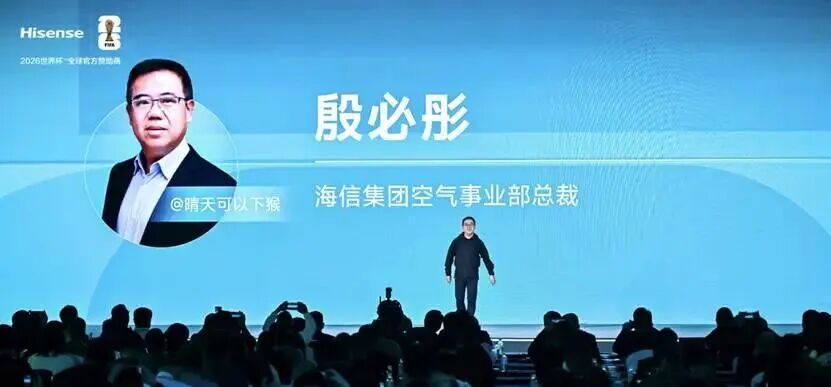
Yin Bitong is not an exception. Many emerging brands such as Aima and Dreame have a large number of Midea - affiliated senior executives. These managers bring the organizational thinking of extreme efficiency, rapid iteration, and market - oriented competition to the new platforms, promoting the upgrading of the management mode of the entire manufacturing industry.
From a meso - level perspective, Midea continuously transports mature management talents to the entire industry through internal high - pressure screening, promoting the continuous maturity of the professional manager system in the domestic manufacturing industry and forming a unique positive industry value.
However, it is necessary to clearly distinguish two completely different logics: within Midea, the talent allocation has long reached Pareto optimality, and continuous iteration is a zero - sum loss; but in the context of the entire industry, the overflow of Midea's talents has achieved a win - win Pareto improvement.
It is precisely here that the outside world is prone to fall into the cognitive misunderstanding of survivor bias. The public often only sees the successful people who stay in Midea and continue to be promoted, or the star managers who successfully move to other companies and achieve good results, and simply define Midea's system as perfect and its talent - cultivation ability as top - notch. However, they ignore the large number of silent samples of those who leave midway behind this high - elimination mechanism.
Midea's talent system is essentially a high - intensity screening mechanism rather than a gentle cultivation system. Behind the few excellent managers in the spotlight, there are a large number of marginalized business leaders, replaced sector executives, and middle - level backbones who choose to leave due to long - term high - pressure overdraft. The professional losses of these people are rarely seen by the industry but are the real hidden costs of this high - speed operation system.
Therefore, the evaluation of Midea's talent model must be two - sided. It can indeed screen out top - notch market - oriented talents, but the price is a very high talent attrition rate and job instability. This model does not balance the development of people and the organization but is an extreme efficiency - screening mechanism of survival of the fittest.
The long - term high - pressure and zero - tolerance iteration rhythm also makes Midea bear a heavy organizational cost. High - intensity performance assessments and frequent organizational structure changes continuously stimulate the organization's potential while constantly consuming the physical and mental states of core talents, weakening the team's sense of belonging, and making it difficult to form long - term and stable team precipitation and organizational memory.
Truly long - term enterprise development is not a one - dimensional extreme involution. Simply forcing to pursue optimization in the already optimal state and exchanging short - term efficiency by sacrificing individuals will only overdraw the organization's vitality.
The long - term prosperity of the manufacturing industry ultimately requires finding a more inclusive and sustainable balance between organizational innovation and team stability, short - term performance and long - term precipitation, extreme efficiency and humanistic care. This is also the most profound thinking and inspiration left by Midea's extreme talent model to the entire industry.
Extended Thinking: Comparison between Midea's Talent Perpetual Motion Machine and South Korea's Chaebol Employment Tactics
The outside world often compares Midea's high - frequency personnel iteration with the phenomenon of "rapid replacement" of senior executives in chaebol giants such as Samsung and LG in South Korea. Although they seem similar on the surface, their underlying logics are completely different, reflecting two different governance wisdoms in the Oriental business world.
The South Korean chaebol model is more like a carefully designed double - layer pressure system. The group of "regular employees" at the grassroots level is protected by strong labor laws, trade unions, and the social expectation of lifelong employment, forming a relatively stable foundation.
The senior management becomes the key to the system's elasticity: they have extremely high salaries but extremely unstable positions and are often quickly replaced due to performance fluctuations, sudden crises, or power layout adjustments within the ownership family. The personnel changes here have the dual attributes of an accountability ceremony and a control tool. In essence, it is a matter of responsibility distribution and political balance within the pyramid firmly controlled by the ownership family, and the replacement of senior executives is like a safety valve.
In contrast, Midea's governance structure presents a more extreme flat - arena characteristic. There is no