With Suanpo (sour and spicy hot pot fermented from rice) and milk skin gaining popularity, which intangible cultural heritage food ingredient will be the next hit?
A list of opportunities for intangible cultural heritage food ingredients.
As hot pot bases are continuously developed and tea drink toppings fall into a homogenized competition, catering brands are looking upstream for differentiation.
Zao Po Cu (fermented rice vinegar), Chaoshan beef balls, Inner Mongolia milk skin, Xinhui tangerine peel... These food ingredients with the label of intangible cultural heritage are increasingly appearing at supply chain docking meetings.
The public may not necessarily care first whether a food ingredient is an intangible cultural heritage, but they do perceive its geographical origin and product form.
For catering brands, food factories, and supply chain enterprises, those intangible cultural heritage food ingredients that already have a foundation for B - end applications or are showing signs of industrialization also have the value to be re - evaluated.
After intangible cultural heritage delicacies are noticed, the food ingredient side also begins to be re - evaluated
When it comes to intangible cultural heritage delicacies, consumers most easily think of a complete product.
For example, Liuzhou river snail rice noodles, Dezhou braised chicken, Huizhou stinky mandarin fish, or the small crispy pork that has become a major single product by frozen food enterprises in recent years. They have clear product forms and are more likely to be seen on social platforms and supermarket shelves.
However, in the catering supply chain, the industrialization of intangible cultural heritage delicacies is often broken down more finely.
When the industrial chain related to the "Kaili sour soup fish production technique" is exported, what is more likely to be magnified are often the sour soup base, sour soup sauce packets, and sour soup instant foods. The same goes for river snail rice noodles. What consumers see is a bowl of noodles, while what the supply chain breaks down are multiple standardized ingredients such as rice noodles, soup packets, pickled bamboo shoots, dried bean curd, and peanuts.
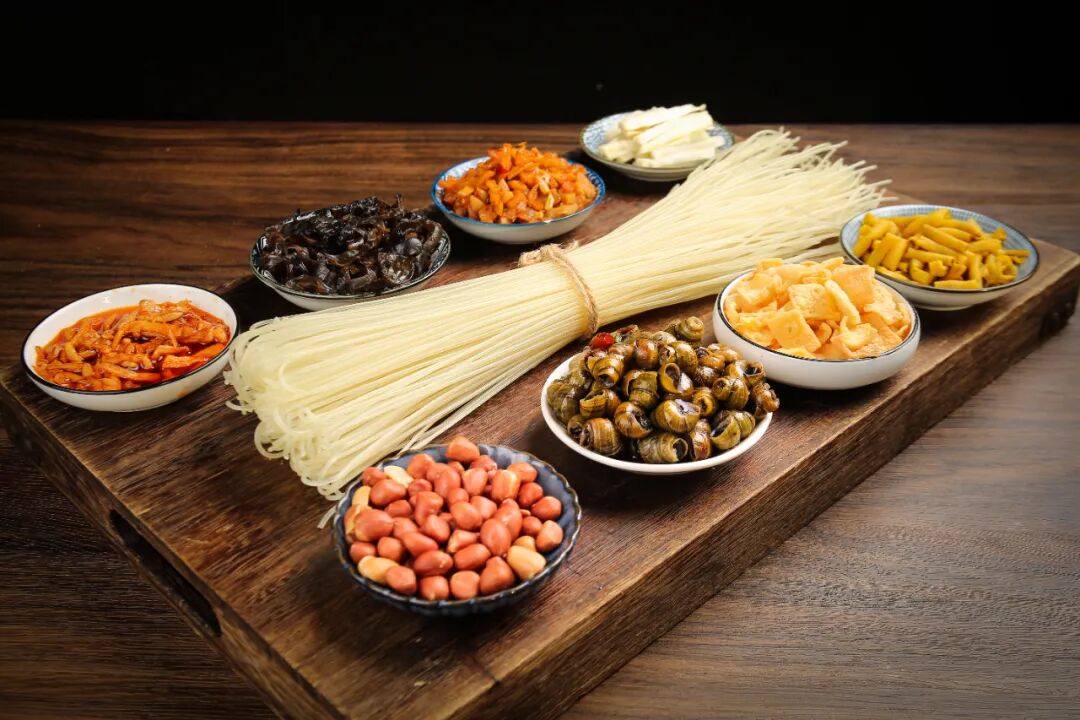
△Image source: Tuchong Creative
What consumers perceive is a single product, while what the catering end actually purchases and re - uses is often a set of standardized products.
Looking further along this logic, the commercial space of intangible cultural heritage delicacies will also extend further upstream. Seasoning bases, staple food raw materials, meat semi - finished products, and special agricultural products may all become entry points for catering enterprises to re - develop intangible cultural heritage delicacies.
Based on the application scenarios of the supply chain, we have selected some intangible cultural heritage food ingredients and classified them into the following 5 categories for inventory: seasonings and flavor bases, meat products and standardized semi - finished products, staple foods and flour raw materials, soy products and dairy products, traditional tonics and special raw materials.
Seasonings and flavor bases: Local flavors are most likely to become base materials first
For catering enterprises, seasonings and flavor bases are the most easily purchased type of intangible cultural heritage resources.
They can appear in product names, becoming flavor labels for new products, or directly enter the kitchen, determining the underlying flavor types of hot pot bases, sauces, dips, and pre - made dishes. Compared with a complete dish, flavor bases are easier to standardize and easier to enter the procurement system of chain catering.
There are two opportunities in this category. Pixian bean paste, Zhenjiang vinegar, Yongchuan fermented black beans, and Wangzhihe fermented bean curd are already mature categories, and their commercial space mainly comes from catering packaging, compound seasonings, pre - made dish seasonings, and customization by food factories. Local flavor bases such as Hainan Zao Po Cu, Leishan fish sauce acid, and Dushan shrimp acid are more suitable as entry points for new flavor types and regional expressions.
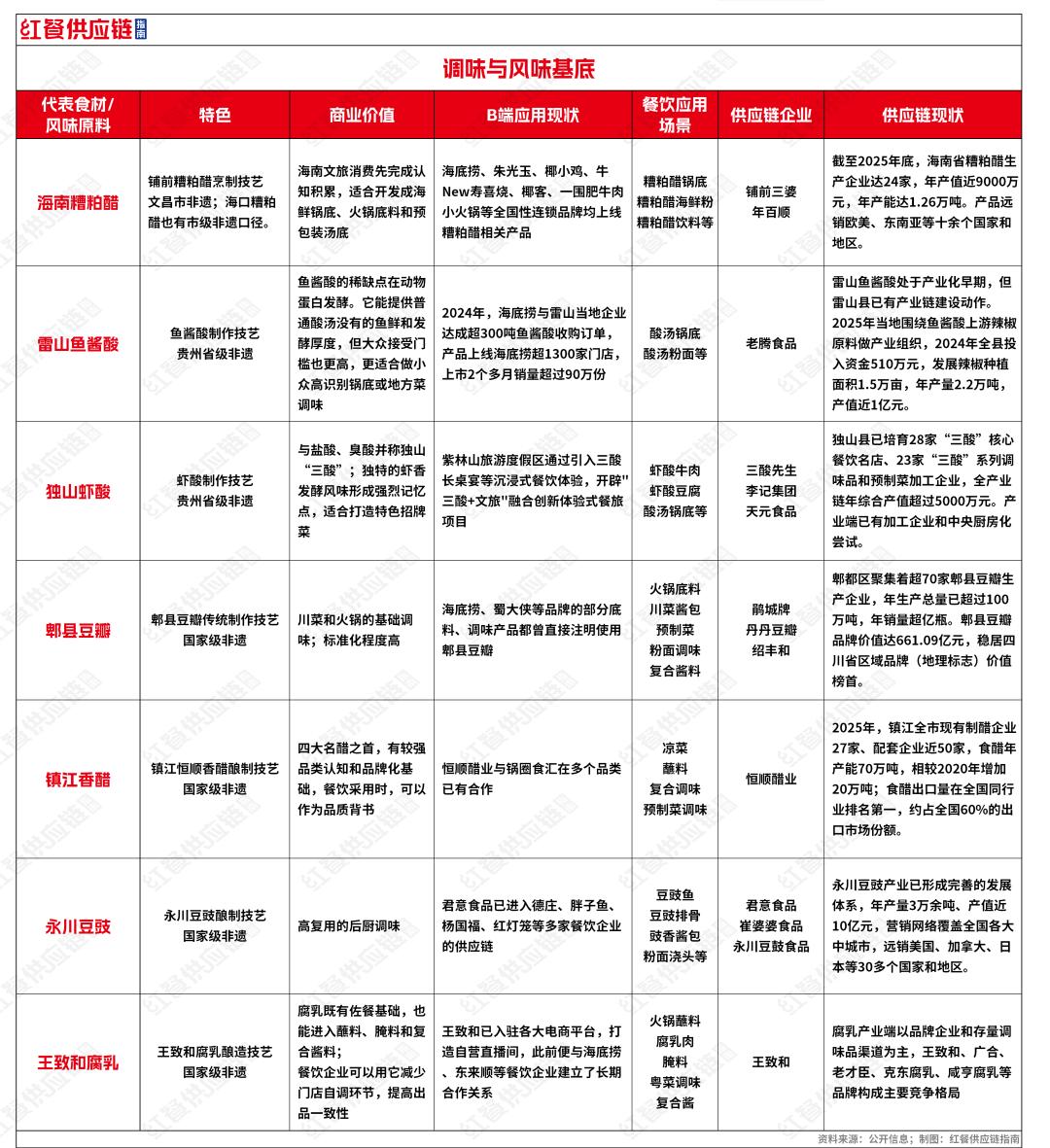
The focus of mature categories is to continue to refine the existing supply chain. When Zhenjiang vinegar begins to extend to high - end aged vinegar, vinegar drinks, and compound sour drinks, it shows that old seasonings are also looking for new consumption scenarios.
The logic of local flavor bases is different. The opportunities for products like Zao Po Cu, fish sauce acid, and shrimp acid may not be immediately reflected in large - scale sales. Currently, brands need to put them into specific dishes to let consumers know what they are, how to eat them, and why they are worth trying.
Therefore, seasonings and flavor bases seem to be a kitchen business, but in essence, they are also a new product business. Whether it can be made into a stable base material determines whether it can be continuously purchased by stores; whether it can be presented as a clear flavor label by the brand determines whether it can reach consumers.
Meat products and standardized semi - finished products: Local flavors need to be transformed into store efficiency
The commercial space of meat - related intangible cultural heritage food ingredients mainly lies in store efficiency.
The demand of catering stores for such products is very clear: less processing, less loss, and stable output. Products like Xuanwei ham and Cantonese cured meats were more regarded as local specialties in the past. However, in the B - end market, if they can be made into slices, dices, fillings, toppings, and standard ingredients, they have the opportunity to enter the systems of rice fast food, Cantonese cuisine, local cuisine, group meals, and pre - made dishes.
The path of Chaoshan beef balls and Fuzhou meat dumplings is more direct. They are already close to standardized semi - finished products and are closer to hot pot, spicy hot pot, group meals, convenient hot food, and frozen snacks.
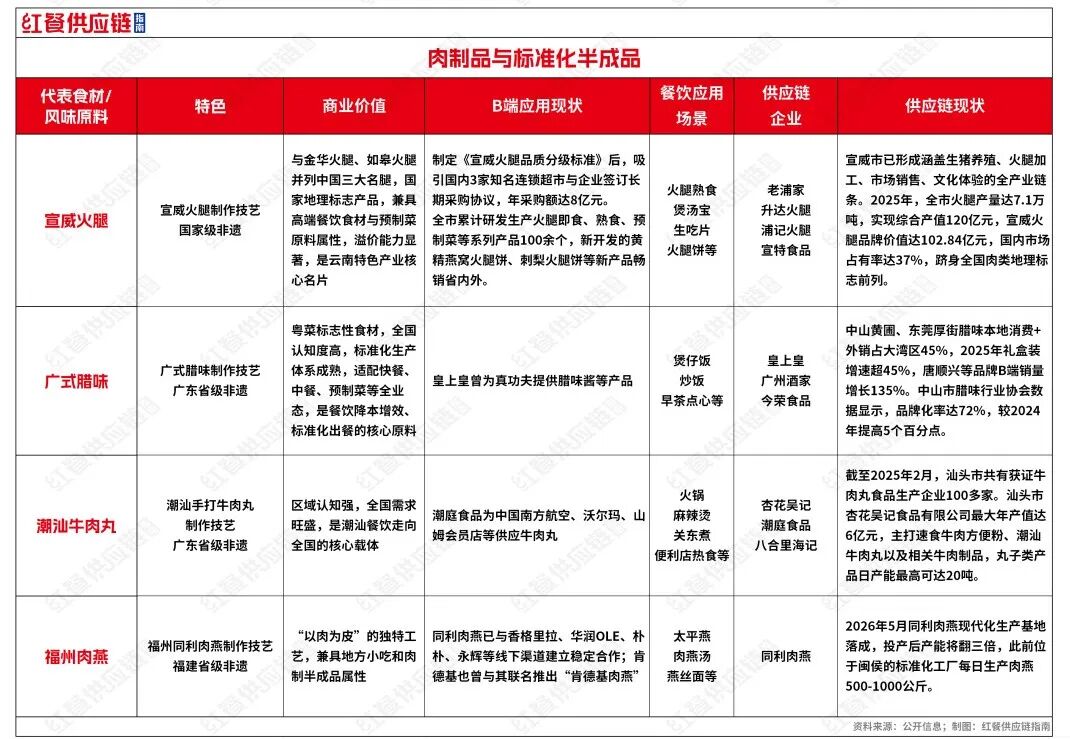
The key to whether this type of product can be expanded in the future depends on whether the specifications, cold chain, reheating, and cost are controllable.
Especially for products like beef balls, consumer awareness is not weak, but there are also problems in the market such as inconsistent standards, unclear raw material content, and chaotic price ranges. The clearer the standardization, the less concern catering enterprises will have about long - term procurement.
Local fame can bring the first - round attention, but for long - term procurement by catering enterprises, they value more whether the product can pre - process complex processing steps in the factory, reducing the uncertainty of cutting, marinating, seasoning, and reheating in stores.
When the product can be made into a stable specification and is relatively controllable in terms of cold chain, reheating, and cost, it has the opportunity to enter a larger catering procurement system from a local specialty product.
Staple foods and flour raw materials: The basic business in high - frequency procurement
Compared with raw materials like flavor bases that are more likely to be used as topics for new products, staple foods and flour raw materials are closer to the basic market in the catering supply chain.
Hot pot requires wide rice noodles and vermicelli, spicy hot pot requires vermicelli and staple food side dishes, noodle fast food requires rice noodles, river rice noodles, and noodles, and group meals and convenience store hot food also need stable staple food blanks. They may not be able to support a single popular product alone, but they determine the daily food output of a large number of stores.
The commercial space of this type of intangible cultural heritage food ingredients mainly depends on the consumption frequency and product state.
The consumption frequency determines the lower limit of demand. The reason why Pengshui crystal sweet potato vermicelli can establish production - sales docking with Chongqing hot pot enterprises is essentially that it has found a high - frequency entry point in hot pot.
The product state determines how far it can go. Shahe rice noodles are fresh and wet rice products, and preservation and logistics limit their cross - regional expansion; in contrast, as a dried staple food, Zhongjiang noodles are more suitable for normal - temperature storage and transportation.
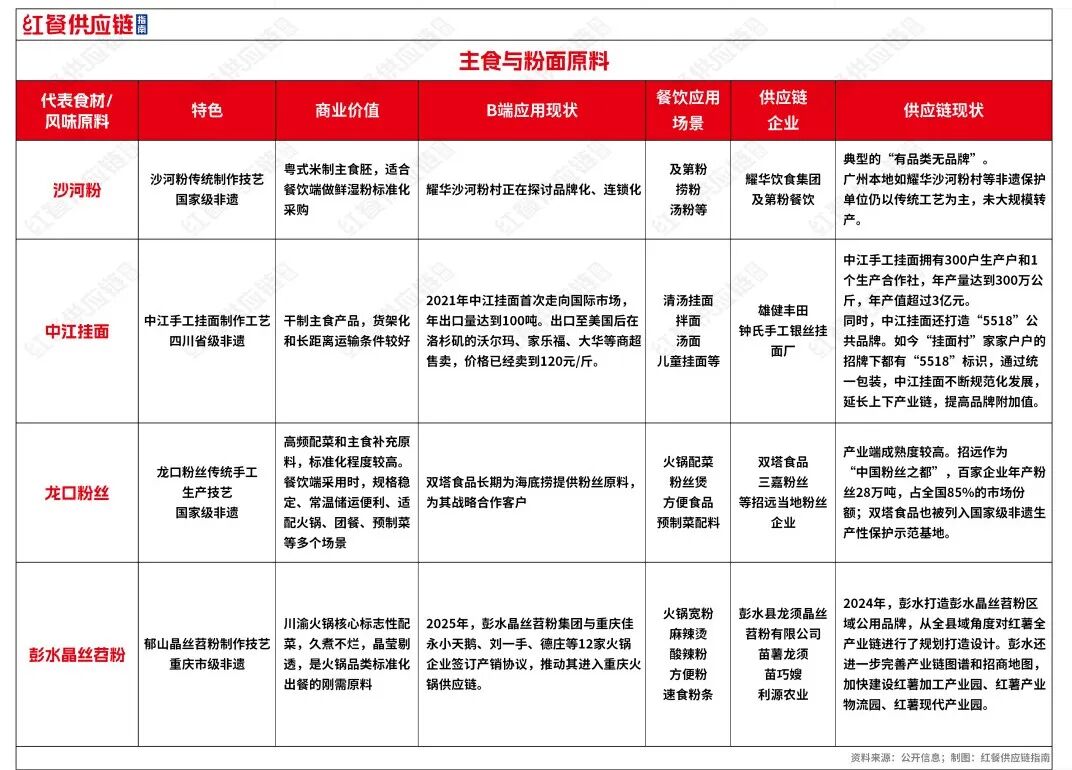
The core factor for whether this type of food ingredient can be expanded in the future depends on whether the product state can be adapted to catering stores.
The difficulties of fresh and wet noodles lie in preservation, distribution, and reheating. If Shahe rice noodles want to go out of the regional market, they need to solve the problems of transportation radius and taste restoration.
For catering enterprises, what they ultimately care about for staple foods and flour raw materials is stable supply, convenient use, and controllable cost. As long as it can reduce the processing steps in stores and reduce the output fluctuation, it has the opportunity to become a long - term procurement item from a local specialty staple food.
Soy products and dairy products: New scenarios for familiar food ingredients
The advantage of soy products is that consumers are not unfamiliar with them.
Ingredients such as tofu, dried tofu, hairy tofu, and milk skin already have a consumer base. They don't need to educate the market from scratch, but rather how to re - enter new catering scenarios.
The opportunities for Shiping tofu and Bagongshan tofu mainly come from the stable demand for soy product side dishes in the catering end. Hot pot, barbecue, group meals, and pre - made dishes can all consume such products. Compared with ordinary tofu, soy products with origin, craftsmanship, and intangible cultural heritage traceability are more likely to be used by catering brands as raw material endorsements.
The path of Huizhou hairy tofu is narrower. It is more dependent on Huizhou cuisine, local snacks, and cultural and tourism catering, but the characteristics of fermented soy products also give it certain differences.
The situation of traditional dairy products is more special. Chagan Yide dairy products correspond to a set of traditional Mongolian milk food systems, and milk skin is just a representative product that is more likely to be magnified in young consumer scenarios. In recent years, milk skin yogurt and milk skin desserts have become popular, indicating that as long as traditional dairy products find suitable product forms, they can also be repackaged by tea drinks, desserts, and baking.
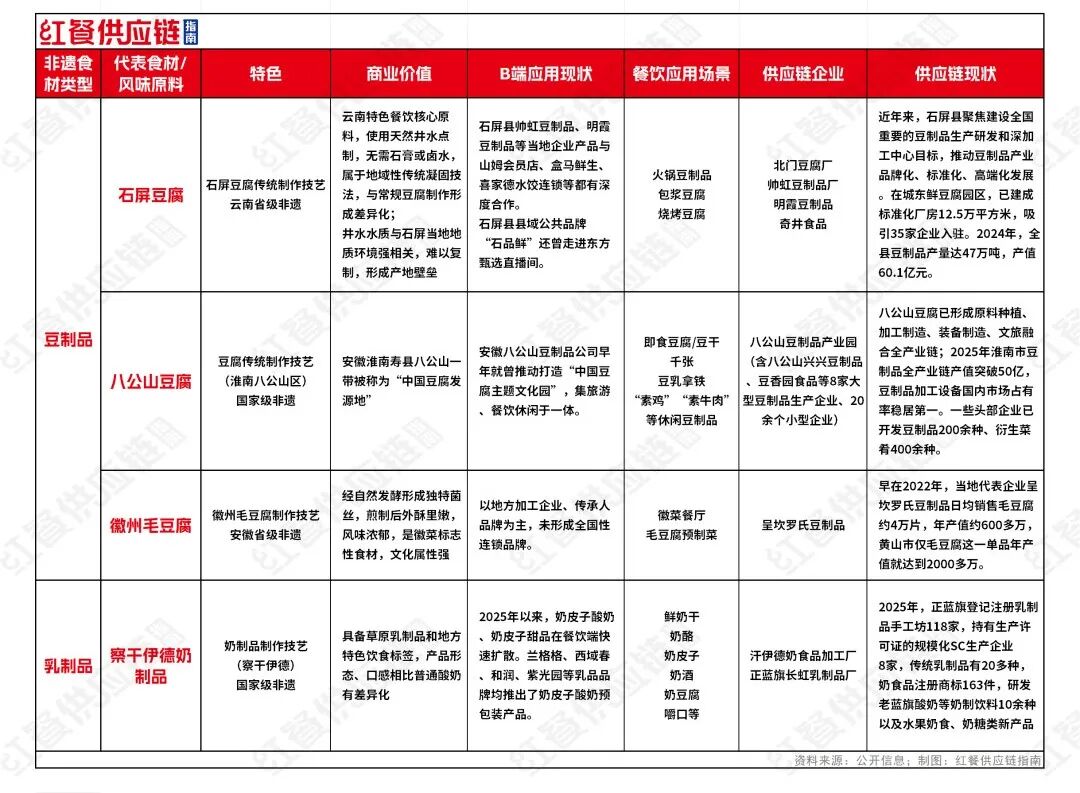
The key to whether this type of food ingredient can be expanded in the future lies in whether the product form can keep up with new scenarios.
If Huizhou hairy tofu still mainly relies on local stores and cultural and tourism consumption, its market radius will be relatively limited. For dairy products, it depends more on the brand's transformation ability.
The popularity of milk skin - related products in tea drinks, desserts, and baking is because they are made into forms that are easier for consumers to understand. However, the popularity of milk skin does not mean that the Chagan Yide dairy product supply chain is fully mature. For the B - end, it also depends on whether the raw material source is clear, whether the production capacity is stable, and whether the product can meet the operation needs of more stores.
Traditional tonics and special raw materials: Will homologous traditional Chinese medicine and food be the next explosive category?
Almost any food ingredient, once marked with a year and a production area, naturally forms a basis for premium.
Xinhui tangerine peel is the most typical example. For the same tangerine peel, whether it comes from Xinhui, how many years it has been aged, and what its grade is will directly affect consumers' judgment of the price.
The value of this type of raw material mainly comes from the long - term accumulated perception of the production area and category.
The homology of traditional Chinese medicine and food further expands the imagination space of this type of raw material. This is also the reason why they are suitable for tea drinks, desserts, soups, baking, health - preserving catering, and pre - made dishes. These industries need to continuously add raw material memory points to products, and traditional tonics and local special raw materials can just undertake the functions of explaining the price and creating differences.
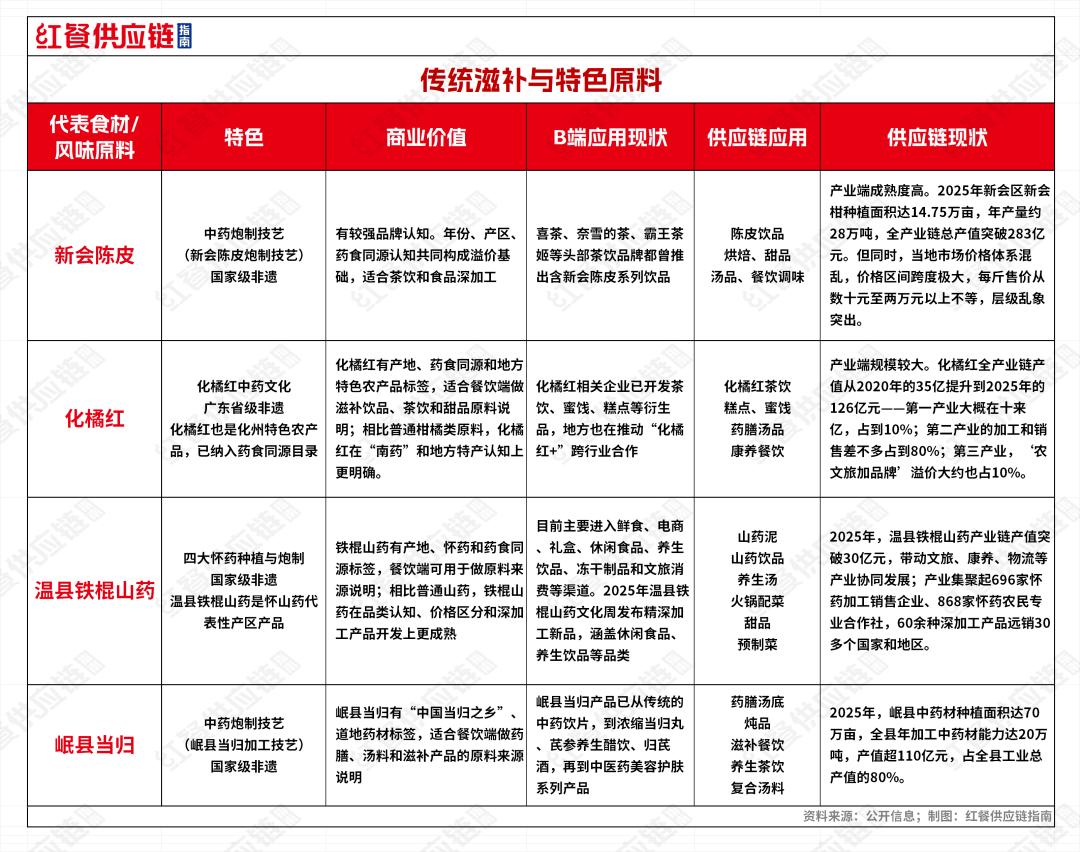
However, risks also exist. If the origin is unclear, the years are chaotic, and the grade standards are not unified, it will be difficult for catering brands to use them in the long term. Especially for raw materials such as Xinhui tangerine peel, Huajuhong, and Angelica sinensis, there are already differences in authenticity, years, and grades in the market. B - end procurement requires a stable source and clear standards.
Therefore, the opportunities for traditional tonics and special raw materials are great, but the threshold is also higher. They can help catering brands establish product memory points and price justifications, but for long - term procurement, it also depends on whether the supply is stable, the grading is clear, and the price range can be accepted by stores.
For intangible cultural heritage food ingredients to truly enter the B - end, they need to pass three tests
The scope of intangible cultural heritage food ingredients is large, but when catering brands look for local food ingredients, what they really care about is often not their position in the list, but the search for differentiating points that can be productized.
In summary, intangible cultural heritage food ingredients that can be used by the catering end usually have three characteristics:
First, consumers should be able to understand its value.
When local food ingredients enter the catering market, they don't necessarily need to have high public awareness first. Many new categories start from niche and are gradually educated by brands, stores, and social platforms.
The real key is whether it has an easily explainable entry point.
Food ingredients such as Guizhou sour soup, Jinhua ham, and Xinhui tangerine peel already have a certain level of awareness, and the explanation cost is lower when catering brands use them. Consumers may not understand the complete process, but they can understand the difference between them and ordinary food ingredients.
For catering brands, whether the raw material can support a new price range is a very real problem.
There are also some food ingredients that originally had less public awareness, but they have a clear geographical origin or product form. For example, Zao Po Cu can be associated with Hainan, sour soup, and seafood hot pot; milk skin can be associated with grassland dairy products, yogurt, and desserts; dragon beard bamboo shoots can be associated with high - mountain bamboo shoots and hot pot side dishes. Consumers may hear about them for the first time, but as long as the scenario is clear, there is a chance of being accepted.
