Google CEO admits falling behind in coding.
Google CEO Sundar Pichai really didn't hold back this time. He just spilled the beans:
When it comes to coding, our Gemini is indeed a bit behind...
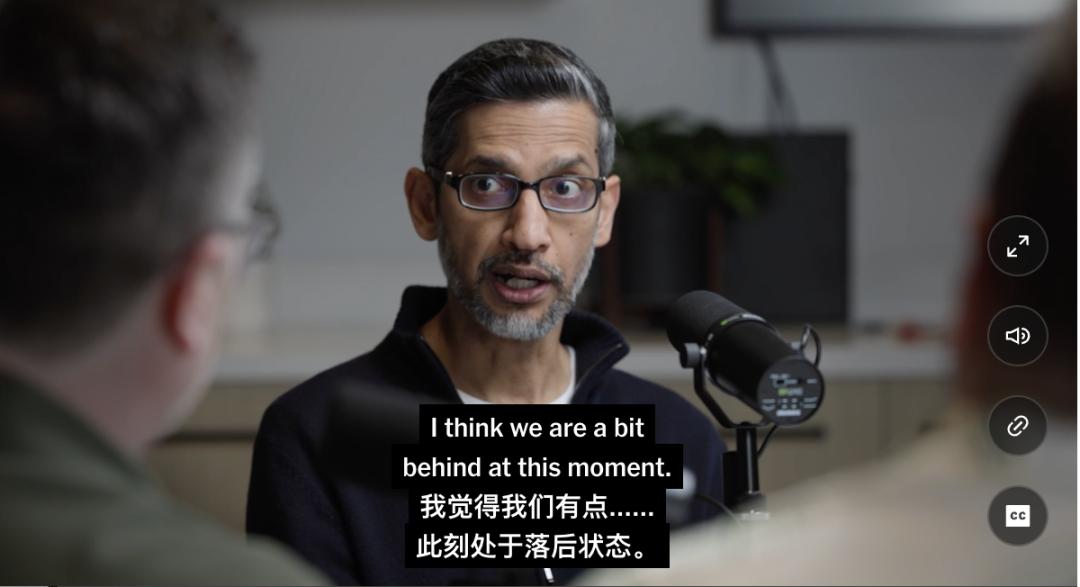
(Gemini: How come this is coming from my own boss!)
Well, just after Google I/O ended -
Gemini 3.5 Flash, Gemini Omini, and Gemini Spark, a whole set of new AI products, were just introduced.
Right after that, in the latest interview on The New York Times' tech podcast, Pichai responded to several of the most pressing questions in great detail.
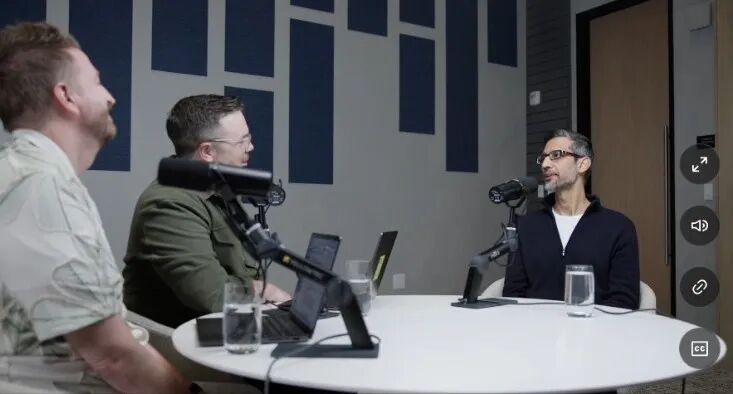
He talked at length about the capabilities of our own Gemini and the AI anxiety, laying it all out and being very honest:
In the field of Coding Agent, Google is not at the forefront.
To be completely honest, the progress in the past year or two makes me feel that AGI might be closer than we previously thought.
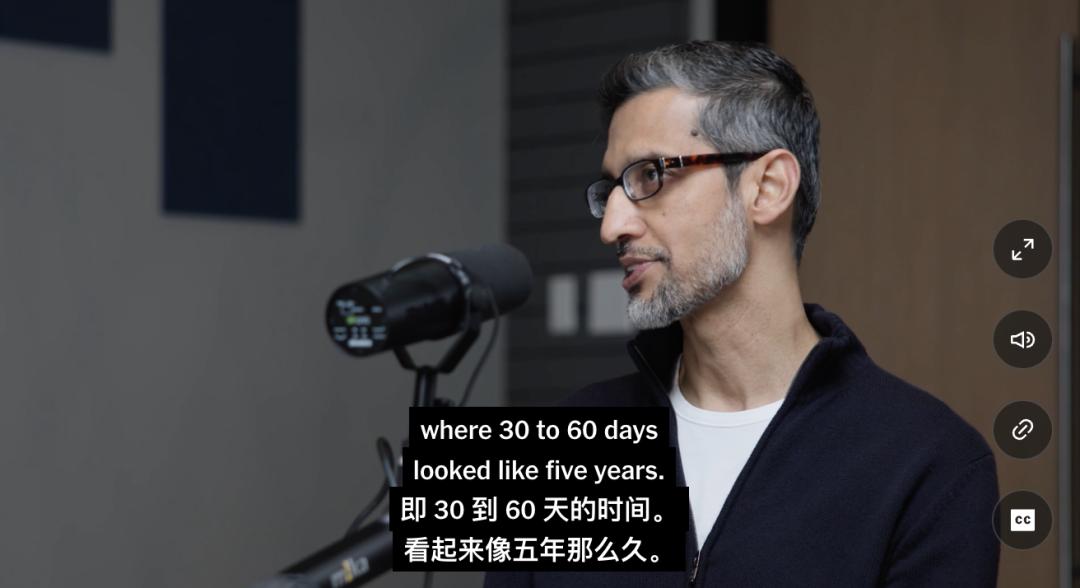
The changes in the AI circle are incredibly fast now! The changes that occur in just 30 to 60 days would have taken 5 years to see in the past.
People's fear of AI is not just unfounded worry because jobs, incomes, and future lives will indeed be rewritten.
...
The following is a transcript of the key points of this podcast. It has been selected and organized around the core ideas, and some text has been moderately edited without changing the original meaning.
Pichai Admits: Gemini Lags Behind in Coding
Q: The last time you were on the show was in 2023 when Bard had just been launched. At that time, people thought Google was still catching up in AI. How do you see Google's position in this AI race now?
Pichai: This question takes me back. Now that I think about it, three years ago seems like a long time ago.
To be honest, the technological progress in these years has been really astonishing.
Of course, Google has also been moving forward, but the industry is changing so fast. We are at the forefront in some areas, but in some other areas, we haven't fully caught up.
Actually, if you look at the overall capabilities in text, multimodality, voice, audio, and reasoning, I think we are still quite strong.
However, when it comes to intelligent agent programming with tool invocation, instruction following, and long - term tasks that require a long time and many steps, I think we are indeed a bit behind. (doge)
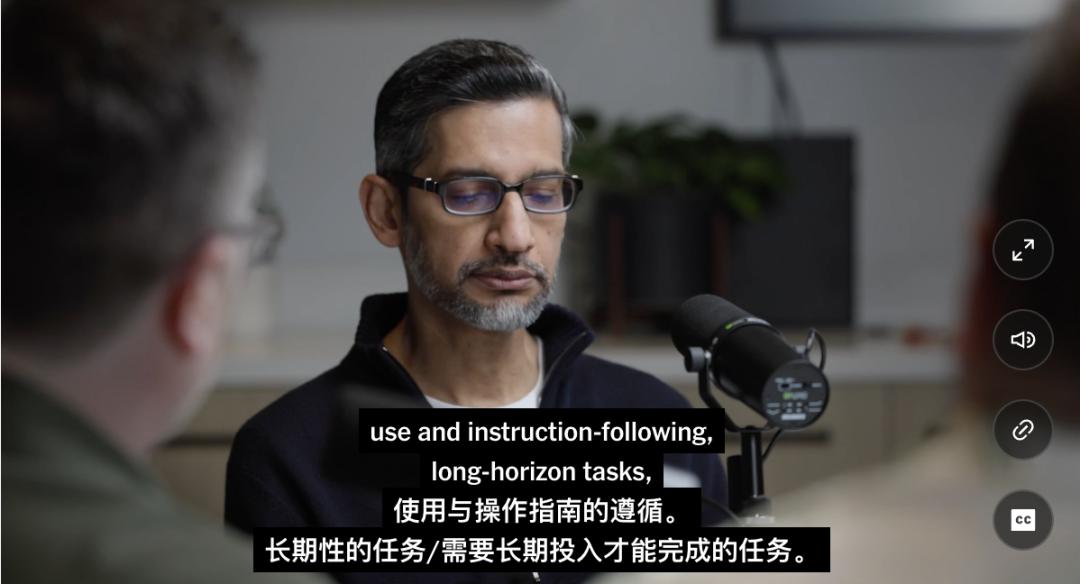
Of course, we are catching up, but the pace in this field is extremely fast.
Each top - level laboratory has its own training cycle, and the time points may not be exactly aligned. Maybe three months ago, everyone thought they were leading and no one could catch up, but the situation might change soon.
This is what happens when you are at the forefront.
I think Google is the only major company that is truly at the forefront. Of course, there are several startups making rapid progress, but Google has been investing in this for many years.
For us, Gemini 3.5 Flash is indeed a significant step forward. It fills in some of the previous shortcomings. A model can only perform better when it is truly used in the real world and then iterated based on user feedback.
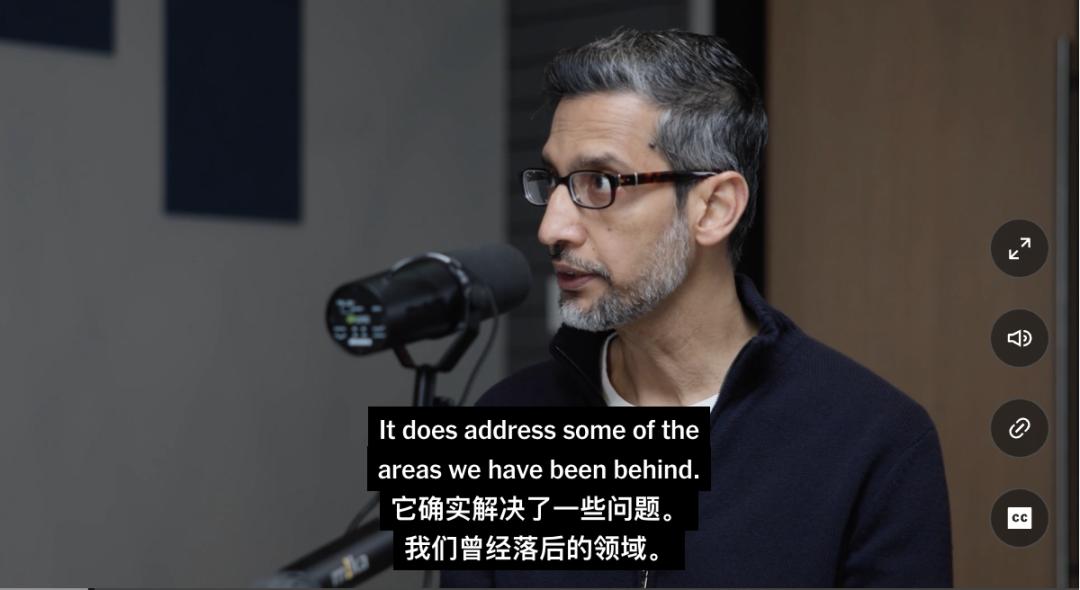
Especially in the field of coding, real - world usage data is crucial.
In the past, we might not have had a product entry point that directly reached developers like Claude Code, nor did we have the high - frequency usage scenarios that Anthropic obtained through Cursor.
So Antigravity 2.0 is very important to us. It has been used within Google for some time, and I also mentioned it at Google I/O -
The internal token usage has been growing extremely rapidly. I've never seen such a situation at Google before: it doubles every week, and people are really using the model for work.
Q: It sounds like if there is an area where you think Google hasn't fully reached the forefront, it's coding, right?
Pichai: Actually, programming plays a crucial role in everything we do.
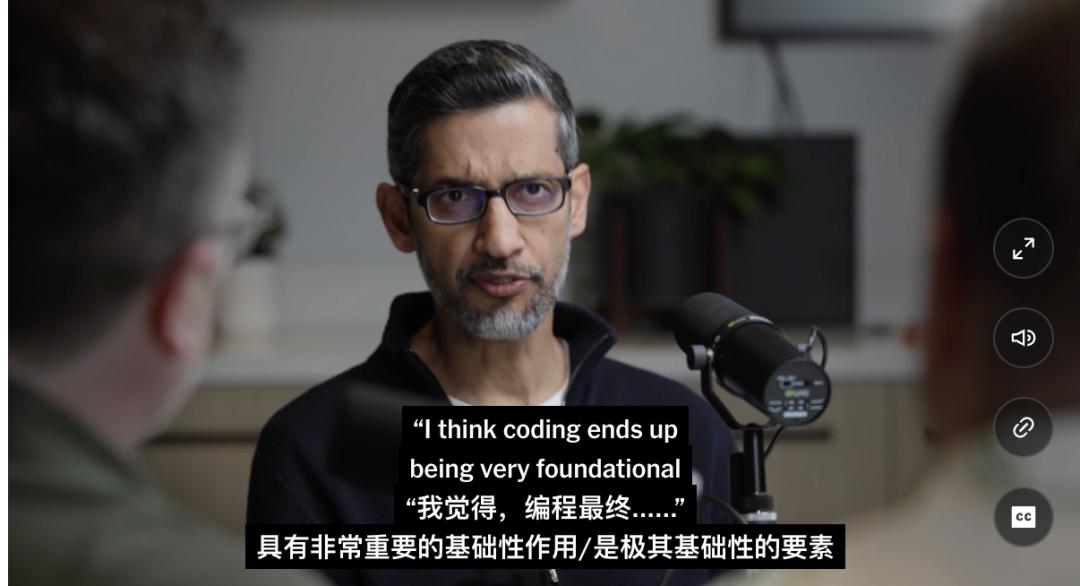
I think this is an area worth exploring in depth. In some aspects of programming, we have achieved good results.
However, for long - term tasks that require senior developers to handle complex codebases, we still have a lot of room for improvement. We are well aware of this and are working hard to make progress.
Just Released: Gemini 3.5 Flash, Google is Still Catching Up in Coding
Q: Gemini 3.5 Flash was just released one day ago. Normally, it takes a few days for people to really test a new model thoroughly.
However, we have also received some feedback on the price and product quality. I'm curious about your initial evaluation of this product.
Pichai: We definitely need a day or two to stabilize it.
This is a new model and a step forward in a new direction. It has indeed brought some progress, but there may also be some regressions. However, we can quickly address these issues through post - training.
I think the flaws and behaviors we are currently seeing are relatively easy to fix.
Additionally, at the Google I/O conference, we released a lot of things in one day.
So, to avoid service interruptions, we temporarily tightened some usage restrictions, but you will soon see an improvement in this regard.
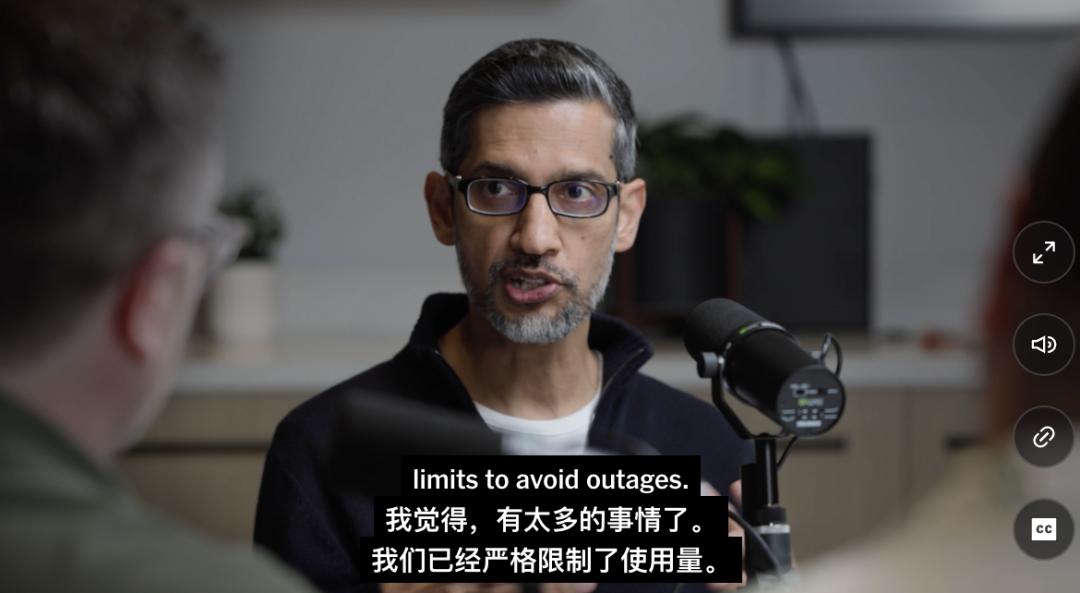
I understand that people will be frustrated when they encounter restrictions, and I would feel the same way. But we will solve these problems quickly.
Q: Some AI companies have been successful because they are very focused.
Everyone knows that Anthropic and OpenAI have invested heavily in coding. OpenAI was criticized last year for spreading itself too thin, but now it has tightened its focus.
Do you think Google is focused enough on coding? Or are you spreading your resources, time, and attention across too many directions?
Pichai: I think everyone can see that the coding field has reached a turning point, so everyone is responding to this change.
We have definitely made a significant investment in this direction. I don't think it's a matter of focus. Google is a large company with sufficient scale, so we can focus on multiple important directions simultaneously.
For me, this is not a fundamental problem. The key is that we are making progress and will continue to do so.
In this field, the changes in 30 to 60 days seem like 5 years in the past. That's how fast it is.
The Biggest Overhaul of Search in 25 Years, but Google is Still Hesitant to Fully Switch to AI
Q: Another change that has attracted a lot of attention this week is the modification you made to the Google search bar and the Google entry. This can be said to be the biggest change in 25 years.
Many people are speculating that one day the classic web search interface will disappear, and the AI Mode will become the default entry. Do you think that day will come? Will Google one day just make a clean break and fully switch to the AI Mode?
Pichai: I think it's very important to let users move forward with the product while ensuring that the product meets their expectations.
I don't want to get too far ahead of users' needs.
From our past changes, users' feedback has been positive, which can be clearly seen from the long - term product indicators.
But users want fast search. People use search to access the existing information and content on the Internet, which is very important to us. So you will see that we will continue to promote product evolution, but in a more paced way.
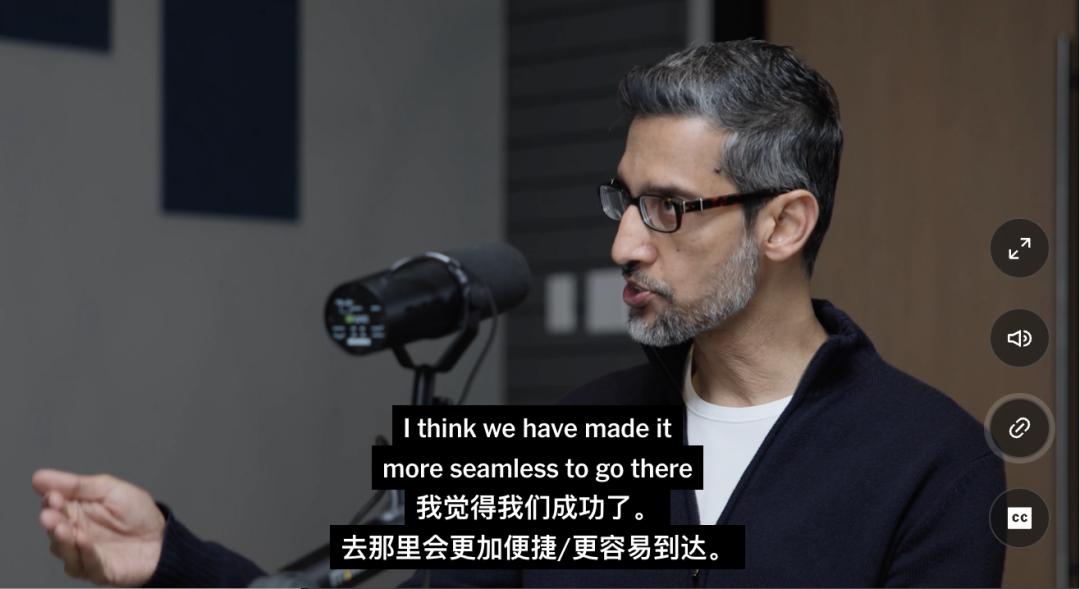
We didn't have the AI Mode a year ago, but now many people are experiencing it, and we have made the path to enter the AI Mode smoother than before.
This is a continuous evolution process, and information sources and links will always be a part of it.
Q: Kevin told me on the way that he has hardly done traditional Google searches in the past year and has almost always used AI search.
When you hear this, do you think: Great, this is the kind of user I want, or do you feel a bit uneasy? After all, the traditional search advertising business is very profitable for Google.
Pichai: In the AI Mode and the Agentic Mode, these technologies can do much more for users than they could ten years ago.
The commercial value ultimately depends on the total value you create for users. As time goes by, the value we provide to users will increase, and there will be more competition and more choices.
So I believe that a suitable business model combining subscriptions and advertising will still exist.
Adam Smith's rules still hold in this new world.
The Public Fears AI, Pichai Admits: This Anxiety is Justified
Q: Let's talk about the public's view of AI.
A survey by The New York Times and Siena this week showed that about 16% of respondents think AI is generally a good thing, and 35% think it's generally a bad thing. How do you view this current backlash against AI? How much ability do you think Google has to change the public's view?
Pichai: AI is now regarded by many as the most important technology that humanity will face next.
It's developing so fast that it's actually not easy for humans to digest such a big change all at once... So it's normal for people to be anxious.
It's natural for people to feel uneasy in the face of such a major technological change. Even some less complex technological changes in the past have made people anxious, not to mention this time, when the scope of influence and the scale of change are truly unprecedented.
From the perspective of the entire industry, what we can do is to continue to improve the technology and also keep showing people what practical benefits AI can bring. This is what we can work on.
At the same time, as the investment in infrastructure is increasing, we also need to figure out how to use these investments more effectively and how to truly turn them into value.
But in the end, what people are worried about is not just the technology itself.
The reality is that many people are worried about whether their jobs, incomes, and future lives will be affected. There are also many discussions outside, such as whether jobs will be completely changed and whether some positions will disappear.
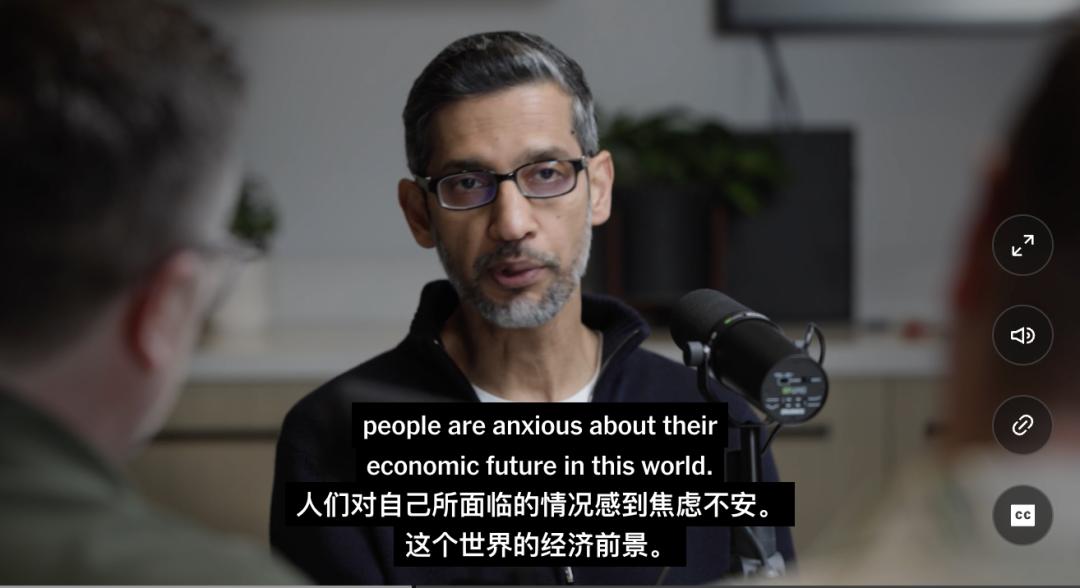
Personally, I think the future probably won't be as bad as some extremely pessimistic predictions.
The current discussions around AI are actually a healthy thing. Given the current development speed of AI, it's reasonable for people to be worried, and we should really take it seriously.
AI Will Rewrite Jobs, but Pichai Thinks Young People Still Have Opportunities
Q: You're going to give a graduation speech at Stanford next month. You've probably heard that there have been quite a few graduation speakers recently. How do you plan to talk to the graduates about AI?
Pichai: Every technological advancement drives the world forward.
In a way, these graduates will be part of driving this progress and also part of dealing with the impact of technology.
I've always been very optimistic about the next generation. The world is always worried about the next generation, but the next generation always rises to the challenge and builds a better world. I think it's the same now. My goal is to share my experience with them.
Q: If you were talking to a newly graduated young person, how would you convince them that their economic future is still worth being optimistic about?
Pichai: The most basic thing is that in the future, each of us will have a new ability, and we may suddenly be able to do many things that we couldn't do before.
Think about when spreadsheets first