Interview with JIANG Gonglüe of VITURE: What should an XR glasses look like?
In the past decade, the XR (Extended Reality) industry has been trapped in a strange narrative.
While practitioners were shouting about the grand vision of the "next - generation computing platform" and the capital market was making crazy bets during the metaverse craze, when it came to the consumer end, the industry has never been able to shake off the fate of being a geek toy.
From the dismal exit of Google Glass to the setbacks of numerous VR/AR manufacturers, the XR industry has finally entered an unprecedented period of calm after all the ups and downs.
The hardship of the industry lies in the fact that although everyone knows the ultimate technological outcome, the path to reach it is full of thorns. Caught in various "impossible triangles", the industry has been moving forward in a meandering way without a consensus.
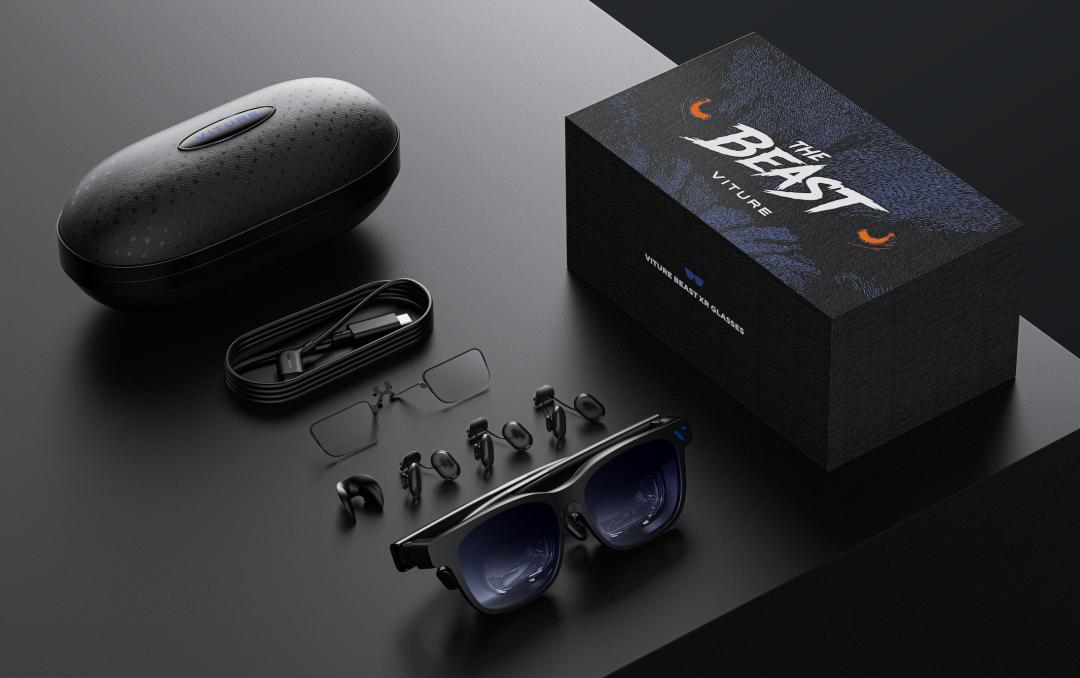
In the rather dull industry atmosphere, XR manufacturer VITURE recently launched a new product - VITURE Beast. As an "invisible champion" that previously focused on the overseas gaming market and rarely made a sound, VITURE's move to target the Chinese market and gradually move beyond the gaming narrative has naturally attracted a lot of attention in the industry.
Jiang Gonglue, the founder and CEO of VITURE, said bluntly at the press conference that this product is not a simple upgrade but a "leap - forward" product that integrates three years of R & D achievements.
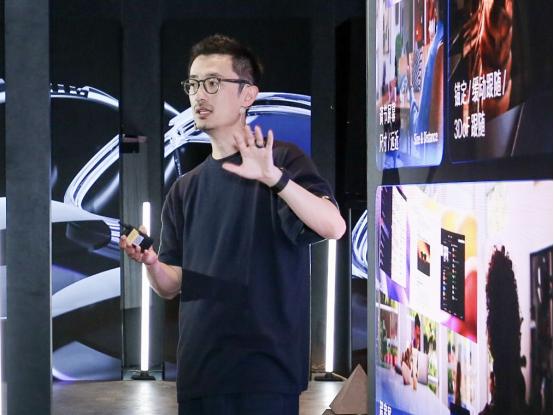
The focus of industry attention is that, unlike other players, VITURE Beast doesn't blindly pile up complex functions and cutting - edge concepts. Instead, it focuses on the three basic pain points of experience: "big enough, bright enough, and responsive enough".
Actually, through the VITURE Beast, we may get a glimpse of the survival philosophy of the practical school in the current XR industry. When the technology has not yet reached its real breakthrough point, instead of "drawing cakes to satisfy hunger", it's better to return to the first - principles and face the real pain points of users.
"We are trying to redefine what an XR glasses should be like," Jiang Gonglue said.
Return to the First - Principles of XR Glasses
In the XR industry, there has always been a strange cycle. Manufacturers are indulged in parameter competition, comparing optics and computing power, but forget what users need in the first second of wearing the glasses while showing off their skills.
This kind of self - indulgence tends to lock the industry's imagination in a narrow closed - loop. Indeed, the core users of XR today are still highly concentrated in the gaming and movie - watching groups.
VITURE's solution is just the opposite. Jiang Gonglue is a "sober person" in the industry. He doesn't shy away from pointing out the crux: "If it can't even be regarded as a qualified screen, how can it carry the future? If you just follow others' parameters, you'll always be a follower."
Refusing to participate in the arms race, this time, he set his sights on the neglected "massive blue ocean" - those "digital nomads" with Steam Decks in hand and those business travelers who long for a private cinema during their trips.
This sobriety runs through the entire R & D process of VITURE Beast. Therefore, the team returned to the first - principles and made a restrained subtraction. Instead of talking about grand dreams, it's better to honestly make a virtual giant screen that can be easily taken out. In the past three years, VITURE's "Ph.D. team" faced the dead - end of experience head - on and achieved three major core breakthroughs of "big enough, bright enough, and responsive enough", meeting users' most basic expectations for a good screen.
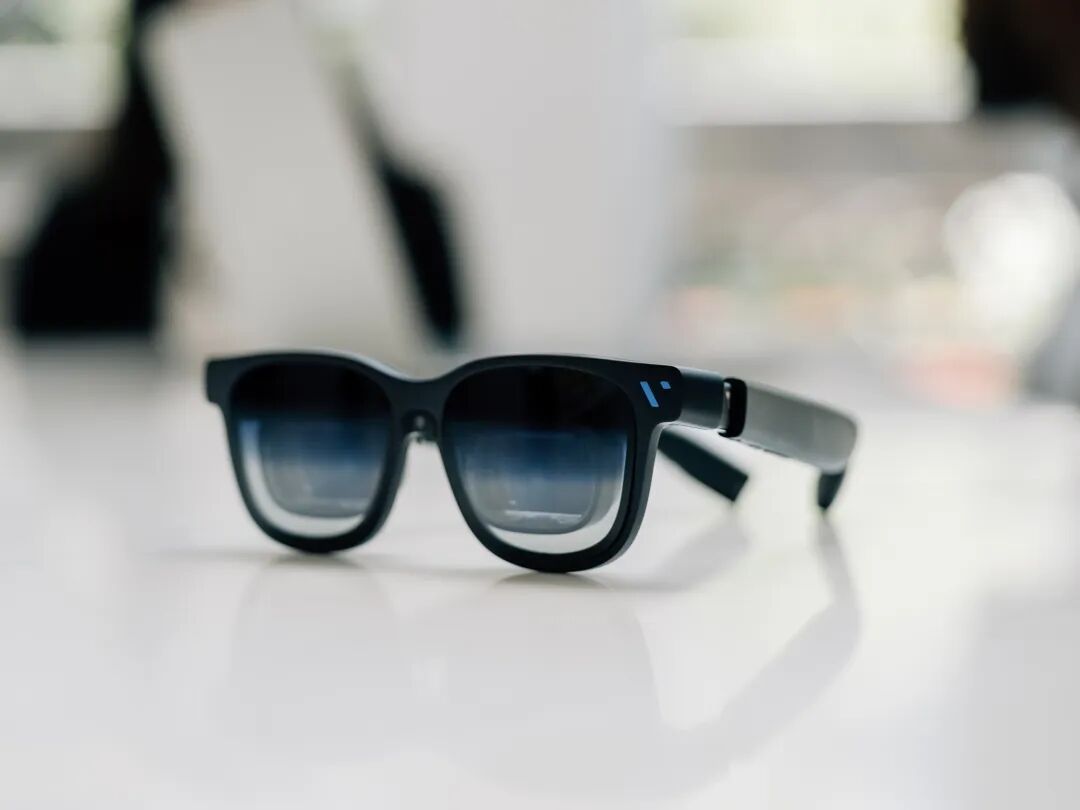
First of all, "big enough" determines whether XR glasses can become a qualified and immersive screen, which is the prerequisite for XR to replace traditional screens.
Currently, a commonly used optical solution in the market is BirdBath (BB solution). Although it has good color and low cost, limited by physical limitations, its field of view (FOV) is only about 50°. For users, the picture seen through the glasses is like holding an iPad at arm's length.
To break through this physical constraint, VITURE didn't choose to patch up the existing BB solution but directly changed the track and adopted a new Prism waveguide optical solution, increasing the FOV to 58°, breaking the long - standing FOV curse in the industry and achieving the largest FOV among current consumer - grade XR glasses.
How to understand a 58° FOV? It's equivalent to watching an IMAX screen less than four meters in front of the user. This means that XR glasses have truly kicked off the immersive experience.
"Bright enough" is another Achilles' heel of XR glasses in the past, determining whether XR glasses can gain the basis for scene liberation.
In the past, the in - eye brightness of traditional waveguide XR glasses was generally less than 500 nits. Once users walked out of a dark room and into the window or sunlight, the screen would instantly become a blurry gray - white mess.
This time, VITURE Beast directly increased the parameter to 1250 nits, which is equivalent to the daily screen brightness of an iPhone 15 Pro Max.
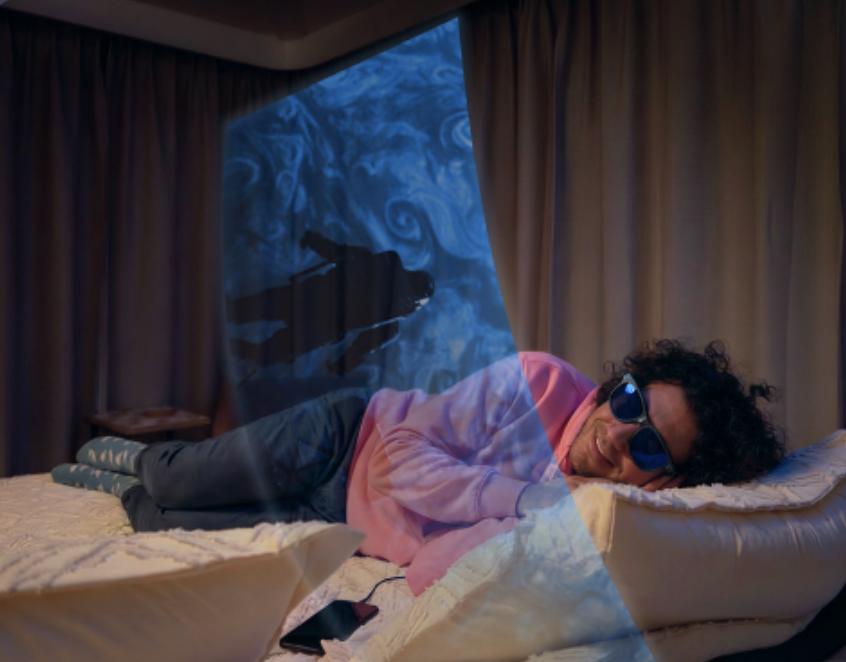
However, this is not a simple parameter arms race. Behind it is actually a set of complex systematic techniques. Jiang Gonglue knows well that simply increasing the backlight of the screen will only increase power consumption and heat generation. Therefore, VITURE Beast not only was the first to adopt Sony's latest 0.68 - inch Micro - OLED screen but also developed a real - time rendering compensation algorithm.
This algorithm is like a strict optical butler, capable of calculating the brightness requirements of each pixel in real - time. Through dynamic compensation, it makes the brightness of the entire picture more even and reduces the light loss from the optical engine to the human eye to the minimum. "The essence of the highest brightness is to make the optical system the most efficient," Jiang Gonglue said sharply.
If "big enough" and "bright enough" can be solved by relying on the supply chain and the hard work of the team, then "responsive enough" tests the manufacturer's underlying architecture ability, which is also the basis for spatial computing of XR glasses.
In the past, if XR glasses wanted to anchor the picture in a fixed area, they usually had to rely on an external neck ring or a mobile app to call the phone's gyroscope. This strong dependence not only increased the user's threshold of use but also brought non - negligible transmission delay. That is to say, when users turned their heads, the virtual screen often lagged behind, which was also one of the essential reasons why XR glasses were always criticized for causing dizziness in the past.
To completely cure this stubborn problem, VITURE's team reconstructed the underlying architecture and inserted a chip like a "mini - brain" inside the glasses, enabling it to have native 3DoF (three - degree - of - freedom) capabilities.
This dimensionality - reduction strike in architecture has brought a qualitative change in experience. In actual experience, no matter how violently users shake their heads, the virtual screen is as stable as a physical display firmly fixed in the air.
This native spatial computing ability that doesn't rely on external devices also enables VITURE Beast to get rid of the long - standing dilemma of being an "accessory to the mobile phone" and become a computing terminal capable of independently handling complex spatial scenarios.
In the past, in order to break through the "triple gates" of large FOV, high brightness, and strong interaction, XR glasses manufacturers either focused on technical parameters but ignored other experiences or simply made rough parameter cuts. VITURE Beast chose a more direct and difficult path - to keep working hard within the existing technical framework and capabilities to squeeze out the last bit of potential.
Only by truly solving these pain points can XR glasses gradually shed their rough prototype appearance in the laboratory and truly become a mature consumer electronic product, approaching the "right look" in users' minds - a normal screen that can be taken out and fixed in the air.
"VITURE's DNA is the first - principles. We define the product logic from the perspective of users," Jiang Gonglue said after the press conference.
XR Glasses Out of the Dark Room
The breakthrough and innovation in hardware parameters are just the ticket to the future, but far from the end.
All along, the mismatch between technology and demand is the essence of the XR industry being trapped in the quagmire of stock competition. For a long time, manufacturers have tried to make XR glasses a substitute for home entertainment. However, XR glasses that can't get out of the dark room can only address "itchy points" rather than rigid demands and face the risk of competing with TVs and tablets for usage time. In the stock game, the XR glasses industry is stuck in a dead - end of high premium and low frequency of use.
Jiang Gonglue knows well that technology itself is not the goal but a means to serve real scenarios. If XR glasses can't provide irreplaceable value in daily high - frequency scenarios, then no matter how large the FOV or how high the resolution is, they are just expensive electronic waste.
Based on a clear understanding of the industry's dead - end, when defining the VITURE Beast product, Jiang Gonglue made a crucial decision: instead of looking for a new continent on the old map, he must jump out of the red ocean of entertainment and gaming and tackle the hard nut of the office scenario.
"VITURE Beast is a starting point because it not only performs better in gaming and movie - watching but also excels in office work. In China, the group with consumption ability has a very strong demand for office work and business trips," he observed. In his view, the office scenario is the core for breaking through the circle. Compared with overseas, the number of office workers in China is far larger than that of gamers.
Three years ago, this strategic prediction has now hit the center of the current workplace ecosystem. With the wave of AI sweeping across, a new way of working - "Vibe Coding" - is rapidly becoming popular in the geek circle.
Jiang Gonglue observed that during Vibe Coding, programmers no longer just stare at lines of code but need to monitor the running status of multiple AI agents simultaneously. This multi - threaded work mode puts an almost greedy demand on screen space. "Many developers told me that their current pain point is not the lack of computing power but the lack of desktop space."
Jiang Gonglue described such a typical scenario: When running AI scripts, programmers who need to monitor the process all the time either have to carry a heavy secondary screen on business trips or stare at the small screen of a laptop cramped in a coffee shop.
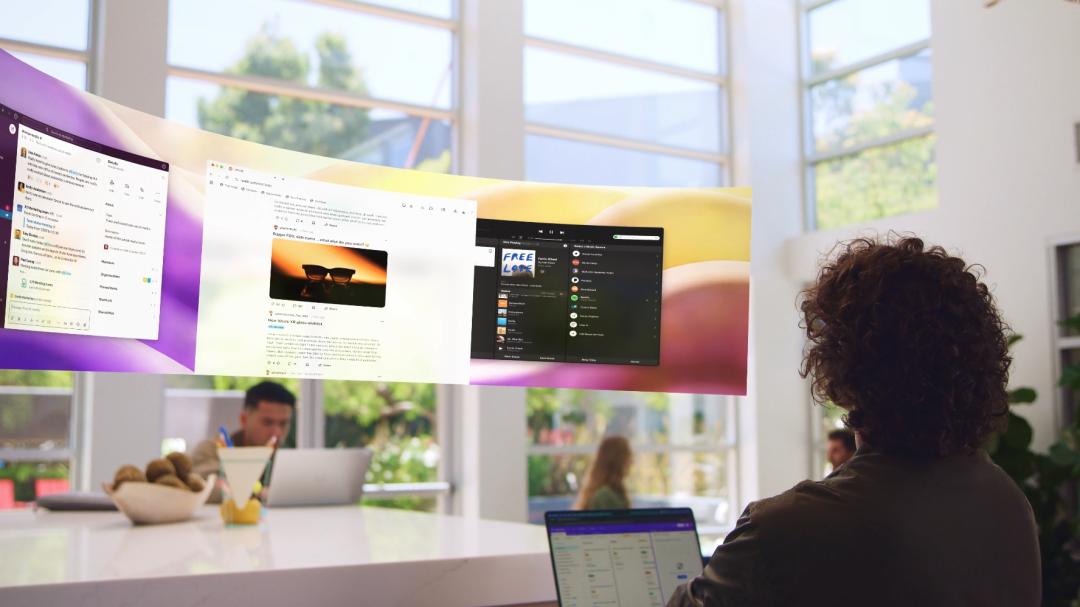
With VITURE Beast, this 174 - inch virtual screen becomes a secondary screen. Users can work normally on the main display while glimpsing the running status of AI in VITURE Beast from the corner of their eyes. They can even use the microphone of the glasses for voice input, completely freeing their hands.
This precise targeting of specific high - frequency pain points has also enabled VITURE Beast to penetrate the business group with strict requirements for productivity tools.
Actually, putting a giant screen in your pocket essentially solves the contradiction between human visual bandwidth and physical display area. This not only precisely hits the pain points of programmers but also reveals a broader truth: in the era of mobile office, the screen is no longer a fixed monitor on the workstation but a production resource that needs to move with people.
Based on this understanding, VITURE Beast has naturally extended the battlefield from the geeks' study to the backpacks of business travelers.
For frequent travelers on high - speed trains and flights, VITURE Beast also solves the ultimate pain point of mobile office. In the past, limited by the interference of neighboring seats and the angle of the sunshade, it was difficult to have a high - quality entertainment or office experience in the carriage. Now, users no longer need to make strenuous adjustments. Just put on the glasses, and they can enjoy an IMAX screen in the bumpy carriage, turning the originally boring fragmented time into an efficient productivity window.
Interestingly, in addition to Vibe Coding and mobile office, Jiang Gonglue also found that users have spontaneously created a large number of long - tail scenarios.
For example, some drone pilots use it as a real - time monitoring screen for the high - altitude view, avoiding the embarrassment of not being able to see the phone screen clearly under direct sunlight. Some maintenance engineers use it as a hands - free 3D maintenance manual, with the guiding steps right in front of their eyes while operating the equipment with both hands. Some geeks even connect it to a Raspberry Pi and a split keyboard and set up an outdoor mobile workstation directly on a park bench.
In Jiang Gonglue's view, letting XR out of the dark room is not only a verification of product definition but also a correction of business logic. Only in this way can XR glasses change from an "optional entertainment accessory in the bag" to an indispensable portable office equipment, truly breaking through the ceiling of usage frequency and moving from the stock era to the incremental era.
This is not only VITURE's strategy for breaking through the circle but also a reference path for the entire XR industry to get out of the winter.
Conclusion: Realize the "Future Device" in Jobs' Mind 21 Years Ago
Actually, from the product definition and business logic definition of VITURE Beast, the image of this always - low - key company and its founder also comes into view.
In many public interviews, Jiang Gonglue often maintains the classic geek image - a textured but minimalist black T - shirt and a black watch.
As the youngest Chinese supervisor engineer at Google and then an entrepreneur, his indomitable spirit has been engraved in his blood. Therefore, when expressing industry views, he is direct, sharp, and goes against common sense, hardly saying any superficial empty words. When immersed in the product, he appears simple and down - to - earth, full of the "Virgo" sharpness and rationality.
He shared a detail about product definition:
In the past, most product managers in teams usually first based on supply - chain solutions and technology, then made products, and finally found market demand. This is the classic solution bias. He prefers to stand on the "opposite side" of the product first - presuppose that this product is "useless". This also forces the team to answer a soul - searching question: "Since users already have mobile phones, computers, tablets, and TVs, why do they need to wear a pair of XR glasses?"
The difference between the two concepts is that when a person holds a hammer in hand, everything looks like a nail. But if you first assume that the hammer in hand is a "useless burden", you must find the real unique solution for this product, otherwise, the product will become completely meaningless.
In terms of specific technology selection, this way of thinking is manifested in the abandonment of "absolute parameters". Jiang Gonglue never pursues the single "best" but is committed to finding the intersection area between the point of increasing marginal revenue and the point