Aktienanleger haben 230 Milliarden Dollar als „Nachprüfungsgebühr“ für Apple AI gezahlt
A Reexamination, $230 Billion
Apple CEO Tim Cook took the stage at the Apple Park for the last time as CEO and delivered the keynote address at WWDC 2026. Three months later, John Ternus, the head of hardware development, will replace him and lead Apple into the more challenging era of artificial intelligence.
The farewell performance on June 8 was supposed to be a crowning achievement. In fact, however, it looked more like a "reexamination." The "new AI" that was promised at WWDC 2024 is finally here and is called "Siri AI." But as the live demo showed, it can only answer questions, search for information, send messages, and set reminders - for users who are used to AI tools, this is no surprise at all. And when it comes to agent capabilities, there is an even greater gap.
After the press conference, the Apple stock price fell steadily. By the end of the trading day, the market value had shrunk by more than $230 billion compared to the daily high.
In the business field, this was a barely passed "reexamination."
Let's take a look at the situation two years ago.
In June 2024, Apple presented "Apple Intelligence" with great fanfare at WWDC and promised that Siri would be able to understand the screen content, operate across different apps, and understand natural language. This was Apple's first official response to the AI wave triggered by ChatGPT, and the capital market was excited for a moment. The Apple stock price reached a new high that summer.
But the promises quickly turned into delays.
In the fall of 2024, the new Siri did not launch with iOS 18. In 2025, the release was postponed again due to "internal technical problems." In the meantime, OpenAI released GPT - 4o, Google introduced Gemini 1.5 Pro, and Anthropic's Claude 3 outperformed all others in terms of code and inference capabilities. However, Apple's intelligent assistant often couldn't even set an accurate alarm.
Even more embarrassing were the internal data. In March 2025, Apple managers admitted in an internal meeting that the execution rate of the new Siri functions was only between 60% and 80%. This means that one in every five interaction attempts fails. These figures were rated as "ugly and embarrassing" in the tech sector.
In January 2026, Apple signed a cooperation agreement with Google and integrated the Gemini model into Siri - as if an excellent student had to borrow the notes of his classmate.
When Apple's Senior Vice President Craig Federighi said at WWDC 2026, "We believe that privacy in AI should not be compromised," he had to explain at the same time why your Siri queries are sent to Google's servers. Apple gave this compromise a nice name: Private Cloud Compute (Private Cloud - Computing). In essence, Apple has admitted that its self - developed AI model is not capable of independently supporting the capabilities of a modern intelligent assistant.
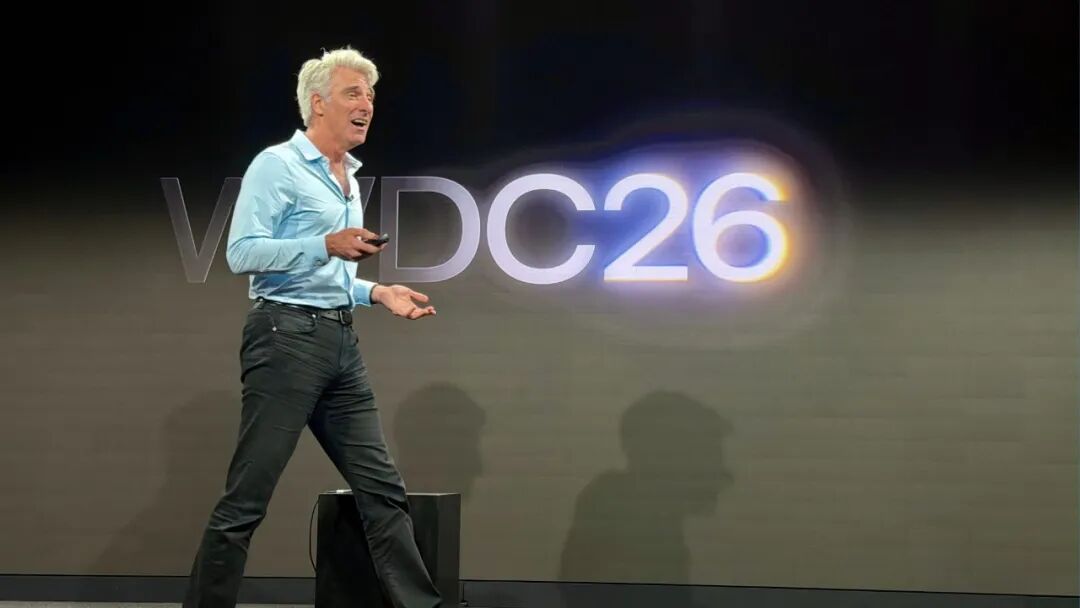
Moreover, the new functions presented at WWDC 2026 are nothing new for many users.
Siri now has its own app, supports interaction in text and voice modes, and stores the conversation history. ChatGPT could do this as early as 2022. "Visual Intelligence" can recognize objects through the camera, scan business cards, and read nutritional information. Google Lens has been available since 2017.
The Image Playground has been improved and now supports the generation of higher - quality images and the "Change Description" function. Users of Midjourney and Stable Diffusion have been using these functions for three years.
As for the addition of AI tag management in Safari, AI response suggestions in Messages, and the ability to read the email context during a call in the Phone app, these functions have existed on Android and third - party apps for years. In addition, Apple has admitted that some functions of Apple Intelligence (e.g., image generation) have limitations in use. Due to regulatory requirements, users from the EU and China are excluded from this "AI update."
The Cost of the Closed - door Philosophy
After WWDC 2026, the opinions of the tech media were surprisingly unanimous.
Mashable noted a detail in its live reporting: When Apple's Senior Vice President for Software Development Craig Federighi announced that Siri AI would appear as a "beta version" later this year, the most liked comment in the comment section was: So... that's it? Sharper criticism came from Mark Gurman of Bloomberg. Before the press conference, he wrote on X that Apple would probably talk about "privacy and security features," which implied that one should not expect any real AI breakthroughs.
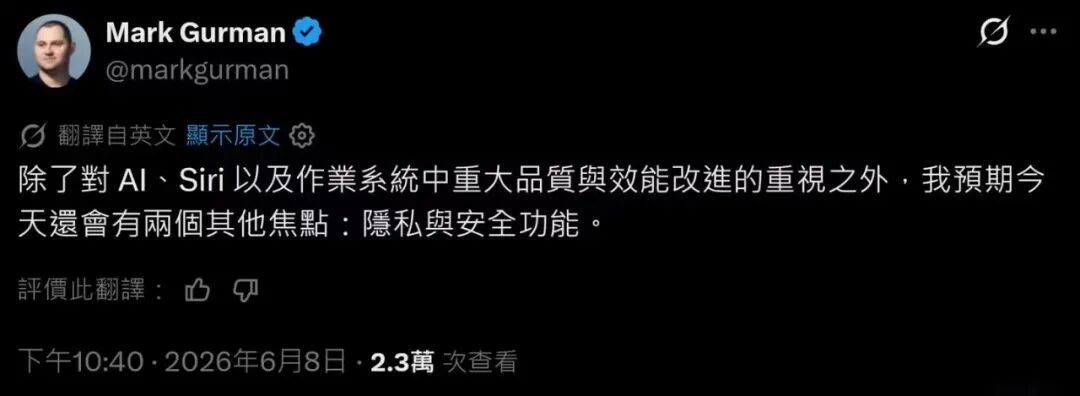
These reactions point to a central problem: Apple has lost the ability to "define the standards" in the era of artificial intelligence.
This was its core competence in the era of smartphones. In the past twenty years, Apple has defined what a smartphone (iPhone), a tablet computer (iPad), and a smartwatch (Apple Watch) should look like. It didn't have to be the first to market, but it could always re - define the industry standards.
In the AI industry, however, it always plays the role of a follower. In the capital market, this is reflected in the fact that although its core businesses (iPhone, Mac, Services) perform strongly, the stock prices were not satisfactory in 2025. Since 2026, as investors have become increasingly interested in companies that already have significant AI revenues, Apple's crisis has become even more apparent.
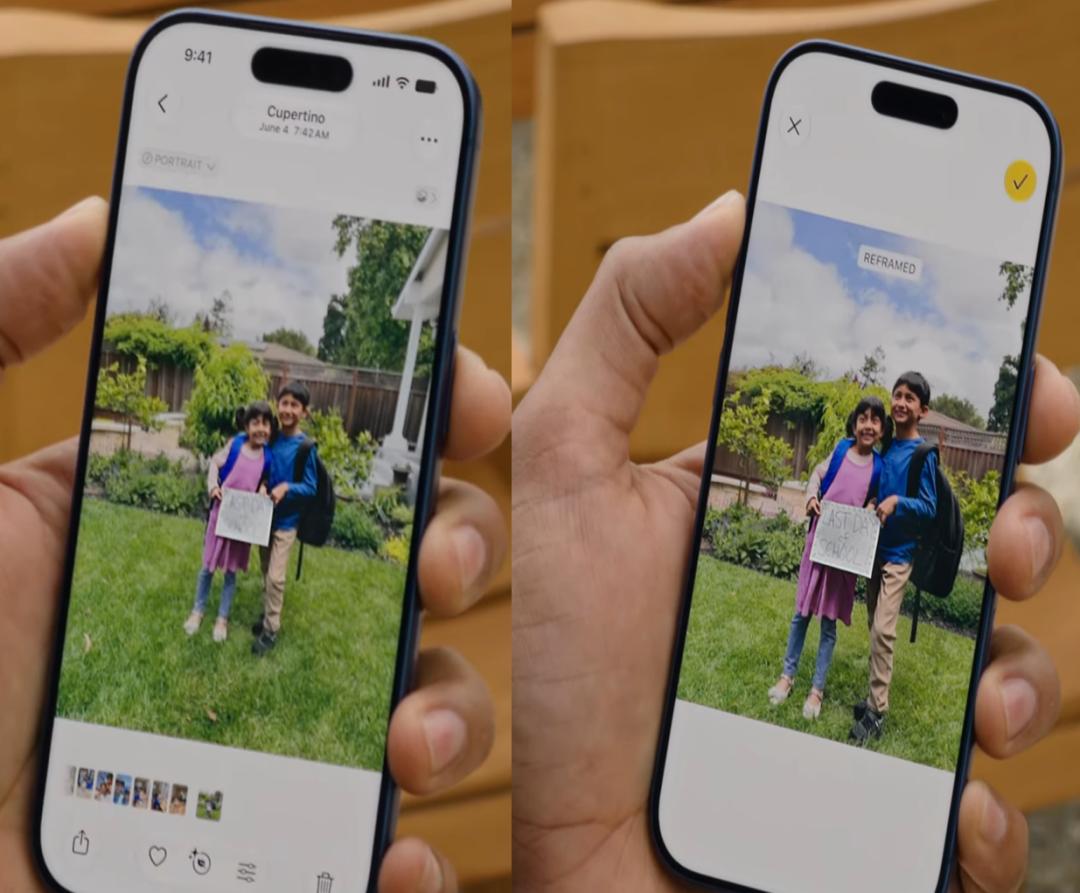
An Apple engineer demonstrates the function of AI for customizing and generating new photos live
Apple has considerable reserves. In addition to its technological ability and financial reserves, its most competitive asset is the world's largest device ecosystem - no other AI company has direct access to 2.35 billion active devices worldwide. Moreover, Apple's promise of privacy has a high level of awareness among users, which can effectively eliminate the concerns of many users regarding the security of AI.
However, this is like a double - edged sword.
The product logic of "Closed - door is elegance" was Apple's key to success in the era of smartphones. From Macintosh to iPhone, from iOS to the App Store, Apple has created a first - class user experience by controlling every stage of hardware, software, and services.
This closed - door policy was a protective wall in the era of the mobile Internet, but in the era of AI, it is a prison. The competitiveness of AI models is directly related to the amount of data, and Apple's privacy policy severely restricts the internal team's access to user data. Researchers can only train models with third - party datasets and synthetic data - this is like a teenager who only drinks water and eats bread every day, which will inevitably lead to malnutrition and stunted development.
When OpenAI released ChatGPT in 2022, it didn't have to worry about device compatibility, didn't have to worry about regional differences in privacy policies, and didn't have to wait for a local computing architecture for billions of devices. It only needed a browser to offer users the world's latest AI capabilities. And Apple? An insider described it like this: Working on AI at Apple means getting thousands of rejections with every step. One has to fight against the "privacy police" to make progress.
In this situation, speed is inevitably sacrificed.
While competitors update their models weekly, Apple develops its functions annually. The term "AI Agent" has been on everyone's lips for a year, but Apple still only made limited progress at WWDC 2026. It allows users to book restaurants via Siri, manage appointments, and control home automation systems, but most agent functions are still in the "planned for release" state.
Changes at the Transition Point
But there are also changes. The keyword is openness.
First, Apple has humbly made friends.
The latest version of iOS allows users for the first time to freely switch between third - party AI models that have been reviewed by Apple. From Google Gemini, Anthropic Claude to DeepSeek, all can replace Apple's self - developed model to drive Siri, writing tools, and image generation.
And the relationship between Apple and Google has become even closer. Apple officially announced at WWDC 2026: To enable Siri to handle the most complex requests, we are collaborating with leading AI models in the industry. Today, we are pleased to announce that Google Gemini will be deeply integrated into Apple Intelligence.
The two companies are enemies in the smartphone market and litigants in the fields of search and advertising, but in the era of AI, they are forced to ally. This is similar to the situation in the 2000s when Microsoft invested $150 million in Apple to maintain the existence of Office for Mac.
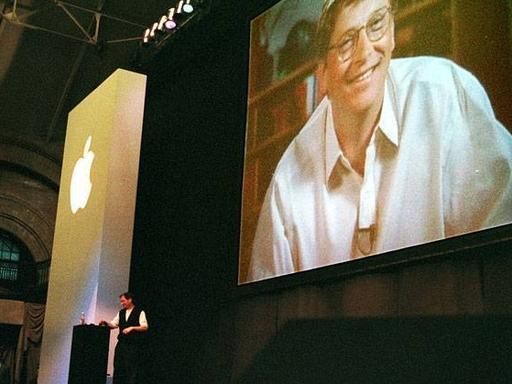
Macworld 1997, Steve Jobs on stage, Bill Gates announces the investment and Office 98 for Mac via live TV stream
Face is worthless in the face of circumstances.
Second, Apple is trying to build a more open developer ecosystem.
Specifically, this includes: The Siri Extensions API allows third - party AI models to integrate into the system - wide experience, the Core AI framework replaces the old Core ML, the Foundation Models v2 can call an edge large - scale model with three lines of Swift code, and there is a special App Store AI section, and more.
Obviously, Apple is trying to repeat the scenario of 2008. At that time, the smartphone market was still an untapped area. Developers who learned Objective - C and Apple's Human Interface Guidelines had access to the world's most powerful consumer group. In the first year after the release of the App Store, the share for developers was over $1 billion; by 2017, this figure had risen to $70 billion.
With an open ecosystem, Apple is trying to make up for its lack of innovation ability and enable developers to explore use cases that Apple itself has not clearly defined. This was the path Apple took in the last era, and now it hopes to repeat it in the AI industry.
But the difficulties are still great. From all aspects, this measure is significantly different from the active innovation in 2008 and bears the traces of a forced willingness to compromise.
For example, Apple is trying to control the entry layer of AI. According to the information announced at WWDC 2026, App Intents is the only interface through which third - party apps can be called by Siri. SiriKit has been officially abolished, and apps that have not been migrated will be invisible to AI. However, the core competitiveness of AI currently lies not in the entry layer, but in the model ability, data cycle, and update speed. If developers can directly access Google Gemini or OpenAI via Siri Extensions, Apple only controls the switch, not the power grid.
If users find that the third - party AI experience is significantly better than Apple's self - developed AI, they will bypass Siri and directly use the original apps - then Apple's entry point will be in trouble and will become an expensive middleman.
Similar risks also exist regarding Apple's dependence on Google Gemini: If the core intelligence of Siri comes from Google, why shouldn't users directly use Google Assistant or the Gemini app?
With Cook's departure, the answers to these questions have to be found by John Ternus, the new CEO. He has a background in hardware development and has led the development of the M - series chips and the Vision Pro. The choice of this successor is a signal: Apple still believes that the ultimate competitiveness of AI lies in the integration of "Chip + Device + Ecosystem."
Cook ended his tenure with an "AI reexamination," and Apple has given up its pride in self - development and begins to participate in the AI competition in a more realistic way. The cooperation with Google, the opening to third - party AI models, and the acceptance of the agent concept are late, but at least the direction seems to be right.
John Tern