How should the middle tier in the film and television industry achieve self-rescue?
In the past few years, discussions in the film and television industry have always revolved around several key terms: top-tier IPs, A-list actors, and leading platforms. At project meetings, everyone is busy chasing big IPs and assembling all-star casts, as if just gathering a handful of aces would lay the groundwork for a successful drama. On the other side, short drama companies compete on release speed, and AI teams compete on production capacity, making both ends of the industry extremely bustling.
Production companies caught in the middle have the hardest time. They do not have sufficient capital, stable platform relationships and mature IP reserves like leading firms, nor can they operate with a light load like small studios. When projects dry up, they still have to keep their teams on payroll; when payment collection is delayed, the development of the next drama cannot be put on hold.
But the industry is ultimately not a business that can be fully monopolized by a few top players. Someone has to develop scripts, organize actors, set up film crews, and professional teams are needed to collaborate on shooting and post-production. Long dramas, short dramas, medium-length dramas and even AI-generated content all rely on a large amount of specific production work.
Against the current unpredictable market landscape, all parties are starting to rediscover the "mid-tier force". This does not simply mean bringing the old medium-sized production companies back to the table, but refers to content teams that can accumulate professional capabilities, continuously develop projects, and adapt to new production methods.
They may not necessarily grow into industry giants, but they determine whether film and television production can have a richer supply of content.
Predicament
The resource allocation of the film and television industry is somewhat similar to a large-scale placement exam. Leading companies, with mature project experience, capital and platform connections, can often enter the development phase much earlier when important projects come up. Small teams, leveraging their asset-light advantages, can focus on a specific genre, a specific type of work, or seize new opportunities such as short dramas and manhua-adapted dramas to test the waters quickly.
The truly awkward group is the batch of companies caught in the middle. They have teams of a certain scale, have completed many projects, and boast decent professional capabilities, but are not strong enough to make platforms and investors line up to cooperate with them proactively.
Especially after the long drama market entered a period of adjustment, platforms have become more cautious in selecting projects, and the development cycle has lengthened, but the upfront costs that production companies have to bear have not decreased accordingly. A project may go through multiple rounds of adjustments from script incubation to official shooting. Any change in actors' schedules, investment structure, or platform demands may lead to all the upfront investment going down the drain.

The pressure on the industry can also be seen from financial reports. According to previous statistics from Guduo, among the 2026 semi-annual report samples of 20 listed companies in the film, television and entertainment industry chain, only Lingmeng Pictures and Alpha Group achieved double growth in revenue and attributable net profit. Lingmeng's performance was driven by projects such as *Reshoots* and *The Growling Season 2*, while Alpha Group was supported by its toy and other businesses.
What is more noteworthy is that AI and IP operation have almost become the new business keywords for many companies, but there is still a long way to go from strategic layout to actual revenue generation. This also explains why most companies seem to have a full pipeline of new projects, but their financial reports show no reduction in operational pressure. Because project reserves do not equal project revenue, and announced layout does not equal a formed commercial closed loop.
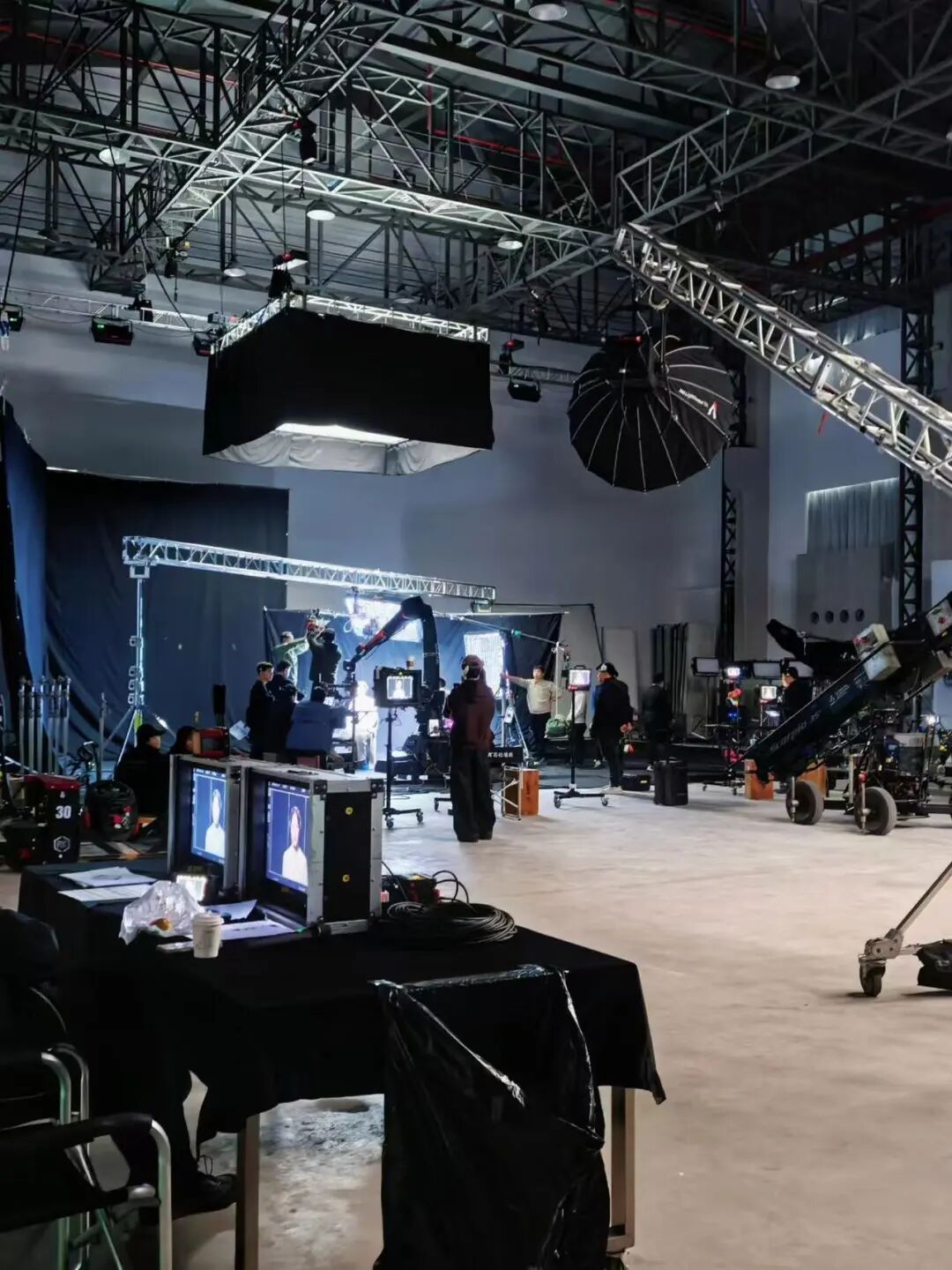
For the mid-tier companies, the pressure is more tangible. Large companies can spread risks through multi-business layout, and small teams can form temporary teams based on projects, while production companies that need to maintain personnel and development capabilities for a long time are easily stuck by cash flow problems.
Should screenwriters continue to be signed? Should the production team be retained? Should more money be invested in an ongoing project? None of these questions are easy to answer.
Netizens often say that in the film and television industry, "the era where projects outnumber people is gone", now it is more like a scenario where people are waiting for projects, projects are waiting for funds, and funds are waiting for certainty. Whether a project can be launched depends not only on how good the creative idea is, but also on whether the company has the ability to survive the long development cycle.
The core of the so-called mid-tier predicament is not that the company is not large enough, but that the past business model that relied on undertaking production contracts to maintain operation is losing its sufficient safety margin. When a company has a team and experience but no stable project sources and continuous development funds, its professional capabilities can hardly be converted into operational advantages.
Opportunities
Judging only from financial reports and project numbers, it is easy to draw a pessimistic conclusion that the mid-tier force is being eliminated by the industry. But if you shift your attention from the company's books to specific projects, you will find that the film and television industry does not no longer need the mid-tier force, but the way they participate in production is changing.

A very obvious signal is that medium-length dramas have begun to become a new content format. According to public filing information, from January to June this year, there were 175 medium-length drama filings across the country, gradually increasing from 21 in January to 44 in May. The participating filers include mature producers such as Linghe Culture, Shandong Film & TV, and Mango Pictures, as well as many production entities that have not frequently appeared in top industry discussions before.
Medium-length dramas do not mean that all companies can get new opportunities, but they do allow more teams of different sizes to try new content specifications.

For example, *The Window with a View* launched at the beginning of this year. As the first medium-length drama to obtain a distribution license, it was produced by China Media Group, broadcast on CCTV-1, and simultaneously streamed on iQiyi, Tencent Video, Youku and Mango TV, with a total of 130 million viewing times and an average single-episode viewership rating of 2.776%. *Soul Ferry · Ten Years* launched in June reached an in-platform popularity score of 8661, becoming a standout medium-length drama on iQiyi at that time.
This shows that medium-length dramas are not necessarily a downsized version of long dramas, nor just an extended version of short dramas. They have their own content space and audience demands. For production companies, changes in content formats also bring new opportunities. Medium-length dramas allow more teams to test their capabilities in script development, genre control and production management in relatively lightweight projects.
We can also see specific companies from the filing list. Beijing Tian'anma Culture Media Co., Ltd. filed multiple medium-length dramas including the *District 16* and *The Unusual Law Firm* series in May 2026; Beijing Qingmai Yinghua Culture Communication Co., Ltd. also has medium-length drama filings. It can be seen that medium-length drama development is not only participated in by traditional top players, and more project organizers are emerging in the market.
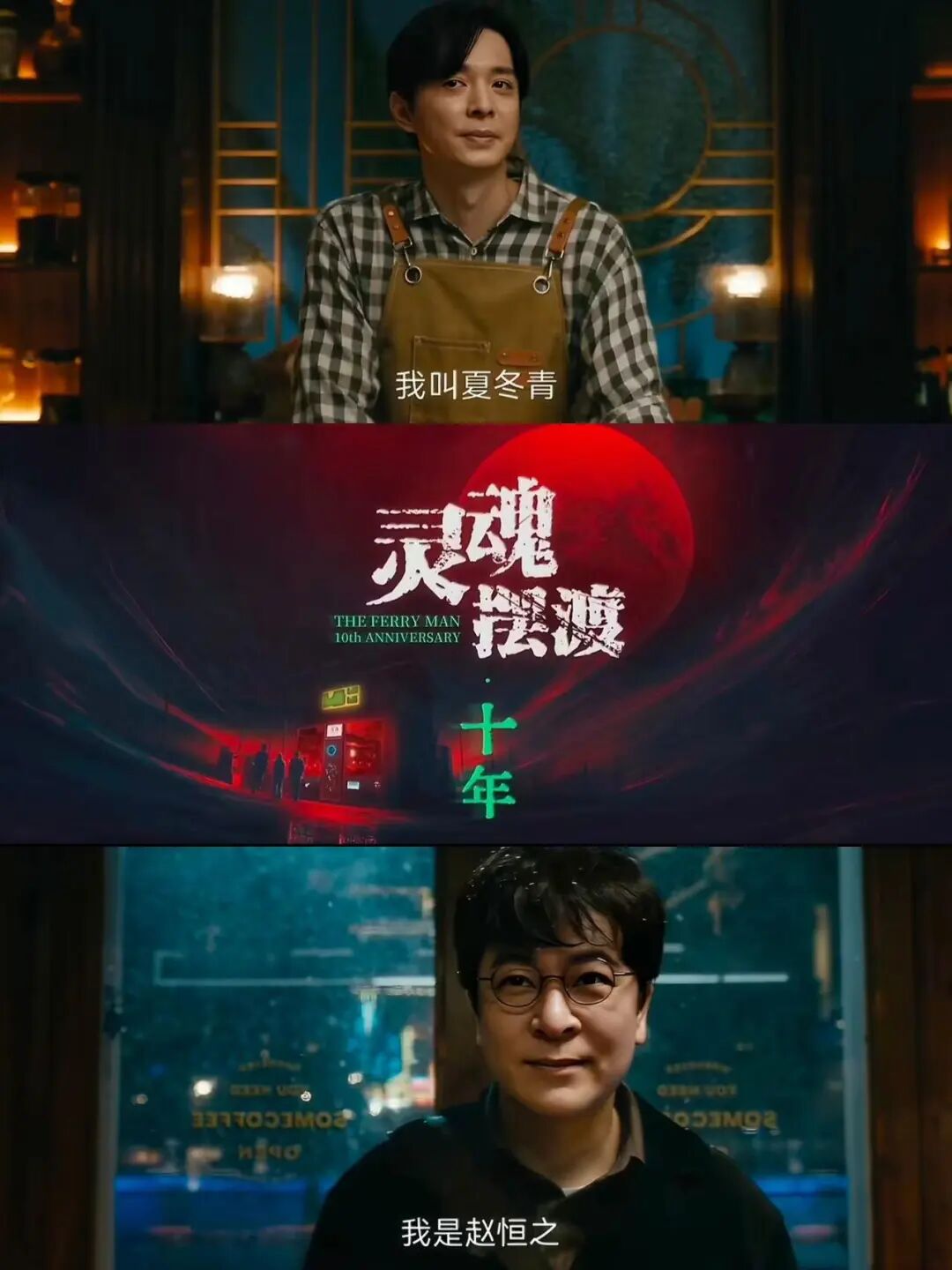
Some teams have long focused on suspense themes, some are familiar with reality-themed content, some are good at adapting online literature into dramas, and some have accumulated experience in production management, post-production and audio-visual technology. Even if they do not own a complete full industrial chain, they can form irreplaceable capabilities in a certain link.
In other words, being able to continuously produce works in a specific niche genre is also a kind of competitiveness. Guduo believes that this is also the biggest advantage of the industry's mid-tier force.
Way Out
To regain their position in the industry, the mid-tier force needs more than just production experience. They also need to find more stable revenue sources and a more proactive project development approach.
In the past, the business logic of some production companies was relatively straightforward: Get the project, assemble the team, finish the shooting, and wait for payment. The company earns production service fees, and once the project is completed, the cooperative relationship may end accordingly. This model is not without value, but it is very vulnerable to price cuts, and it is difficult to accumulate long-term assets. Once the number of projects decreases, the company will immediately feel the chill.
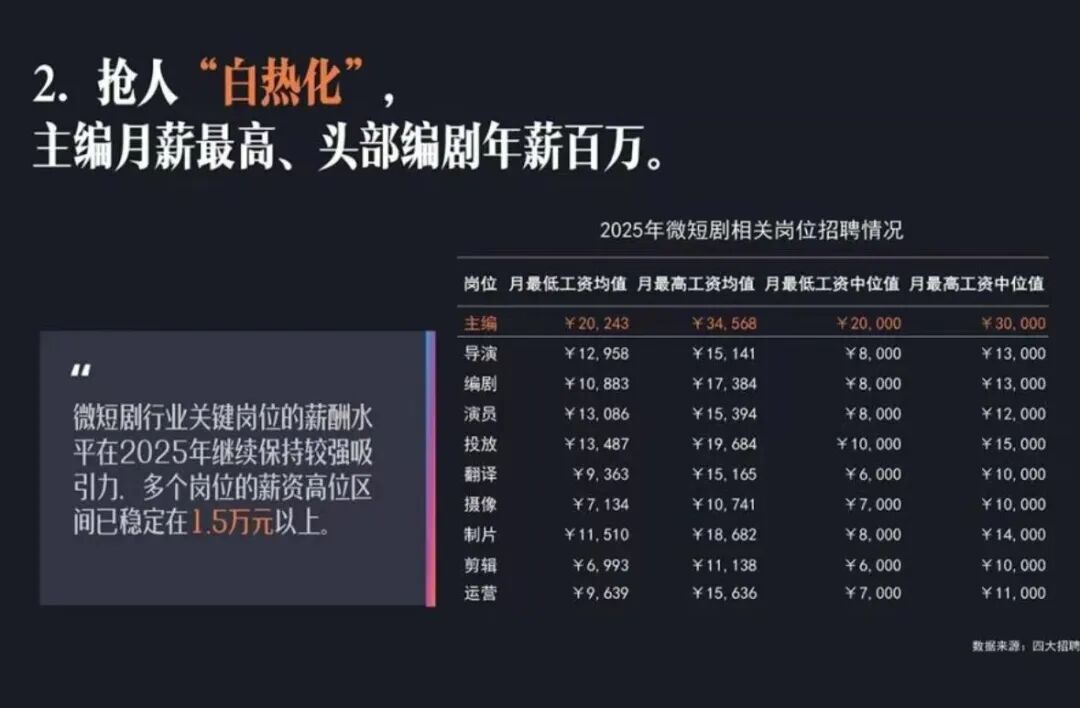
Production companies in the future need to enter the content development phase much earlier. Where a story comes from, whether it is suitable to be made into a long drama or a medium-length drama, whether the characters and world view can be further extended, what kind of director and actors are suitable for the project — all these judgments should become the core capabilities of the company. If a company can form its own development plan at the script stage, it will not have to wait forever for others to hand projects to it.
IP operation is also a path worth exploring. The IP mentioned here does not only refer to buying the copyright of a popular novel and then waiting for it to be adapted into a drama. More importantly, whether the company can make long-term plans around a story, so that film and television content, short dramas, derivatives, overseas adaptations and other businesses are interconnected. After the project is broadcast, whether the audience is willing to continue paying attention to this story, and whether the characters and world view have room for extension, will affect the long-term value of the content assets.
Of course, this path is not easy. IP development requires time and capital, and not every drama can support derivative businesses. There are many works in the market that are popular during broadcast but quickly lose public discussion after being taken off the air. For small and medium-sized companies, blindly hoarding copyrights may be more dangerous than simply undertaking production projects. The truly feasible way is to select a few potential content works according to their own capabilities and continue to invest in development, instead of taking "full-link operation" as a universal business card.
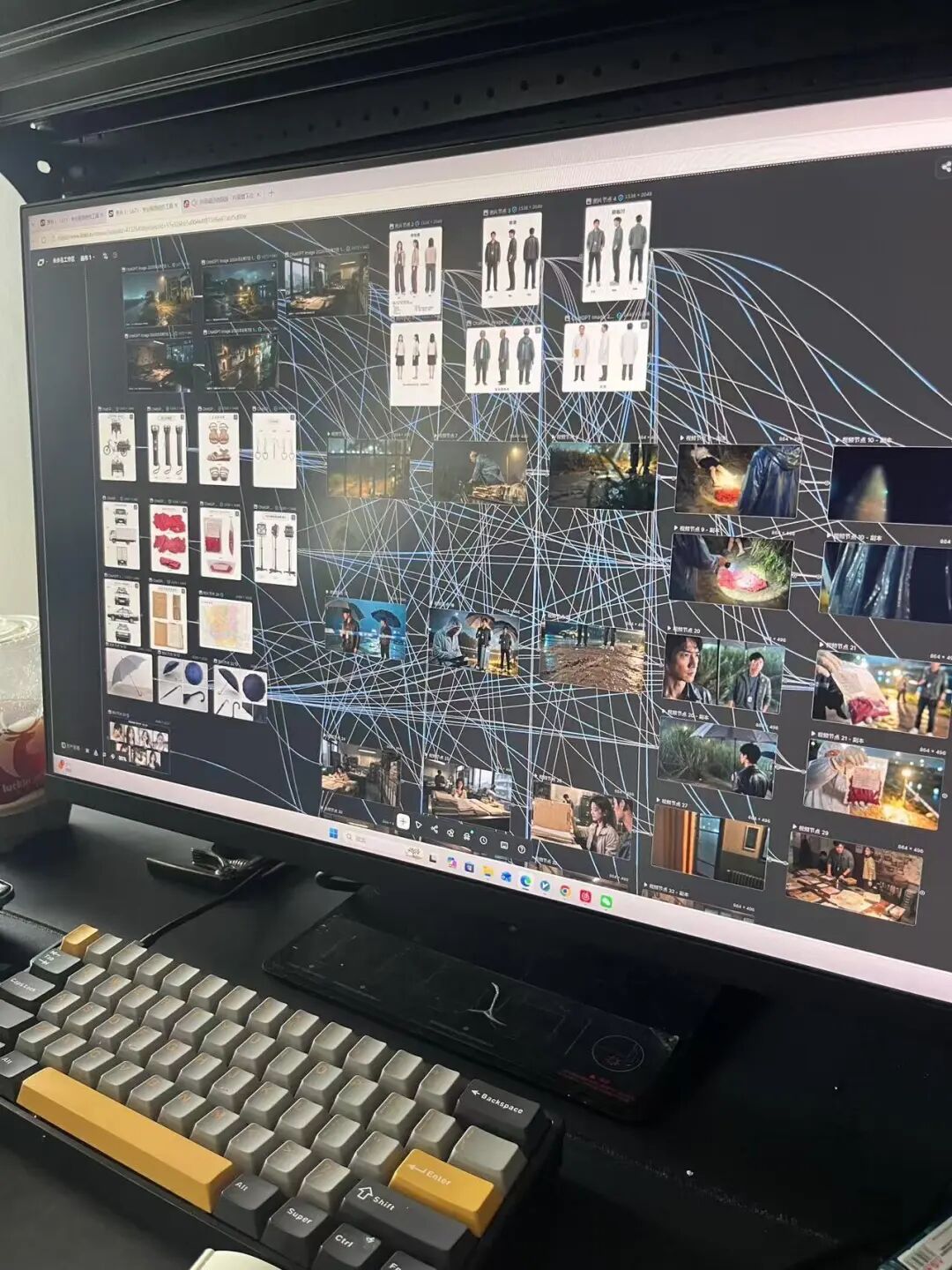
AI has brought another change to production companies. It is being applied to script assistance, concept design, storyboard preview, scene production and post-production processes, which is expected to reduce the cost and time of some links. Part of the work that used to require a large team to complete can now be done through tool collaboration.
Huace Film & TV's AI layout can be used as a reference for mature companies. It has a huge library of film and television copyrights, and has disclosed AI-related assets and business explorations in its annual reports. But Huace itself is a listed film and television group, and its resource conditions cannot be directly applied to small and medium-sized production companies. For the latter, a more realistic choice is to find tools and workflows that suit them to improve efficiency in specific projects, rather than starting a new business from scratch just to chase the trend.
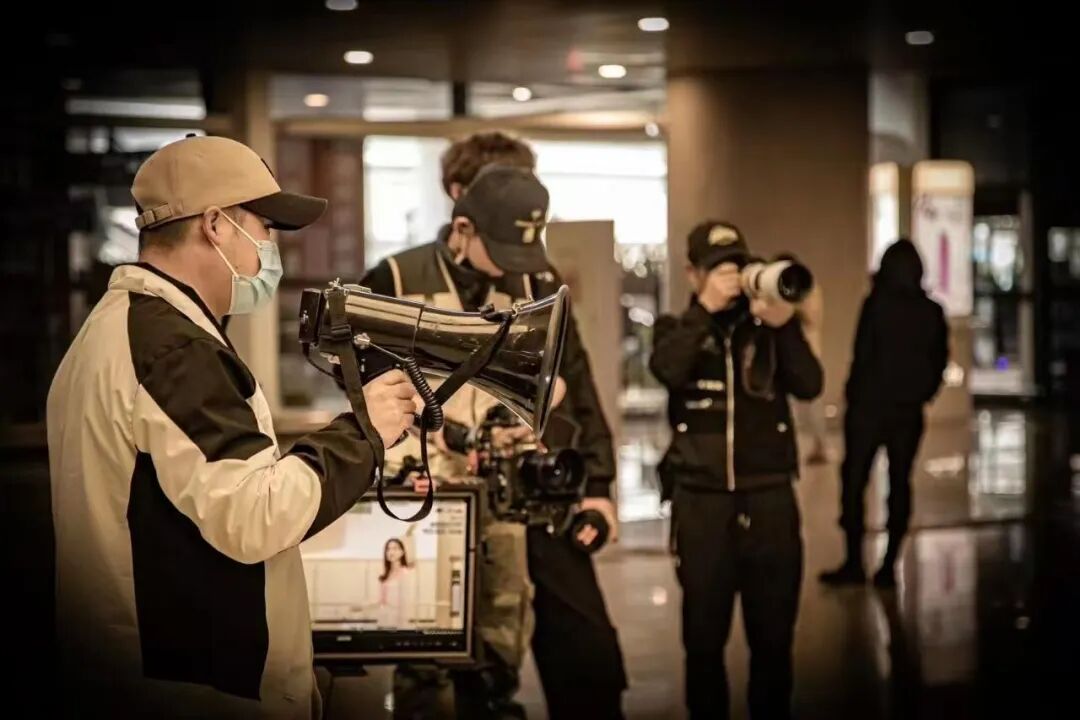
In the past, people always thought that the winners in the film and television industry must be the people standing at the top of the pyramid. But for a drama to go from the script to the audience, what is needed is never just a few faces at the top of the tower. Those who understand creation, production and the market, and can organize a group of professional talents, also deserve their own position.
Leading companies are responsible for raising the upper limit of content in the industry, small teams continuously bring fresh ideas, and the truly mature mid-tier force can turn creative ideas into finished works, and allow professional experience to be accumulated continuously. The film and television industry is rediscovering them, which ultimately means it is looking for a more stable and richer way of content production.
This article is from the WeChat Official Account "Guduo Web Entertainment" (ID: guduowlj), written by the Editorial Department of GuDuo, and published by 36Kr with authorization.