The "weak provincial capital" at the 400-billion-yuan level has finally welcomed a 4F-class international airport after long waiting.
Another provincial capital/regional capital city has welcomed its own 4F-class international airport.
At zero o'clock on November 26, Hohhot Shengle International Airport (hereinafter referred to as "Shengle Airport") was put into operation after relocation. The old Baita International Airport, which was first built in 1958 and had been in operation for 68 years, was closed simultaneously, marking a new era milestone for the "Grassland Airport".
Against the general background, the current designed annual passenger throughput of 3 million passengers of Baita Airport can no longer meet the actual demand of 13 million annual passenger trips. Shengle Airport is a large aviation hub built in accordance with the 4F standard (the highest grade of civil airport flight zone), with a designed annual capacity of 28 million passengers and 320,000 tons of cargo and mail.
At present, there are 18 4F-class airports in China, most of which are located in economically strong cities. Therefore, some people wonder how Hohhot, with a GDP of 427.83 billion yuan and a permanent resident population of only 3.661 million, can support the passenger and cargo flow of the new airport?
Looking further, with the rapid growth of Inner Mongolia's foreign trade this year and the opportunity of the establishment of the Free Trade Pilot Zone, how can the new Hohhot airport coordinate with Baotou and Ordos airports to serve the economic development of the whole region and turn "channel flow" into "landed industry"?
The New Airport
At around 9:10 on November 26, Tianjiao Airlines flight 9D5682, operated by the domestic civil aircraft C909, landed in Hohhot from Ulanhot, becoming the first passenger arrival flight at Shengle Airport. Baita Airport, which has been "in service" for 68 years, has officially come to an end.
The total investment of Shengle Airport is 23.11 billion yuan, which is close to the general public budget revenue of Hohhot for the whole year of 2025 (26.86 billion yuan), equivalent to spending nearly one year's fiscal revenue to build a new 4F-class airport.
In the local context of Hohhot, building a new airport is "a necessity for development, a demand of the city, and a guarantee for safety".
Baita Airport has undergone many expansions. During the last expansion in 2004, the planned passenger throughput was 3 million passengers. However, the actual passenger volume of the airport exceeded 13.15 million passengers in 2019, and stood at 12.7227 million passengers in 2025.
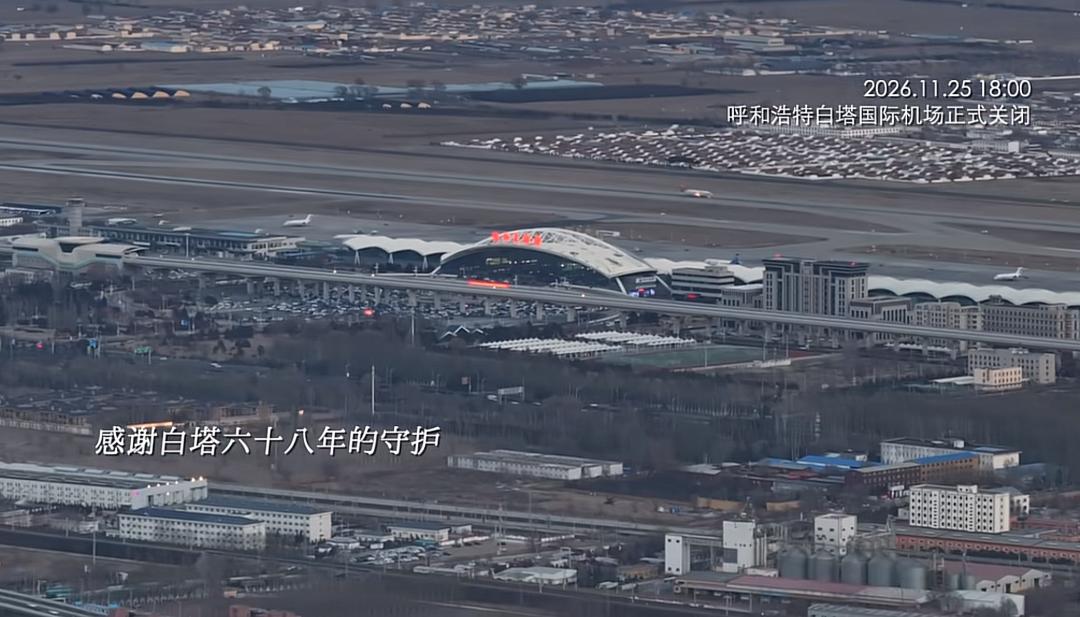
Image source: video screenshot
It is not difficult to see that this old airport has been operating overloaded for a long time, with a serious shortage of carrying capacity.
More critically, Baita Airport "cannot grow anymore". With the eastward expansion of Hohhot's urban area, the nearest distance between Baita Airport and the built-up area is only about 2.6 kilometers, making it one of the provincial capital airports in China that are closest to the urban area.
This has led to a special pattern of "the city surrounding the airport", leaving little space for on-site expansion. The conflicts between clearance and airspace have become increasingly prominent year by year, and the noise interference caused by flights taking off and landing across the city also restricts the eastward expansion of the city.
From the perspective of the national layout (excluding Hong Kong, Macao and Taiwan), among the previous 17 4F-class airports, 5 are located in East China, 4 in Southwest China, 2 each in North China, South China, Central China and Northwest China. Most of the cities where 4F airports are located have far larger economic and population scales than Hohhot. Measured by this standard, the construction of this new airport in Hohhot is "moderately advanced".
However, economy and population are not the only two considerations. The construction of 4F-class airports in Kunming and Urumqi benefits from their hub positions serving major national strategies and driving regional development.
The story of Shengle Airport is the same. Yu Guangjun, a researcher of economics at the Inner Mongolia Academy of Social Sciences, analyzed that Shengle Airport is not only a two-way domestic and international transfer hub, but also a core air channel for opening up to the north, which will provide more stable take-off and landing capacity and alternate diversion capacity for the regional aviation network of the entire North China region.
To meet the needs of development, plans such as on-site expansion and joint construction of a large airport by Hohhot, Baotou and Ordos have been demonstrated, but restricted by topographical conditions, urban safety and other factors, the relocation plan was finally determined, and the new airport is located in Helingeer County, 31 kilometers away from the urban area.
However, the ensuing problem is the accessibility of the airport.
Some netizens joked that Hohhot is one of the few cities in China that "lost and then regained" the airport subway. Hohhot Metro Line 1, which runs from Hohhot East Railway Station to Baita Airport, is the first subway in Inner Mongolia and the only subway connection line to the airport. However, the relocated Shengle Airport is not accessible by subway.
The transportation connection guarantee after the new airport is put into use has also become one of the key work priorities of the Hohhot government. The local government has provided 5 types of transportation connection methods, including airport express line, airport bus, customized passenger transport, cruising taxi and online car-hailing, trying to use diversified transportation to offset the travel friction caused by long distance.
Passenger Transport Hub
The designed capacity of the new airport of 28 million passengers is about twice the actual passenger volume of Hohhot's previous airport.
What does Hohhot rely on to support the passenger flow? Chen Yao, vice president of the China Regional Economic Association and researcher at the Institute of Industrial Economics of the Chinese Academy of Social Sciences, told us that of course it does not only rely on the more than 3 million people in the city and the total economic volume of less than 500 billion yuan, but on the superposition of the three identities of "provincial capital hub + regional hinterland + northward node".
From the very beginning of its planning, Shengle International Airport has been positioned as the core aviation hub of the whole Inner Mongolia, rather than only serving the local area of the provincial capital.
In 2025, Inner Mongolia Airport Group completed a passenger throughput of 25.589 million passengers, of which Baita Airport alone accounted for nearly half, and the agglomeration effect of the provincial capital has long been apparent. Combined with the location advantage of connecting the Beijing-Tianjin-Hebei region in the east, connecting Russia and Mongolia in the north, and connecting the inland of Northwest China in the west, Shengle Airport obviously serves more than just the 3.66 million local people in Hohhot.
Taking the cultural tourism flow that is the first to be leveraged as an example, the Hohhot Municipal Government, in response to the CPPCC proposal on the cooperation of Hohhot-Baotou-Ordos-Ulanqab and Beijing-Tianjin-Hebei-Shanxi to build a "two-hour air-rail cultural tourism circle", stated that it will promote the coordinated development of regional tourism industry in view of the transportation advantages such as Shengle Airport.
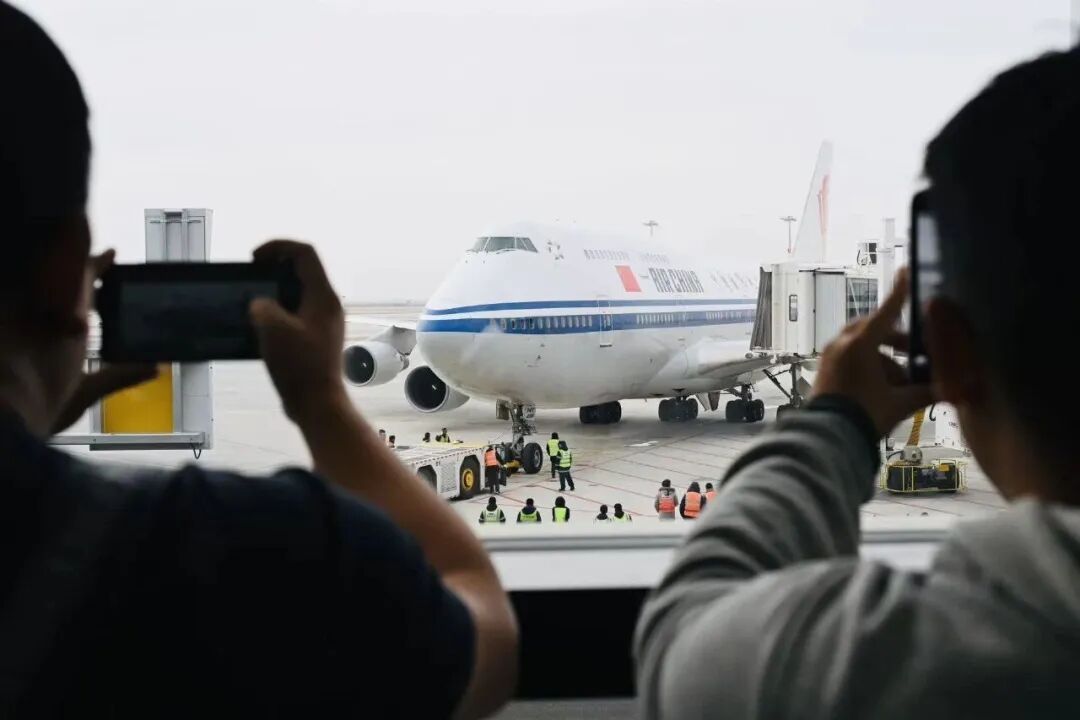
Image source: Inner Mongolia Daily
In order to fully release the passenger transport capacity of the new airport, the local government's top priority is to expand direct trunk routes.
The "15th Five-Year Plan" Comprehensive Transportation Development Plan of Inner Mongolia Autonomous Region clearly proposes to strengthen the regional aviation hub function of Hohhot Shengle International Airport, and increase direct flights to key regions such as the Yangtze River Delta, Guangdong-Hong Kong-Macao Greater Bay Area, and Chengdu-Chongqing region.
What truly constitutes the unique advantage of Inner Mongolia's aviation is its large volume of transfer passenger flow.
"Taking a train from Tongliao or Hailar to Hohhot often takes more than ten hours. People basically travel by plane, and many inter-provincial flights also have to transfer here first." described a merchant who travels around Inner Mongolia for business all year round.
Geographically, the Inner Mongolia Autonomous Region has a straight-line distance of 2400 kilometers from east to west and a north-south span of 1700 kilometers. It is distributed with 9 prefecture-level cities and 3 leagues. The distance between each league and city is relatively long. In addition, affected by factors such as regional economy and population, the time for some leagues and cities to navigate to outside cities is not yet mature.
Therefore, Hohhot, the capital city, as the political, economic and cultural center of Inner Mongolia, plays the role of a transportation hub connecting all leagues and cities in the region and popular cities outside the region.
The local characteristic aviation service "Transfer via Hohhot", that is, transferring via Hohhot, came into being. The annual transfer passenger volume is stable at the level of millions, becoming one of the important supports for the hub aviation value of Hohhot. As Chen Yao said, from the perspective of transfer dividend, "Transfer via Hohhot" brings in feeder passengers from Tongliao, Hailar, Xilinhot and other places, and then flies to the Yangtze River Delta, Guangdong-Hong Kong-Macao Greater Bay Area, Chengdu-Chongqing region, amplifying the "local departure volume" into the "regional outbound volume".
However, to convert the hub value of the new airport into passenger flow increment, route support is still needed. Facing the "15th Five-Year Plan" period, the local government intends to improve the coordination capacity of this route network — Inner Mongolia has clearly stated that it will build a "Transfer via Hohhot" route network with Shengle Airport as the main channel in the whole region, guide and cultivate qualified "feeder-to-feeder" routes to extend outside the region, and form a "coordinated flight" network covering the whole region.
With the operation of the new airport, new routes have also been launched simultaneously.
The operation of Shengle Airport coincides with the first winter navigation season. The "Transfer via Hohhot" transfer channels of Inner Mongolia Airport Group continue to expand, and new "Transfer via Hohhot" routes such as Chengdu Tianfu ⇌ Hohhot ⇌ Xilinhot, Hefei ⇌ Hohhot ⇌ Tongliao have been opened. At the same time, 46 new inter-feeder routes are planned to be opened across the region, a year-on-year increase of 2.2%, realizing the interconnection of all leagues and cities in the autonomous region.
Industrial Increment
The channel value of the airport is not limited to passenger flow throughput, but will eventually be converted into industrial momentum.
The operation of Shengle Airport just coincides with the key node of Inner Mongolia's opening-up and upgrading. In April this year, China (Inner Mongolia) Free Trade Pilot Zone was inaugurated. Among them, the Hohhot Area, with an area of 76.28 square kilometers, accounting for 63.7% of the total area, has become the core plate with the largest area and the heaviest task.
Among them, the aviation port block of Shengle International Airport, relying on the only 4F-class international airport newly put into use in the whole region, is exactly the carrier of aviation port economy and airport economy laid out in the area, and also an important fulcrum of the northward opening air corridor of Inner Mongolia.
Zhao Xiaomin, an expert in express logistics, told City Evolution that Inner Mongolia is a major resource province with the foundation of characteristic industries such as green agricultural and livestock products, biomedicine, and rare earth new materials. After Shengle Airport is put into operation, the high-standard airport capacity will interact and connect with the existing local land port system, promoting the logistics pattern to upgrade from the traditional dual dominance of highway and railway to a three-dimensional supporting system of highway, railway and aviation.
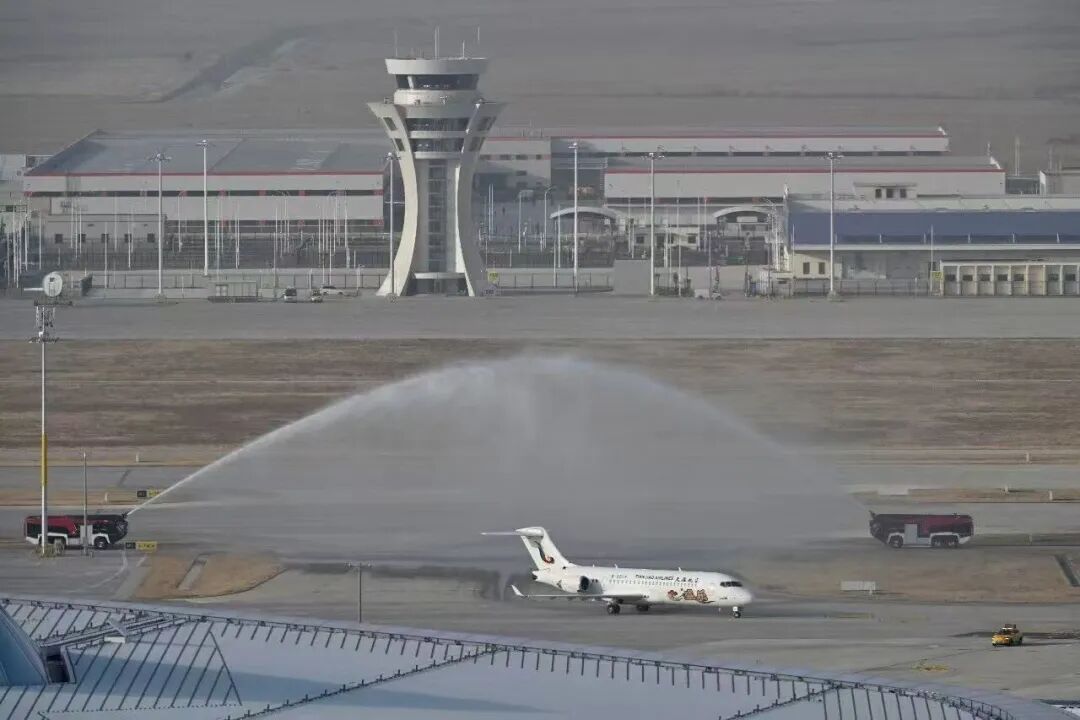
Image source: Inner Mongolia Daily
Looking at the whole region of Inner Mongolia, Shengle Airport can link with regional airports such as Baotou and Ordos to form a cluster effect, weave a dense global air logistics network, and superimpose the policy dividend of the free trade zone to further consolidate the cross-border supply chain links and build differentiated competitiveness for opening up to the outside world.
The growth potential has first appeared in the foreign trade sector. In the first three quarters of this year, Inner Mongolia's import and export volume exceeded 200 billion yuan for the first time, hitting a record high for the same period in history, with a year-on-year increase of 32.8%, ranking 4th in China, 14 percentage points higher than the national average growth rate;
By the end of September this year, the inbound and outbound cargo volume at Inner Mongolia's land ports reached 122 million tons, a year-on-year increase of 29.7%, ranking first in China.
Zhao Xiaomin believes that Shengle Airport is located in the China-Russia-Mongolia Economic Corridor. Foreign trade parcels from the Yangtze River Delta, Pearl River Delta and other regions to Russia and Mongolia will be transferred and distributed here. From this perspective, Shengle Airport is one of the air transport hubs for cross-border logistics in northern China.
Zhao Xiaomin particularly emphasized that Inner Mongolia's current cross-border logistics is highly dependent on land channels, and the volume and capacity of air freight are insufficient. As a confirmation, according to local media reports, the original Baita Airport has long had problems such as insufficient international routes and weak cross-border freight capacity, which is difficult to support the landing of high-time-efficiency and high-value-added industries.
The emergence of Shengle Airport is expected to fill this air gap. Recently, the customs supervision site for express delivery at Shengle Airport passed the acceptance, clearing hardware obstacles for cross-border e-commerce and international express delivery businesses.
In the long run, hardware upgrading is only the first step. According to Inner Mongolia's plan, by the end of 2028, the total air cargo and mail throughput of the whole region will strive to exceed 120,000 tons, and an air logistics system with "complete facilities, connected networks, industrial agglomeration, high efficiency and intelligence" will be initially formed.
In Zhao Xiaomin's view, the ecological cultivation of air freight cannot be achieved overnight. The transformation of the new airport's "economic channel" into real "channel economy" depends on when the local systematic capacity of air freight services takes shape.
This article is from the WeChat official account "City Evolution", written by Liu Xuqiang, authorized to release by 36Kr.