Overseas automakers have started their self-rescue efforts, and the first step is to build "fast-track vehicles"
Let me start with a question, do you think vehicles polished by carmakers for several years are definitely of good quality?
Recently, discussions about "quickly-built cars" have never stopped, from the debate over 500 new vehicles launched within half a year to the quality of auto parts, it seems that almost any news can be linked to quickly-built cars.
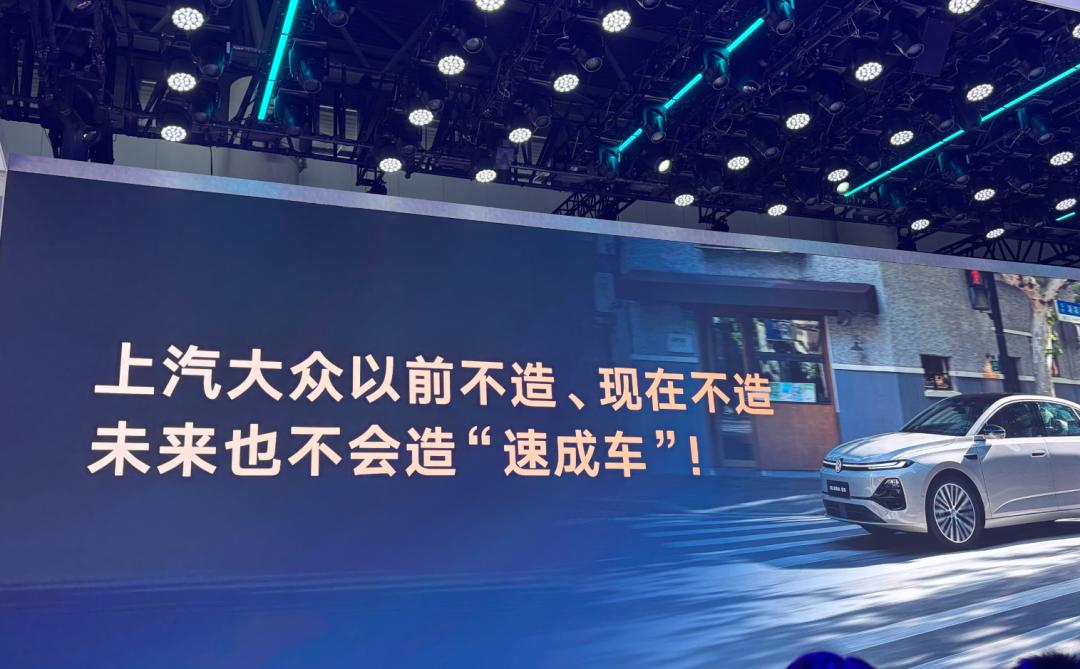
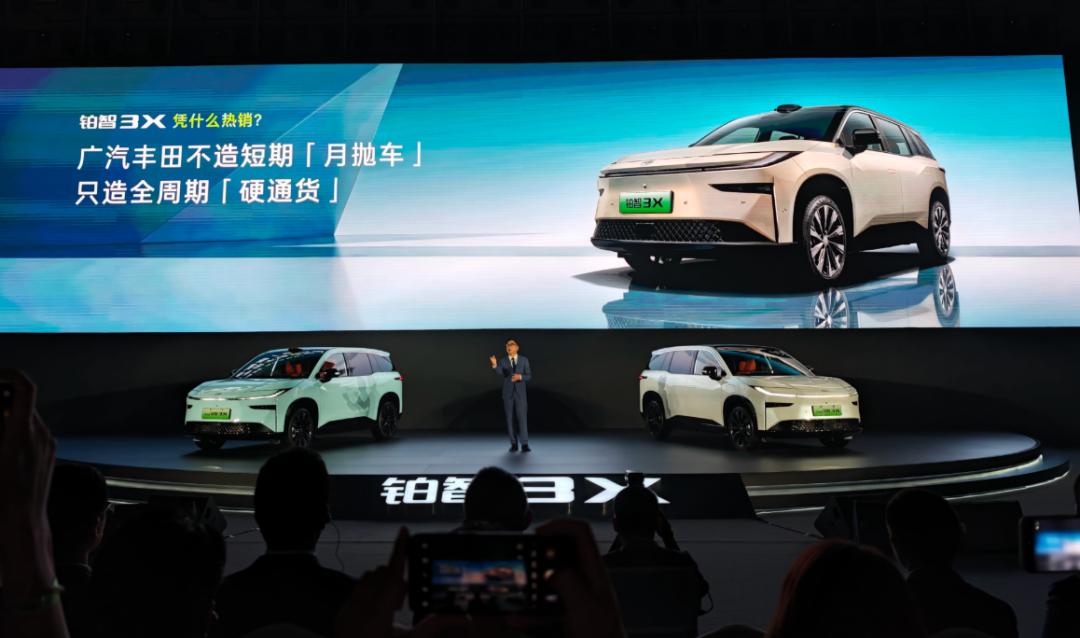
In this process, joint-venture carmakers seem to have finally encountered a once-in-a-century favorable situation. No matter European carmakers or Japanese peers, all of them are emphasizing how high their internal standards are and how long their development cycles are.
They are fully presenting craftsman's dedication and ingenuity, claiming that they will never rush to roll out vehicles.
It does make sense in a way. Before the explosive growth of new energy vehicles, the facelift pace of fuel vehicles was so slow that it was almost unnoticeable.
Minor facelifts were done every two years, mid-cycle updates every five years, and full model generation changes usually took nearly a decade.
Compared with new energy vehicles that are iterated several times within a year, the traditional fuel vehicle development model does show the characteristics of "slow work yields fine products".
But counterintuitively, for carmakers, especially those time-honored traditional carmakers, slower development does not always mean better quality. A lot of time is actually spent dealing with the messy legacy code accumulated over a century of automotive industry development.
Take several major automotive groups as examples. Thanks to their early start and rich experience, these groups have already formed a complex set of vehicle development processes internally.
For example, General Motors has the Global Vehicle Development Process GVDP, Ford has a similar GPDS system, and Toyota has the Toyota Production System TPS.
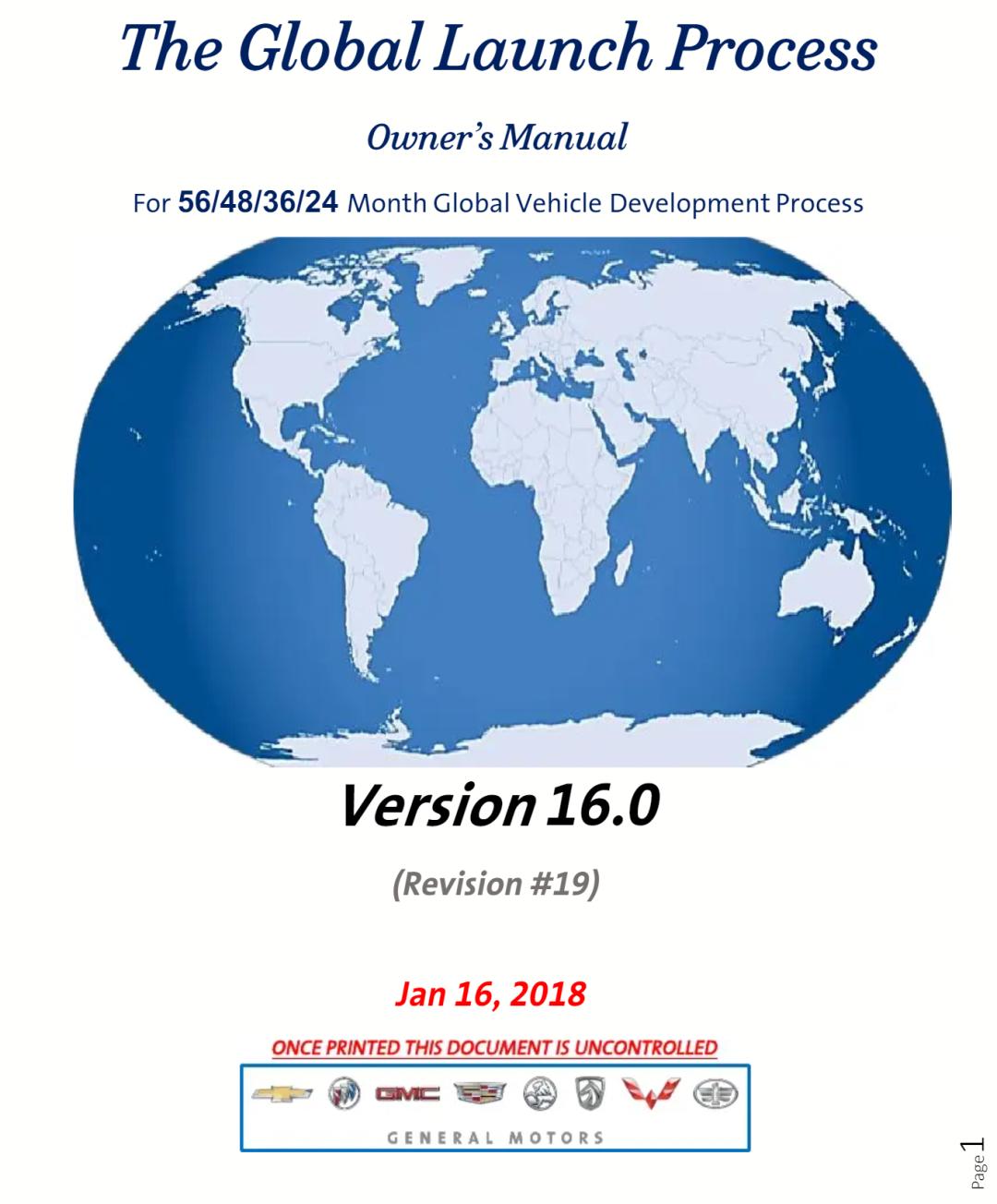
These system documents clearly specify all procedures involved from the conception of a vehicle to its launch on the market. You can find answers to every step of vehicle manufacturing, how long each step takes, and how to verify that each step is completed properly in these documents.
Take the GVDP process of General Motors as an example, it divides the vehicle manufacturing process into more than a dozen phases from A4-A1 to G9-G0, the total time span even reaches 57 months, which is nearly 5 years.
It is like a vehicle manufacturing manual with mandatory requirements. As long as General Motors wants to launch a new car (except derivative models on the same platform), it must go through all steps in the process to meet its century-old understanding and requirements for vehicle manufacturing quality.
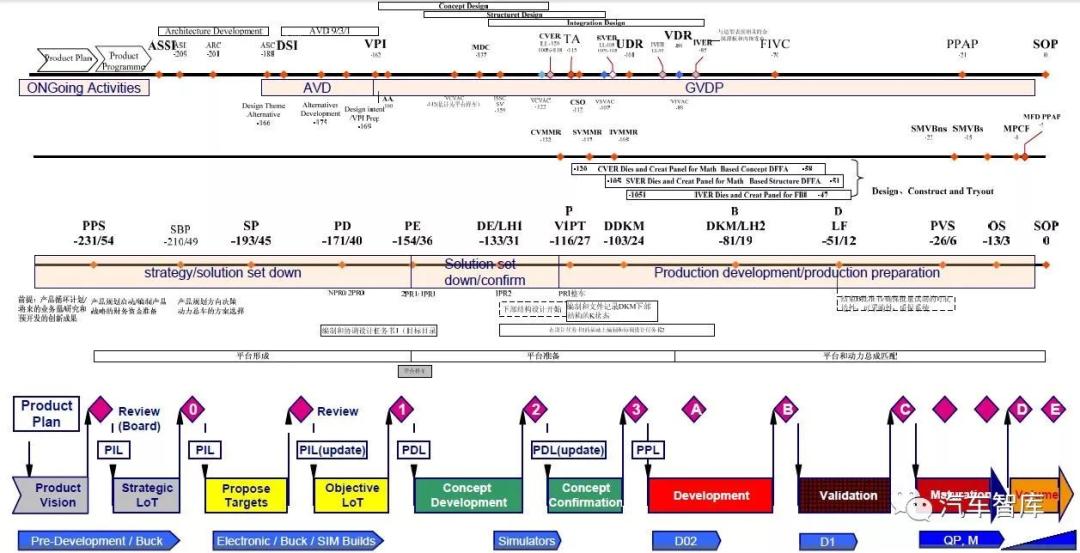
This is only a general process specification. When it comes to specific parts development, whole vehicle verification and production capacity planning, there are corresponding detailed sub-rules.
Over time, these internal documents will multiply automatically like noodles, growing more and more, so much so that they have even become a burden for R&D personnel now.
This is actually the rule dilemma that many traditional carmakers are facing, which is called process bloat.
A few real examples will help you understand this easily.
Suppose you are a software engineer working for the Volkswagen Group. One day you receive a request to add a new function to the infotainment system of a certain model.
You think it's a trivial task, isn't it just changing the color of the trees in the navigation interface? It can be finished in five minutes, right?
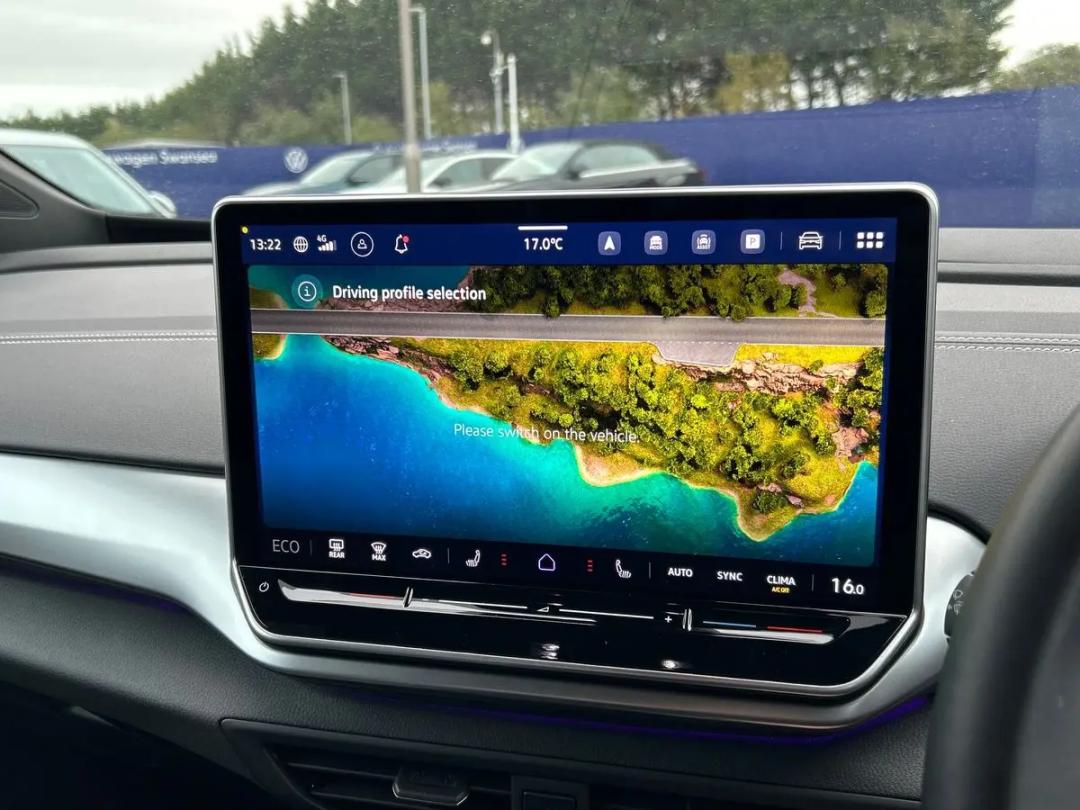
But after checking, you find that even for such a small change, the involved internal standards include the group's vehicle development process PEP, the group's general software requirements GBSR, as well as the necessary internal project verification plan, test drive scheme, and software release and approval standards.
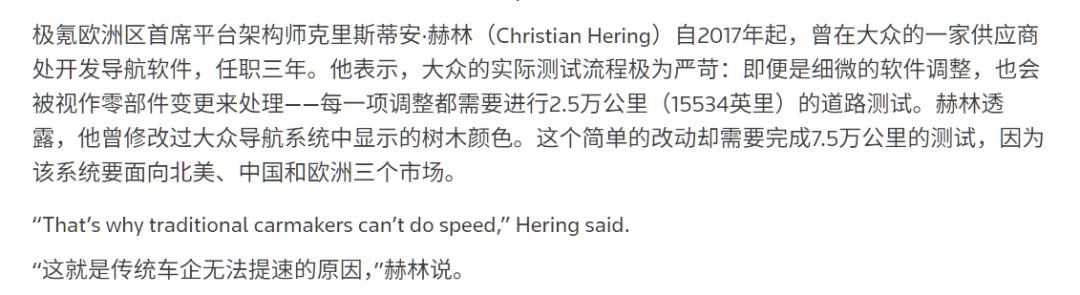
After sorting out all the procedures, you find that to make this change applied to the vehicle smoothly, the actual vehicle with modified navigation tree color must complete at least 25,000 kilometers of real road tests.
Meanwhile, since this vehicle needs to be launched in three markets: China, the United States and Europe, the actual road test distance needs to be tripled.
That is 75,000 kilometers.
This is not a story I made up, but a real experience shared by Volkswagen software developer Christian Hering in an interview with Reuters.
Well, I wonder if there are any Volkswagen engineers among our readers, I really want to see what the trees in that navigation look like after the color change...
The case from Toyota is even more abstract.
Two years ago, in an internal survey, they found that there are too many different production departments in the group, and the document wording and data specifications used by different departments are not unified. Even for the same configuration information, when it is transferred between different departments, it has to go through complex format conversion, meaning interpretation and even manual data proofreading.
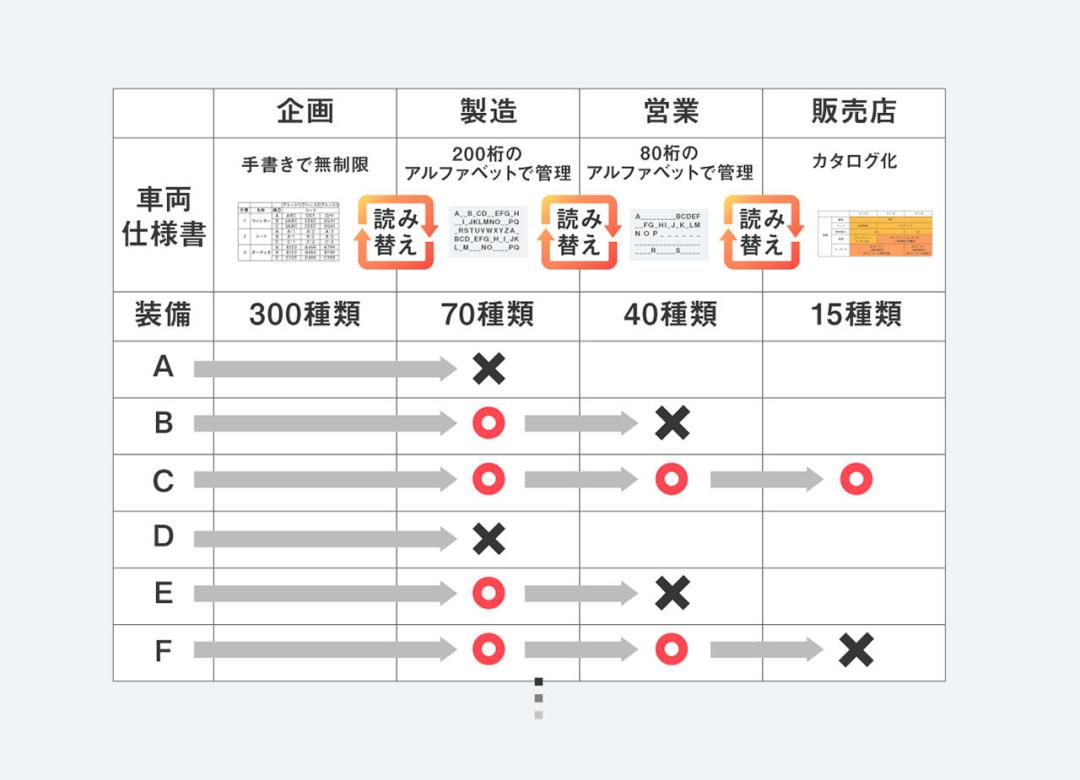
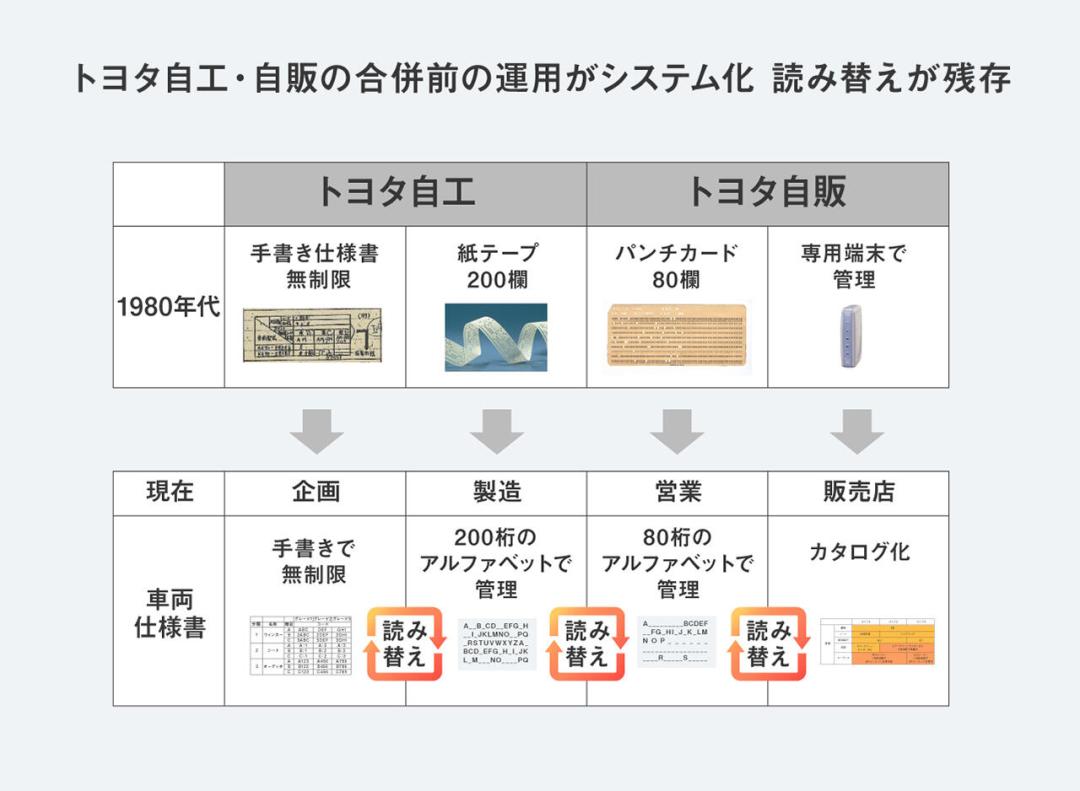
According to their statistics, in the whole year of 2024, they spent a total of 310,000 hours on data proofreading, accounting for 35% of all statistical work.
Toyota realized that this situation was unacceptable, so it immediately decided to make improvements.
But they got stuck as soon as they started the work, there were more than 800 departments that needed to be coordinated. The relevant staff was so annoyed that he wrote an article overnight to denounce this absurd phenomenon, and named the article Give Back 310,000 Hours to Users.
This is the principle of "pay back what you borrow, and it will be easy to borrow again".
In another case at almost the same time, Toyota found that when it commissioned its supplier Denso to develop digital instrument clusters for vehicles, it took nearly four months from the time they submitted the demand to the time Denso finally returned the development specification document.
After checking, they found that there were not many technical reasons behind it, the main problem was human factors.
For example, during the process of collecting internal feedback in Toyota to clarify the requirements for the instrument cluster from all parts of the vehicle, many departments thought that the collection period was still very long, so they simply did not write the requirements, and rushed to submit a hasty copy until the deadline was approaching.

As a result, Toyota spent two months just collecting feedback.
When the deadline came, materials from various departments flooded in concentratedly, which eventually caused a large number of errors. 80% of these errors were typos or formatting errors in the text, which had to be returned for rewriting.
There are many similar cases, so we will not go through them one by one.
In short, veteran groups like Toyota, Volkswagen and Ford have all found and criticized the problem of process bloat in their internal investigations more or less.
These redundant processes take up R&D time, but do they bring better product quality? I don't think so.
That's why when people in China are denouncing quickly-built cars, overseas carmakers are setting off a trend of accelerating vehicle development.
They say they want to learn from Chinese carmakers, cut unnecessary time waste, and speed up development, so that they can compete with "efficient Chinese carmakers".
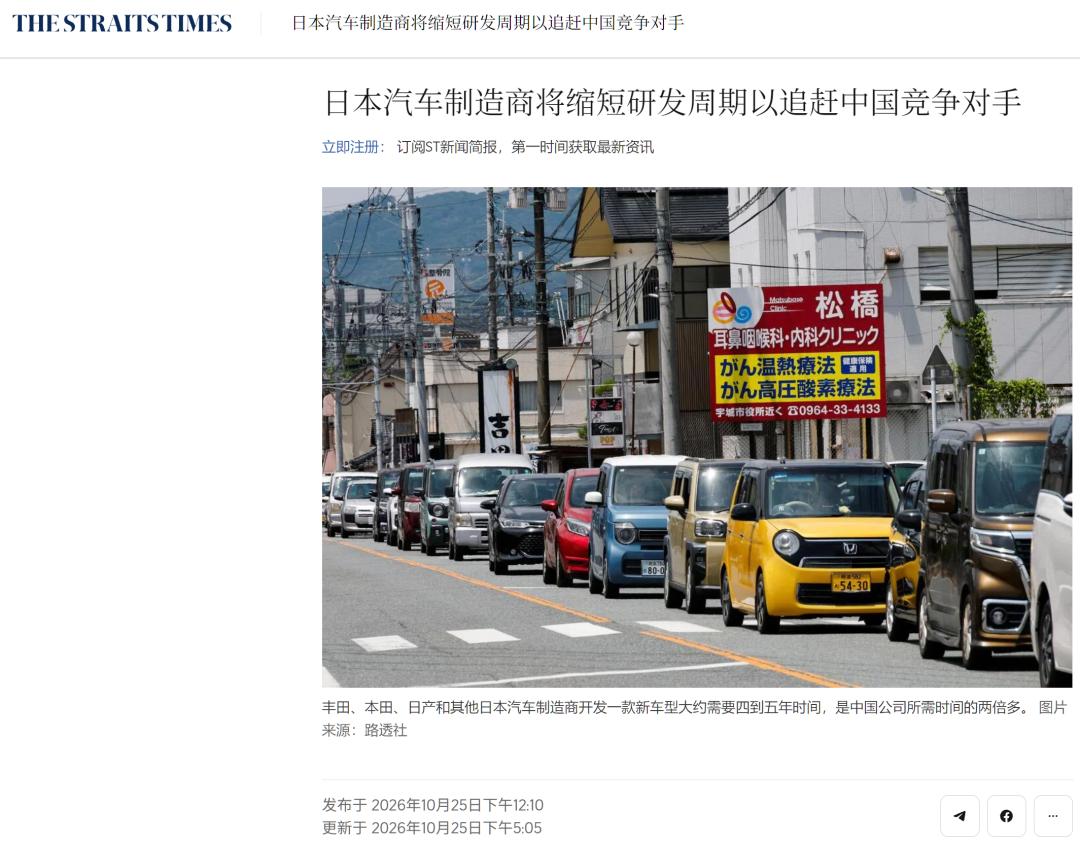
Last month, Japan's Kyodo News reported that Japanese companies including Nissan, Honda, Suzuki and Mitsubishi are preparing to reform their R&D processes, the basic goal is to shorten the new car development cycle from the original 5+ years to 24-36 months, that is, 2-3 years.
The most radical one is Honda. About half a year ago, its president Toshihiro Mibe proposed a policy called "Three Halves", which aims to halve R&D expenses, new car development cycles and specific development working hours in the future based on 2025 data.
The specific approach is exactly what we mentioned earlier: "re-examine the development requirements themselves (to see if they are necessary)".
Figure out which processes are unnecessary, and which experiences can be reused.
They plan to widely introduce AI tools for processes that can be accelerated by AI, such as design and testing, and even directly obtain ready-made platforms and standardized parts from Chinese partners to develop new vehicles.
If we talk about who among overseas carmakers respects the strength of Chinese automobiles the most, it must be Ford CEO Jim Farley.
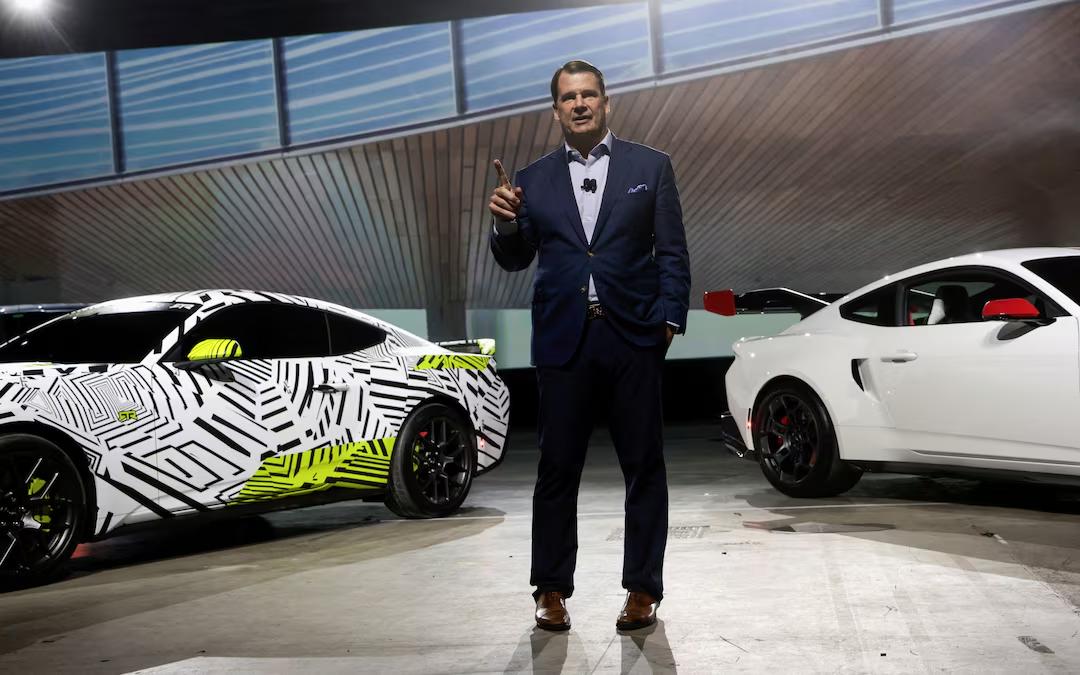
We have introduced in previous articles that Jim Farley is a genuine fan of Chinese vehicles.
He bought various Chinese vehicles including Xiaomi and Avita at his own expense to drive (and of course it is very possible that he also took them apart for research), and then told the public in various podcast shows how powerful Chinese electric vehicles are.
At Ford's Q3 earnings conference not long ago, Jim Farley said that during their cooperation with Geely on European projects, Ford found that even if they tried their best, their development speed was still several months slower than Geely's.
So recently Ford is studying Geely's entire development system item by item, figuring out exactly where the speed advantage comes from, and applying these skills to its electric vehicle development.
And what is the result of this learning? You definitely can't guess it.
Two months ago, the American Automotive Innovation Alliance (AAI) led by traditional carmakers such as Ford and General Motors sent an open letter to the U.S. Senate and House of Representatives, suggesting that legislation be passed to ban the manufacturing and sale of Chinese connected vehicles in the United States, and imports are also prohibited.
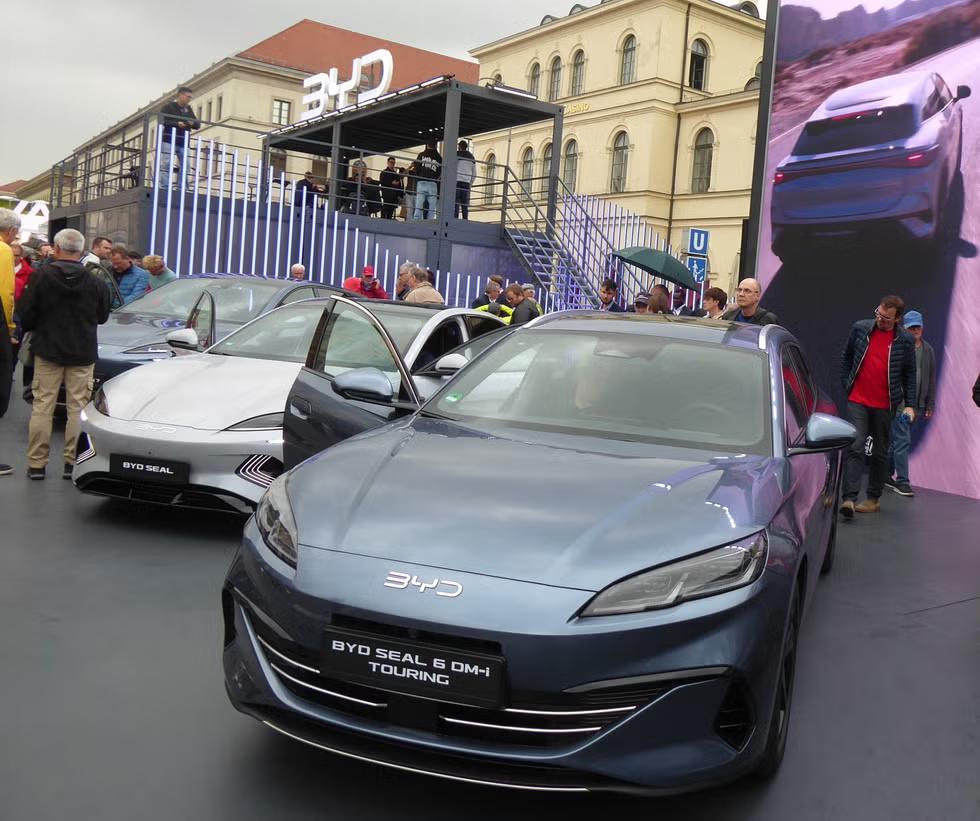
Jim Farley himself even stated directly at an industry forum that the United States should carefully consider Chinese carmakers entering the U.S. market, and Ford has even lobbied the U.S. Congress to restrict such situations.
It fully reflects the logic of the more you understand, the more you want to learn, the more you learn, the more scared you become.
After saying so much, you should understand what we want to express.
Like almost all business models that rely on large sales volumes, R&D speed is not a dangerous thing at all, but an important part of carmakers' competitiveness.
What people are worried about is never how fast new cars are launched, but when carmakers pursue such speed, what they cut is the time wasted by process bloat, or the time that is absolutely indispensable for driving safety such as winter and summer extreme condition tests and parts verification.
Two months ago, we published an article to tell readers