Elon Musk's brain-computer interface is about to be launched on the market, with key clinical trials approved, and playing *GTA 6* with the power of thought has become a reality.
Zhidx reported on November 26 that in the early hours of this morning, Neuralink, the brain-computer interface company under Elon Musk, announced that it has received approval from the U.S. Food and Drug Administration (FDA) to launch the pivotal clinical trial of LINK, and has opened recruitment to adult patients with amyotrophic lateral sclerosis (ALS).
According to the company, this is the first pivotal trial of an implantable brain-computer interface in the United States, which means the company has entered the key clinical verification stage before the marketing application. If the trial obtains sufficient safety and effectiveness evidence to support the application, Neuralink is expected to submit a marketing application to the FDA.
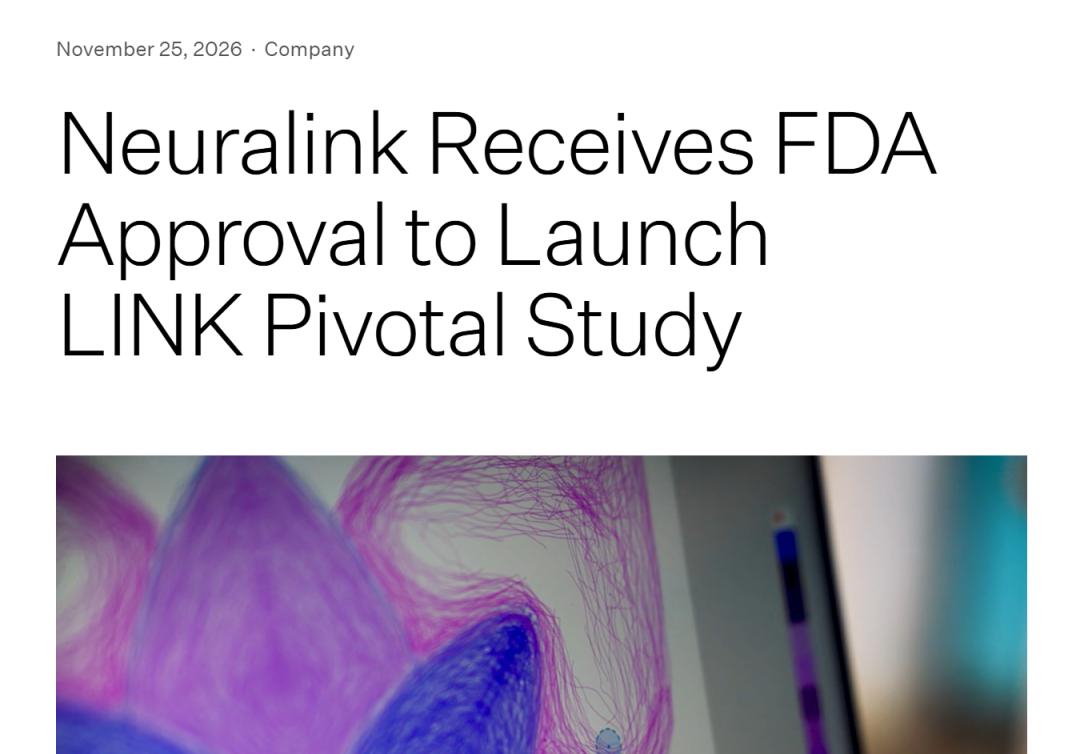
▲Official announcement from Neuralink (Image source: Neuralink)
This trial targets Neuralink's first product Telepathy, which is designed for patients severely paralyzed due to ALS, and will focus on examining whether they can control digital devices through their thoughts to complete daily tasks more independently. The trial will also continuously evaluate the long-term safety and reliability of the system at multiple clinical centers.
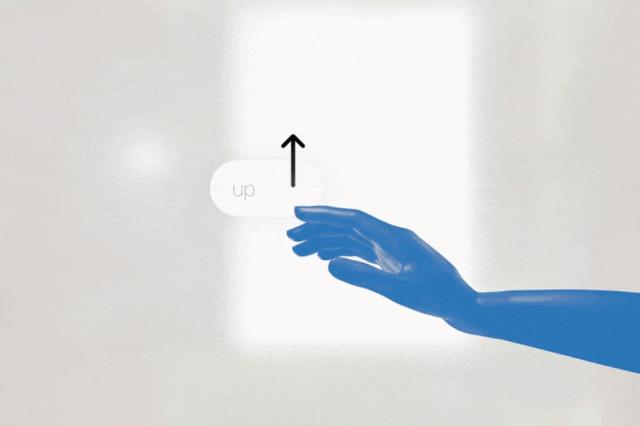
▲Telepathy supports controlling mouse movements with thoughts (Image source: Neuralink)
The product collects brain neural signals through the N1 implant, and then converts them into control instructions through supporting software, allowing paralyzed patients to operate devices such as computers with their thoughts. In previous early feasibility studies conducted in the United States, Canada and the United Kingdom, more than 30 participants have received implants, contributing a total of thousands of hours of real-scenario usage data. Participants have used the implant to return to university, create artworks, play video games, and communicate with family and friends.
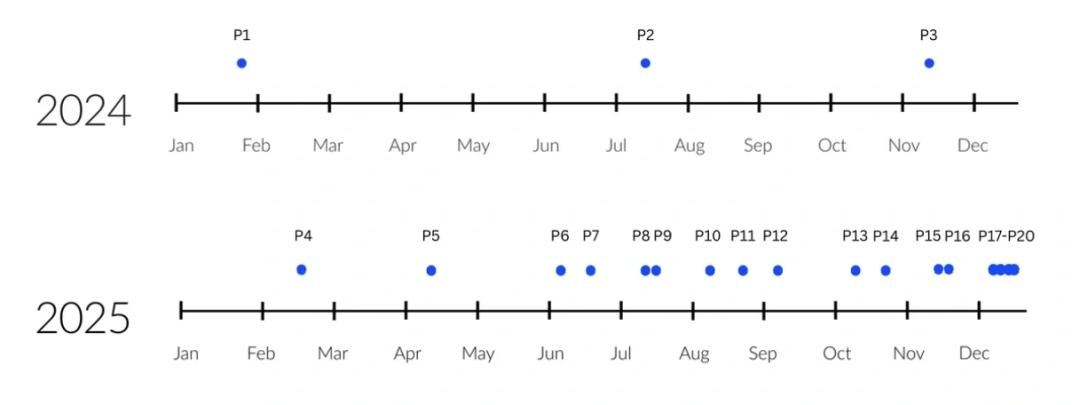
▲Participation journey of patients in early feasibility studies (Image source: Neuralink)
Invasive brain-computer interfaces require surgery to implant electrodes into the patient's brain, which can usually collect more precise neural activities, but also carry risks of surgery and long-term implantation. Compared with non-invasive solutions (wearing head-mounted devices such as EEG caps), it requires additional verification of surgical safety and long-term implantation reliability, which is one of the reasons why its clinical transformation takes a long time.
At present, there are also a number of companies in China engaged in the development of invasive and semi-invasive brain-computer interfaces. In March this year, the NEO system of Neuracle adopting the epidural semi-invasive route was approved for marketing. This product can help patients with tetraplegia caused by cervical spinal cord injury complete grasping with the help of pneumatic gloves. Among other leading enterprises, BrainCo and Step Medical are all advancing clinical trials.
01 More than 30 participants received implants, playing games, painting and reading papers with their thoughts through the device
In the video recently released by Neuralink, participant Billy, who is tetraplegic due to spinal cord injury, can already play *GTA 6* with his thoughts. Without a physical controller, he can control operations equivalent to 2 joysticks and 12 buttons to complete actions such as driving a boat, shooting, flying a seaplane and driving a car.

▲Billy plays *GTA 6* with his thoughts (Image source: Neuralink)
The first implantee Noland re-entered university with the help of the device to pursue a degree in neuroscience; medical student Sebastian used the device to annotate research papers and complete interactive assignments, with a maximum daily usage time of up to 17 hours.
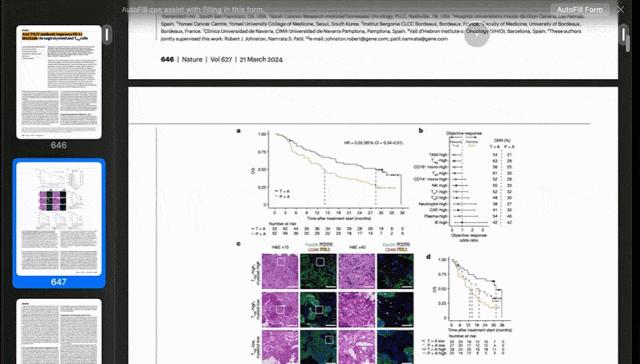
▲Sebastian annotates research papers with the device (Image source: Neuralink)
The first female participant Audrey has relied on her partner to operate the computer for nearly 20 years due to spinal cord injury. After implanting the device, she began to control the cursor with her thoughts to independently create digital artworks such as floral and abstract patterns, and plans to open a physical gallery.

▲Audrey draws with the help of the device (Image source: Neuralink)
ALS patient Brad previously relied on eye-tracking devices to type, but the device could not work properly under strong light, which restricted his outdoor activities. Now he can control the cursor to input text through his thoughts, which is then played by speech synthesis software, allowing him to communicate with neighbors outdoors, participate in his children's activities, and even answer questions on the spot after giving a speech at church.
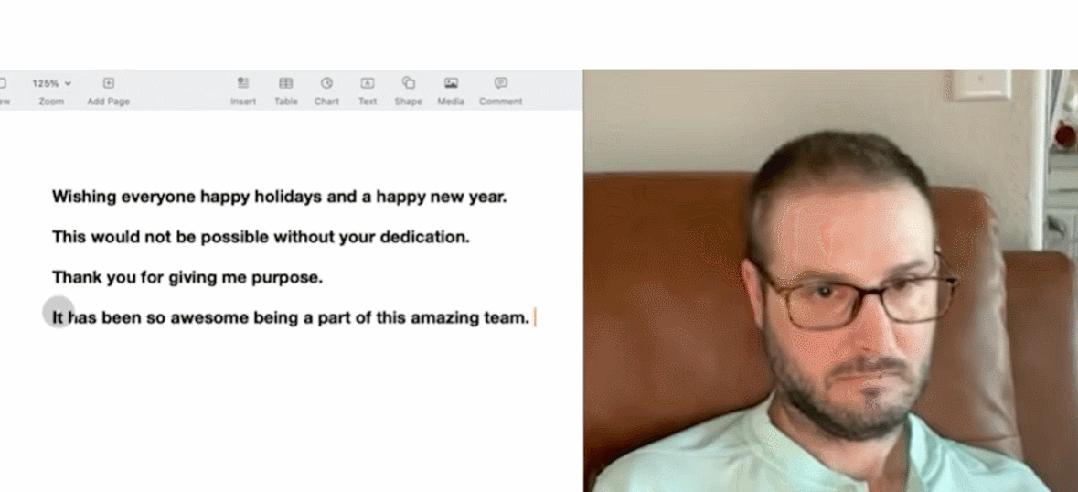
▲Brad types by controlling the cursor with his thoughts (Image source: Neuralink)
02 Neuralink was founded ten years ago, and its brain-computer devices have received regulatory support one after another
Neuralink was co-founded in 2016 by Elon Musk and others, and was first publicly announced in March 2017.
Neuralink's first product Telepathy aims to help paralyzed patients control external devices through their thoughts. The company is also developing Blindsight, a vision restoration technology that helps blind people restore visual perception by stimulating vision-related brain regions; in the direction of speech restoration, it is conducting the VOICE trial to explore converting brain signals generated when patients try or imagine speaking into text and synthesized speech.
Prior to this pivotal trial, Telepathy has received successive regulatory support and carried out early human trials in multiple countries. In July 2020, the N1 implant received the FDA's "Breakthrough Device" designation, entering the FDA's accelerated R&D and priority review support program.
In May 2023, Neuralink was approved by the FDA to carry out its first human clinical trial, and launched recruitment for the PRIME trial in September of the same year, targeting patients with tetraplegia caused by cervical spinal cord injury or ALS. In January 2024, Neuralink completed the first human implantation, and the first participant was subsequently able to move the computer cursor with his thoughts, play chess, and play games such as *Civilization VI*.
After that, the early trials of Telepathy were gradually expanded overseas, and the company announced in November 2024 and July 2025 that it had been approved to conduct the CAN-PRIME and GB-PRIME trials in Canada and the United Kingdom respectively.
03 Conclusion: First to get FDA approval, implantable brain-computer interfaces are accelerating clinical transformation
Against the backdrop of multiple companies continuously exploring different technical routes, Neuralink's approval to carry out the first pivotal trial of implantable brain-computer interface in the United States has sent a positive signal to the entire field. From daily use by patients to systematic verification supporting marketing applications, this progress has shown the market a clearer path for implantable brain-computer interfaces to become practical medical products, and has also added confidence to long-term investment in the industry.
Brain-computer interface has been listed as one of the six future industries in the 2026 government work report. Relevant Chinese enterprises are also advancing clinical trials along different technical routes, and some products have been approved for medical application. These developments have made the prospect of brain-computer interfaces helping more patients re-operate devices and communicate with others more concrete. In the longer term, brain-computer interfaces may also expand from medical use to healthy people, providing a new way for human-computer interaction in the future.
This article is from the WeChat Official Account "Zhidx" (ID: zhidxc), written by Sun Xiaowen, and published with authorization from 36Kr.