For the first time in history, Elon Musk is set to deploy 1 million satellites to build a space data center, and the United States has approved the plan.
Zhidx News, November 26: Today, the U.S. Federal Communications Commission (FCC) announced that it has approved Elon Musk's SpaceX to deploy up to 1 million computing satellites to form a space data center constellation named Starmind, which provides AI computing services for the Earth and processes massive amounts of data in orbit. The FCC revealed that this is the first time in U.S. history that a space data center constellation deployment has been approved.
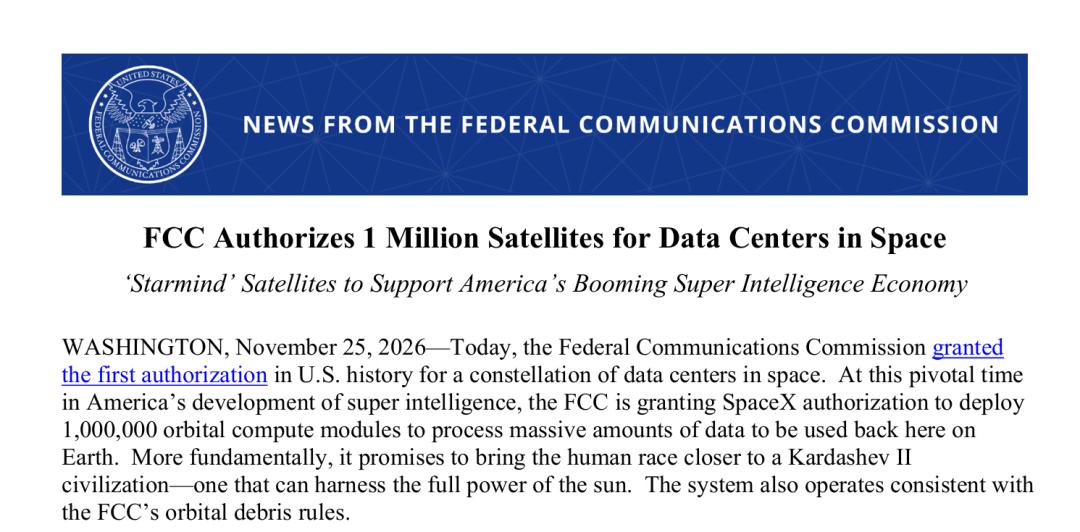
▲FCC official announcement (Source: FCC)
According to Reuters, there are currently about 17,000 satellites in space, of which SpaceX's Starlink satellites number slightly more than 11,000. The upper limit of 1 million satellites authorized for Starmind this time is about 59 times the total number of current satellites in space.
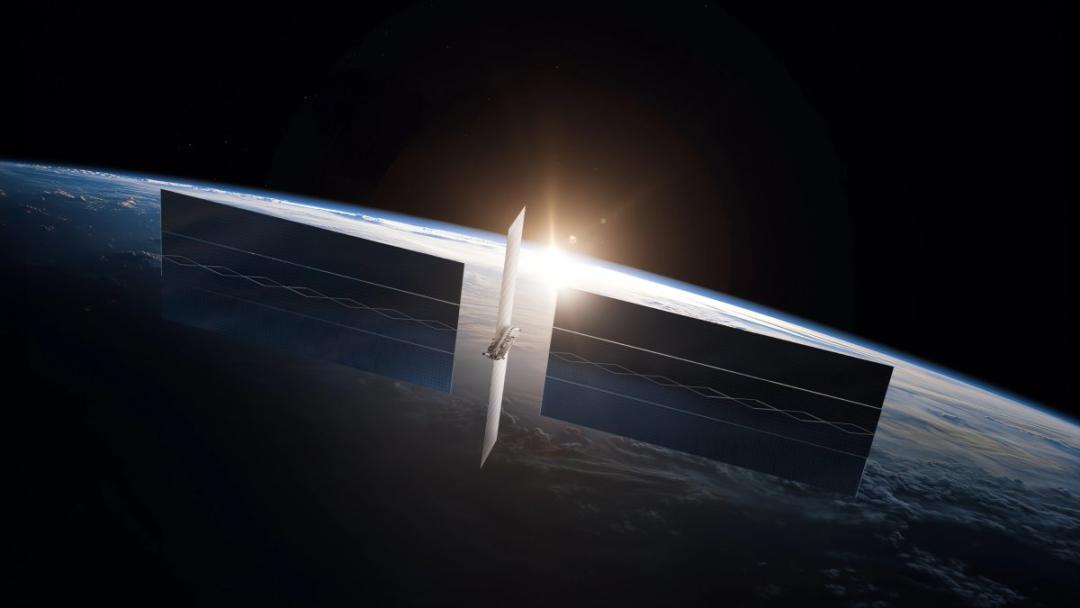
▲Rendering of Starmind computing satellites operating in orbit (Source: SpaceX)
01 The first satellite will be put into operation no later than 2033, with 1 million satellites entering orbit in phases
The FCC has specified SpaceX's deployment pace in the license. The first Starmind satellite must be sent to the designated orbit and put into operation no later than November 25, 2033. Before November 25, 2035, 10% of the authorized upper limit, that is, 100,000 satellites, need to be deployed and put into operation. Before November 25, 2038, SpaceX needs to deploy and operate at least 500,000 satellites.
SpaceX must complete the deployment of the authorized constellation before November 25, 2040, and put all relevant satellites into the designated orbit and into operation. According to current FCC rules, without permission adjustments such as extensions, the authorization for satellites not deployed after the deadline will be automatically terminated.
Starmind mainly connects satellites through inter-satellite optical communication links, and exchanges data with the Starlink network. This time, the FCC also approved SpaceX to use radio frequency links in the 18.8-19.3GHz downlink band and 28.6-29.1GHz uplink band to provide backup and emergency telemetry, tracking and command transmission for the entire system when the optical communication links fail.
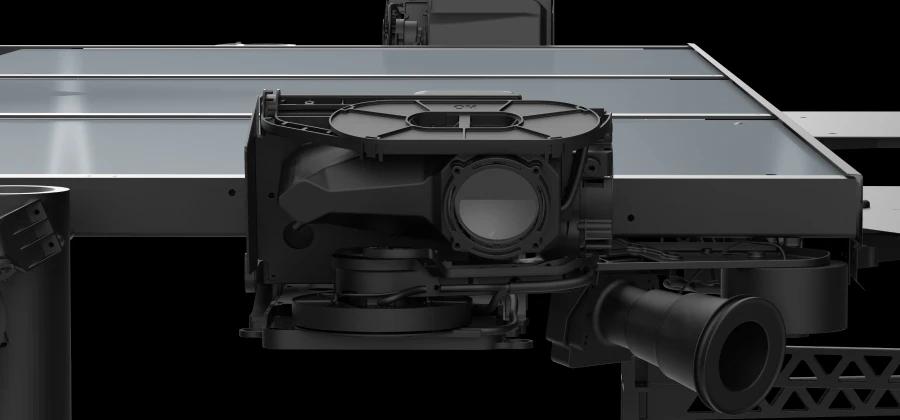
▲Schematic diagram of the inter-satellite laser communication equipment of Starlink satellites (Source: SpaceX)
In terms of decommissioning arrangements, SpaceX plans to make Starmind satellites re-enter the atmosphere for destruction through controlled deorbiting. In accordance with relevant FCC rules, these satellites should re-enter as soon as possible after the end of the mission, no later than 5 years.
For some satellites with operating altitudes exceeding 600 kilometers, SpaceX also applied to transfer them to the Earth disposal orbit or the disposal orbit orbiting the sun after decommissioning, but this application was suspended for review by the FCC due to insufficient materials. In addition, before deploying satellites with operating altitudes exceeding 600 kilometers, SpaceX must submit a license modification application containing the final orbit debris mitigation plan.
02 Starmind plans to adopt NVIDIA computing system, the 1-million-satellite plan was once opposed by Amazon
According to SpaceX, the first-generation computing satellite designed by the company for the Starmind constellation is named AI1, with a deployed height of about 30 meters, a wingspan of about 75 meters, a peak computing payload power of up to 250 kW, and an average power of 175 kW.
In August this year, NVIDIA announced that SpaceX's AI business SpaceXAI plans to use the optimized Vera Rubin NVL72 rack-level computing system on the first-generation Starmind satellites. The two sides will cooperate to adjust the design of the system's power supply, heat dissipation, bandwidth and reliability to adapt to the orbital environment.
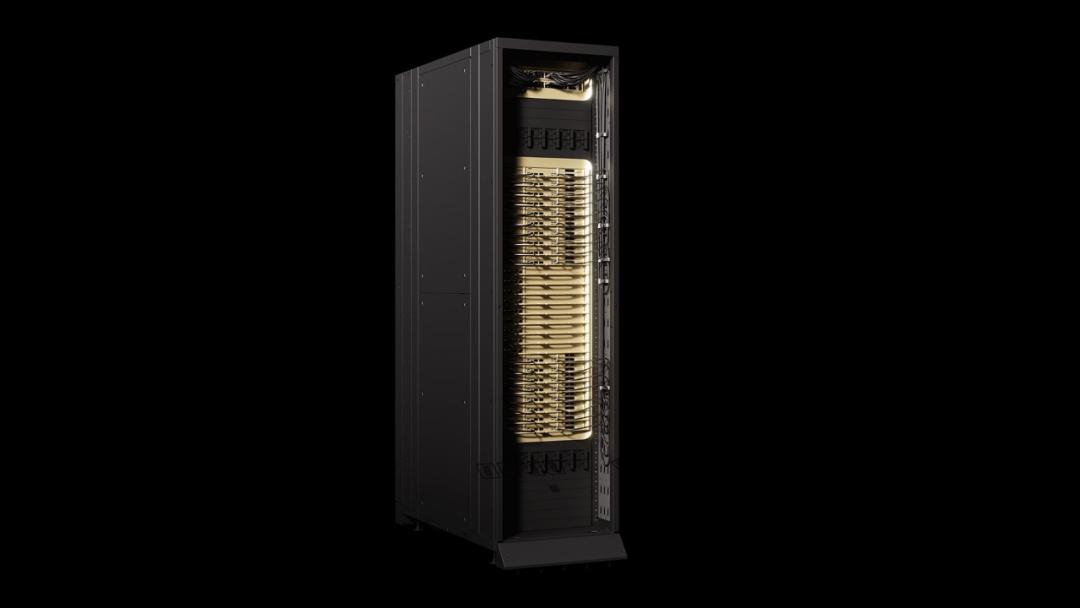
▲NVIDIA Vera Rubin NVL72 rack-level computing system (Source: NVIDIA)
According to Reuters, SpaceX's plan is largely betting on the next-generation reusable launch vehicle Starship, which is still under development. The company hopes to use Starship to reduce launch costs and support the large-scale deployment of computing satellites.
SpaceX stated in the materials submitted to the FCC that these satellites can use solar power almost uninterruptedly, greatly improve cost and energy efficiency with lower operation and maintenance costs, and reduce the environmental impact brought by ground data centers at the same time.
Regarding the actual deployment scale, Reuters mentioned that satellite operators sometimes apply for a quantity higher than the actual deployment plan to reserve flexibility for system design. It is reported that before SpaceX started deploying Starlink, it applied to deploy 42,000 satellites.
SpaceX submitted this application in January this year, and on February 4, the FCC accepted it and publicly solicited opinions. In the process of soliciting opinions, there were also many opposing opinions.
In March this year, Amazon's satellite business Leo, satellite communications company Viasat and the American Astronomical Society all requested the FCC to reject SpaceX's application. Among them, Amazon believes that it is unlikely that SpaceX will deploy all 1 million satellites, and even if implemented, it may take hundreds of years.
FCC Chairman Brendan Carr refuted in an interview with Reuters in the same month that Amazon should first do a good job in its own satellite launch and constellation construction, instead of worrying about companies like SpaceX that are already continuously launching satellites at high frequencies. In this approval document, the FCC rejected the petitions of the above three parties.

▲Brendan Carr, Chairman of the U.S. Federal Communications Commission (Source: FCC)
The FCC revealed that it is continuing to review other orbital data center proposals and plans to make decisions on each item as soon as possible in accordance with regular procedures. The FCC said that in the long run, SpaceX's project is expected to push humanity closer to a Kardashev Type II civilization, which uses all the energy released by the sun to support the operation and development of civilization.
03 Conclusion: AI computing power expansion targets space, short-term supply still relies on ground facilities
The growing demand for AI computing power is driving the accelerated expansion of data centers. Multiple new intelligent computing center projects are concentrated in Ulanqab, China. However, ground data centers need to take into account land, power supply and heat dissipation conditions, and low-latency services also need to be deployed close to users, which limits the site selection space.
Therefore, space data centers have become a new route for enterprises to explore computing power expansion. In November this year, Google announced a launch cooperation with Blue Origin, planning to use the New Glenn rocket in the first quarter of 2029 to launch computing satellites for its space computing project Project Suncatcher. If SpaceX's Starmind can be implemented on a large scale, it is also expected to provide a large amount of new AI computing power.
However, AI iterates on a monthly basis, while satellite deployment is measured in years, and the full deployment period given by the FCC extends to 2040. The demand for computing power is urgent at the moment, and this "big pie" of the space data center still has a long way to go.
This article is from the WeChat Official Account "Zhidx" (ID: zhidxc om), Author: Sun Xiaowen, published by 36Kr with authorization.