Started with hit products, trapped by hit products, Fjällräven does not want to be merely a "bag seller"
A little fox curls up, its tail covering most of its body, with only its head sticking out.
This is the trademark of Fjällräven, which also reflects its long-term situation in the Chinese market:
One of its products is far too eye-catching: more than a decade ago, its Kanken backpack swept the streets, and its design has barely changed to this day, remaining ubiquitous. You have most likely seen it, or even bought it, but you may not pronounce its name correctly; the entire brand has always kept a low profile: it never signs celebrity spokespersons, and rarely launches large-scale advertising campaigns. When self-media outlets list "niche outdoor brands", they often leave it out, and even many industry practitioners with years of experience lack sufficient awareness of it.
18 years after entering China, this brand still has not been truly understood by the public.
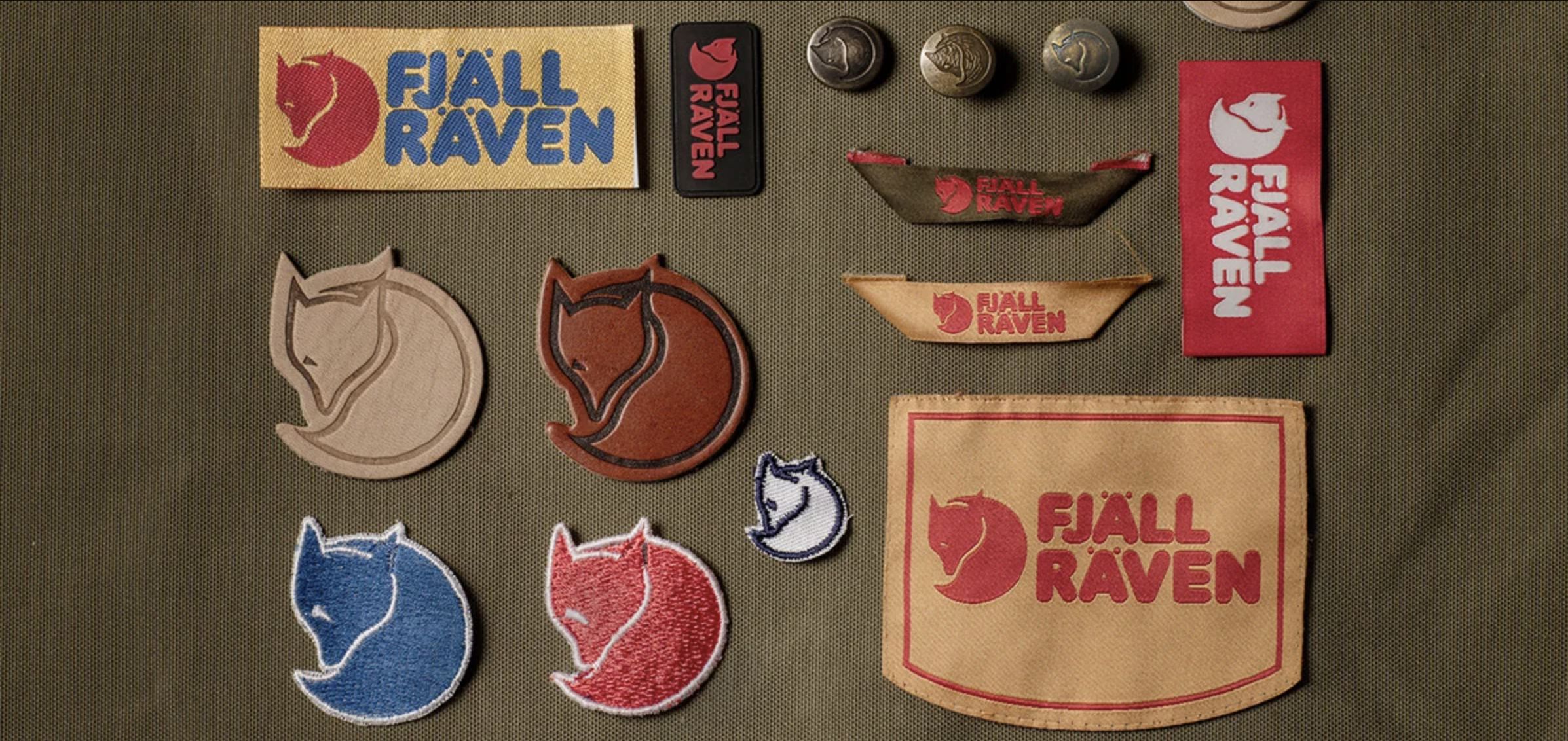
Photo credit: Fjällräven
"People think we are a 'bag-selling brand', but Fjällräven is not a bag brand." In May 2025, by the bank of Jinhai Lake in Beijing, Lin Mingwen, the head of this Swedish outdoor brand's China region, said similar words no less than eight times during his one-hour conversation with "TIDE".
At that time, Fjällräven's employees were setting up the venue on the lawn, preparing for the brand day event the next day. Not only him, but the entire team also showed a subtle sense of tension. They spent money on events, hoping that more people would get to know Fjällräven; but when it comes to Kanken backpacks, traffic, marketing and celebrities, they will subconsciously return to the keywords of "products" and "long-termism".
They are eager to be seen, but even more afraid of being misread.
In 2008, Lin Mingwen obtained the Chinese operating rights of Fjällräven. In the first few years, they tried consignment sales through channels, and also opened self-operated stores, hoping to break into the market with professional outdoor products. But what really allowed Fjällräven to reap market dividends was the unexpectedly popular Kanken backpack - it once accounted for the vast majority of sales in China, almost becoming a synonym for the brand.
When the backpack sales were booming, Lin Mingwen and the Swedish headquarters decided to cool down the momentum: Fjällräven cannot rely solely on backpacks.
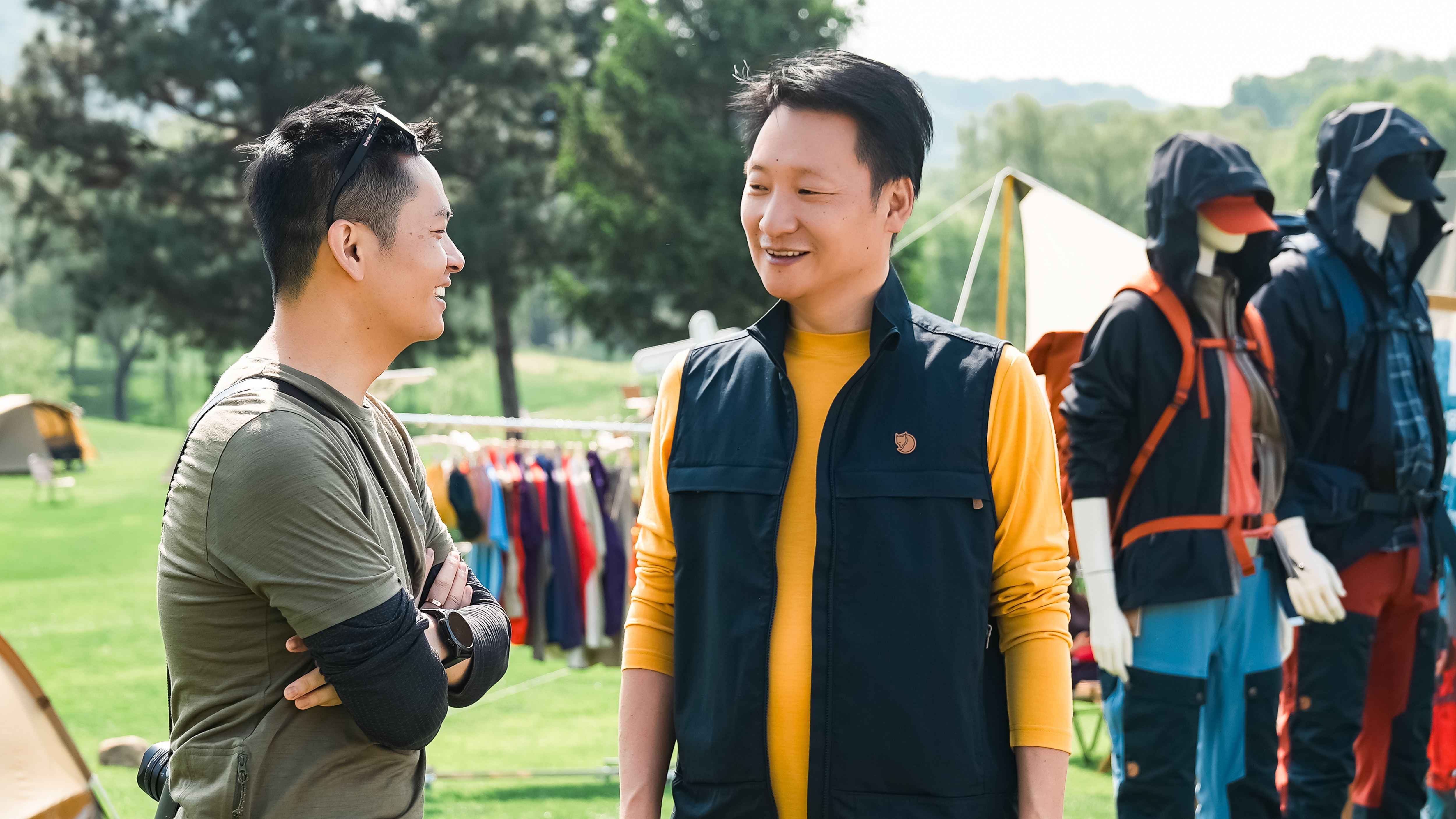
Lin Mingwen (right) at the event site of Jinhai Lake, Photo credit: Fjällräven
In the following years, they set up a China-based design team, successively closed independent Kanken counters, and invested heavily in upgrading or expanding full-category stores in high-end shopping malls, trying to pull the brand image back to the outdoor sector.
But over the years, the strategies of China's outdoor circle have been constantly updated: high-end positioning, event hosting, trend collaborations, celebrity endorsements... What all brands are competing for is no longer just professional users.
Traffic can bring growth, but it also easily leads to misinterpretation; to be recognized by more people, it is often impossible to avoid trends. In the fiercely competitive Chinese market, should this slightly old-school Swedish outdoor company follow the trend, or not?
01. Kanken is too popular, but it has nothing to do with outdoor
Around October 2016, in an office of more than 70 square meters, Fjällräven's annual review meeting was about to start.
There was no independent meeting room in the house, so Lin Mingwen had to clear an open space next to his workstation. Four people each pulled a chair and sat in a circle. In addition to him and the China marketing director, the other two were senior executives who flew over from the Swedish headquarters: Martin Nordin, Group CEO and son of the founder, and Alex Koska, Brand Sales Director.
Outside the floor-to-ceiling windows, the white buildings of Jianwai SOHO stand next to each other. People kept coming in and out of the hair salons, convenience stores and small restaurants on the ground floor. Fjällräven's office is located in this cluster of commercial and residential buildings. This was Fjällräven's eighth year in China.
Alex Koska turned on his computer. In the PPT, several curves recorded the sales proportion of Kanken backpacks in different markets: Sweden had the lowest proportion, never exceeding 20%; the United States fluctuated between 50% and 60%; South Korea once approached 80%, then fell back and stabilized.
Only the curve for China had no inflection point - after crossing the 80% mark, it was still climbing upwards.
Lin Mingwen had seen a similar trend chart in an email at the beginning of the year. At that time, he mostly thought "it's normal, after all Kanken is too popular". But this time, Alex Koska reminded him: Kanken's global growth has slowed down, and the Chinese market will slow down sooner or later. Lin Mingwen looked at the screen and did not respond immediately.
What he cared about was no longer just how long this backpack would remain popular.
About a year ago, at a Huaiyang cuisine restaurant in Yangzhou, Lin Mingwen sat around a table with his high school head teacher and old classmates. Halfway through the dinner, the teacher suddenly asked him where to buy their brand's bags, saying that his son saw others carrying it and "liked it so much". Lin Mingwen casually said that he would send the best-selling frost green version later. As soon as he spoke, his old classmates also joined the conversation one after another.
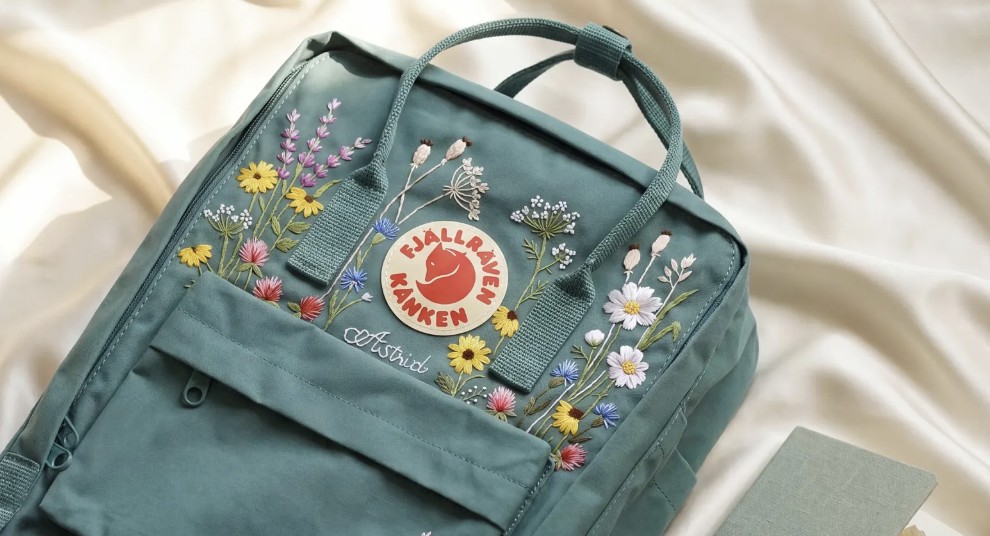
Kanken frost green backpack, Photo credit: Fjällräven
That day, the topic always revolved around Kanken. In the past, almost no one talked about his business.
He couldn't help explaining that Fjällräven is actually an outdoor brand, and cited the experience his colleague shared on the "Kungsleden" (a famous public long-distance hiking trail in northern Sweden), talking about various experiences of people in the wilderness.
But after chatting for a long time, in everyone's mouth, young people buy Fjällräven backpacks simply because they are "good-looking and fashionable".
That was the first time he truly felt something was wrong: "In everyone's eyes, Fjällräven is just a bag."
At the review meeting, the four of them talked until evening about the future of Fjällräven. In the end, Martin Nordin set the tone: the China region can no longer bet growth on Kanken, and the business focus must return to outdoor apparel.
Before the meeting ended, they finalized the first step: to form a China-based design team to develop products that fit the local market.
But by 2017, the top posts on Fjällräven's official WeChat public account still pushed Kanken content again and again. In cities like Shanghai and Nanjing, independent counters that only sold this backpack were still opening one after another.
02. What kind of product should we use to open up the market?
Only two years after its establishment, Fjällräven's Chinese joint venture was on the verge of shutting down.
In 2010, before the plum rain season came to Yangzhou, at the quarterly meeting, the agenda was going through one by one as usual, when the finance staff spoke up: Fjällräven had no money left in its account.
At that moment, Lin Mingwen's mind went blank.
As the owner of Yangzhou Jinquan, an outdoor OEM manufacturer, he had dealt with many troubles on the production line. But he had never encountered a situation where the brand operation ran out of cash.
On the eve of the 2008 Beijing Olympic Games, with the trust accumulated from 5 years of producing tents and sleeping bags for Fjällräven, Lin Mingwen officially signed a cooperation agreement in China with the Swedish side, with the Chinese and Swedish sides each holding 50% of the equity.
On the day of the signing, the new company held its first regular meeting in Yangzhou. The biggest disagreement at the meeting was: what product should this brand, which was almost unknown in China, use to open up the market?
The professional manager invited by Lin Mingwen set his sights on the hunting jacket. It is a classic Fjällräven product, with deep colors and tough lines. The unique G-1000 fabric feels like canvas, with a tight texture; when you touch it carefully, your fingertips can feel a hint of waxiness.
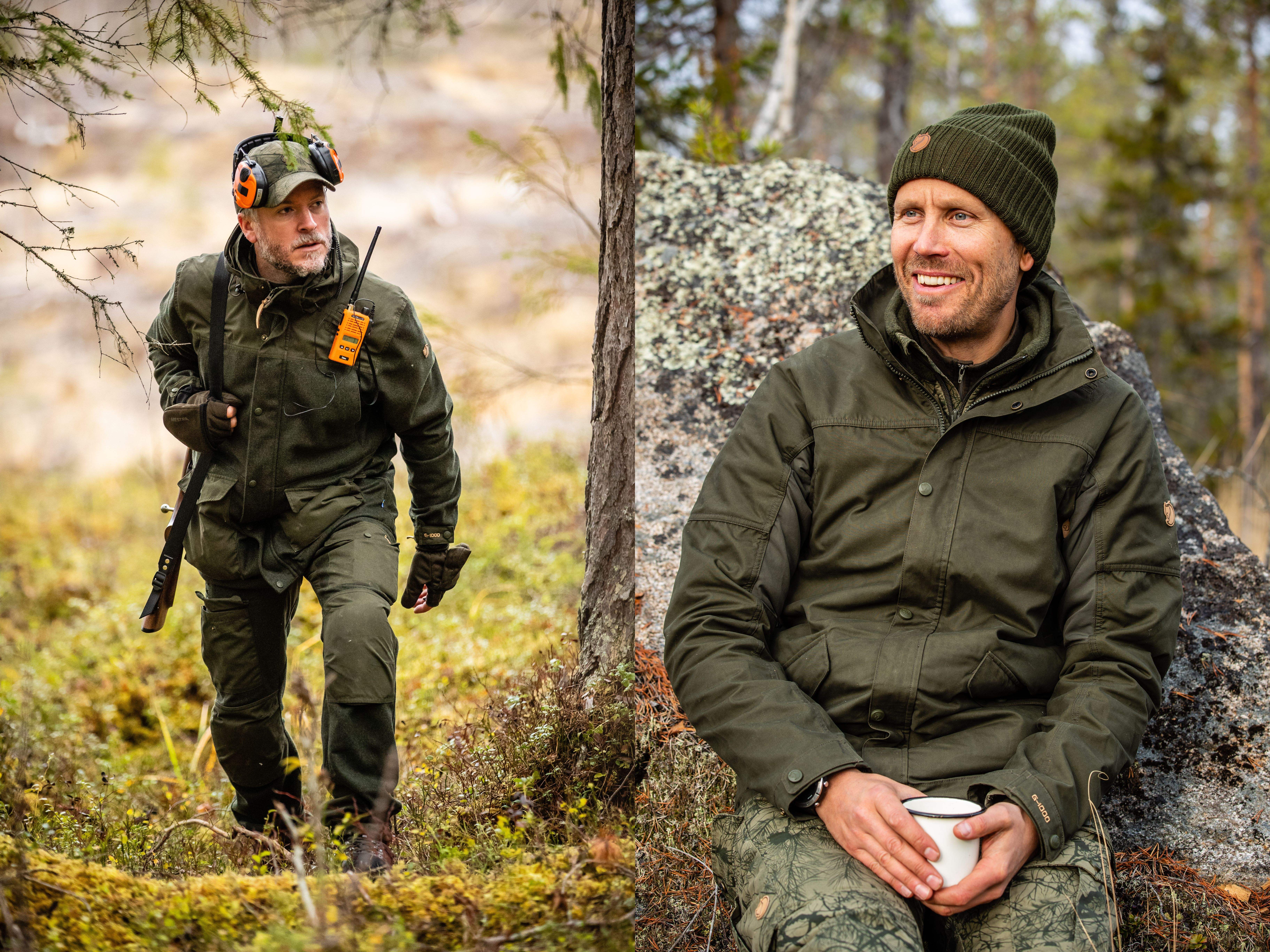
Fjällräven hunting jacket, Photo credit: Fjällräven
What that person valued was the "category gap": hunting jackets are distinctive, no one makes them, there is little competition, and they are easy to remember. The Swedish side did not agree: it is just one of Fjällräven's many product lines, not a core product, and besides, promoting hunting jackets in a country that controls "private hunting" would obviously not adapt to the local context.
But this professional manager had an excellent brand resume and held channel resources in his hands. In Lin Mingwen's view, the top priority was to break into the market first.
"Since we have hired a professional, we choose to trust him." Lin Mingwen made the final decision, and the main product was set as the hunting jacket. In the days that followed, he mainly handed over the operation of Fjällräven to the other party, and rarely intervened directly.
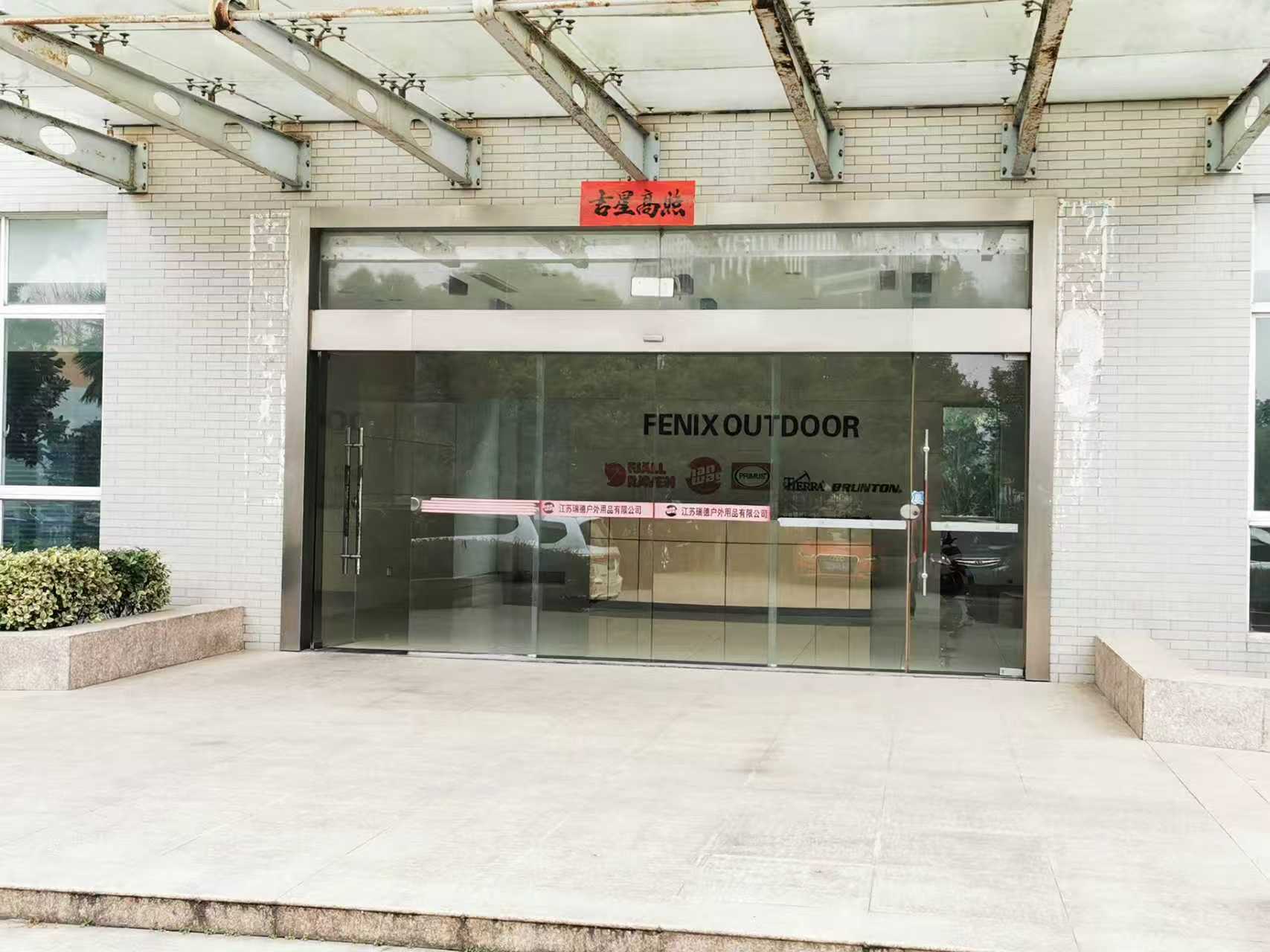
Jiangsu headquarters of Fjällräven's Chinese joint venture, Photo credit: Fjällräven
Until the first phase of investment was completely exhausted.
Lin Mingwen was unwilling to quit. He transferred 3 million yuan from Jinquan's account to the joint venture, wanting to keep it running for a while longer. As soon as the money arrived, he began to test self-operated stores.
Away from the familiar production line, Lin Mingwen was like a newcomer: where to choose the store location, how large the store should be, and how to manage the store staff, everything had to be explored from scratch. After the new store opened, there were often deviations in procurement plans, and the accounts between the warehouse and the stores often did not match.
As a result, the 3 million yuan only lasted for a few months. "It's like a bottomless pit, money keeps pouring in, but we can't hear any echo," he described Fjällräven at that time.
The clothes were obviously of good quality, so where was the problem?
In October 2010, after receiving a call from Lin Mingwen, Martin Nordin came to Yangzhou. The Group CEO was already aware of the situation of the joint venture. Before that, the operating data of the China region was sent to Sweden every month.

Martin Nordin Photography: Fredrik Hjerling
The two met at the hotel where he was staying. Lin Mingwen recalled that the two "did not beat around the bush and went straight to the point": does the Chinese market really need Fjällräven?
After Fjällräven entered various channels, Lin Mingwen followed to visit the stores. He talked to people, customers thought the clothes were "practical" and "durable", and shop owners also commented that they were "quite good". In his words: "People who like it like it very much." These feedbacks made him believe that a group of people in China could already accept Fjällräven, and after the Beijing Olympic Games, sports consumption was gradually rising, so he judged that the outdoor industry would also "develop gradually and move upwards".
"I clearly told them that China needs Fjällräven, and it definitely has room to survive."
Martin Nordin agreed with this judgment. But why did the funds run out in such a short time?
The topic inevitably returned to the hunting jacket.
At the beginning, the Swedish side preferred Fjällräven to present itself as a complete outdoor brand, and also reminded Lin Mingwen: "When a brand enters a new market, once the first impression is formed, it is extremely difficult to correct later."
Relying on the uniqueness of the hunting jacket, Fjällräven did knock on the doors of many outdoor stores. But entering the store does not mean that the business can be sustained.
Around 2008, the total size of China's outdoor products market was only 3.65 billion yuan, just half of Li Ning's revenue in that year, but more than 400 brands had already crowded into the market. At that time, most outdoor stores looked the same: the light was dim, the air was mixed with the smell of nylon and waterproof coating, and clothes of different brands were piled tightly in the same space.
Most of the customers who entered the stores were men in their 30s and 40s. They usually went straight to the shelves, checked the parameters, touched the fabric, and then asked about the performance. Fjällräven's popularity was not as good as The North Face and Columbia, and hunting jackets were not as easy to understand as hardshell jackets, so few people were willing to pay for them.
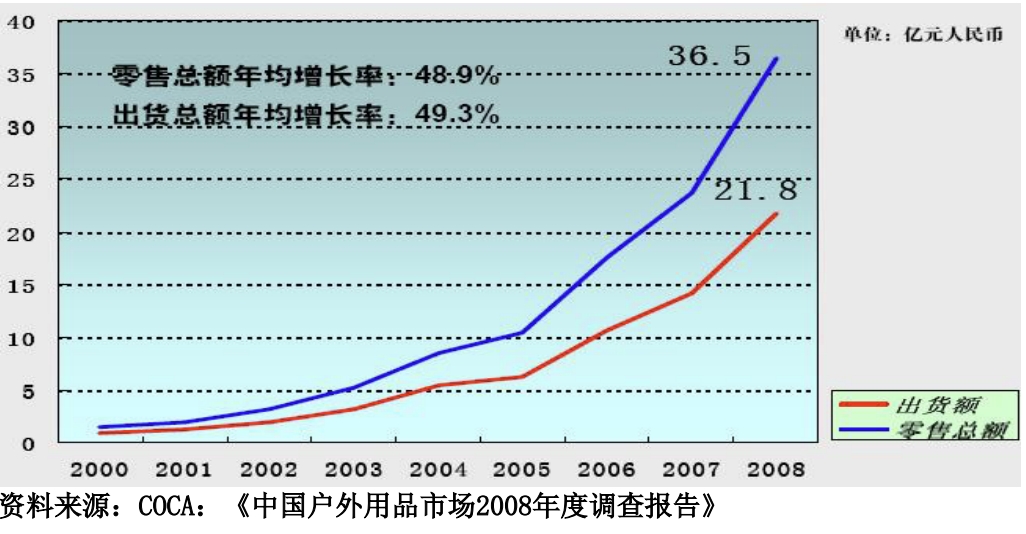
Photo credit: Toread IPO Prospectus
Except for a few cities such as Xi'an and Urumqi, the response to hunting jackets in other places was mediocre. Uniqueness and scarcity do not mean demand.
"The reality confirmed the Swedish side's professional judgment at the beginning, which made me feel that our partners are very