OBSBOT Unveils Three New Products to Accelerate the Implementation of AI Imaging Automation | Frontline
By Huang Nan
Edited by Yuan Silai
On November 25, intelligent imaging brand OBSBOT launched three new products, the OBSBOT Tail 2 Pioneer Edition, Tail Air 2 and Meet 3, which are respectively targeted at professional long-distance shooting, lightweight program production and desktop video communication scenarios.
The imaging equipment industry is undergoing a shift in narrative focus. In the past few years, competition among mainstream products has been concentrated on hard indicators such as sensor size, resolution and frame rate, with increasingly lengthy parameter lists. However, the core problems users face in actual shooting — framing, follow shot, camera movement and multi-camera scheduling — still rely heavily on manual operation. The improvement of hardware capabilities has not been synchronously translated into higher shooting efficiency.
The three new products released by OBSBOT this time are precisely targeting this gap: embedding capabilities such as AI tracking, automatic framing and camera movement control into the workflow of specific shooting scenarios, rather than only staying at the parameter level.
In professional long-distance shooting scenarios, camera positions are often limited by site conditions and can only be set up at edge positions. The OBSBOT Tail 2 Pioneer Edition increases continuous optical zoom to 21x, supports a maximum 40x hybrid zoom, and adopts a variable aperture design for the first time. Combined with the self-developed OBSBOT Log imaging mode, custom LUT import, and the newly added time code function, it provides a collaborative basis for multi-camera color consistency and post-production workflow.
Among them, after the AI intelligent tracking and automatic framing are combined with the super telephoto optical system, the device can continuously adjust the lens direction, focus and framing range according to the movement of the subject, reducing the operational burden of manual follow shooting. For scenarios such as sports events and variety show recording, this means changes to the coverage capability and shooting efficiency of a single camera position.
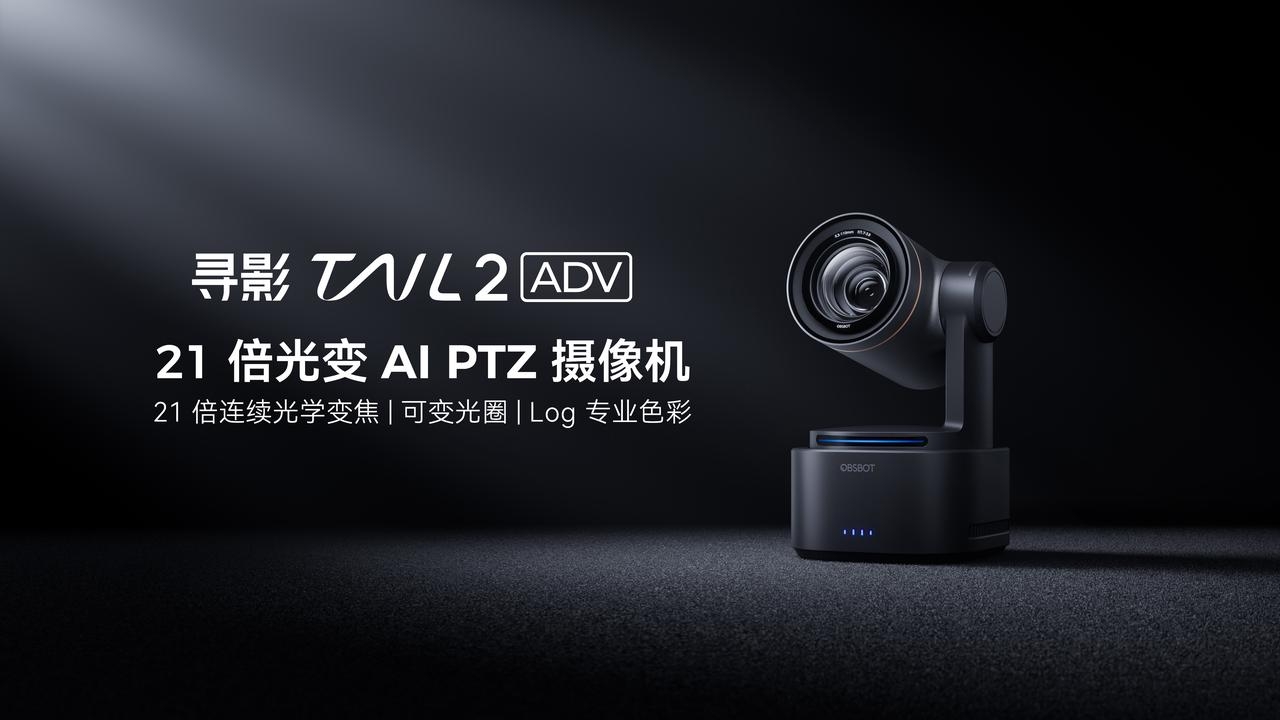
OBSBOT Tail 2 Pioneer Edition (Source: Enterprise)
Lightweight program production faces another type of problem. In scenarios such as interview podcasts and small-scale performances, shooters often need to take into account follow shooting, framing and camera movement at the same time, while limited site space restricts the deployment of camera positions. The OBSBOT Tail Air 2 is equipped with a 1-inch large-bottom CMOS sensor, whose photosensitive area is about 200% higher than that of the previous generation. Combined with the F/1.9 large aperture and AI dual-core architecture, it can improve the imaging performance in low-light and high dynamic range scenarios.
The Tail Air 2 provides a variety of AI intelligent tracking modes, supports person, animal and object recognition, and can collaboratively control gimbal movement and lens zoom in combination with automatic framing and camera movement control, to achieve lens effects such as automatic following, zooming in and zooming out. Weighing 438 grams and featuring a compact size, it can adapt to special camera positions such as hoisting and inclined installation; unified multi-camera monitoring and control helps small production teams improve on-site scheduling efficiency.
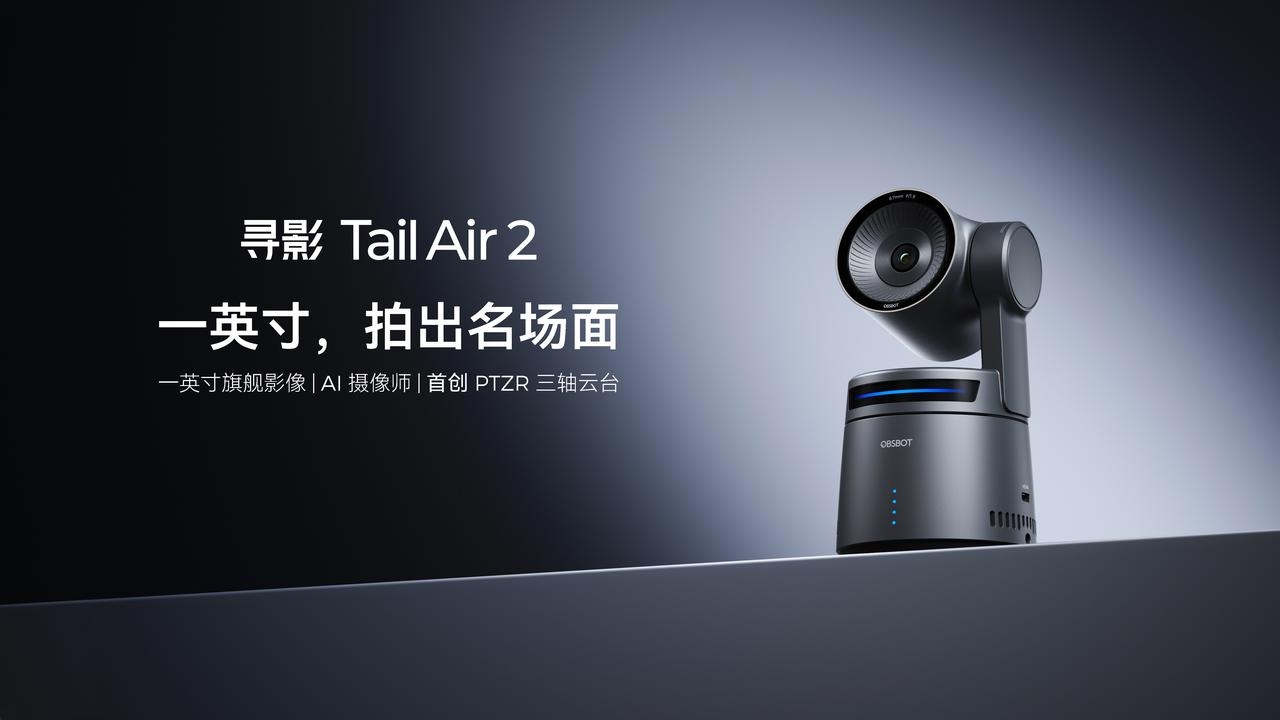
OBSBOT Tail Air 2 (Source: Enterprise)
The logic of desktop video communication scenarios is more oriented to individual creators and daily office work. The OBSBOT Meet 3 is equipped with a 1/1.28-inch CMOS sensor and F1.8 large aperture, supports 4K output and fast focusing, is equipped with an omnidirectional and directional dual microphone system, and supports intelligent noise reduction and multiple sound pickup modes. AI automatic framing and gesture control reduce manual operations during live streaming and meetings; the AI Magic Note function at the software level supports meeting transcription, speaker distinction and key summary generation, extending hardware capabilities to the content organization workflow.
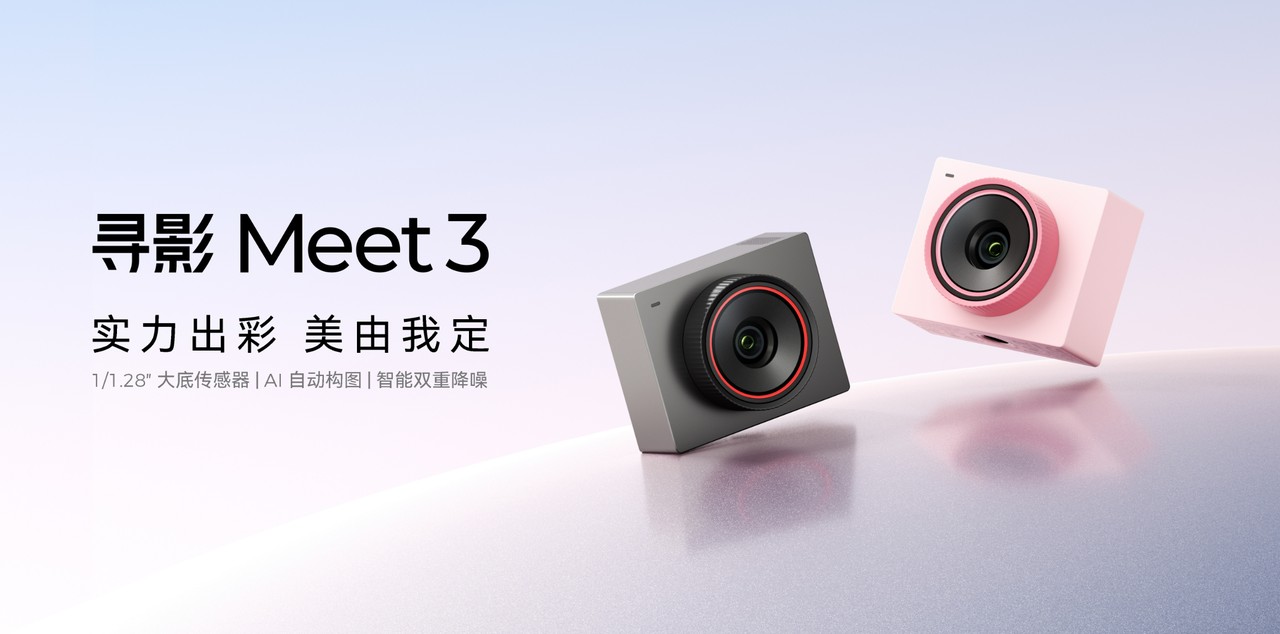
OBSBOT Meet 3 (Source: Enterprise)
From an industry perspective, the real value of imaging automation does not lie in completing a single shooting for users, but in reconstructing the shooting workflow itself.
When capabilities such as AI tracking, automatic framing and multi-camera scheduling change from "additional features" to "default capabilities", the competition dimension of imaging equipment also changes accordingly: from the competition of single hardware parameters to the comprehensive experience of "hardware + software + automation capabilities". For professional teams, this means less human input and higher output efficiency; for individual creators, this means the threshold of professional-level shooting capabilities is further lowered.
The three new products launched by OBSBOT this time cover different scenarios from professional long-distance shooting to daily desktop video communication. Their common point is: embedding automation capabilities into the workflow of specific scenarios, so that the equipment evolves from a "passive recording tool" to an "active collaboration assistant". On the track of imaging automation, this is perhaps closer to the value that users really need than any single parameter improvement.
From now on, the three new products are officially on sale at OBSBOT's official flagship stores on Tmall, JD and Douyin.