The Fierce Battle of Chinese Autonomous Taxis in Dubai
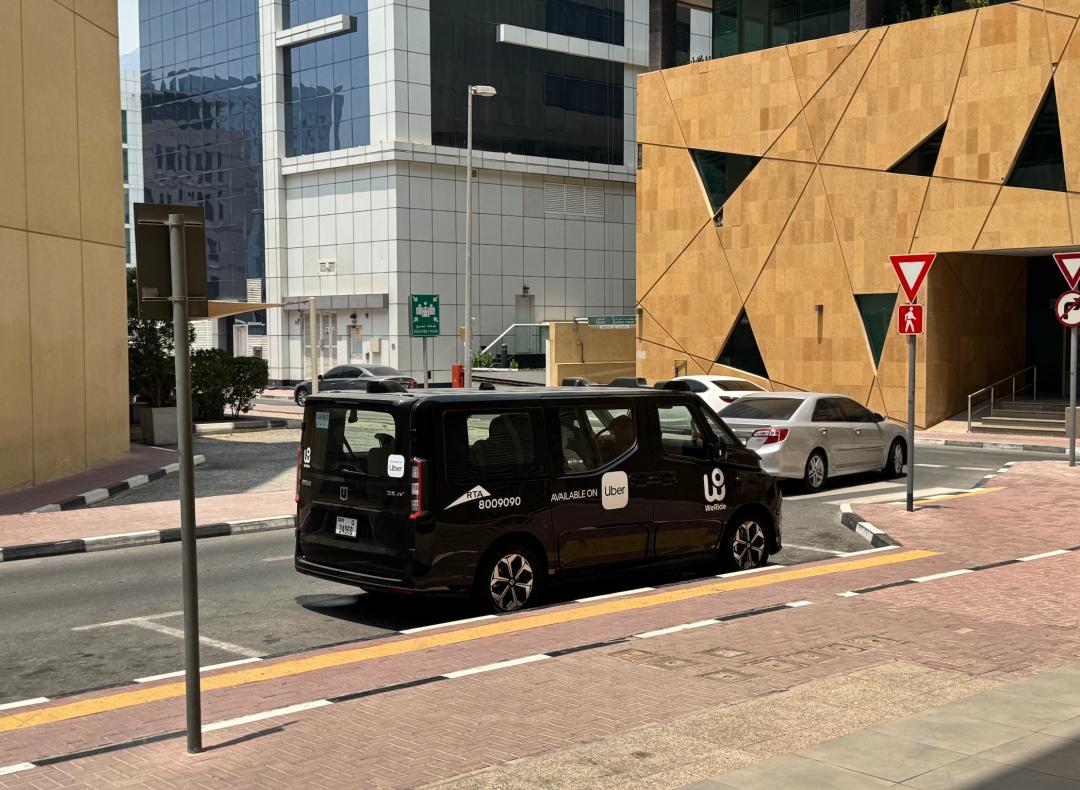
If you open Uber near Jumeirah Beach in Dubai and happen to select a driverless taxi, the arriving vehicle will most likely bear the logos of Baidu Apollo Go or WeRide.
Currently, local ride-hailing passengers cannot specify the brand, and they will not know which operator will pick them up until the trip is confirmed. However, the assigned operator will not affect the fare of the trip. Chinese Robotaxi companies that used to operate independently in China have all landed on the same ride-hailing app page in Dubai, competing fiercely for user orders.
The intensity of competition among these Chinese Robotaxi operators in Dubai is far higher than that in China, and the market has heated up at a much faster pace.
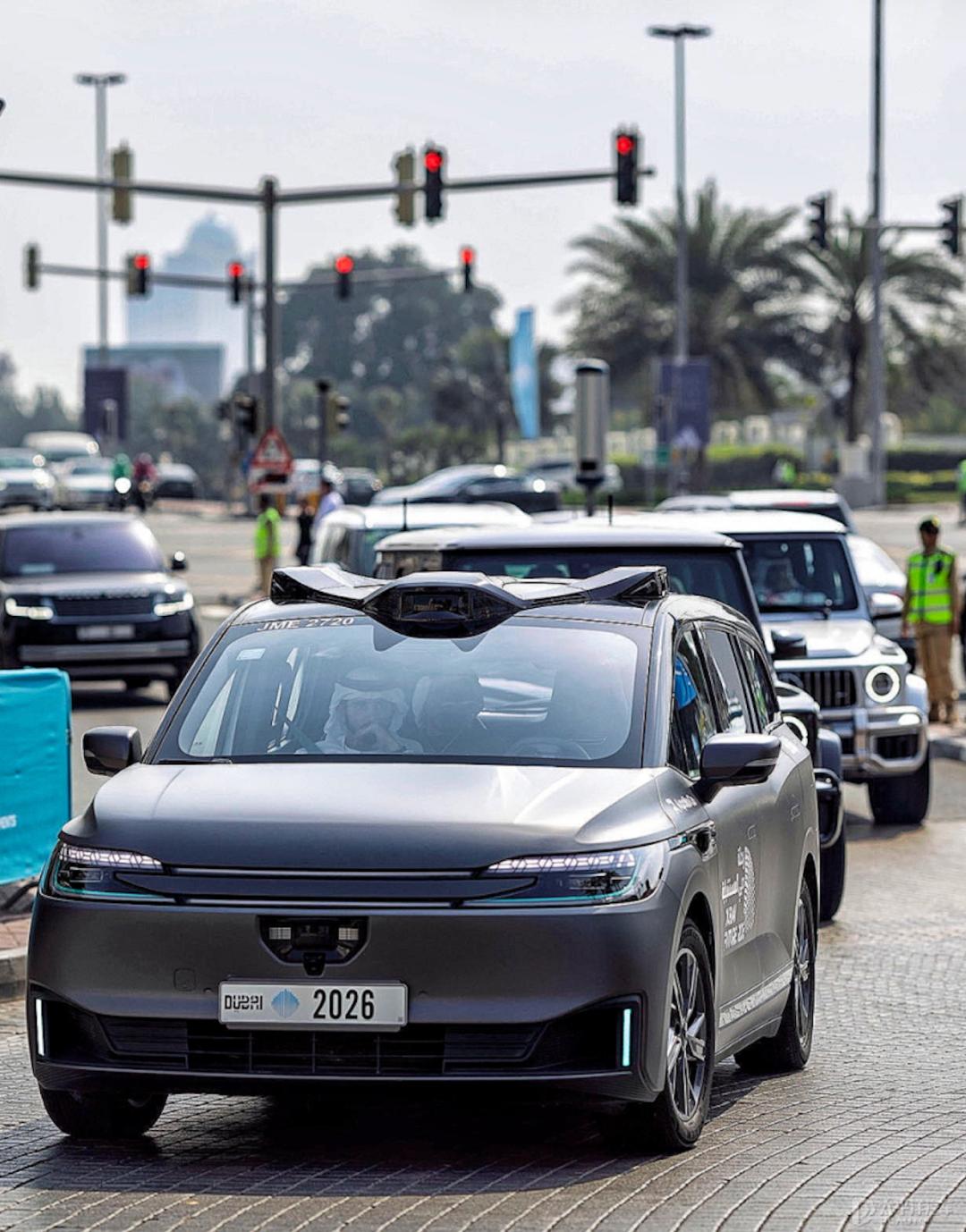
On November 18, Uber disclosed that it plans to invest approximately 50 million US dollars in the next two years to expand local autonomous driving services and operation facilities in Dubai. Moreover, the next step is not only to increase the number of vehicles, but also to continuously upgrade services.
For example, users are requesting on-demand door-to-door ride hailing within designated zones, so that passengers no longer need to go to fixed pickup points. The service scope will also cover core business districts including Downtown Dubai, the Dubai International Financial Centre, and Business Bay.
Nearly all mainstream Chinese Robotaxi companies have entered the Dubai market. Before the competition in China has produced a clear winner, these Chinese players have already laid out their positions overseas.
Sowing the Seeds
Chinese enterprises entered the Dubai market almost one after another, but each chose a different entry path.
Baidu's Apollo Go is the earliest player in the industry to launch operations in Dubai.
In August 2025, Apollo Go deployed 50 6th-generation RT6 models in Dubai to carry out tests on designated roads. In January 2026, Baidu launched its first overseas operation control center in Dubai, covering an area of 2,000 square meters. The center is responsible for fleet scheduling, charging, maintenance and software iteration, and is also equipped with facilities for simulation testing and driver training.
The Dubai Roads and Transport Authority (RTA) stated at the time that this center was built to prepare for expanding the local fleet to thousands of vehicles in the coming years.
In terms of operation channels, Baidu adopted a dual-track system of "taxi company + Uber": in March, Dubai Taxi Corporation and Baidu announced their cooperation to provide fully driverless commercial passenger services through Apollo Go's own app; in August, Baidu connected the fleet operated by New Horizon Luxury Transport to the Uber platform.
These two approaches seem to complement each other: The self-owned app can directly reach users, but Baidu has to bear the customer acquisition and service costs on its own; connecting to Uber can leverage the existing traffic pool, but it cannot directly convert platform users into its own private domain users.
Baidu intends to move forward on both tracks. After all, multiple entry points can make the order volume look larger, and the fixed investment in the operation center can be spread more thinly.
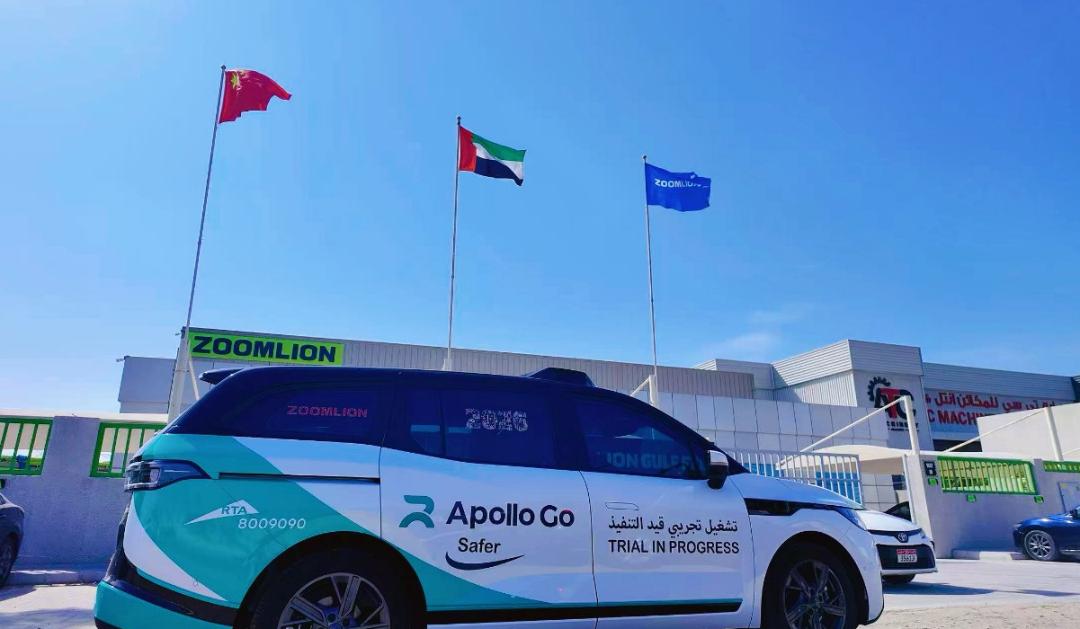
WeRide has taken the asset-light technology export route.
In December 2025, it launched supervised trial operations in Dubai; on March 31, 2026, it launched fully driverless paid services in Jumeirah and Umm Suqeim.
WeRide exports autonomous driving technology solutions, and entrusts local partner Tawasul with fleet management and platform operation, while most of its orders come from Uber's traffic pool.
At the same time, WeRide is also gradually expanding its offline layout:
In February this year, it announced the upgrade of its strategic cooperation with Uber. The two parties plan to deploy at least 1,200 Robotaxis in the Middle East by 2027, covering the three major markets of Abu Dhabi, Dubai and Riyadh; in March this year, WeRide and Geely Farizon Auto jointly announced that they are expected to deliver 2,000 Robotaxi GXR units in 2026, which will be put into domestic and overseas markets.
Compared with the two Chinese peers mentioned above, Pony.ai has adopted a different strategy and a slightly slower pace.
In September 2025, Pony.ai obtained the public road test license in Dubai. In April 2026, it disclosed that it had completed road tests without on-board safety operators, and proposed the plan to launch paid public services with hundreds of vehicles. As of November, in the investor materials disclosed by the company, it still uses the expression "advancing commercialization" for its Dubai business, and has not officially confirmed that the paid public service has been launched.
The three enterprises have different entry times, different models and different progress, and all have started in-depth cultivation in the same market.
Sprouting
Some people may ask, why do Chinese Robotaxi operators choose Dubai one after another as the place to sow their seeds overseas? There are certainly many reasons, and the core reason is most likely attributed to the more open regulatory attitude.
Dubai highly encourages autonomous driving. As early as 2016, it proposed to convert 25% of all transportation trips to smart or driverless modes by 2030. In 2025, this target was expanded into the "Dubai Autonomous Transportation Strategy 2025-2040", further raising the proportion to 36% by 2040.
Although this target covers multiple transportation modes such as metro, public buses and taxis, and is not only targeted at the Robotaxi category, there is no doubt that this enthusiasm for driverless vehicles has ignited the passion of many related companies, especially Chinese companies.
This enthusiasm has driven Chinese Robotaxi companies to take root collectively in Dubai and quickly sprout new buds.
On August 19, the Dubai RTA disclosed a set of city-wide data: at that time, the city's total Robotaxi fleet had 144 vehicles, 48 of which were in active operation, with about 50 trips per day on average, and a total of 7,613 passenger trips completed since the launch, with a passenger satisfaction rate of 97%.
There are two different interpretations of this set of data performance.
From an optimistic perspective: there are still many operational restrictions for Robotaxis in Dubai at present, such as fixed pickup and drop-off points, limited service areas, and many potential demands are blocked by geographical restrictions. If flexible pickup and drop-off are lifted later, the order volume may grow much faster than the fleet size, the vehicles can also reduce empty driving mileage, and the operation efficiency will continue to improve.
There are also many reasons for doubts: most of the current passengers are beach tourists who come to try the new service. For rigid scenarios such as commuting, catching a flight, and picking up children, it is still unknown whether people will choose driverless cars on a regular basis. If several more service areas are opened under insufficient preparation, it may only add an extra set of charging, maintenance, scheduling and safety systems, and the order volume that fails to keep up will dilute the returns instead.
This set of data itself also has certain limitations. For example, it does not break down data by enterprise, nor does it disclose the average operation duration, the order volume of each company, and the payment ratio. The high satisfaction score only shows that the experience of passengers who have taken the rides is not bad, but it does not mean that there is indeed a huge potential crowd waiting for the full rollout of Robotaxis.
In addition, even if Dubai's goal is to make more than one third of all transportation trips in the emirate automated by 2040, it does not require one third of the people to take Robotaxis, but only sets requirements for transportation vehicles, with high standard restrictions on operation licenses and insurance. For example, vehicles are verified in stages, on-board supervisors must be equipped in the early stage, and cross-regional operation is not allowed, etc.
This regulatory rhythm makes the vehicle investment choice of Chinese Robotaxi operators a "Schrödinger's cat": whether to pay for the vehicles in advance and stock them while waiting for licenses, or to add more vehicles after the demand is clear, the answer can only be given by time.
A bigger problem at the industrial level is that currently all Chinese Robotaxi orders in Dubai are highly dependent on Uber. Although this can improve matching efficiency in the early stage, on the other hand, since the platform holds the order dispatching power, Robotaxi operators will inevitably lose a lot of initiative. The "Dubai version" of travel platform monopoly + high-intensity capacity competition is very likely to emerge overseas.
Therefore, on the current Dubai market, Robotaxis have sprouted, but they are far from reaching the fruiting stage.
Complexity
As for when Chinese Robotaxi operators can generate sufficiently strong revenue capacity in Dubai, none of the companies have made a statement. Judging only from the financial reports of each company, the base is too small to have a sufficiently significant impact on the financial results.
WeRide's Q3 data disclosure shows that its Robotaxi business revenue exceeded 100 million RMB for the first time, a year-on-year increase of 204%, of which more than 90% came from overseas markets. However, the group's net loss for the quarter was 310 million RMB;
In addition, Pony.ai recorded an operating loss of 68.7 million US dollars for the same period.
The loss data of both companies includes the costs of other markets and other business segments around the world — the goal of these loss costs is global market construction, and they are not spent only on the Dubai business.
WeRide previously mentioned in its annual report that its Middle East subsidiary's Robotaxi business has achieved operational profitability since 2025, but it has not separately disclosed the data of the Dubai market.
As of the third quarter of this year, Baidu only mentioned in its financial report that Dubai's fully driverless commercial operation area has expanded and the fleet size has doubled, but did not give the specific number of vehicles. The outside world cannot directly calculate the current operation scale from the initial 50 test vehicles.
To find the answer, we can only refer to the performance of other cities.
WeRide disclosed in its Q3 report that the Guangzhou market has achieved positive per-vehicle economics, with an average of 21 orders per vehicle per day for its domestic business in the same period. Pony.ai stated that Guangzhou reached the break-even point for per-vehicle economics in November 2025, and Shenzhen hit the same milestone in February 2026.
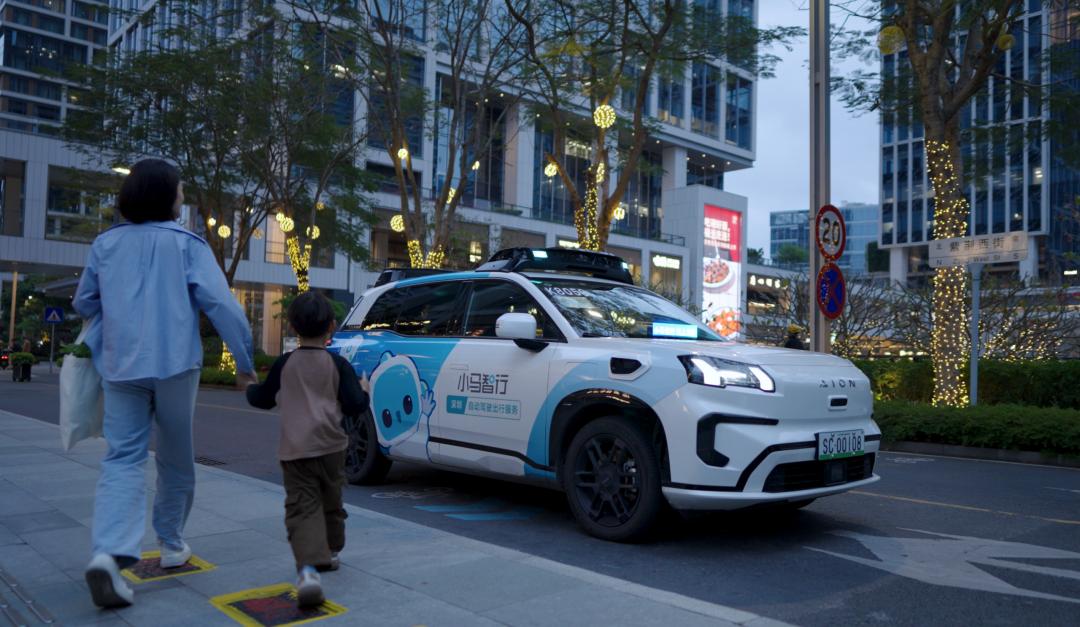
These are all phased data disclosed by the enterprises according to their own calibers, which do not mean that the whole company is profitable, and cannot be directly applied to the Dubai market. After all, the charging rules, service hours, subsidy policies and labor costs of the two places are different, so there is no direct comparability.
However, domestic experience has at least verified one logic: If newly added vehicles can be deployed to areas where continuous operation has been formed and residents have high ride-hailing frequency, there is an opportunity to use Robotaxis to take over the demand that was previously lost due to too long waiting time, and vehicle operation and maintenance can be more easily connected to the original system, so the return effect will be better.
There is another more intuitive reference system, which is Abu Dhabi, also in the UAE market.
The local transport authority announced in November 2025 that it would launch fully driverless commercial operations, and the first batch of licenses involved two groups of players: the combination of WeRide, Uber and Tawasul, and the combination of AutoGo-K2 and Baidu.
WeRide mentioned in its annual report that after removing the on-board safety operators in Abu Dhabi, the fleet is qualified to reach the per-vehicle break-even point. This is not the full profit statement of Abu Dhabi, but at least it shows that overseas markets are not destined to be unprofitable.
However, even though they are both in the UAE, the actual situations of the two cities are very different, which is exactly a core feature of the heavy-operation business model such as Robotaxi: the actual situation of each operating country and city is different, and all need to be "treated differently".
For example, whether on-board safety operators are required means different labor costs. The specific input intensity and personnel scale of the teams for remote assistance, accident response and on-site maintenance that need to be configured in the back office will all be different.
Dubai's regulations even require that vehicles must be insured by insurance companies licensed to operate in the UAE. One accident not only involves repair costs, but may also lead to vehicle downtime, re-inspection and higher renewal insurance costs.
For Chinese companies, these different policy differences in different regions not only mean that the layout in these cities requires more complex calculations, but also directly affect their specific business progress.
It is obviously not enough to only see "how many hours a day a vehicle can actually take orders", "how much is the actual revenue per hour", and "what are the net fare, empty driving loss, electricity cost, depreciation, insurance and platform commission". Because for driverless taxis to run on the road, one single vehicle is far from enough.
This article is from the WeChat Official Account "Giant Tide WAVE", written by Huigu, edited by Lao Yu'er, and published with authorization from 36Kr.