The top scorer in the tax exam was involved in a fraud scandal and the Minister of Education resigned: behind the fierce disputes over South Korea's college entrance examination, AI is destroying the thousand-year-old exam-oriented order in East Asia.
In 958 AD, Goryeo officially introduced the imperial examination system, selecting talents through examinations following the example of the Tang Dynasty.
For more than 1,000 years thereafter, the imperial examination, along with modern examination systems derived from it such as the national college entrance examination, judicial examination, and tax agent qualification examination, has always occupied the core position in the talent selection system on the Korean Peninsula.
Until this year, AI set off this "unprecedented change in a thousand years".

On November 15, 2026, in Seoul, 34-year-old South Korean examinee Won-seok Han, after much hesitation, chose to upload a 14-minute apology video on a lawyer's YouTube channel, admitting to cheating.
His cheating method was very simple: he used a miniature camera hidden in a correction tape to photograph the test questions, transmitted them to a home computer via a modified calculator and smartphone, and then used generative AI to generate answers for the test.
But with such simple tools, a few months ago, he just won the first place in the 63rd Registered Tax Agent Qualification Examination — he only got 1 out of 160 multiple-choice questions wrong in the first round, setting the best score in the history of the examination since its establishment.
The news of the "top scorer cheating" became a trending headline across South Korea overnight, but the disaster was far more than that. What was even more terrifying were the following two incidents:
First, all the generative AI tools used by Han were civilian equipment purchased from e-commerce platforms, with extremely low assembly difficulty and cost, which was impossible to guard against or ban from sale at all;
Second, four days later, on November 19, was the national college entrance examination day that South Korean people value the most, 550,000 examinees competed fiercely: those who got into the SKY League would embrace an upward life, while those who only got into ordinary universities would face a downward life, and their life trajectories diverged for the first time at this point.
Now, the method of using AI to get the top score in the exam has been leaked, but the education authorities have not made any contingency plans to deal with AI cheating at all.
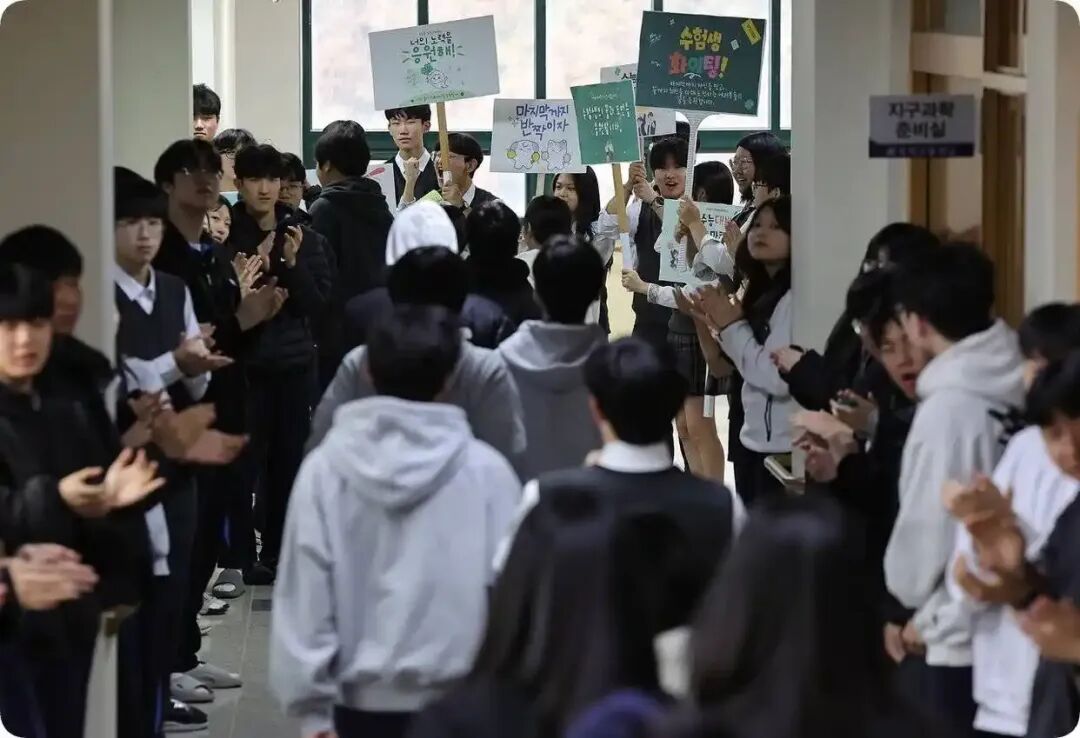
(On November 17, at a send-off ceremony held at Seok-gu High School in Jigu County, North Gyeongsang Province, third-year high school students walked through the cheering crowd. There were only two days left before the national college entrance examination. (Yonhap News Agency))
【 Spear and Shield: The 96 Hours of Panic in Seoul 】
The time left for the South Korean education authorities to plug the loopholes is less than 96 hours.
The South Korean education authorities were forced to urgently introduce supplementary plans: on the 17th, they announced that more than 8,400 additional personnel would be deployed, including more than 1,800 full-time staff dedicated to checking smart devices and more than 6,600 corridor invigilators, and launched a measure of pasting stickers on the buttons of examinees' clothes to block pinhole cameras.
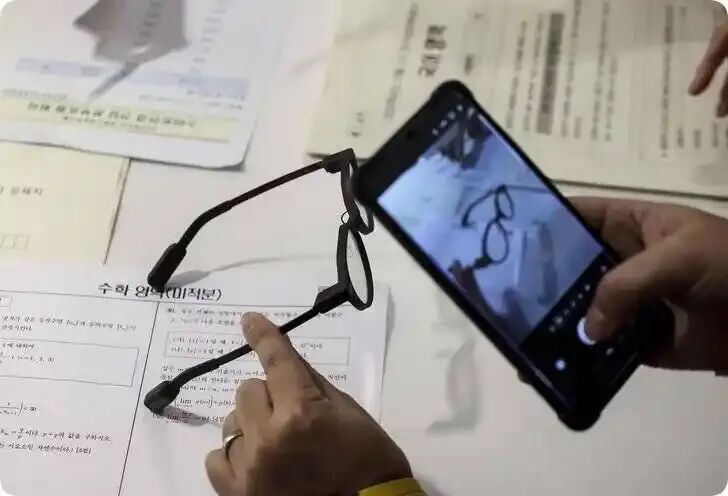
(An official in charge of checking smart glasses at college entrance examination sites across Seoul inspected a pair of smart glasses at a training meeting at the Seoul Metropolitan Office of Education on Wednesday. (Yonhap News))
On the 18th, further restrictions were imposed: examinees were banned from bringing stationery such as correction tapes, erasers, and mechanical pencil leads into the examination room. Since the above stationery was originally allowed to be used, the sudden ban made some examinees fluctuate in mentality, triggering subsequent protests from the examinee group.
More fatally, members of the temporarily organized teacher group stated that they only participated in emergency online training the day before the exam, and it was difficult to identify highly hidden AI cheating methods after only one day of hasty training before taking up their posts.
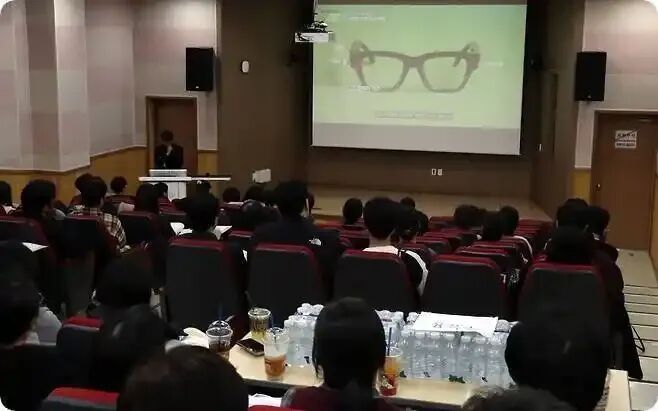
(On November 18, at a high school in Sejong City, invigilators in charge of supervising the college entrance examination received training on how to deal with cheating behaviors. (Yonhap News Agency))
The South Korean Ministry of Education was forced to ask the Blue House for help, requesting that in addition to conventional WIFI shielding and traceability cooperation from AI companies, a national-level emergency disaster push system be activated during the college entrance examination. This public system, originally used for notifications of earthquakes, tsunamis, and major communicable diseases in South Korea, will force every mobile phone to sound an alarm after being turned on, thus exposing hidden mobile phones.
According to SBS reports, a total of 54 people were found carrying mobile phones after being exposed by three rounds of forced alarm rings; a total of 111 people violated the regulations related to smart devices throughout the college entrance examination.
"Although some cheaters were caught this time, how many more have not been discovered?" An examinee preparing for the South Korean civil service exam raised a question to South Korea's Korea JoongAng Daily.
Under widespread public criticism (for failing to prevent AI cheating and taking remedial measures only after the damage was done) and continuous pressure from the opposition party and groups of third-year high school students, South Korean Minister of Education Choi Kyo-jin announced his resignation on November 22.
For South Korean society, the offensive and defensive battle around the college entrance examination is over, but the debate seems to have just begun.
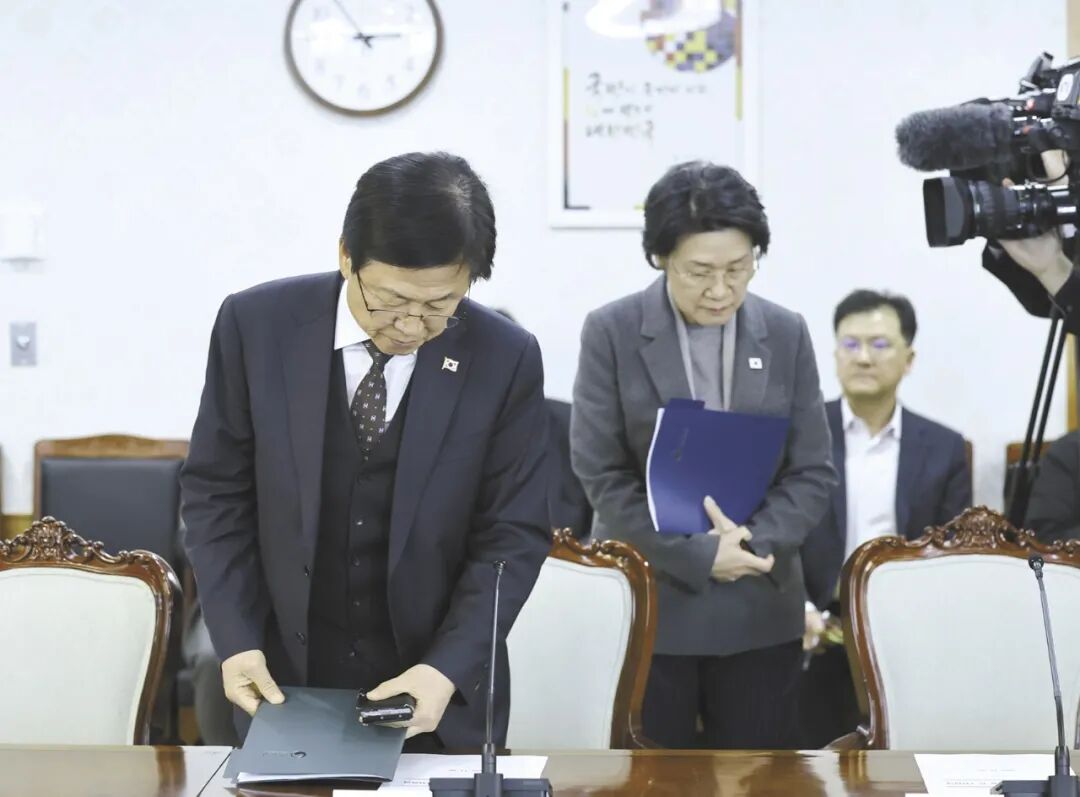
(South Korean Minister of Education Choi Kyo-jin attended a meeting on coping with college entrance examination cheating in Seoul on the 20th, and announced his resignation two days later)
【 The College Entrance Examination Is Over, But The Socio-Economic Accounts Are Out Of Control 】
Behind the debate is the loss of control of the socio-economic ledger.
The frequent occurrence of AI cheating points to the first contradiction: The input-output ratio of studying hard is far lower than that of delving into AI cheating skills.
It is not difficult to analyze the tax exam cheating case of Won-seok Han: the tax agent qualification examination, as a major exam that "can make parents recognize my value again", he only spent half a year preparing for cheating, and achieved the highest score as the top scorer in the tax exam in South Korean history.
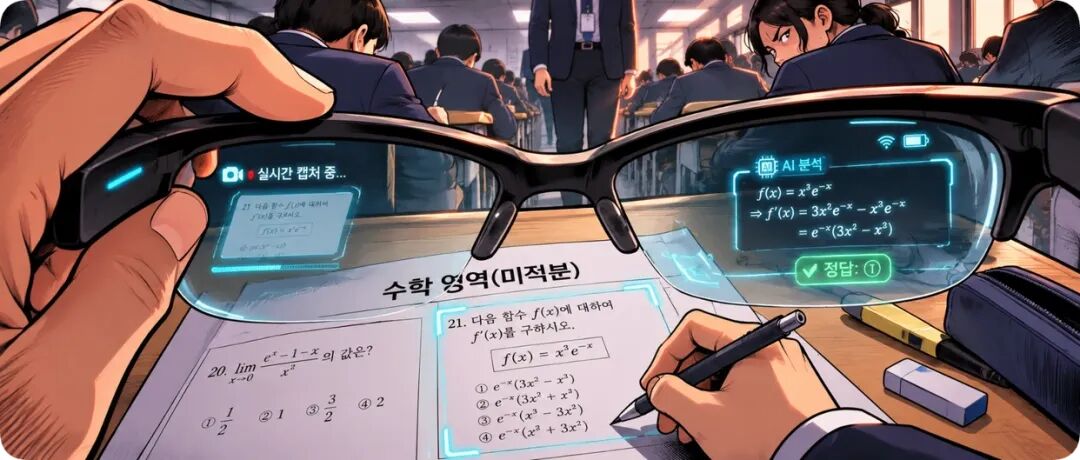
If he had reviewed hard, the so-called half-year review period would not even be enough to reach the passing threshold. The gap in the input-output ratio is so large that it is enough to make people take desperate risks.
This is also the concern of the South Korean education sector.
An official from the South Korean Teachers' and Education Workers' Union said, We cannot keep falling into the "spear and shield" confrontation with new cheating tools, otherwise the examination will be reduced from a talent selection mechanism to a "prop war"; in addition, The authority of the examination will disintegrate soon, "People no longer trust examinations, but instead believe that those who get high scores are all cheaters who have the ability to break through invigilation."
The second contradiction comes from the industry: large manufacturers such as Samsung, SK Hynix, and Kakao have widely deployed AI businesses, and spend huge labor costs every year. They are also the dream workplaces for South Korean examinees.
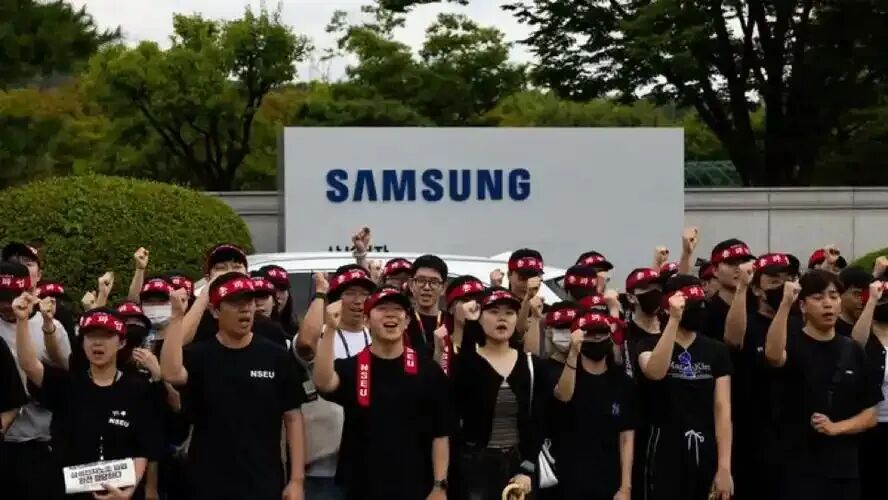
However, the 2025 strike cases of Samsung and SK Hynix tore a gap between the chaebol groups and the employee group; the successive AI cheating cases in the finance and taxation, judicial, civil service, and college entrance examinations in 2026 proved that as long as the invigilation is broken through, even a small model deployed locally can easily get the top score, which also makes the South Korean industry start to think: if we shift part of the labor cost to AI training while centrally purchasing intellectual resources, will we get better results?
Once this chain of thinking starts, it will not stop.
【 Major Negative Impact On The Education And Training Industry: Talent Cultivation Has Become A False Proposition 】
Of course, the above debates are still in internal meetings of the government and the board of directors, and have not caused current institutional changes.
But for South Korea's education and training industry, the debate itself is already a thorough negative impact — because education and training is an industry that trains people, and now social resources are going to be diverted to train AI.
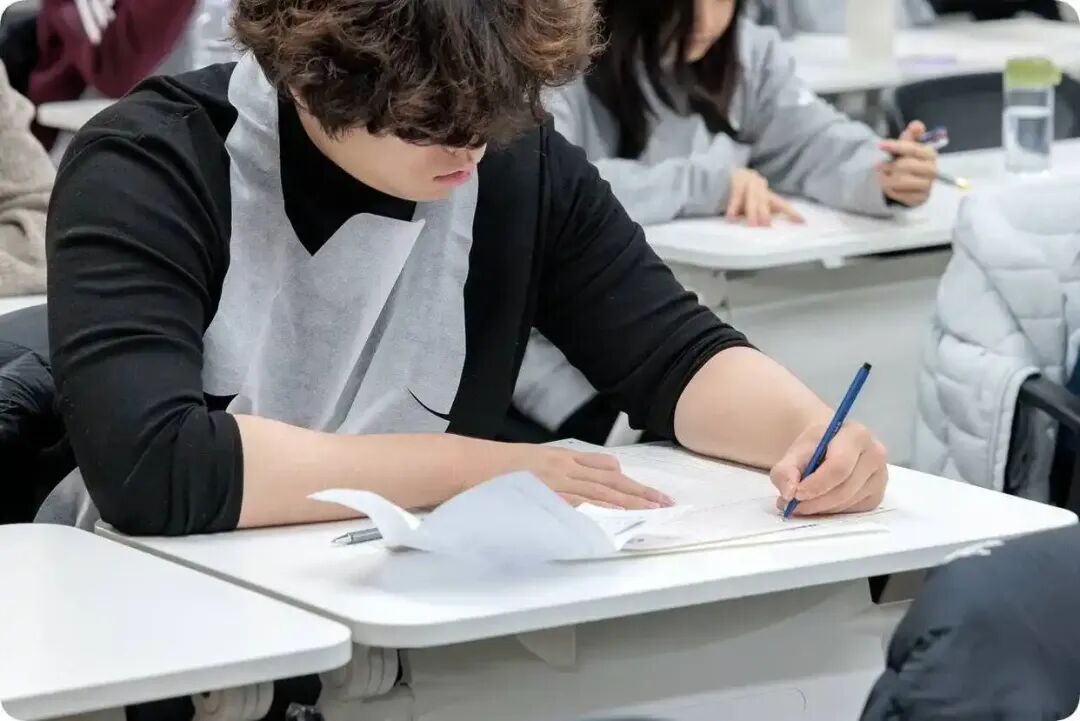
(At Kyung Hee University, a student taking the college entrance essay exam wears an apron. (Yonhap News Agency))
South Korea has the most developed education and training industry in the world. In 2024, South Korea's private education expenditure reached 29.2 trillion won, hitting a new historical record for four consecutive years, with the participation rate in cram schools as high as 80%.
The commercial foundation of this industry is a high-stakes, standardized, and predictable examination structure: the College Scholastic Ability Test, tax agent qualification examination, judicial examination, etc., provide clear demand anchors and scalable product interfaces for education and training — question banks, prediction of exam questions, question type decomposition, mock exam rankings, essentially all producing "score improvement capabilities centered on predictable standard answers".
What AI cheating has shaken is precisely the credibility of the "predictable" premise. If high scores can be forged at low cost with civilian equipment, then the core promise that education and training sells to parents — the certainty that "one more class of investment will bring a few more points of improvement" — will depreciate.
Products related to question banks and exam prediction are the first to be impacted, because the abilities they train are exactly the parts that are most easily generated directly by AI. Parents will not stop taking cram lessons immediately, but their willingness to pay will shift from rigid demand to wait-and-see, which is very uncomfortable for the education and training industry that highly relies on cash flow turnover.
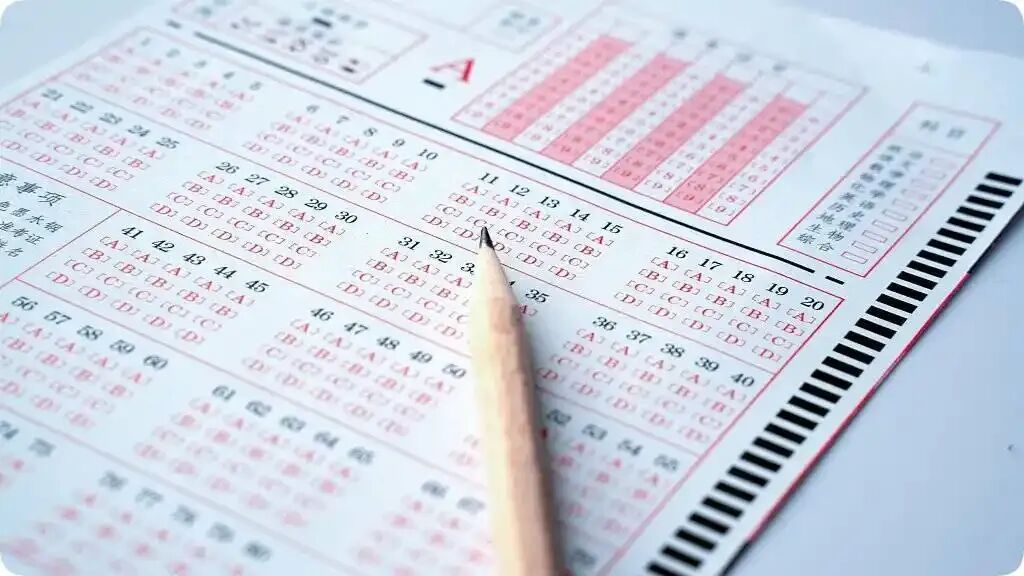
In addition, the proposal being discussed at the table of large companies to reduce the number of real employees and invest more resources in AI training is even more of a fatal blow to the education and training industry.
The essence of education and training is to provide South Korea's middle class with a highly deterministic life trajectory: get good grades — enter a top university (SKY) — enter a large company — get a high salary and middle-class status. Now, this path may be broken.
Large companies are downsizing, the value of prestigious school diplomas is depreciating, and the examination system is reforming. Any change in any node will lead to the overall subversion of the industrial logic.
This is not alarmist talk, but something that is happening. Professor Min-soo Ha (phonetic) of Seoul National University said: "For a long time, we have believed that having a large number of examinees answer the same set of papers at the same time is fair and objective. Through this incident, we must reflect on this model that gives the right to judge personal ability to the scores of such examinations."
Listen, the wind of change in the education sector has already blown.

【 May Break Through The Millennium-Old Imperial Examination System In East Asia 】
The far-reaching impact lies at the social level.
In 958 AD, Goryeo officially introduced the imperial examination system, selecting talents through examinations following the example of the Tang Dynasty. For more than 1,000 years thereafter, the imperial examination, along with modern examination systems derived from it such as the national college entrance examination, judicial examination, and tax agent qualification examination, has always occupied the core position in the talent selection system on the Korean Peninsula.
Because this system is fair enough and efficient.
Apart from the traditional two-class aristocracy, the imperial examination system provided a visible upward channel for the civilian class.
But now, the fairness on which the imperial examination system is