Hollywood and Netflix are also about to reach their breaking point.
My friends around me and I haven't stepped into a cinema for a very long time.
For one thing, there are no films that feel particularly worth watching recently. More importantly, I've noticed that many people around me have developed a new entertainment habit: spending a large amount of time watching short dramas.
In the past, when people chatted, they would discuss what good movies and TV series were out recently. Now some people have started recommending all kinds of short dramas to me, even AI-generated short dramas.
The data of short dramas is also extremely impressive.
According to QuestMobile's data, in July and August this year, the average daily usage time per user of Red Fruit Short Drama has reached 151 minutes, while for Douyin, which is famous for keeping users scrolling nonstop, this figure stands at 133.5 minutes.
Two and a half hours a day is enough to finish watching a full-length movie.
According to the data disclosed by the National Radio and Television Administration in September this year, the market size of China's micro-short drama sector has exceeded 1 trillion yuan in 2025, while the national total box office of films in the same year hit 518.32 billion yuan. As of November 15 this year, the national film box office has just exceeded 320 billion yuan.
The daily active users of Red Fruit Short Drama alone have surpassed the sum of iQiyi, Youku, Tencent Video and Mango TV, and this is just the beginning. The next target will be Netflix.
I increasingly have a feeling that what short dramas will eventually impact is likely the film and television industrial system that Hollywood has built for over a hundred years.

01 Hollywood Got People Into Theaters, Netflix Keeps People In The Living Room
In 1912, Adolph Zukor, who later founded Paramount Pictures, released a film named *Queen Elizabeth* in the United States.
The biggest selling point of this film was Sarah Bernhardt, the world-renowned French stage star at that time. A famous theatrical performer could only perform on stage in one theater per night, but once filmed, the same performance could be sold to audiences in many different cities.

For more than a hundred years, Hollywood has pushed this business to its peak.
It has established a mature studio system, star system, genre film system and global distribution network. Screenwriters, directors, actors, cinematographers and special effects teams all perform their respective duties, turning film production into a highly specialized industrial system.
A successful film can also spawn sequels, toys, games, theme parks, and even a form of global pop culture.
Marvel, Disney and Harry Potter are all products of this industrial system. The influence of Hollywood has long gone far beyond the film box office itself.
Then Netflix came along.
Netflix found that audiences do not necessarily have to go to the cinema, nor do they have to watch stories shot by Hollywood.
It invests in producing local content in South Korea, Spain, Germany, Japan and other regions around the world, and then pushes the content to the whole world through its own platform.
In 2021, the South Korean-produced series *Squid Game* became a global hit. According to Netflix's statistical standard, the first season gained 265.2 million views within the first 91 days after its release.
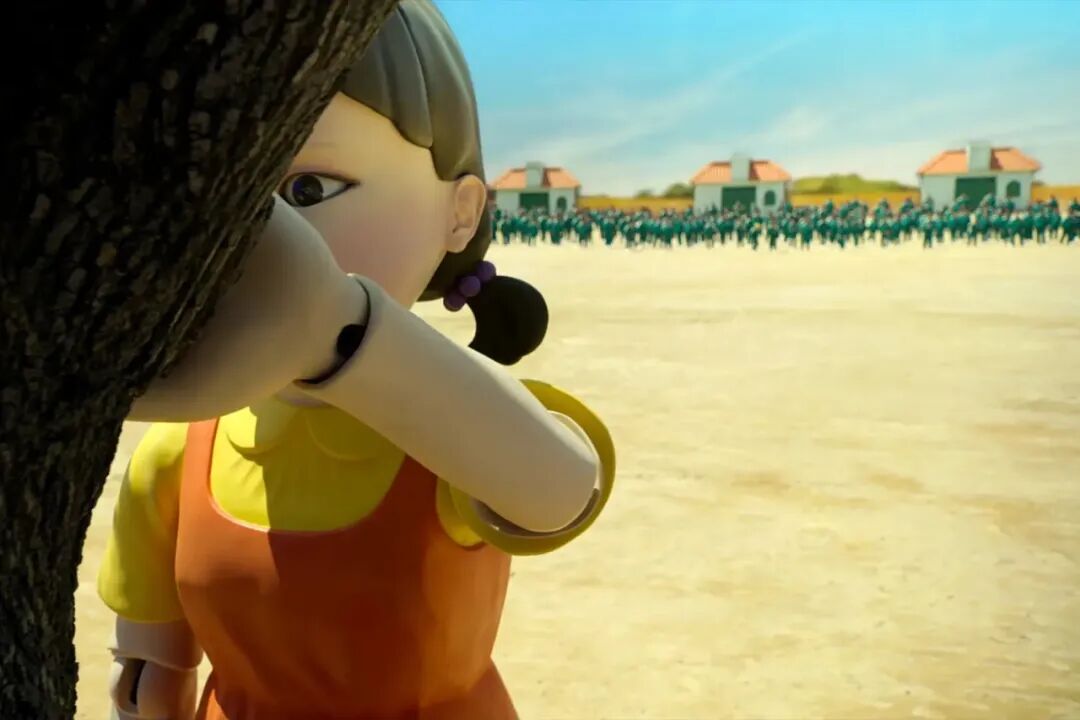
In the past, globally popular film and television culture was usually defined by Hollywood. Netflix proved that a story taking place in South Korea can also become a global cultural event.
As home TV screens get larger and larger, and streaming platforms provide richer and richer content, some of the original advantages of cinemas have been weakened.
Spending half a day going out to the cinema on weekends, or lying on your own sofa watching an original Netflix series whose quality is no less than that of a Hollywood film? More and more people choose the latter.
However, Hollywood and Netflix still share a basic premise.
Audiences are willing to set aside a dedicated period of time for a work, and patiently listen to the creator finish the whole story.
The emergence of short dramas has begun to shake this premise.
02 Short Dramas Are Turning Storytelling Into An Algorithm-Driven Business
There is a large amount of personal expression on Douyin: some people record their daily lives, some share knowledge, some show their talents, and some just want to say a few words from the bottom of their hearts.
From the very beginning of its birth, short drama has a very strong attribute of industrialized production. Its scripts, characters, plots and rhythms can all be designed around one single goal: to keep the audience watching.
French newspaper *Le Monde* once interviewed a short drama producer working in Hengdian. The projects under his hand have a clear creation requirement: every episode must have two major plot twists.
Imagine that an episode is only one or two minutes long, and it needs to complete two major twists. This means that the audience barely has any time to catch their breath emotionally.
Create conflicts in the first few seconds, keep building up emotions in the middle, and throw out a cliffhanger at the end. The audience just gets a little satisfaction, and immediately develops new expectations.
Of course, creating suspense, designing conflicts, and planting foreshadowing are all skills that Hollywood screenwriters have been using for a hundred years.
The really powerful part of short dramas is that they have a set of data feedback mechanism that can continuously optimize these skills.
In the past, after a movie was released, the director could know whether the box office was good and how the public reputation was, but it was difficult to know exactly at which plot the audience started to feel bored.
Short drama platforms can obtain more detailed viewing behaviors. At which episode the audience leaves, which plot is more likely to drive continuous watching, and what kind of character setting can improve user retention, all these data can be used as reference for the next round of content production.
The action of an audience swiping away from an episode of short drama, after being aggregated with massive amounts of data, may eventually affect whether another screenwriter's script can be sold.
The influence of algorithms has gone deep from content distribution to the very upstream of film and television production.
And the addition of AI further amplifies the power of this model.
According to the data from the National Radio and Television Administration, in the first 8 months of this year, 430,000 micro-short dramas were launched nationwide, 13 times the total number of last year, of which AI-generated dramas accounted for more than 90%.
In the past, to verify whether a story is popular, you had to find investment, find actors, build sets, and spend several months to finish shooting it.
Now, some AI short drama teams can produce a few episodes first to see the market response. If the data is not good, they will stop the investment in time; if the data is good, they will continue production and promotion.
It can also try different openings, different character images and different themes at lower costs.
In comparison, for American TV series, you have to at least finish producing and releasing a whole season before deciding whether there will be a next season, and the cost of this season is usually already very high.
The short drama industry is forming a continuously self-reinforcing cycle. AI reduces production costs, massive works provide more test samples, user feedback helps producers screen content, and successful experiences are applied to the next round of creation.
According to independent calculation by iiMedia Research, by 2030, the market size of China's micro-short drama sector is expected to reach 1505.9 billion yuan.
The traditional film and television industry has spent more than a hundred years studying how to tell a good story, while the short drama industry is using the methods of the internet industry to study how to more efficiently produce a story that keeps people watching continuously.
03 From Chinese Taiwan to the United States, the Appeal of Short Dramas Has Been Verified
The recent explosion of short dramas in Chinese Taiwan left a very deep impression on me.
A very interesting scene is that some audiences cast vertical-screen short dramas to the horizontal-screen TV in their living room. The large black areas on both sides of the TV do not affect their enthusiasm for following the dramas at all.
On October 19, Red Fruit Short Drama topped both the App Store and Google Play free app charts in Chinese Taiwan region at the same time.
According to the industry data released by *Short Drama Self-Study Room* on November 18, Red Fruit got about 630,000 downloads in Chinese Taiwan region in October, and the average daily usage time per user reached 103.7 minutes.
There are even local netizens saying that they have unsubscribed from Netflix because they are addicted to short dramas.
This phenomenon is also taking place in other markets around the world.
Data from Sensor Tower shows that in the first quarter of 2026, the total number of downloads of short drama applications worldwide exceeded 850 million, a year-on-year increase of 140%, among which Southeast Asia contributed 32% of the downloads.
What is more noteworthy is the United States, the base camp of Hollywood. In 2025, the number of micro-short drama viewers in the United States has reached 66 million, more than twice the number in 2024.
Omdia predicts that the revenue of the US micro-short drama market will reach 1.5 billion US dollars this year.
In the fourth quarter of 2025, the average daily usage time per mobile end user of the US short drama platform ReelShort (which is also a Chinese company) reached 35.7 minutes, while the figure for Netflix was 24.8 minutes, and Disney+ was 23 minutes.
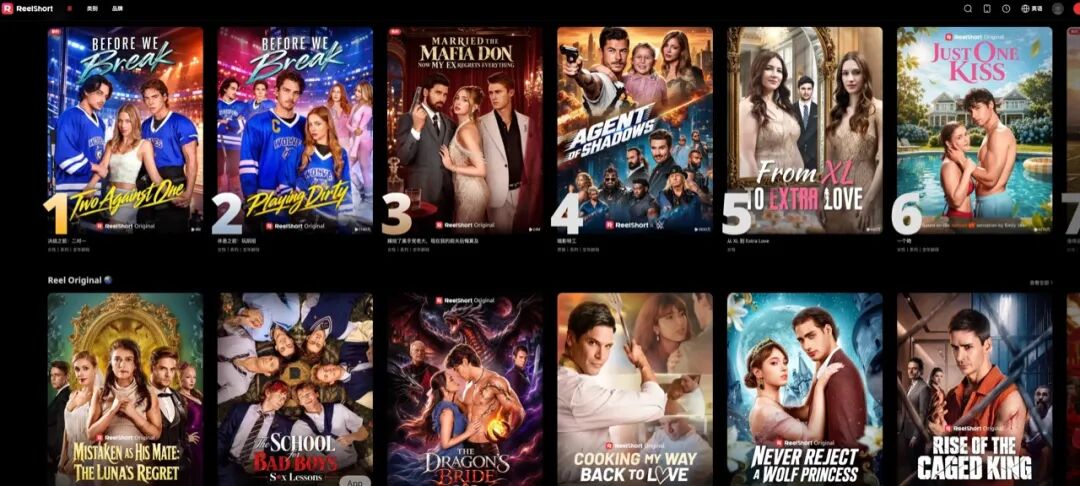
Although the overall user scale and large-screen viewing advantages of Netflix still far exceed these short drama platforms, short dramas have proved that they have the ability to make some American audiences spend more time watching the content they produce.
There is an important business logic here.
People in different countries have different cultural backgrounds, living habits and values, but the underlying emotional needs of human beings are interlinked.
Chinese people love to watch a person who has suffered a lot of grievances finally achieve a counterattack, and Americans love this too. Chinese people love stories about romance, revenge and identity reversal, and audiences in Southeast Asia can also understand these stories.
Overseas short dramas can replace the actors, languages and story backgrounds, but retain the narrative structure that has been verified by the market.
What Chinese short dramas are exporting to the whole world includes not only specific film and television works, but also a set of highly efficient production model for emotional content.
04 Hollywood Can No Longer Sit Still
In the first three quarters of this year, the box office of Chinese mainland films dropped by about 29% year on year, and the total number of moviegoers was only about 750 million, more than 200 million less than the same period last year.
According to Yunhe Data, in the first half of this year, the effective full-play view count of the top 20 long dramas across the whole network dropped by 8% year on year, and in the third quarter, the decline further expanded to 27%.
The US market is also facing similar pressure.
In 2025, the North American film box office was about 8.66 billion US dollars, down about 24% compared with 11.36 billion US dollars in 2019. The box office has rebounded this year, but there is still a gap from the pre-pandemic peak.
Of course, we cannot attribute all these changes to short dramas. Film supply, consumption environment, film and television production cycle and other entertainment methods are all affecting the performance of the traditional film and television industry.
But there is a basic fact that is hard to change: people only have 24 hours a day.
When a person spends two hours after work watching short dramas, how much time and patience will he have left for movies and TV series?
Hollywood giants have obviously realized this problem.
This year, Netflix launched a vertical video feature called Clips, hoping that users can discover interesting film and television clips just like scrolling through short videos, and then enter the full episodes to watch.
Peacock, the streaming platform under Universal Pictures, went even further. It has started to launch original vertical-screen micro-dramas on its own application, trying to give users a reason to open the platform every day.
Fox Entertainment has directly invested in the vertical content platform HOLYWATER, and promised to produce more than 200 pieces of vertical-screen content for its short drama platform My Drama within two years.
From changing the content recommendation method, to launching original micro-dramas, to investing in short drama platforms and producing short dramas on a large scale, the influence of short dramas has gradually entered the core production system of Hollywood.
In my opinion, the first ones impacted by short dramas will definitely not be those films with unique viewing value made by Steven Spielberg, Christopher Nolan, Hirokazu Koreeda, Lee Chang-dong and other directors.
A blockbuster worth asking your friends out and going to the cinema specially on weekends still has its value of existence. But to be honest, how many such films can there be in a year?
The first ones to be impacted are those ordinary movies and TV series that we would click into casually in the past and do not really care whether we watch or not. The demand they satisfy for killing time and relaxing is exactly what short dramas are best at meeting.
And the more far-reaching change may happen at the moment when a film and television project is approved.
Next time, when a Hollywood producer gets a story about romance and revenge, will he look for investment according to the standard of a ten-episode TV series, or first spend a small sum of money to make it into a vertical-screen short drama to see which character the audience is actually willing to follow?
When more and more producers choose the latter, what short dramas will reshape is the very top of the global film and television industry: what kind of stories will get the chance to be shot.
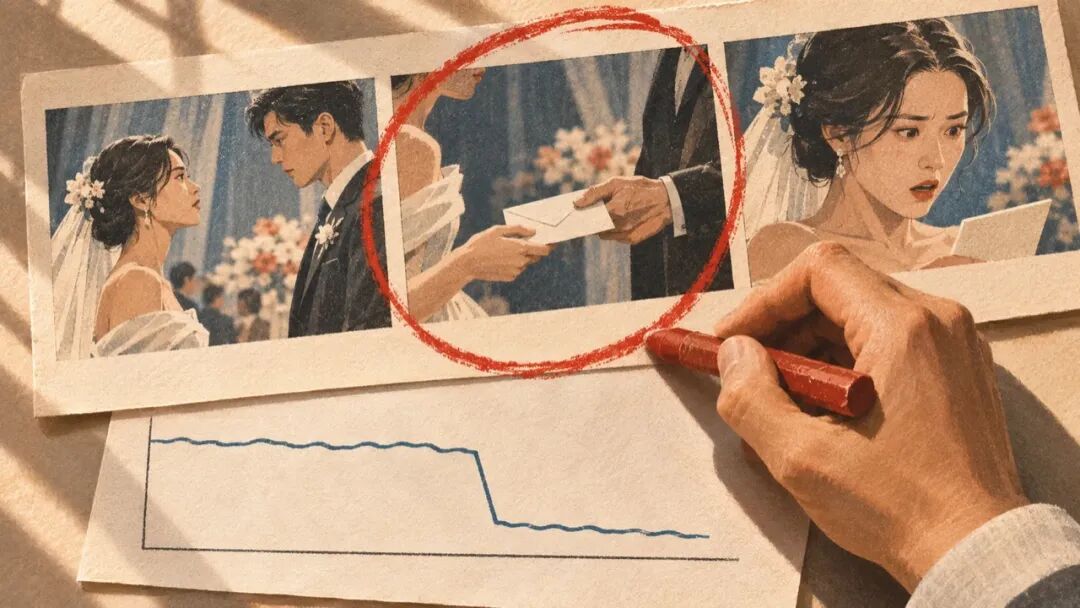
Conclusion
Over the past hundred years, Hollywood has defined the