A piece of Chinese ginger was turned into a pink IP by the Japanese, and surprisingly 300 million packs have been sold?
Have you ever eaten pink ginger?
In Japan, a brand has turned the most humble pickled ginger into a striking bright pink product, with total sales exceeding 300 million packs!
Even more surprisingly, they do not just sell pickled ginger as a side dish, but use it to make pink curry, gyoza, salads, soda, puffed snacks... They even created a mascot for this ginger and built a dedicated museum for it.
Who would have thought that a single piece of ginger could be developed into such a wide range of products?
In China, pickled ginger and vinegar-soaked ginger are also familiar traditional foods for many people. But when it comes to them, we often only remember their taste, cooking methods and consumption scenarios, and few well-known brands of such products can be named by the public.
For a long time, Foodaily keeps focusing on the innovative application of ginger as a homology ingredient for medicine and food. In previous articles, we mainly focused on the innovation of ginger in the beverage field. This time, we shift our attention back to the most traditional application scenario of ginger: catering.
As the eighth article in the "Homology of Medicine and Food: Ginger" series, Foodaily will introduce a special Japanese pickled ginger brand - Iwashita no Shin Shoga (hereinafter referred to as "Iwashita Fresh Ginger"). While most traditional pickled vegetables are still trapped in fierce homogeneous competition on the dining table, how does Iwashita break away from the public's inherent perception of pickled ginger as a trivial side dish and continuously break into cross-border consumer scenarios?
1 A 10-billion-yen business starts with a piece of Chinese ginger
Why is this piece of ginger pink?
The answer may surprise you. The special ginger that gives Iwashita Fresh Ginger its distinctive feature is a special ginger variety from Taiwan, China - Hongshima Ginger.
The ginger we usually see in vegetable markets is mostly mature ginger with large size, relatively obvious fiber and strong pungency. The Hongshima Ginger used by Iwashita Fresh Ginger is completely different.
Local farmers will precisely control the moisture content, and repeatedly cover the ginger seedlings with soil three or four times after they germinate, so that the ginger roots keep growing upward. This special cultivation method makes Hongshima Ginger have different shape and taste from ordinary ginger: slender shape, less fiber, sufficient moisture and milder pungency.
After being pickled in vinegar, the natural pigment in the ginger shows pink in an acidic environment, forming the striking visual feature of Iwashita Fresh Ginger.
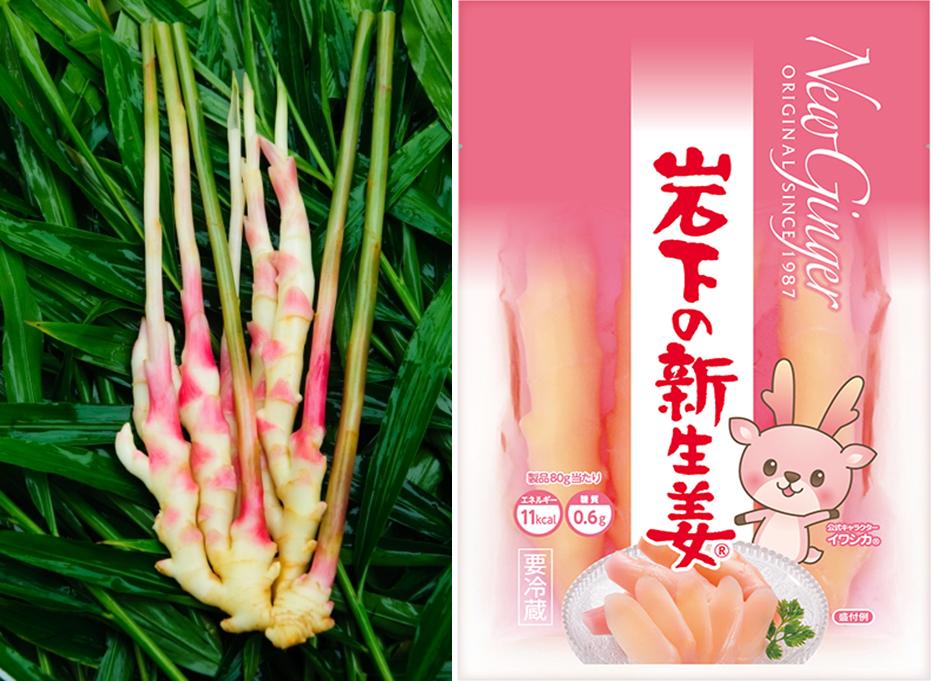
Image source: Iwashita Shokuhin
The encounter between Iwashita Shokuhin and Hongshima Ginger started from an accidental flight.
In 1978, when Kunio Iwashita, then president of Iwashita Shokuhin, took a flight to Taiwan, he tasted the tender ginger pickled with local Hongshima Ginger, which left a deep impression on him.
At that time, there was no shortage of ginger products in the Japanese market. But just like the pickles on Chinese dining tables, most of them only serve as side dishes to enhance the flavor, and consumers usually only eat a small amount of them with meals.
This made Iwashita realize that he could use its unique taste to create ginger products that can be integrated into the daily life of more consumers.
But it was not easy to achieve this idea. Iwashita initially tried to move the cultivation method of Hongshima Ginger to Japan, but it was difficult to replicate due to the differences in climate and soil. In the end, he chose to cooperate with local farmers in Taiwan to build contracted production areas, and then transport the raw materials to Japan.
With raw materials guaranteed, how to retain the fresh and crisp taste became a new problem. Traditional high-salt pickling easily damages the fresh flavor of Hongshima Ginger, while the traditional low-salt, low-temperature shallow pickling method can retain the taste but cannot preserve the ginger for a long time.
To solve this problem, Iwashita spent 9 years building a whole-process cold chain system. The tender ginger is subjected to low-salt preliminary pickling on the day of harvest, then transported to the Japanese factory by refrigerated sea freight for low-temperature sub-packaging and seasoning, and then distributed through a 0~10℃ fresh cold chain, to minimize the flavor loss from the origin to the dining table.
In 1987, Iwashita Fresh Ginger was officially launched on the market.
Fresh ginger, just as its name implies, has become a brand new category of pickled ginger products.
With its differentiated taste of being fresh, crisp and mildly pungent, coupled with promotion methods such as TV advertisements, Iwashita Fresh Ginger has gradually become a well-known single product in Japan's pickled food category. At its peak, the annual sales of this single product exceeded 3 billion yen, and once drove the total sales of the enterprise to exceed 10 billion yen.
2 From side dish to all-matching ingredient, how does Iwashita expand consumer imagination?
Creating a differentiated product is only the first step.
For ginger products, scenario limitation has always been a difficult problem. Consumers usually come into contact with ginger incidentally when eating a certain dish, rather than buying a food product specifically for ginger.
How to make consumers take the initiative to think of Iwashita Fresh Ginger? Iwashita Shokuhin has carried out a series of interesting operations.
1. Change the eating method first, so that consumers can realize that fresh ginger can be eaten in many unexpected ways
The breakout of a brand often starts from listening to consumers' suggestions.
Since 2011, Wahei Iwashita, the fourth-generation president, opened a Twitter account and began to pay attention to consumers' discussions about fresh ginger. He was surprised to find that many loyal fans had already unlocked all kinds of creative and delicious eating methods of fresh ginger spontaneously.
This made the brand see an opportunity: consumers are actually more imaginative than the brand itself.
Therefore, Iwashita began to sort out these scattered user ideas, and published a fan recipe book in 2012, turning the eating methods created spontaneously by consumers into content that the brand can continuously spread.
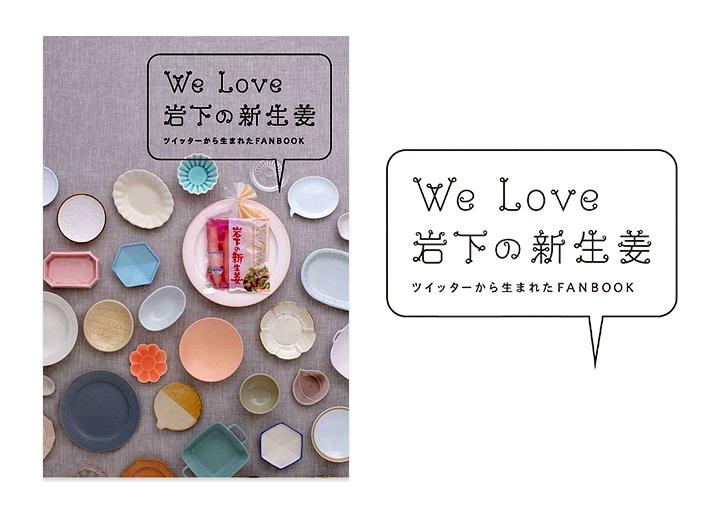
Image source: Iwashita Shokuhin
In 2015, the Japanese band "Dakitsuki Gokumon Dōkōkai" even launched a song themed on "Iwashita no Shin Shoga" called "New Gingeration".
The song puts fresh ginger into a series of cooking scenarios such as meat rolls, chikuwa, salads, curries, fried rice and sandwiches, showing its various eating methods in a relaxed and interesting way.
By interacting closely with consumers, Iwashita helped them break the mindset that "ginger can only be served with sushi".
2. Then upgrade products to make fresh ginger the real protagonist
It is not enough just to tell consumers that there are many ways to eat fresh ginger. If consumers still need to figure out the collocation by themselves every time, the threshold for trial still exists.
When Iwashita conducted a survey on fans of fresh ginger, it found that many people had been used to adding fresh ginger to curry as an ingredient.
Following this clue, Iwashita decided to make a curry "full of fresh ginger", and turn this eating method into a product that can be purchased directly.
In January 2016, they cooperated with Miyajima Shoyu, a professional manufacturer of vacuum-packed curry, for joint development. After 16 months of repeated polishing, they launched the subversive "Pink Fresh Ginger Curry" (Pink New Ginger Curry) in 2017.
In traditional curry, ginger is usually only a seasoning for enhancing flavor, but this product does the opposite, directly giving fresh ginger the "protagonist-level" presence, adding 27g of coarsely cut fresh ginger, accounting for 15% of the total weight.
The fresh and crisp taste of fresh ginger forms a contrast with the rich flavor of curry, and with the striking pink appearance, the product has extremely high recognition.
Fresh ginger began to get rid of the identity of traditional side dish ingredient, and gained the ability to participate in independent product innovation. When consumers think of pink curry, they will directly associate it with fresh ginger.
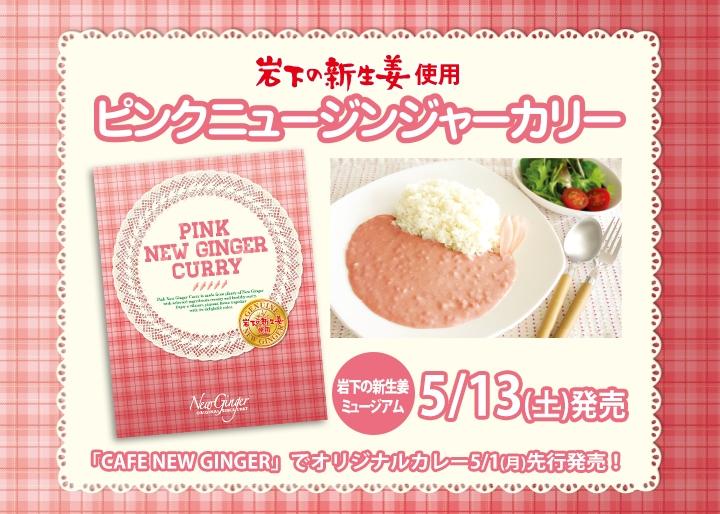
Image source: Iwashita Shokuhin
3. Go outside, so that consumers can "meet" fresh ginger repeatedly everywhere in daily life
In order to consolidate the flavor perception of "being everywhere", Iwashita began to carry out high-frequency and large-scale cross-border co-branding.
In 2022, Iwashita cooperated with Nissui, a Japanese aquatic enterprise, to add fresh ginger to tempura; in the same year, it cooperated with Fuji Bread to launch fresh ginger-flavored sandwiches.
Subsequently, the cooperation was further extended to convenience store channels.
In 2023, Iwashita cooperated with FamilyMart to launch fresh ginger Inari sushi, with cumulative sales exceeding 1.45 million copies. Welcomed by consumers, the product was re-launched in the summer of 2024. In 2026, the two sides continued to cooperate to launch fresh ginger chicken skewers, bringing this flavor into the hot food cabinet.
As the cooperative categories continue to expand, fresh ginger has also begun to appear in products other than meals. In 2026, Iwashita cooperated with fresh food channel Lopia to launch fresh ginger tartar sauce, and cooperated with Japanese snack enterprises to launch fresh ginger-flavored snacks limited to Ministop stores.
In addition, the brand also cooperated with Sangaria to launch fresh ginger-flavored soda, and cooperated with Takara Shuzo to launch limited-edition shochu.
From cold cabinets to hot cabinets, from dining tables to snack bags and beverage bottles, Iwashita Fresh Ginger has gradually evolved into a flavor IP with distinct recognition.
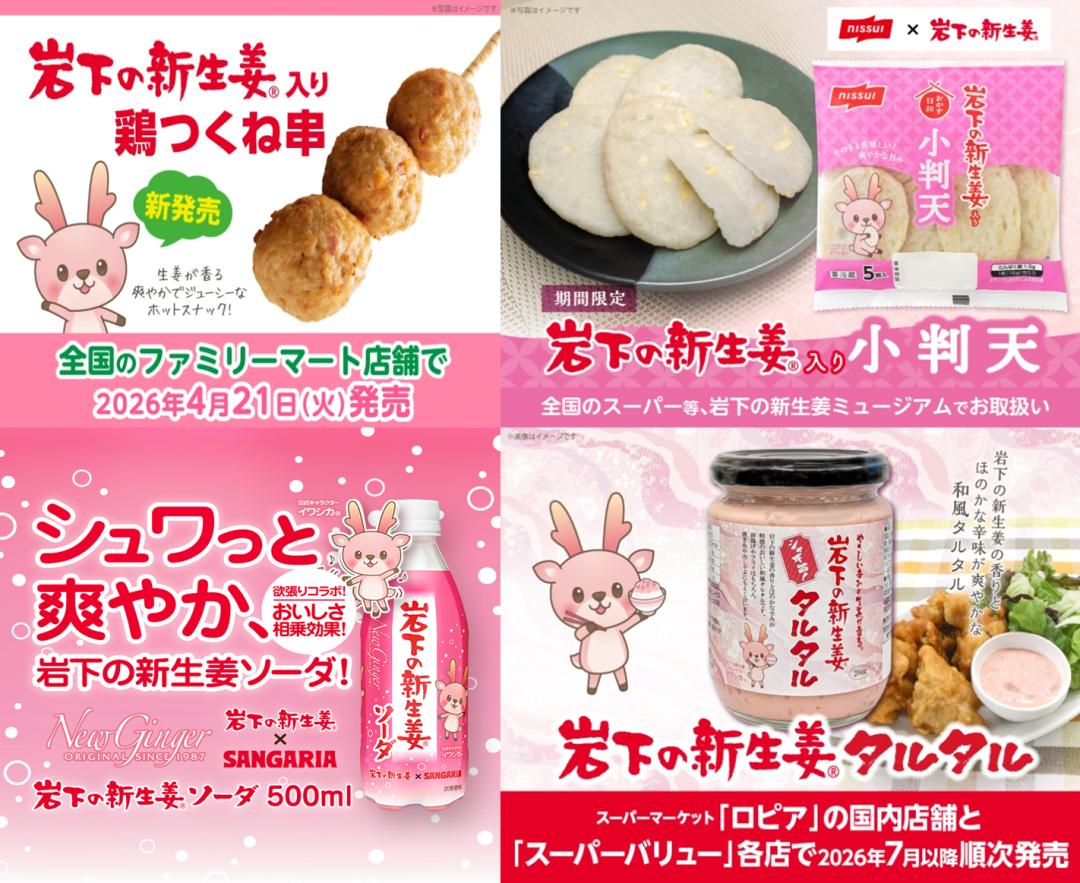
Image source: Iwashita Shokuhin
4. Empowered by efficacy, anchor the consumer perception of warming the body
While expanding general scenarios, Iwashita did not forget to return to the core health attribute of ginger.
In our previous article "Ginger tea sells best in summer! A Yunnan brand wants to make ginger juice the next 'coffee concentrate'", we mentioned that there is a natural consumer perception connection between ginger and warming the body.
Iwashita also seized this point.
Iwashita designated November 11 every year as "Iwashita Fresh Ginger Day", and by popularizing the thermoregulatory effects of gingerol and shogaol, it strongly advocates adding fresh ginger to pork miso soup, oden, and warming hot pot, to further promote its application in winter dishes.
After that, Iwashita Fresh Ginger naturally obtained the Japanese Functional Food with Claims (FFC) certification, becoming the first pickled ginger product with this qualification, which scientifically anchored the consumer's psychological anchor of "warming the body and being healthy".
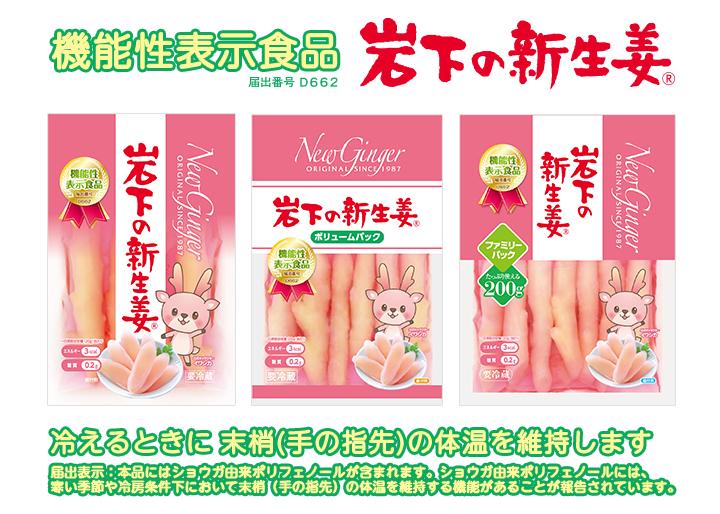
Image source: Iwashita Shokuhin
3 When "pink ginger" is no longer unique, how does Iwashita maintain brand recognition?
As fresh ginger becomes more and more popular, Iwashita has to face a new problem:
Products with packaging designs similar to Iwashita Fresh Ginger began to appear on the market, and even some consumers mistook them for genuine Iwashita products, which caused a lot of troubles for consumers and retailers.
When similar products begin to blur the brand boundary, how can Iwashita make consumers recognize its products at a glance?
The decision Iwashita made is: Based on the iconic pink color, further integrate brand symbols to create exclusive visual assets and super symbols for the brand.
In June 2015, Iwashita Shokuhin opened the Iwashita Fresh Ginger Museum in Tochigi City, where its headquarters is located. The whole space takes pink as the main visual element, integrating product display, brand culture, entertainment interaction and catering experience, attracting about 140,000 to 150,000 tourists to check in every year.
This is not just a place to display brand history, but also gradually becomes a special channel for Iwashita to interact with consumers and launch new products.
Many foods and drinks developed with fresh ginger as inspiration will be sold in limited quantities in the museum first. Consumers can try new products here, and the brand also creates experiences and topics outside the ordinary retail shelves.
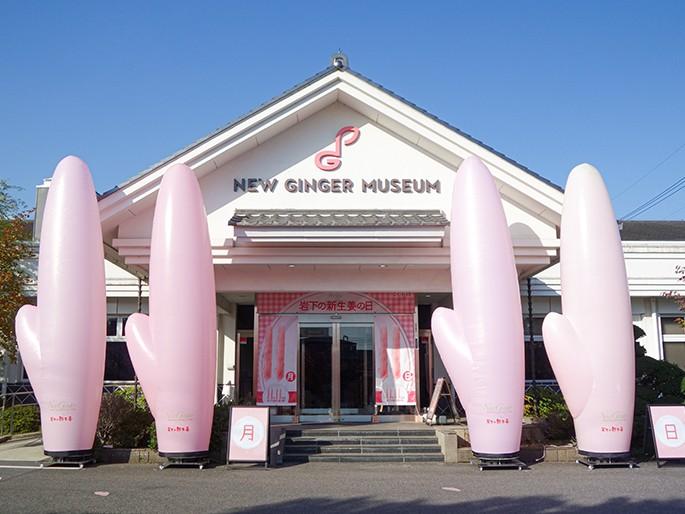
Image source: newscast
But to make consumers remember a brand, the pink space alone is not enough. Iwashita also needs a more specific and easier-to-spread communication medium.