A veteran who worked alongside Ma Huateng and Lei Jun for ten years respectively started a business at the age of 45, and the founder of WeChat and Li Wanqiang have made investments in this project.
He believes he is creating a brand-new species right now.
A CEO running a "coffee robot" business is constantly pressed by investors to update short videos every day — this is the normal daily routine of Tang Mu, founder and CEO of ING XBOT this year. Posting one video per day is Tang Mu's current KPI, which is also required by his angel investor Li Wanqiang: "Tang Mu has such a high-quality personal IP, we can't let it go to waste."
To fulfill this KPI, Tang Mu and his team were overwhelmed at the very beginning, but by October this year, Tang Mu's WeChat Channel had already accumulated 200,000 followers. For this milestone, he even recorded a dedicated video titled *Small Results From Daily Updates*: "I don't sing, dance or do silly gags, yet I've gained so much attention. That's actually pretty impressive, isn't it?"
Tang Mu indeed has many labels that can be well packaged: he is the founder of Tencent CDC, the system he led developed the QQ avatars and WeChat stickers; former Vice President of Xiaomi Eco-Chain, who led two product lines that each shipped over 100 million units, Xiaomi Router and Xiao Ai Speaker; he founded ING Technology in 2022, launching products including coffee robots and ice cream robots, with over 1,600 units deployed globally by 2026.
Before starting his own business, he worked with Lei Jun and Pony Ma for 10 years respectively. He joked that the biggest gain from these 20 years was being "tortured day and night". In his current office, his desk and shelves are filled with products he developed in the past, including the once failed "Little Q Robot".
However, different from all the products he has made before, he believes he is creating a brand-new species right now.
One of ING's main current products is the coffee robot: inside a cabinet of about 2 square meters, there are devices including coffee machine, milk frother, ice maker, and latte art printer. The robotic arm is responsible for "holding" the cup, connecting all these machines to complete the whole production process. It can be regarded not only as a robot, but also as a coffee shop. Investors of this product can use the XBOT Coffee brand, which is equivalent to a chain franchise model, completely different from all previous business formats.
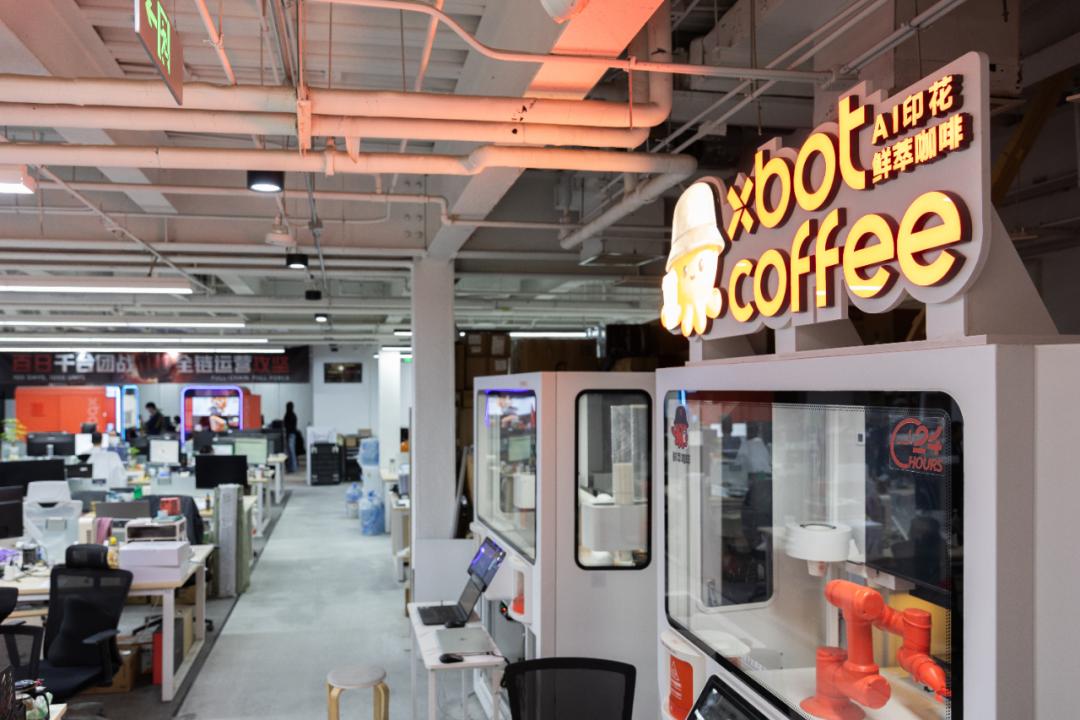
Photography: Deng Pan
To improve the success rate of this new species, Tang Mu chooses to personally supervise every detail on the front line. To perfect the coffee taste, he drinks six cups of robot-made coffee every day. Even new coffee flavors that employees want to promote will be first "tested for poison" by him, such as bitter melon flavored or mustard flavored coffee.
"I really hate those arrogant bosses who just daydream in their offices. I stay on the front line every day, so I know clearly that there are still many flaws in our products." he said.
After leaving Xiaomi, he was already 45 years old when he founded ING Technology. As an "advanced age" entrepreneur, he has regretted his decision more than once. He likes a sticker of Tang Seng smoking a cigarette, with the text "everyday struggle" on it. "Entrepreneurs always cry late at night, then get up the next day full of energy to work again." he said.
He is a native of Kaifeng, Henan Province. Near the Qingming Riverside Landscape Garden scenic area in Kaifeng, there is a Longting Lake, with a pavilion in the center of the lake. When he was six or seven years old, he swam towards the pavilion in the middle of the lake without his parents noticing. Halfway through the swim, he ran out of strength. At that moment, he could either swim back, or keep swimming towards the pavilion. He chose to move towards the pavilion. "Swimming back is actually farther, and it's meaningless to go back. The only thing you can't do is to stop." He thinks this is also a portrayal of entrepreneurship: "If you stop, you will die for sure, so you can only swim forward, there is no other choice."
"Come out and do something while I still have the drive"
Tang Mu's WeChat signature is "keep walking", a label he has used for many years. People who have worked with him say he "can't stop", and he admits that his biggest fear is to stop.
Tang Mu majored in international accounting in college. His father originally asked him to apply for international law, but "I knew that major was even less suitable for me". So for the three college entrance examination applications, he filled in English, Computer Science and International Accounting respectively.
After he started studying accounting in college, Tang Mu realized he was not cut out for this major, so he took industrial design as his minor. After graduating in 2001, he joined Kingsoft to work in design.
In 2003, he joined Tencent, and later established the Tencent User Research and Experience Design Center — CDC, responsible for the experience design of products including QQ, QQ Music and QQ Zone. The well-known QQ avatars and WeChat stickers were also designed under his leadership, and he is often called "the father of QQ emojis" publicly.
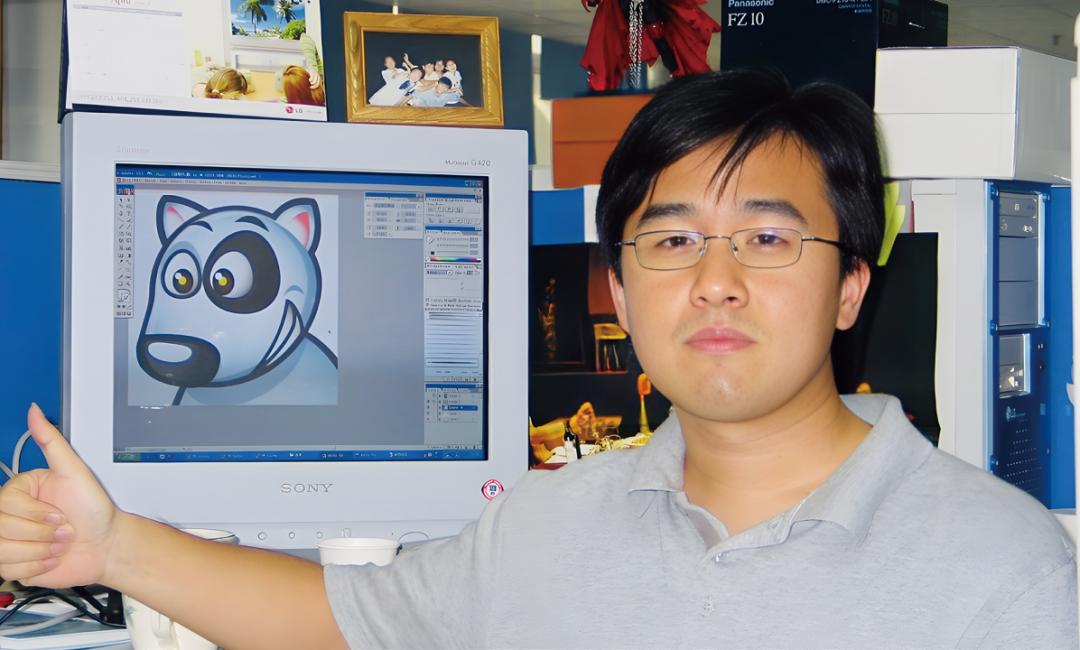
Father of the original generation QQ avatars Source: Interviewee
At that time, as the General Manager of Tencent Experience Design Center, he had very frequent contact with Pony Ma. In his impression, Pony Ma is very approachable and pays great attention to details. "When we were working on Tencent.com, even the line spacing, font size and font color were adjusted on site by me and Pony. I also adjusted the angle of the Tencent logo right in front of him." Tang Mu recalled.
Qian Zhuang, Product Lead of ING XBOT, joined the QQ Business Unit right after graduation. According to him, at that time "from the perspective of Tencent employees, Mr. Tang was an absolute big shot".
But at Tencent, Tang Mu hit a wall that he could not cross.
Tang Mu had always wanted to develop hardware, and he even discussed this idea privately with Allen Zhang (founder of WeChat). In 2012, Tang Mu made an internal attempt at Tencent — the Little Q Robot, a penguin-shaped "speaker".
After the product was developed, not a single unit was sold. In an interview with *China Entrepreneur*, he mocked himself that his idea at that time was extremely "naive". According to his assumption, QQ had 300 million users, and if 1% of them bought the product, the number would be huge — after all, the conversion rate of any Tencent business at that time was above 50%, and 1% was already a very conservative number, but it still failed in the end.
Tang Mu realized then that for the hardware business, every buyer is a binary choice of 0 or 1. "It is not that 1 out of 100 people will definitely buy it, it is possible that no one will buy it at all."
He faced two choices: either take it easy and stay in the comfort zone, or go to a place more suitable for hardware development to keep "making waves". "The market cycle is always changing, I am extremely afraid of stopping, I am a person who keeps moving forward and making progress." Tang Mu said.
In 2013, Tang Mu left Tencent and joined Xiaomi. Lei Jun gave him his first task: to develop the Xiaomi Router.
Hardware development was his weak point, "it is completely different from the software traffic distribution logic I followed at Tencent". At the very beginning of meetings with colleagues, he could not understand any of the terms they used, so he could only nod thoughtfully and say "uh-huh" from time to time, then look up all the terms on Baidu later by himself.
The good news is that the Xiaomi ecosystem provided him with more favorable conditions for hardware development. At Tencent, he was the party A, a "rich and naive landlord" who seemed to have everything he wanted, but actually wasted a lot of money unnecessarily. When he arrived at Xiaomi, the supply chain partners reported to him instead, and taught him all the "tricks" in the supply chain. He also made up for lessons on how to market hardware products and how to build hardware sales channels.
But when he showed the first finished router product to Lei Jun, Lei Jun shook the packaged product a little and put it on the table, then said to him: "Go back and redo it." Lei Jun told him that some parts inside the package were not fixed properly, there was a rattling sound of parts hitting each other when shaking the package; the plastic seal edge on the outside of the box was also crooked. "You are a design major, how can you accept a product like this?" Lei Jun said.
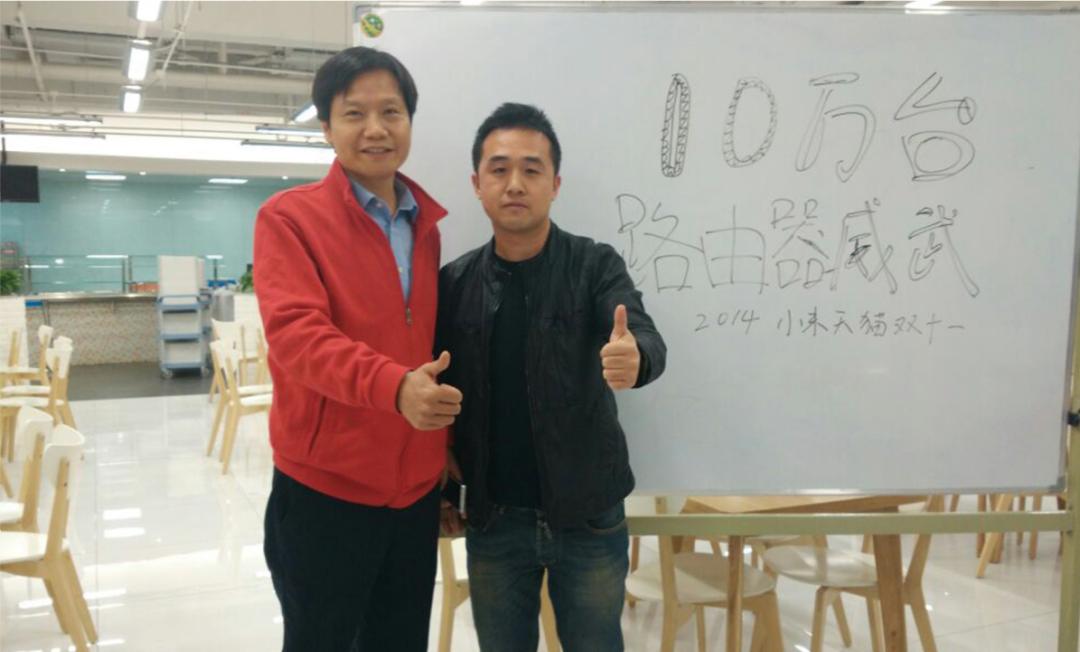
Celebrating the achievements of Xiaomi Router with Lei Jun Source: Interviewee
This experience also shaped his later product development habit: pursue every detail to the very end.
Later on, Tang Mu was promoted to Vice President of Xiaomi Eco-Chain. The two business lines he led, Xiaomi Router and Xiao Ai Speaker, achieved shipment volume of over 100 million units. At the same time, he led the Xiaomi Exploration Lab to explore the VR and robotics fields. In 2017, Xiaomi VR Glasses sold more than 1 million units.
After developing several products that satisfied him, Tang Mu began to feel confused instead, "I felt I hit a bottleneck, and I didn't know what else I could challenge". Lei Jun once pointed out a new target for him, but he judged that this target deviated from his main direction at that time.
In 2019, Tang Mu decided to leave and start his own business. In his opinion, he had reached a point in the big company where "if I don't leave now, I will never have the chance to leave in the future", and if he stayed any longer, he would "lose all his drive".
"Flash of Inspiration"
Tang Mu, who left his job to start a business, had not yet figured out exactly what to do when he received angel investment. His investors included Allen Zhang and several co-founders of Xiaomi.
At that time, Tang Mu only had a vague direction, "I think the robotics track is definitely the right one, but what kind of robot to make is very important."
Before figuring out the exact direction, the team had to survive first. "As a founder with years of product polishing experience, I cannot accept rushing into the robotics field and burning money aimlessly from the very beginning, and my angel investors will not allow me to do that either." At the initial stage, Tang Mu led the team to develop smart home products, make eco-chain products for Xiaomi, and later developed electronic accessories for Xiaomi Automobile. All the car keys of Xiaomi Automobile on the market now are developed by their team.
But even if they did the Xiaomi supply chain business well, Tang Mu thought that if they just kept doing this, the team could "survive, but may not live well". "There are no low-hanging fruits left in the Xiaomi eco-chain that you can easily pick." Tang Mu said.
At the end of 2022, the idea of developing coffee robots was formally put forward for the first time. Tang Mu described that moment as a "flash of inspiration".
At that time, ChatGPT was launched to the public, Elon Musk also started to talk about humanoid robots, and a group of people in China were eager to follow the trend. Tang Mu analyzed the robot market, dividing it into three major sectors: industrial, commercial and household, and he ruled out the industrial and household sectors first.
In the industrial field, Tang Mu had seen too many factories at Xiaomi. Industrial robotic arms have high accuracy, strong stability and extremely high production efficiency. At that time, humanoid robot technology was still immature, and the cost remained very high, so factory owners would not replace mechanical arms with humanoid robots in the short term. He believes that factory owners will always choose the most mature, most stable and most efficient production method.
For the household market, on the one hand, there is a huge amount of R&D work to be done, and "the current product definition is definitely not accurate enough". Plus there are many issues including compliance, safety and privacy, Tang Mu analyzed that there is still a very long way to go in this direction, "I don't think the funding we raised can support us until that day".
Then only the commercial scenario was left. In Tang Mu's opinion, the catering industry can go through cycles. Considering the repurchase rate, he chose the "drink" category in catering, "We can drink three cups of coffee a day, but we can't eat three roujiamo a day."
Among them, the coffee industry is a huge growing market. According to the *2026 China Urban Coffee Development Report*, the scale of China's coffee industry reached 354.9 billion yuan in 2025, with a year-on-year growth of 13.3%; the annual per capita coffee consumption increased from 16.7 cups in 2023 to 28.6 cups in 2025, an increase of about 70% in two years.
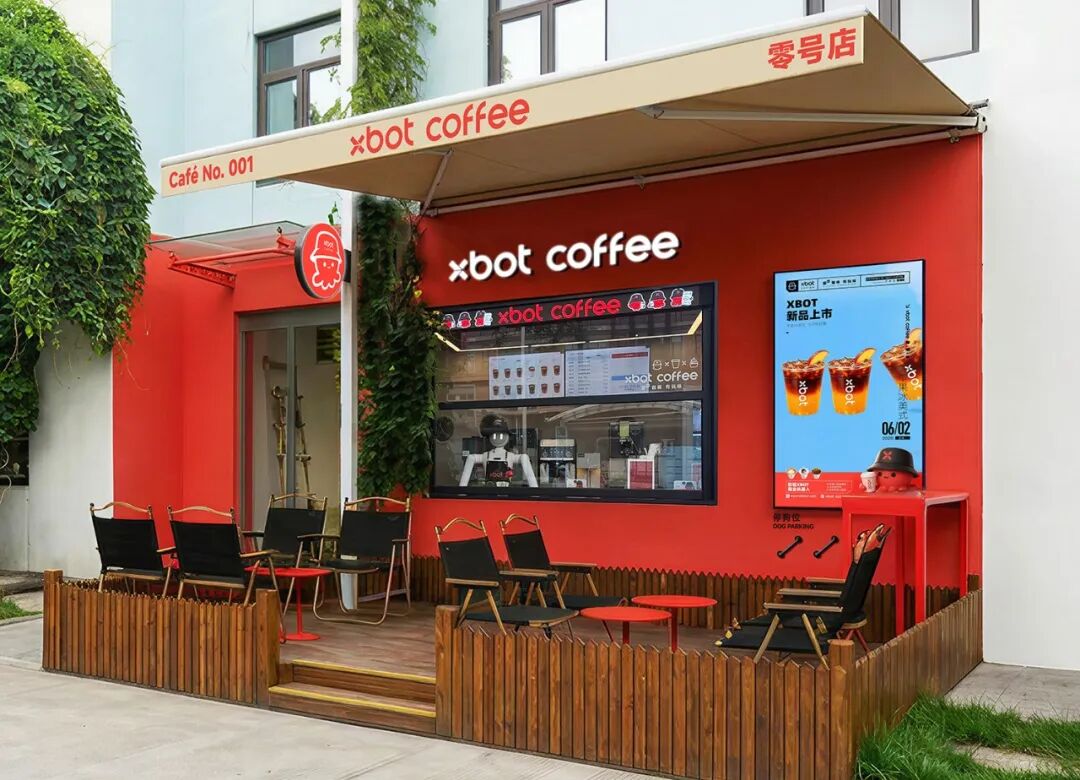
Source: Interviewee
What made Tang Mu more determined was a social news: a barista spilled coffee on a customer. He wondered: baristas are always considered to be of good taste and high quality, why did this kind of incident never happen before? He thought the reason was cost. A coffee shop used to need at least 3 people on shift, but now there is only one person left, who needs to handle cashier, order taking, takeout packaging, takeout rider reception, and also make coffee, "they don't even have time to go to the restroom". When meeting a difficult customer, conflicts can break out easily.
Tang Mu believes that there is a problem with the current production relations, "in today's production relations, people are in a very vulnerable position". He thinks people can do work that requires interaction with customers or creativity, while repetitive, boring and tiring work can be done by robots.
At the end of November 2022, ING Technology was officially registered and established.
"I don't think about burning money, I think about making money"
What should a qualified coffee robot look like?
Tang Mu spent a very long time just working out the product definition of the coffee robot: it cannot be a completely new product developed from scratch, and it must be matched with mature products from the existing supply chain. "Any technology that has not been verified by the market, mass production, and a large number of users cannot be used." Under Tang Mu's definition, the underlying technology of the coffee robot is actually IoT, except that the objects it connects and controls are coffee machines and