Many regions across China have successively introduced policies to liberalize vacation arrangements. Is the "right to rest" for working people really coming back?
This year, regions across the country have been "exploring every possible way" to arrange vacations for the public.
For example:
Recently, Guangxi released an official document, encouraging eligible entities to explore the trial implementation of "2.5-day flexible vacation per week for one month each year".
On November 3, the Development and Reform Commission of Guangdong Province printed and distributed the Implementation Plan for Expanding Consumption in Guangdong Province, writing paid annual leave, connecting annual leave with small public holidays, and flexible staggered vacation into the deployment of consumption expansion.
In August this year, many regions issued official notices, requiring leading officials to take the lead in taking vacations.
These are not isolated actions of a single region, but a collective action across the country that has started to implement the paid annual leave system and encourage employees to take staggered vacations.
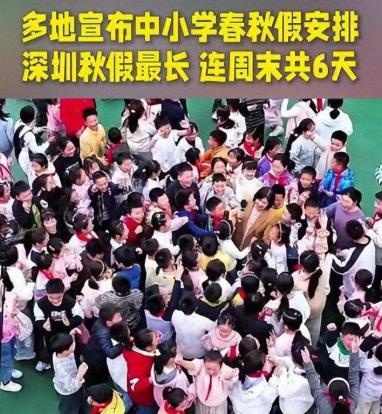
The widely discussed spring and autumn vacations for primary and secondary schools recently are also linked to the paid vacation of working people.
The establishment of spring and autumn vacations in primary and secondary schools, in addition to helping students reduce academic burden and promoting their physical and mental health, can also be linked with parents' paid annual leave to arrange travel or leisure activities, thereby driving consumption.
After all, when children are on vacation, there must be at least one parent who is "off work" to take care of them.
For families that are too busy to take care of their children, the government has also provided a fallback plan. For example, in Foshan: as long as students have childcare needs, parents can sign up for public welfare after-school care on campus, and can call the supervision hotline at 12345.
Before some people even figure out the spring and autumn vacations, many regions have announced the "snow vacation".
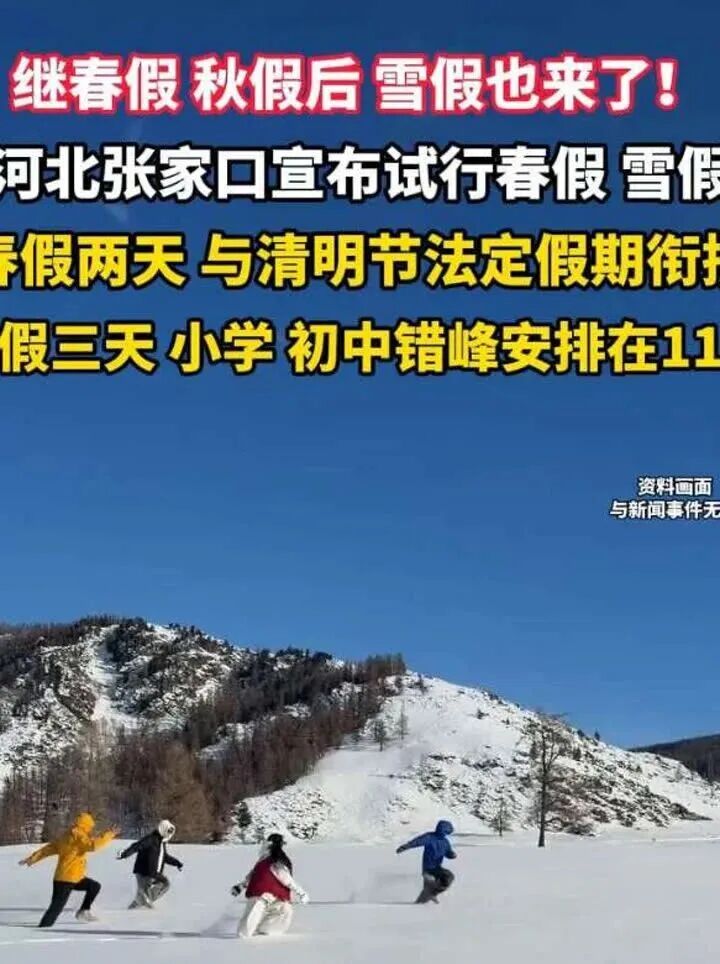
According to the report of Zhangjiakou Daily on November 13, starting from this year, primary and secondary schools in Zhangjiakou, Hebei Province will carry out the trial implementation of spring vacation and snow vacation, covering Grade 1 to Grade 8 of all compulsory education schools in the city.
In addition to Zhangjiakou, many regions including Jilin Province, Hulunbuir City of Inner Mongolia, and Altay Prefecture of Xinjiang have also announced the snow vacation arrangements.
At first glance, it seems that all regions are "giving out a large number of vacations", but in essence, this is the "right to rest" that belongs to working people.
During the Two Sessions at the beginning of this year, the proposal on "the right to rest" became the most heated discussion topic.
OECD data shows that in 2022, the annual working hours of employed people in China were about 2548 hours, far higher than 2193 hours in Mexico, 1865 hours in South Korea, 1796 hours in the United States, and 1331 hours in Germany.
In 2025, the average weekly working hours of employees in enterprises across the country was 48.6 hours, nearly one full working day more than the standard working hours.
Let's take a look at the situation of annual leave:
According to previous data from the Ministry of Human Resources and Social Security, the overall implementation rate of paid annual leave across the country is about 60%, and nearly 40% of employees have not really enjoyed it; calculated by working years, each person should enjoy about 10 days of paid annual leave on average, but in fact they only take 6.29 days; employees in private enterprises even have less than 4 days, and more than 72% of private enterprise employees have never taken a full paid annual leave.
When it comes to annual leave, the statutory minimum paid annual leave in China is 5 days (with a maximum of 15 days linked to working years), which is already lower than the 20-28 days range in most European countries; it is also lower than the minimum 10 days in Japan and the minimum 15 days in South Korea.
At the meeting at the beginning of the year, Yu Miaojie, a national people's congress deputy and economist, suggested that the minimum statutory annual leave be increased from 5 days to 10 days, and unused annual leave be allowed to be carried over for use within two years.
Although the policies are very good, including some vacation measures mentioned at the beginning of the article, the comment section reflects the real situation: "Give me back my 5 days of annual leave first."
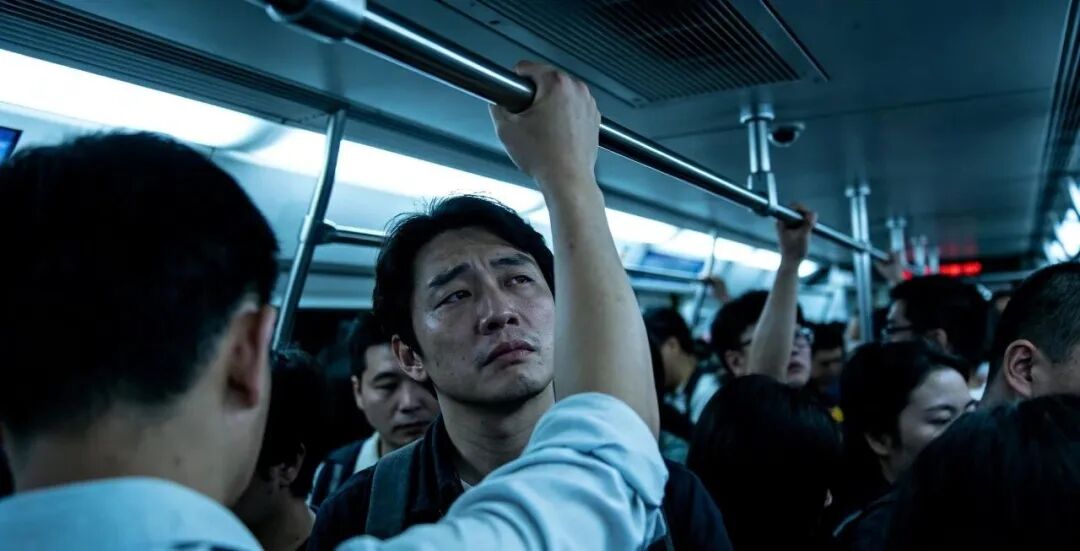
Why is it so difficult to take a paid annual leave?
Because there are three "mountains" blocking the way: "being too dedicated to work to take a vacation", "unwilling to take a vacation due to involuntary overwork and competition", and "daring not to take a vacation due to performance pressure".
Moreover, when it comes to asking for leave, 46% of people have "leave anxiety", feeling anxious and guilty as soon as they ask for leave, and 26% of people say that whether they can take leave depends on the attitude of their leaders and the workplace atmosphere.
Many individuals and enterprises believe that only working hard can bring competitiveness.
But in fact, taking vacations is also a kind of productivity.
At the beginning of this month, three departments in Foshan jointly sent an initiative letter titled "Taking Vacations is Also Productivity" to all employers and employees in the city. It states that taking vacations is not a pause in production, but a reinvestment in human capital.
Why is that?
Let's look at two sets of data first:
In the first three quarters of this year, retail sales of services increased by 5.0% year on year, while retail sales of goods only increased by 1.0%, a full 4 percentage points gap.
The contribution rate of final consumption expenditure to economic growth is 46.7% for goods and 66.3% for the service industry.
This shows that people are increasingly willing to spend money on "experiences" rather than on "physical goods".
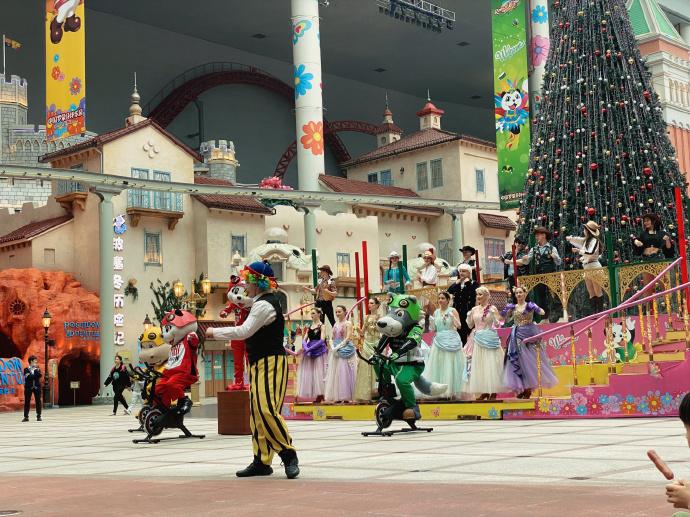
Watching performances, traveling, and taking children for study tours all require a whole continuous period of time. Vacation is the "time infrastructure" for service consumption.
It's not that people have no money to spend, but that they have no time to spend.
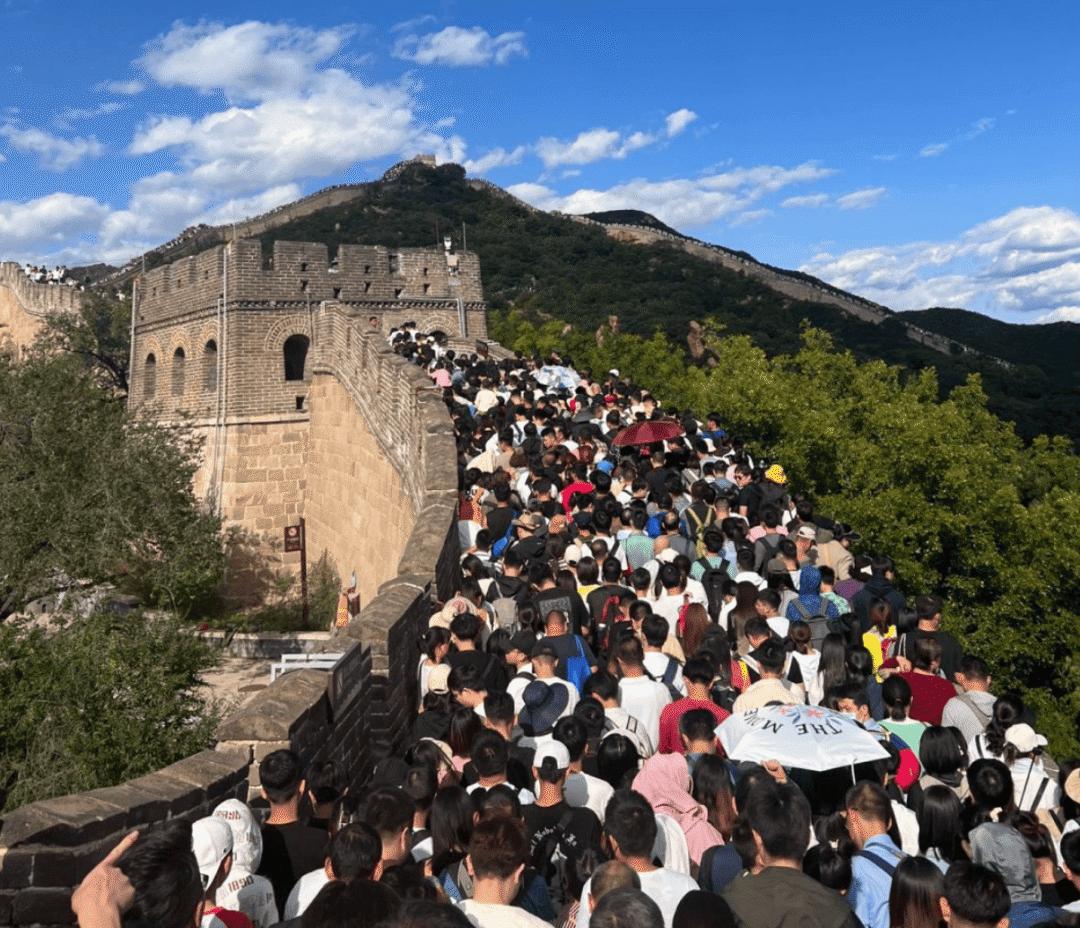
There is another more hidden account, which is the uneven performance of the holiday economy. During the May Day and National Day holidays, air ticket prices double, hotel prices double, and people queue up for three hours at scenic spots.
However, after these few days, a large number of hotels, scenic spots, and performers are idle. If production capacity is allocated according to the peak demand, most of the year the capacity is idle; if production capacity is not allocated according to the peak demand, the industry cannot handle the peak passenger flow in the peak season and the consumption experience will collapse. This gap is ultimately passed on to prices and consumption experience.
Spreading vacations throughout the year essentially raises the capacity utilization rate of the service industry. This is not a welfare narrative, but an efficiency narrative.
Although everyone is talking about wanting to take vacations, wanting to rest, wanting to take an extra half-day off, in reality when there is no work to do and people are allowed to rest, they will start to feel anxious, and take the initiative to join the involution, because only by working non-stop can they survive.
Especially in recent years, I believe everyone has a deep experience of this.
But in the long run, the reduction of working hours in China is an inevitable trend.
This is also the result of economic development reaching a certain stage.
On this point, Japan and South Korea have already set a reference for us. In the early stage, both countries relied on exports to drive the economy. As the development stage progressed, the proportion of manufacturing industry gradually declined, the growth focus shifted to tapping the domestic consumer market, and successively introduced laws to implement the 40-hour working week system.
According to data in recent years, the average annual working hours in Japan have dropped from 1821 hours to 1710 hours; in South Korea, which is also known for fierce work competition, the average annual working hours have also dropped by about 10% in the past decade.
The statistical data tracked continuously by OECD for many years also confirms this rule, the average annual labor hours of major global economies are steadily declining as a whole.
China will not deviate from this general trend.

At present, China is undergoing a transformation from "export dependence" to "domestic demand driven", shifting from the development path of focusing on manufacturing, meeting material needs and prioritizing investment to the path of focusing on service industry, meeting spiritual needs and prioritizing consumption.
Since we prioritize consumption, there are two unavoidable conditions: the people must have disposable income in their pockets, and they must also have free time.
Therefore, in the long run, increasing income and ensuring rest time will become two major starting points to activate consumption, and will also be the key direction for subsequent policy efforts.
But to be honest, it is still a little far from the ideal vacation that everyone expects. But at least, changes have begun, and any change is a good thing.
This article is from the WeChat official account "Xiaofang Talks About Workplace" (ID: XF-SZC), written by Wang Xiaofang's team, and released with authorization from 36Kr.