How to make happiness a kind of ability?
Susan Sontag wrote at the opening of *Illness as Metaphor* that every person born into this world holds dual citizenship, one belonging to the kingdom of health and the other to the kingdom of illness.
Before writing this book, she had just finished breast cancer treatment. In the book, she sorts out all kinds of claims attached to cancer: it has long been regarded as an ominous and unclean thing, and people with suppressed emotions and frustrated lives are considered more likely to suffer from it. And because it is difficult to cure, cancer has always been shrouded in a layer of mystery, which in turn deepens people's fear.
"Having cancer has become a scandal that endangers a person's relationships, promotion opportunities, and even job security, so patients who know their condition often keep it closely guarded, or even keep it completely secret," Susan Sontag wrote in the book, "And nothing is more punitive than giving meaning to a disease, and that meaning is always moralized."
For cancer patients and survivors, the stigma of illness is an omnipresent thing.
Yang Meng's experience provides a specific cross-section of this invisible pressure. At the age of 32, she accidentally found out that she had ovarian cancer during a routine gynecological examination. Fortunately, it was still in the early stage, and the biological behavior of this type of tumor was relatively mild. After surgery and six cycles of standardized chemotherapy, Yang Meng's life returned to its original track.
After the diagnosis, Yang Meng often secretly rejoiced that she did not have the most dangerous type of cancer, so she could go to work while receiving treatment. Her parents rushed over from China to take care of her, but in the end they could only help walk the dog, and Yang Meng even arranged a nearby trip for them.
No one knew about her condition except her family, her direct supervisor, and two or three close friends. Gradually, she herself almost forgot the identity of "cancer patient". She planned to do a medical aesthetic procedure to remove the scar on her abdomen, but later gave up because she was too busy with work.
Until one day, someone asked her about tumor treatment. She replied to the other party in every detail. After turning off her mobile phone, she ran into the bathroom and cried bitterly.
The psychologist told her that this was her trigger — just like her mother, she had actually never accepted the fact that she had cancer. She felt that this experience was not worth mentioning to others, and thought that as long as she returned to work, life could get back on track, and if her performance surpassed everyone else, she could make up for the missing part in her heart. But "not mentioning" does not mean "it's over". Under the seemingly normal life, the stigma of illness still affects how she understands herself.
*Oncology Nursing Forum* published an interview study of 19 lung cancer patients in a tertiary oncology center in South China in 2023. It points out that hiding the fact of having cancer, resisting the identity of a patient, and feeling that one is no longer a normal person are three common manifestations of illness stigma. People who survive cancer often need several years, or even decades, to fight against the stigma of illness.
A 2023 survey shows that one in seven members of the British public considers being diagnosed with a serious illness like cancer a "taboo" topic; 19% of cancer patients are unwilling to talk about their emotional problems for fear of others' reactions. 2025 data shows that 58% of British adults still hold "outdated" perceptions of cancer.
Yang Meng asked the doctor: Now that there is no worry about life and death, everything seems to be back on track, why do I still break down and feel unhappy? The doctor only said one sentence: find your support system.
Like most people, Yang Meng initially understood the support system as external conditions. Is it money? With money, she can afford better daily nutrition, even quit her job, relax completely, and travel around. Is it a larger house? For someone thousands of miles away from their hometown, that is a very real sense of security. Or is it a thoughtful boyfriend who takes care of everything for her?
What's more, the support system was a new thing for Yang Meng. Having made her way from a small-town exam-focused student to Europe, the most familiar phrase to Yang Meng is "depend on yourself": when she lived with her boyfriend, she never let him pay a single bill; last year, she obtained German permanent residence under the status of unmarried.
But performance, identity, and independence are all proofs made for others to see. She rarely stops to ask herself if she is tired, happy, or what she needs. The first step to find your support system may not be to look for others outside, but to look inward first.
A Sunset Glow, and a Little Pink Pony
Slowly, Yang Meng began to realize that the support system is more like pieced together by some trivial little things: a countryside hike, a long talk with a friend, a book finished on a rainy day, the usual greetings when calling parents, or a yoga class that relaxes the whole body completely.
"Once, I saw very beautiful sunset glow on my way home for three consecutive days, and I was in a good mood the whole time," she said, "I never noticed it before, because that road was usually very congested, and all my attention was spent on being sullen."
The sunset glow has always been there, what has changed is the way she gets along with life. After the treatment ended, she once understood "getting back on track" as restoring efficiency and proving herself; now, she is practicing shifting her attention away from traffic jams and frustration, letting a conversation, a meal cooked by herself, and a patch of sunset glow she sees when she looks up by chance enter her perception. From this point on, the support system not only comes from the help of others, but also includes one's ability to re-perceive life and settle emotions. These tiny feelings accumulate little by little, and that is the original appearance of happiness.
And this kind of perception can be consciously cultivated. Peng Kaiping, a professor in the Department of Psychology and Cognitive Sciences at Tsinghua University and a positive psychologist, calls this "savoring": notice the beauty, appreciate it, and then reminisce about it. In Peng Kaiping's view, happiness is not entirely luck, but also a kind of ability that can be practiced. This ability does not mean forcing yourself to be positive all the time, but practicing identifying and retaining beauty in daily life, so that your body and mind can be nourished again.
The Ralph Lauren Pink Pony public welfare project takes "The Power of Shared Existence" as its theme this year, and what it wants to convey is exactly this point: give yourself the greater ability to be happy. In other words, "being happier" contains the possibility of continuous adjustment and gradual accumulation.
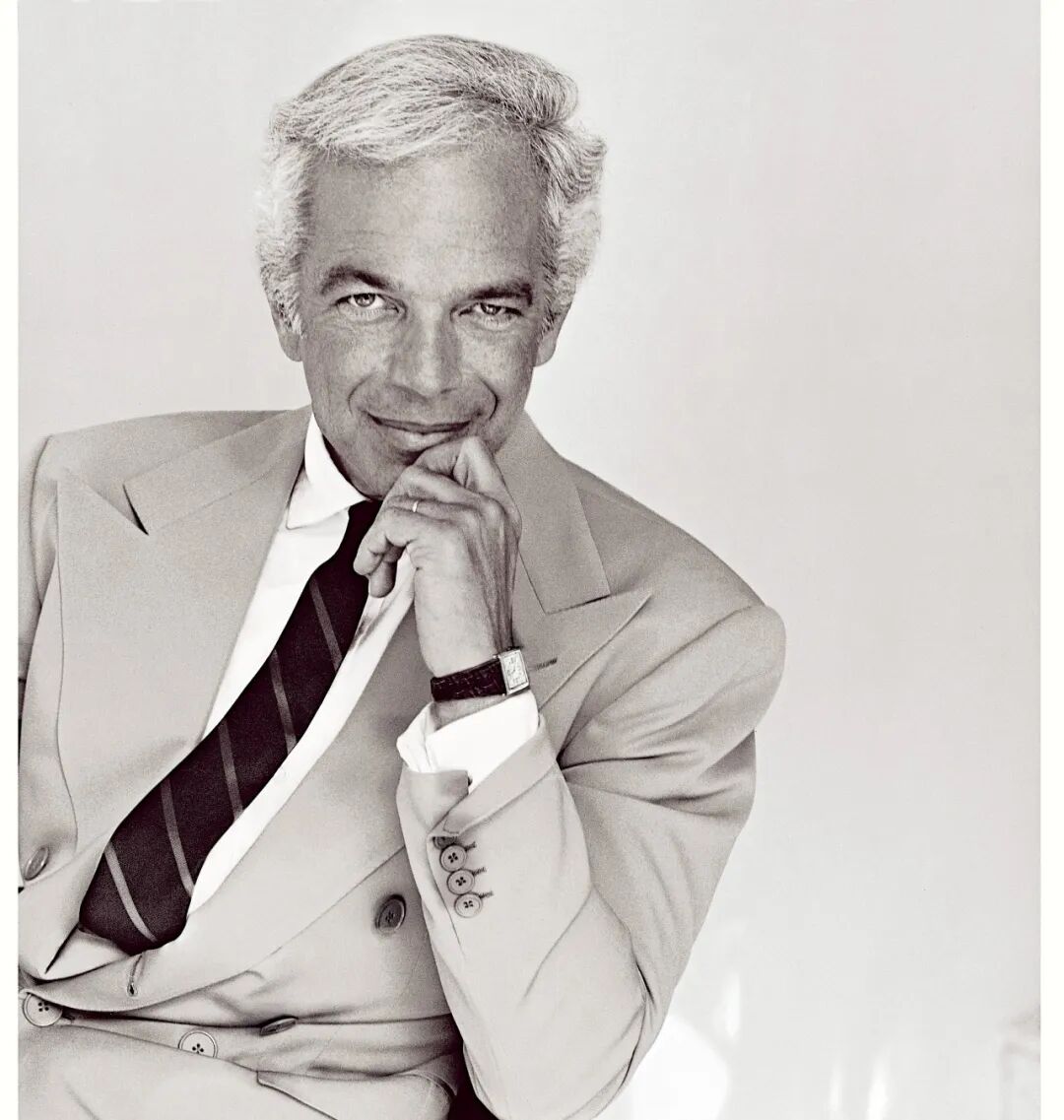
Ralph Lauren
The starting point of Pink Pony is the fear that one person endured alone. Ralph Lauren was once diagnosed with a brain tumor, and he told no one except his wife and brother. "That was the most frightening moment of my life — and I lived with it alone." After the surgery, he met a good friend, Nina Hyde, fashion editor of *The Washington Post*, who was also fighting breast cancer.
In 1989, he and Katharine Graham, publisher of *The Washington Post*, promoted the establishment of the Nina Hyde Center for Breast Cancer Research at Georgetown University to pay tribute to their good friend. In 2000, Ralph Lauren first launched the pink version of the Polo pony logo, and Pink Pony was born.
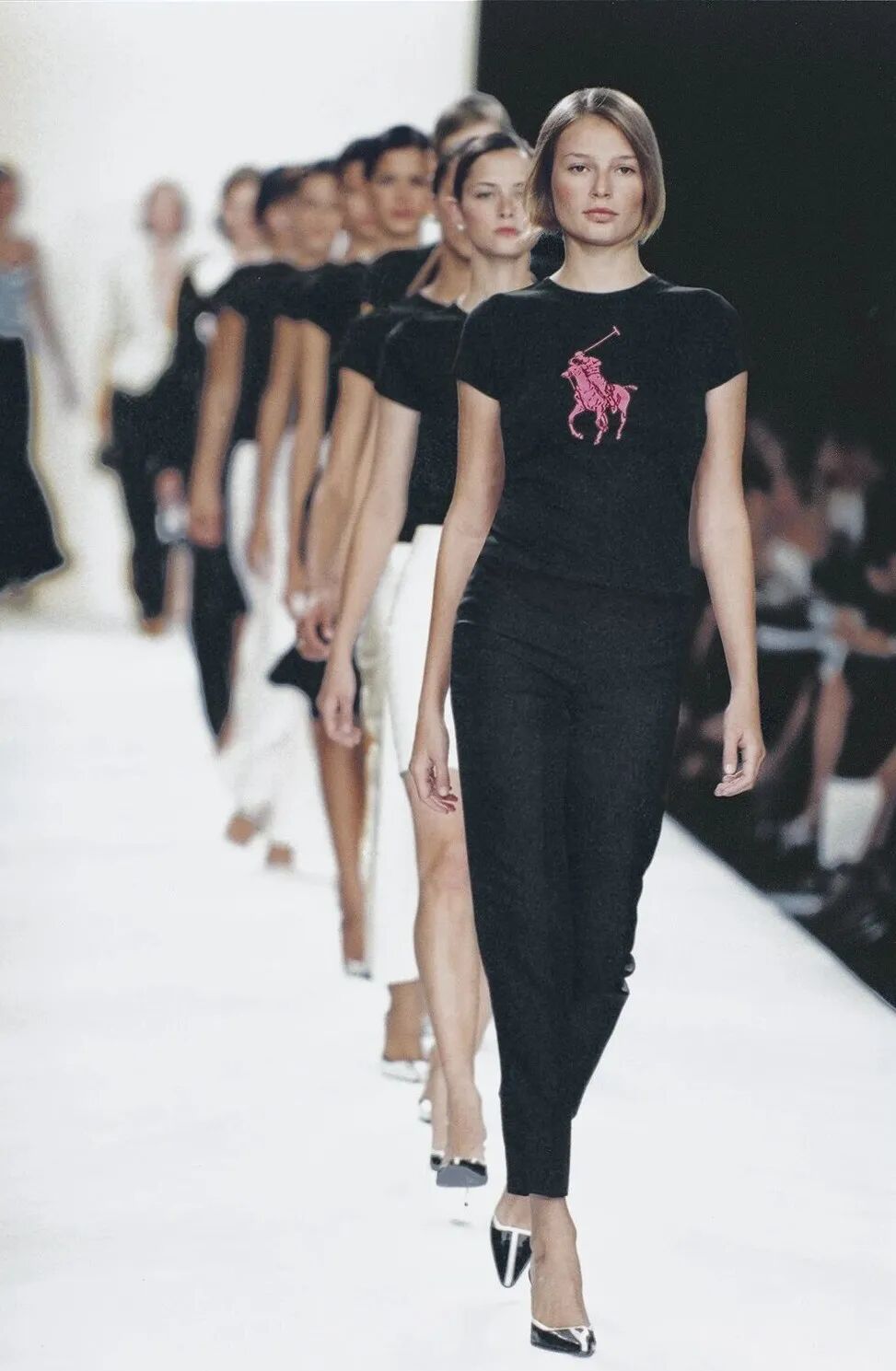
At Ralph Lauren's Spring 2002 runway show, models wore tops printed with the Pink Pony pattern
"The world is so small when you don't have choices or you have no one to talk to," Ralph Lauren said. For more than 20 years since then, from the community cancer center in Harlem, to the five newly built or expanded cancer centers in the United States, to the patient and family rehabilitation center set up in South Korea this September, what Pink Pony has been doing is always the same thing: making sure no one has to face it alone.
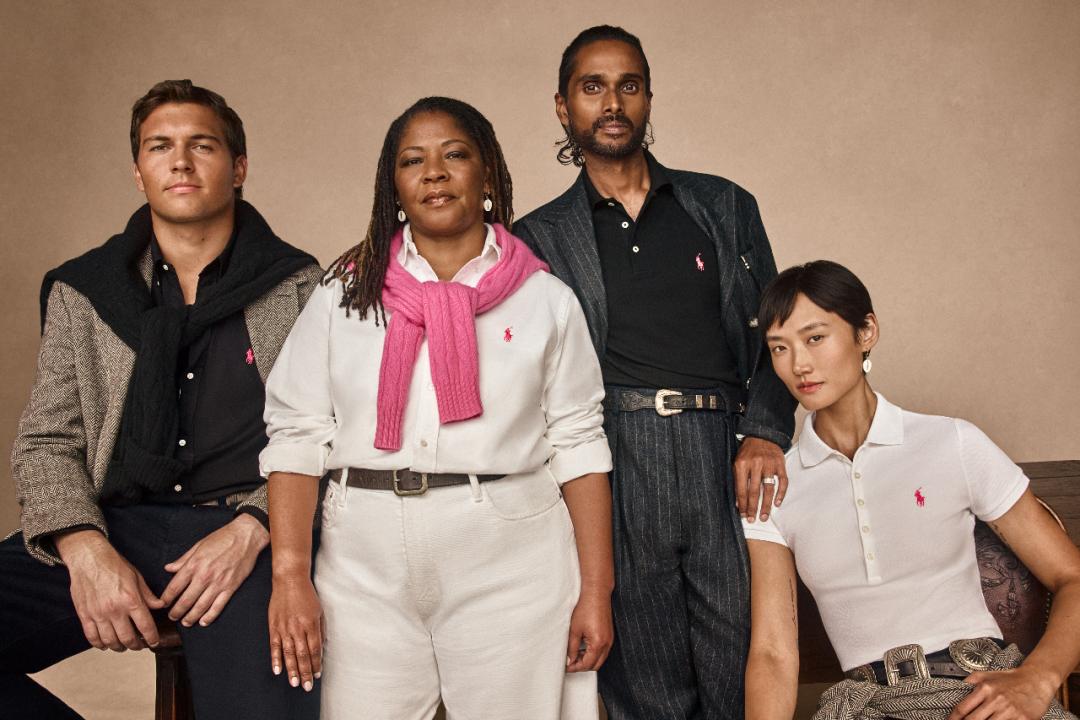
2026 Pink Pony program participants: Chad Palumbo, Dr. Chanita Hughes-Halbert, Sam Suriakumar, Ash Foo
This year, the theme of Pink Pony is "The Power of Shared Existence", with the core of "giving yourself the greater ability to be happy". In this fast-running era, we are often pushed forward by various identities and expectations. In front of others, we are used to playing the unbreakable adult; but in the exhaustion of late night, we often forget how to make ourselves truly happy.
This ability is divided into three layers: being able to understand yourself, break the definition from the outside world, and retrieve your inner confidence; being kind to yourself, allow yourself to be gently caught in understanding and connection; being passionate about yourself, liberate yourself, discover new possibilities, and gain strength in giving. All three ultimately point to the same relationship: care for others, and more importantly, liberate yourself. In the process of perceiving the situation of others, we re-recognize our own needs and identify the things that are truly worthy of being cherished — this is the meaning of "shared existence".
Put into practice, Pink Pony tells the meaning of community support through the stories of cancer survivors, and also reminds people to pay attention to early detection. Ordinary consumers can also participate: 100% of the proceeds from three designated items, the twill baseball cap, oxford shirt and cable knit sweater, will be donated; at least 25% of the proceeds from the rest of the collection will be donated; on Global Shopping Day on October 17, an additional 5% of the consumption amount of the day will be donated. The program covers 38 beneficiary institutions in 17 countries and regions, and in Chinese mainland, the donations go to the Shanghai Red Cross.
From knowing yourself, being kind to yourself to loving yourself, Ralph Lauren hopes to explore this ability together with the public. This year, Ralph Lauren made its debut at the China International Import Expo, bringing the topic of "giving yourself the greater ability to be happy" to the forum, and discussing with psychologists, scholars and media people: why modern people are getting less and less happy, and how to practice the ability to be happy.
Give Yourself the Greater Ability to Be Happy
People today are getting less and less happy.
The *World Happiness Report 2025* shows that 19% of young people around the world say they have no one to rely on when encountering difficulties, an increase of 39% compared with 2006; the *Report on National Mental Health Development in China (2021-2022)* released by the Institute of Psychology of the Chinese Academy of Sciences shows that the detection rate of depression risk across the country is 10.6%, and as high as 24.1% among young people aged 18 to 24. Material abundance has never been so high, but happiness is getting harder and harder to come by.
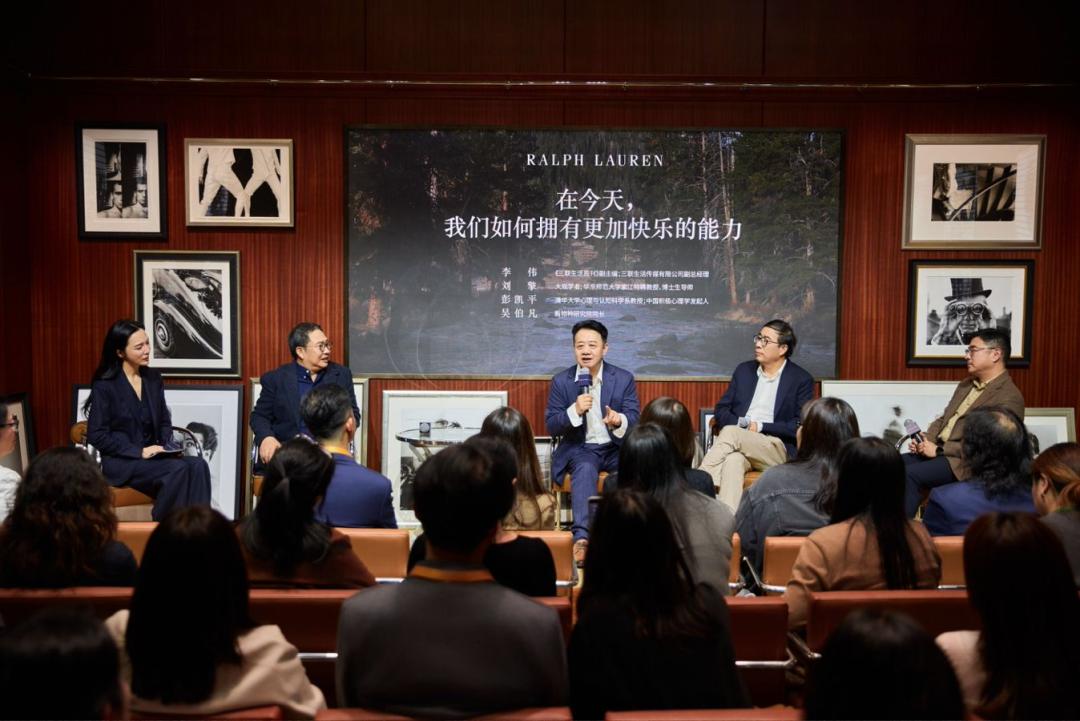
Ralph Lauren made its debut at the China International Import Expo for the first time and held a forum themed "How to Have the Ability to Be Happy"
At the CIIE forum themed "The Power of Shared Existence" held by Pink Pony, Peng Kaiping, a professor at the Department of Psychology and Cognitive Sciences of Tsinghua University, gave an evolutionary explanation: for tens of millions of years, dangers always came from bad things, so the human brain is naturally born with a "negative bias", which tends to pay attention to, believe in, and remember bad things. "It's actually very difficult to make others happy, but it's very easy to make people unhappy."
Professor Liu Qing from East China Normal University supplemented the "sensitivity" of modern people. In the past, the script of life was already written, and you only needed to act it out well or mess it up; now you have to write the script yourself, "one person can have three directors", and internal friction arises from this. He said to his students, renting a house in a third-tier city with a flush toilet, air conditioner and mobile phone, "these four things were not even available to Empress Dowager Cixi", but people are still not happy. Technology provides another trap: every moment you spend scrolling through short videos feels happy, "but after 10 hours of scrolling, you feel so miserable about yourself".
Since the brain is naturally biased towards negativity, happiness needs to be practiced. Peng Kaiping said that meaningful happiness is inseparable from four connections: with the body, with others, with nature, and with cultural ideals.
The connection with the body often starts with acceptance. In 2019, Canadian model Ash Foo was diagnosed with ovarian cancer, and the surgery left a nearly 25-centimeter scar on her abdomen. At first she dared not look in the mirror, but later she showed it off like a tattoo: "I am imperfect, destined and forever flawed. And that is beautiful." This year, she appeared in the advertisement of Pink Pony's "The Power of Shared Existence".
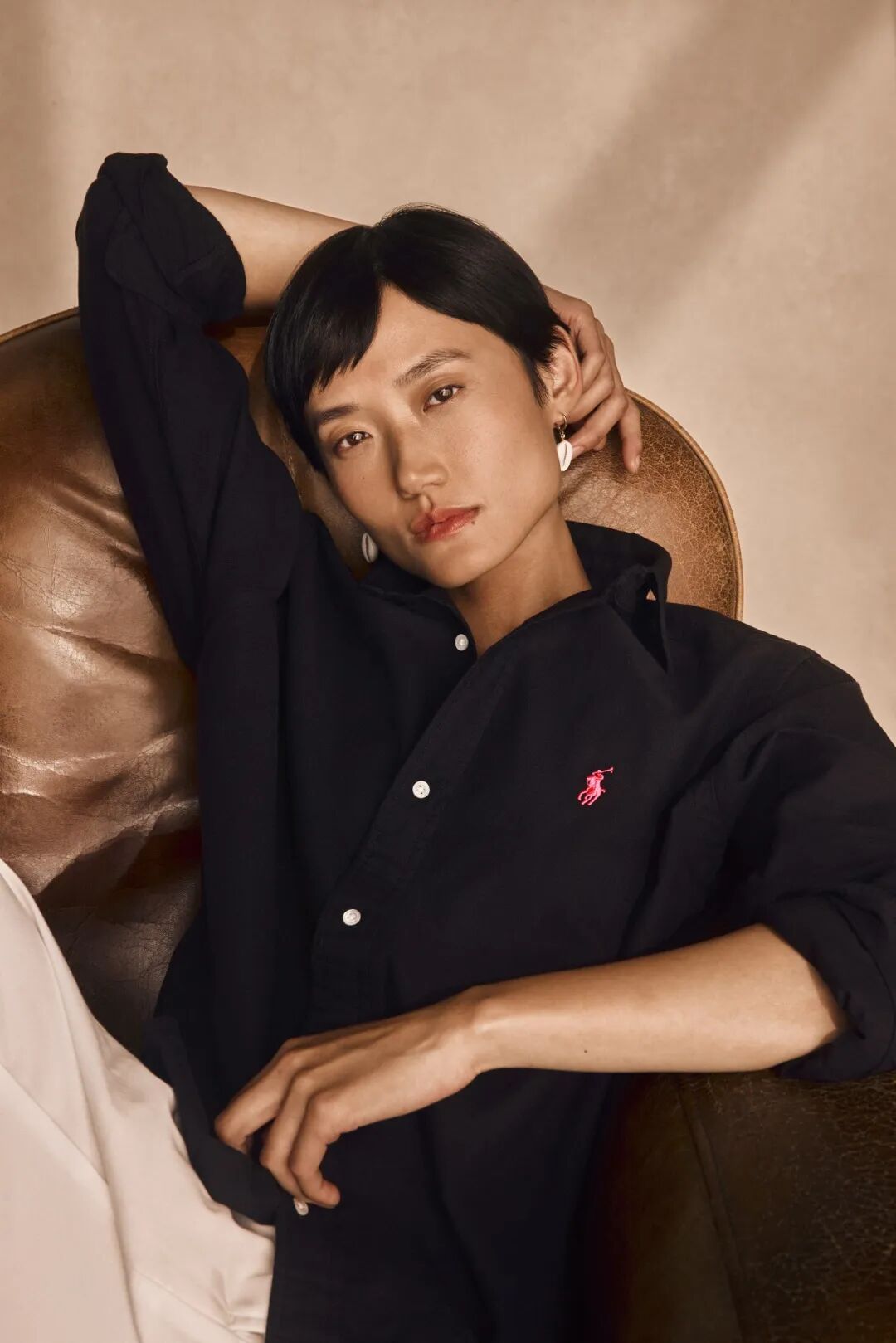
2026 Pink Pony program participant: Ash Foo
At the forum, Li Wei, deputy editor-in-chief of *Life Week*, said that compared with the brain that tends to be negative, the body is "more positive", and his method is so simple that it is almost plain: go to bed at 10 or 11 p.m., and sleep for 7 hours.
The connection with others requires allowing others to get close. "You can't achieve being seen, being understood, and being affirmed by yourself alone," Liu Qing said. Ash Foo attributes her coming out of the low point to a group of people who do not judge her: "As human beings, we need social connections to thrive." Saffron Vadher, a British model who also appears in this year's Pink Pony advertisement, was diagnosed with leukemia at the age of 3, went into remission at the age of 7, and is now an ambassador for the British leukemia charity. She said: "Sometimes, talking to someone who has gone through a similar experience can help."
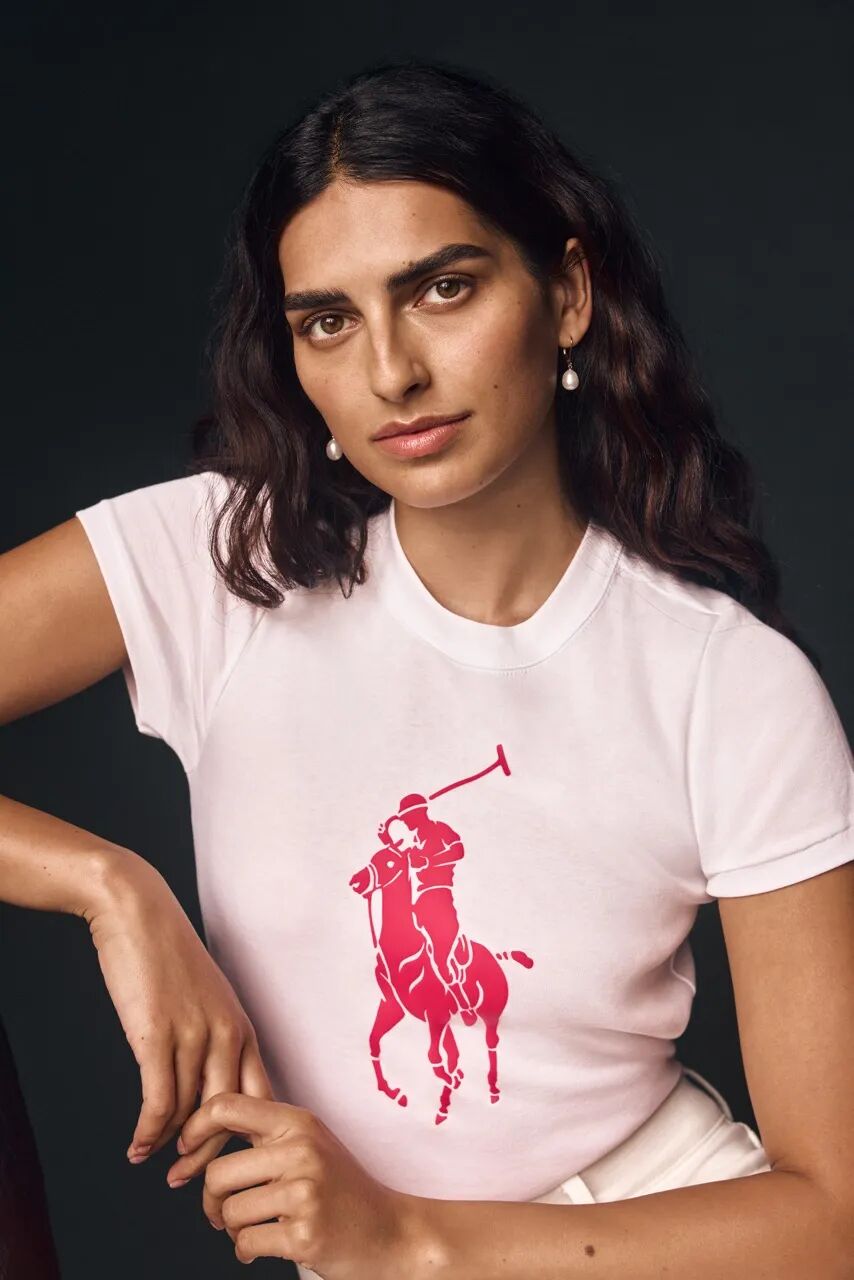
2026 Pink Pony program participant: Saffron Vadher
Ralph Lauren is all too familiar with the connection with nature. In 1982, he and