As the tug-of-war over AI copyright rages on, Australia's move to take the lead in rolling out relevant reforms has sparked heated widespread controversy, leaving musicians completely up in arms.
Recently, the head of the International Federation of the Phonographic Industry called out to the Albanese government of Australia: If Australia lowers the threshold for AI copyright, the entire industry might suffer!
She believes that loosening restrictions to allow AI companies to arbitrarily scrape online music materials for model training is an extremely bad move that will also ruin Australia's international reputation.
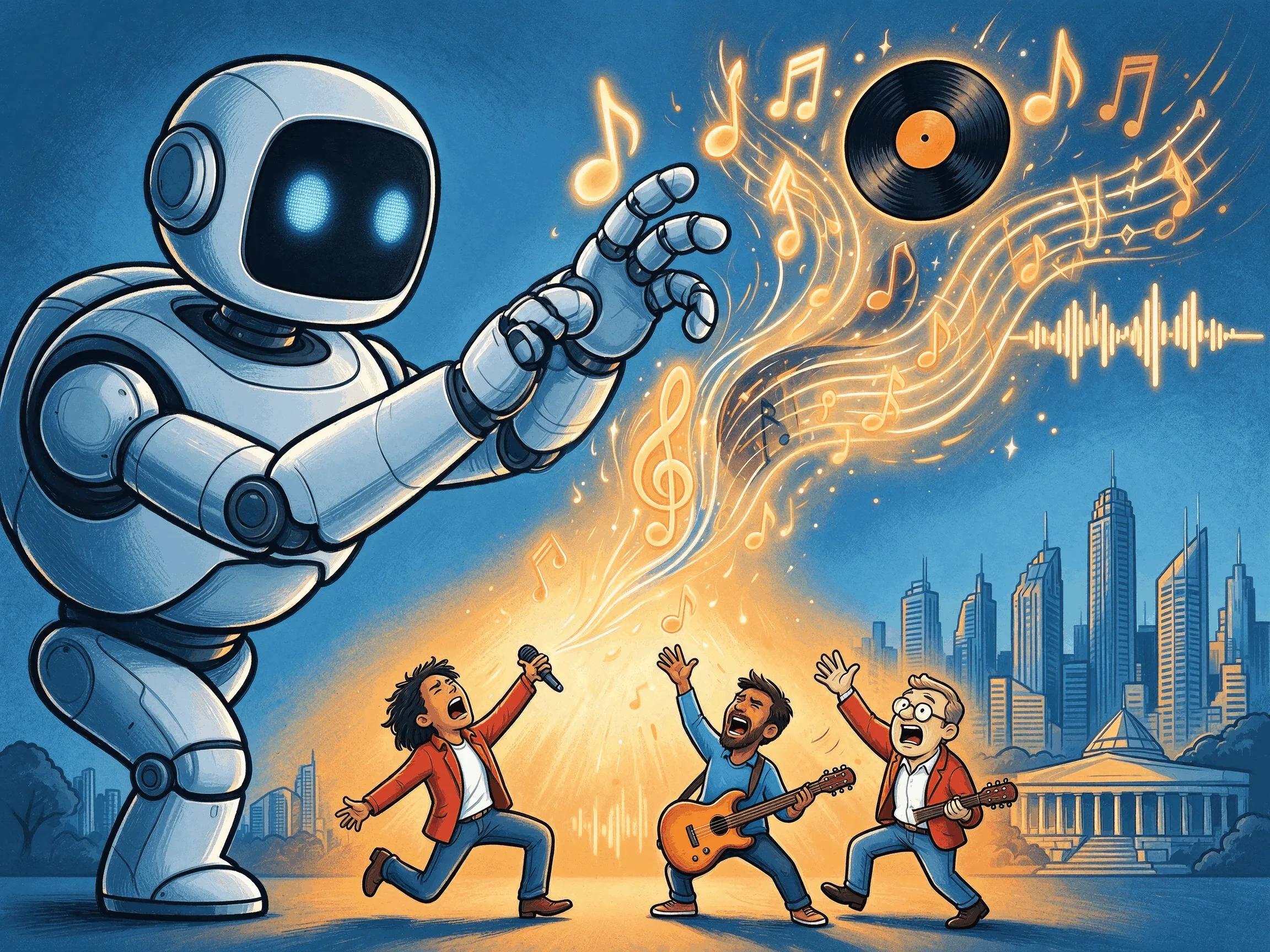
Image source: Generated by Doubao AI
It is extremely dangerous for Australia to relax copyright protection according to the demands of large AI enterprises.
The whole world is now watching the Albanese government, waiting to see how it will respond to the demands of these tech giants.
Local Australian creators have publicly stated long ago that such a revision may cross the legal red line.
The International Federation of the Phonographic Industry, or IFPI, manages many record companies around the world. People inside the organization are very anxious, fearing that Australia will agree to conditions that other countries have already rejected.
Victoria Oakley, CEO of IFPI, asked in an interview: What is Australia trying to achieve? It has considerable cultural strength and is a mature country, so why would it believe the empty promises painted by a small number of large AI enterprises and abandon its own cultural and creative foundation?
She does not want to see Australia become an easy target. After all, once concessions are made, all creators will be the ones to pay the price, and a bad precedent will be set for the whole world.
As long as this opening is made, AI enterprises can arbitrarily scrape global music for model training. This will not only affect local Australian musicians, but creators all over the world will suffer as a result.
Australia is now rolling out adjustments to a large number of AI-related policies, and copyright is only one part of them, covering other fields including data centers, cybersecurity, employment, energy, and the economy.
Previously, Albanese also stated that he would definitely protect creators, and that using works without paying a penny is essentially plagiarism.
No one expected that as soon as large AI enterprises came forward to demand relaxed copyright rules to make it easier to scrape materials for training, the situation immediately became tense.
Many AI companies find the normal copyright licensing process cumbersome and do not want to go through formal channels. Anthropic, for example, has proposed a plan: content can be taken arbitrarily by default, and copyright holders have to take the initiative to say no to the use before they will stop.
These large enterprises claim that if the copyright rules are vague, they will not dare to invest in Australia, nor will they train models locally.
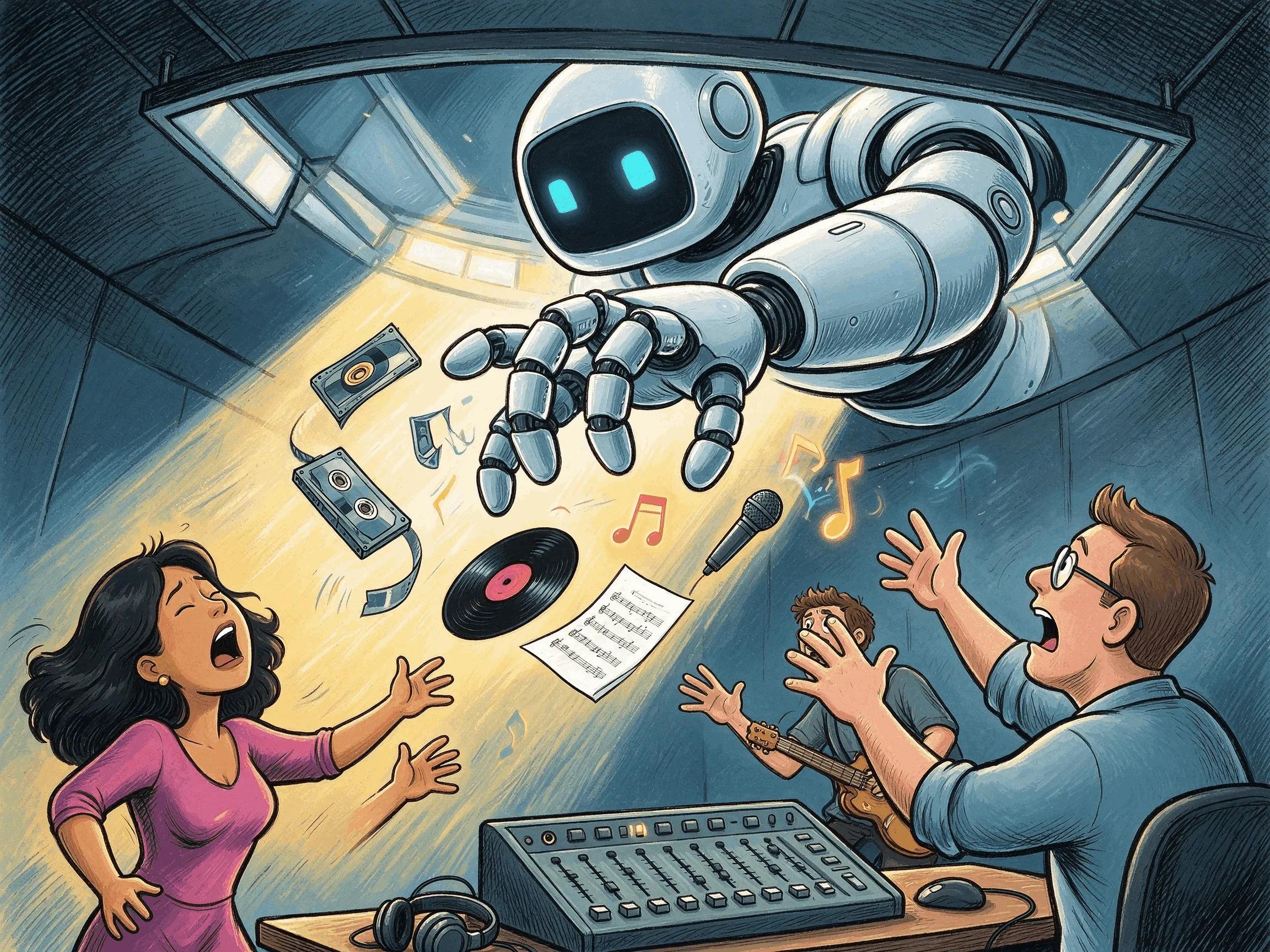
Image source: Generated by Doubao AI
Oakley warned that the United States and the United Kingdom have heard such claims before, and Australia must not be fooled. Attracting investment and promoting innovation do not require unconditionally accommodating AI enterprises.
"We have been sharing information with governments of all countries, and everyone is aware of Australia's current plans. In our view, this is a disaster for the creative industry."
A spokesperson for Australia's Attorney General responded last week: The government will stand on the side of creators, and when the copyright law is revised subsequently, it will ensure that creators can control their own works and receive the due income.
Conflicts between AI and copyright exist everywhere, but Australia's current moves are the most worrying, as it seems that it is about to do something absurd that will bring endless troubles.
What everyone fears most is that once Australia loosens its stance, other countries will follow suit and relax copyright rules, and all copyrighted content will no longer be safe in the future.
The Australian Recording Industry Association predicts that this matter may go to court later and involve constitutional disputes. Oakley did not say much about litigation, but she admitted frankly that if the policy is actually implemented, Australia's reputation in the global creative circle will be ruined.
Taking this wrong step will bring tiny benefits that cannot make up for the losses at all.
At the AI hearing of the Australian Parliament earlier, independent senator David Pocock asked OpenAI: Why can't you learn from Spotify and negotiate copyright cooperation in an honest manner?
OpenAI explained that Spotify only plays music in its original form, so it is inherently required to obtain authorization.
But Oakley said that major record companies have already negotiated dozens of licensing cooperation agreements with many small and medium-sized AI companies. The licensing path is completely feasible.
Everyone was very surprised to hear that the leading large AI enterprises said this path was not feasible. The streaming media model has long been proven to work, and Spotify, Amazon Music, Apple Music, and Tidal all cooperate in this way.
In the final analysis, copyright holders are not unwilling to cooperate. After all, they have accumulated a lot of experience in negotiating licensing in the streaming media era, and there are already successful cases of granting licenses to AI companies.
All parties can sit down and negotiate directly, the business can be fully settled, and it can be left to market consultation.
This article is translated by Leitech from the original text of theguardian. Link to the original article: Global music body warns Albanese that weakening AI copyright law will bring a "creativity disaster"