3A, the feudal superstition in the gaming industry
There are currently 21,330,000 enrolled college students in China, but in the gaming industry, this number is only... 2.
The first "college student" work is *Black Myth: Wukong* released in 2024, developed and published by Hangzhou-based Game Science; the second one is *Phantom Blade Zero* released this year, produced by Beijing-based S-Game. Both titles have been nominated for TGA (The Game Awards) Game of the Year, and are absolute historic masterpieces of domestic single-player games.
In the single-player gaming sector, Western companies have dominated the market for almost as long as the entire history of video games. Therefore, when Game Science and S-Game pried open a gap in the market, they were quickly hailed as "the only two college students in the village". While players stayed up late to clear the games, a widespread grand discussion also broke out, with the guiding ideology that "3A is the only criterion for testing a developer's reputation".
The subtext of the "3A College Student Theory" is that a Chinese game developer can only be considered "successful" and "graduated" when it launches a 3A single-player blockbuster with global influence. When this standard is placed in front of gaming giants such as Tencent, NetEase and miHoYo, it may not be an outright face-to-face provocation, but it is almost equivalent to writing them all off with one stroke.
And the climax is yet to come. This month, *GTA6*, hailed as one of "the greatest games in the world", was released with a bang. With an 11-year development cycle and a cost of over 1 billion US dollars, its pre-order volume before launch was close to 20 million. This series of data not only elevated the position of developer Rockstar Games (R Star) on the gaming altar by several levels, but also further reinforced the "3A College Student Theory".
This view is mapped to the "3A Industrial Pearl Theory" in mainstream public opinion. In 2024, when major mainstream media intensively reported on the breakthroughs of domestic games, they equated 3A games with high investment and high quality, and used expressions such as "the gaming field with the highest requirements for cultural industrial level" and "the pearl on the crown of the gaming industry".
Beneath all the enthusiasm, only insiders in the 3A circle dare to speak the unvarnished truth calmly and objectively. For example, when Feng Ji congratulated *Phantom Blade Zero* on Weibo, he specifically wrote this sentence: "Single-player games are not a more advanced form of games."
Industry insiders are indeed not in a position to pour cold water on the public and the media, but they share a common hidden concern: if a game is only considered "graduated" when it reaches 3A standards, where should the global user base, competitive ecosystem, technical capabilities, commercial achievements and cultural output accumulated by China's gaming industry over the years be placed? More than 95% of domestic gaming practitioners are not part of the 3A game industrial chain. Are they only qualified to sit at the kids' table for meals in the future?
And an unmentionable fact is that, looking back at the history of video games, the very concept of 3A games is a deliberately created, elaborately packaged and carefully maintained definition. At present, it can neither represent the existing pattern, productivity and evolution direction of the current gaming industry, nor can it be equated with "good games" in the minds of players more and more.
The concept of 3A is increasingly resembling the Yellow Eyebrow Immortal from the Little Leiyin Temple — it is likely a carefully guarded false deity.
01. The Alienated 3A Game
The primary problem with 3A games right now is that everyone is talking about them, but no one can define them accurately.
There is an interpretation of 3A circulating on Chinese internet: A lot of money, A lot of resources, A lot of time, which means that developing this game requires massive investment, massive resources and massive time.
A moment of reflection reveals the problem: "A lot" is a qualitative phrase that cannot be quantified. Exactly how much counts as "A lot"? Compared with *Plants vs. Zombies*, which was developed by only 4 people, *Black Myth: Wukong* and *Phantom Blade Zero* definitely count as "a lot". But compared with *Genshin Impact*? Don't make Mr. Dawei laugh — the sum of their costs is not even enough for *Genshin Impact* to develop one single version update.
Therefore, in the contemporary Chinese context, the definition of 3A has been further narrowed down, and it precisely refers to those large-scale, buy-to-play, single-player games based on high-performance hardware platforms, characterized by exquisite art effects, sophisticated graphics technology, and the buy-to-play business model (the key point), where players pay a one-time fee to experience all the content.
So 3A is a segmented category defined by a bunch of attributives, similar to "the best-selling domestic new energy 6-seat brands with sales above 400,000 units".
So how on earth did 3A get so many attributives? Game history researcher John Scalzo's research found that as early as a game retail publication in September 1991, retailers were already using AAA to describe games worthy of high prices — at that time, games were still based on 8-bit platforms such as the Famicom, and the phrase "A lot" had nothing to do with the term at all.
The real origin of 3A is Wall Street. Charles Cecil, developer of the *Broken Sword* series, recalled that in the late 1990s, game publishers referred to the credit rating classification in the bond field, and used AAA to describe a game, which was to tell game store owners that this game, like a high-rated bond, "is unlikely to fail", so they should pay for it and stock it immediately.
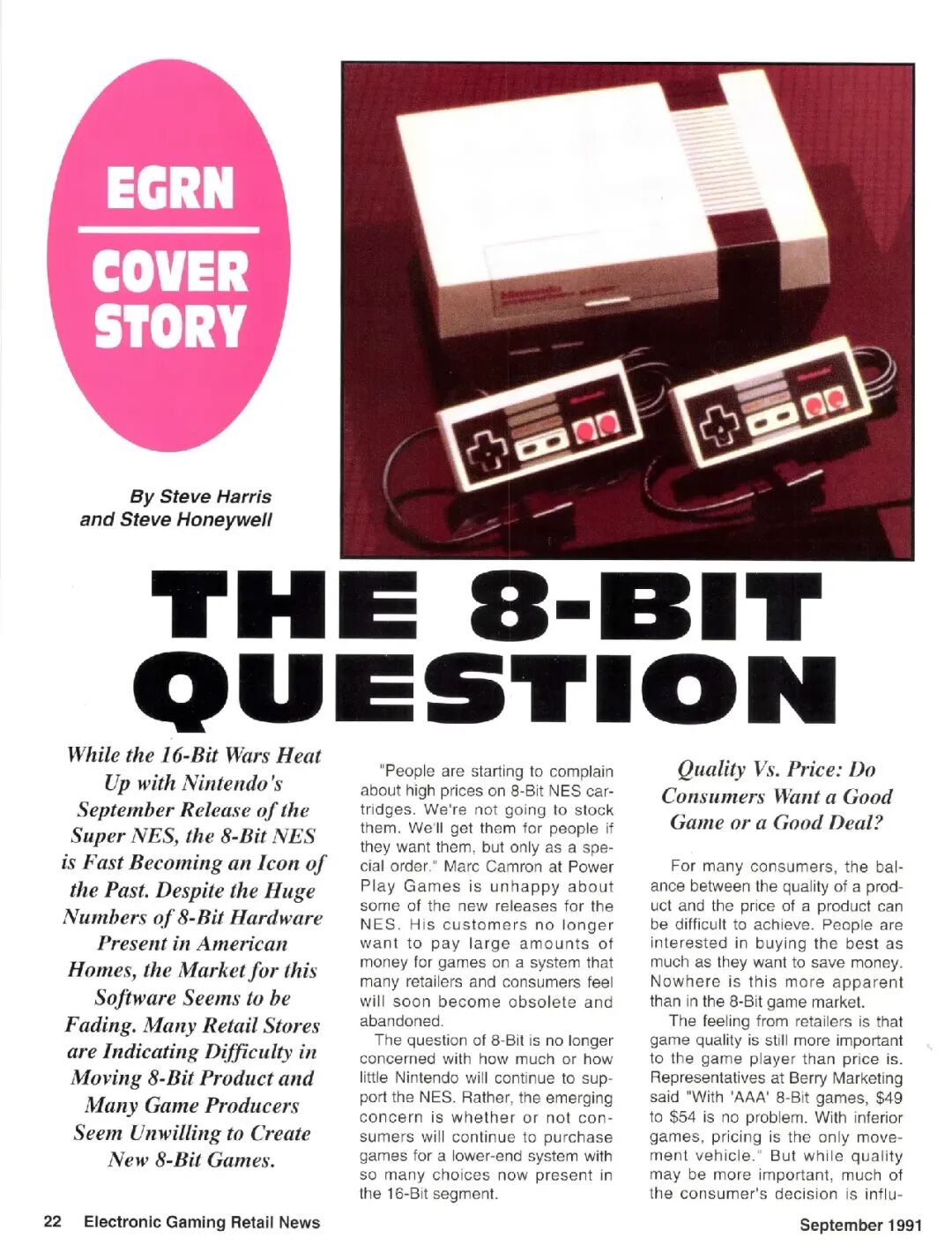
In a 1991 magazine, a distributor representative said that a good AAA 8-bit game could easily sell for $49 to $54.
In other words, 3A is essentially a clever trick for interest groups to circumvent advertising regulations. But it was lucky enough to meet the boom era of 3D games.
Around the year 2000, the global gaming industry entered the 3D era. NVIDIA launched the GeForce 256 graphics card in 1999, Sony released the PS2 console in 2000, Microsoft launched the Xbox in 2001, and masterpieces such as *Halo*, *GTA* and *Half-Life 2* came out one after another, giving the AAA game title the support of a large number of excellent works.
After entering the era of PS3 (2006), Xbox 360 (2005) and the 90nm process NVIDIA GeForce 7900 (2006), open worlds, motion capture, complex lighting and cinematic narrative allowed players to intuitively feel the leap in the capabilities of the gaming industry, and gradually made 3A games, which require large teams and specialized division of labor, a byword for high-spec production.
In this process, console manufacturers such as Microsoft, Sony and Nintendo, and a number of single-player game publishing giants began to collude to spread the concept of "AAA games" across all kinds of promotion media, equating it with "high investment, high quality" to implant this idea into players' minds: This is a AAA game, buy it without hesitation, play it with peace of mind, and you will be immersed in it happily.
In the smooth sailing, the conspirators forgot one important thing: to build a united front for 3A, and absorb more new forms of game types.
The first type of game excluded by the 3A camp was online games, the most typical of which was *World of Warcraft* launched in 2004. This large-scale multiplayer online game, fully developed by Blizzard, was greenlit in 1999, with a development cycle of about 4 years and a cost of over 60 million US dollars, which was 1.5 times that of *Half-Life 2*, 4 times that of *Call of Duty 2*, and 7 times that of *Gears of War*, meeting all the strict standards of "high investment and high quality".
Online, internet access and multiplayer connectivity are innovations in video game forms that emerged with the development of the internet, but this innovation could not get a pass to enter the 3A camp. After that, even the most exquisitely made non-buy-to-play, long-term operation games are not regarded as 3A, such as *Final Fantasy XIV*, *DotA 2*, *League of Legends*, *Fortnite* and so on.
After the popularization of smartphones in 2010, the video game industry once again ushered in carrier innovation — mobile games. However, since most mobile games adopt a non-buy-to-play, long-term operation model, just like desktop online games, no matter how much "A lot" their production and investment have, they will not be regarded as AAA games.
In the final analysis, the standards for 3A games have stood still for at least 20 years — its definition still stays in the single-player era of the 1990s, when the internet, smartphones and tablets were not popular. According to statistics from Newzoo, there are more than 3.1 billion mobile gamers worldwide, exceeding the combined 1.6 billion PC + console gamers (a large part of whom are also heavy users of online games).
How could such an outdated and old game classification standard be repeated and reinforced for a long time? Obviously, there is a huge interest group behind it trying its best to maintain it.
02. The Interest Groups Behind 3A
In the industrial world, there is no standard that comes out of nowhere.
From 5G algorithms to high-speed rail gauges; from Bluetooth parameters to USB specifications; from IMAX film size to electric vehicle charging power, every definition is maintained by a large number of relevant manufacturers. All parties have their own share on the same industrial chain, and the order is well organized. The industrial chain behind 3A games follows the exact same logic.
For a large buy-to-play single-player game from production to distribution, the 3A label can bring benefits to every link: large publishers find it easier to promote the game, console platforms can sell more devices and boost daily active users, gaming media can get traffic and advertising budgets, exhibitions and award ceremonies can create public topics and sell advertising slots, and even peripheral manufacturers can launch co-branded packages to make a fortune.
The first four types of roles constitute the core vested interest groups in today's 3A camp.
The first category is large third-party game publishers such as EA, Ubisoft, Take-Two, and Bandai Namco. Their job is to promote and sell games to players. The 3A label can obviously greatly reduce communication costs — no one knows if the game is fun, but with the 3A label, it is easy for players to form quality expectations and make purchases.
The second category is console platforms such as Sony, Microsoft, and Nintendo. They are keen to cooperate with internal and external studios to build flagship and exclusive 3A games, to promote the sales of hardware platforms such as PlayStation, Xbox and Switch. The latest case is the exclusive release of *GTA6*, which pushed the price of PS5 Pro on Xianyu up to 12,000 RMB per unit at its peak.
The third category is gaming media, such as IGN, GameSpot, etc. 3A games are gold mines for content — large projects not only have a multi-year promotion cycle, but their first reveal, exclusive interviews, demos, reviews, guides and subsequent updates can all generate content. At the same time, developers will place advertisements, sponsor content and purchase promotion services through these media.
The fourth category is exhibition and award organizers, such as TGA, Gamescom, Summer Game Fest and so on. 3A projects with sufficient budgets and mature trailers are the big sponsors of exhibitions and award shows. In 2025, the commercial trailer for "Game Oscars" TGA was quoted at 450,000 US dollars per minute, and more than 1 million US dollars for 3 minutes; the 60-second ad quote for Summer Game Fest was as high as 250,000 US dollars.
A widely publicized 3A blockbuster can allow the four groups on the chain to make money first, even before the game quality is known.
*Cyberpunk 2077*, released in 2020, is a typical example. Its developer and publisher, Poland's CD Projekt, operated a global promotion covering celebrities, game exhibitions, media demos, series of live streams, TV ads and brand co-branding, covering 55 countries and 34 languages, achieving more than 3 billion clicks and exposures before the official launch.
The most unforgettable scene for players appeared at Microsoft's E3 show in 2019. Keanu Reeves, who played the supporting character Johnny Silverhand in the game, suddenly appeared on the conference stage, and ignited the whole audience with the line "We have a city to burn", greatly raising players' expectations. In the end, *Cyberpunk 2077* achieved an unprecedented 8 million pre-orders, a record that was not broken until 6 years later by *GTA6*.
Media and exhibition organizers also played a role in fueling the flames. CD Projekt intensively released trailers, interviews, behind-the-scenes footage, demos, official cosplay and other activities, providing a steady stream of content to feed traffic. The media returned the favor: before launch, the PC version of *Cyberpunk 2077* once reached a combined media score of 91/100 on Metacritic.
Hardware manufacturers did not miss this feast either. Microsoft launched a co-branded Xbox One X console and controller, of which 45,000 limited units were sold out immediately; NVIDIA produced a co-branded RTX 2080ti graphics card, Porsche authorized the 911 Turbo to be implanted into the game, and Chinese phone manufacturer OnePlus also launched a *Cyberpunk 2077* co-branded phone — even though you cannot run this game on it.
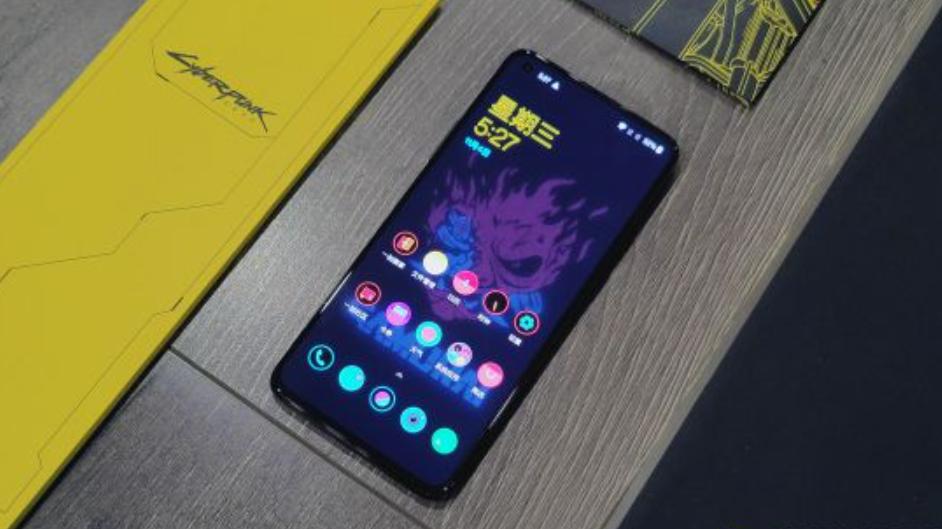
Cyberpunk 2077 co-branded mobile phone
Everyone on the interest chain had a great time, and a world where only players got hurt was created. The game was released on December 10, 2020, with a large number of catastrophic graphical glitches and bug issues, and its reputation collapsed severely. CD Projekt's stock price plummeted by 40% in half a month, Sony directly removed the game from the PlayStation Store, and players could get a full unconditional refund.
The total budget of *Cyberpunk 2077* reached 300 million US dollars, 45% of which was for marketing and communication expenses. If CD Projekt had not worked hard to fix the game and restore its reputation later, this failure would definitely have been nailed to the pillar of shame in gaming history, and revealed a harsh fact: even AAA-rated bonds could be issued by Lehman Brothers or Evergrande.
Therefore, the advocacy that "3A is the future" is all driven by interests. After all, the Yellow Eyebrow Old Monster once made an important speech in *Black Myth: Wukong* — now that you see the future, why not buy?
03. The Industry Has Long Suffered From Obsession With 3A
According to statistics, the output value of 3A games, hailed as the "pearl on the crown", only accounts for about 10% of the global gaming industry's total output value.
According to Newzoo's statistics, the global gaming revenue in 2025 is 201.6 billion US dollars, of which the mobile segment accounts for 113.3 billion US dollars, taking up 56.2%; the PC segment accounts for 43.6 billion US dollars, and the console segment accounts for 44.7 billion US dollars, adding up to 88.3 billion US dollars. Among this 88.3 billion US dollars, the revenue from game titles + DLC buy-to-play sales is 43.5 billion US dollars. If we assume 50% of that comes from 3A games, the overall proportion