A 20-year-old guy used 250 AIs to bring the entire Earth into Minecraft, and it is even more fun to explore than GTA 6?
20-year-old developer Thijs Simonian posted a video on X, claiming that he has recreated the entire Earth at a 1:1 scale in Minecraft, including the house you live in.
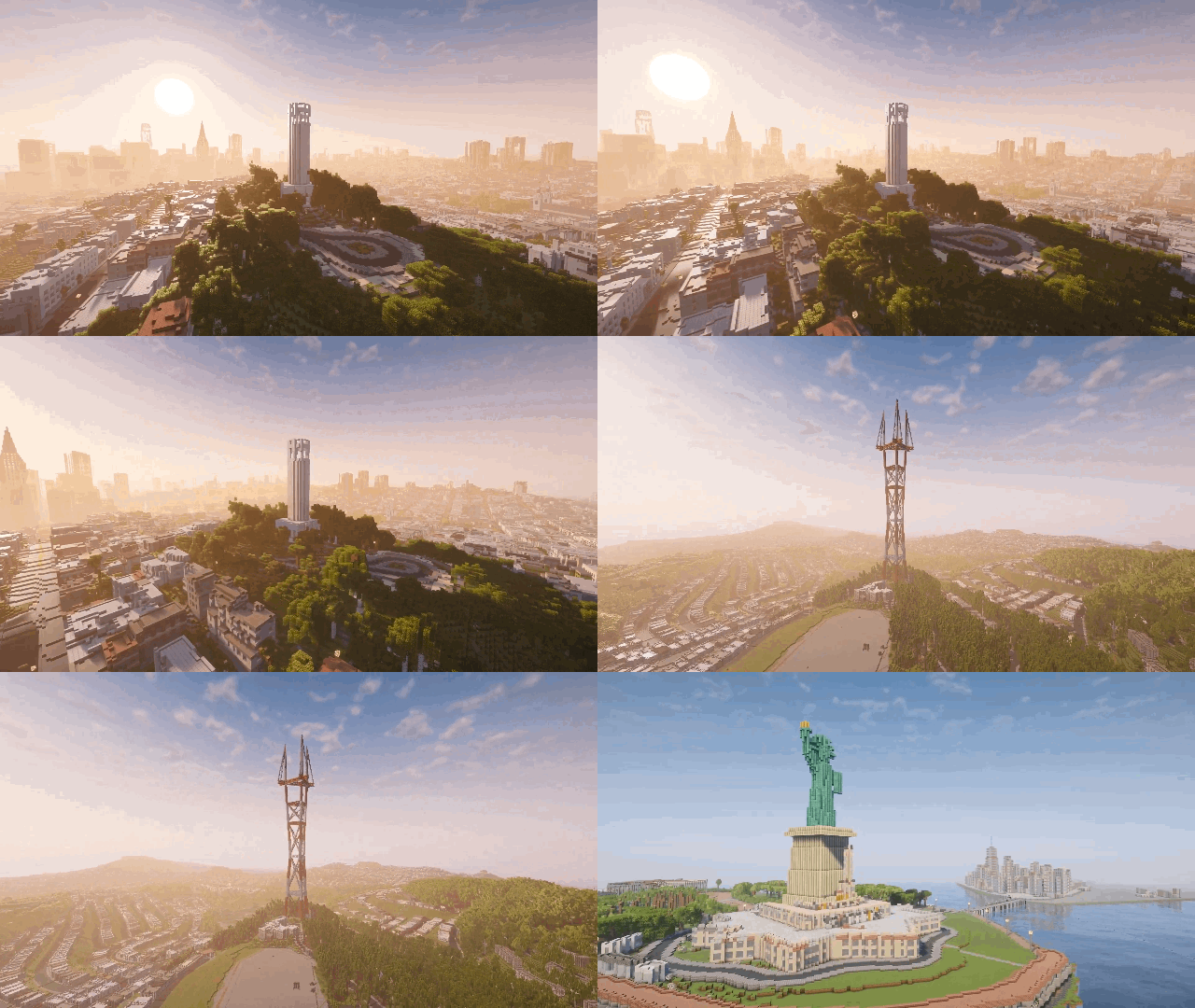
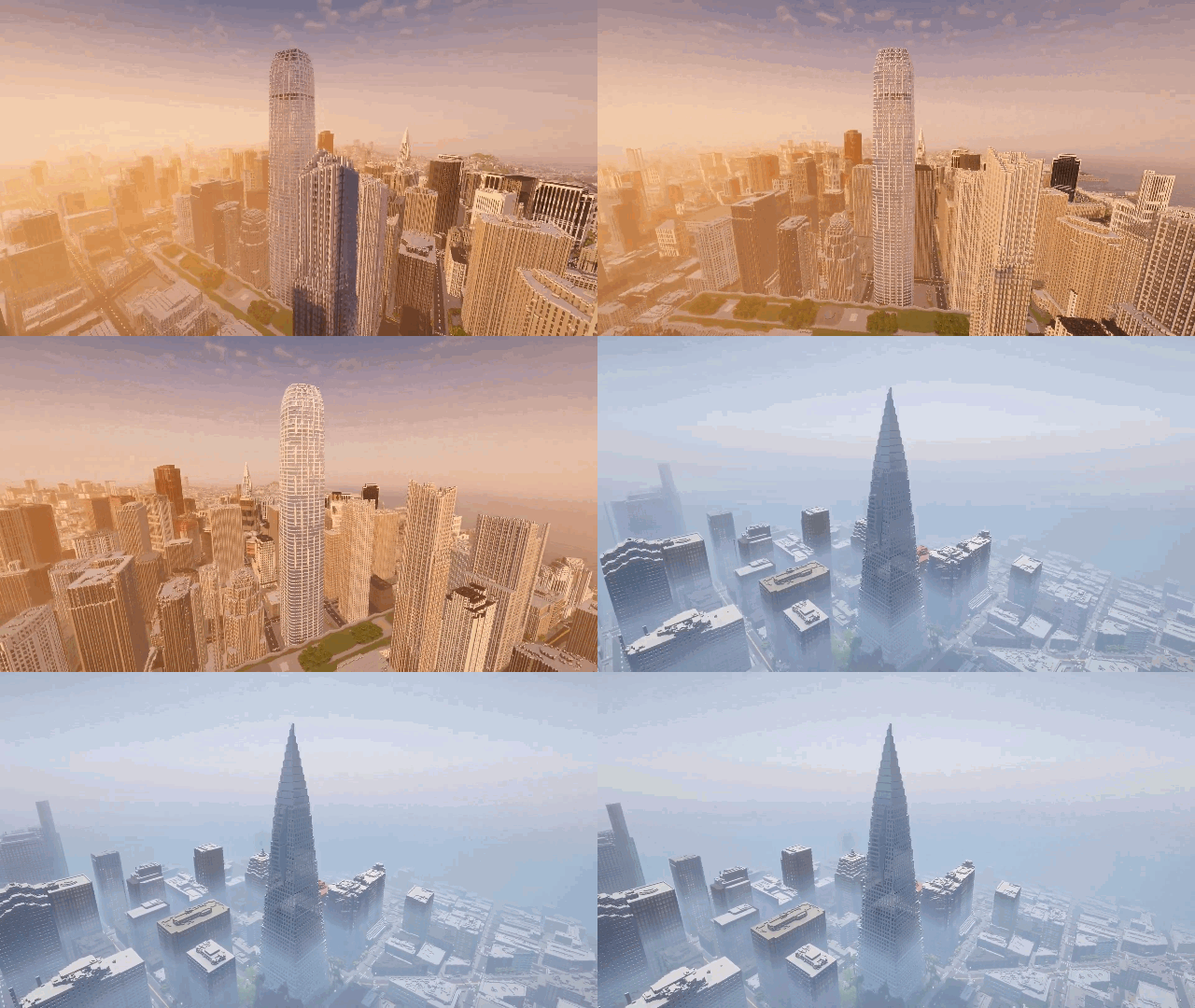
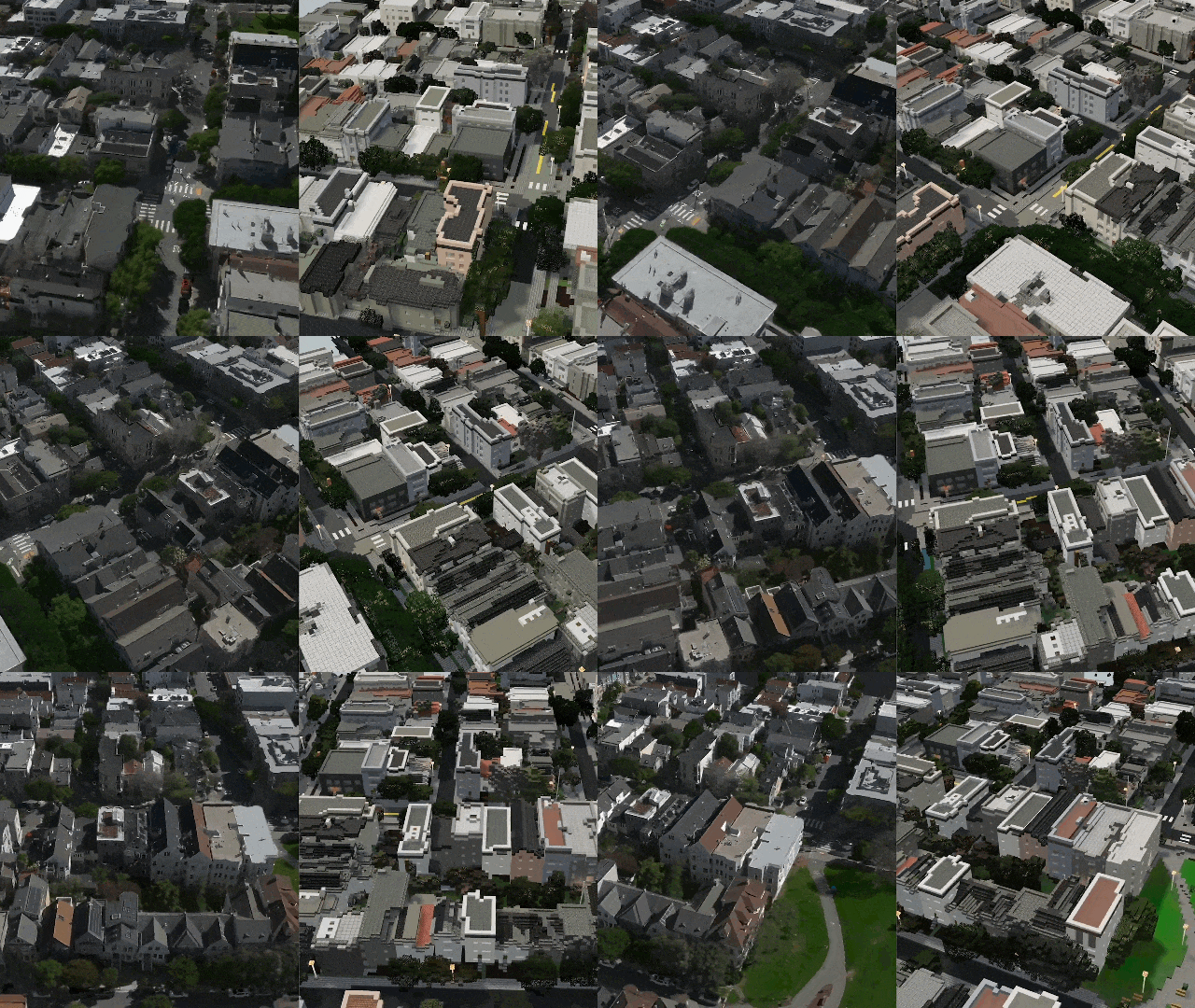
He fed map data into a generation system co-developed by AI Agents, so that players only need to enter a real-world address, and they can step into a familiar world made up of blocks.
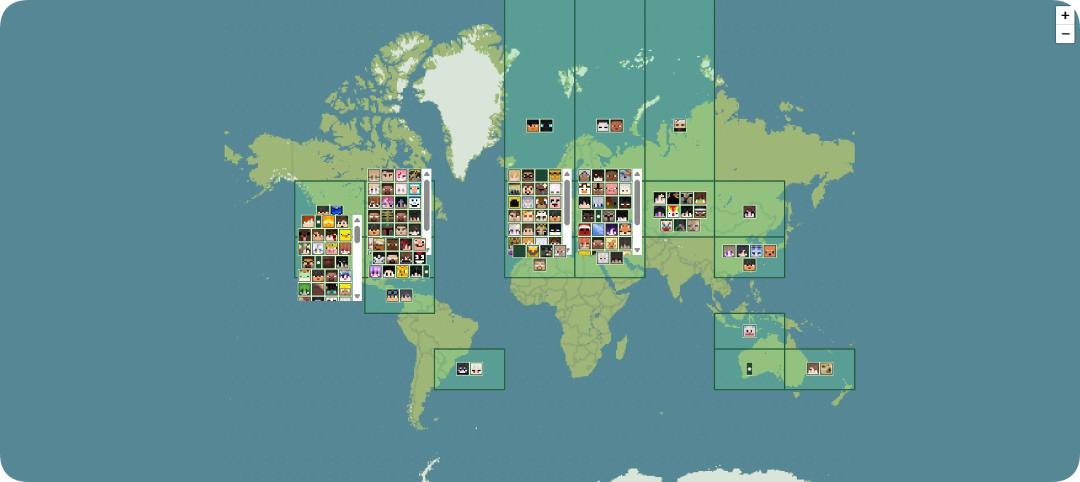
Players who got access to the experience quickly flocked to social platforms, sharing screenshots they took after entering their home addresses, confirming the outline of streets, identifying the shape of buildings, or capturing screenshots of details that surprisingly match the real locations in their memory.

Access portal🚪: worldcraft.gg
Enter an address, and you can find your own home in Minecraft
Thijs's original goal was only to recreate San Francisco in Minecraft.
He converted the city into a Minecraft map file of about 6 GB, which players can download and explore locally. Roads, buildings and terrain are arranged according to their real-world positions. Standing on the street and looking into the distance, the familiar city turns into a landscape pieced together by blocks.
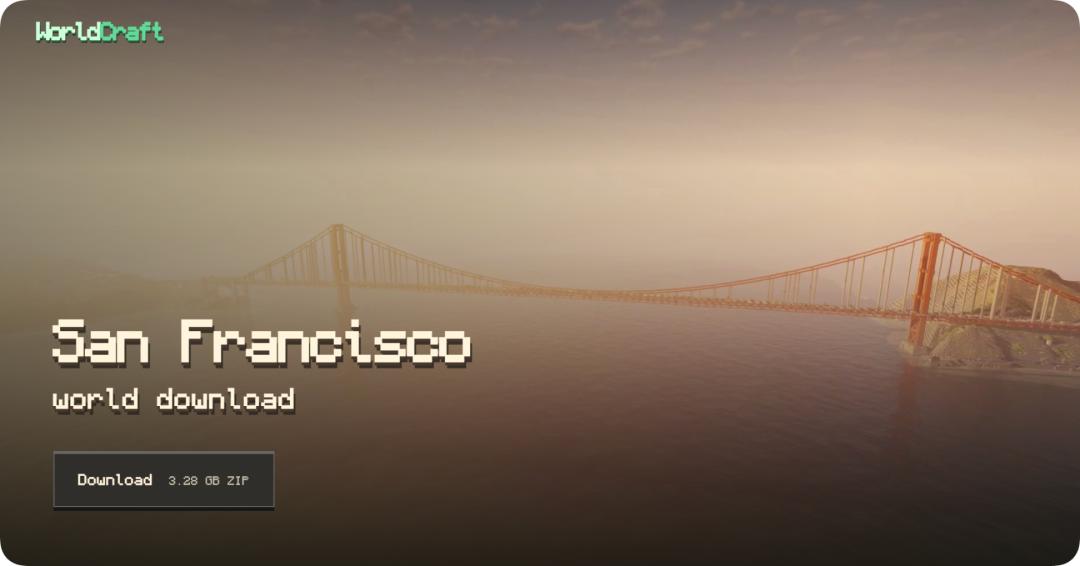
After the results came out, he decided to extend the same generation process to the whole world.
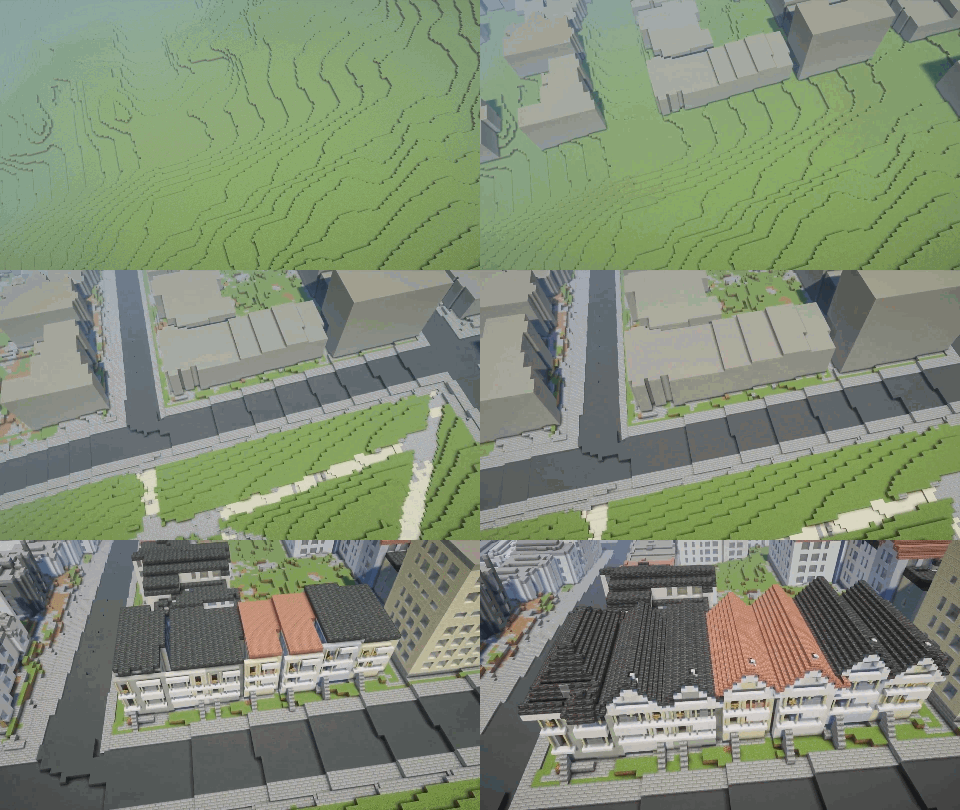
The generation process of this system is roughly divided into three steps. Elevation data is used to determine the undulations of hills, valleys and plains. Next, the system reads open map data, mainly from OpenStreetMap, to determine the position and orientation of roads, as well as the planar outline of buildings.
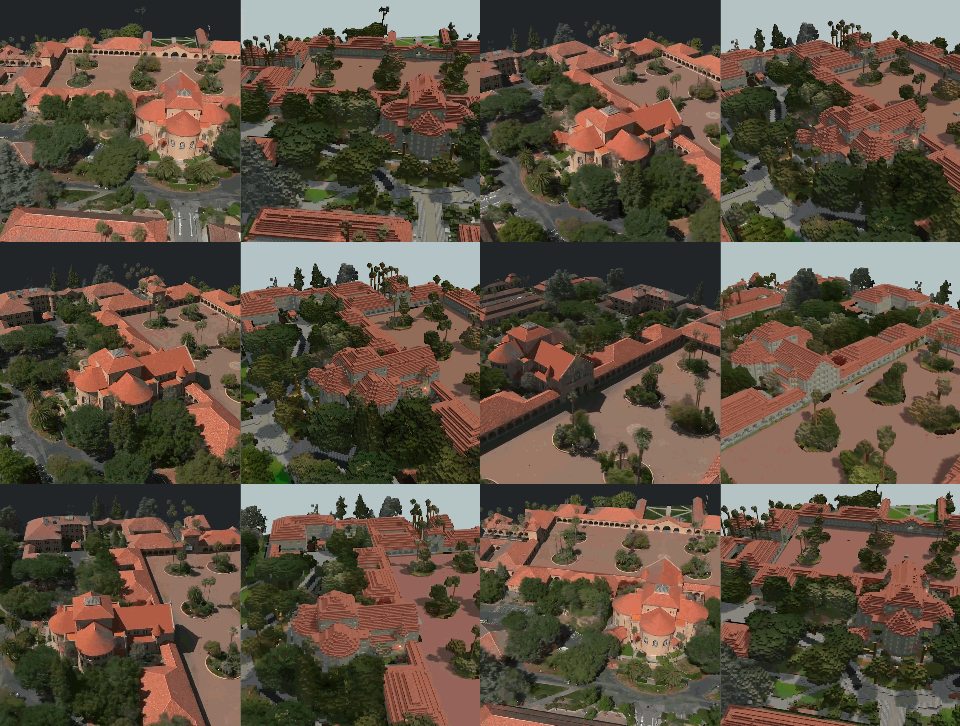
With terrain and outlines, the city has already taken initial shape, but the buildings are still relatively rough at this point. Then, the AI refers to 3D aerial images to supplement roof shapes, colors and some partial structures for the buildings, and then converts them into blocks that Minecraft can use.
In areas with sufficiently complete data, players may recognize the shape of a building, and even tell where they are by the relative positions of streets and houses.
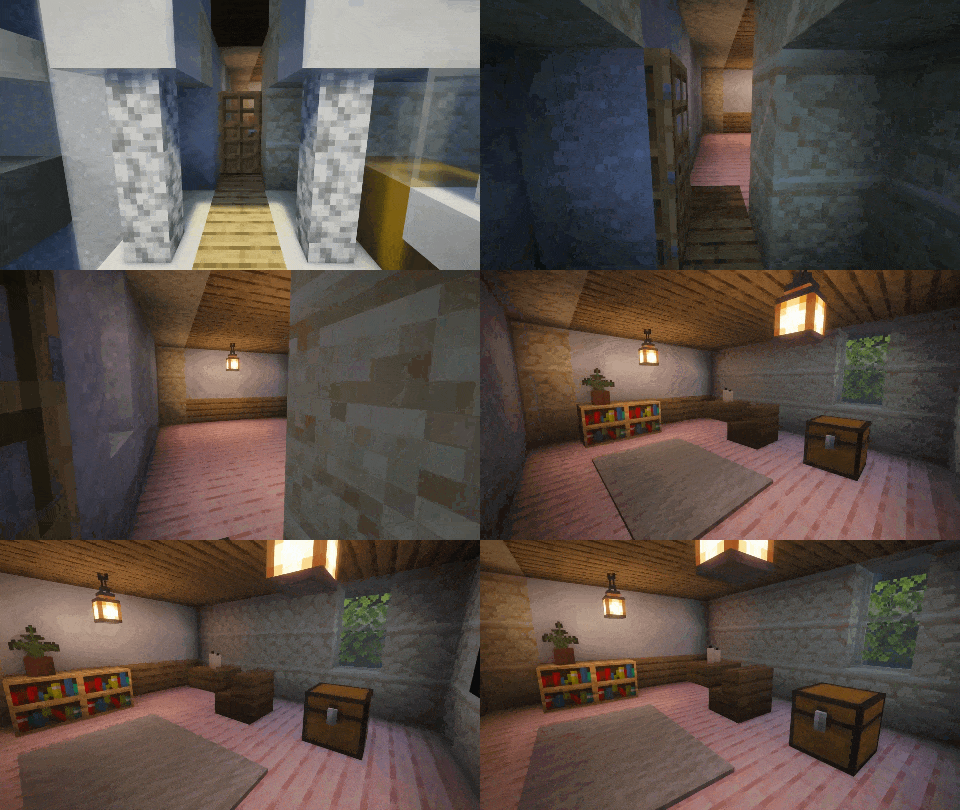
Thijs also added interior spaces to the buildings. Walking into some houses, you can see beds, tables, chairs and other furniture, which are generated to look like reasonable interior spaces based on the appearance of a residential building.

This block-based Earth is not fully built in advance. Thijs estimates that if the entire global map is pre-generated, the final file will require about 2 PB of storage space, which is equivalent to approximately 2000 TB. Storage and transmission alone are already tricky enough problems.
His solution is on-demand generation. Players open Minecraft Java Edition 26.2, connect to the server worldcraft.gg in multiplayer mode, enter "/go" followed by the real address after logging in, and the system will generate the map based on the data of the corresponding area, then teleport the player there.
The project was first launched with access to the US region, and later Thijs announced that global access was restored. However, map missing, generation failure or over-simplified buildings may still occur in some countries and regions.
This method soon attracted a group of people who wanted to go back and take a look. According to a report from Dexerto, someone found that the prefab housing community they once lived in was generated by the system as a row of three-story residences. The location of the buildings seems to remain, but their appearance looks somewhat unfamiliar. Other players entered familiar neighborhoods only to find that only a small nearby area was loaded successfully, and the area further ahead was blank.
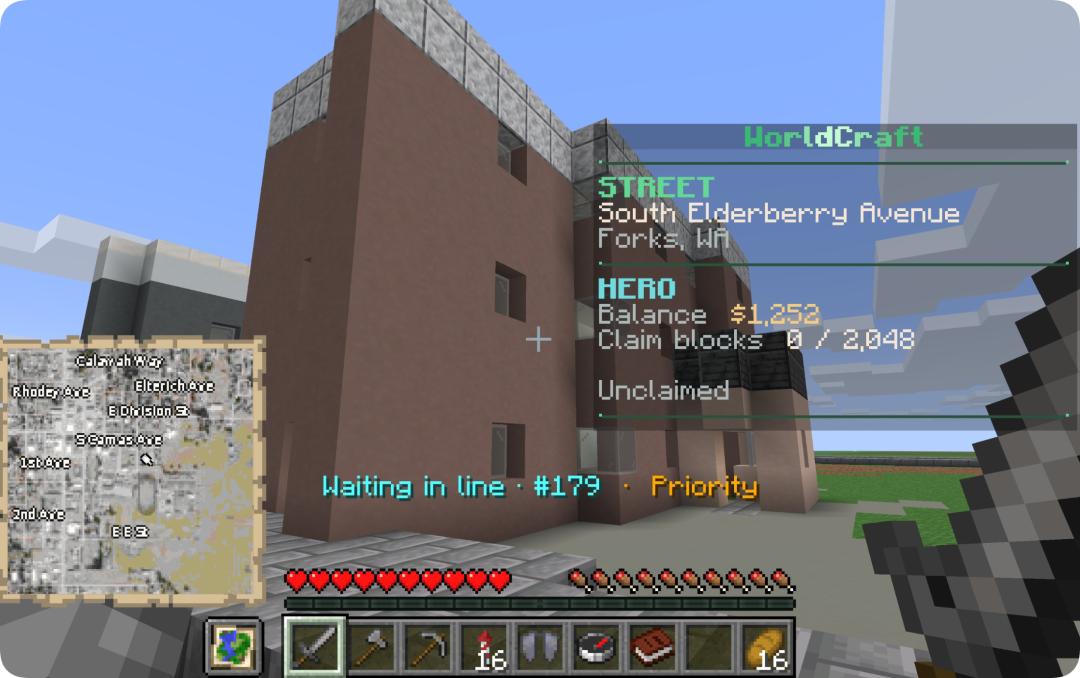
The server also received far more visits than expected. Thijs said that the initial infrastructure was only designed for about 100 concurrent users, but tens of thousands of people tried to access it. The server crashed frequently for a period of time. As of today, the official website still indicates that the server demand is too high, the relevant system is being rewritten, and the number of online users is limited.
But the appeal of WorldCraft is already obvious from the reactions of these players.
250 AI Agents, iteratively modifying a set of algorithms that are nearly unreadable to humans
How was this generation algorithm developed?
Thijs calls it "Program Learning".
He explained that this is not a traditional end-to-end trained deep learning model. If a large generative model is used to directly convert 3D maps into Minecraft scenes, the model needs to learn the correspondence between terrain, buildings, materials and spaces. Facing map data on a global scale, the computing resources required for each generation can be very considerable.
He prepared a large amount of location data from different regions of the world, and let more than 250 AI Agents participate in the development and tuning of the same conversion algorithm.
The work of these Agents is not to draw models for every house on Earth at the same time.
Some Agents are responsible for observing the generation results of a certain location, looking for differences from the reference data; some try to modify scripts and rules to make building outlines, roof structures or other details closer to the target; others act as graders, specifically responsible for reviewing the modified effects. If a modification achieves better results, it may be retained and become the basis for further optimization.
Thijs describes this process as "hillclimb", which is a hill-climbing optimization process that continuously seeks better solutions along the evaluation results.
One Agent modifies certain rules, another Agent checks the results, and then others continue to adjust for problems exposed in other locations. A large amount of data from different cities, buildings and terrains serves as the basis for the entire system to make repeated trial and error.
The final complex program, which mixes small distilled classification models and rule-based algorithms, allows small classification models to undertake certain local judgments, while the rule system is responsible for converting these judgments into specific block arrangements and structures. Compared with calling a large generative model to reconstruct the scene every time, this method is more suitable for map generation tasks that require frequent and large-scale operation.
In a subsequent interview segment, Thijs revealed that he once used Astra, and later used Claude, to let Agents continuously adjust the conversion scripts for training and testing locations.
However, as more and more rules are added, another problem arises.
Thijs said that after the algorithm reaches a certain level of complexity, the rules written by Agents are almost incomprehensible to humans.
He connects this approach to early symbolic AI. Before deep learning became mainstream, researchers tried to make computers complete complex judgments by manually writing rules and knowledge representations. However, rule-based systems are difficult to cover all situations in the real world, and their maintenance and expansion are also very difficult.
The difference today is that humans are no longer the only bottleneck in writing rules. Agents can continuously write, modify and evaluate rules, allowing complex systems that were previously difficult to maintain manually to continue to grow.
Streets in blocks, and the daily life we rediscover
After WorldCraft went online, the most common thing players do is to look for places related to themselves.
As mentioned earlier, real-world geographic data provides positions and scales, while AI supplements shapes, colors and interior spaces based on available information. When data is sufficiently sufficient, the results can be quite credible; when data is missing, the system can only simplify, infer, or even fail to continue generating.
This somewhat rough real-world mapping reminds people of another years-long Minecraft project, Build the Earth.
In 2020, YouTuber PippenFTS launched this initiative, hoping to gather the power of players from all over the world to rebuild the Earth at a 1:1 scale in Minecraft.
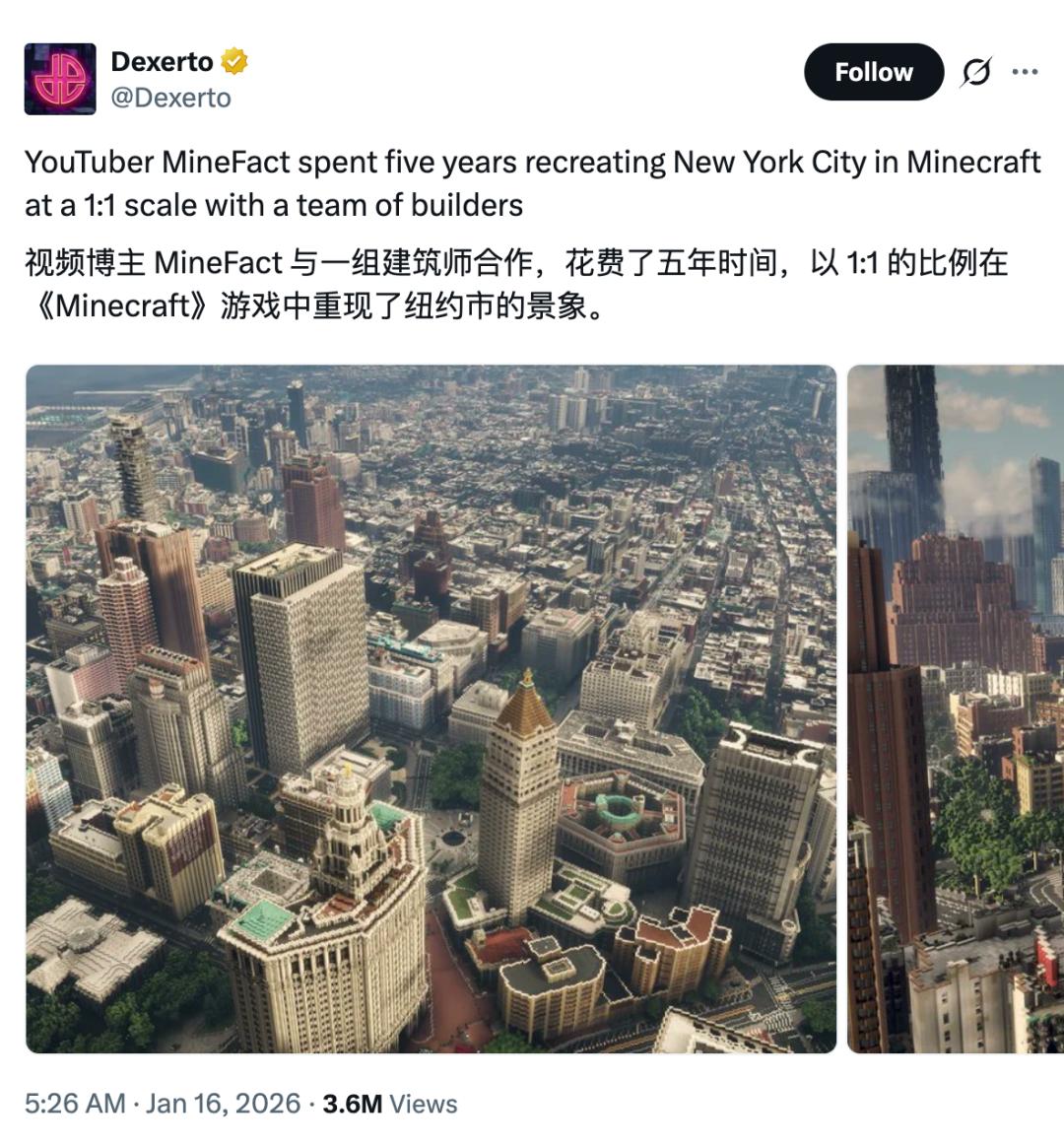
The main buildings of Build the Earth are completed by volunteers by hand. Some start with their own homes, some are responsible for schools and blocks, and large teams have been working on rebuilding cities like New York for a long time.
Builders can repeatedly adjust building proportions, window positions and exterior decorations based on real photos. Those completed areas often have details that algorithms can hardly take care of. For example, in some blocks of the New York project, volunteers even placed flower pots on building balconies.
According to data from the official Build the Earth website, there are currently more than 17,700 registered builders participating in the project, who have completed about 1.07 million buildings, covering an area of more than 1110 square kilometers. It has also obtained the Guinness World Record certification for the largest construction project in Minecraft.
But compared with the entire Earth, these numbers are still very small.
According to a Guinness World Record report in October this year, the completed area of Build the Earth is far less than 1% of the Earth's surface. Project member Gideon Bergheim estimates that the entire project may take about 100 more years. Moreover, buildings in the real world are changing every day. A street built today may look different a few years later.
Of course, in those areas that have been completed by players by hand, Build the Earth has more details and creativity.
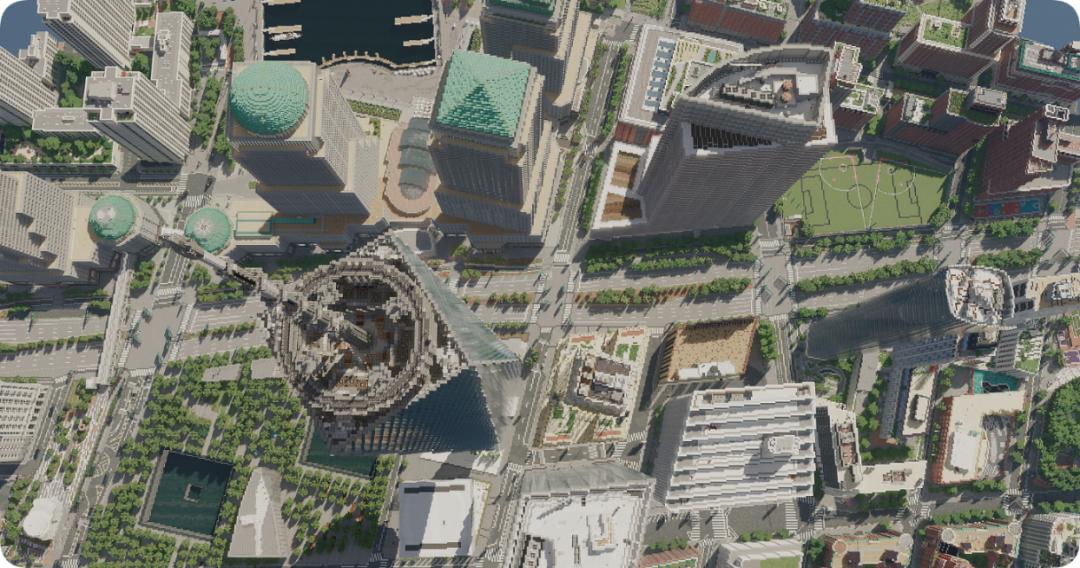
Image source: Build the Earth
However, the vast majority of places in the world are not so lucky. Famous landmarks, historical buildings and large cities easily attract builders, while ordinary residences, small towns and remote areas may remain unworked for a long time.
Thijs once mentioned that his and his friends' homes, as well as the communities and towns they live in, are not in the completed areas of Build the Earth. WorldCraft wants to convert a little-known small town into a space for players to explore, as long as data permits.
For players, the choice of which method to use sometimes simply depends on where they want to go.
This article is from the WeChat Official Account "APPSO", author: APPSO that discovers tomorrow's products, published by 36Kr with authorization.