"Wan Yao" is released in cinemas, Hongguo makes business layout on TV terminals, is the next stop for AI videos the large screen?
Starting from November 20, some cinemas in Hangzhou and other cities will welcome a group of audiences who are used to catching up on dramas on their mobile phones.
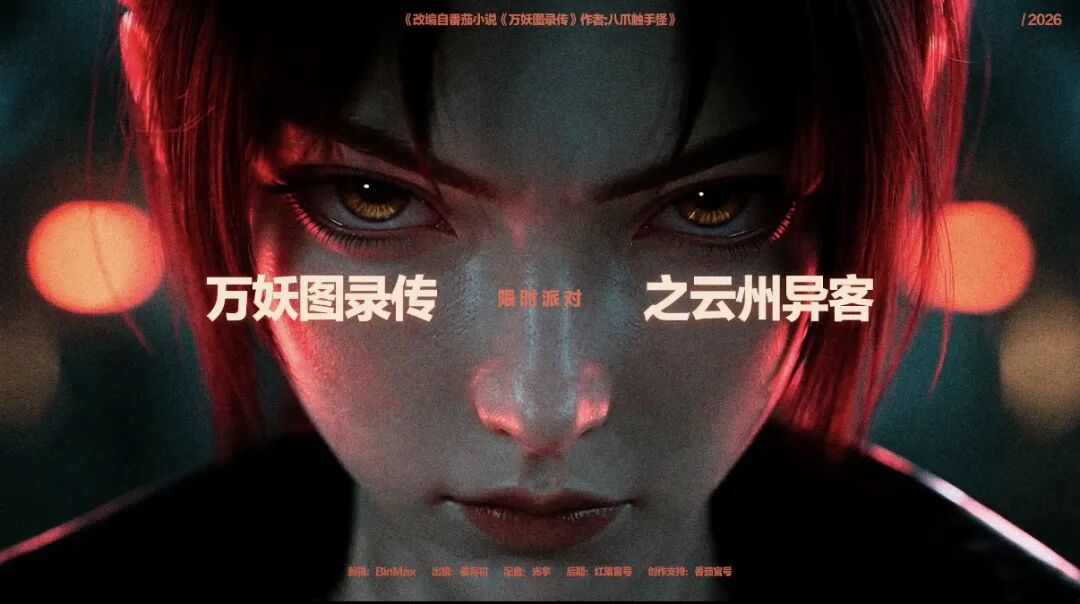
What they are going to watch is not a newly released movie, but *Yunzhou Stranger*, the special episode of the AI manhua drama *Legend of Ten Thousand Demons*. This work, which has been serialized for more than ten seasons, brings its story to the big screen for the first time. The official defines this screening as a "limited-time party" to see how many audiences are willing to go to the cinema for it.
This is by no means the only recent attempt by AI content to break into the big screen.
On November 16, Volcano Engine announced the full opening of the API for Seedance 2.5 4K. A 30-second technical promotional video generated by this model was screened in more than 20 high-end cinemas in Beijing, Shanghai and other cities. One day later, the position of OTT-side Product Manager for Hongguo Short Dramas appeared on ByteDance's official recruitment website, which clearly proposed to build the TV-side product from scratch and include membership revenue into the assessment indicators.
The business demands behind the three events are not the same: Seedance hopes to enter professional film and television production with stronger generation capabilities, *Legend of Ten Thousand Demons* wants to verify whether the manhua drama IP can be extended to the big screen, while Hongguo is looking for users and revenue increments beyond mobile phones.
The improvement of video model capabilities makes it possible for AI content to extend to larger screens. Next, whether audiences are willing to watch AI content on TV and in cinemas depends on how far the models, works and business models can go respectively.
The big screen is becoming a new examination ground for AI videos
By sending a promotional video to more than 20 high-end cinemas, what Volcano Engine wants to convey is obviously not just letting ordinary audiences get to know Seedance. The cinema provides a more direct technical test, and also gives the film and television industry the opportunity to intuitively see its capability boundaries.
If we extend the timeline, this is not the first time that video generation models have moved closer to the film industry.
As early as September 2024, Keling launched the Director Co-creation Program. In 2025, Keling became the exclusive technical partner of the AIGC Film Unit of the Beijing International Film Festival. On September 27 this year, Volcano Engine released the Seedance Film and Television Cooperation Program at the Pingyao International Film Festival, providing Token subsidies, promotion resources and technical support for feature films, series episodes, animation works and creative short films.
There is a very realistic business logic behind these layouts. For model manufacturers, entering the professional production market means further integrating into the production links of films, episodes and other content, and cutting into the hundred-billion-yuan film and television industry market.
The upgrade of Seedance 2.5 4K is also to supplement the capabilities in this regard.
On October 23, Volcano Engine officially released Seedance 2.5 4K, and fully opened the API on November 16. This upgrade not only increases the resolution to 4K. The model has also carried out special training for character expressions, subtle movements and picture details, and introduced 10-bit color depth, so that the texture, outline and color hierarchy of the picture are presented more fully, and the light and shadow transition is smoother.
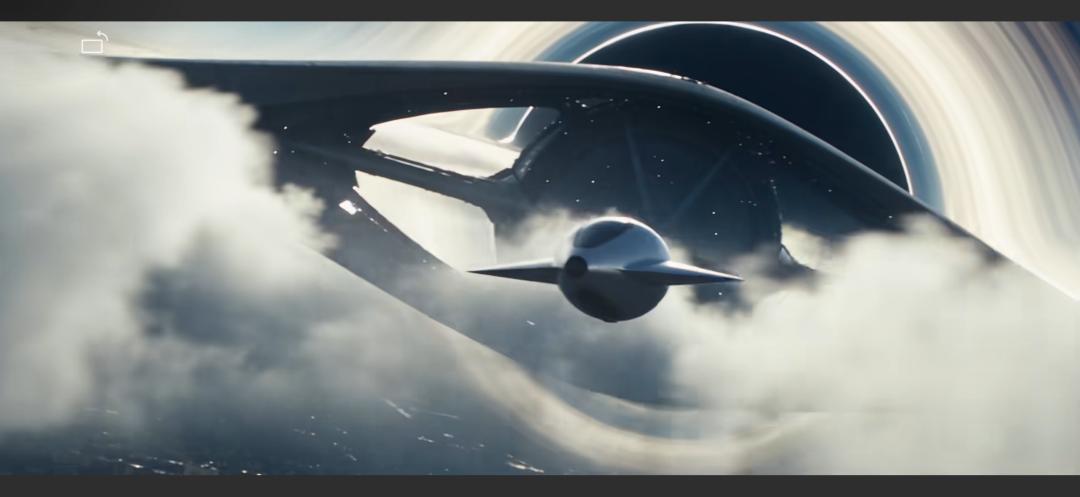
These improvements may not be clearly perceived by audiences on mobile phones, but when moved to the cinema screen, the differences are more obvious. This also explains why Volcano Engine wants to send the promotional video to more than 20 high-end cinemas. Instead of repeatedly introducing parameters at the press conference, it is better to project the picture generated by the model directly on the big screen, so that directors, producers and production teams can see what Seedance can really achieve.
When *Legend of Ten Thousand Demons* enters the cinema, it is to answer another question: can AI manhua dramas have their own fans, and can they extend IP value on the big screen like traditional animation series?
Since its launch in March this year, the *Legend of Ten Thousand Demons* series has been updated to the 14th season, with more than 1200 total episodes, and the effective total views of the whole series have exceeded 10 billion. The character Jiang Yuechu, and the story world developed around him, have also accumulated a group of familiar audiences in continuous updates.
The newly launched *Yunzhou Stranger* this time is an independent special episode with a duration of 109 minutes. The story tells that Jiang Yuechu strayed into a cyber cultivation world, reset his cultivation base to zero and started a new adventure. Starting from November 20, the film will be screened in cinemas in more than 200 cities across the country through China Film's reservation-based screening system.
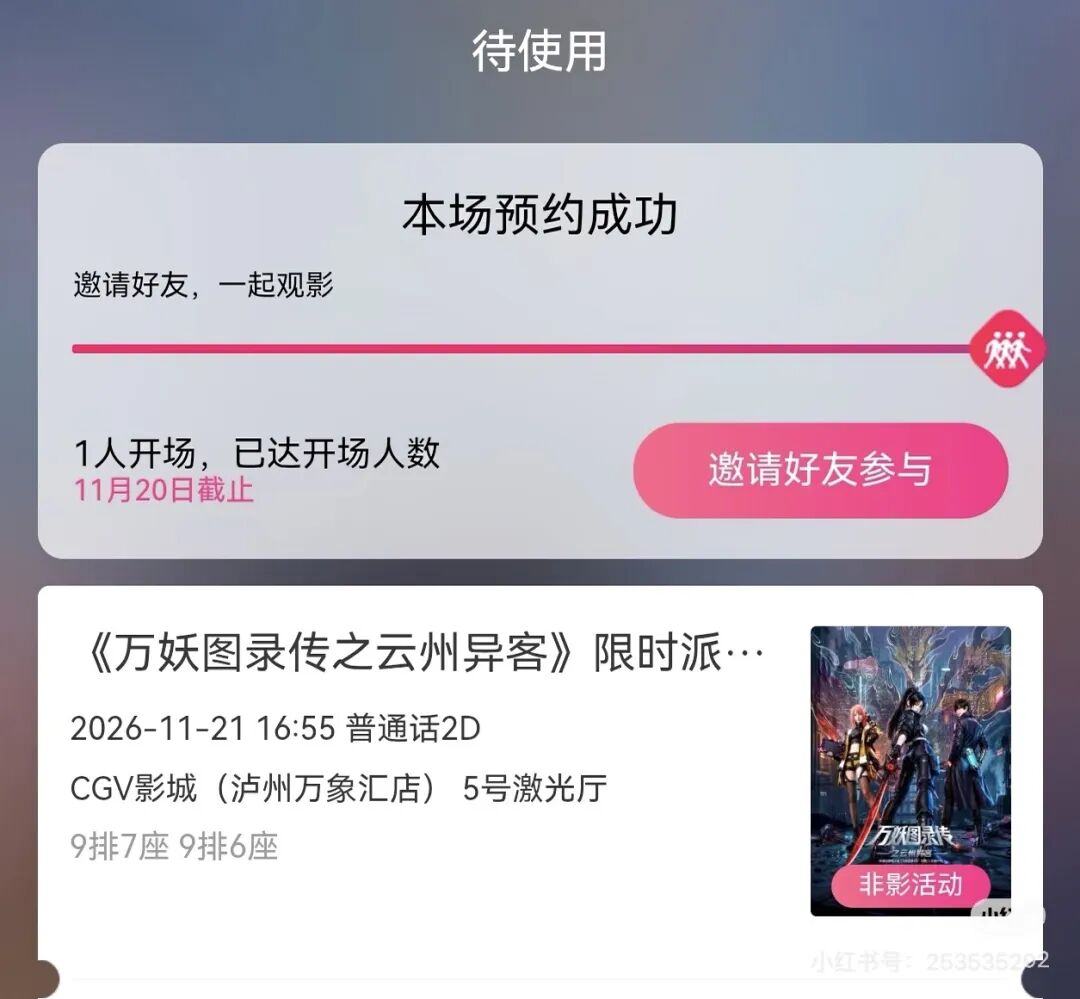
The reservation-based screening method is also quite special. Audiences first select the city and session, reserve and buy tickets, and then the cinema organizes the screening according to the actual demand. Cinemas do not need to arrange fixed screenings for an AI manhua drama whose audience scale has not yet been verified; content producers can also gather people who follow the drama online to offline with the help of their existing fan base.
Take Hangzhou as an example, the unified ticket price for all sessions is 30 yuan, and the screening can only be confirmed when the required number of people is gathered. As of November 17, 7 sessions in the local area have reached the required number of people.
This path is exactly the opposite of the previous way for AI films to enter cinemas. A month ago, *Sanxingdui: Past and Future*, the first domestic AI feature film for cinema release that obtained the public screening license, was released, but the market response was mediocre. The former arranges screenings first and then finds audiences; *Yunzhou Stranger* gathers audiences first and then arranges sessions.
For cinemas, this is also an attempt to find new increments. In the first three quarters of this year, the total box office of mainland China films was 29.581 billion yuan, down 29.5% year on year, and the empty cinema halls need new content types and new customer groups.
What *Legend of Ten Thousand Demons* wants to explore is a path that the traditional animation industry has already verified to be feasible.
In Japanese animation, there are many cases where long-running TV series are adapted into theatrical versions. *Demon Slayer: Kimetsu no Yaiba* accumulated audiences through TV animation, and then released *Mugen Train Arc*, which finally created a phenomenal box office result. The domestic work *The Legend of Hei* also grew from a web animation series to a theatrical film.
The premise for a theatrical version to be successful is that the characters and stories have accumulated enough fans. Audiences go to the cinema not just to watch a new story, but also to pay for the emotional connection built up through long-term following of updates.
Works like *Legend of Ten Thousand Demons* that are based on a continuous worldview, character relationships and long-term updates already have the content conditions to try theatrical versions. More than ten seasons of continuous updates at least show that AI manhua dramas can not only attract users by plot twists in a single episode, but also have the potential to precipitate IP that can be operated for a long time.
After reaching 430 million users, Hongguo sets its sights on the living room
Apart from cinemas, Hongguo is targeting a more daily and larger-scale viewing scenario: the living room.
On November 17, the position of OTT-side Product Manager for Hongguo Short Dramas appeared on ByteDance's official recruitment website, responsible for building the TV-side product from scratch.
The recruitment information reveals many details. In addition to basic functions such as home page recommendation, category navigation, search and drama following, Hongguo also hopes that candidates are familiar with remote control interaction, large-screen UI design and multi-resolution adaptation, and participate in OTT license application, content submission for review and review result return. In terms of commercialization, the position clearly mentions exploring modes such as screen-casting membership, membership subscription and derivative rights and interests.
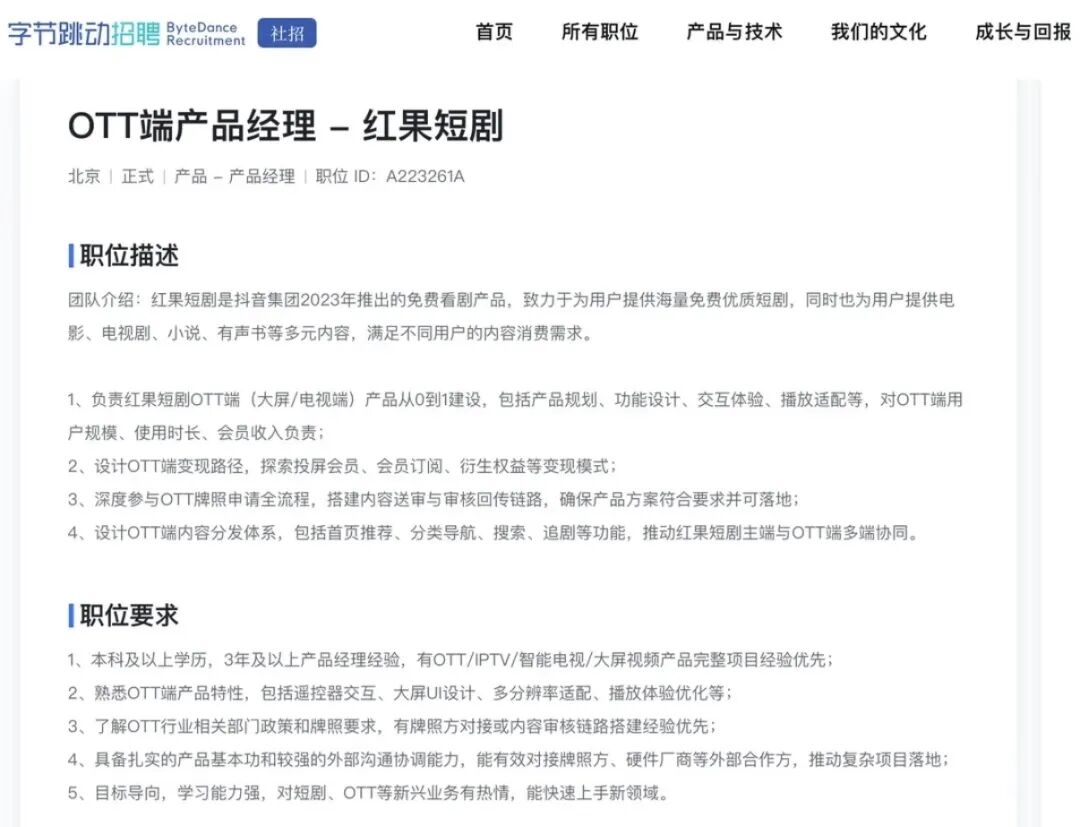
Judging from these job requirements, what Hongguo is preparing to do is obviously not just a TV screen-casting entry. It needs a set of TV-side products suitable for remote control operation, adapted to family viewing habits, and capable of independently exploring commercialization.
Why does Hongguo choose to layout the TV side at this time? According to QuestMobile data, in September 2026, the monthly active users of Hongguo Free Short Dramas reached 430 million, up 81.8% year on year; the monthly active users of its Hongguo Free Manhua Dramas also reached 78.83 million.
For a platform that already has such a huge user base, it is certainly important to continue to compete for mobile phone users, but new growth spaces also need to be explored in advance, and TV is one of the directions.
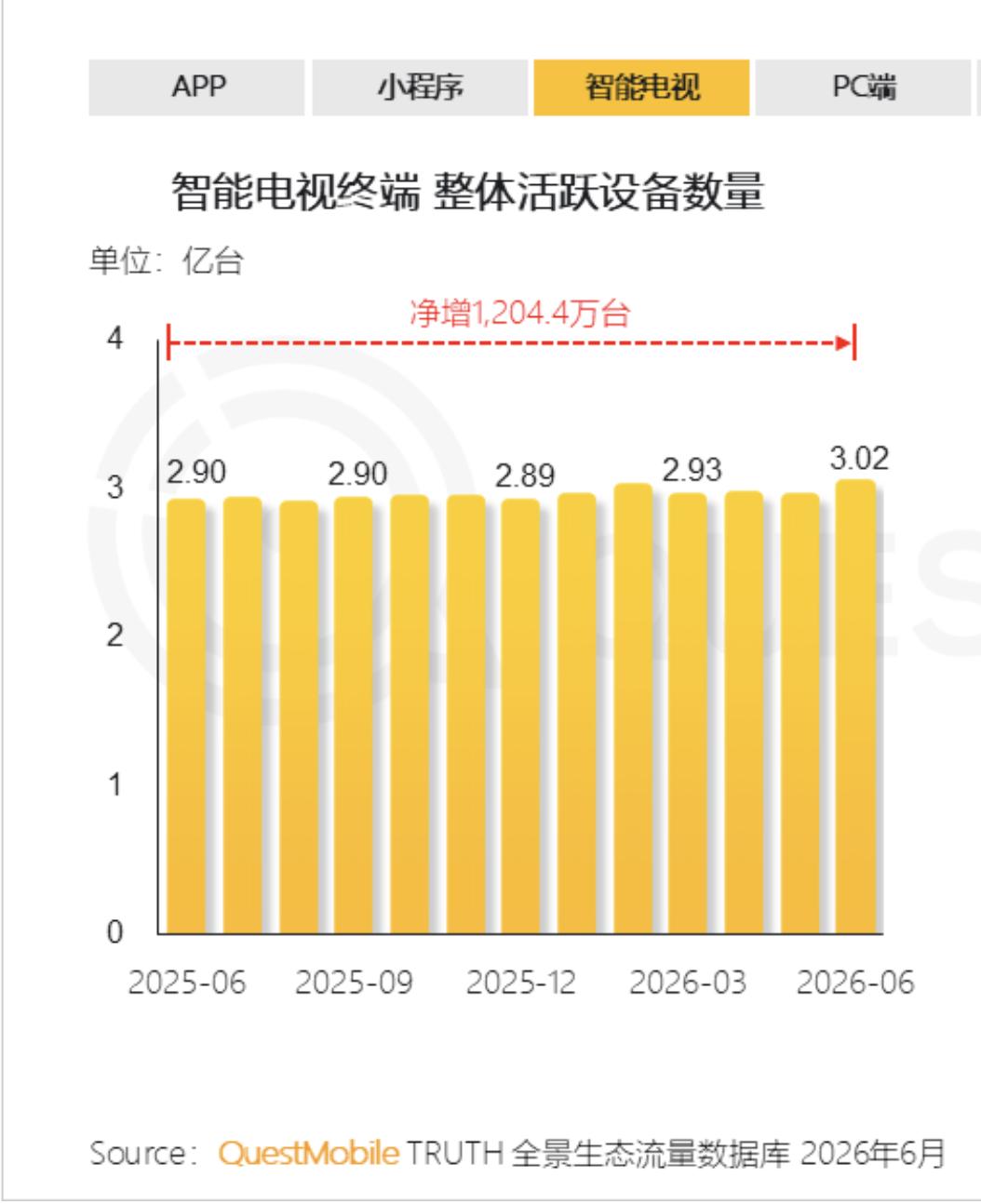
The TV market still has a considerable user base. QuestMobile data shows that in June this year, the number of active devices of smart TV terminals across the country reached 302 million, with a net increase of 12.044 million units year on year. For Hongguo, this means that there is a considerable family viewing market worth developing beyond mobile phones.
Moreover, the viewing scenarios of TV and mobile phones are indeed quite different. Mobile phones are mostly used personally, and short drama users often watch several episodes in fragmented time such as commuting and breaks; TVs are placed in the living room, and the whole family may sit down and watch at the same time. Themes such as family ethics, urban romance and era stories also have the opportunity to change from personal pastime to content watched by the whole family together.
However, the content that the Hongguo TV side will carry in the future is no longer limited to traditional live-action short dramas. In the past two years, AI manhua dramas and AI simulated real-person dramas have grown rapidly, which is changing the content supply structure of Hongguo. In May this year, AI short dramas accounted for more than half of the daily TOP 100 list for the first time, and by August, this proportion had risen to about 70%. In July alone this year, 74313 new AI dramas were launched on the Douyin platform, accounting for 75.4% of the new short dramas launched that month.
If Hongguo further brings these contents to the TV side, the living room large screen will also become a new distribution scenario for AI manhua dramas and AI simulated real-person dramas.
This also makes the image quality improvement of video models have more practical application significance. From 4K resolution to 10-bit color depth, the progress of model capabilities is not just to make the generated videos look clearer, but also to create conditions for AI content to enter more viewing scenarios such as TV.
What Hongguo values is also the payment space on the TV side.
Free short dramas on the mobile side mainly realize monetization through advertising and other methods, and users are already used to watching dramas for free as soon as they open the app. The TV side is different. After years of market education from long-video platforms, family users are no strangers to membership subscription. In addition, TVs are more inclined to be watched by the whole family, which leaves new exploration space for services such as membership subscription and screen-casting rights and interests.
Of course, whether short dramas can directly apply the membership model of long videos remains to be tested by the market. But Hongguo has included membership revenue into the assessment indicators of the TV-side product position, which shows that this layout is not simply to add a new playback channel. Advertising, membership subscription, screen-casting rights and interests and derivative services may all become new revenue sources for it to try.
Moving to the large screen, how many more hurdles do AI videos need to cross
From Seedance's cinema exhibition, to the launch of special episodes of AI manhua dramas, and then to Hongguo's layout of the TV side, AI content is turning its attention to large-screen scenarios beyond mobile phones. However, 4K only solves part of the picture quality problem. The larger the screen, the more specific the requirements of audiences for content will be.
The production difficulty of a 30-second technical promotional video and a complete film and television work is not at the same level. Promotional videos can be generated and screened repeatedly to pick out the best shots; complete works require the characters to remain consistent from beginning to end, the connection between scenes to be natural, and the actions, light and shadow and spatial relationships to be error-free.
After the resolution is improved, the flaws in the picture are more difficult to hide. The more clearly the character's face, clothing details and scene texture are seen, the easier it is to find generation problems.
The 4K upgrade of Seedance improves the picture presentation, but whether it can support continuous narration of tens of minutes or even more than 100 minutes still remains to be tested.
Apart from image quality, whether the story can support the duration of a cinema screening is also a new test. An episode of mobile short drama usually only lasts one or two minutes, and audiences can pause, adjust playback speed or swipe away at any time. Movies are completely different, which require a relatively complete story structure and emotional rhythm. The fact that audiences are willing to follow the updates of manhua dramas does not mean that they are willing to sit in the cinema and watch a long special episode.
The TV side faces a different viewing habit. Short dramas born for vertical screens are likely to be acclimatized when moved to TV. Habits such as remote control operation, family co-viewing and continuous playback also mean that Hongguo needs to reconsider content arrangement and product experience. For the platform, this is not something that can be solved by simply making an adaptation version.
Apart from technology and content, there is an unavoidable business logic.
The reservation-based screening of *Yunzhou Stranger* is built on the existing fan base of *Legend of Ten Thousand Demons*. According to industry estimates, the comprehensive cost of this special episode is several million yuan, and it can break even when the box office exceeds 10 million yuan. Calculated at a ticket price of 30 yuan, it requires about 330,000 admissions, which is spread over more than 200 cities, with about 1600 admissions per city.
This threshold is not high, but it requires the IP to have real fans in every city. This method can help top works test the offline market, but it is difficult to be directly copied to every AI manhua drama. It is still a question mark whether works that do not have the accumulation of long-term following updates can attract audiences to buy tickets specially.
The TV side of Hongguo also has its own thresholds. The *Administrative Measures for the Development of Micro Dramas* implemented on September 1 has included broadcasting channels such as Internet TV, IPTV and cable TV into the regulatory scope. Hongguo's recruitment information specially mentions OTT license application, content submission for review and review result return,