No more scrambling for co-branding collaborations? Brands have decided to develop their own IPs.
The direction of brand marketing has changed again.
Recently, McDonald's decided to end its 32-year World Cup sponsorship partnership with FIFA, and invest more resources in the development and operation of the brand's self-owned IP. This decision was actually foreshadowed long ago. During the FIFA World Cup co-hosted by the United States, Canada and Mexico, McDonald's launched a series of marketing activities covering more than 110 countries around the world, but the results failed to satisfy the senior management. Ian Borden, CFO of McDonald's, said frankly on the Q2 earnings call that the marketing effect of the World Cup was "below expectations", and the brand will be more prudent in selecting externally borrowed brand assets.
It is not a new thing for brands to build their own IP. Looking back decades ago, the Want Want Kid of Want Want, Haier Brothers of Haier, and Tencent Penguin have all been popular for more than 20 years, and Michelin's "Bibendum the Tire Man" was born more than a century ago and has long become a symbol of the brand. In recent years, new IPs such as the Snow King of Mixue Ice City and Duo of Duolingo have become popular one after another, and have accumulated a group of loyal fans respectively.
The shift of McDonald's, to a certain extent, means that the balance in the brand's mind is tilting towards self-owned IP between self-owned IP and external top-tier IP. This also brings us some thought-provoking questions: Why, in today's era where co-branding is becoming more and more common and external IPs are increasingly abundant, do brands begin to re-value their own IP? Is this another short-lived marketing trend, or a deep shift in the logic of brand building?
Objectively speaking, self-owned IP can hardly replace the role of external IP, but the practices of brands like McDonald's show that brands are no longer satisfied with leasing third-party IP to obtain short-term traffic, but hope to take back the marketing dominance through self-owned IP and precipitate brand assets that can appreciate in value in the long run.
01
The mindset of brands developing IP has changed
Looking back at the development history of brand self-owned IP, we can find that the growth of early classic IPs is inseparable from huge investment and long-term operation.
"Haier Brothers" is one of the most classic cases. The self-named animation tailored by Haier to promote the IP was launched in 1995 and broadcast 212 episodes in a row. It was the longest animation invested and filmed by enterprises around the world at that time, and the investment scale was extremely rare in that era.
In addition, the Want Want Kid IP born in 1979 and the Tencent Penguin IP launched together with QQ in 1999 have also experienced super long-cycle operations, and gradually expanded from a single IP image to a complete IP universe: Want Want has successively launched a series of related characters such as Want Want Girl, Spicy Guy, Lang Xiaoxian, and Little Crisp, forming the "Want Want Family"; Tencent has also incubated IP family members such as babyQ and Dov.
The common characteristics of these classic IPs are heavy investment, slow effect, but strong enough vitality. They not only require continuous content production, but also need to appear repeatedly in consumers' lives to gradually form stable cognition. The logic behind this model is to exchange long-term content investment for user cognition, and then accumulate brand assets with user cognition.
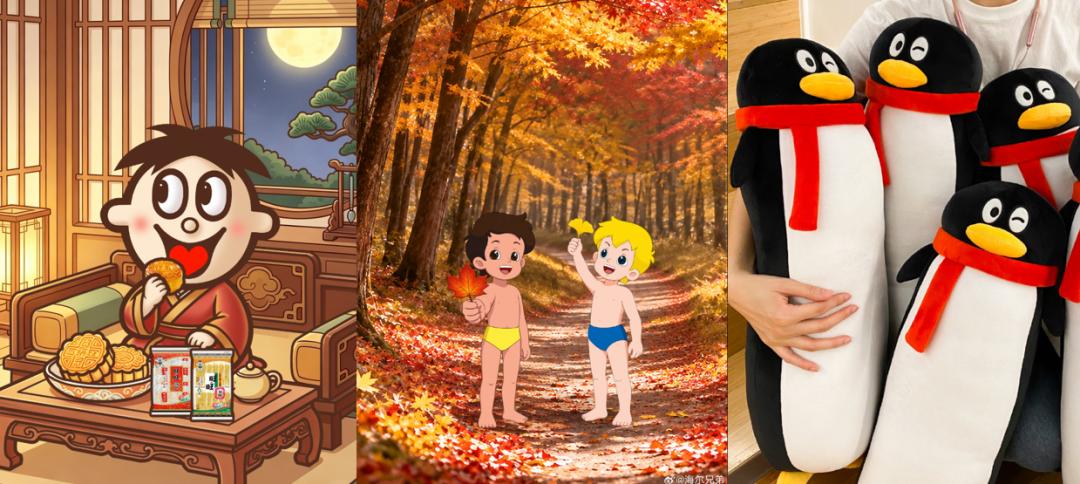
Want Want Kid, Haier Brothers, Tencent Penguin
After entering the era of social media, the growth path of IP has changed. Fragmented content has become the mainstream, and young people do not need to watch hundreds of episodes of animation to fall in love with an IP. A recognizable image, an interesting video, or even a timely social media interaction may make a character quickly become popular. Now, developing IP focuses on building an emotional bond between the IP and fans: having a memorable persona, knowing how to interact with fans, and maintaining a sense of presence are the most important, and the brand's IP development strategy has also been iterated accordingly.
First, establish a three-dimensional, highly recognizable IP persona to provide an emotional anchor for fans.
In the eyes of Generation Z, whether an IP is good-looking is far less important than "whether it has a distinct personality". The "2026 IP Co-branding Marketing White Paper" (hereinafter referred to as the "White Paper") released by Alifish shows that senior IP consumers value the charm of IP character setting the most, followed by visual style and emotional resonance.
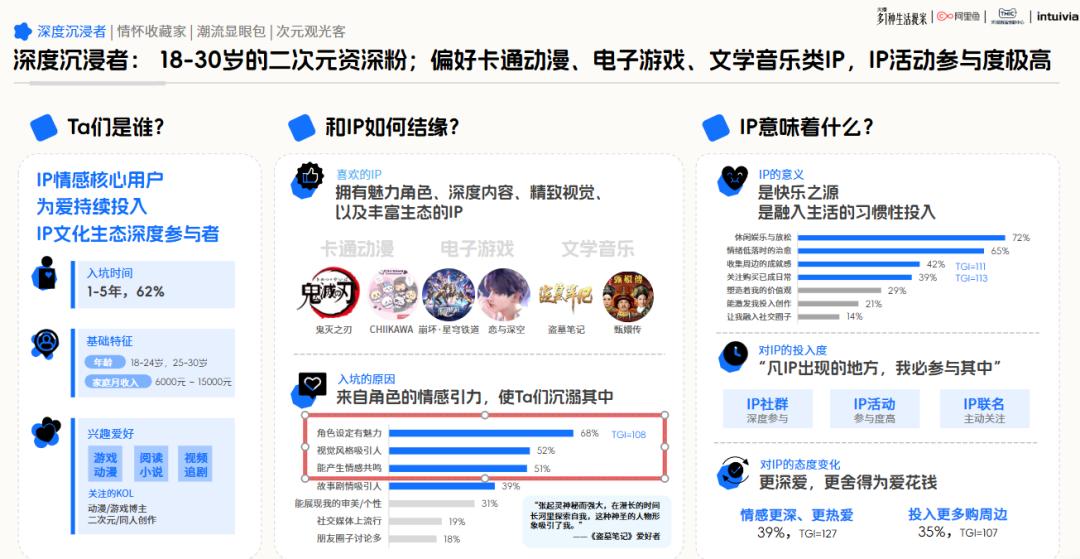
IP consumer consumption preference Source: Alifish "2026 IP Co-branding Marketing White Paper"
Young people do not necessarily pursue the so-called "perfect setting". On the contrary, they think that IPs with flaws, mood swings and embarrassing moments are more like real people, easier to empathize with, and generate the emotional projection of "making real friends with them".
For example, the Snow King of Mixue Ice City has a well-known abstract and playful persona, keen on self-deprecating memes and occasionally "fighting" with other brands, just like the enthusiastic and extroverted playmates that many people will meet in their lives; the Little Jasmine of Jasmine White Tea is a typical healing IP, whose daily copywriting and images follow the soft and cute style, using a gentle personality to meet users' emotional companionship needs.
Although the personas of these IPs are different, they are similar in one point: they are highly isomorphic with the brand tone, and use anthropomorphic images to break the communication barrier between the brand and users, and interpret the brand temperament more naturally. For example, the Snow King corresponds to Mixue Ice City's civilian and down-to-earth positioning, and Little Jasmine caters to the aesthetic preference of the main young female users of Jasmine White Tea. The personality of the IP is like the concrete externalization of the brand temperament, and its every word and deed conveys and deepens the brand's value proposition.
This is also an important difference between self-owned IP and ordinary co-branded images: the former is not a temporarily borrowed communication symbol, but an extension of the brand's own character.
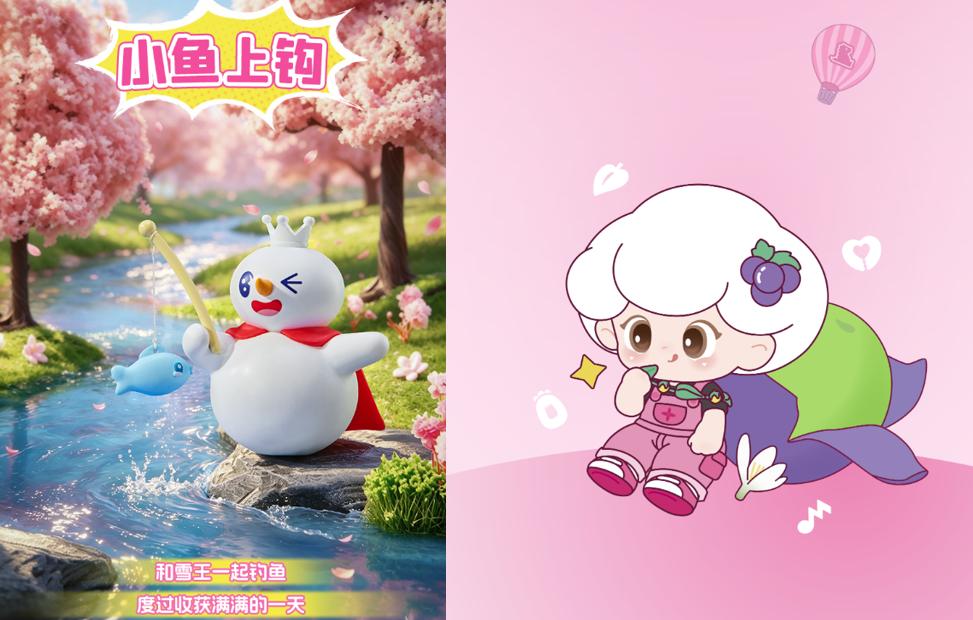
Snow King, Little Jasmine
Secondly, focus on lightweight and normalized content output, and amplify the vitality of IP through user co-creation.
Fragmented, lightweight social media content not only adapts to the current fast-paced communication environment to maintain the presence and vividness of IP, but also lowers the threshold for user participation, turning users from "bystanders" to "co-builders" with the help of UGC co-creation, making the emotional bond between the two sides stronger.
Duo of Duolingo is a senior player in this regard. It surfs on Xiaohongshu and Weibo at high intensity all year round. Recently, when the show Friends for the Rest of Our Lives became popular, it immediately played hot memes such as "I draw questions for you to stay, Li Na" and "Li Na, forgive Xu Fei!".
Even the now well-known IP personas such as "deadline-urging owl" and "check-in supervisor" originally came from users' jokes about the software's crazy reminders to study. The official actively absorbed these user feedback and transformed them into part of the IP personality, forming a unique tacit understanding between the character and users.
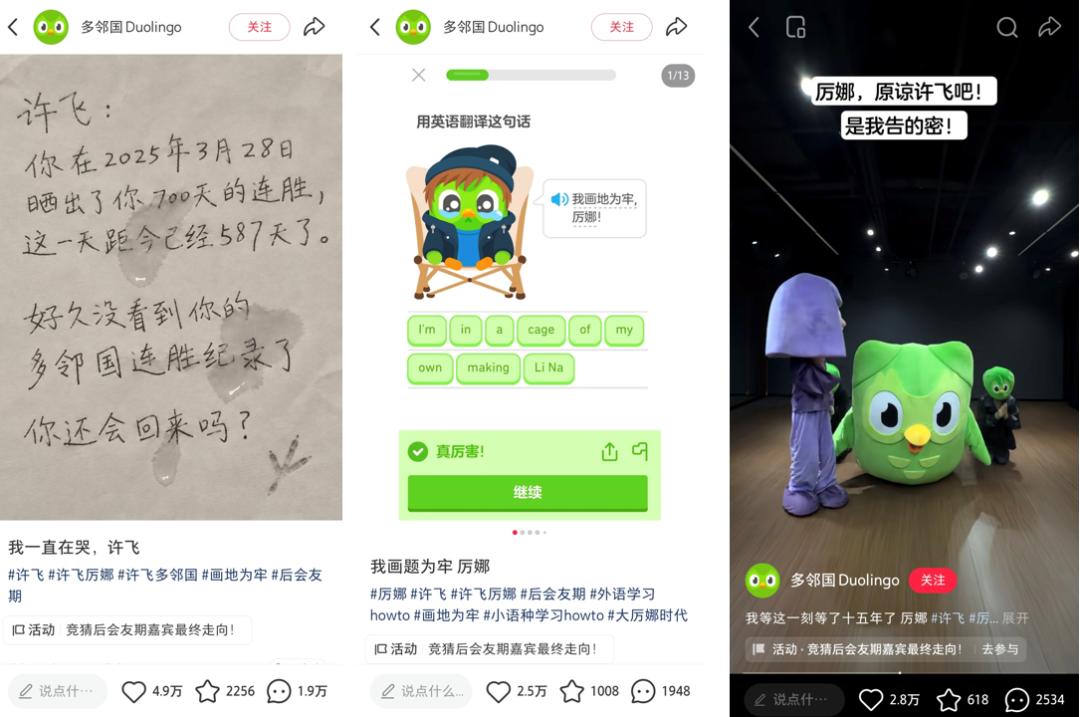
Duo plays memes of Friends for the Rest of Our Lives
The recently popular AI manhua drama has also become a bet for brands. Jing Brand has tailored a Xianxia-themed AI manhua drama The Legend of Nine Spirits for its digital human IPs Oriental Jing, Fang Xiaojing and Health Duck, and implanted the brand's health wine as a plot prop. Compared with traditional animation, AI manhua drama has lower production cost, more imaginative ideas, and provides sufficient space for brands to give full play to their creativity.
These lightweight strategies obviously cater more to the tastes of young people: an IP that can pick up memes, give instant feedback and keep up with trends can better integrate into the daily context of young people, allow emotions to accumulate naturally, and continuously deepen the tacit understanding between each other.
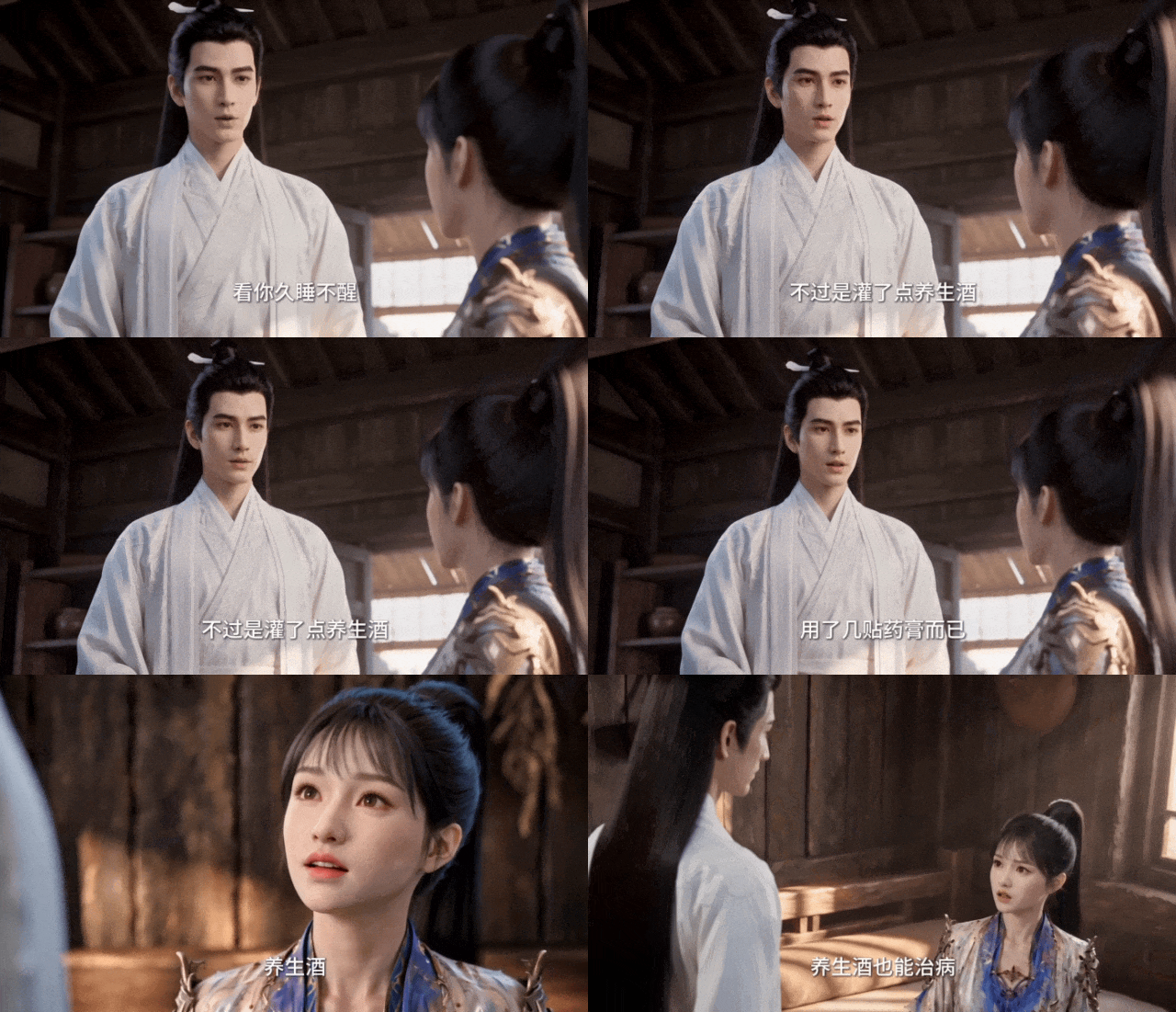
AI manhua drama The Legend of Nine Spirits
Third, penetrate through full-scenario touchpoints to make IP part of the brand experience.
To build a solid IP mindset, continuous interaction and real contact are indispensable. When IP runs through the entire link of user-brand contact, it is no longer an isolated marketing material, but a vivid and perceptible emotional carrier. The memory depth of this penetrating communication is much higher than the centralized exposure of a single scenario.
McDonald's knows this well. IPs such as Ronald McDonald, Hamburglar, Birdie the Early Bird, and Grimace are deeply embedded in store playgrounds, Happy Meal toys and various public welfare projects.
For example, when the milkshake product line returned to the Chinese market in May this year, some stores were transformed into milkshake flagship stores; during the World Cup, multiple IP characters interacted with well-known football stars, and Grimace and Ronald McDonald also appeared in short films starring David Beckham, Ronaldinho and others.
From stores to products, from public welfare projects to social media, IP constantly appears in different scenarios that consumers can access. Consumers not only see it in advertisements, but also establish connections with it by purchasing products, participating in activities and experiencing services.
This also makes IP gradually evolve from a simple communication image to an experience entry connecting brands and consumers.
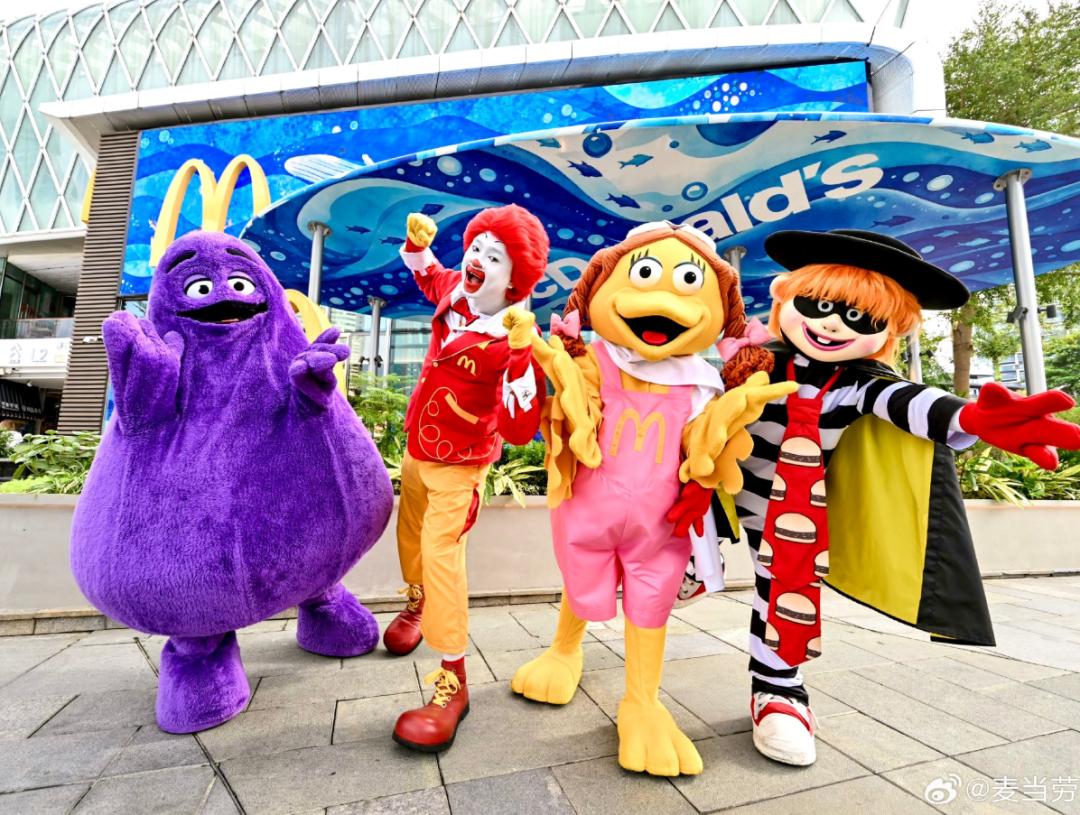
McDonald's IP matrix
From heavy investment and long-cycle IP construction to the combined operation of personalization, lightweight and full-scenario penetration, the gameplay of brand self-owned IP continues to iterate, but the core idea remains unchanged: IP cannot become brand assets just by being designed. It requires continuous content supply, user interaction and scenario operation to truly precipitate a stable emotional relationship between the brand and users.
02
Building self-owned IP for brands,
is more than just earning an extra income
Of course, brands spend so much time and resources on IP not just to get an additional marketing tool. Especially with the continuous change of the market environment, the comprehensive value of self-owned IP is constantly highlighted.
Reducing risks and regaining marketing initiative is the primary value of brand self-owned IP.
One of the biggest pain points of external IP cooperation is that the initiative is not completely in the hands of the brand. Today's public opinion environment is becoming more and more sensitive, and the plot and persona disputes of cooperative IP are likely to backfire on the brand. For example, the cooperation between China Post and the mobile game White Night: Apocalypse was boycotted by a large number of netizens because the latter was suspected of "vulgar edge-cutting", and the activity was urgently stopped less than two days after its launch.
Even if there is no problem with the content, the difference in the audience of the brand and IP circle may also cause unnecessary conflicts. Many times, the focus of IP fans and ordinary consumers is completely different. For example, Luckin Coffee's recent co-branding with the 10th anniversary of Honor of Kings KPL printed the real avatars of e-sports players on coffee cups. E-sports fans thought it was very sincere, but passers-by questioned that it was "aesthetically unappealing", making it hard to satisfy everyone.
Self-owned IP has more advantages in this regard: the whole link from persona to content is controllable, and there is no risk of third-party public relations crisis; the IP image and persona are highly bound to the brand, and fans' love for IP and brand is consistent, so there is no need to worry about expectation mismatch.
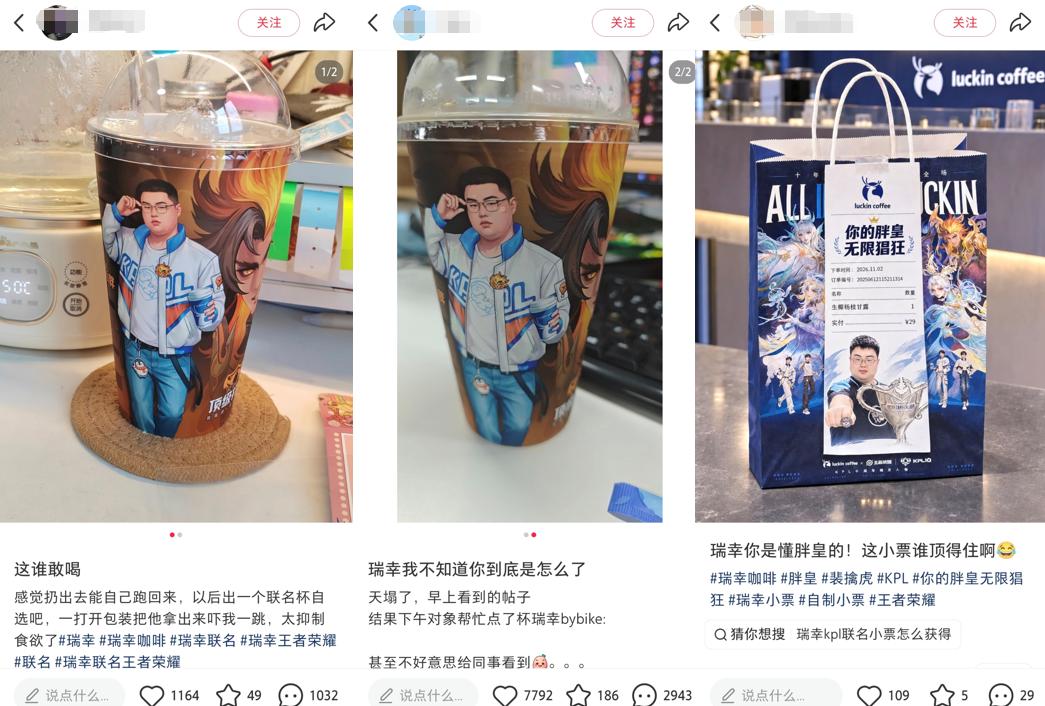
Luckin Coffee x Honor of Kings KPL co-branding controversy
Another important role of building self-owned IP is to help brands jump out of the involution trap of co-branding homogenization.
In the past few years, the popularity of brand and IP co-branding has continued to rise, and it has already entered a white-hot stage. Taking the catering industry as an example, statistics from Lei Report show that in the first half of this year, 12 leading brands carried out 89 co-branding activities, a year-on-year increase of 27.14%.
Behind the fanaticism of "everything can be co-branded" is the increasingly serious aesthetic fatigue of users. The stereotyped shell-based co-branding has been difficult to arouse users' enthusiasm. Self-owned IP is the exclusive mental asset of the brand, with uniqueness and exclusivity: other competitors cannot simply imitate and copy, so naturally they will not fall into the dilemma of homogenized involution.
Thinking deeper, self-owned IP is still a standard "appreciating asset". External cooperation can only "borrow" short-term exposure and sales, but self-owned IP can precipitate into reusable brand assets and achieve long-term compound interest effect.
On the one hand, it earns real second income: many brands have formed mature IP development ideas, making profits from derivative peripherals, external authorization cooperation to theme activities in one stop. The Snow King of Mixue Ice City and Little Jasmine of Jasmine White Tea have developed full-category peripherals such as plush toys, blind boxes, and cultural and creative products, and the Snow King theme park is also being accelerated to land; IP authorization cooperation is also very common, and Want Want has successively reached cooperation with brands such as the streetwear brand TYAKASHA and Nayuki.
On the other hand, it earns brand reputation and user favor: a good IP can act