These 30 enterprises have propped up half of the dexterous hand industry.
On November 16, Star Era announced the launch of the five-finger dexterous hand XHAND 1 Pro-U. Different from simply adding joints, this product adjusts the hand structure around the DexUMI exoskeleton of NVIDIA GEAR Lab, enabling human demonstration movements to be mapped to the robot hand more directly.
Two months ago, South Korea's Wonik Robotics expanded the classic four-finger architecture of the Allegro Hand to a five-finger design with 20 degrees of freedom. Also in September, Singapore-based enterprise Sharpa launched the W02, which has 21 active degrees of freedom and full-hand tactile perception coverage.
The competition in the field of robot hands has extended simultaneously to mechanical structure, tactile perception, data collection and model training.
In an end effector close to the size of a human hand, enterprises need to arrange motors, transmission mechanisms, sensors and control circuits, and also deal with grasping force, heat dissipation, collision and maintenance. How many movements the fingers can complete is only one of the requirements.
Around this type of hand, there are both established companies that have long supplied research institutions, new players that have expanded from prosthetics, industrial grippers and micro-transmission, as well as full-stack robot enterprises that keep hand R&D in-house.
Core Intelligent Headlines selected 18 representative domestic enterprises and 12 overseas enterprises to sort out their products and technical paths.
01 InTimes Robotics: From Micro Actuators to Five-Finger Hands

Founded in 2016 and headquartered in Beijing, InTimes Robotics has long been engaged in the R&D of micro servo electric cylinders and dexterous operation end effectors. Its products cover finger actuators and complete five-finger hands.
The RH56 is its representative product series. The standard RH56DFX provides 6 active degrees of freedom, and there are versions with added wrist movement; partners listed on the company's official website include Unitree, Agibot, Ubtech and Galaxy Universal, etc.
Delivery scale is another noteworthy progress. The company disclosed that the sales volume of dexterous hands exceeded 10,000 units in 2025. In February 2026, InTimes announced the completion of two rounds of C1 and C2 financing totaling hundreds of millions of yuan, with investors including China Mobile Industrial Chain Leader Fund, Shenzhen Venture Capital and Beijing Artificial Intelligence Industry Investment Fund.
02 LinkHand: Deploying Multiple Transmission Routes Simultaneously
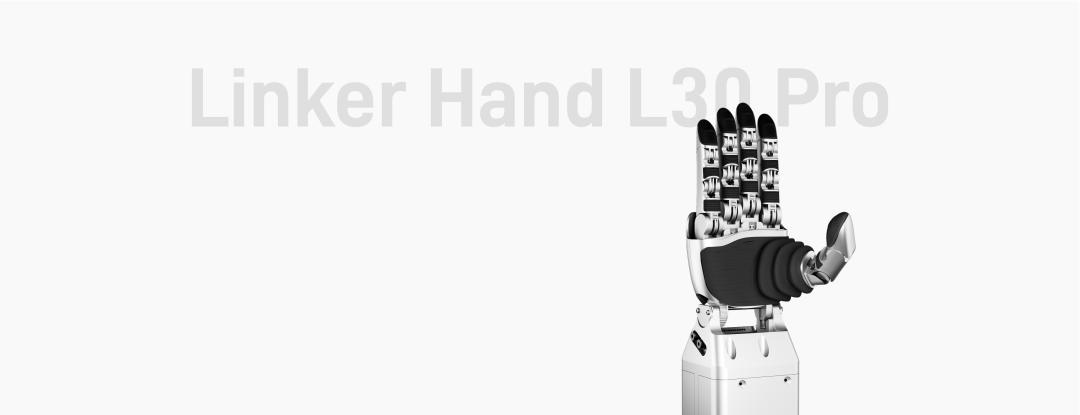
LinkHand has built a product line covering connecting rod, tendon rope and direct drive around the Linker Hand. L20, L30 and O30 correspond to different structures respectively, and O30 provides 20 independently movable joints for ontology integration, scientific research and industrial operation.
In addition to the complete hand, the company has also launched the Open TeleDex teleoperation system, dexterous operation skill library and Linker Genesis model. The company disclosed that its products have been used by university laboratories including Stanford and Cambridge, as well as enterprises such as Midea and Foxconn.
In February 2026, LinkHand announced the completion of nearly 1.5 billion yuan in Series B financing; it completed Series B+ financing in April, and the funds will be used for capacity expansion and intelligent production line upgrading.
03 BrainCo: Bringing Bionic Hand Accumulation into Robots
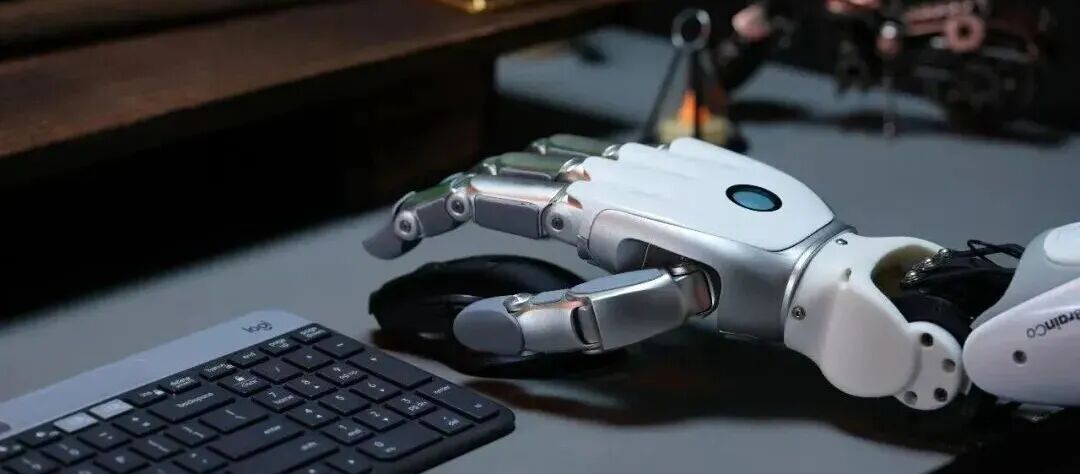
BrainCo was founded by Han Bicheng in 2015 when he was pursuing his doctorate at Harvard University. It initially focused on non-invasive brain-computer interfaces, then launched intelligent bionic prosthetics, and extended its accumulation in micro-structure, sensing and control to robot dexterous hands.
The Revo series iterates from lightweight grasping to high-degree-of-freedom operation. Revo 2 adopts a structure with 6 motors and 11 degrees of freedom; Revo 3 launched in 2026 is upgraded to 21 active degrees of freedom, emphasizing backdrivability and compliant contact.
Revo 3 is equipped with fingertip 3D force, full-hand piezoresistive tactile array and fingertip visual-tactile according to different versions, and provides simulation, teleoperation and algorithm development support.
04 OYMotion: Extending from EMG Interaction to Robot End Effectors
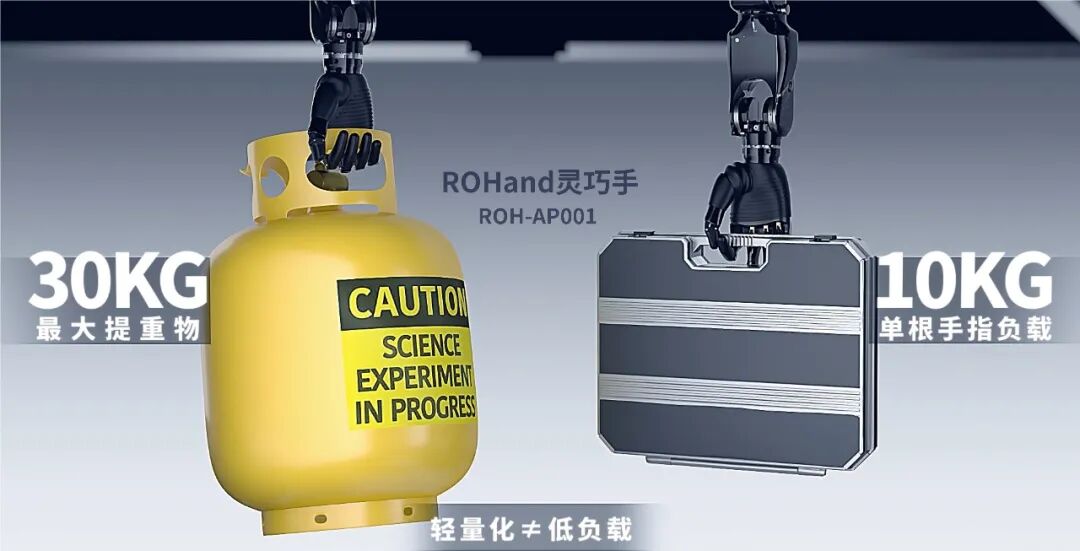
Founded in 2015 and headquartered in Zhangjiang, Shanghai, OYMotion has long been engaged in the R&D of neural signal perception, artificial intelligence and bionic robot components. Its business includes OHand intelligent bionic prosthetics, ROHand robot dexterous hands, as well as rehabilitation products.
OHand mainly recognizes the user's intention through electromyographic signals; ROHand directly receives robot control commands. The general-purpose ROHand has 11 motion joints and 6 built-in motors, providing control and feedback capabilities such as position, speed and force.
In March 2026, OYMotion completed 150 million yuan of Series C1 financing, led by CICC Capital Brain Science Fund. At the World Robot Conference that year, product series including ROHand AP and Lite were exhibited in a centralized manner.
05 Pachini: Developing from Tactile Sensors to Dexterous Hands
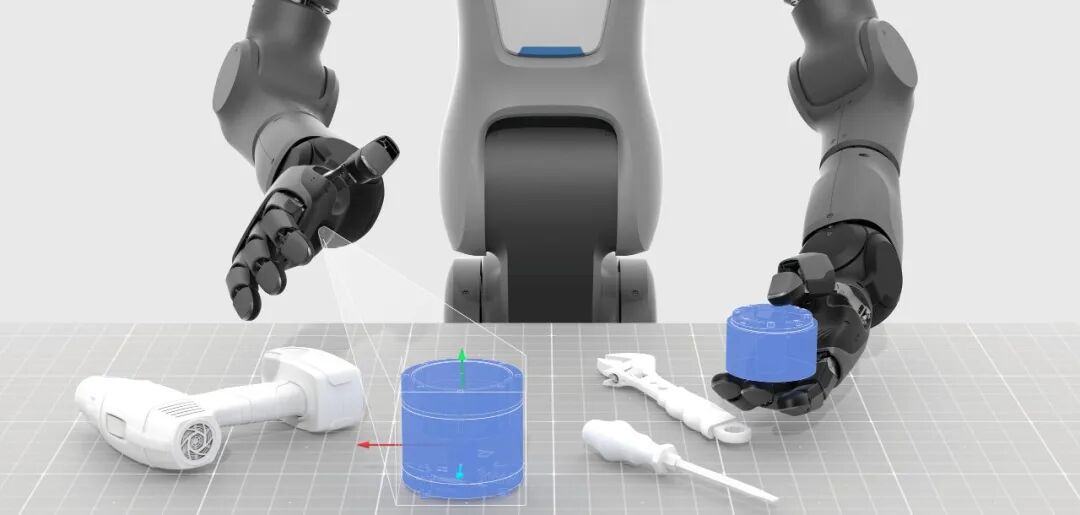
Founded in 2021, Pachini's founding team comes from the Sugano Laboratory of Waseda University in Japan. Its early accumulation focused on high-precision force and tactile perception. The company currently has products including tactile sensors, dexterous hands, humanoid robots and embodied models.
Its DexH13 GEN2 adopts a four-finger structure with a total of 16 degrees of freedom, 13 of which are active and 3 are passive, and it combines multi-dimensional tactile and visual capabilities to perceive contact and force changes to assist in adjusting movements.
In March 2026, Pachini completed over 1 billion yuan in Series B financing; in August, it disclosed that it received 1 billion yuan in strategic financing.
06 DynaHand Robotics: Integrating Visual-Tactile Sensing into Fingertips
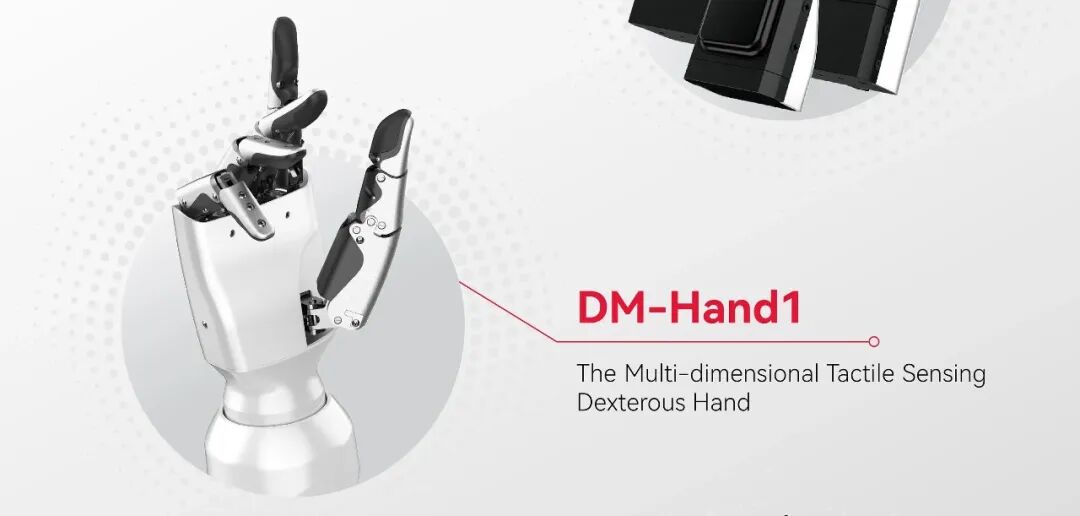
DynaHand Robotics was incubated from the research team of the Hong Kong University of Science and Technology, officially put into operation in 2023, and headquartered in Shenzhen. It develops visual-tactile sensors, dexterous hands, teleoperation equipment and operation models.
Its DM-Hand1 embeds thin visual-tactile sensors into fingers to obtain information such as force, texture and hardness through the deformation of the contact surface; supporting products also include DM-Tac sensors and DM-EXton teleoperation systems.
In August 2026, DynaHand announced the completion of hundreds of millions of yuan in financing led by Ant Group. According to the disclosure at that time, its visual-tactile sensors have achieved shipments of 10,000 units, serving more than 200 customers in total, including over 50 overseas customers. In the same year, the company built a "data collection into households" network with China Mobile to collect interactive data including tactile information.
07 DexRobot: Combining Dexterous Hands with Industrial Delivery
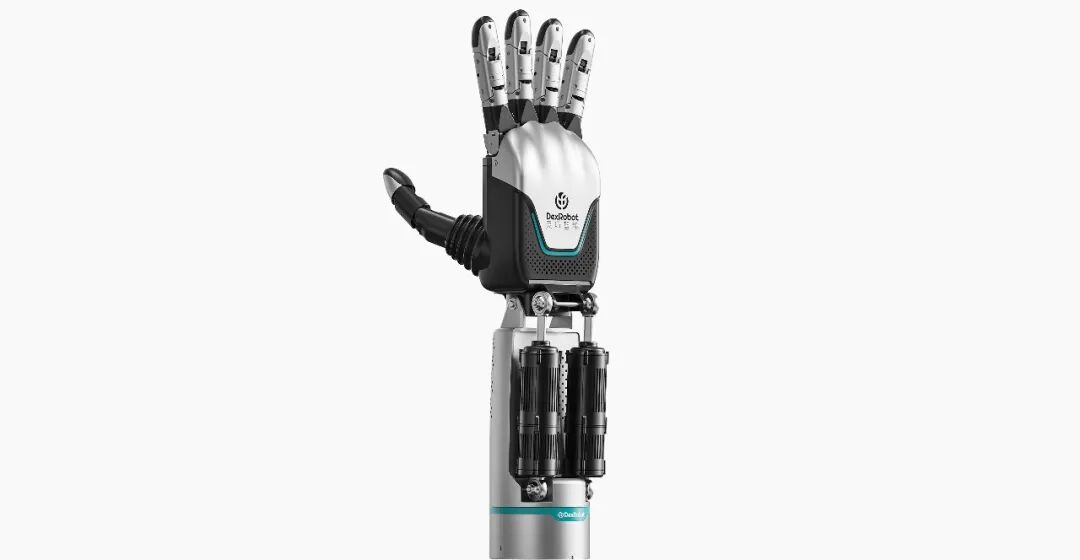
DexRobot was incubated and nurtured by the Shanghai AI Research Institute, founded in 2024. Its products include dexterous hands, wrist-hand systems and operation algorithms.
Its mass-produced version of DexHand021 adopts a 19-degree-of-freedom rope-driven bionic design, integrating multi-modal perception and micro-force control; the Pro version further adopts an integrated wrist-hand structure.
In 2026, the company completed hundreds of millions of yuan in Series A financing, and jointly established two companies, Lingji Yidong and Lingji Zhilian, with Shanghai Electric, a subsidiary of Shanghai Electric Group, with a total registered capital of over 100 million yuan. The two joint ventures focus on the R&D and mass production of core components, as well as industrial solution integration, project delivery and market expansion respectively.
08 CAS Silicon Era: Putting Research Accumulation into Specific Working Procedures
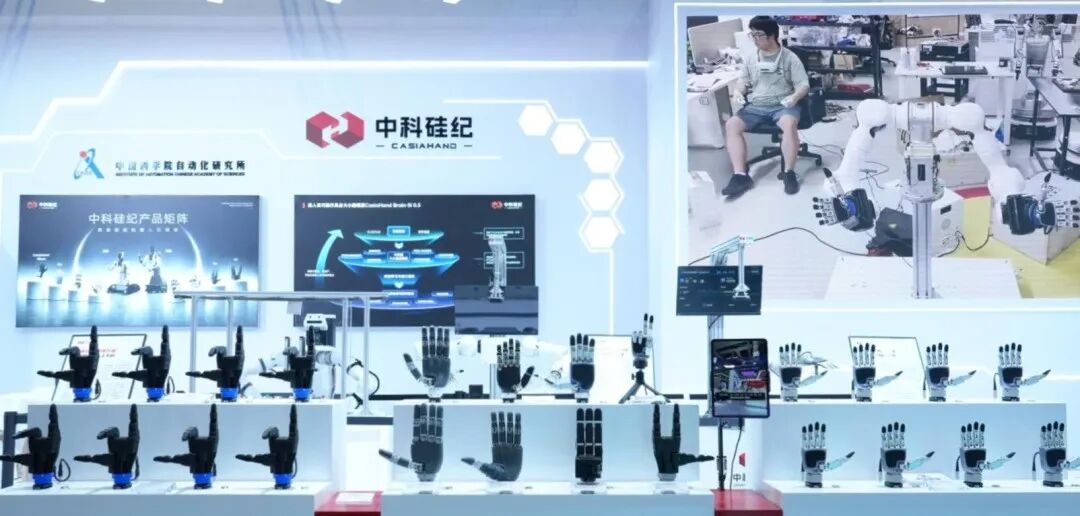
CAS Silicon Era is incubated from the relevant team of the Institute of Automation of the Chinese Academy of Sciences, and has long been engaged in the R&D of robot upper limb dexterous operations. Its products include dexterous hands, humanoid arms and operating robots.
Its CasiaHand has formed series such as M, X and G, including five-finger products as well as three-finger hands for industrial grasping.
At the 2026 Industrial Expo, the company demonstrated solutions such as PCB mixed-line grasping, machine tool loading and unloading, and high-speed sorting. The PCB solution combines robotic arms, dexterous hands and vision systems to complete circuit board identification, grasping, transportation and pin alignment placement, with application targets including line change and fixture adaptation in multi-variety production.
09 Xynova: Adapting Different Tasks with Different Drive Structures
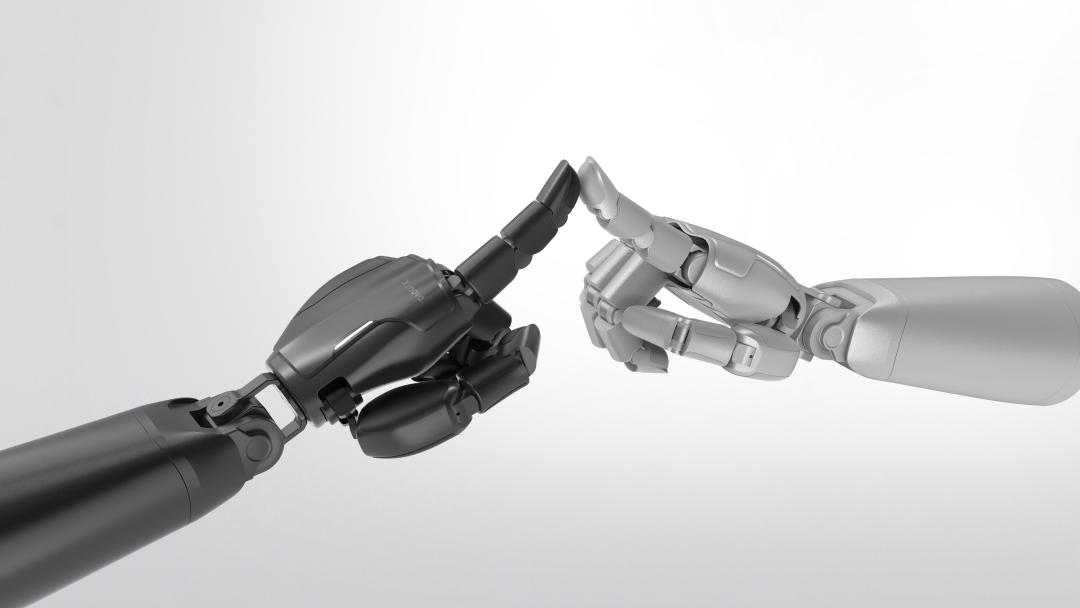
Founded at the end of 2024, Xynova's founder and CEO Xia Yuxuan previously had experience in hard technology investment. The company develops dexterous hands, rotary joints and linear actuators at the same time, and its self-developed scope covers components such as motors, electronic controls, reducers and lead screws.
In 2025, the company launched the tendon-driven Flex 1; in 2026, it launched the Flex 2 combining tendon rope and direct drive, as well as the 22-degree-of-freedom Prima 1 for scientific research.
Xynova has also built production lines covering machining, motor winding, module and full hand assembly. In July 2026, the company announced the completion of 500 million yuan in Series A+ financing, led by Meituan, followed by NIO Capital, China Merchants Capital, etc., with Xiaomi Strategic Investment continuing to increase its stake.
10 Agilink: Moving from Internal Full-Stack Team to Independent Supply
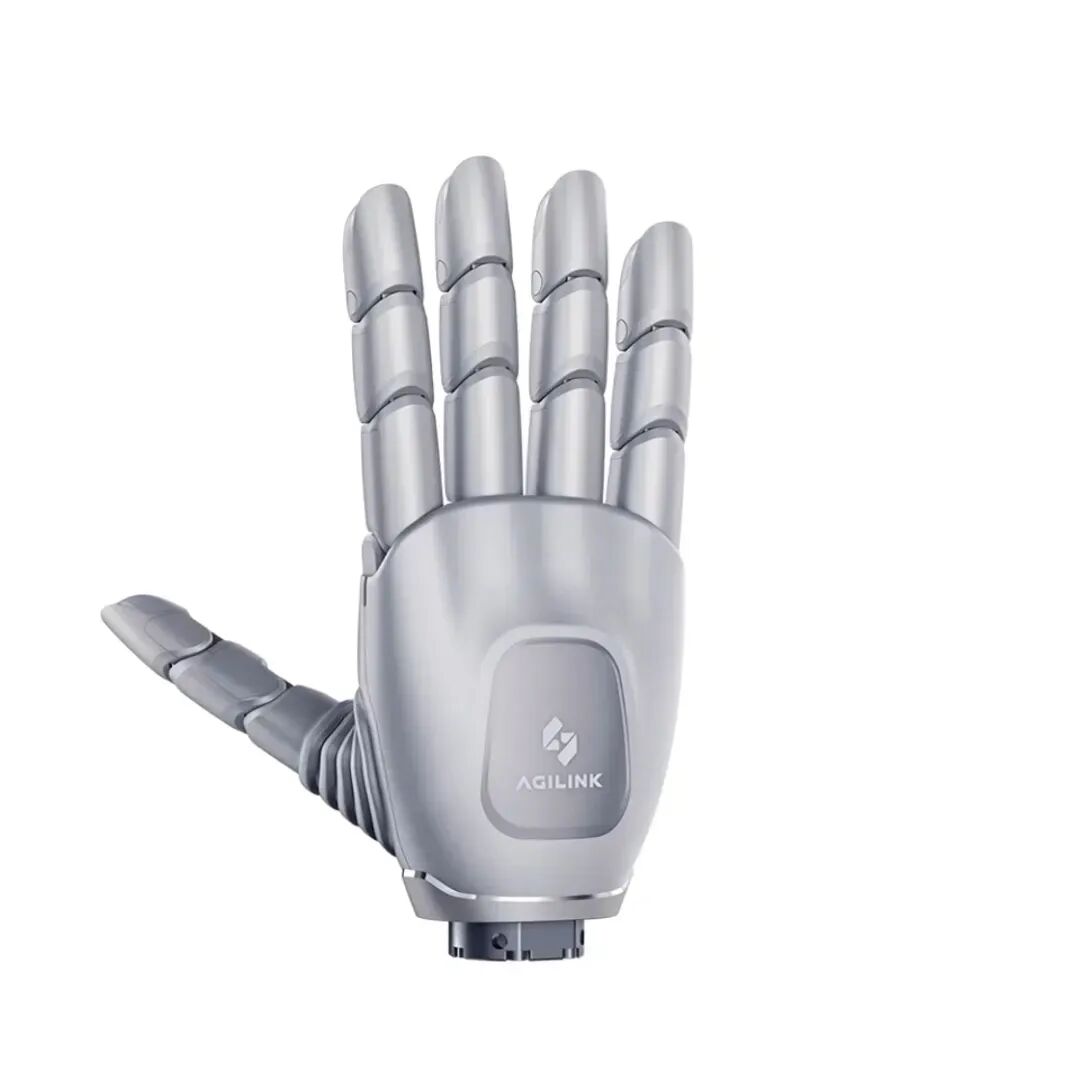
The dexterous hand team of Agilink was established within the Unitree Robotics system in 2023 and began independent operation in January 2026.
The OmniHand product covers routes such as lightweight general-purpose, full direct drive and rope drive. The Ultra series provides a version with 21 active degrees of freedom, the Ultra-T adopts a rope-driven scheme, and supporting products include OmniGlove gloves and OmniPicker grippers.
In June 2026, Agilink disclosed that its valuation after the new round of financing exceeded 1 billion US dollars; according to the company's disclosure at the end of September, the cumulative delivery of the OmniHand series exceeded 15,000 units.
11 Wuji Tech: Developing Hardware Around High-Frequency Control and Maintenance

Wuji Tech's products include Wuji Hand dexterous hands, Wuji Glove data gloves, as well as supporting development and simulation tools, serving robot teleoperation, data collection and operation strategy training.
Wuji Hand 2 adopts 20 active degrees of freedom, the official provides 20-axis, 1000Hz control capabilities, and emphasizes backdrivability and modular disassembly. Backdrivability allows the fingers to comply with contact under external force; the modular structure supports quick disassembly and replacement of components.
The supporting software supports real-time control and motion mapping, and is compatible with input methods such as self-developed gloves. It provides simulation models and supports deployment to real hardware after simulation training.