Even staying afloat has become a huge challenge, there is no point at all talking about "elevating the brand to a higher positioning".
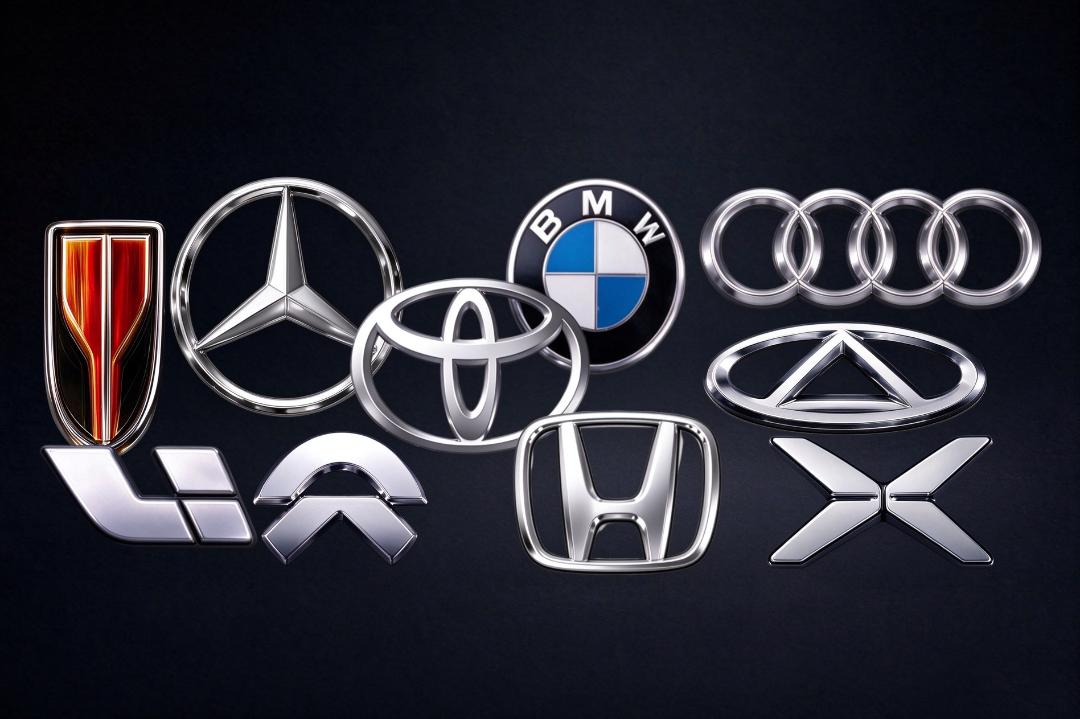
When everyone is pursuing the ultimate cost-performance ratio, building a brand is facing unprecedented difficulties.
Price war, price war, and nothing but price war.
Virtually every step taken in this year's automotive market revolves around this theme. As time goes by, when carmakers have repeatedly met consumers' strict and demanding requirements, the market seems to leave no room for any product with inherent shortcomings.
For a long time, everyone has been expecting Chinese automobiles to truly rise and seize market share back from foreign brands. This aspiration has become particularly strong as the entire industry enters the electrification era.
Over the years, thanks to the rapid evolution of new energy and intelligent technologies, the label of "shoddy manufacturing" has long been stripped from "Chinese automobiles". BYD has claimed the title of global leader in new energy vehicles, and new power brands have step by step taught countless people what "overtaking on a curve" really means.
But an undeniable fact is that "cost-performance ratio" is still a label that Chinese automobiles cannot shake off.
It is widely acknowledged that the story of "spending big money on poor-quality cars" in the joint-venture era has been completely rewritten by Chinese carmakers. However, seeing that the industry-wide profit margin has dropped to a pitiful 1.5%, is "fighting to the death in involution" the only path left for Chinese automobiles?
Now we have lap-record monsters at the Nürburgring, and a group of all-around models that can turn the car into a movable home. Logically, as the performance of Chinese automobiles is recognized by the world, "brand upgrading" should come naturally.
Unfortunately, as Yin Tongyue, Chairman of Chery, said not long ago, "Chinese automakers cannot only pursue sales volume. Building high-value brands is the fundamental way out."
While he keeps emphasizing that "single-minded pursuit of sales volume is not a viable path", the reality is that the industry is still mired in widespread price wars. To chase traffic, unscrupulous provocations and malicious slander against competitors have become the norm. All these phenomena show that the industry is not as prosperous as it seems, but is riddled with many hidden problems.
Domestically, for the industry to become a pillar of the national economy, what it needs is not endless mutual harm, and true internationalization is not simply "shipping products overseas for sale".
On the topic of how to drive self-progress and industrial transformation through brand influence, impetuousness is unacceptable, and accumulating achievements purely by high sales volume is never what the Chinese automotive industry should pursue.
Disordered competition leads the industry astray
The proposition of "brand upgrading" has been continuously discussed by Chinese automakers ever since the automotive market opened to the outside world.
A dozen years ago, joint-venture brands stood at a dominant position, building an impenetrable wall with their products, corporate culture and long history.
The Tiguan was sold at a markup, the Audi A6 was a symbol of prestige for people working in government sectors, and the BMW 3 Series was the entry ticket for young successful people. What were independent brands doing back then? They were competing in the 70,000 to 80,000 RMB market by making thicker car bodies, larger interior space, and longer configuration lists. They worked hard with justified reasons, but had no way to break through the bottleneck.
Later, the whole industry was affected by the "four new modernizations" of automobiles. The automotive industry replaced real estate as the focus of national development, and everyone thought the era of Chinese automobiles had arrived.
The three-electric system keeps iterating and upgrading, and intelligent technologies have brought qualitative leaps to the overall vehicle experience. Acceleration from 0 to 100 km/h within 3 seconds, a cruising range of over 1000 km, and high-level intelligent driving that makes driving as easy as pie. "Premium" has been made so accessible, does that mean Chinese automobiles have already achieved the goal of "overtaking on a curve"?
But everyone has witnessed the recent situation of the industry over the years.
What has been made accessible is "technical barriers", not "brand barriers". When every carmaker can achieve fast acceleration, everyone buys solutions from the same intelligent driving supplier, and all in-car infotainment systems are connected to the same large model, the label of "I am more premium than you" between different car models has been burned to ashes by ourselves, and then the problem arises.
Now when people buy cars, they have got used to expecting all kinds of configurations, no matter what the vehicle class or model is. As long as a new car is not a "well-rounded product" with no shortcomings, remarks like "others have higher configurations than you, why should I pay the same money for your car?" or "the configurations are all the same, why is your car much more expensive than the one next door?" will leave automakers speechless.
Then enterprises fall into the vicious cycle of self-justification, and everyone regards the playbook of Leapmotor as the golden rule for success. Step by step, "technologies have flattened the threshold, but there is no room left for premium" has become the true portrayal of today's automotive industry.
Most of the time, consumers keep instilling an idea into automakers that the practices of joint-venture brands in the past were dross, and Chinese automakers should popularize technologies in the most down-to-earth way.
But now the topic of "quickly assembled low-quality vehicles" is still fermenting, and the Ministry of Industry and Information Technology has taken the lead to supervise the rectification of chaotic payment practices in the industry. Can we look back and think: is the fuel vehicle era that everyone spurns really as worthless as an outdated story magazine?
Chery has long suffered from the lack of strong brand power. The fact that Exeed has not established a premium image up to now has been a constant headache for Chery. So, can other independent automakers stay out of this trouble?
It is true that some popular new energy SUVs on the current market have broken the 500,000 RMB price mark and sold very well. But on second thought, when potential users of BBA and Porsche are attracted to these products, are they not essentially coming for the high cost-performance ratio? Brand factor does play a small part, but it is definitely not the main reason for their purchase decision.
What is the most surreal scene in the automotive market in the past two years?
It is the scene where the auto show is lit up with gorgeous lights, senior executives of automakers are talking about long-termism on the stage, while the top sales director off the stage keeps getting non-stop calls: the competitor has cut the price by another 20,000 RMB, are we going to follow suit?
From 2025 to the present, the industry profit margin has kept declining. After a whole year of hard work, most enterprises have barely made any profit at all. More than 80% of dealers face price inversion, and losing 20,000 to 30,000 RMB per car sold has become the norm.
In such a business environment, "brand upgrading" is definitely a luxury. If someone still claims to be committed to brand building, just ask: if you make a 100,000 RMB two-seat pure electric small car with only 300 km cruising range and no high-level intelligent driving features like smart, do you have the confidence to make it a hit?
If no one dares to give a positive answer, how can we talk about the so-called "brand upgrading" when the blank of brand history cannot be filled?
Brand is the key to winning the future
In the era of traditional fuel vehicles, there are many external factors such as century-old mechanical accumulation, racing track pedigree, handcrafted manufacturing and exquisite materials that make users willing to pay. Just like when you argue with most luxury goods that your bag can hold more items and its hardware accessories are more durable, you have already lost the argument.
In the new era of automobiles, Li Auto has gained a firm foothold with "large color TV, refrigerator and big sofa", NIO has built user loyalty through its service and battery swapping system, and AITO has attracted a large number of smartphone enthusiasts with its full-vehicle intelligent features. These new brands have indeed cultivated user trust car by car over the past 5 to 6 years.
But as the price war continues to this day, the main brands of more automakers are still relying on high sales volume. Products priced at the 100,000 RMB level are now delivering the performance that used to belong to models priced above 200,000 RMB, making brands seem dispensable. Except for BYD, which has spawned Denza, Fangchengbao and Yangwang with their own separate market positioning, it is hard to find other typical successful cases.
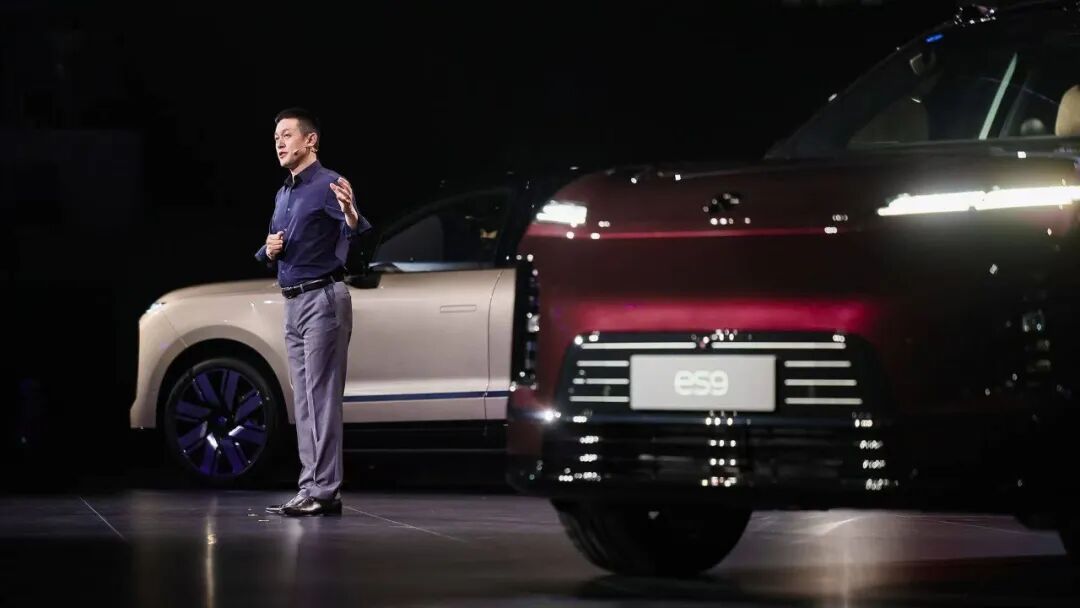
Exeed has changed its CEO seven times in seven years, and all its products have become pioneers of overseas expansion; Wey brand has developed from the VV series to the Coffee series, and finally made progress with MPV products, but its marketing team has gone through a complete reshuffle; Hyper, with GAC's promise of "no upper limit on investment", is still looking for its own clear market positioning...
Is this the result of poor product quality? Actually not. What brand upgrading requires is firm determination. The public mind positioning of every new premium brand cannot withstand repeated changes. If you position yourself as performance luxury today, change your slogan to family intelligence tomorrow, and talk about personalized advocacy the day after tomorrow, you will eventually be burdened by the heavy pressure of sales volume.
Judging purely from this logic, which new brand can withstand such repeated tosses? For reference, NIO, the new power brand with the strongest brand power, even has to set up separate brands Leda and Firefly to maintain its own brand tone with continuous heavy investment, and it also has to expand the battery swapping ecosystem to protect the rights and interests of NIO users.
At the end of the day, "brand upgrading" cannot be achieved simply by shouting a slogan.
It requires independent sales channels, high-quality services, refined user operation, and continuous investment for many years even without making profits. But every enterprise cannot avoid quarterly financial report reviews and constant inspections on sales performance from investors. As a result, brand upgrading always turns into empty talk.
In the past when the era dividend still existed, too many people could not resist the temptation, and put aside their original aspiration of brand upgrading in exchange for higher sales volume.
Now, even for cruising ranges of 700 km and over 1000 km, users can hardly perceive the difference in daily use. The improvement of in-car infotainment computing power is far less perceptible to consumers than the parameter specifications suggest. For automakers, it is already very difficult to accumulate sales volume purely by stacking configurations, let alone building a strong brand.
China's automotive market has no lack of smart people, and of course, Chinese automobiles have no lack of manufacturing capacity. The industrial chain is full of strong players in battery, electric drive, intelligent driving and electronic architecture. What we lack is the sense of reverence: reverence for industry cycles, reverence for users, reverence for time, and the patience to translate "capability" into "brand character".
The difficulty of brand upgrading does not lie in technology, but in the fact that no matter how sufficient resources you have or how harsh the environment is, you have to resist the urge to cut prices, resist the urge to copy others' practices, resist the urge to change your brand narrative, and persist in solving problems for users even when others have already taken off riding the trend. There is no shortcut in this process.
The *2026 McKinsey China Auto Consumer Insights* report pointed out long ago that a landmark change this year is that among the key purchase factors of electric vehicles, the ranking of "brand" has jumped from the long-stagnant 5th place to the 2nd place, second only to "cruising range and charging time".
Moreover, in the new market trend, brand is strongly returning to the core of consumer decision-making, and has become a key indicator that determines the future direction of market competition.
"Looking forward to the next decade, the winners of the future will be those automakers that can precipitate innovation into stable experience, translate brand into credible commitment, and turn industrial collaboration into systematic competitiveness."
Although this is the conclusion put forward by McKinsey, as Chinese automobiles have grown into global key players, "survival" should not be a stumbling block for brand upgrading. Brand upgrading is a practice of restraint.
When the market enters a mature stage, and the gaps in cruising range, intelligent driving, intelligent cockpit and other aspects are basically eliminated, brands will assume the ultimate role of "value judgment", helping consumers make purchase decisions in a highly complex market.
Then, this long-term restraint will finally get its long-awaited return.
This article is from the WeChat official account "Auto Community" (ID: iAUTO2010), written by Cao Jiadong, and authorized for release by 36Kr.