Has the final conclusion been drawn for the most successful domestic blockbuster of 2026? It climbed up all alone from the mountains of corpses and seas of blood.
On November 17, Google Play awarded Arknights: Endfield the global "Best Game of the Year" award and the "Best Narrative Game of the Year" awards in multiple regions. At the same time, Endfield was also nominated for TGA's Best Mobile Game. This may give the answer to which is the most successful domestic long-term operation blockbuster game of 2026.

Google's review: From the storyline to the vivid and grand landscapes, every detail of Arknights: Endfield is fascinating. The smooth and exhilarating real-time combat, well-rounded characters, and in-depth factory construction and management gameplay... It creates a truly unique and unforgettable experience.
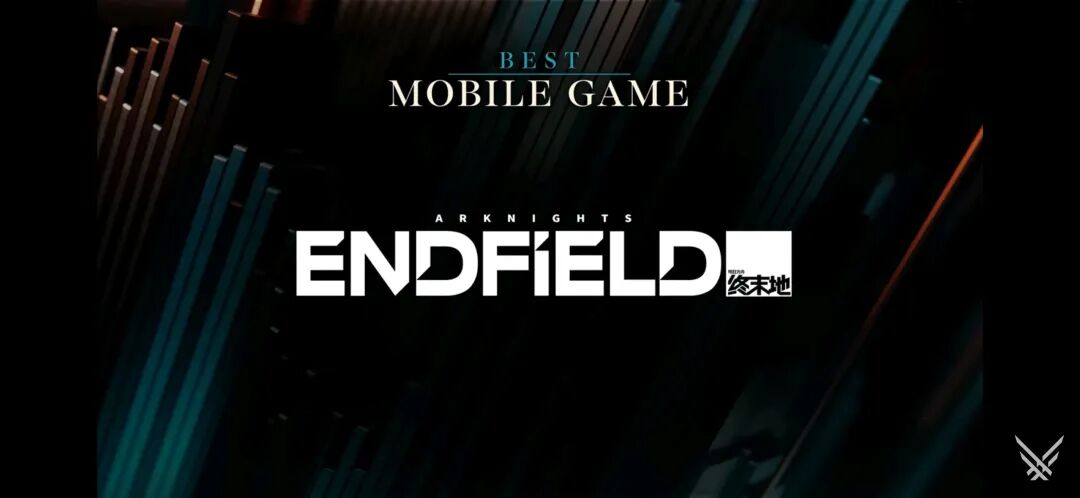
TGA Best Mobile Game Nomination
Actually, Putao Jun didn't plan to bring up Endfield again. However, as the year is coming to an end, when I was working on the industry recap, I found that among all the mainstream commercial blockbuster games launched this year, the only product that earns good revenue, operates stably, has decent long-term performance, wields global influence, and is widely recognized by the industry is this one... Even if we don't consider long-term operation and include standalone games, there is only one more extra game, Phantom Blade Zero.
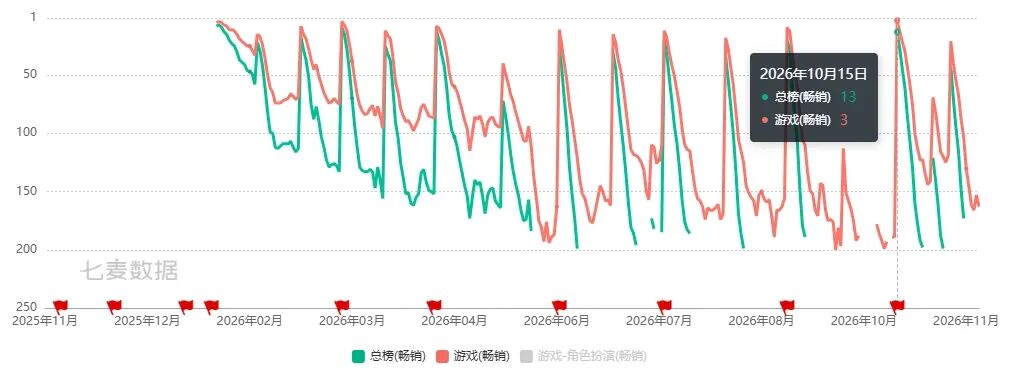
The chart shows the ranking trend of Endfield in the past year. The remaining few blockbuster games launched this year cannot have their long-term performance judged for the time being.
What? You say the above criteria are too strict? You know that at the beginning of 2026, countless high-quality cross-platform blockbusters were ready to go, and there were countless products that were expected to meet these goals. But today, some products have a strong start but a weak follow-up, some have not yet been launched overseas, and some have failed completely... There are few blockbusters that can guarantee they can operate for at least two more years. Under this extremely difficult environment, it is no exaggeration to say that Endfield climbed out of the fierce competition alone.
Why did Endfield stand out? As 2026 is drawing to a close, we may as well re-examine this product. The several inspirations it brings may hold the key to the survival of the game industry in the next stage.
First, the importance of design. The design here refers to the ability to create leverage by reallocating resources, achieve better results with limited resources, and thus create differentiated experiences.
Hypergryph has always attached great importance to design. The fact that the first concept PV of Arknights in 2017 exceeded 10 million views is the best proof of their development path. Many of their contents do not win by pouring a lot of money, but still gain the pursuit of massive users, and even form a certain design paradigm followed by the industry — the narrative style of PV, the industrial and tech-inspired design language, the high-end UI, the smooth animation of characters when switching interfaces... Examples can be found everywhere.
Take the art style as an example. Before Endfield was launched, the realistic anime style combining PBR and NPR was not yet a popular choice for a new generation of anime games. But at that time, hyf, co-founder of Hypergryph, said that the choice of Endfield was more realistic than most similar games on the market, while pursuing self-consistency, balancing the unique style and temperament of the product.

At the beginning, most people noticed the material of the characters' costumes, the details of industrial creations, and the modern Chinese style. However, in subsequent updates, you will find that they have been following this path to improve the art quality of maps with different themes and the performance quality of cutscenes; the recent "Danqing Ferry" version also integrates the ink wash painting style into the Chinese-style maps while combining the character settings, creating a solid and timeless impression. This shows that many of their designs are not sudden inspirations, but have their own logic, form their own system, and have the ability to extend.
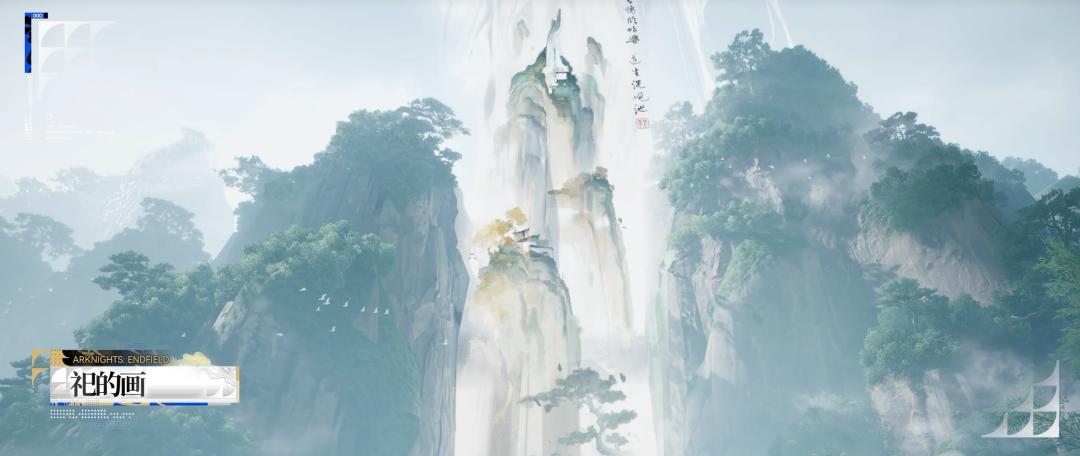
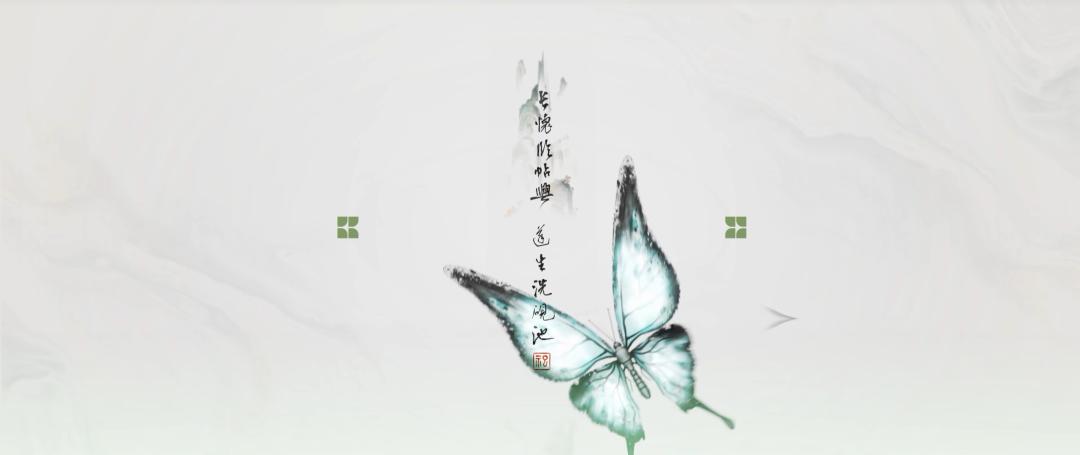
Similarly, we have shared the character and storyline design of Endfield, as well as the evolution and progress of Hypergryph's offline event design in many articles, which also helped Endfield win a series of awards including the Apple Design Award nomination and the Best Booth award at Gamescom. This shows that Hypergryph's design capability is among the top tier in the global context.
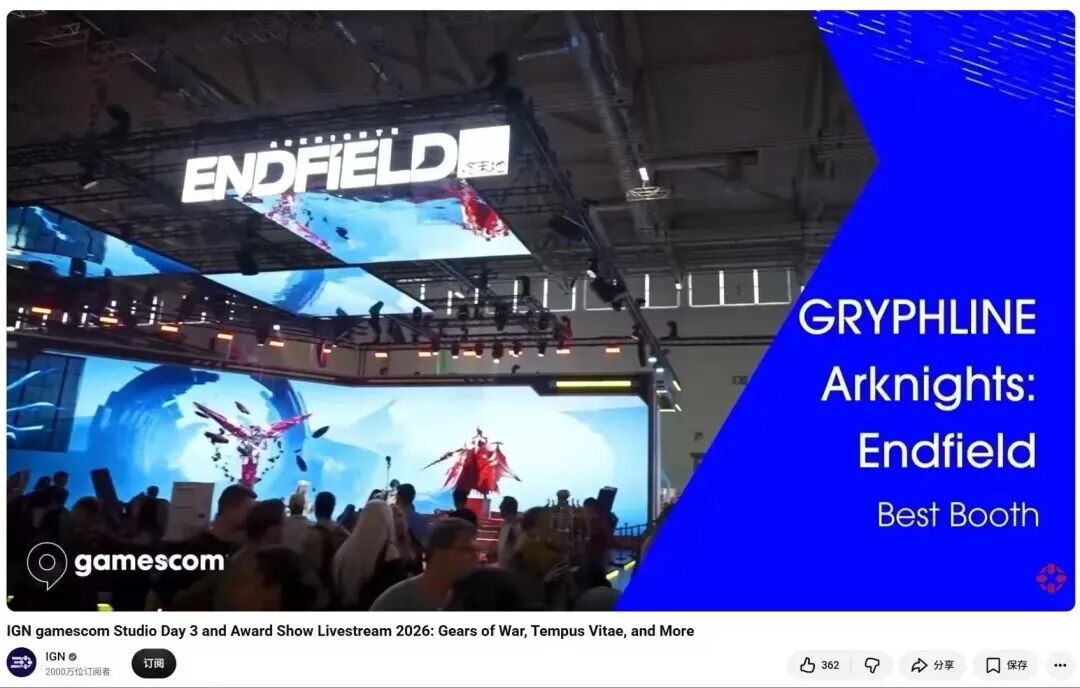
You may ask, what is the use of emphasizing design so much? The truth is simple: in this era, design determines profit.
In the era when blockbuster games just became popular, the relatively scarce high quality itself could attract a large number of users, and constitute the reason for user retention, return and payment. But now there are too many high-quality games that focus on stacking resources, and various platforms also charge extremely high user acquisition costs. Therefore, only differentiated designs that can meet the unmet needs of users and exceed their expectations can form high momentum, promote organic dissemination, help games get free traffic, shape the identity of user groups, and build IP — just as many people sigh that IP is a huge advantage of Endfield, little do they know that the key to building IP is design in the first place.
At a time when the R&D cost in the industry often reaches 1 billion or 2 billion yuan, only with the leverage of design can huge costs bring equally huge profits, rather than meager or even negative profits.
Second, the importance of gameplay. Because among all design elements, gameplay is the one with the largest leverage, the longest effective time, and the slowest diminishing marginal effect, which directly determines the potential of long-term operation.
Gu Yu, CTO of Hypergryph, once said that the views of professors from USC inspired him: the direct sensory stimulation at the art level and the content at the narrative level can quickly attract players' attention, but the effect of retaining players is relatively weak; while gameplay is the hardest to directly attract players' attention, but the most likely to retain them.
Of course, in my opinion, the gameplay of Endfield is far from perfect. For example, it still needs to better balance the needs of different types of users. But compared with the more problematic traditional anime game routines, it is already interesting and distinctive enough to form a relatively self-consistent loop of infrastructure building, map exploration, combat and character development, and show the resilience to maintain optimization and iteration.
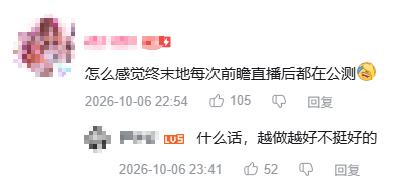
Do you still remember how the public opinion crisis was resolved when Endfield was just launched? Its gameplay quickly gained positive reviews in the community, helped the game establish a good reputation rapidly, and avoided missing the window of massive new users during the public beta; and since its launch, I guess the reason why many users stay is that the fun of this set of gameplay is still greater than the tiredness, and from the perspective of the underlying framework, it also has the opportunity to create fresh fun through more differentiated designs.
In contrast, many new games that adopt the traditional anime game framework and only make minor modifications in some parts seem to avoid the risk of innovation, but also inherit users' fatigue towards the old routine. If Endfield had chosen this path, its initial performance would not have been bad, but in the long run, it would have lost a lot of resilience.
Third, it is necessary to make players always have expectations and confidence in future versions.
The head of a long-running hit game once said that the biggest challenge for GaaS games is to maintain the deep combination of overall gameplay, core combat and unique tone to ensure the game is attractive, and at the same time do a good job in long-term content updates, and always balance the relationship between the two.
Since Endfield was launched, different gameplay modes of infrastructure building, exploration, puzzle solving, combat challenge and casual play have been launched irregularly in both major and minor versions. Moreover, many side gameplay modes are not just simple copies of popular gameplay or "mini-games" from indie games, but complete works with design, functions and iteration.
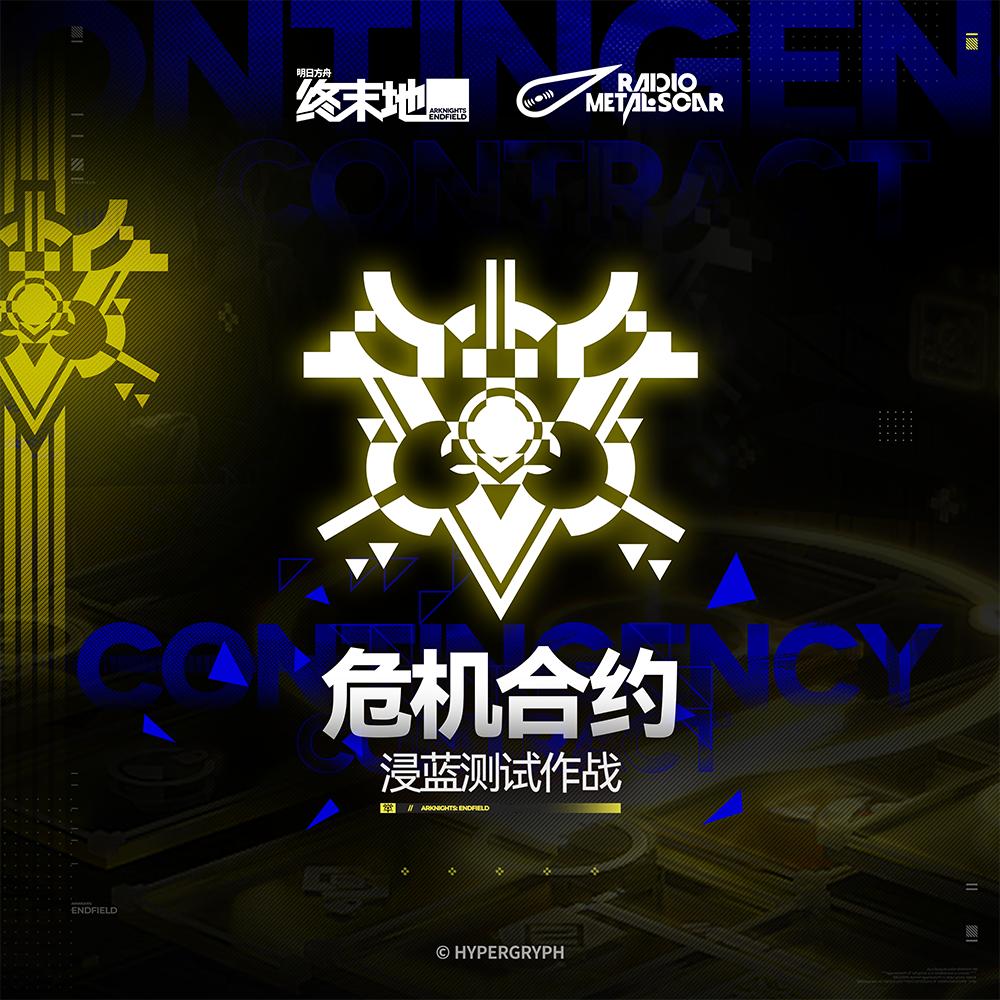
Inherited from the tradition of Arknights: even side gameplay has its own OST
The expectations built by conventional anime games are mostly the characters updated in each version; for some better anime games, the storyline may also be added. As we all know, it is difficult for characters and stories to satisfy everyone, and even sensitive issues may occasionally occur. But Endfield gives people the feeling that they are striving to make progress in multiple areas, provide a variety of services, try their best to make more excellent designs beyond characters and stories, avoid disappointing players as much as possible, and make them feel that there are always surprises.
For a high-quality 3D game with a large amount of content, to achieve all this, we can't only rely on sudden inspirations from several key versions a year. Instead, we need to lay multiple corresponding pipelines before launch, leave space for pipeline adjustment and addition, and split small and large surprises into various versions during the operation process, taking this as one of the most important goals of content updates.
That's all for the discussion. Today, many of the above truths seem to be common sense, and have been verified by some long-running hit games: top-invested cross-platform blockbusters must continuously obtain free traffic through design to ensure the profit scale, rely on gameplay to obtain stable and considerable long-term revenue, and spare no effort to maintain players' confidence. However, the regret of the previous stage of the industry is that many products entered the market rashly without figuring out these truths.
In the few months before the 2027 Spring Festival, the industry will face a new round of bombardment of blockbuster games. I am curious that with the lessons learned from the past two years, what kind of answers everyone will hand in; which once non-consensus views will become self-evident new truths in the future.
This article is from the WeChat Official Account "Game Grape" (ID: youxiputao), written by Thomas Skull, published with authorization from 36Kr.