The rallying cry from auto dealers: survive, deliver profitability, and live with dignity
On November 12, in Fuzhou, at the venue of the 2026 Automobile Distribution Industry Annual Conference, the unique heavy sentiment of the industry permeated the air.
Several PPT slides were secretly photographed, circulated rapidly in WeChat groups of automotive practitioners, and resonated widely across the platforms.
"Price inversion, high inventory, broken rebate promises, and lack of discourse power are the four major mountains weighing on the shoulders of auto dealers."
"For luxury brands such as Porsche, Mercedes-Benz and BMW, dealers have successively set up exclusive branches to support each other, which has become the confidence for dealers at the negotiation table."
"OEMs that have no scale, no core technology, no profit, and treat dealers poorly will only be eliminated, or merged and restructured."
"Industry governance has shifted from 'verbal reminders' to 'enforceable measures'. Abnormal behaviors of OEMs such as irregular rebates and improper inventory management are linked to anti-involution mechanisms and constrained by laws and regulations."
......
These tough remarks seem to push the entire dealer ecosystem to the opposite side of automobile OEMs against the current backdrop of sluggish automotive industry, creating a strong confrontational atmosphere.
In particular, the cry of "2027, let us survive, make profits, and even more importantly, live with dignity" reminds many industry insiders of the deafening cry of "survive" from Vanke in 2018. The survival warning of the real estate industry eight years ago has been transplanted to the automobile distribution industry in 2026, carrying the same heavy weight.
As the tide of the era turns, the once high-flying group of auto dealers is now standing at the cold bottom of the industry cycle.
01
Some stores close down, some people leave the industry
When Lao Zhang put his pen on the signature column of the last page of the acquisition agreement, he let out a long sigh of relief. The weight that had been hanging on his shoulders for 16 years was suddenly lifted the moment the pen touched the paper.
He is the head of an auto dealer group in Shanghai, and the largest dealer of a leading domestic independent brand in Shanghai. He entered the industry in the early years when the brand's annual sales were only 200,000 to 300,000 units, and grew up with the brand all the way, witnessing its transformation from a local carmaker to a giant with annual sales of 3 million units.
Dozens of stores are scattered across all districts and counties in Shanghai, and the lights of brand showrooms have been shining in this city for many years. This dealer group is the business he built up brick by brick with his own hands. At its peak, it had hundreds of employees, and had sold and served about 100,000 customers and families in total, which was the battlefield of half his life.
A few months ago, he quietly packaged and sold these more than 10 4S stores to the largest national dealer group.
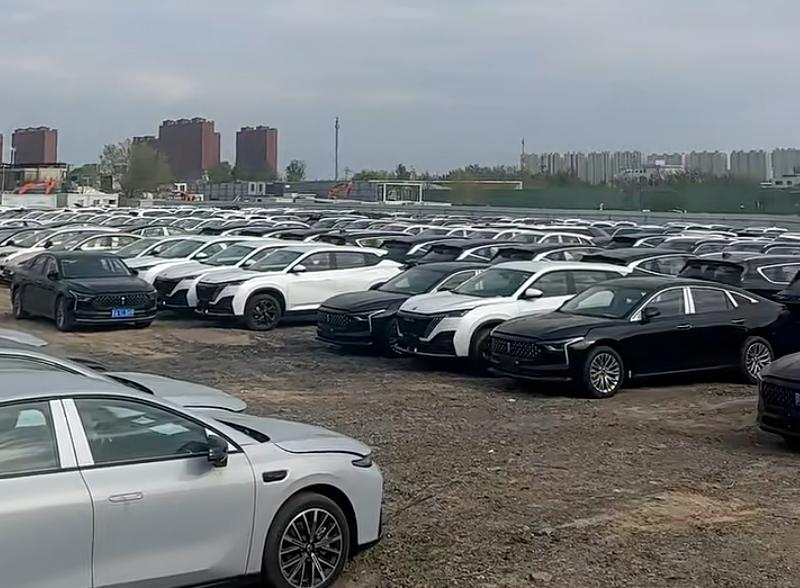
Few people outside know about this news, and there is no press coverage. Recently, on automotive vertical media platforms, those former 4S stores have been renamed, which means the handover has been completed and the new owner has officially taken over this business territory.
He did not escape any of the several major pressures that weighed on dealers in recent years. As a veteran who grew up with domestic independent brands, he has seen the golden era when showrooms were packed with customers and profit margins from price differences were substantial, and he also experienced this round of fierce involution, witnessing new car prices keep falling, and the profit space of stores being eroded little by little.
He did not make fierce public accusations, but chose to leave the industry. The ease at the moment of signing had nothing to do with the joy of cashing out, but meant that he no longer had to carry the day-to-day torment and move forward.
Many peers could not understand that this leading independent brand is still growing upwards, why did he choose to hand over his business at this node? But in his judgment, the present may already be a phased peak, and the automobile market in the future will only become more brutal.
This is a vote cast by a witness who has been immersed in the industry for decades with his own choice. He has seen the ups and downs of the industry cycle, and understood the ongoing changes in the channels. Behind the aggressive expansion of OEMs, the risks of channels are being continuously amplified.
The once symbiotic partnership is out of balance.
In fact, Lao Zhang is already very lucky that his 4S stores could find a buyer and complete the delivery, because in recent years, the closure and exit of auto dealers has become the norm of the industry.
Liuliu from Pingdingshan, Henan, runs a Fengxing 4S store. When life was extremely difficult from July to August this year, she wrote on her WeChat Channel that "everything is destined, just try harder" to cheer herself up, and kept trying to post videos on the channel to attract customers. Recently, she said that after working in the automotive industry for more than 20 years, her store will be completely closed at the end of this month.
In the first half of 2026, the number of authorized 4S stores shut down across the country reached 1,800, which translates to an average of 10 4S stores disappearing from the market every day. From a longer time dimension, nearly 15,000 4S stores have completed exit from the network in the past five years, and 5,000 stores left the market silently in 2025 alone.
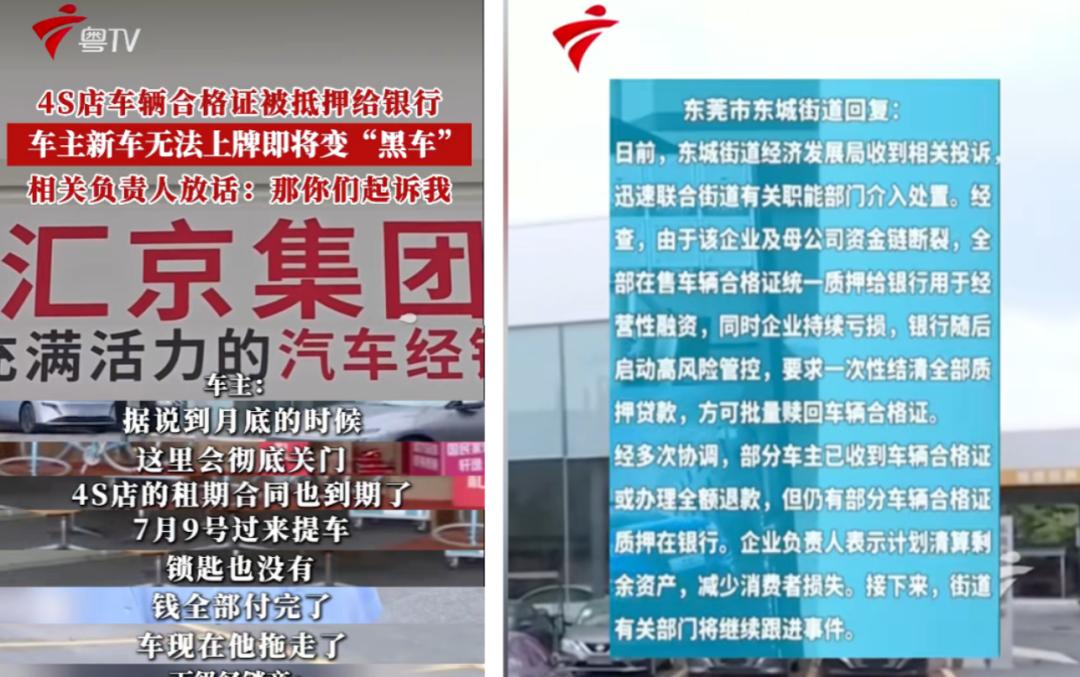
At its peak, Huijing Group owned more than 60 4S stores. In the middle of this year, it was exposed that the capital chain of its stores in many places broke, and vehicle certificates were pledged in banks and could not be redeemed. Consumers who paid full payment for vehicles could not get the license registration certificates, and fell into the quagmire of rights protection.
Oulong Group ranked 13th among the top 100 national dealers. In June this year, the certificate turmoil broke out at its Wenzhou store. Then 92 subsidiaries submitted applications for pre-reorganization, and the redemption of the 200 million yuan "Happiness Fund" issued to employees completely stalled, leaving the stores empty.
Recently, car owner Mr. Chen is still carrying out rights protection in the media, saying that a group of car owners have taken delivery of their cars for 3 to 4 months, but have not received the certificates, so they cannot register the cars, and the vehicles they bought for more than 100,000 yuan can only be parked there as decorations. The involved enterprise is Guizhou Changfeng Auto Sales Group, a long-established dealer group of the largest domestic independent automotive brand.
Later, some media broke the news that the group was still receiving customers normally the day before, the next day the store was empty, the vehicles in the store were moved away overnight, and the actual controller of the enterprise lost contact. The rights and interests of car owners who have paid for their ordered vehicles, and on-the-job employees waiting for salary payment are all hanging in the air, which has become a typical epitome of the large-scale clearance of new energy channels.
From national top 100 dealer groups to regional leading enterprises, from joint-venture brands to luxury brands, even popular independent brands, it seems that no one can stay out of the incident.
02
Under market contraction, the front line under pressure
Store closure and network exit are only the results, and the cause of this result is the sluggish automotive industry.
In the past two months, the "Golden September and Silver October" that belongs to the automotive industry is completely becoming a historical memory. In previous years, September and October were the busiest seasons of the year for 4S stores, with surging customer flow in showrooms, successive orders, and it was normal for sales consultants to work overtime to sign orders. But in 2026, this industry convention completely failed.
Domestic retail sales of passenger vehicles in September fell 28% year-on-year, and retail sales in October fell 27% year-on-year. The peak season did not arrive as scheduled, leaving only the cold reality of "peak season is not prosperous".
Cui Dongshu, Secretary-General of China Passenger Car Association, publicly stated that there may never be the traditional sense of "Golden September and Silver October" in the future.
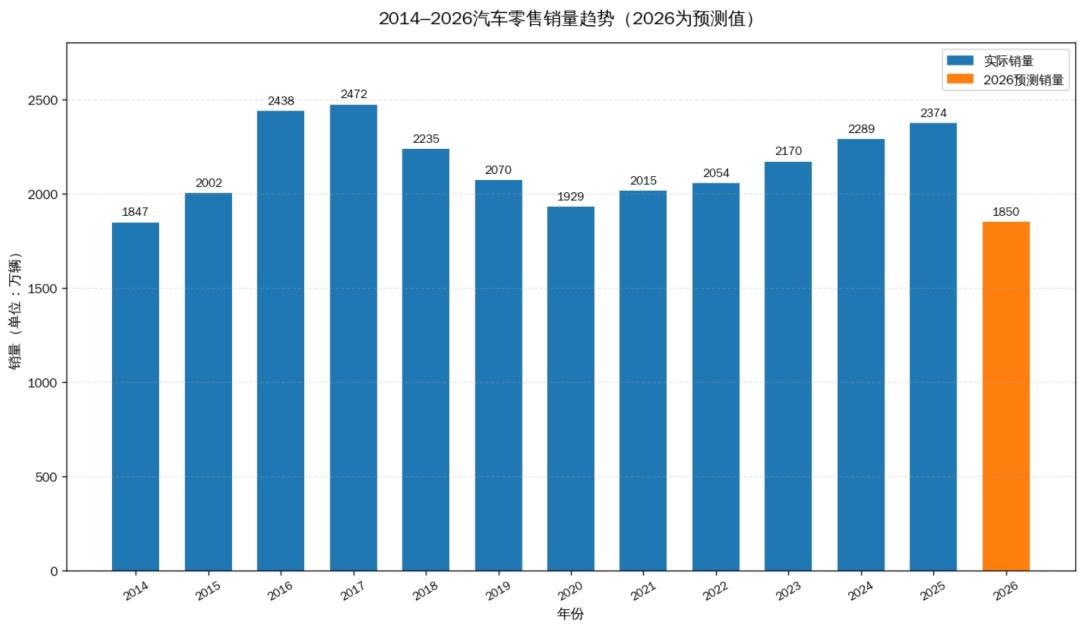
The overall market data is cold. The industry predicts that the annual domestic passenger vehicle retail sales in 2026 will be about 18.5 million units, and the industry retail scale may drop by about 20% compared with previous years. This figure means that the scale of the domestic auto retail market has fallen back to the level 12 years ago.
The market cake shrinks sharply, and the dealer group at the forefront of automobile consumption bears the brunt of all the impacts. The crisis is no longer a superficial industry report, but a real hardship that has landed in the accounts of every dealer group, every store, and every salesperson.
Industry statistics show that 82% of dealers are trapped in the predicament of new car price inversion, and the gross profit margin of new car sales has dropped to -25.5%. Selling one car at a loss has become a common reality. The loss of luxury brands is even more tragic. Some Porsche stores lose an average of 70,000 to 80,000 yuan per car sold. For the once high-flying Mercedes-Benz, BMW and Audi, there are only a handful of models that can really make profits for dealers.
Other data shows that only 23.5% of dealers across the industry can make profits, and more than half of dealers are in a state of continuous loss. New car business can no longer generate income, and many stores can barely operate almost entirely relying on after-sales maintenance business to supply blood and extend their lives.
The shock wave of the industry downturn is transmitted along the industrial chain to thousands of front-line practitioners. In the past five years, about 110,000 employees in the automobile distribution industry have chosen to leave the track they have worked for many years.
An auto salesperson from Guangdong posted his salary on the Internet, saying that it was normal for him to earn more than 10,000 yuan a month in the past, but now his monthly salary is only more than 1,000 yuan, which is even less than the pension of ordinary retirees, so he has completely given up.
Recently, an Audi store salesperson in Guizhou posted a video complaining that their store has raised the work intensity for salespeople: a fine of 10 yuan for no customer invitation, and a fine of 10 yuan for failing to complete the order signing. The store has launched a "crowdfunding assessment" for long-inventory vehicles: everyone crowdfunds 10 yuan a day for unsalable vehicles, and the money will be returned to the salesperson only after the vehicle is sold.
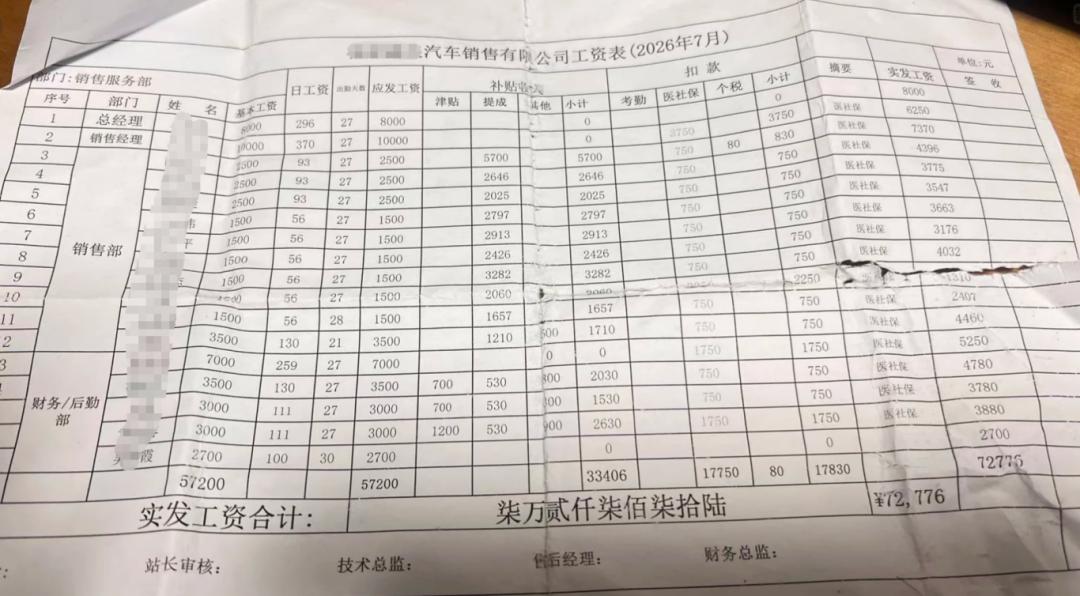
"When you are unlucky, you go to work 25 days a month, and deduct 30 yuan every day, you have to pay 750 yuan out of your own pocket in a month." What is more cruel is that the sales position in this store implements a zero-base salary system. The daily hard expenses such as commuting by car and breakfast cost this salesperson 70 to 80 yuan per day.
"It's not that we don't want to sell cars, we have given all the preferential policies to customers, but the market just can't pick up." He said helplessly that going to work every day but having to pay for it out of his own pocket sounds extremely absurd.
Having a job is still lucky for salespeople who have been laid off. A few days ago, an anonymous authorized dealer of a certain electric vehicle brand revealed the current situation to the media that the store has completed 20% of staff downsizing to prepare for the long off-season in advance.
In order to boost sales, the manufacturer has raised the dealer rebate ratio from 4.5% to 5.4%, an increase of 20%. A rebate close to one percentage point is by no means a small amount for the store. But the policy can only mobilize the subjective willingness of dealers to sell cars, but cannot reverse the objective situation of sharp drop in store visitors, shrinking orders and rising order cancellations, and terminal sales continue to decline.
03
Seeking rebalancing of manufacturer-dealer relationship
When November comes, the familiar script every year - manufacturers concentrate on pressing inventory to channels is staged again. China Passenger Car Association summarizes the current characteristics of the auto market as "strong manufacturer, weak retail, production determines sales", which means production no longer follows the real terminal consumer demand, OEMs give priority to ensuring capacity operation and completing annual performance targets. After a large number of vehicles are produced, the inventory pressure is transferred layer by layer to the dealer channels through business policies.
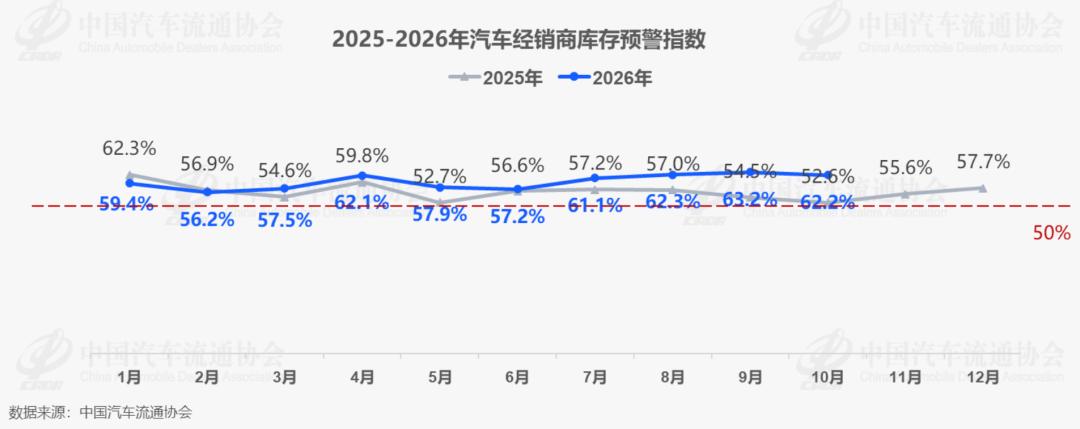
The latest "Survey on Auto Dealer Inventory Early Warning Index" released by China Automobile Dealers Association shows that the auto dealer inventory early warning index in October 2026 is 62.2%, up 9.6 percentage points year-on-year, and the inventory index has remained above 60% for 4 consecutive months, which is significantly higher than the boom-bust line of the inventory index.
Why do manufacturers still frantically deliver vehicles when the market obviously cannot sell? Don't manufacturers know the pressure on the front line of the industry? The answer is definitely yes, but it is indeed an inevitable result.
On the one hand, the fourth quarter is coming, and the year-end assessment countdown is on. Many auto companies' KPI and financial report sales assessments prioritize wholesale data. The time window before the end of the year is limited, and the gap of previous tasks is huge. It doesn't matter whether customers buy or not, as long as the vehicles are wholesaled to the dealer's warehouse, the report figures can meet the assessment requirements.
On the other hand, it is closely related to high quarterly and annual rebates, and monthly vehicle purchase tasks. If dealers fail to meet the vehicle purchase targets issued by the manufacturer, hundreds of thousands or even millions of annual rebates will be directly cleared. Dealers know clearly that buying more vehicles means losing more money, but in order to avoid the waste of their whole year's efforts, they can only be forced to take in the unsalable vehicles and find a way out later.
In such a general environment, the new cars that are continuously delivered to 4S stores will push dealers into multiple desperate situations. Huge amounts of funds are firmly locked by inventory, and capital interest, warehousing, vehicle depreciation, insurance and miscellaneous fees generate pure consumption costs every day when the vehicles are parked in the warehouse.
Inventory turnover days continue to lengthen, and the inventory age continues to rise. Vehicles with long inventory age can only be sold at a large discount to stop losses, with