Is the curse of the gaming industry that acquisition equals a death sentence?
At the start of this article, I will list several high-profile acquisition cases in the gaming industry for you to take a look:
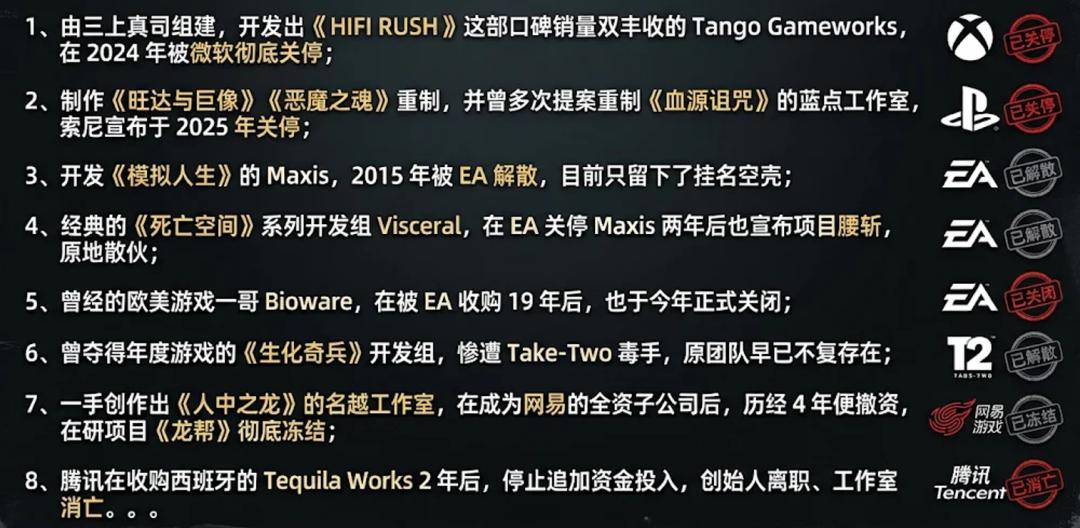
Many of the 8 incidents above are still fresh in our memory, and the outcome of each studio after being acquired by large manufacturers is surprisingly consistent: all of them ended up in total failure.
But the harsh truth is that these are just the tip of the iceberg.
Recently, Sebastian Cardoso, who has worked in the gaming industry for over 20 years and held management positions at multiple game companies including Riot Games, EA and Crytek, published a data analysis article longer than an extra-long custard tart.
The article counted a total of 392 game acquisition cases over 25 years, and reached a result that is not exactly surprising but still shocking —
Among nearly 400 acquired game studios, 60.2% either suffered a severe decline in game quality or closed down directly, with a median survival period of 5 years;
This does not include self-developed studios independently invested and founded by large manufacturers, 85.7% of which have declined or shut down, and even half of them have never launched any game at all.
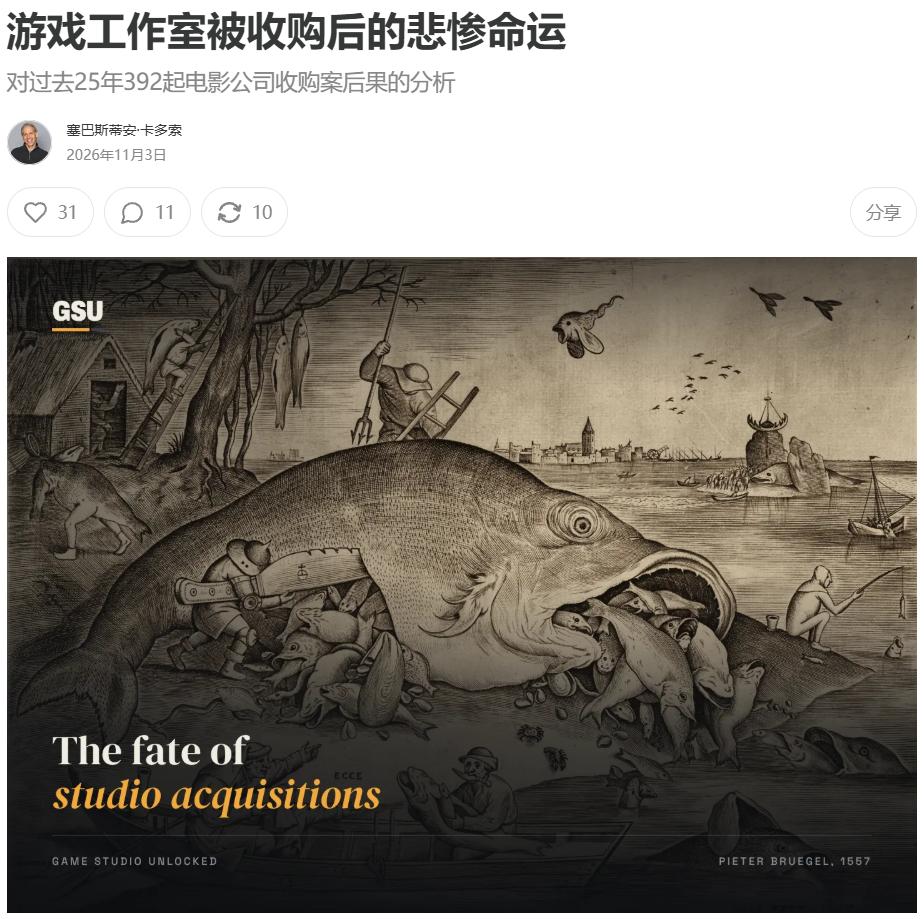
It seems that acquisition is like a curse in the gaming industry, which curses those once-glorious studios and those once-popular game works.
But why is this exactly? What kind of operating logic lies behind it?
With reference to Cardoso's analysis, today we will briefly talk about this topic.
First of all, before talking about the specific ways these studios failed, I need to explain the authority of Cardoso's database first.
Because some institutions have counted the survival rate of acquired studios in the past, but their rules are usually: as long as the studio's business license is not revoked and its name is still listed on the parent company's official website, it is not considered closed down.
Such statistics are a total waste of brainpower.
For example, in the past two decades, Activision Blizzard has acquired 19 studios. Apart from 7 that were shut down directly, the rest are indeed still not delisted, but they have long lost the right to independently initiate projects, reduced to cogs in the annual Call of Duty production line, and all their remaining capabilities are only used to make battle pass skins.
To describe their status, I can't find a more appropriate term than "in-house outsourced", or in other words, they exist in name only.
To solve this kind of problem, after excluding 30 pure outsourcing/porting teams, Cardoso set two scoring criteria for the remaining 362 self-developed game studios, and only those that meet the criteria are included in the statistics:
1. Work Score: Used to judge whether the quality, reputation and sales of the games produced after acquisition have risen or fallen.
2. Health Score: After being acquired, any studio that has experienced a major layoff of more than 15% at one time, has been laid off more than three times in seven consecutive years, or has lost the right to independently initiate projects and been merged into a supporting department, is counted as declined or closed down.
The final result shows that the truly healthy studios that can maintain their quality, keep their teams from being torn apart by layoffs and internal strife after being bought by large manufacturers only account for 28.5%.
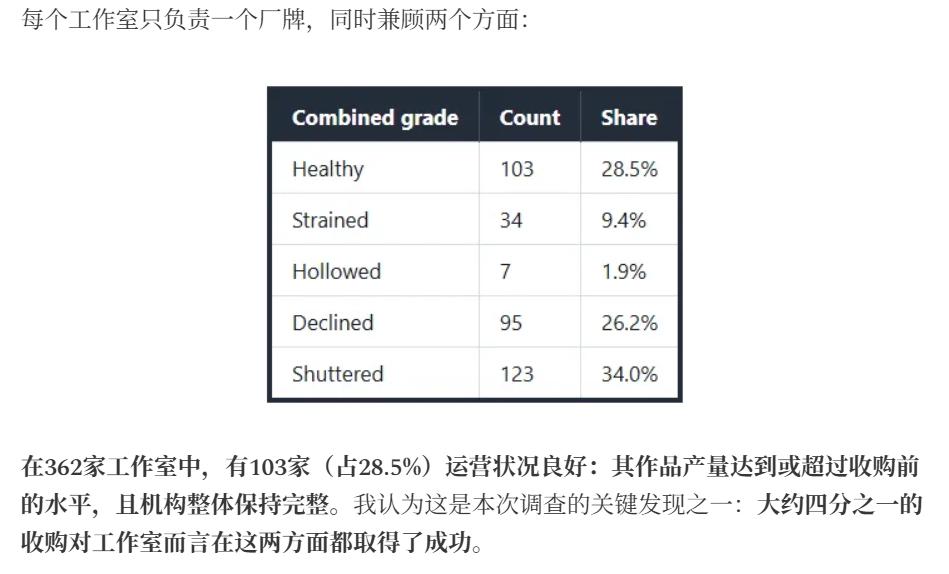
This is actually quite counterintuitive, because the thing that the game development industry lacks the most is capital.
They were able to produce masterpieces when they were poor, but now with hundreds of millions of dollars in budget, sufficient manpower and access to the top motion capture studios, how come their output gets worse instead?
The first reason is that many people often cannot handle the sudden huge wealth properly.
These studios used to have teams of only 30 to 50 people, with flat internal instant communication, and the pressure of project management was low.
But once the budget increases and the parent company raises the standards, the communication efficiency of the expanded team will plummet sharply, and the team itself lacks the management experience of large-scale projects, so it naturally cannot cope well.
For example, Visceral Games, which made *Dead Space* back then, was extremely good at making closed-space horror box games, and its UI-free design was textbook level.
But after being acquired by EA, it kept expanding in scale, the development rhythm got out of control, and finally messed up the *Star Wars* project pipeline, before it was shut down by EA in 2017.
The same story happened to Arkane, which developed the *Dishonored* series. It is even said that after the team expanded, bureaucracy emerged within the company...

Next, a large number of studios will completely lose their autonomy after being acquired.
The most typical example is the "long-term operation game" that the entire console industry has been scrambling to get involved in in recent years. The logic is simple: single-player games are one-time sales that cannot make much profit, and only games that keep updating can generate continuous revenue.
But these well-known small studios all started out making pure single-player games. They can easily polish a 30-hour single-player campaign, but when it comes to developing a stable content update pipeline, real-time multiplayer servers, balancing numerical design and other related work, they are completely inexperienced and doomed to fail.
In the past five years, Sony, Microsoft, Warner Bros. and NetEase have all done this.
Not only did they force these single-player teams to develop multiplayer online games, but they also kept interfering in their work non-stop.
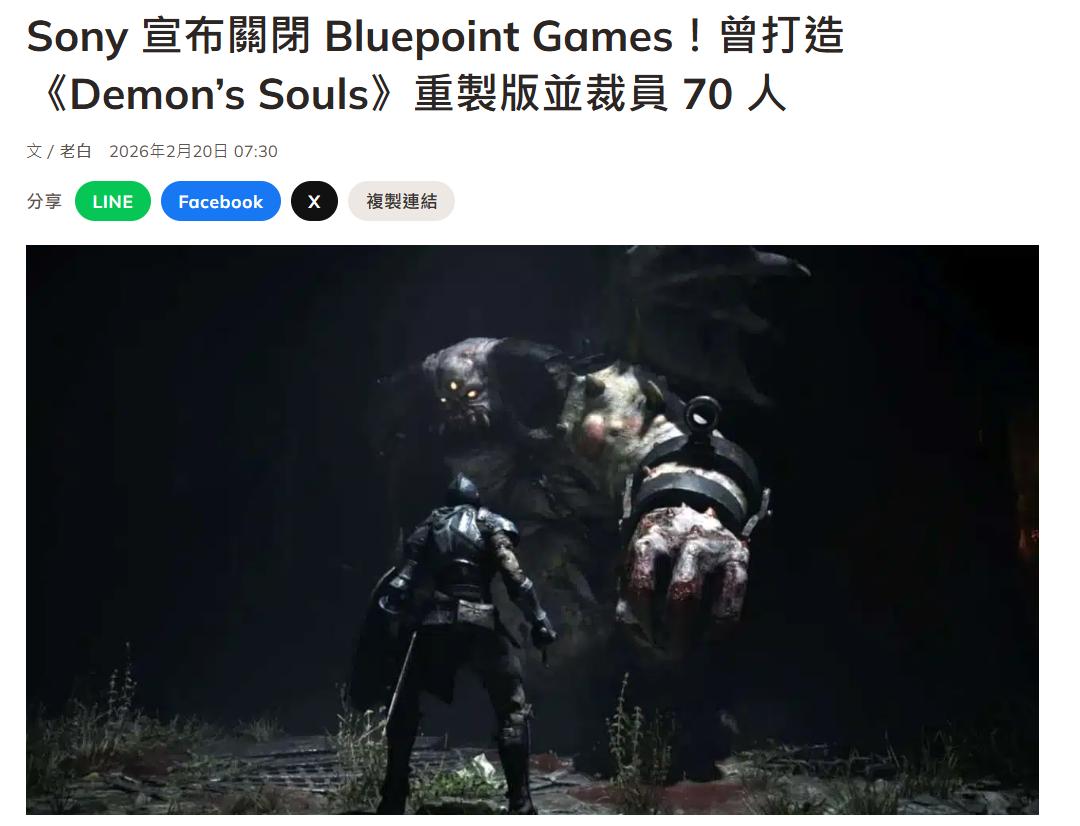
Take Bluepoint Games under Sony as an example. Its advantage lies in top-notch computer graphics and low-level code refactoring, and its track record is all about next-gen remasters of classic works.
However, after being acquired by Sony in 2021, Bluepoint was once assigned to develop a multiplayer spin-off for God of War, even though the studio had clearly stated that what they wanted to make was a Bloodborne remaster.
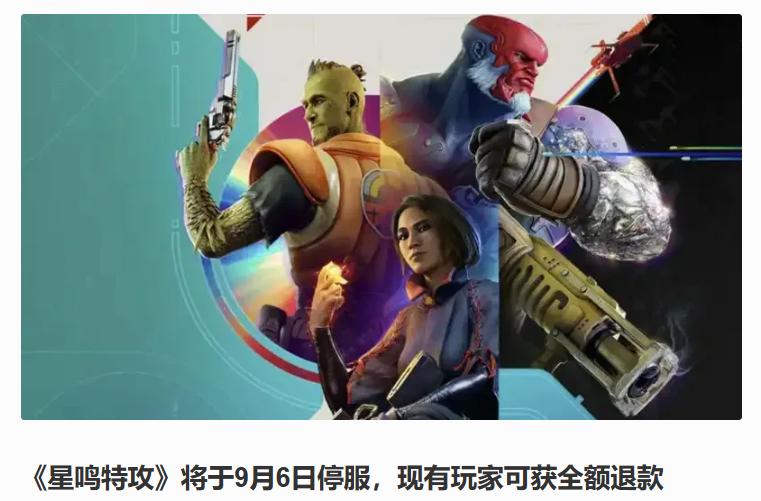
Around the same time, Firewalk Studios, which had participated in the development of big hits including *Destiny*, *Apex Legends*, *Halo* and *Call of Duty*, under Sony's same strategy, launched the infamous DEI flop *Concord*, which most of you have probably heard of: an epic game that was shut down and refunded to all players just two weeks after launch, with the studio disbanded immediately.
This incident made Sony's top management realize that something was wrong, so they urgently stopped the Bluepoint God of War project. But since a lot of money had already been invested, they did not know what new tasks to assign to Bluepoint for the time being.
So instead of solving the problem, they got rid of the problem itself, and kicked Bluepoint out of the group.
What's more ridiculous is that similar situations are very common in the gaming industry. Bluepoint and Firewalk are by no means isolated cases, and you can talk about them all night if you list them all.
Finally, there are some financial issues related to acquisitions.
For example, not long after many studios are acquired, the producer will leave directly, or the core creative team will resign together. Behind this, there are "performance bet" or "final payment agreement" clauses in some acquisition transactions.
It means that the large capital does spend hundreds of millions of dollars on the acquisition, but the money is not transferred to the producer's account all at once. Only a deposit is paid first, and the remaining final payment will be paid after subsequent performance meets the target, or after a fixed number of years are fulfilled.
This will lead to two results: one is that the task is successfully completed, the producer gets a large sum of money and can completely lie flat and no longer needs to work hard to make games;
The other is that there is no hope of meeting the target, so there is no need to stay any longer, and they will leave as soon as the agreement period ends.
No matter which situation it is, the end result is the same.
Because once the core personnel leave, the entire studio will inevitably lose its soul.
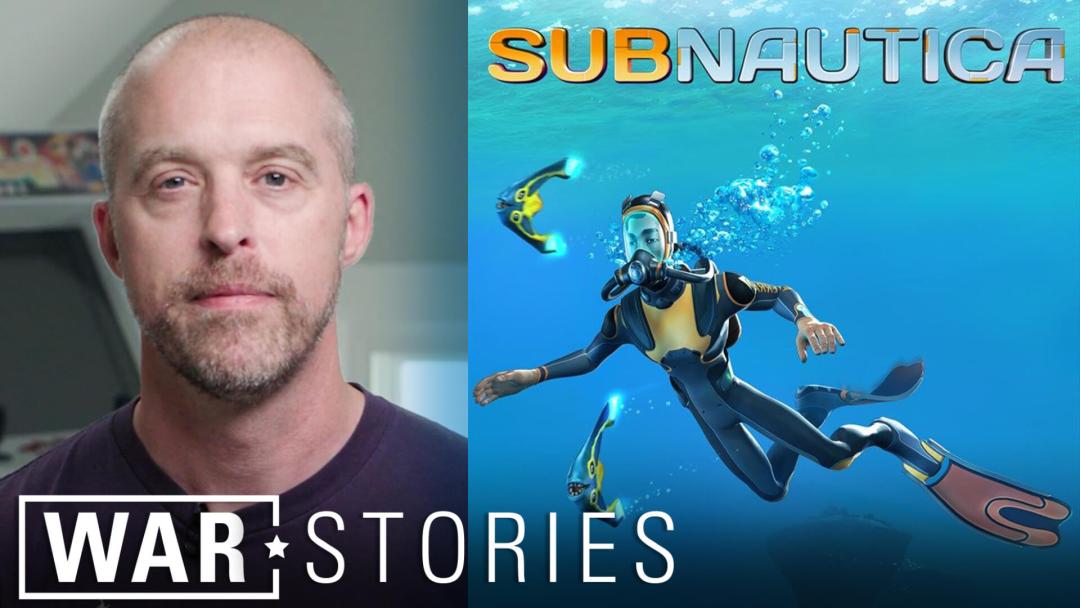
For example, Charlie Cleveland, the producer of *Subnautica*
Another point is that around the 2020 pandemic, the entire gaming industry was at the peak of acquisitions, showing a false prosperity.
Back then, large manufacturers were frantically raising prices to bring various studios under their banner, just like queuing up to grab free eggs. Industry salaries also reached a high point at that time. It didn't matter how much money they spent, as if whoever grabbed more and faster could seize the right to speak in the future gaming industry.
But after 2022, the entire bubble was ruthlessly punctured. The studios they bought at high prices back then were no different from buying at the peak of the market. Since they had already lost money, they could only shut them down immediately to stop the loss in time.
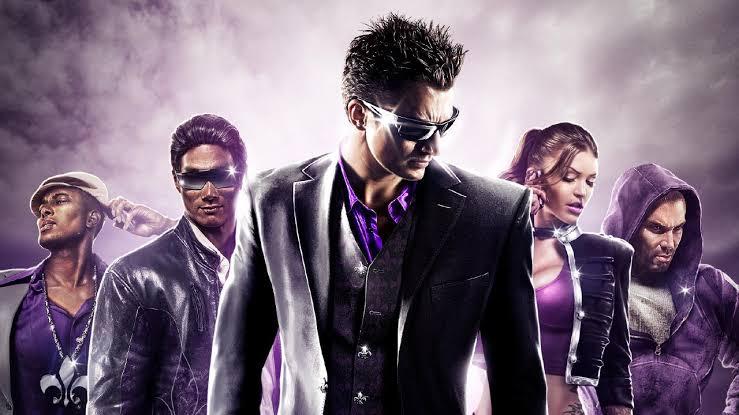
For example, Volition, the 30-year-old developer of the *Saints Row* series, was the first to be executed by Embracer Group after its new game failed to meet sales expectations.
Free Radical Design, the developer of *TimeSplitters*, Pieces Interactive, the developer of the *Alone in the Dark* remake, and Piranha Bytes, the developer of the *Gothic* series... all of them closed down one after another.
Of course, the most absurd thing is that even if nothing goes wrong and you make a pretty good game, you may not be able to escape unscathed.
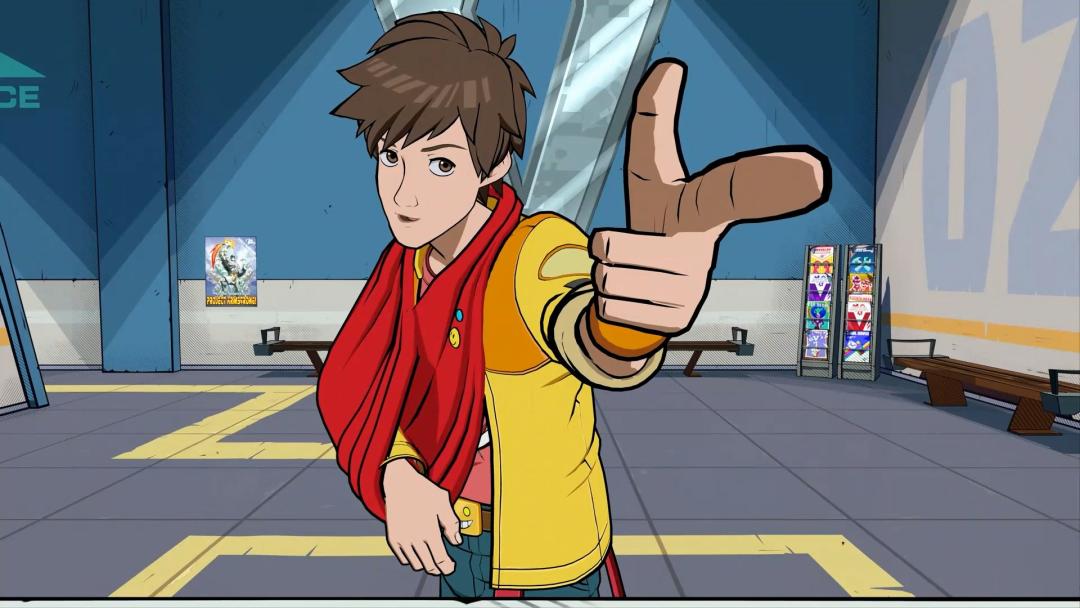
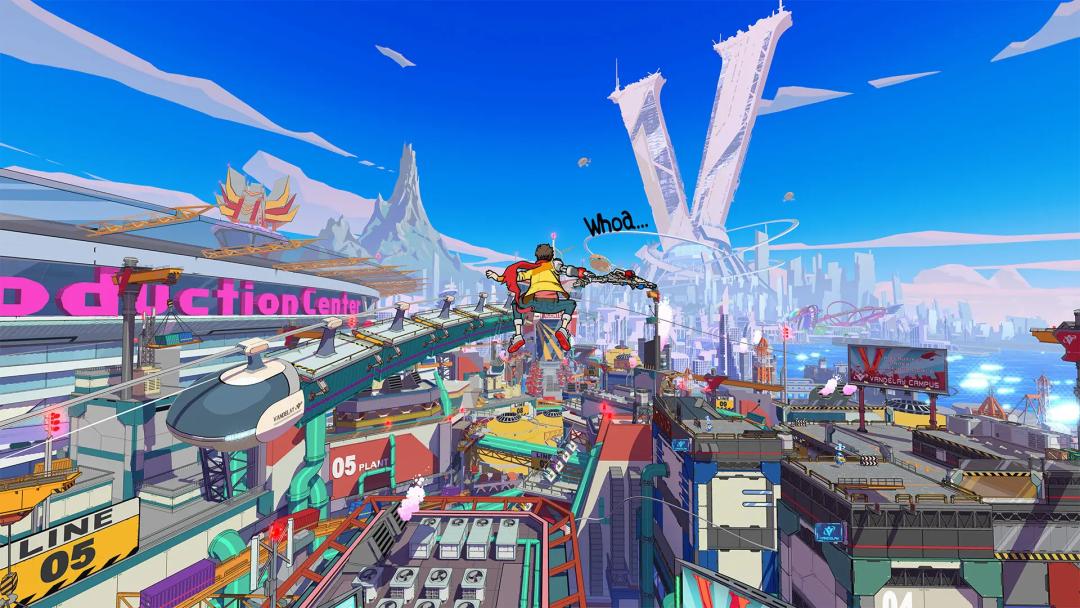
In early 2023, Tango Gameworks, founded by Shinji Mikami, launched *Hi-Fi Rush*. With its creative ACT + rhythm game design, it won countless awards and also achieved good commercial results. Counting Xbox Game Pass players, the number of players exceeded 3 million, and Microsoft executives even publicly praised it on social media.
However, in May 2024, Microsoft was severely weakened by the acquisition of Activision Blizzard, and was facing huge financial pressure. It bit the bullet and announced that it would lay off the entire teams of Tango Gameworks and Arkane Austin.
It was Krafton from South Korea that stepped in and bought Tango and its IPs to barely keep it alive.
At this point, smart readers may have figured out the pattern: all these acquisition failures are caused by big companies being self-righteous. If they only give money and don't interfere, wouldn't there be so many problems?
Coincidentally, Tencent also thought so.
In fact, in the investment circle, Tencent has always had the reputation of being a "benevolent" investor, the dream partner who gives a lot of money and rarely interferes.
But according to Cardoso's report, nearly half of the mature self-developed studios