Is Elon Musk going to use chopsticks to pick up the rocket again?
At around 6:54 a.m. Beijing time today (November 14), a rocket over 20 stories tall fell from the sky. It slowed down over the coast of Texas, USA, and almost hovered in mid-air.
On the shore, two robotic arms extended from a tall tower, which had been fully prepared to clamp the rocket.
However, the rocket did not fly to the launch tower in the end. Instead, it completed deceleration and hovering over the surface of the Gulf of Mexico. Then the engine shut down, the self-destruct system activated, and the rocket exploded into a fireball the moment it fell towards the sea surface.
These two robotic arms are commonly known as "chopsticks", while Elon Musk calls the entire tower "Mechazilla".
This rocket is the first stage of Starship numbered B22. More than 6 minutes ago, around 6:47 a.m. Beijing time, it just lifted off from this launch pad and started the 15th experimental launch of Starship.
Since October 2024, the "chopsticks" have caught the first stage of the previous generation of Starship three times. Today was supposed to be the turn of the larger and more powerful third-generation Starship.
In the previous three test flights of the third-generation Starship, the first stage had no intention of attempting recovery. This time the attempt was made, and the flight was fairly smooth: among the 33 engines, only one failed to ignite during the return firing, which did not affect the subsequent process.
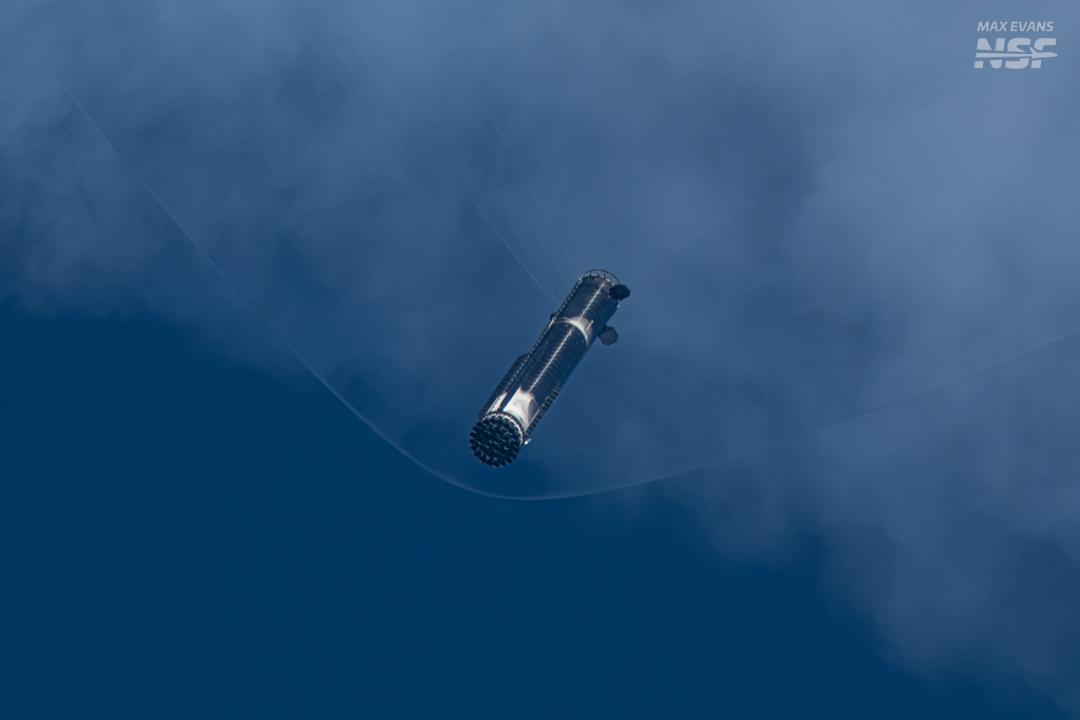
The first stage of Starship on its way back丨Max Evans / NSF
Unfortunately, it changed its route at the last minute and did not fly back to the tower.
SpaceX is still investigating why it diverted temporarily. Similar things happened before: during the 6th test flight of Starship in November 2024, the first stage also abandoned the tower catch on the way back. It was later found out that communication with the launch tower's computer was lost.
Starship is a new-generation heavy-lift launch vehicle developed by Elon Musk's SpaceX, and it is also the largest and most powerful rocket ever built by mankind so far. Musk originally built it to send humans to Mars.
Starship is 124.4 meters high, equivalent to more than 40 stories, and is stacked by two stages. The lower first stage is 72 meters high, with 33 Raptor engines installed at the bottom. The upper second stage is 52 meters high, equipped with 6 engines. The second stage itself is a spacecraft, so it is also called the Starship spacecraft.
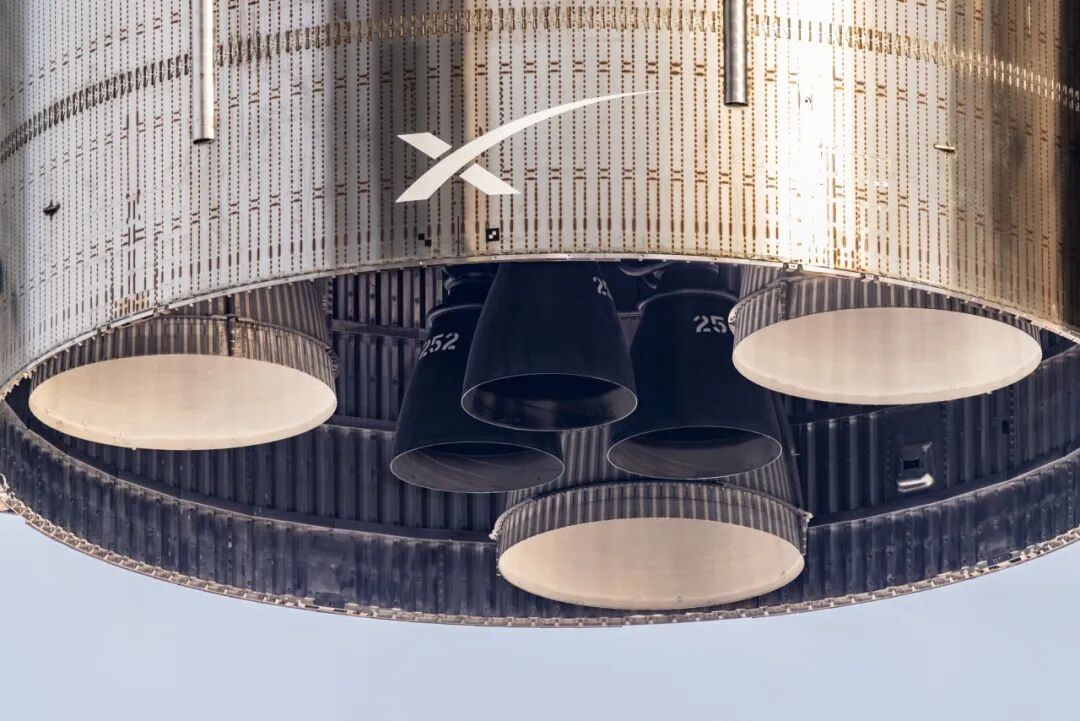
The 6 Raptor engines of Starship S42丨X user @thejackbeyer
According to the design, Starship can send more than 100 tons of cargo into low Earth orbit in one launch. SpaceX's set goal for it is that both stages can fly back and be reused repeatedly. The one that flew back this morning was the lower first stage.
On the other side, the second stage numbered S42 entered a low Earth orbit about 275 kilometers above the ground. About 35 minutes after liftoff, 26 SpaceX's third-generation Starlink satellites were pushed out one by one from the "dealer" on one side of the hull, just like dealing playing cards, and all were released after more than 40 minutes.
But none of these are the biggest highlights of this mission.
At this moment, S42 is still orbiting the Earth. It will stay in space for nearly a full day and will not return until around 5 a.m. tomorrow Beijing time. It will fly diagonally across the North American continent, return to the launch pad, and get into the pair of chopsticks that did not wait for the first stage this morning.
In the previous 14 flights, the spacecraft either disintegrated halfway or fell into the sea, and never flew back to the launch site. This will be the first time Starship attempts to recover the spacecraft using the launch pad. Musk's previous judgment was that the probability of success was more than half.
According to the original plan, this was supposed to be the first time in human history that both stages of an orbital rocket were recovered in one flight. After the first stage fell into the sea, this goal can only be left to the next attempt.
But tomorrow morning's catch is still a first: no one has ever used a launch tower to catch a rocket second stage returning from orbit.
If successful, both the first and second stages of Starship will have been caught by the chopsticks. It is only one last step away from a truly fully reusable rocket.
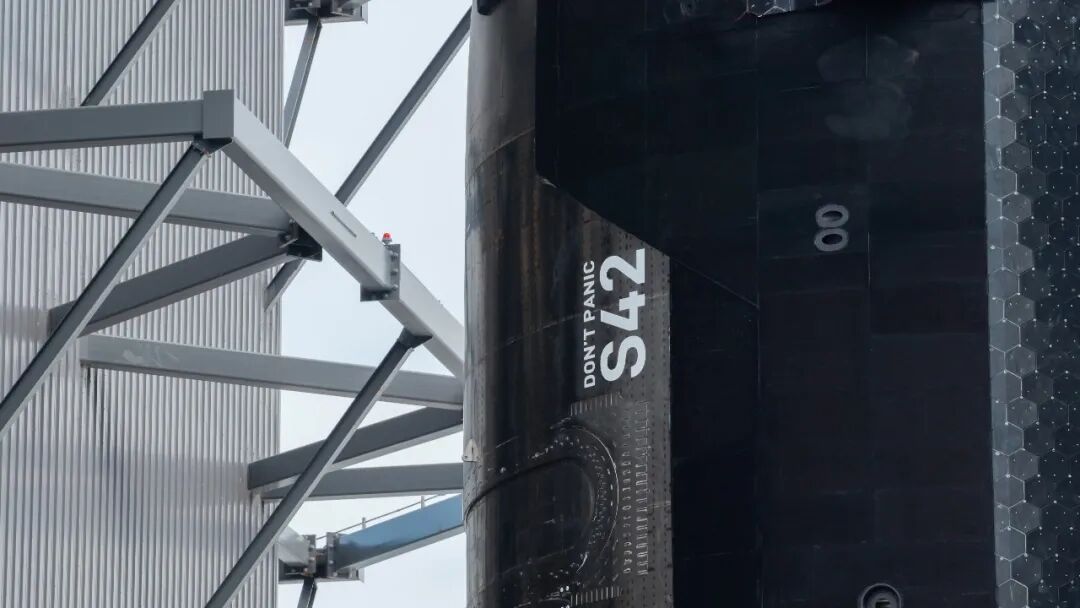
The SpaceX team specially sprayed a line of words next to the serial number of Starship S42: "Don’t panic", which is a classic line from the science fiction novel *The Hitchhiker's Guide to the Galaxy*, to cheer for Starship丨SpaceX
The spacecraft is still flying in the sky
After releasing the satellites, S42 is in no hurry to return.
According to the original plan, the ground needs this period of time to make room: the caught first stage needs to be unloaded and moved away, and the chopsticks also need to be inspected and reset to be ready to catch the second stage. Today the first stage fell into the sea, so this step is saved, but the spacecraft still needs to stay in space for nearly a full day as planned.
The spacecraft itself is also undergoing tests. Nearly 22 hours of in-orbit flight is the longest duration of Starship so far, which poses unprecedented challenges to the battery, spacecraft attitude control and propellant preservation.
There is still propellant for the return journey left in the tank, which is liquid oxygen and liquid methane below minus 160 degrees Celsius. Under direct sunlight, they will inevitably evaporate due to heating.
The belly of the spacecraft is covered with black heat-resistant tiles, which are originally designed to withstand high temperatures during re-entry. Now it has to rotate slowly to face the heat-resistant tiles towards the sun, which is equivalent to propping up a sunshade for itself.
Flying for such a long time this time is also making up for the lesson that was not completed in the last test flight.
During the 14th launch on September 28, Starship entered orbit for the first time and became a veritable launch vehicle. However, one engine of the second stage failed on the way of ascent. The original plan was to fly in orbit for nearly 9 hours, but it only flew for about 3 hours before deorbiting in advance and splashing down in the Pacific Ocean.
In the future, for missions to the Moon and in-orbit refueling, the Starship spacecraft must be able to stay in orbit for a long time, a capability that has not yet been fully verified.
According to the plan, around 4:23 a.m. Beijing time on November 15, S42 will ignite to deorbit, and will be caught by the chopsticks in less than an hour afterwards.
The last hour tomorrow is the most difficult part of the entire test flight.
High-temperature ablation, pitch-over maneuver, and needle-threading precision
When returning home, the journey for the first stage is much easier. This morning, B22 completed this entire journey, except that the destination was changed to the sea surface.
When separating from the spacecraft, the first stage is at an altitude of about 70 kilometers, with a speed of only 1.5 to 2 kilometers per second. It only takes a few minutes from separation to being caught. The altitude is low, the speed is slow, and the distance is short.
The second stage has to return from the orbital speed of about 7.8 kilometers per second, which is about 25 times the speed of sound, and carries more than ten to twenty times the kinetic energy of the first stage. To safely dissipate so much energy, it has to pass three hurdles in a row.
The first hurdle is high-temperature ablation. After deorbiting, the spacecraft faces down with its belly covered with heat-resistant tiles, and re-enters the atmosphere from space. The air in front is violently compressed, burning into glowing high-temperature gas (plasma) that wraps the entire windward side of the spacecraft, with the hottest point reaching 1400 to 1650 degrees Celsius.
Nearly 20,000 hexagonal heat-resistant tiles, together with all the rotating shafts and sealing joints, are all immersed in this layer of flame. Starship has gone through multiple re-entry tests, and surviving high temperatures is no longer a problem. The key this time is that after the high-temperature baking, the components that will be caught by the chopsticks must remain intact.
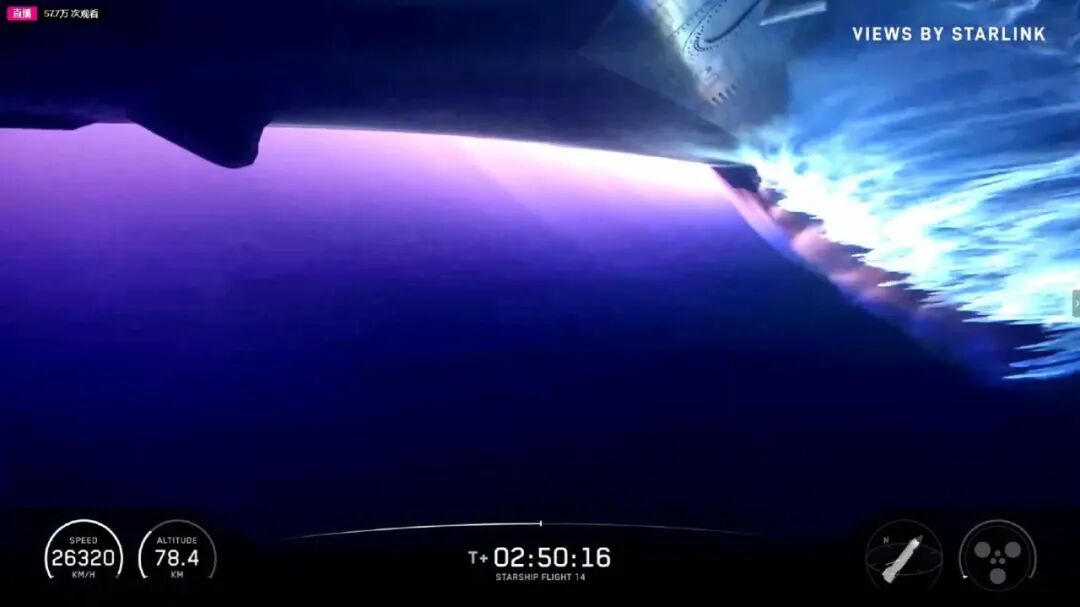
The previous Starship spacecraft S41 was completely surrounded by high-temperature plasma when re-entering the atmosphere丨SpaceX
The second hurdle is the pitch-over maneuver. The first stage returns vertically, but the second stage returns horizontally. It faces down with its belly, glides thousands of kilometers in the atmosphere relying on two pairs of small movable wings (flaps) at the front and rear of the hull, flies diagonally across the North American continent, consumes speed while correcting its heading.
To minimize the use of braking fuel, it will stay horizontal until it is only a few kilometers away from the tower and hundreds of meters above the ground, then quickly pitch from horizontal to vertical in a very short time, and ignite 3 engines at the same time. This is the so-called "dragon tail flick" maneuver.
This maneuver is the most accident-prone step in the entire process. If any of the flaps, engines, or navigation software lags even half a beat, the spacecraft will not enter the capture range of the chopsticks.
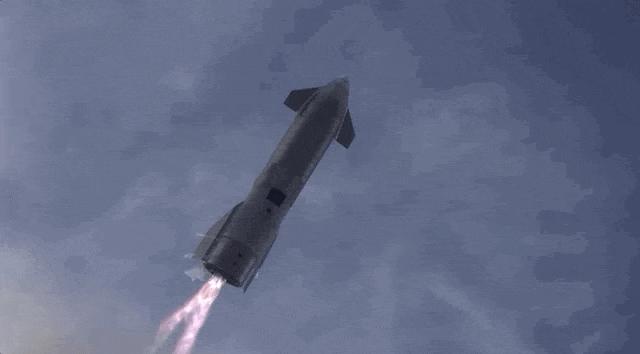
The dragon tail flick process in previous Starship test flights丨SpaceX
The third hurdle is the needle-threading precision. The chopsticks close to clamp two dedicated lifting load points on the hull. The hull is 52 meters high, but these two points are very small, leaving very little margin for errors in position, speed and attitude.
For sea splashdown, a large sea area can be designated, and a smooth landing on the sea counts as success. But the chopsticks cannot: their movable range is limited, and the launch tower is the most expensive fixed asset of the entire base. If the spacecraft hits it with residual propellant, the consequences will be disastrous.
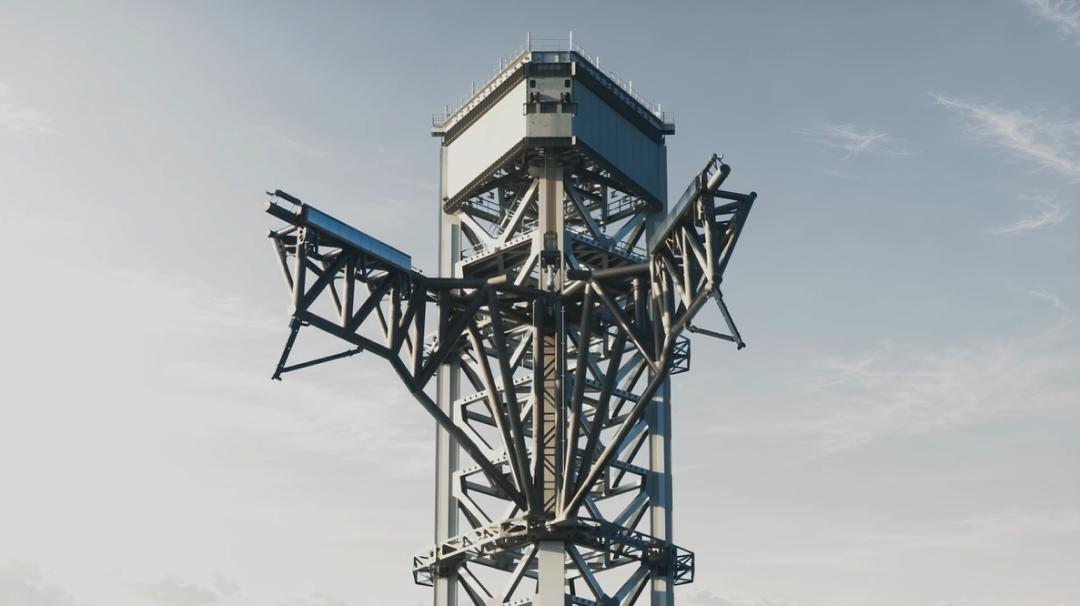
Animation of the capture robotic arms on the launch pad, commonly known as "chopsticks", which serves as both a recovery mechanism and a lifting mechanism for the rocket body丨SpaceX
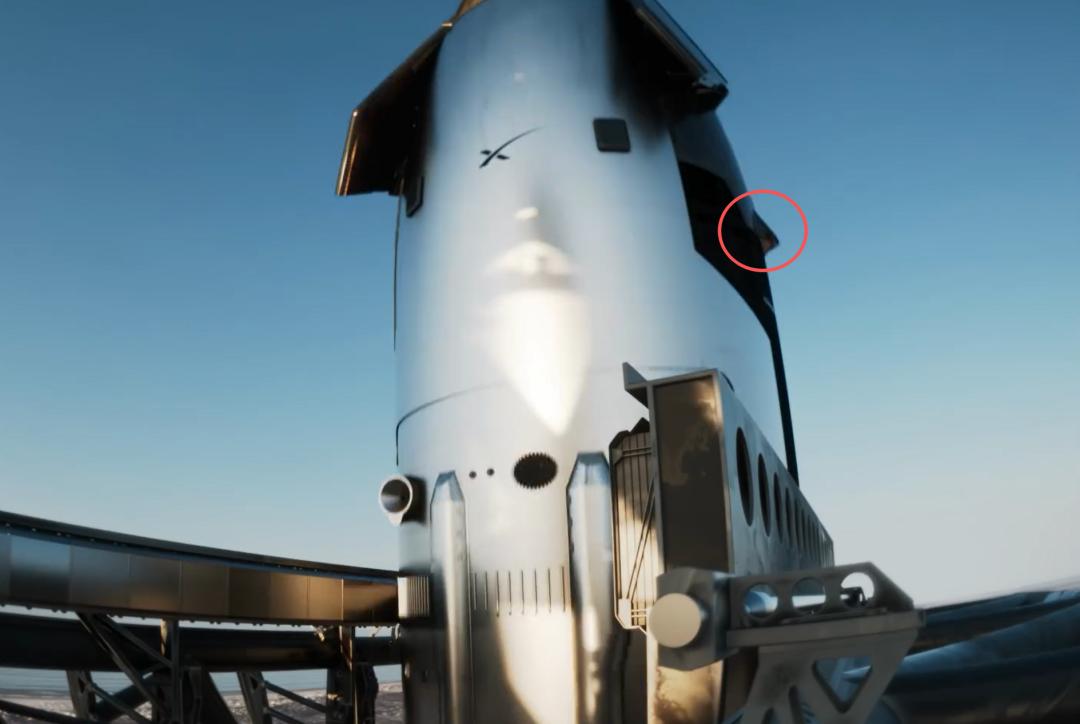
The capture points on the Starship second stage are very small, and the accuracy requirements are extremely strict丨SpaceX
After passing these three hurdles, it comes to the last few tens of seconds. After standing upright, S42 slowly falls into the range of the chopsticks, shuts down one engine, and uses the remaining two to fine-tune its position. Only one engine is left running when approaching hover. The moment the chopsticks close and hold the spacecraft, the last engine shuts down.
SpaceX has prepared backup plans for every step.
If a problem occurs during ascent, the spacecraft will fall down before entering orbit and land in the Indian Ocean. This step has been safely passed this morning.
If a problem is found in orbit, it will deorbit in advance and land in the sea near Hawaii, USA or west of Chile. The 14th launch returned in this way.
If a problem occurs before re-entry, the spacecraft can be actively disintegrated and burned as much as possible in the atmosphere. But its route crosses North America, and there is a risk of debris falling on land, which must be avoided as much as possible.
In the final stage, as long as either the spacecraft or the launch tower is in abnormal condition, the pitch-over maneuver and ignition will be canceled, and the spacecraft will be allowed to fall directly into the Gulf of Mexico east of the launch pad.
The first stage this morning used the same backup plan: rather than giving up the tower catch and falling into the sea, than risking damage to the launch tower.
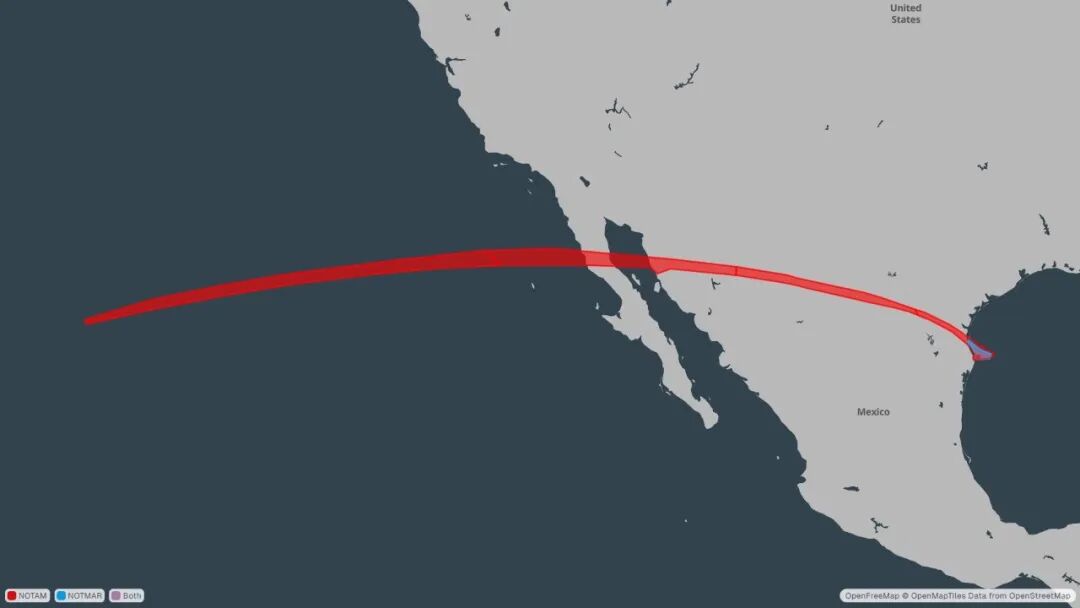
The red area is the re-entry safety zone for this mission, crossing the southern part of the North American continent diagonally; the blue area at the end is the sea crash zone after recovery is canceled丨X user @SpaceNotices
Second stage recovery is the real target
Going to such great lengths and taking such big risks just to catch a spacecraft, SpaceX has its own calculations.
Almost all rockets are disposable. In more than 7000 space launches in the past, the vast majority of rocket bodies and engines are complex, sophisticated and expensive, but they are thrown away as garbage after only working for more than ten minutes.
Falcon 9 is SpaceX's current main rocket. Its first stage has long been able to fly back and be reused, and the technology is very mature. Many rocket companies around the world are imitating its design. Few people have tried second stage recovery because it is too difficult.