Moyu Travel has suspended operations, have travel buddies now completely fallen out of favor and become widely rejected?
01
This week, Moyu Travel, a platform focusing on peer group travel for young people, has suddenly released abnormal news.
Many users reported that their mobile application frequently throws errors when logging in, and the page prompts that the server address cannot be parsed. Meanwhile, the official website is also in an inaccessible paralyzed state.
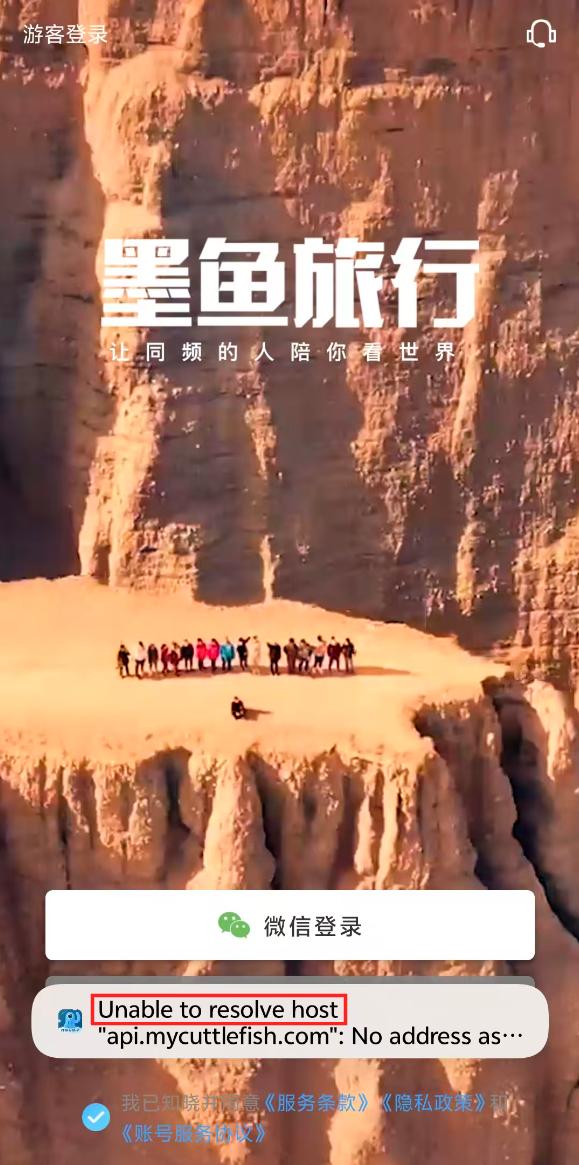
Public information shows that Shanghai Moyu Travel Agency Co., Ltd. was founded in November 2019. Under the slogan of "let people with the same vibe accompany you to see the world", the platform focuses on getting to know travel companions before departure and freely forming groups, sharing group tours and carpooling during the trip.
As a niche platform that entered the travel buddy track at a relatively early stage, the current signs of shutdown of Moyu Travel have triggered a lot of speculation from the outside world about its capital chain.
Sorting out industrial and commercial information through Qichacha, we can find that the capital chain behind Moyu Travel has long lit up a red warning light.
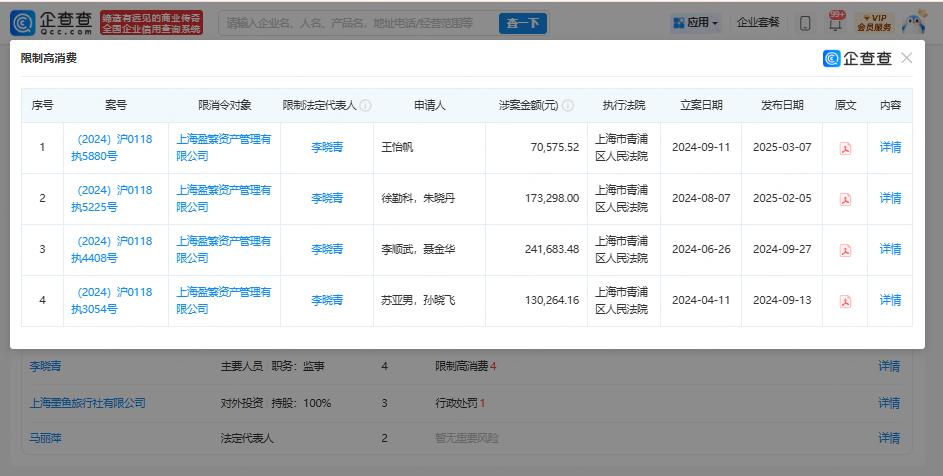
On September 23 this year, Ma Liping, the legal representative of the company, pledged 8.25 million yuan of equity held in Shanghai Shanzhen Culture Media Co., Ltd., its controlling parent company. Meanwhile, Li Xiaoqing, the supervisor of Shanzhen Media, has 4 high-consumption restriction orders under her name.
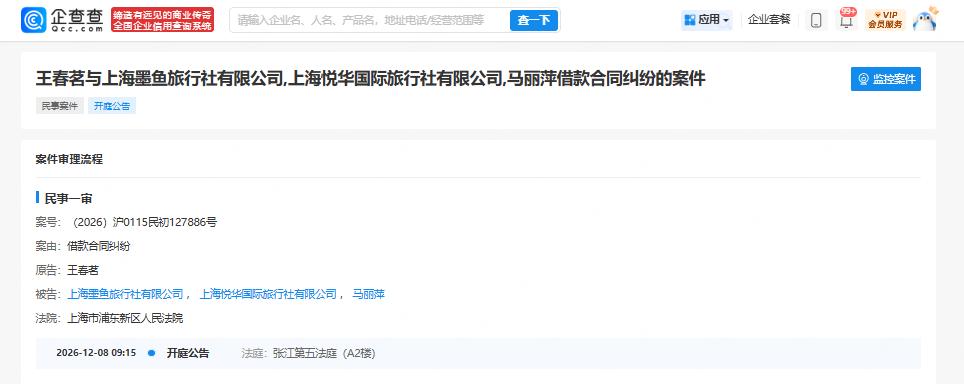
Not only that, Moyu Travel and Ma Liping have also been sued over a loan contract dispute, and the related case will be heard at the People's Court of Pudong New Area, Shanghai on December 8 this year.
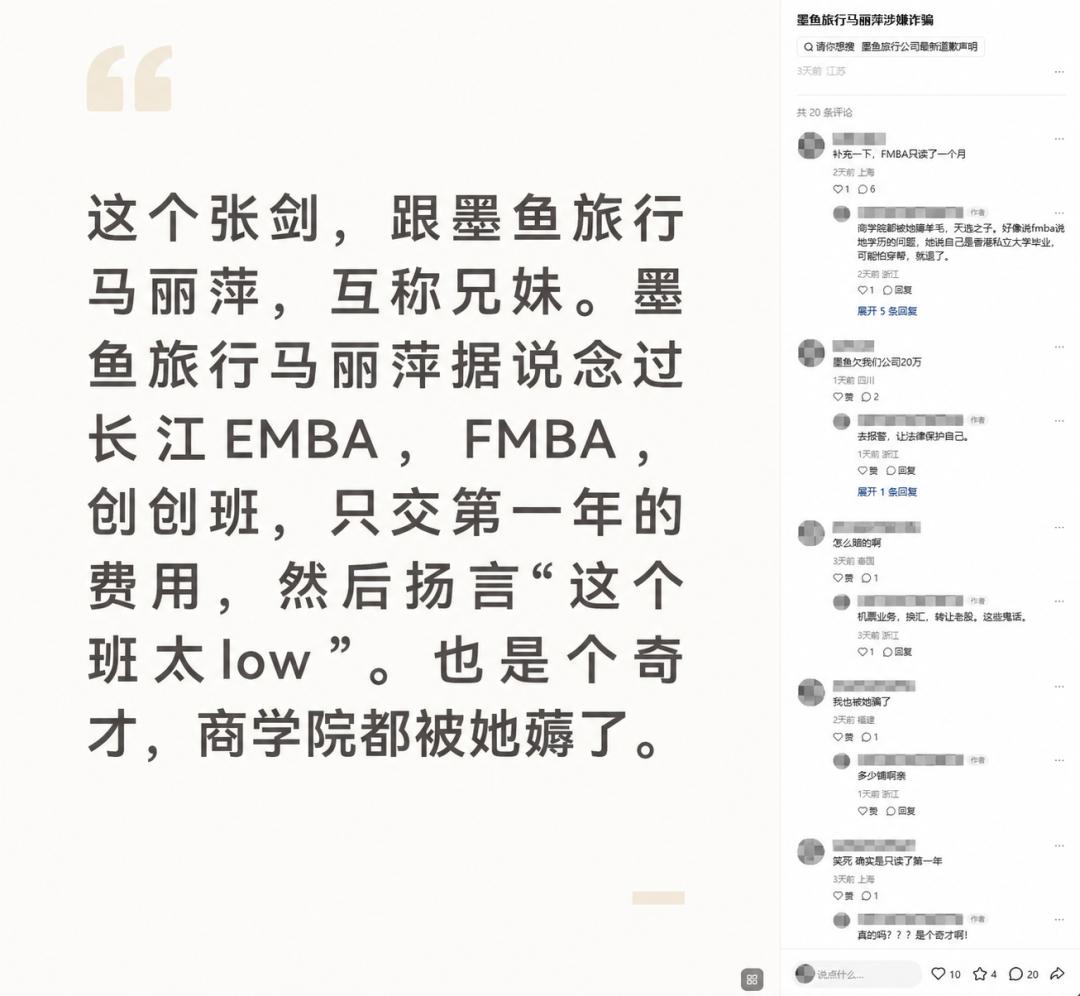
On social platforms such as Xiaohongshu, accusations against Ma Liping for defaulting on 200,000 yuan of payment to suppliers and even incurring debts under the name of air ticket business and foreign exchange exchange have been spreading widely. Some netizens even specially registered debt-collecting accounts to post condemnations, and also exposed past events of unclear authenticity, such as her only paying the first year's tuition when she studied in business school in her early years.
It is worth mentioning that Travel Daily has exclusively tracked this company twice before.
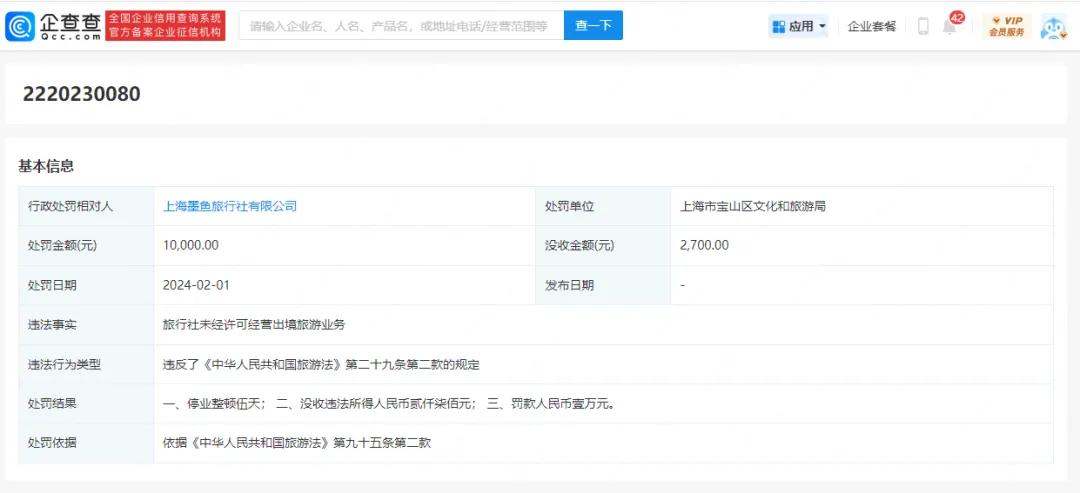
In November 2023, we published the article "Is Moyu Travel, which raised hundreds of millions of yuan in financing, a gathering place for unlicensed tour guides?" focusing on the recruitment of Moyu captains and group operation qualifications. On February 29 the following year, we published "Moyu Travel was ordered to suspend business, how can the travel buddy model continue?", further reporting that the Baoshan District Culture and Tourism Bureau of Shanghai once ordered it to suspend production and business operations.
The plight of travel buddy platforms mired in trouble reflects the overall collapse of the entire folk peer travel ecosystem.
Since the beginning of this year, full-screen accusations of being scammed on social media have replaced the peaceful landscape photos of previous years, and spontaneous folk peer travel has become a disaster area where professional shills hunt individual travelers.
A common scam is to use the name of traveling together as a cover to induce the other party to sign up for a designated travel group.
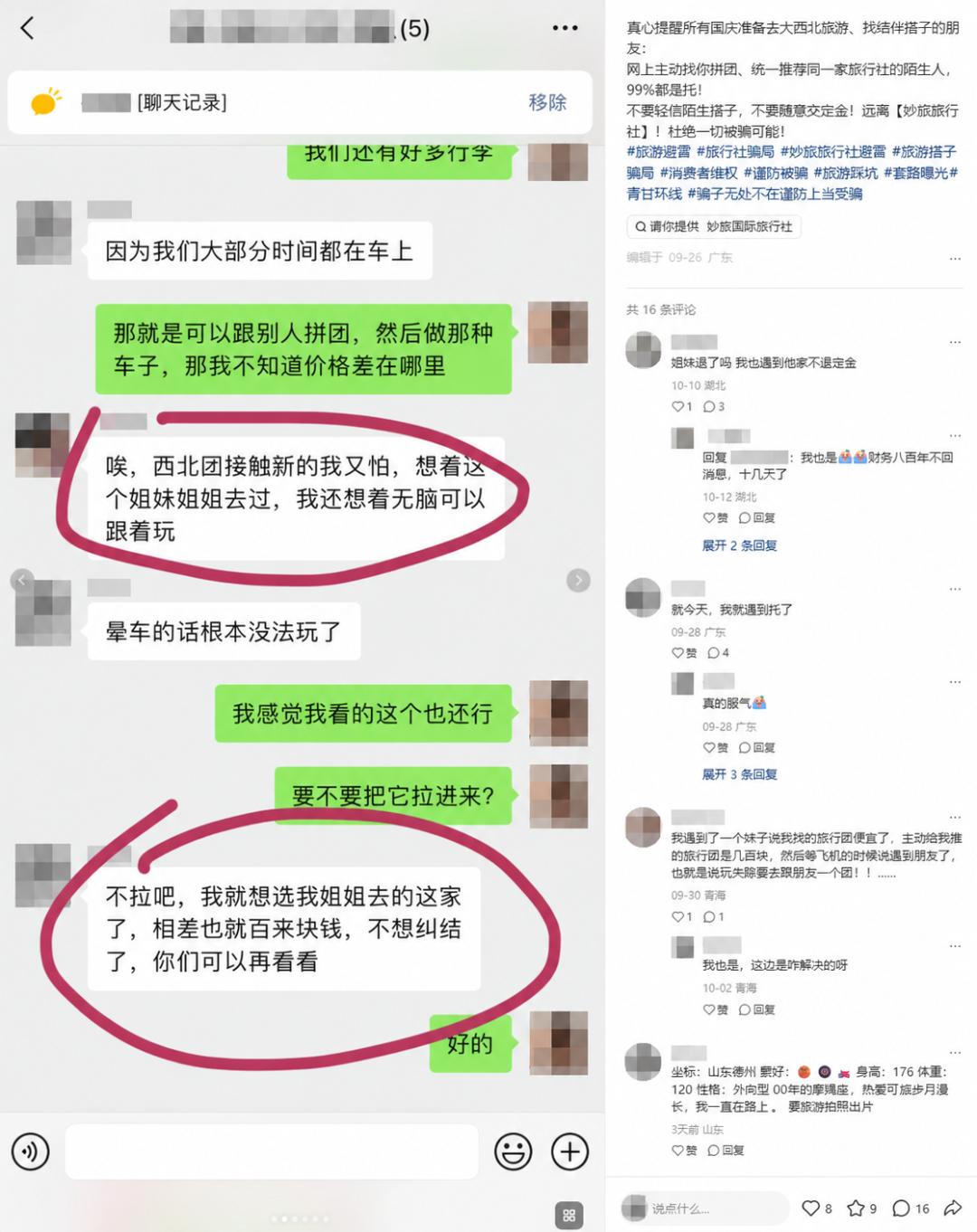
For example, at the end of September this year, a tourist from Guangdong exposed a travel agency in Qinghai on Xiaohongshu, saying that after he posted to find travel companions, he was pulled into a group by 3 accounts pretending to be ordinary tourists, who strongly recommended this agency to him.
After the victim paid the deposit and signed the contract, those enthusiastic travel buddies all went missing collectively under excuses such as their grandmother falling at home before departure, and the travel agency then firmly refused to refund the deposit.
The rampant chaos on social platforms soon aroused the vigilance and attention of authoritative media.
In mid-October, People's Daily Client published a comment analyzing the deterioration of travel buddy socialization. Shangyou News then sorted out the gray industrial chain behind it, pointing out that lawbreakers are using travel lead generation and wine shill rhetoric to defraud individual travelers of their shared accommodation fees.
To be honest, some travel buddies are so considerate that it is unbelievable.
Some time ago, Wang Jingshu, who was reported by Polar Day, once received a detailed item list made by her travel buddy. The other party asked about her food allergies, knew she liked heavy-flavored food, and said she bought spicy gluten and planned to share it in the hotel.
Later, she arrived in Xining and waited until late at night without meeting the other party. To arrange her vacation, she used five days of annual leave and started preparing one month in advance, but finally ended up staying alone in a hotel in a strange city.
Not only domestic peer travel has been occupied by travel agency trolls, but travel buddies for outbound travel also hide capital fraud traps.
In August this year, netizen hade disclosed her experience of being scammed when looking for a travel buddy for the Seoul National Day trip on Xiaohongshu. The scammer first used an incomplete air ticket screenshot that did not show ticket issuance completion to gain trust, then repeatedly encouraged her to give up the hotel and book homestays in Seoul and Busan instead.
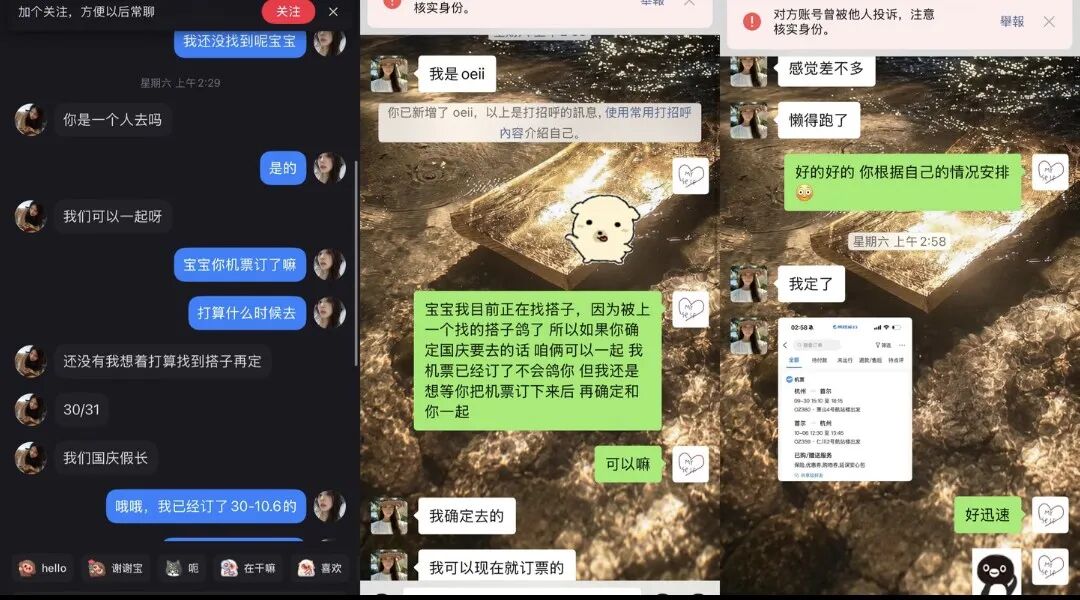
When the victim was about to transfer money to share the accommodation fee, both WeChat and Alipay popped up interception warnings of risk users restricting payment collection. The scammer then asked for bank card transfer, and bit back and blocked the victim after being asked about their real name.
In the post, she listed the suspicious points one by one, trying to figure out what kind of person she met. The wonderful outbound travel itinerary had not even started, and finding a travel buddy had turned into a detective verification process just like Conan's reasoning.
What is more impressive is the comments under the screenshots. Under these scam warning posts, there are even people seriously looking for travel companions.
But when seeing such enthusiastic invitations again, it is inevitable to make people suspicious: does the other party really lack a travel companion, or is just waiting for them to take the bait.
02
The shutdown of Moyu Travel is not an isolated case. The entire travel buddy track has long been riddled with holes after being infiltrated by gray industries.
For many people who are too lazy to make travel strategies, finding a travel buddy saves money and effort, they can just follow passively and act as an accessory that only provides emotional value.
This gives scammers an opportunity. They only need to chat about strategies for a few days, complain about high-priced hotels along the way, and then guide the victim to a designated low-quality travel group.
Especially when the other party takes the initiative to help bargain, it is hard to imagine that the person sitting on the other end of the chat box may be waiting to get a commission from the tour fee.
An investigation by China News Weekly revealed the batch operation behind this. A practitioner disclosed that travel agencies can operate hundreds of accounts, with division of labor in all links from creating content, replying to private messages, to guiding tourists to WeChat. The industry calls this "hundred-push group".
In this case, the patience that tourists feel is counted as customer acquisition input on the operator's ledger. As long as the order can be finally closed, the time spent chatting before has commercial value, which can be called a customized pig butchering scam.
The Qinghai-Gansu Grand Loop and long-distance routes in Xinjiang are especially suitable for this kind of operation. If traveling alone, the long-distance chartered car fee needs to be shared, and unfamiliar road conditions make many people dare not drive by themselves. Having a companion makes people feel much more at ease.

Xinjiang / Travel Daily on-site shooting
When the air tickets are bought and annual leave is approved, no one can easily change their plans.
When arriving at the destination and finding that the travel buddy has broken the promise, it is not cost-effective to look for a new reception party, and canceling the original arrangement may also cause losses. Continuing to finish the trip has become a helpless choice for many young people who have fallen into travel buddy scams.
In fact, jumping out of the partial perspective of the cultural tourism industry, the rapid corruption of travel buddies on Chinese Internet is a recurrence of the fate of stranger socialization.
Looking back at the development history of Chinese Internet in the past ten years, almost all communities that try to connect strangers purely through interests can hardly escape the fate of going bad.
Weak-relationship socialization without strong constraints often slides to the edge of out of control under the dual pull of commercial monetization and human nature.
Travel buddies are not a new thing. In the early years, the poor travel group on Douban and the peer travel section on Tieba also had a short golden age.
At that time, the threshold of long-distance travel was quite high, and most netizens who could post on forums to find companions were real backpackers. Everyone gathered in the same off-road vehicle to share fuel costs out of yearning for distant places, and the slow-paced text and image communication filtered out quick-success opportunists invisibly.
However, under the pressure of soaring user scale and commercial monetization, pure interest matching soon gave way to more primitive hormonal impulses.
Over time, peer travel has gained a tacit ambiguous color in the public's mind, and the pure friendship originally advocated has long been marginalized.
In the public traffic pool where the breach of contract cost is almost zero, stranger connections without commercial contract guarantee are destined to be extremely fragile, and easily fall into the gray zone harvested by black and gray industries.
03
The collapse of trust in wild travel buddies has not eliminated young people's real desire to travel together.
People have begun to realize that instead of gambling on human nature on social platforms, it is better to give sense of security to institutions bound by commercial contracts.
Keen online travel platforms have long sensed the change of trend. Open the group tour page of Ctrip or Fliggy, and you can see a wide range of private group and small group sharing products targeting 2 to 8 people.
Tourists can still share carfare with peers, but even if someone quits the group temporarily, the supply chain behind will guarantee the departure, and there will be no dilemma that all travel buddies disappear collectively before departure.
Of course, sense of security and hassle-free experience need to be paid for. The quotation of standardized commercial small groups is usually 20% to 30% higher than pure self-guided travel.
It is worth mentioning that when ordinary individual travelers retreat to formal platforms to seek basic guarantees, the peer travel market at the top of the pyramid has evolved into a completely different business form.
In the past two years, high-priced study tours led by well-known scholars or business influencers have quietly become popular among high-net-worth people.
For example, Liu Run, a business consultant, recently launched a South America inspection tour, with a single person fee as high as more than 100,000 yuan, which still attracted many business owners to sign up to travel together.
Similar celebrity-led models are not rare in the financial and cultural circles. Essentially, they move the past offline private board meetings to cross-border trips.
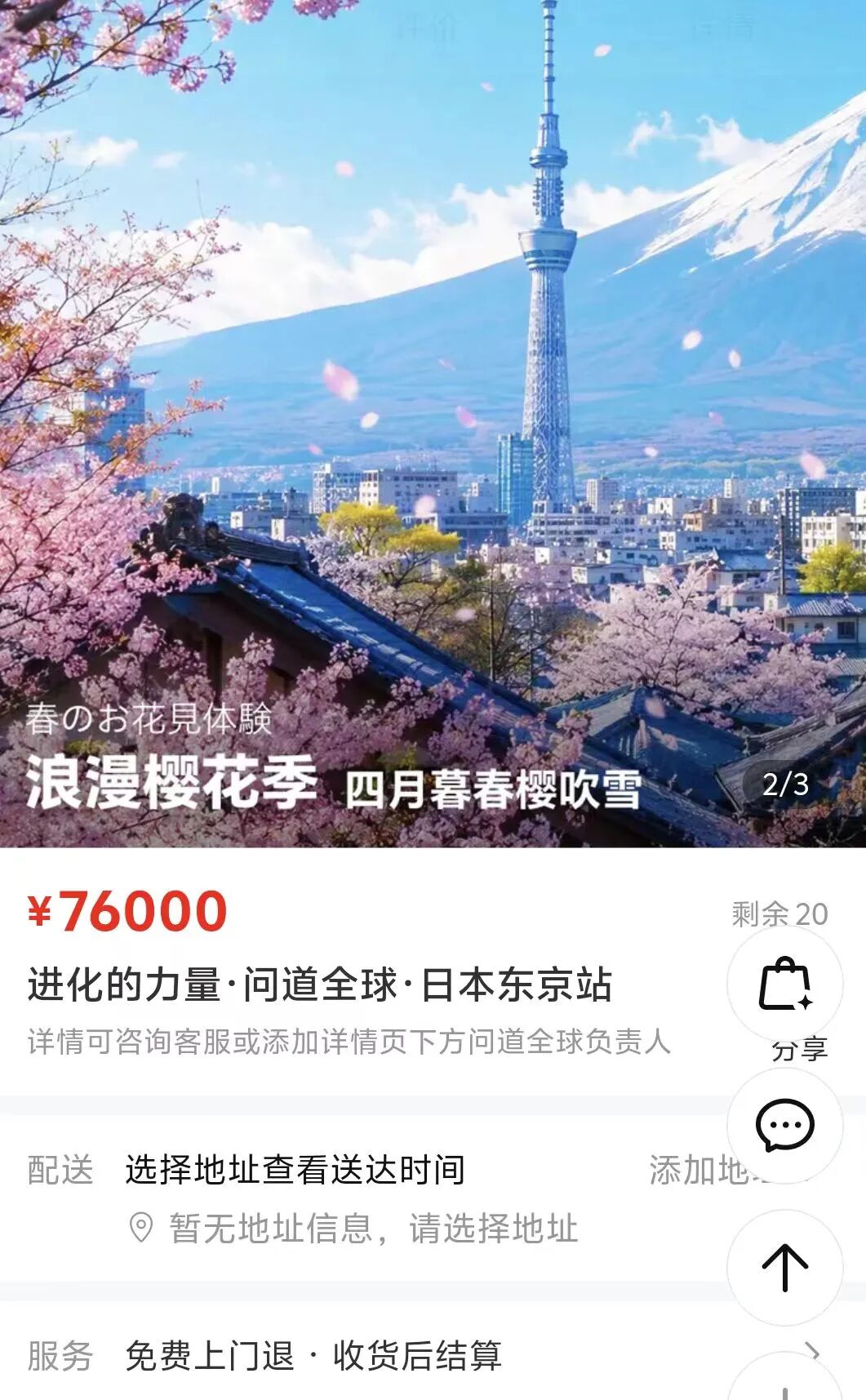
Liu Run's Japan tour does not include air tickets and visas (double occupancy four-star standard room)
The six-figure tour fee obviously goes beyond the scope of ordinary sightseeing, and is more like an asset and cognition filter set up by the organizer.
What registrants pay a large sum of