Will this non-provincial capital city in China's central and western regions make a comeback to the "Top 50" list?
The ranking of China's top 50 cities by economic aggregate is released, and Ordos, the "coal capital" in northwest China, is back at the table this time.
In the first three quarters, Ordos' regional GDP reached 483.71 billion yuan, up 5.6% year on year at constant prices, leading the growth rate of all 12 leagues and cities in Inner Mongolia Autonomous Region.
At present, across the country, Ordos' GDP has surpassed that of Harbin (483.13 billion yuan) and Nanning (478.787 billion yuan), ranking 48th nationwide.
Where does the increment come from? From the perspective of industrial structure, the growth clearly points to the industrial sector: in the first three quarters, the added value of Ordos' three industries increased by 3.6%, 6.7% and 3% respectively, and the driving effect of the industrial engine is obvious.
Further focusing on the segmented data, the simultaneous rise in both volume and price of the coal industry is the key boost for its return to the list this time. As the prefecture-level city with the largest raw coal output in China, Ordos owns more than 260 billion tons of coal reserves, accounting for one fifth of the national total.
Now, as the year-end performance submission is approaching, the competition for positions at the bottom of the top 50 economic cities remains fierce. Facing "old rivals" such as Yichang and Luoyang, whether Ordos can secure its position depends not only on the release rhythm of coal prices and production capacity in the fourth quarter, but also on whether non-coal industries can take over in time.
Overtaking
Ordos was once known by the alias of "sheep, coal, earth and gas", and the coal industry once accounted for nearly 70% of the added value of industries above designated size.
In 2025, Inner Mongolia's annual coal output reached 1.287 billion tons, ranking the second in China, second only to Shanxi. Among them, Ordos, the largest coal-producing city in China, produced 889 million tons of coal, accounting for 69% of the region's total output.
However, this did not bring greater economic increment to Ordos -- in 2025, the global coal price fluctuated and went down, and the average price of commercial coal decreased by 14.2%.
Affected by this, Ordos achieved a GDP of 612.22 billion yuan in 2025. Although the actual growth was 5.1%, 0.1 percentage points higher than the national average growth rate, the nominal growth rate was negative. Compared with 636.3 billion yuan in 2024, the GDP decreased by 24.08 billion yuan, falling out of the top 50 of national urban GDP.
Entering 2026, the central level of coal prices has rebounded, and Ordos has once again ushered in a window period of "prospering due to coal".
In the first three quarters, the city's raw coal output increased by 6.7% year on year. Coupled with the surge in global coal prices due to tight supply and demand, the coal industry achieved simultaneous rise in both volume and price, driving the added value of the mining industry to increase by 8.2% year on year, boosting the added value of industries above designated size in the whole city to increase by 7.7% year on year. The industry has become the core engine of steady economic growth.
Reflected in the total economic volume, in the first three quarters, Ordos achieved a GDP of 483.71 billion yuan, an increase of 46.92 billion yuan compared with 436.79 billion yuan in the same period of 2025, with a nominal growth rate of 10.74%, leading the whole Inner Mongolia Autonomous Region, and returning to the top 50 of national urban GDP in one fell swoop.
This growth rhythm that fluctuates with coal prices is not unique to Ordos.
Yulin, which is also in the first echelon of coal output, achieved a GDP of 613.401 billion yuan in the first three quarters, an increase of 47.99 billion yuan compared with 565.411 billion yuan in the first three quarters of 2025. It also achieved high nominal growth, and the driving logic of the secondary industry and industry is exactly the same as that of Ordos.
However, the growth supported by market conditions is fragile after all. Ordos obviously does not want to always be a "passive acceptor" of coal prices. Its 2026 government work report clearly points out that during the "15th Five-Year Plan" period, the growth range of coal output is limited, and there is uncertainty in price recovery.
Breakthrough
The direction of breaking the situation lies in accelerating the opening up of the "second growth curve".
Facing the "15th Five-Year Plan", Ordos proposes to build "four world-class industries": world-class energy industry, world-class modern coal chemical industry, world-class new energy equipment manufacturing industry and world-class cashmere industry.
Among them, the energy industry is the "foundation" of Ordos' industry, and the modern coal chemical industry is an unavoidable lesson for this resource-based city's industrial diversification transformation.
The transformation code of modern coal chemical industry is to promote the upgrading of coal from "fuel" to "raw material". In fact, some production capacities have been released steadily. In the first three quarters of this year, coal chemical products such as refined methanol and polypropylene in Ordos increased simultaneously, becoming new production capacities supporting industrial growth in addition to raw coal.
Looking forward to the fourth quarter, the construction progress of Rongxin Olefin Project, a key annual project of the city with a total investment of 9.83 billion yuan, has exceeded 90%, and it is expected to be put into operation within the year, adding 800,000 tons/year of new olefin production capacity to the whole city.
In order to further extend the modern coal chemical industry chain, according to the plan, Ordos will also promote the extension of coal chemical industry to the downstream, develop new materials, special fuels and high-end chemicals, build and strengthen the pilot test base of modern coal chemical industry, and explore the coupled development of synthetic biology and modern coal chemical industry.
However, if Ordos wants to completely get rid of its dependence on coal and obtain more stable anti-cyclical ability, it needs to strengthen the diversified support of non-coal industries in addition to developing the coal chemical industry.
Among the "four world-class industries", the new energy equipment manufacturing industry based on the endowment of "wind and solar resources" is an important carrier for Ordos to develop non-coal industries.
The world's first zero-carbon industrial park built in Mengsu Economic Development Zone is a microcosm of the development of Ordos' new energy industry. The park has attracted leading new energy enterprises such as Envision AESC, LONGi Green Energy and Huajing to settle in. In 2025, the output value of the new energy industry reached 23.69 billion yuan, up 18% year on year.
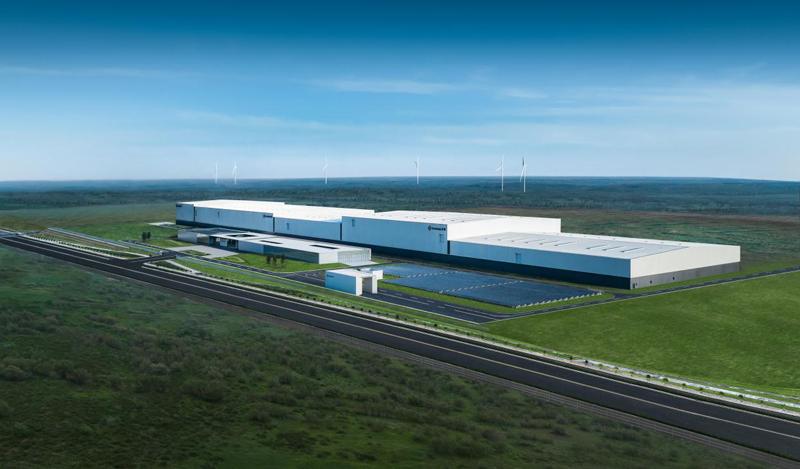
Image source: Department of Industry and Information Technology of Inner Mongolia Autonomous Region
Expanding the vision to the whole city, during the "14th Five-Year Plan" period, Ordos has completed and connected to the grid a total installed new energy capacity of 28 million kilowatts, with industrial clusters covering the whole region, forming a whole industrial chain of "wind power, photovoltaic, hydrogen energy, energy storage and vehicles" from upstream photovoltaic modules, midstream battery and hydrogen energy equipment manufacturing to downstream new energy vehicle projects.
Under this layout, the added value of Ordos' new energy industries above designated size increased by 28.6% in 2025, and the production capacity of multiple categories of products such as solar cells, lithium-ion batteries and monocrystalline silicon initially gained momentum.
With the "four world-class industries" as the main traction, Ordos' ultimate goal is to "promote the output value of non-coal industries to exceed that of the coal industry and strive to double the output value of the manufacturing industry" in the next five years.
However, the key stage of transformation has just started. In 2025, the added value of non-coal industries above designated size in Ordos accounted for 30.8% of the added value of industries above designated size. To increase the proportion from 30% to more than half depends not only on the commissioning speed of Ordos' non-coal industries, but also tests the city's development resilience to challenge unknown fields.
Rivals
As the year-end performance submission is getting closer and closer, can Ordos hold its seat in the top 50 economic cities?
The biggest variable comes from Yichang. According to the data of the first three quarters of last year, Yichang's GDP was 455.328 billion yuan, ranking 50th in the national urban GDP; it increased by 7% year on year, ranking first in the top 50 national urban GDP by growth rate. For the whole year of 2025, Yichang's GDP was 646.442 billion yuan, up 6.1% year on year, and its total economic volume rose to 47th in the country.
At the beginning of this year, Yichang also publicly put forward the "trillion-yuan" goal -- striving to move towards a trillion-yuan city scale in about five years, and striving to become the leading non-provincial capital city in central and western China. Similar to Ordos, industry is the core driving force of Yichang. In the first half of this year, the growth rate of added value of industries above designated size in Yichang maintained double-digit growth.
However, starting from July, the cumulative growth rate of added value of industries above designated size in Yichang dropped to 4.8%; it dropped to 4.6% in August. Some points out that Yichang's leading industry, phosphorus chemical industry, is under pressure due to cyclical influence, and the growth rhythm has slowed down. Taking local leading enterprise Hubei Yihua as an example, the company's profits were under pressure in the first three quarters, with the attributable net profit of 327 million yuan, down 59.69% year on year.
Luoyang, which is only one position away from Yichang, also has the strength to compete for a seat in the list.
In the first three quarters, Luoyang achieved a GDP of 473.51 billion yuan, up 5.0% year on year. Compared with Ordos, Luoyang's tertiary industrial structure is 3.8:41.5:54.7, with more obvious structural characteristics of the coordinated development of the secondary and tertiary industries, and the growth foundation is more resilient.
Taking the data as an example, in the first three quarters, the production line expansion of CATL Luoyang production base drove the city's equipment manufacturing industry to grow by 24.3%, and the added value of industries above designated size in the whole city increased by 7.2% year on year; the effect of industrial structure upgrading also appeared simultaneously, with the high-tech industry growing by 68.0% and the strategic emerging industry growing by 28.8%, and their proportions increased to 14.6% and 21.8% respectively.
In contrast, Xiangyang, which fell out of the top 50 list together with Ordos last year, has a slower recovery rhythm. In the first three quarters, its GDP reached 444.951 billion yuan, with both actual growth rate and nominal growth rate running at a low level. The growth of the absolute core pillar automobile industry has slowed down under the downward pressure of the fuel vehicle cycle, and the increment of new industries is too small to hedge the downward pressure of traditional industries, so it is not easy to impact the "top 50" in the short term.
On the whole, whether it is Ordos supported by coal, Yichang waiting for the breakthrough of phosphorus chemical industry and new energy, or Luoyang and Xiangyang relying on the heritage of manufacturing industry for transformation, they are all in the key stage of industrial iteration. The gap of total economic volume between these cities has not been completely widened, and the suspense of ranking is still maintained.
This article is from the WeChat official account "Urban Evolution", author: Liu Xuqiang, published by 36Kr with authorization.