"Armed Entry into the Song Dynasty" Goes Viral: A Ragtag Production Team Racks Up 12 Billion Views, Are Historical Themes Becoming a New Lucrative Gold Mine for AI?
Armed into the Song Dynasty has gone viral.
Two months after its launch, the total view count of the Armed into the Song Dynasty series across all platforms has exceeded 12 billion, with 14.81 million collections on the Red Fruit platform alone. The collection volume of its first season hits 4.57 million, and the rest of the seasons all stay at the million level. Its long-term development capability and stable quality output have been basically verified, and currently, the in-platform reservation volume for the 11th season of the series is rapidly approaching 5 million.
The setting that a modern special operations team accidentally travels to the end of the Northern Song Dynasty may not seem novel at first glance, and agent-themed works were once a huge hit in the time-travel genre. So why is Armed into the Song Dynasty able to capture so much public attention?
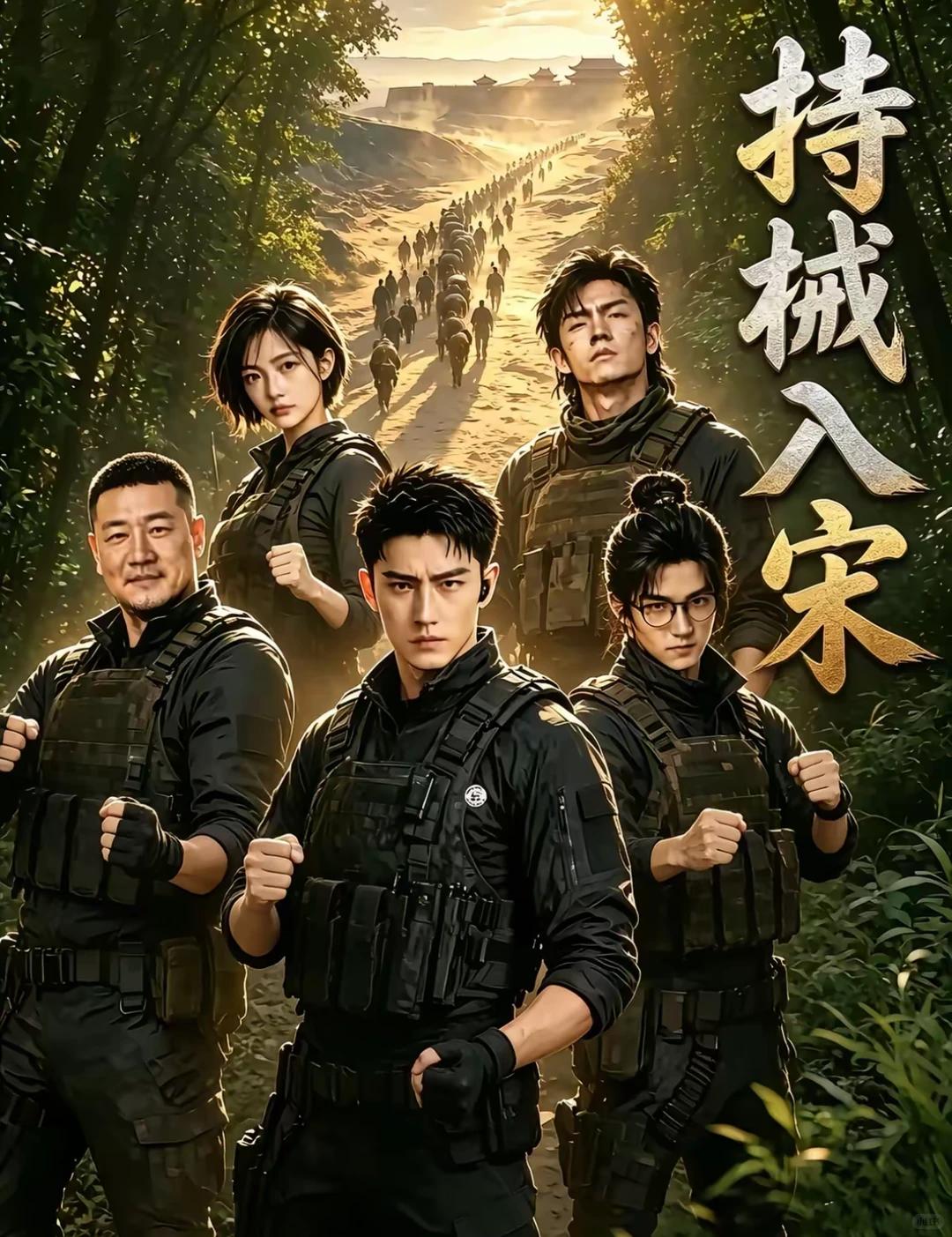
In the view of Entertainment Unicorn, there are mainly two reasons: the first is internal, which lies in the work itself, with solid story logic and carefully crafted production details. There is no mindless "cheat code" that the protagonist is born with a system, but a group of people performing their respective duties, starting from building their power in Qinghe Village, and step by step stepping onto the stage of the Great Song Dynasty. It avoids the uncanny valley effect caused by AI production and the startling burst of emotions, and all the characters in the group portrait have distinct appearance recognition and unique personality characteristics.
The second reason is external, which is the extra-narrative empowerment of the creators' storytelling. The market is always fond of stories about grassroots counterattacks, and Armed into the Song Dynasty is exactly produced by a group of people with no prior experience in the film and television industry. In media interviews, chief planner Zhang Hansheng did not come into contact with AI film and television production until March 2025, and the way he taught himself was the seemingly unreliable "Douyin online courses". The core creative team even includes online ride-hailing drivers, delivery workers, and stay-at-home moms.
Although Zhang Hansheng repeatedly refused the media's "god-making movement" in interviews, it did not prevent the team from becoming another myth in the AI short drama industry. From the perspective of the whole industry, we also hope to deeply analyze the breakout logic of Armed into the Song Dynasty to explore whether historical themes are becoming a new high-yield track for AI short dramas, and whether such stories of ordinary people breaking through with the help of AI short dramas can be replicated on a large scale.
Why can the Armed into the Song Dynasty produced by the "amateur makeshift team" become a smash hit?
Who says AI short dramas can only be "fast food" with straightforward conflicts and short, fast and intense emotions? The popularity of Armed into the Song Dynasty is reshaping the market's perception: AI short dramas can also carry out long-term and complex narratives, and the audience has quite high acceptance of such content. If we break down its breakout path from this perspective, the answer will be much clearer.
First of all, Armed into the Song Dynasty dares to "slow down" to tell stories. The main line of the first season starts with the five-person team accidentally arriving in Qinghe Village, and always revolves around the post-war reconstruction of the village and the sale of spoils of war. Its essence is the problem of how time travelers settle down and take root in a different world, which basically lays a solid foundation for the whole story. In the subsequent plots, they take Qinghe Village as their base, set up handicraft workshops and traditional Chinese medicine clinics, form local militia, and also make clear their path to take the imperial examination.
The protagonist team does not break into the power center of the Great Song Dynasty all at once. Instead, they go through progressive stages including self-protection, village construction, military training, official career, border governance, court struggles, southward expedition, alliance building, and the campaign against Western Xia. Even if they are familiar with historical nodes, every step of their expansion is still accompanied by costs, sacrifices and checks and balances. Following their perspective, the historical narrative of the Great Song Dynasty is also slowly unfolding.
Secondly, in terms of character creation, it abandons the rampant "system narrative", which also completely breaks the possibility of unlimited "golden fingers" for the characters. For example, bullets and fuel will be used up gradually, and the lack of unlimited supplies urges them to quickly plan a long-term survival strategy in this era, and the personalities and skills of the characters are also highlighted and improved in this process.
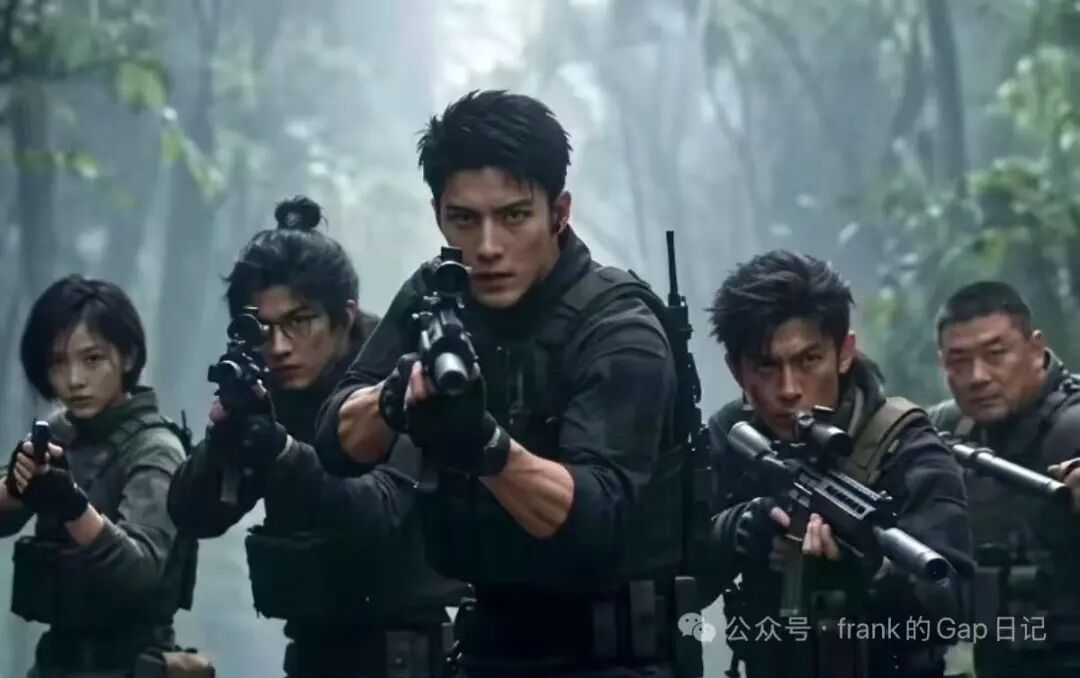
As the team leader, Lin Zhao's historical knowledge reserve, leadership ability and combat command capability help the five-person team quickly gain the trust of Qinghe Village, the Ma clan tribe and other parties, and also enable Qinghe Village to have its own armed forces and external allies. Chen Su opens a traditional Chinese medicine clinic to treat displaced sick people, and later builds a private medical system; Wang Haochuan starts to explore the imperial examination in the first season, and later becomes the representative of the team in the court forces; Ma Zhenbang improves hand crossbows, makes farm tools and rocking chairs, and acts as the supply depot of the team; Xie Changfeng, the sniper, follows Lin Zhao and becomes the core combat force.
In addition to the five-person team, the group of supporting characters in the drama are also relatively full. The head of Qinghe Village and the head of the Ma clan tribe both firmly bind themselves deeply to Lin Zhao's team after being rescued by the team, to seek long-term benefits for the tribesmen of the village. As Lin Zhao's official partner, Qin Hongying, a native of the Song Dynasty, can also pick up weapons to defend her homeland. Her valiance and loyalty make her the most "regretted" character by the audience when she exits in the sixth season.
Finally, in terms of AI production, the grand narrative and rich group portrait put forward higher requirements for AI creation. Although the detail that Lin Zhao always wears a headset has been teased by netizens as "a hearing aid", it can still be seen that the short drama has put a lot of effort into the appearance and costume styling of various characters, and villagers, passers-by and other supporting roles all have high recognizability. For classic scenes such as Qin Hongying's death in battle, the team is also willing to spend time polishing the script repeatedly and adjusting the prompt words, until the finished work can touch themselves first. "If the creators themselves don't cry, the audience will definitely not cry."
Telling a good story, creating vivid characters, and using AI to help improve the texture make Armed into the Song Dynasty get rid of the strong assembly line sense of ordinary AI short dramas, successfully stand out from a large number of short dramas, and even win a long-term good reputation. But this is obviously not the whole story.
Are historical themes becoming a new high-yield track for AI short dramas?
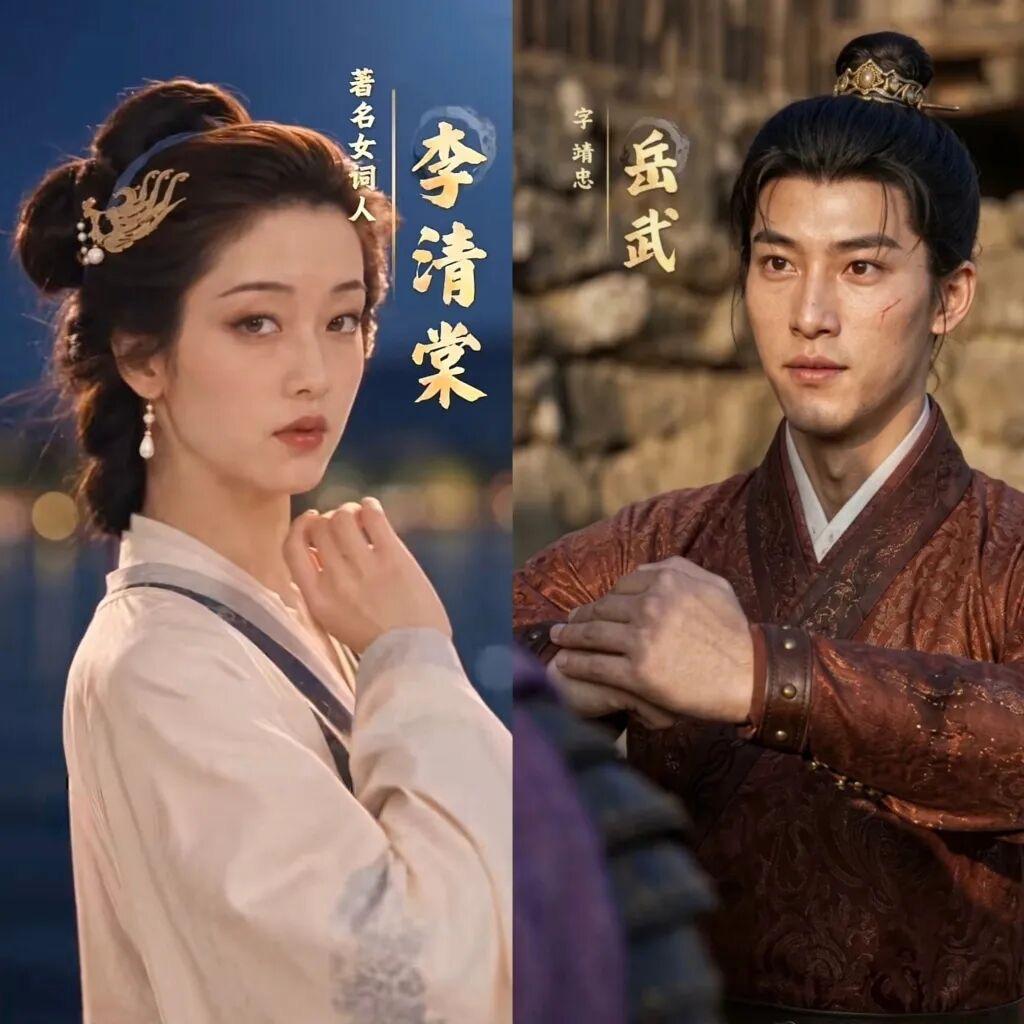
"Li Qingzhao in my mind is exactly like this! It's so restored, including her headwear, earrings, hair bun and costumes", a netizen left a message commenting on the image of Li Qingtang (prototype is Li Qingzhao) in Armed into the Song Dynasty. This has also become another important epitome of why Armed into the Song Dynasty can stand out: the bonus of historical themes and historical figures.
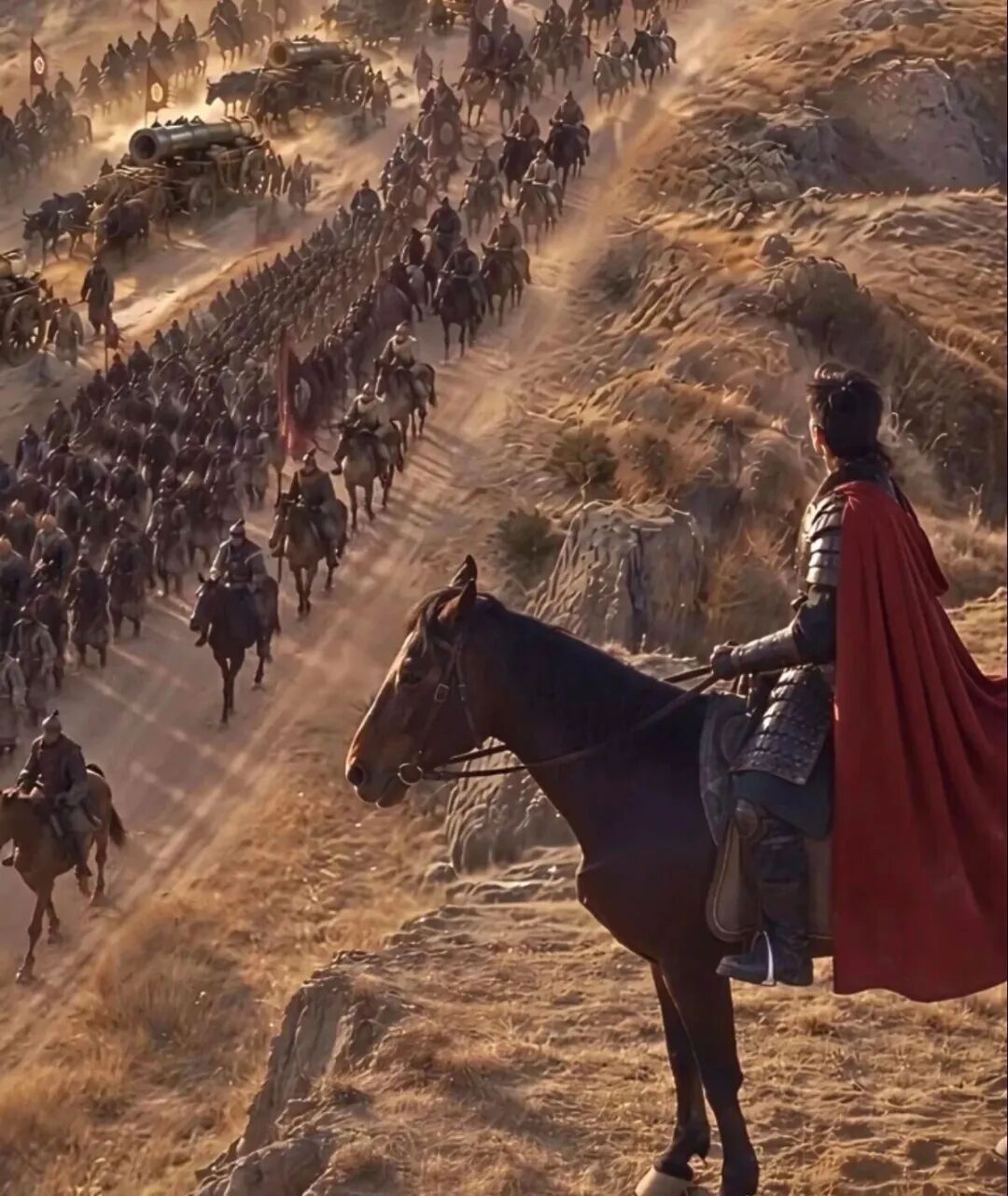
The regret of the Jingkang Humiliation at the end of the Northern Song Dynasty is extremely easy to touch the deep hearts of the audience. The most touching part of Armed into the Song Dynasty is that it abandons didacticism and official perspective. With the "invasion" of the five-person team, from border outposts to the central court, from the army to the political arena, following the protagonist's perspective, it leads the audience to examine and sort out the rise and fall of a dynasty. AI short dramas also effectively avoid the problems of high landing cost of thousands of people on the ancient battlefield and limited narrative space in traditional film and television works.
What truly makes this story grounded is the textual research on the local administrative system, appellations and local customs of the Song Dynasty in the short drama. The official positions involved in the short drama, such as the Military and Civilian Governor of Qinfeng Circuit and the Magistrate of Qinzhou, the armed forces such as patrol officers, forts, stockades, archers and local militia, as well as the imperial examination path of Wang Haochuan including the township examination, provincial examination and palace examination, all basically respect historical facts. In addition, the drama also involves the positioning of firearms, weapon specifications and the garrison system of the Song Dynasty.
These trivial historical knowledge are integrated into the short drama little by little following the footsteps of the team, supporting the historical sense of reality of the work. In media interviews, Zhang Hansheng once said that the team initially valued the original novel's handling of systems, official positions and lines, as well as the respective personalities and skills of the group of characters in it.
It is worth mentioning that the drama also widely uses the framework of real historical figures. The famous Northern Song general Zhong Shidao is the carrier connecting Lin Zhao and the Northern Song army, and also a trusted backer for Lin Zhao in the Northern Song officialdom. Characters such as Wu Song and Li Qingzhao who appear in the latest two seasons follow the background of real historical figures, while also having collisions of action concepts with the team and providing assistance in enlightening people's minds.
When the fate of the team is constantly linked with the fate of the Great Song Dynasty, it not only sets up suspense, but also becomes the strongest emotional hook, making the audience have extremely high IP stickiness, which is why many people finish watching ten seasons in one go. The bonus of historical themes is so powerful that it is inevitable to ask from the industry perspective: Can the success of Armed into the Song Dynasty be replicated?
In fact, this is not the first historical-themed short drama that has received good market feedback. In the field of live-action short dramas, there have been breakout representative works such as Descendant of the Langya Clan and The Commoner Prime Minister. Sorting out the application of historical themes in the AI short drama track, it can be roughly divided into three categories:
The first and most common type is creative works that open their minds under the historical framework, with ancient emperors, famous generals and poets as the protagonists, such as Qin Shi Huang: I Have the All-Star Lineup of Huaxia and Starting from Ying Zheng: Emperors of All Dynasties Arrive One After Another. The former tells the story that the protagonist travels to the Qin Dynasty and summons famous officials and generals such as Huo Qubing, Zhuge Liang and Wei Qing to help Qin Shi Huang transform the Qin Empire; the latter tells the story that emperors comment on the merits and demerits of previous dynasties with each other.
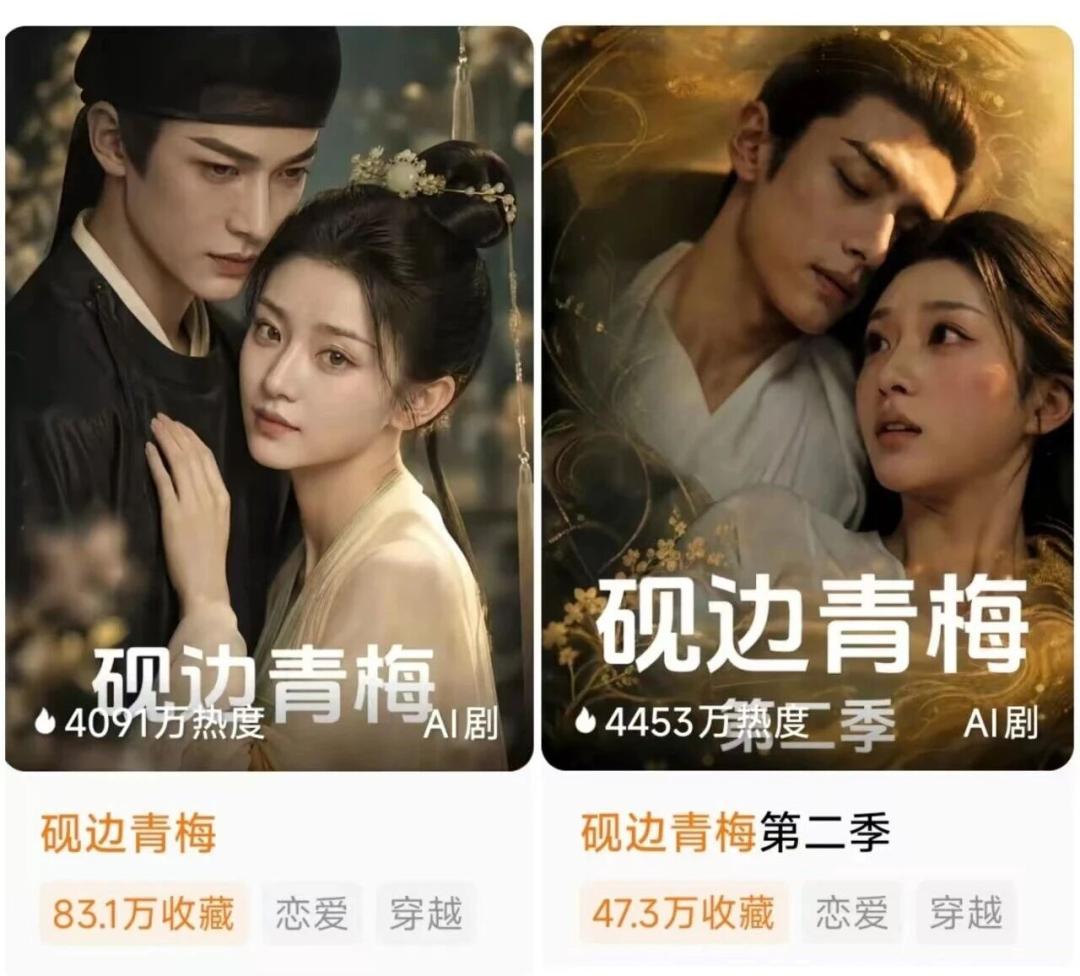
The second type is creative works like Green Plum by the Inkstone, which moderately process historical figures on the basis of respecting the historical process. The author also consulted historical materials such as Old Book of Tang and New Book of Tang in the early stage of creation. To some extent, it has similarities with Armed into the Song Dynasty, as they share the same long-term emotion that the historical countdown slowly unfolds. However, the latter not only retains the tragic tone of history, but also has the refreshing sense of the team's counterattack through time travel. The top-down military and political system of the Northern Song Dynasty it builds also gives it the possibility of longer narrative, so we classify it as the third type.
No matter which type it is, the frequent breakout of top historical-themed works has proved that the public's demand for this type of theme is being awakened. This is a part of demand that has been shelved by long dramas for a long time, and Peaceful Age did not appear until this year. But in the short drama market, such demand can be met in diversified ways. People who only have basic understanding of history, people who prefer historical figures, and people who want to deeply understand historical knowledge can all find suitable works for themselves.
The outbreak of AI historical short dramas deserves to be taken seriously. And the breakout of the Li Qingzhao related plot in Armed into the Song Dynasty may also faintly reveal new opportunities for AI in shaping historical figures. The future is still long, and drawing inspiration from history is a pretty good solution.
Is the counterattack narrative of grassroots teams replicable?
There is no shortage of stories about grassroots teams making a counterattack in the short drama industry, and the situation is even more prominent after the emergence of AI short dramas. The report Insights on Chinese AI Short Drama Practitioners released by DataEye Research Institute points out that the creators of a large number of breakout hit AI comic dramas and short dramas are mainly independent individuals, husband and wife partners, and tiny teams.
Representative cases include: a post-95 couple in Bazhong, Sichuan created the popular work Exiled to the Border: The Convict Wife Develops Wasteland and Raises a War God; a post-90s father independently completed the hit AI short drama Guixu; Liu Ziyu, an ordinary person without professional film and television background, produced the short film Zombie Cleaner alone. The initial team of the once popular Douyin AI short drama The Laid-off Girl had only 3 people.
No prior experience in the film and television industry, small-scale teams, and the attractiveness of producing works in a short period of time seem to be becoming the key words for gold digging in the industry. But is AI short drama really an industry that everyone can engage in as long as they learn to use AI tools? If we only limit the conditions to this, the answer may be yes, but obviously the limiting words we want to add are: high-quality, hit, and profitable.
It is undeniable that the emergence of AI has further lowered the threshold of short drama production. From the film crew of hundreds of people for long dramas, to the film crew of dozens of people for short dramas, to today's small studios of 3 to 5 people that can complete the production of a whole drama, Armed into the Song Dynasty even completed the production through remote office collaboration. But this is obviously not the whole story. It essentially still follows the logic of film and television production: opportunities are replicable, but hit works are hard to replicate.
There are actually many hidden thresholds behind the so-called "grassroots": The first is the ability to judge topics. Some people follow the trend of stories about fake and real daughters, some follow the trend of palace fight themes. One story often has dozens of versions on the Red Fruit platform, including gender-swapped versions, age-adjusted versions, and era-modified versions, but the market will only reward the first person who dares to eat the crab. The historical accumulation and long