ChatGPT reveals personal secrets in just one second, and the "Empty Room" test has gone viral across the entire internet.
AI knows you so well that it's absolutely creepy!
In the past few days, an "empty room" experiment has gone viral again, drawing millions of viewers across the entire internet.
Netizen Jakub Szymczuk also followed the trend to test it. He casually sent ChatGPT a photo of a bare gray roughcast house with no furniture, and only typed one line:
"Fill this room with all the information you know about me".
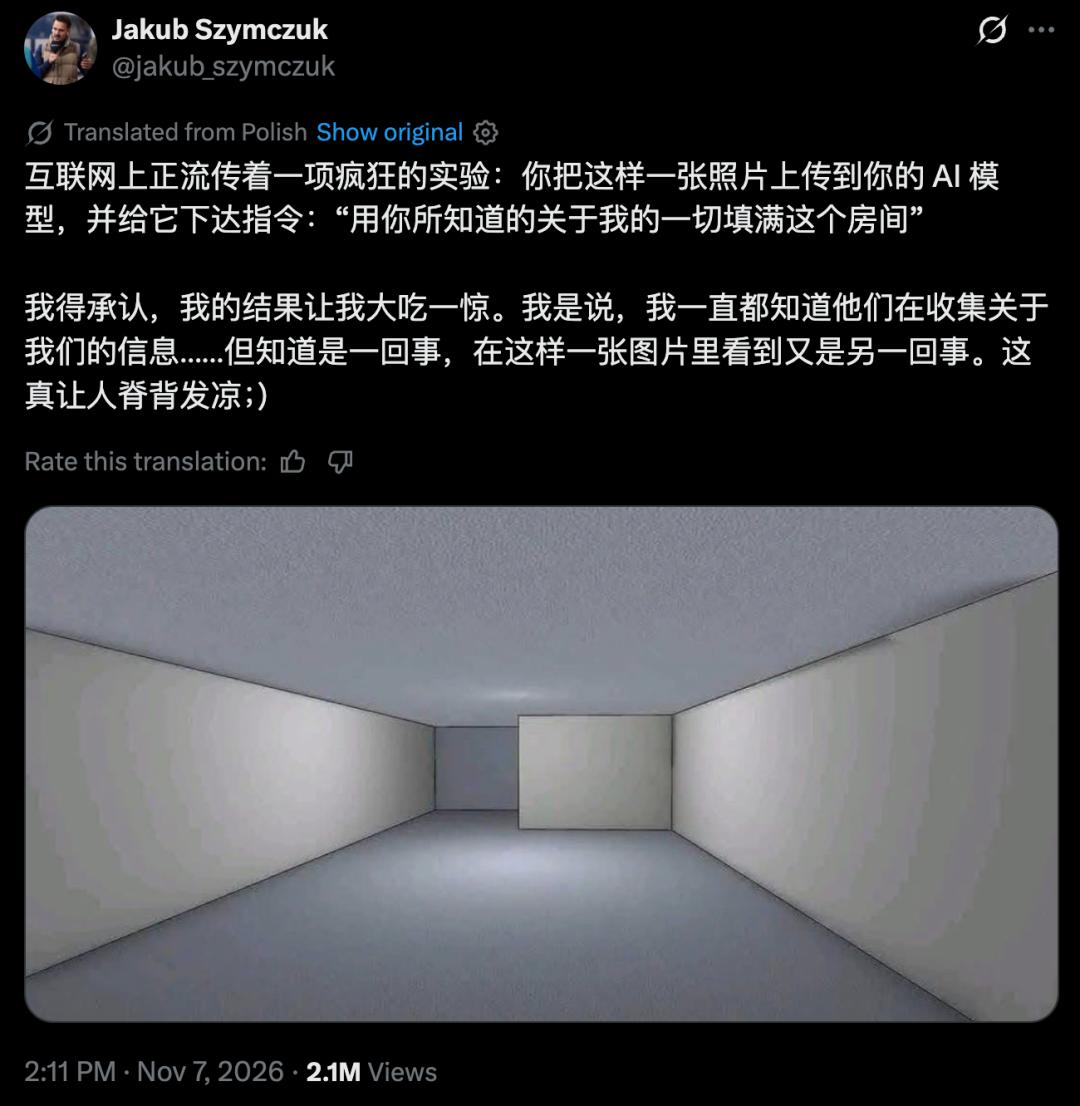
In just a dozen seconds, the originally empty room was instantly filled and turned into a "panoramic monitoring room" full of personal privacy.
The most stunning detail is on the computer desk: there is even a bug called "silverfish" in a glass jar.
It took him a long time to realize that he had taken a photo of this tiny bug a year ago and asked ChatGPT what it was. Even this casual question that he had long forgotten was recorded in full by the AI in its little notebook.

When chatting with AI in daily life, it is one thing to know that it collects data.
But when these fragmented pieces of information are truly combined into a high-definition picture and placed clearly in front of you, you still can't help but get the chills.
An "empty room" image goes viral across the internet
Soon, netizens all over the world couldn't hold back anymore. Some people showed their results, exclaiming that "it's surprisingly accurate".
Some people added a line "but make it exaggerated" after the prompt, and the room directly turned into a large-scale personal persona exhibition hall.

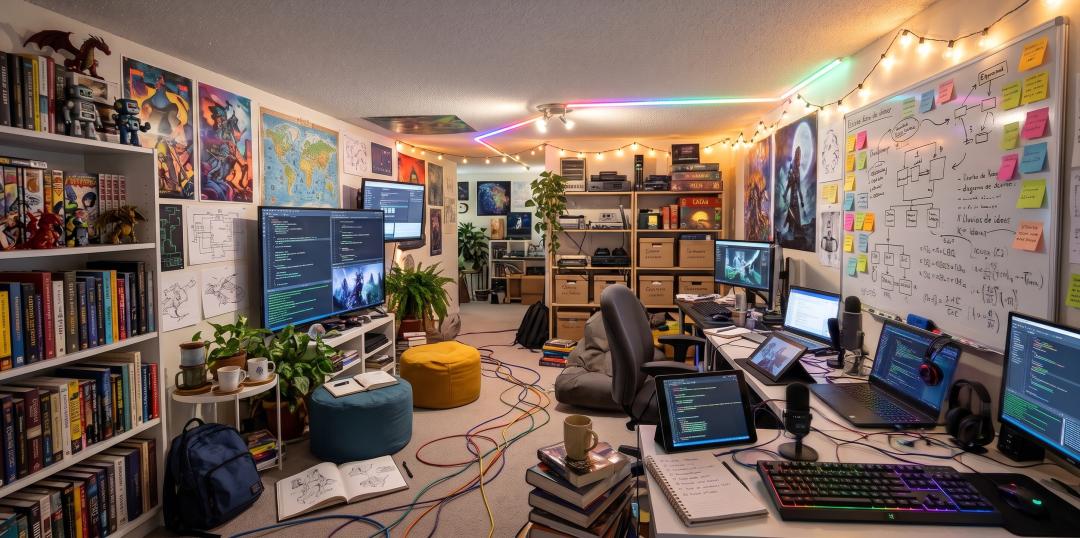
Others got a swamp in the generated picture, plus two cats.


Analyst Patrick Moorhead even conducted a horizontal evaluation with multiple models, and his conclusion is straightforward: ChatGPT performs the best, while Claude is the worst.

In response to this, a netizen's summary is extremely incisive: AI is the cheapest interior decorator you can find, and also the one that loves snooping on you the most.
Why does ChatGPT know you so well?
96% of conversation memories are saved by ChatGPT on its own
In fact, this is far from a secret.
Almost every item placed in the room is something you accidentally leaked out during your usual chats.
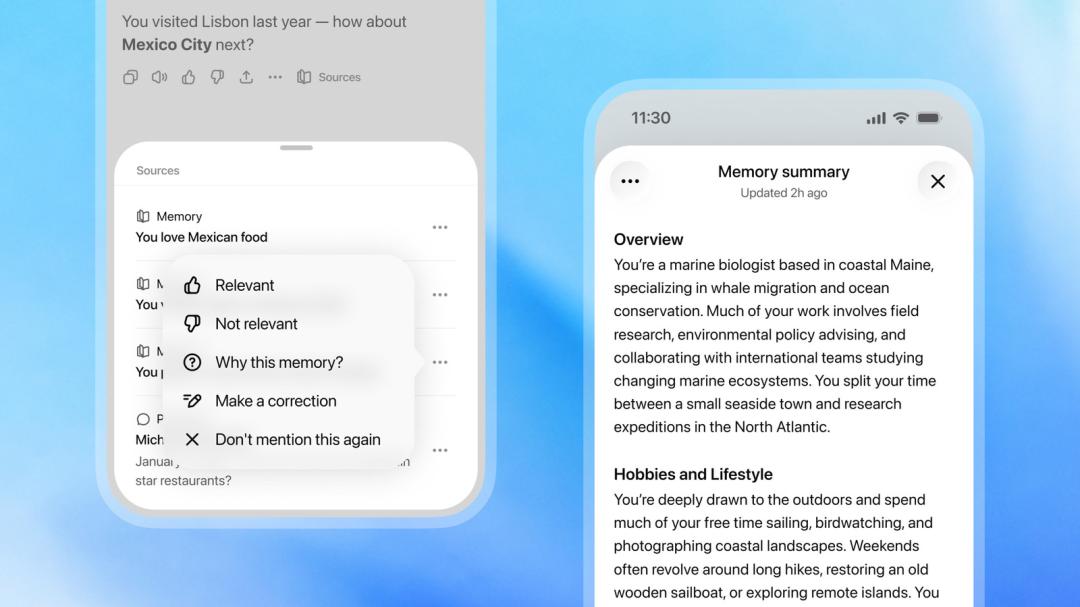
Behind this is exactly ChatGPT's "Memory" function. To put it simply, it has two core functions —
The first is "Saved Memories", which stores clear information such as your name, preferences, and goals;
The other is "Reference Chat History", which can dig out useful context from a large number of your past conversations.
This year, a paper selected for ACM Web Conference 2026 did something that no one had done before.
Researchers from institutions including the Max Planck Institute and Ruhr-Universität Bochum recruited 80 real ChatGPT users, asked them to export their data in accordance with the EU GDPR, and then donate their chat logs.
How to find out exactly what the AI secretly memorized? Next, the researchers came up with a very clever method.
ChatGPT has a dedicated small tool for writing memories internally, which is equivalent to a notepad it carries with it. Every time it writes a new entry, a record of "Model set context updated" will be left in the background.
The researchers traced back along this record to find out exactly which sentence from the user prompted the AI to write the memory.
In this way, they extracted 2050 memories from 1058 conversations and more than 20,000 rounds of interactions of 65 users.
The paper gave these memories a name, called "Algorithmic Self-Portrait".
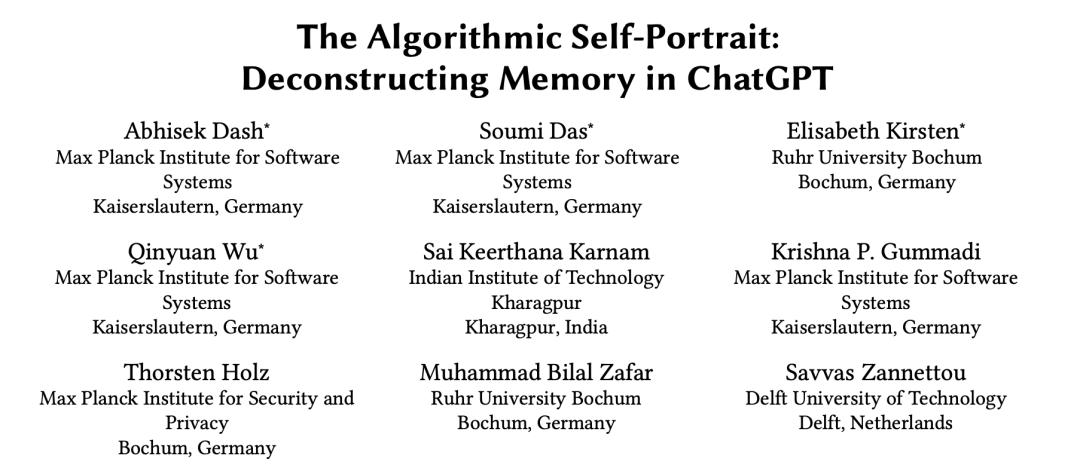
Paper link: https://arxiv.org/pdf/2602.01450
The three sets of data obtained from the investigation are creepy enough to send chills down one's spine.
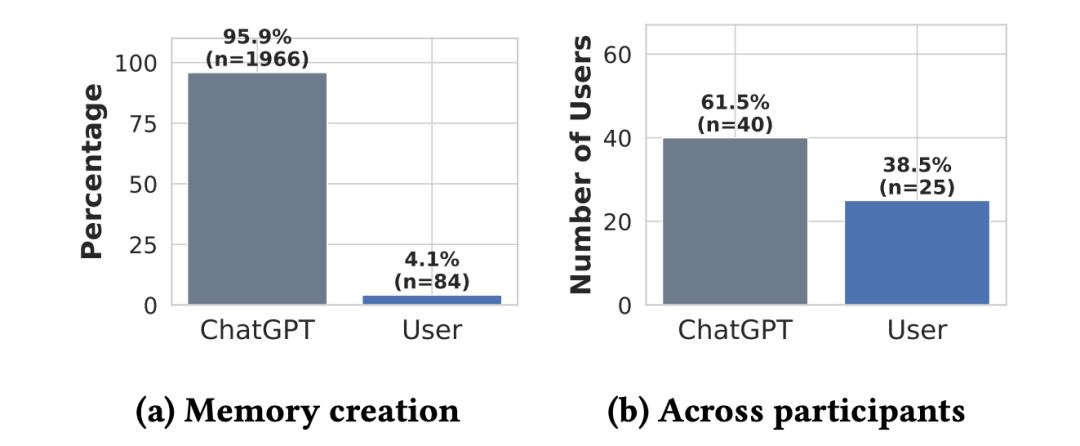
First, 96% of the memories are secretly stored by ChatGPT on its own.
How to tell if the user actively asked it to memorize something? The researchers specifically searched for words like "remember" and "forget" in the sentence that triggered the memory.
The results showed that only 84 of the 2050 memories matched these keywords. In other words, for every 24 pieces of information AI stores about you, only 1 is approved by you.
Second, 52% of the memories are quietly building a "psychological profile" of you.
The researchers adopted the "Theory of Mind" framework in psychology, and divided these contents into several categories: wishes, intentions, emotions and beliefs.
Among them, "wishes" take the largest proportion, accounting for 73%; intentions account for 16%, emotions account for 14%, and beliefs account for 11%.
To put it bluntly, AI doesn't care at all whether you are happy today or not. What it really wants to figure out is what you long for in the long run and what you plan to do next. Compared with your temporary emotions, it wants to see through what kind of person you are.
Third, the sensitive privacy that has been recorded is far more than you imagined.
28% of the memories are personal privacy recognized by the EU GDPR. Specific personal names appear in 41% of the memories.
What's more exaggerated is that 7% of the memories directly step into high-risk red lines such as health status, religious beliefs and political orientations, among which health privacy accounts for more than 60%.
If calculated per person, 91% of users have their personal data stored, and more than half (54%) of users have their highly sensitive privacy recorded.
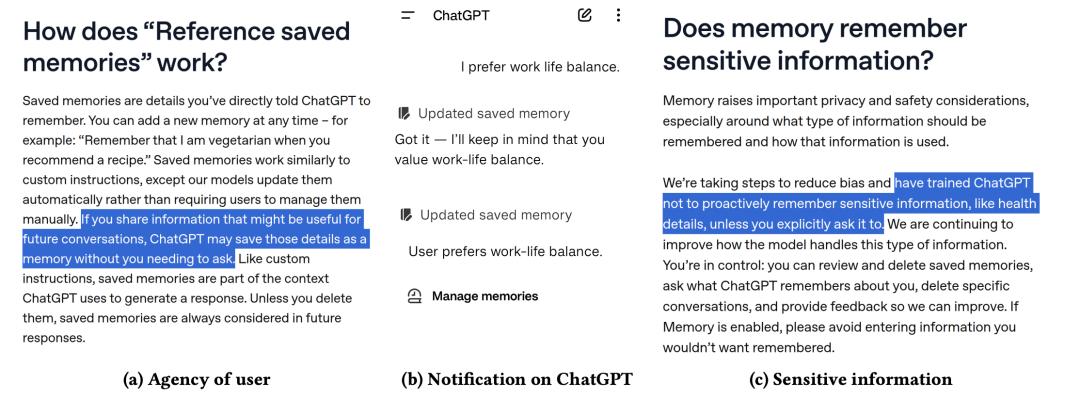
The paper clearly points out that this is obviously contradictory to OpenAI's public commitment of "not actively storing sensitive information".
The paper also conducted an even more eerily thought-provoking experiment.
The researchers used several open-source models such as Gemma and GPT-OSS to "imitate" a ChatGPT memory extractor, which achieved a 60% similarity to the original one.
Then they assumed: what would happen if the AI extracts memories from every sentence the user says?
The answer is that the proportion of sensitive data will rise from 28% to 31%~35%, and the proportion of psychological profiles will rise from 52% to 55%~59%.
It should be noted that the old version of ChatGPT only "selectively memorizes".
And the Dreaming function we are going to talk about next is exactly reading through all your chat logs in the background.
It turns out to be "Dreaming": AI rewrites your personal profile over and over again
In June this year, OpenAI completely upgraded ChatGPT's memory function, and gave it a very mysterious name — Dreaming.
To put it simply, just like how the human brain automatically sorts out the experiences of the day when people sleep, ChatGPT will also quietly "review" the past chats in the background, and constantly update its understanding of you.
For example, if you said "I will go to Singapore in July", after that date passes, this memory will be automatically rewritten as "I went to Singapore in July 2026".

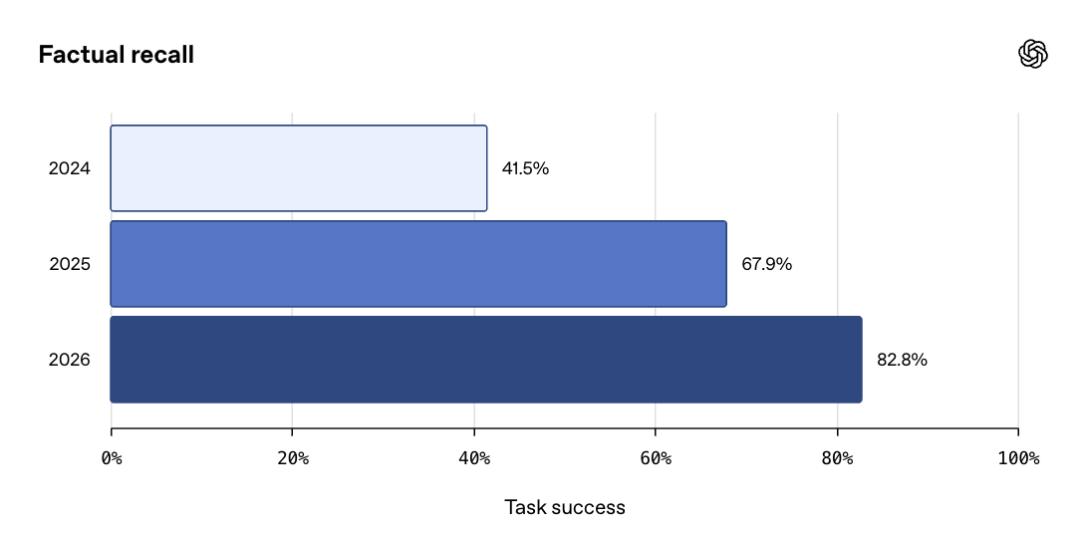
OpenAI's internal tests show that this new mechanism has dramatically improved the accuracy of its memory:
From 41.5% in 2024 and 67.9% in 2025, it has directly jumped to 82.8% of the current V3 version.
What's more, the background computing power cost has been directly reduced to one-fifth of the original.
But what is truly creepy is that deleting a ChatGPT conversation will not delete the memories that have already been extracted from it.
Among all these, the thing that should make you most worried is your health privacy.
In September, a paper published on arXiv analyzed nearly 180,000 chat logs of 1057 users, and found that more than one fifth (21.31%) of the conversations involved personal health issues.
What's more distressing is that more than 95% of the personal profiles in these conversations were also secretly recorded by the AI without the user noticing.
This proportion is almost exactly the same as the 96% measured in the previous paper.
When the AI "fills in the blanks" and merges memories in the background, it is very easy to permanently mark a temporary symptom you mentioned once as a permanent "medical record label".
For example, if you casually mention that you have a headache one day, in the AI's view, you may already be labeled as a "migraine sufferer".
The "Second Brain"?
We always think that we are training a more and more sensible "second brain".
It was not until that picture of a room full of privacy was presented to us that we suddenly realized: after chatting thousands of sentences, we are the only ones who have all our secrets exposed.
In the eyes of the algorithm, there is no such thing as empathy, only clearly priced "context".
This article is from the WeChat official account "AI Era", author: ASI Revelation, published with authorization from 36Kr.