Could the inventors of smart glasses please show some consideration for the plight of people with myopia?
Smart glasses are getting increasingly cool and stylish, but for many people, there is still a practical problem before making a purchase: Where do I put my existing myopia glasses?
Take them off? You can't see clearly.
Wear both pairs at the same time? Your nose bridge would probably beg you to hang your backpack on it too.
Pair them with contact lenses? That seems unnecessarily complicated, and not everyone is used to wearing contacts.
Are people with myopia not meant to use smart glasses?
Which type of glasses do you want to buy?
For people with myopia who want to buy smart glasses, the first step is to figure out what type of smart glasses you prefer.
To clarify the issue of lens fitting, we can roughly divide smart glasses into four categories based on their functions.
Glasses without display functions
The first type can be tentatively called "pseudo-smart glasses" or "pseudo-AI glasses".
Essentially, it is still a pair of ordinary glasses, but modules such as Bluetooth, microphones, and speakers are embedded in the temples. You can use it to listen to music, answer calls, and activate the voice assistant. It is equivalent to a combination of glasses and a smart speaker, so calling it Bluetooth glasses may be more accurate.
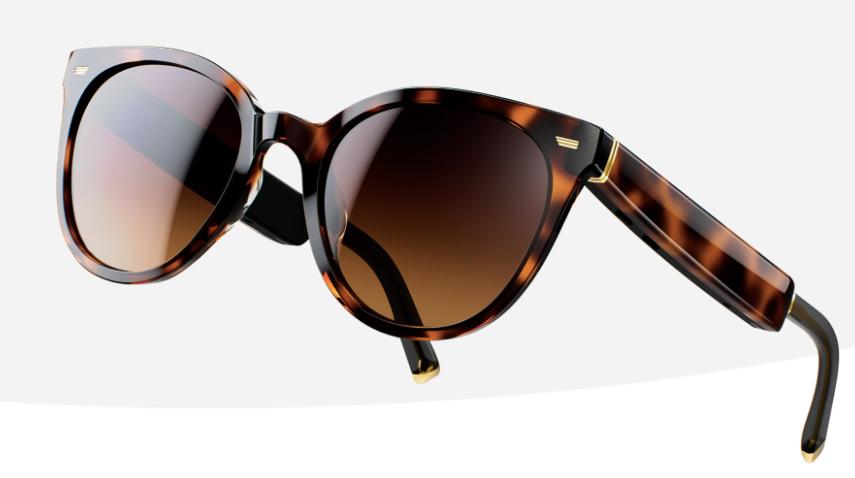
Amazon Echo Frames丨amazon
The second type of smart glasses adds an extra camera.
This type of glasses can take photos and record videos, and some can also recognize captured objects and answer questions, with information output mainly through voice.
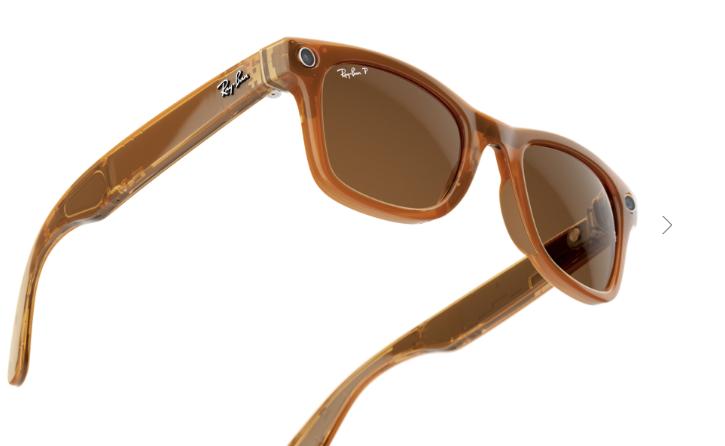
Ray-Ban Meta Gen 2丨ray-ban
The lens fitting logic for these two types of glasses is largely the same as that of ordinary glasses.
As long as the glasses model supports myopia lenses, and your eye power and astigmatism are within its supported range, you can generally get your lenses fitted through normal optometry procedures.
Glasses with display functions
The third type of glasses has a display function, but no camera or speaker.
It can display information transmitted from mobile phones or other devices right in front of your eyes, and can also receive voice input, but cannot take photos independently, nor can it play sound directly through the built-in speaker.
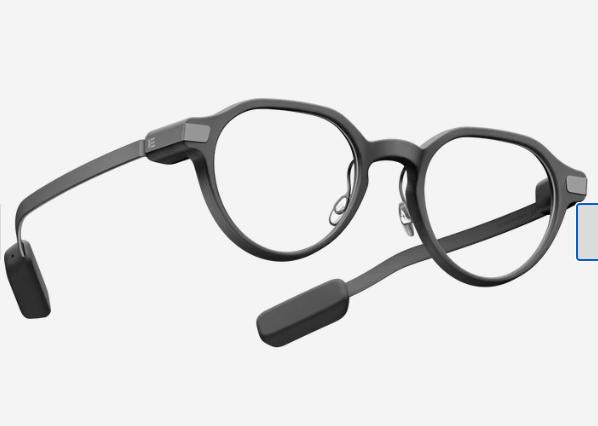
Even G2丨evenrealities
The fourth type of glasses is equipped with a microphone, speaker, camera, and display-enabled lenses.
It can see, hear, speak, and display information, with relatively complete functions. When you put it on, it no longer feels like wearing a pair of glasses, but more like hanging a digital device on your face.
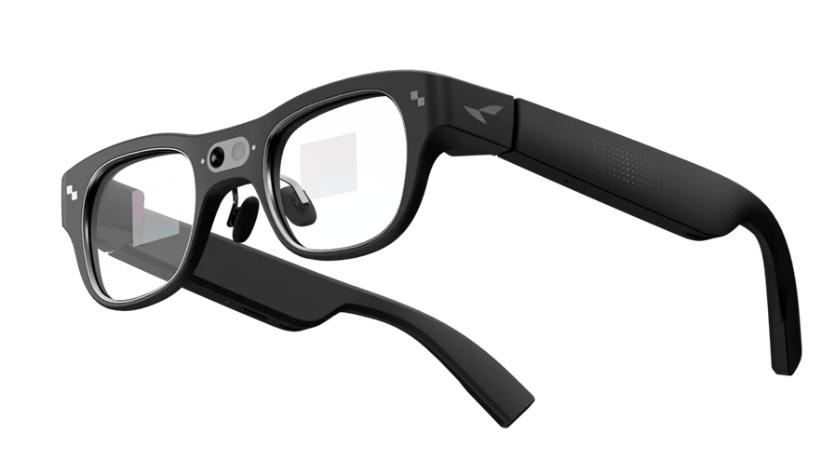
RayNeo X3 Pro丨rayneo
For people with myopia, these two types of display-enabled glasses are much more complicated to use.
There are two common solutions available at present.
One solution is to use a dedicated myopia frame or lens assembly, and attach the myopia lenses customized to your own diopter via a buckle or magnetic suction mechanism. In this way, even if your diopter changes later, you can replace the myopia lenses separately, without having to replace the entire pair of glasses.
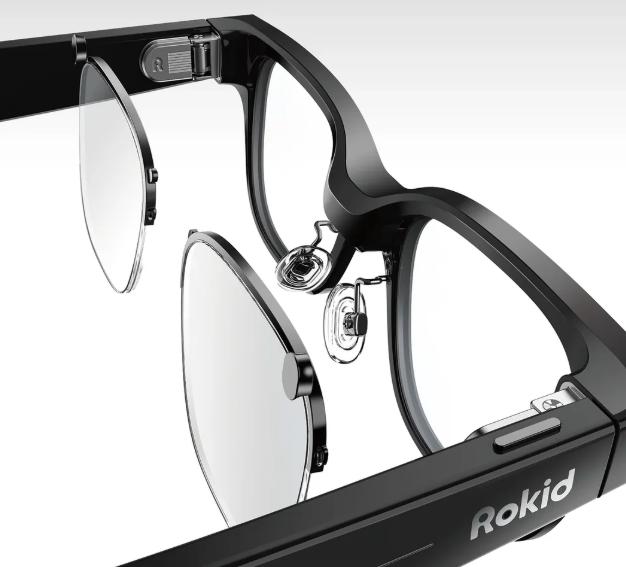
Rokid's magnetic myopia frame丨rokid
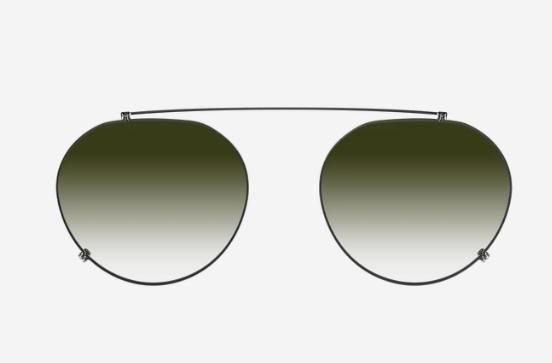
You can also choose to attach external sun lenses to the frame丨evenrealities
However, this method has an obvious drawback.
Adding the myopia lenses and the frame for fixing the lenses will increase the thickness and weight of the entire pair of glasses, and may also change the relative position between the eyes and the display optical assembly — these changes may affect the display effect and wearing comfort, for example, the displayed content is not clear enough, the frame is too thick to press on the bridge of the nose, or your eyelashes brush against the lenses.
In short, don't only look at the promotional pictures. If conditions permit, it is best to try on the exact same pair of glasses in person, or test a finished product that is already fitted with myopia lenses with diopters close to yours.
The other solution is to directly customize display-enabled lenses that are adapted to your own diopter.
Directly customizing display lenses adapted to your own diopter can avoid some of the problems caused by adding an extra layer of lenses and frames. The disadvantage is that the price is usually higher, and the waiting time for customization may also be longer. For the pair I bought personally, it can be shipped in about a week without customization, but I waited for almost a month for the customized version.
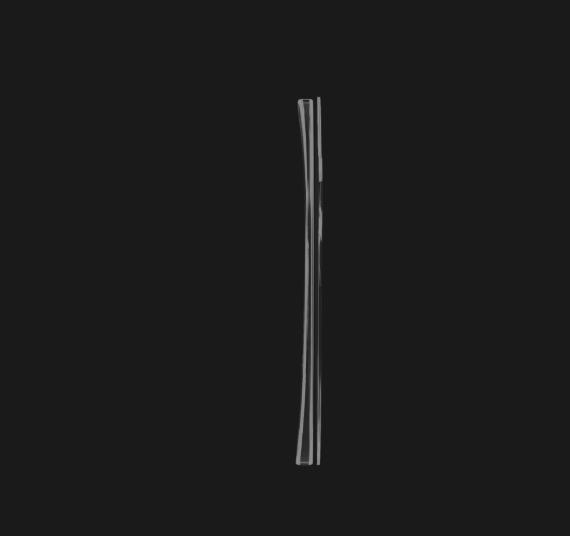
The vision correction lens and the display-enabled lens are seamlessly bonded together丨evenrealities
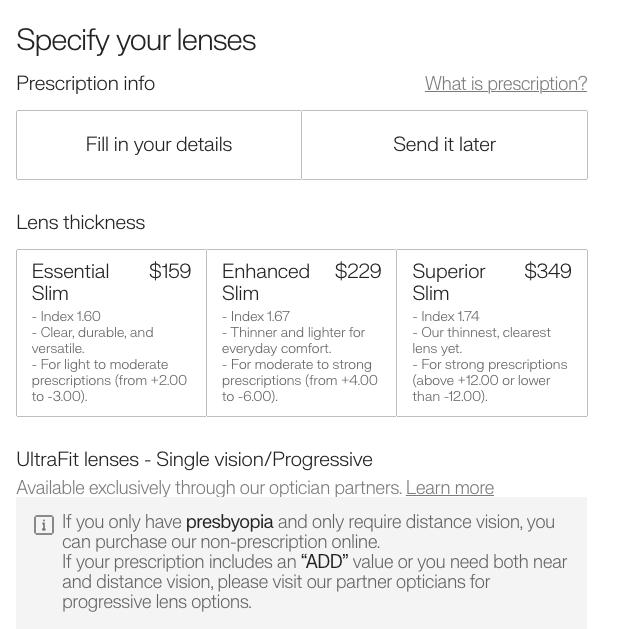
On Even's official website, you can customize myopia lenses with different refractive indices, as well as multifocal lenses suitable for both myopia and hyperopia丨evenrealities
Some more specific questions
Knowing how to get your lenses fitted does not mean you can place an order with complete peace of mind. There are still some practical usage issues worth clarifying in advance, and we will talk about them one by one.
The screen of smart glasses is right in front of your eyes. Will prolonged use worsen myopia?
Generally speaking, it won't, at least there is no evidence to support this claim for now.
The screen projection of many smart glasses uses a virtual distance, making you feel like you are looking at a distant object. The display distance of some glasses is even adjustable, usually ranging from 1 to 4 meters — while the distance we look at our mobile phones is more than 20 centimeters, less than 50 centimeters for tablets, and about 70 centimeters for computers.
Instead of simply blaming smart glasses for worsening myopia, it is better to spend less time scrolling through your mobile phone.
Then will it cause eye fatigue?
Factors such as the display distance, brightness, and clarity of smart glasses may all affect visual comfort during wearing. Some products allow you to adjust these parameters, you can try to adjust them to a position that feels more comfortable for you.
Of course, eye fatigue is not necessarily entirely caused by the device. Continuous eye usage time, rest status, and personal visual conditions also have an impact.
Can elderly people with presbyopia still use smart glasses with display functions?
Absolutely yes.
People with presbyopia cannot see things clearly at close range, but the virtual display distance of smart glasses is much farther. What's more, smart glasses are equivalent to projecting a screen of about 30 inches in front of you, with much larger fonts. People with presbyopia may find using smart glasses more relaxing than looking at their mobile phones.
You can see the displayed content clearly, but you may still not be able to see the mobile phone in your hand clearly while wearing smart glasses — the solution to this problem is the same as that for myopia: you can attach an extra pair of lenses, or customize multifocal lenses.
For people with myopia, smart glasses must first be a pair of qualified glasses
I have used all the types of glasses mentioned above, but at least up to now, none of them can be worn at any time like ordinary glasses, and most of them are only taken out and used on specific occasions.
This makes me feel that no matter how many functions AI glasses have, they must first be a pair of comfortable and wearable glasses. Especially for people with myopia, before buying, you should not only focus on researching what it can shoot and what it can display, but also confirm first whether your diopter can be adapted, and whether you can wear it comfortably after fitting.
Specifically, you can follow this sequence when making a purchase:
First check if your diopter can be adapted. Especially for people with high myopia, don't finish checking all the functions and place the order, only to find out at last that your diopter cannot be supported.
Then check if the frame fits you well. It is also very important that the frame can be stably worn on your face.
Then check the weight and thickness after the lenses are fitted. It is best to try on the glasses in person to see if they are comfortable to wear and whether the display effect is affected.
Finally, look at the functions. Will you really use those cool functions frequently?
After all, for people with myopia, it is a pair of glasses first, and then a pair of smart glasses.
This article is from the WeChat Official Account "Guokr" (ID: Guokr42), written by Jin Xin, and published by 36Kr with authorization.