Now that photo-based question search is no longer popular, how are platforms like Yuanfudao faring these days?
In the era when Doubao and DeepSeek were not yet available, Zuoyebang and Xiaoyuan Souti were no strangers to many student groups, right?
Today's students are still good at leveraging the power of technology, except that this time it is AI.
AI can handle a wide range of tasks: solving math problems, polishing essays, and even providing practice for spoken English.
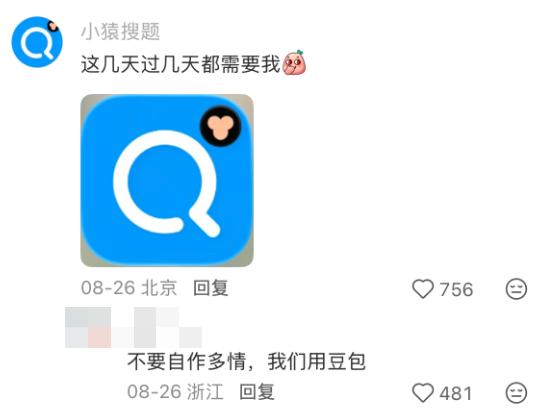
When the summer vacation was drawing to a close, Shi Chao even saw someone mocking Xiaoyuan Souti, saying that everyone is using Doubao now.
A survey conducted by the Chinese Academy of Educational Sciences last year showed that more than 80% of primary and secondary school students have used AI tools when doing their homework.
When general-purpose AI takes over the tasks of photo-based problem search and homework tutoring, won't players like Yuanfudao be on the verge of being eliminated?
Shi Chao originally thought the answer to this question would be rather pessimistic.
But after looking into Yuanfudao's development over the past few years, he found that the company was not wiped out by the AI wave at all. Instead, it has taken on a completely new look.
To put it simply, today's Yuanfudao is no longer a company that survives on photo-based problem search and course sales.
In 2020, Yuanfudao was still the world's most valuable edtech unicorn, but its $15.5 billion valuation had barely settled when the after-school tutoring industry lost half of its vitality overnight.
One month after the implementation of the "Double Reduction" policy, Li Yong, founder of Yuanfudao, gathered the company's executives to urge everyone to accept the new reality as soon as possible.
They conducted research on more than 20 directions in one go, ranging from toys, glasses, maternal and child products to coffee, down jackets, and maternity centers, all industries that had almost no connection with their previous business.
And they actually successfully launched several businesses in these fields.
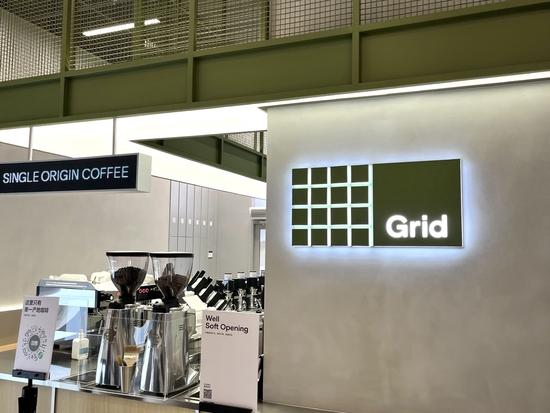
For example, they launched Grid Coffee, selling specialty coffee in Sanlitun at 20 to 30 yuan per cup.
The down jacket brand SKYPEOPLE takes the mid-to-high-end route. When it was first launched, one piece could sell for 3,000 to 4,000 yuan, and the most expensive one even reached 7,200 yuan.
But all these businesses are just appetizers compared with the maternity center business.
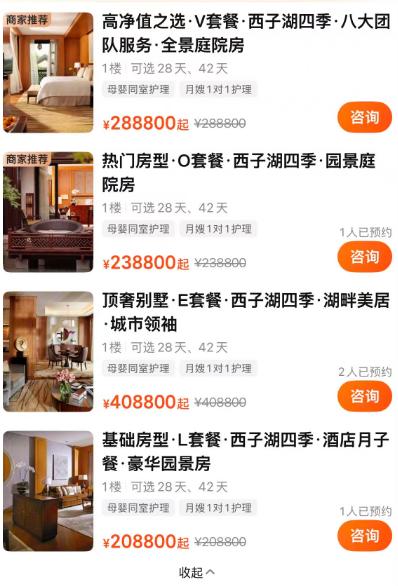
The Molly Smart Maternity Care Center, invested in by Lookyun Holdings under Yuanfudao's founding team, charges up to 258,800 yuan for its 28-day maternity package, and there is also a 56-day package priced at 517,600 yuan (data from 2022).
Back then, a reporter from *Caijing* visited the center and found that the rooms were equipped with a 5,000-yuan breast pump, silk wallpaper, pure wool carpets, and an imported bubble bathtub that was claimed to be worth 50,000 yuan and could provide "audio-visual-light experiences" for babies.
Shi Chao searched for the Hangzhou branch of this maternity center, any friends who have stayed in a maternity center can share their opinions: what level does this price belong to in China?
But after years of trials in various fields, Yuanfudao probably realized that education is its real comfort zone.
Then in 2023, the Xiaoyuan Exercise & Learning Machine was launched.
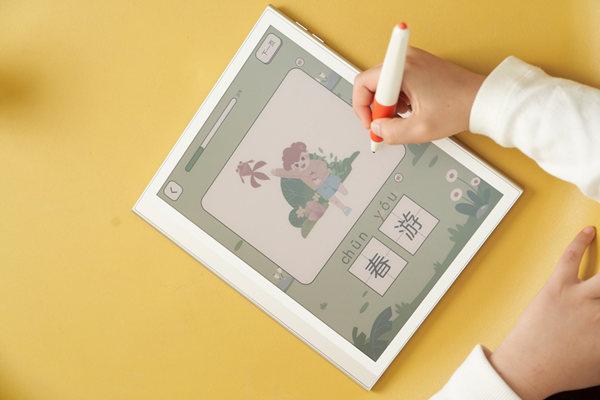
Different from traditional learning machines that pre-install courses, question banks and learning software on tablets, the Xiaoyuan Exercise & Learning Machine puts more emphasis on "practice": users can directly do exercises on the device with a stylus, and the machine will grade the answers automatically.
Equipped with an e-ink screen, stylus, and the question bank accumulated over the years, this product sold extremely well. From August 2023 to July 2024, within one year, around 800,000 units of the Xiaoyuan Exercise & Learning Machine were sold, bringing Yuanfudao a disclosed revenue of about 3 billion yuan.
Before AI was widely applied in the education sector, Yuanfudao had already found a new way to survive.
Moreover, Yuanfudao is not the only company that has found this path.
In the past, when people mentioned learning machines, the first brands that came to mind were probably BBK and Readboy. But now the best-selling products are launched by those companies that used to run problem-searching platforms and sell online courses.
Zuoyebang took actions even earlier. When Yuanfudao was busy opening maternity centers, it had already clearly positioned educational hardware as its new transformation direction, and launched the "AI Tutor One-on-One Learning Machine".
Data from Runto Technology shows that in 2024, a total of 5.923 million educational tablets were sold in China, generating revenue of 19.06 billion yuan. In terms of rankings, Zuoyebang ranks first in total-channel sales, and the top three players in the online market are all edtech veterans: Zuoyebang, Xueersi and Xiaoyuan.
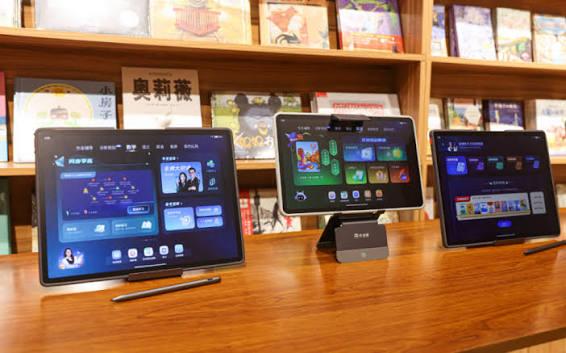
Even the exercise & learning machine product first developed by Yuanfudao was quickly replicated by its peers.
To put it another way, the presence of problem-searching apps may have declined, but these companies have long been prepared not to rely solely on problem-searching services to survive.
They also responded very quickly to this wave of AI.
Since students started using AI to do their homework, they simply decided to develop their own AI products.
Last year, Yuanfudao upgraded "Xiaoyuan Oral Arithmetic" to "Xiaoyuan AI", integrating the capabilities of Xiaoyuan Oral Arithmetic and Xiaoyuan Souti, and launched the Xiaoyuan AI Learning Machine at the same time.
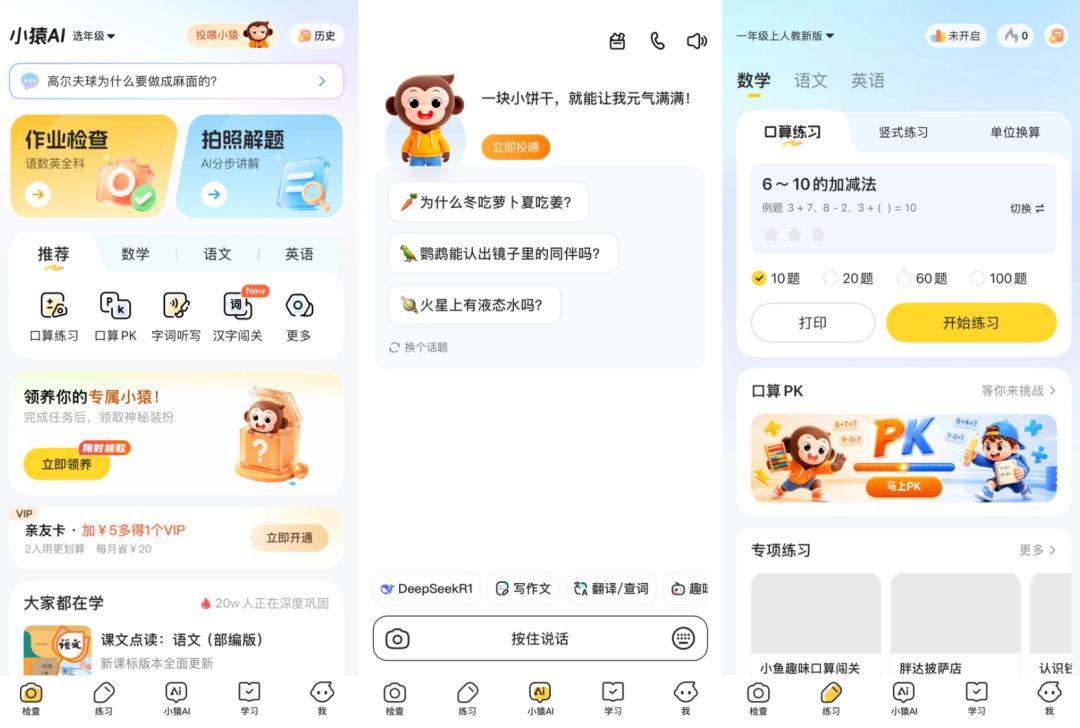
Zuoyebang has also been making layouts for a long time. It released its self-developed Galaxy large model back in 2023, and later integrated capabilities such as AI Q&A and full-subject tutoring, upgrading the original photo-based problem search function to "AI Q&A Tutor".
Moreover, they have leveraged AI to expand their problem-searching business to overseas markets.
Uknow.AI under Yuanfudao has covered more than 100 countries and regions around the world, while Question.AI launched by Zuoyebang has attracted a large number of students in markets including the United States and Indonesia, with its officially disclosed user scale exceeding 10 million.
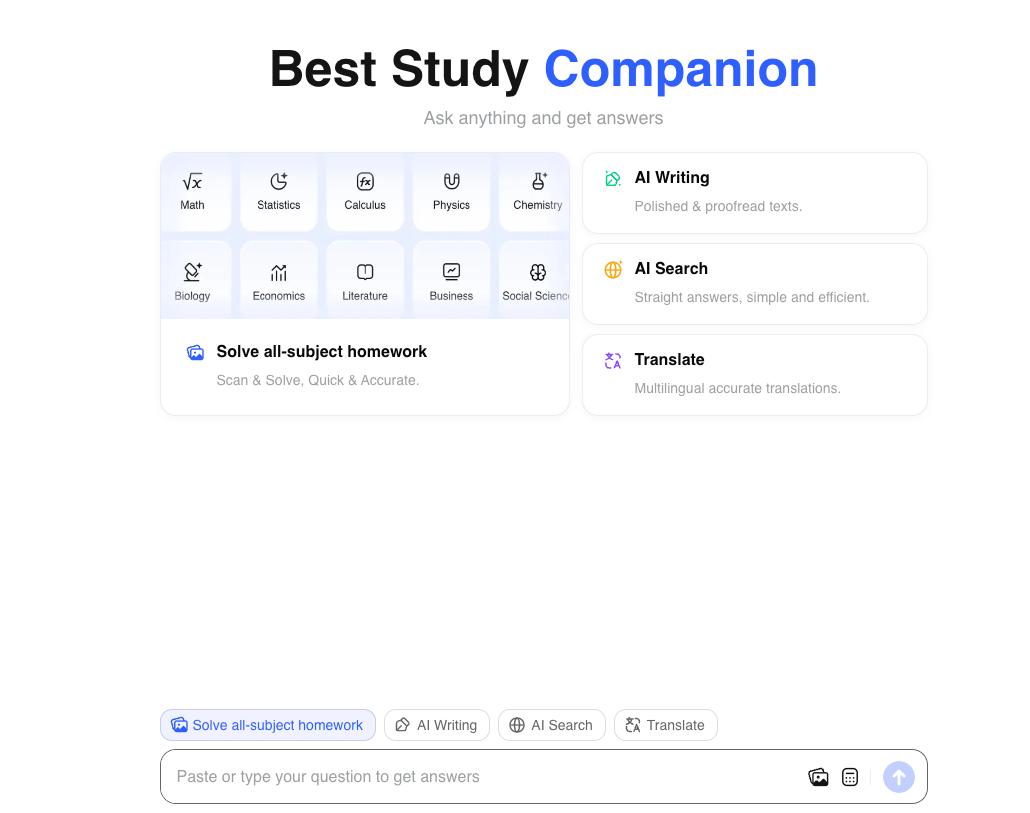
But at this point, readers may wonder: Doubao and DeepSeek can also do all these things, so why do I need to open a dedicated Xiaoyuan AI or Zuoyebang app? Not to mention spending thousands of yuan to buy an AI learning machine.
To be honest, when it comes to pure model capabilities, these education auxiliary service providers can hardly compete head-to-head with large model vendors. What they really have as their unique advantages are the question banks, teaching research systems, and long-accumulated learning situation data that they have built over more than a decade of providing education support services.
Because education is a very complex sector, it is far more than just giving out correct answers.
Which grade and which knowledge point a question belongs to, how difficult it is, and what related knowledge points it connects to before and after, all these judgments rely on a professional teaching research system.
To figure out whether a student has mastered the knowledge, what supplementary content he should learn after making a mistake, and what exercises he should do next, we need to analyze based on his answer performance and learning situation data.
For example, Yuanfudao has a "mastery degree model". It sounds a bit abstract, but in fact, it comprehensively analyzes data including students' accuracy rate of doing exercises, question difficulty, and problem-solving speed, to determine which knowledge points have been mastered and which ones need further tutoring.
In the past two years, if you look at various learning machines and education auxiliary products, you will find that terms like "AI Tutor", "learning situation diagnosis" and "personalized learning" are so widely used that they are almost overused.
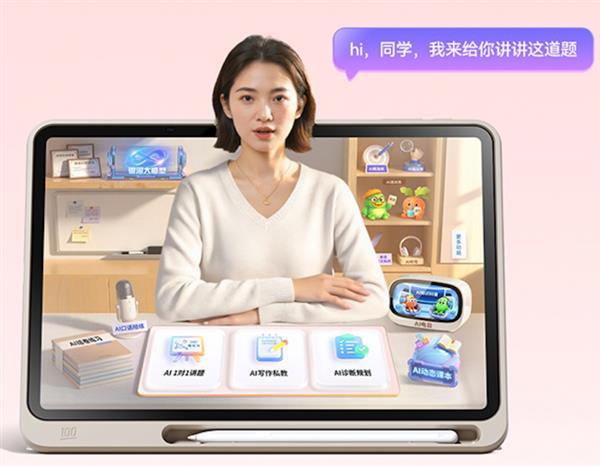
Shi Chao thinks that this is probably where they want to emphasize that they can open a gap with general-purpose AI.
To put it bluntly, they want to leverage AI to turn part of the personalized tutoring that used to require long-term follow-up by real human teachers into services that can be provided on a large scale.
It is hard to say what the exact effect is. The survey by the Chinese Academy of Educational Sciences last year shows that among common AI tools, the usage rate of Doubao reached 65%, Zuoyebang 56.6%, DeepSeek 40.1%, and both Xiaoyuan Souti and Xiaodu 20.9%.
At least one point is certain: those companies that grew up on photo-based problem search, survived several rounds of industry reshuffling and are still in the game, were not eliminated by the emergence of AI.
They have also joined this AI wave. Just like some people use AI to develop companionship, office and medical products, these veterans in the education sector have started to rebuild the education business with AI.
After all, although correct answers are becoming less and less valuable, the demand for helping students master problem-solving skills will probably always exist.
Image and data sources:
Chinese Academy of Educational Sciences, Cheng Bei, Cao Peijie, Hou Jinqin: The Double-Edged Sword Effect of Generative Artificial Intelligence in Primary and Secondary School Students' Learning
*Caijing*, What New Businesses Are the After-School Tutoring Industry Busy with One Year After the "Double Reduction" Policy?
Red Star News, Yuanfudao "Transforms" to Open Maternity Centers, The Most Expensive Package Exceeds 510,000 Yuan, and It Also Invests in Apparel and Coffee
Sold 800,000 Units in One Year, Yuanfudao's Exercise & Learning Machine Is a Hit, New Players Enter the Market to Launch Offensive and Defensive Competition
Runto Technology, *China Educational Tablet Retail Market Monthly Tracker*
This article is from the WeChat official account "X.PIN", author: Xixi, editors: Jiang Jiang & Mianxian, published with authorization from 36Kr.