One competition, two kinds of gains: The 6 years of the Duoduo Agricultural Research and Technology Competition
The life and death of crops is no longer entirely determined by "favorable weather and geographical conditions". This year's "Duoduo Agri-Tech Research" program aims to let you eat fresh strawberries all year round.
This year, several "plant factories" have emerged in Fengxian, Shanghai. These are planting cabins without sunlight or distinct seasons — in a closed space, LED light replaces sunlight, substrate replaces soil, and air conditioners and sensors control temperature and humidity, allowing crops to grow in the most suitable environment free from the constraints of seasons and producing areas.
Plant factories are an advanced form of protected agriculture, and the "Duoduo Agri-Tech Research Competition" is an emerging event that has risen in the field of protected agriculture in recent years. Over the past six years, the competition venues have been upgraded step by step, from the Yunnan Plateau greenhouse, Chongming containers to the plant factory in Fengxian, Shanghai; the number of participating teams and participants has also gradually increased. The just-concluded 5th competition attracted 46 teams from around the world and more than 300 young talents at home and abroad, hitting a record high in the number of participants over all previous sessions.
At the same time, the technical difficulty and assessment dimensions of the competition have gradually increased. In the latest session, participating teams need to jointly tackle comprehensive pain points including energy consumption and cost of planting, crop quality and varieties, as well as the design and implementation of plant factories.
Taking into account the performance in plant factory design and construction, planting results, cost and energy consumption, the Cyber Farmer team formed by China Agricultural University won the first prize of the competition for the second consecutive year, the Bionic Ecology team led by Zhejiang-based enterprise Tajinmai won the second prize, the Berry Cube team led by Shanghai Jiao Tong University won the third prize, and the OPPLE Smart Berry team led by Shanghai-based enterprise OPPLE Lighting won the excellence award.
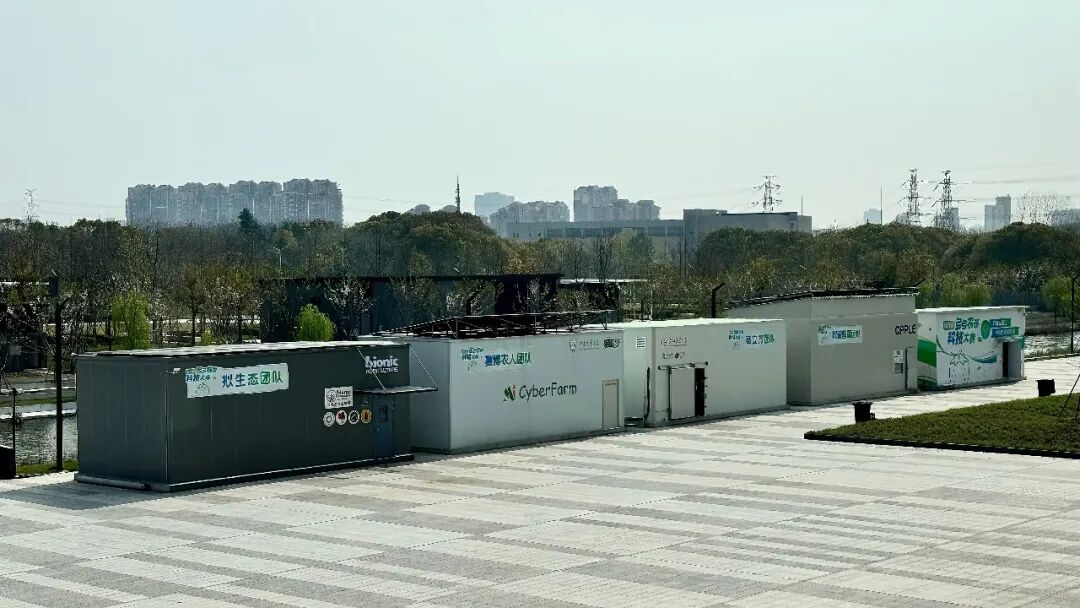
The significance of holding this competition is not to tell a fancy story about growing strawberries in plant factories, but to pull agricultural scientific research from academic papers to real production, and even to the improvement of people's livelihood and well-being.
01
Break down favorable weather and geographical conditions into parameters to create an "artificial four seasons" for strawberries?
Why are plant factories needed at this stage?
This is of course first related to the practical difficulties of crop planting. According to He Dongxian, judge of the competition and professor at the College of Water Resources and Civil Engineering of China Agricultural University, there are three main difficulties in traditional open-air or greenhouse strawberry planting — supply gap in summer and autumn, diseases and continuous cropping obstacles, and dependence on seed sources.
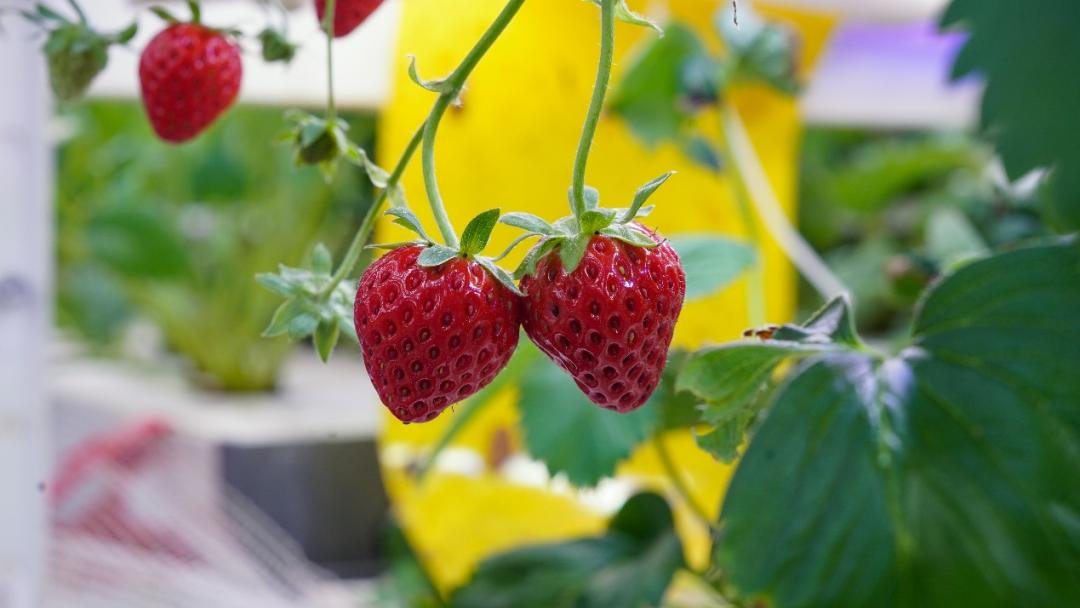
Solving the supply gap alone requires a lot of consideration. Since traditional strawberry planting has a clear seasonal window, summer and autumn are the "supply gap periods" for open-air and greenhouse planting. This is why this year's competition deliberately set the planting cycle to span summer and autumn, directly targeting the industry's empty window: during this period, there is almost no domestic fresh strawberry supply, which can only be supplemented by transshipment from off-season producing areas and cold chain logistics, leading to high prices and large losses.
However, it is quite difficult to cultivate strawberries in plant factories. Compared with leafy vegetables, growing strawberries requires both vegetative growth and reproductive growth, and continuous flowering and fruiting puts forward precise requirements for light formula, temperature and humidity, water and fertilizer, ventilation and other conditions.
All these planting difficulties will eventually be reflected in costs, especially energy consumption costs. Lv Zhaochen, a member of the Berry Cube team, put it bluntly: "If the energy consumption problem cannot be solved, it will be difficult for strawberries from plant factories to enter the shopping baskets of ordinary consumers." The three-tier threshold for commercialization proposed by He Dongxian has been repeatedly cited in the industry: an annual output of 5 kg per square meter is qualified, 8 kg means breaking even, and 12 kg means making real profits.
The most energy-efficient team in this session is the OPPLE Smart Berry team. They directly take away heat through water-cooled lamps, and then save 5-6 percentage points of energy consumption by using high-voltage DC power supply, achieving the lowest energy consumption among the four teams. To sum up, they give full play to their technical advantages in the lighting field, and improve energy efficiency through the intelligent centralized power supply and control system of DC power supply and optimized lamp design.
Members of the Berry Cube team adopt independent switch control for equipment such as fans, air conditioners and dehumidifiers to realize precise start and stop of a single device, and maximize the avoidance of energy waste; at the same time, the system predicts the future trend of temperature and humidity 15 minutes in advance according to the real-time temperature and humidity in the plant factory, and makes equipment adjustment decisions 5 minutes in advance. Thanks to this cooling scheme, the air conditioning energy consumption of the team accounts for less than 20% of the total energy consumption, while the proportion of other teams is around 30%.
The Cyber Farmer team, which finally won the first prize, won because they not only reduced the electricity cost, but also made every kilowatt-hour of electricity produce more strawberries with better quality, which is why their cost accounting can break even.
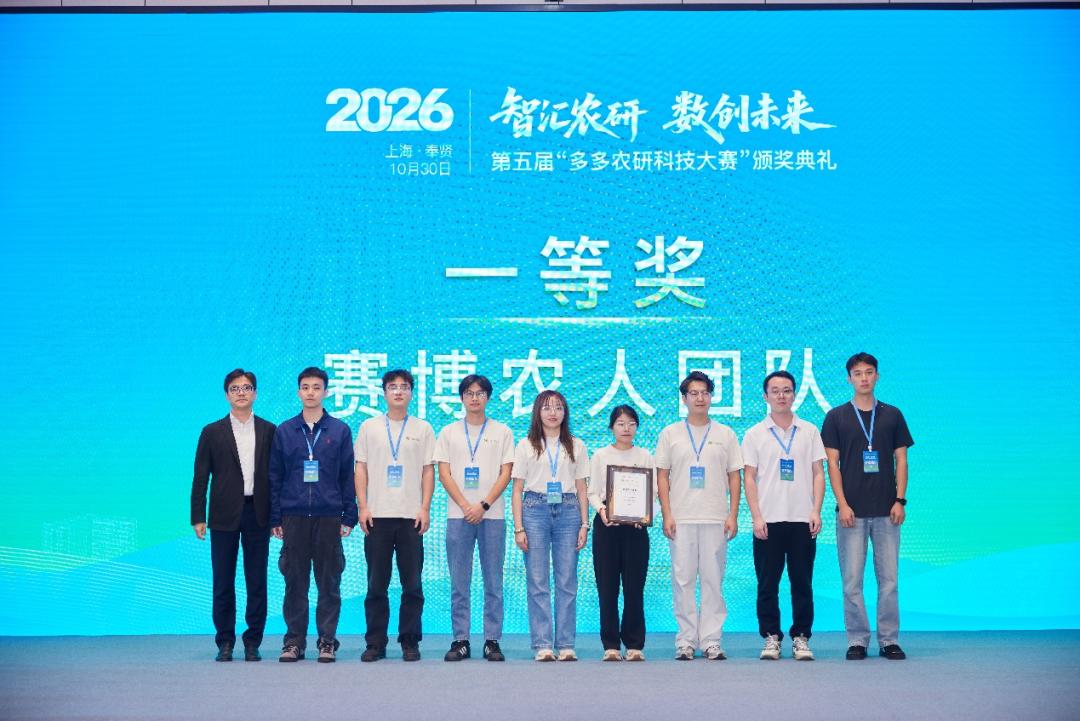
This team has participated in five consecutive sessions of the Duoduo Agri-Tech Research Competition. All members are postgraduates and doctoral students with formal professional education background. The most tricky problem they faced was the lack of hands-on experience in growing strawberries, so they could only build a knowledge graph based on expert experience, literature and historical data. All members, from the "veterans" to the team leader Chen Minhui, have accumulated rich experience through several participations in the competition, forming a long-term research echelon.
They hope to convey the planting concept of "talking to plants" to the outside world. When implemented in plant factories, this is the underlying operating logic of environmental control — instead of artificially setting a set of parameters to force plants to adapt, we should adjust the environment as much as possible according to the feedback from plants. This is similar to the logic of "clothes adapt to people rather than people adapt to clothes".
After several iterations of technology through participating in previous competitions, the Cyber Farmer team integrated this concept into technical methods such as intelligent models, image acquisition and remote monitoring. But this does not mean that plant factory operations can be separated from real people. Especially when entering the real production link, removing aged leaves and communicating with on-site workers cannot be replaced by technology and algorithms. The more advanced technology is, the more human wisdom is needed to give play to subjective initiative.
The Cyber Farmer team continued to use the condensate water recovery technology used in previous competitions, collecting the water vapor generated by plant transpiration through air conditioner dehumidification for recycling. Statistics show that during the final 165 days of planting, the team's actual water consumption was 7.8 cubic meters, far lower than other teams; the amount of recovered condensate exceeded 24,500 liters, with a recovery rate as high as 75.7%, which greatly reduced the operating cost of the plant factory.
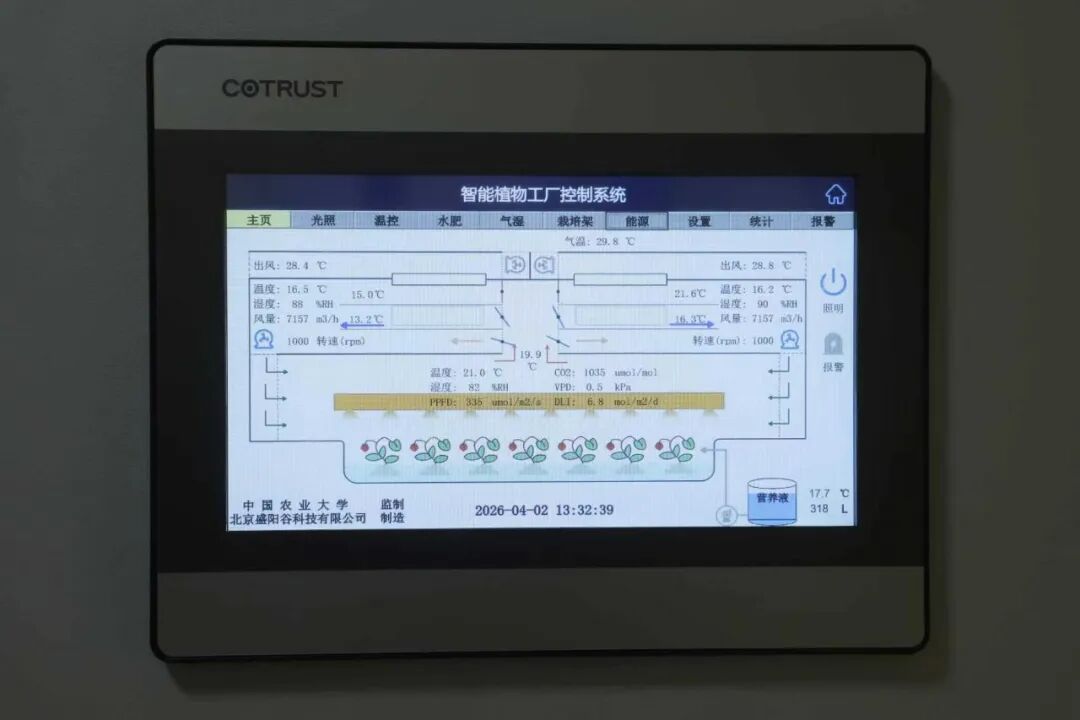
The real-time monitoring of the plant factory control system makes all target environmental data clearly visible
Of course, the practices of several finalist teams all show that a plant factory is not just about putting equipment into a container. Remote control, subsequent operation and maintenance, and on-site management must all be in place, so that the system can be truly delivered.
The performance of the Bionic Ecology team well illustrates this point. They are the only team that abandoned substrate cultivation and adopted shallow flow cultivation. The team used self-developed special tanks and planting equipment for shallow flow cultivation, which greatly improved the space utilization rate of the plant factory, and the number of planted plants ranked first among the four teams.
In the past, strawberries were planted in soil. The Bionic Ecology team wanted to use water as the carrier, add beneficial bacteria to the water, and let the system complete the decomposition of organic acids internally. Team member He Zhaohui described the Bionic Ecology team as a combination of "Zhejiang scientific research team" and "industrial practical experts", with members covering multiple fields such as breeding, horticulture, plant protection and international commercial implementation. What they want to deliver is not just a batch of strawberries, but a set of replicable and deliverable production systems.
Strawberry supply is highly dependent on producing areas, seasons and transportation conditions, but people hope to eat it in any season and anywhere. The significance of plant factories emerges in this gap. It is not only to replace greenhouses, nor just to verify technology, but to form a set of replicable production capacity.
02
Between electricity cost, quality and yield, who pays for plant factories?
All finalist teams tried to solve the cost problem through technology. After nearly half a year of planting, the solutions have been proven to be implementable, but plant factories still face some key commercialization challenges.
Who exactly needs plant factories, and is the demand in this market large enough?
The account is very clear at present: if we do not offset the cost with photovoltaic power storage, the electricity cost allocated to each jin of strawberries is about 10 yuan higher than that of ordinary planting. This means that it is difficult for plant factory strawberries to enter ordinary consumption scenarios. This made a number of participants including He Zhaohui not optimistic about its commercial potential at the beginning. Previous history has repeatedly proved that the cutting-edge nature of a technology can often attract investors' attention for a while, but long-term investment requires stable market demand.
Ordinary consumption scenarios cannot cover such costs for the time being, but some overlooked markets show promising prospects. At present, the demand is mainly concentrated in three types of places: first-tier domestic cities, arid regions overseas, and countries with low vegetable self-sufficiency rates.
When talking about the demand market, the participating teams usually divide it according to the shortcomings of geographical conditions rather than by industry: where light, land or transportation is not conducive to the supply of fruits and vegetables, there is a potential market for the plant factory model to be implemented.
Yu Hong, head of the strawberry research team at Hangzhou Academy of Agricultural Sciences, said bluntly: "With the same output, it is better to shift the output to summer and autumn when the premium can be higher than to rush to market in winter."
This judgment is based on such industrial reality — the harvest season of open-air and greenhouse strawberries is concentrated from December to April of the next year, and production is almost impossible in the rest of the time, because strawberries must undergo flower bud differentiation when the night temperature is lower than 12℃. During the gap period of traditional planting, consumers may accept strawberries produced by plant factories with higher premiums; once the strawberry season comes, plant factory strawberries cannot compete with greenhouse strawberries or open-field strawberries.
The Berry Cube team accordingly depicted a customer profile: direct supply to high-end bakeries, boutique supermarkets and star hotels during the summer and autumn supply gap. These three types of customers are not sensitive to prices, but have extremely high requirements for stable supply and consistent fruit shape, which exactly matches the strengths of plant factories.
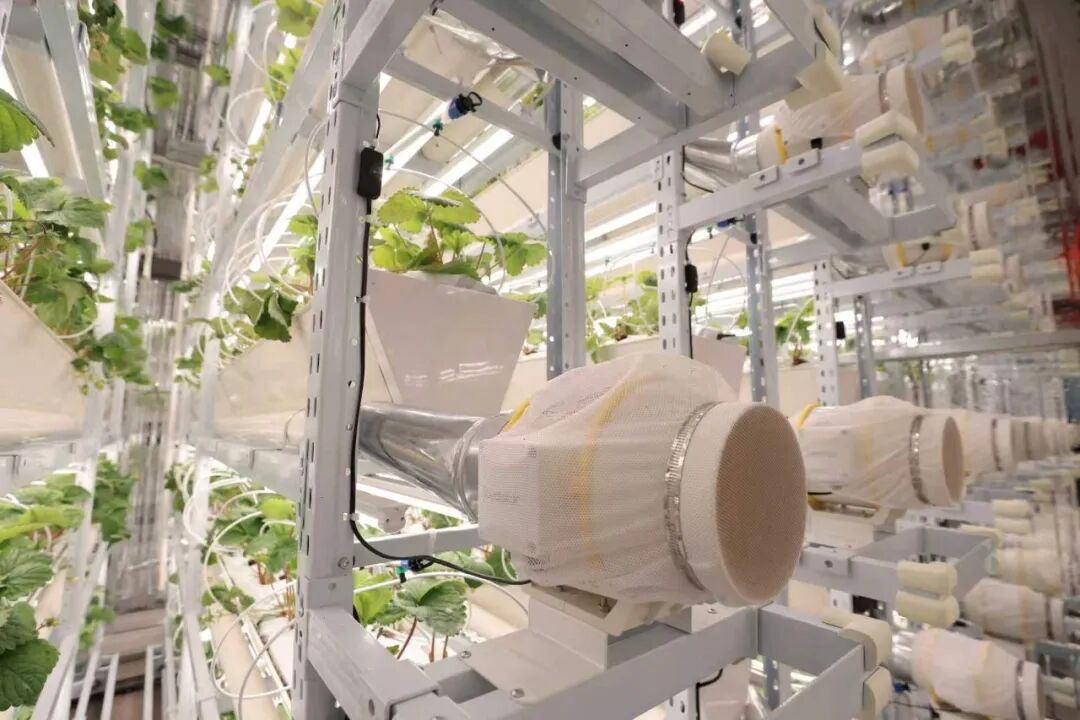
Each layer of the planting rack is equipped with an independent fan to build an efficient internal air circulation system
For some remote alpine and cold regions, plant factories have great practical value.
The team of the previous session took a different approach and promoted plant factories to the Qinghai-Xizang Plateau. "While our peers are solving the problem of technology 'from good to excellent', we are solving the problem of 'from scratch' on the plateau," said Qin Chuhan, captain of the Moquan team, winner of the Excellence Award of the 4th Duoduo Agri-Tech Research Competition.
Lv Zhaochen, member of the Berry Cube team, believes that in remote areas such as Xizang, wind energy and solar energy are abundant, and the electricity cost is low. If plant factories are built there, it can also solve the problem of not being able to eat fresh fruits and vegetables in alpine cold regions.
Agricultural globalization provides another possibility for plant factories. Equipment, factories, technology and services can all be salable "commodities".
The Bionic Ecology team has already successfully sold its plant factory solutions. Team member He Zhaohui once visited Singapore and the Middle East, where he found that the core element of plant factory commercialization is not price, but stable output is the real challenge.
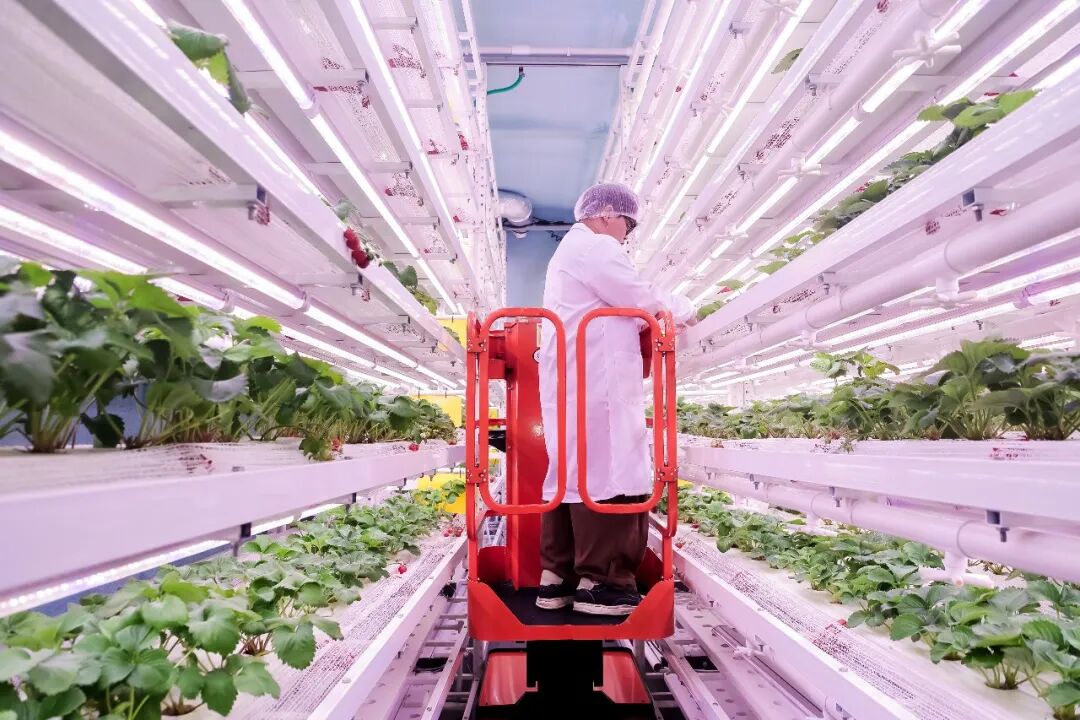
Workers operate the rail-type picking vehicle, moving between movable planting racks to pick high-position strawberries conveniently
The shallow flow cultivation solution they developed has built demonstration bases in New Zealand, Qatar and Singapore. These three sites are very representative: Qatar and Singapore are regions with perennial high temperature, very limited arable land, and markets where leafy vegetables are highly dependent on imports; New Zealand is a high-end agricultural country that is willing to pay for technology.
The Middle East, North Africa and other places are short of water resources, and the water consumption of plant factories is only 2% to 5% of that of traditional agriculture, which is a rigid demand in local areas. In hot areas, strawberries cannot be grown in the open air. Last year, the Bionic Ecology team exported strawberry planting container systems to Qatar at a price as high as 70,000 US dollars.
He Zhaohui mentioned at the competition that the Bionic Ecology team has contacted many overseas customers at the CAC International Agrochemical Exhibition. For them, plant factories are a set of solutions for local production of high-quality fruits, not an experimental display.
On the field of Duoduo Agri-Tech Research, participating teams discuss whether the cost, electricity bill and market operation model can work. As a result, plant factories are no longer just an idealized story — their future is not on the parameter sheet, but lies in whether they can find a balance between electricity cost, quality and yield, and come up with a mass-producible planting solution.
03
What is the value of the Duoduo Agri-Tech Research Competition?
This much-concerned competition in the industry not only shows the winners and losers, but also many positive signals: the cost of agricultural R&D is calculated openly, domestic solutions are truly verified, technology flows to places that are most short of vegetables, and a group of young people stay in the agricultural field.
Agricultural technology competitions are most likely to turn into parameter competitions: how high the light efficiency is, how accurate the algorithm is.
But in this session, the focus of everyone's discussion is: who are the harvested