GPT-Image-2.6 has been fully rolled out, supporting native GIF and SVG output, and 6.2 Astra has also been unveiled.
GPT-Image-2.6 is suddenly launched!
The overall generation time is shortened by 50%, with the fastest image output in 6 seconds; it natively supports generating GIF animations, and supports direct export of SVG vector format.
For the first time, OpenAI has split the model's "scene planning capability" and "pixel rendering quality" into two independent parameters in the API, which greatly reduces the cost and time consumption of multiple rounds of modifications.
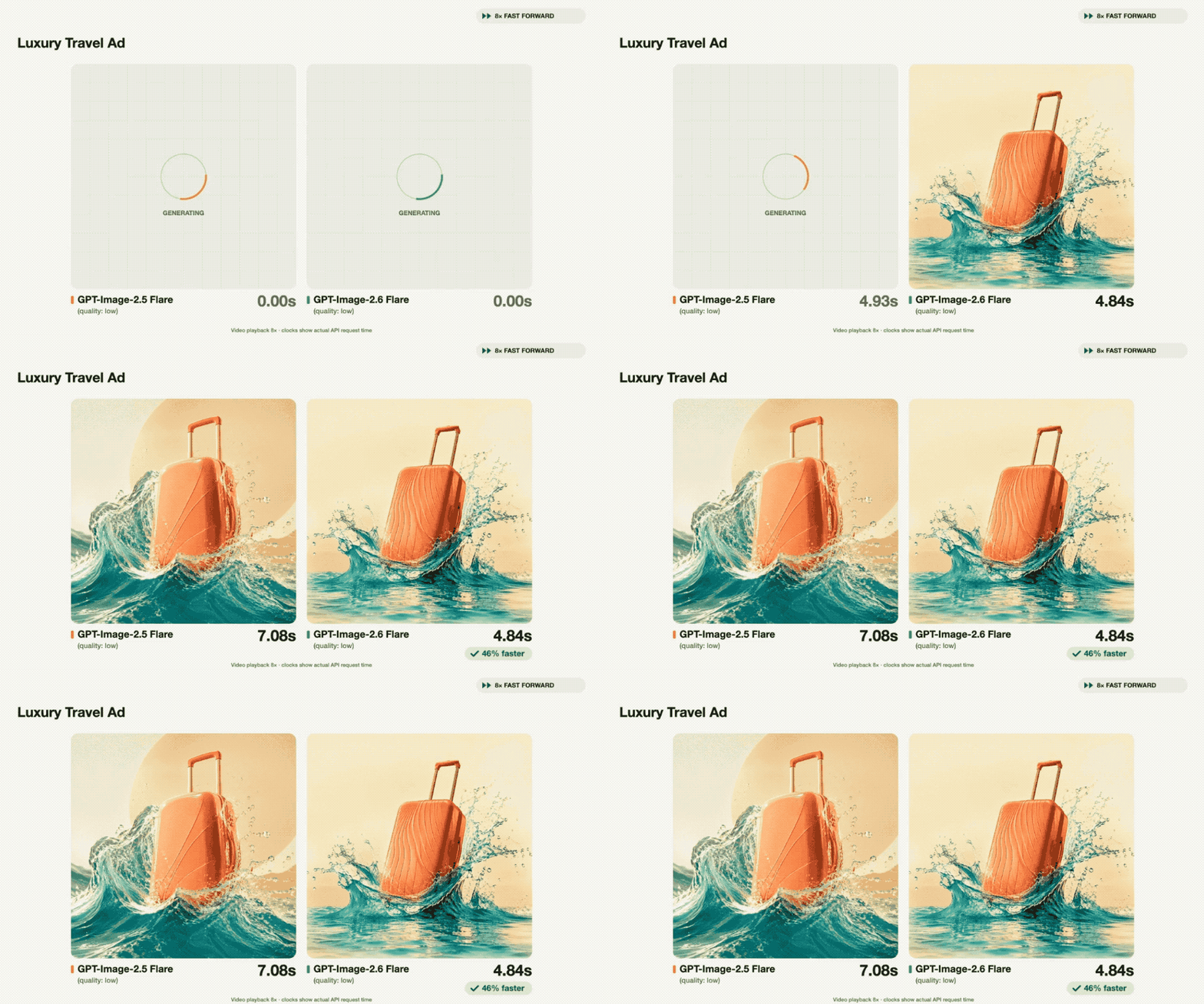
At present, GPT-Image-2.6 has been fully rolled out in ChatGPT, Codex and APIs, and all free and paid users can use it directly.
Decoupling "planning capability" and "image quality", outputting images in as fast as 6 seconds
This time, the API side of GPT-Image-2.6 has two specific models for the first time, namely Flare and Sunburst.
Flare focuses on speed and typesetting, which is specially optimized for commercial visuals such as posters and e-commerce product images. Under the low image quality gear, the generation time of a single image is compressed to 6 seconds.
Sunburst is designed to tackle complex challenges, providing higher detail accuracy under medium and high image quality gears, and corely solving the consistency problem that characters and products will change after multiple rounds of dialogue modification.
Changes in the underlying control logic are also noteworthy.
In the past, when calling the image generation API, developers could only adjust the resolution or the general image quality gear. Even if you only change the background color, the model needs to re-run the full composition planning process.
This time, Images 2.6 adds a new parameter called complexity, which is specially used to control how much computing power the model spends on scene planning before starting to generate. The original quality parameter is purely responsible for visual details and fidelity.
This method of decoupling conception effort and rendering accuracy follows the same idea as adjusting the reasoning thinking depth in large language models.
In the actual workflow, if it is a daily local fine-tuning or quick image modification, developers can adjust the complexity to low while maintaining high quality output.
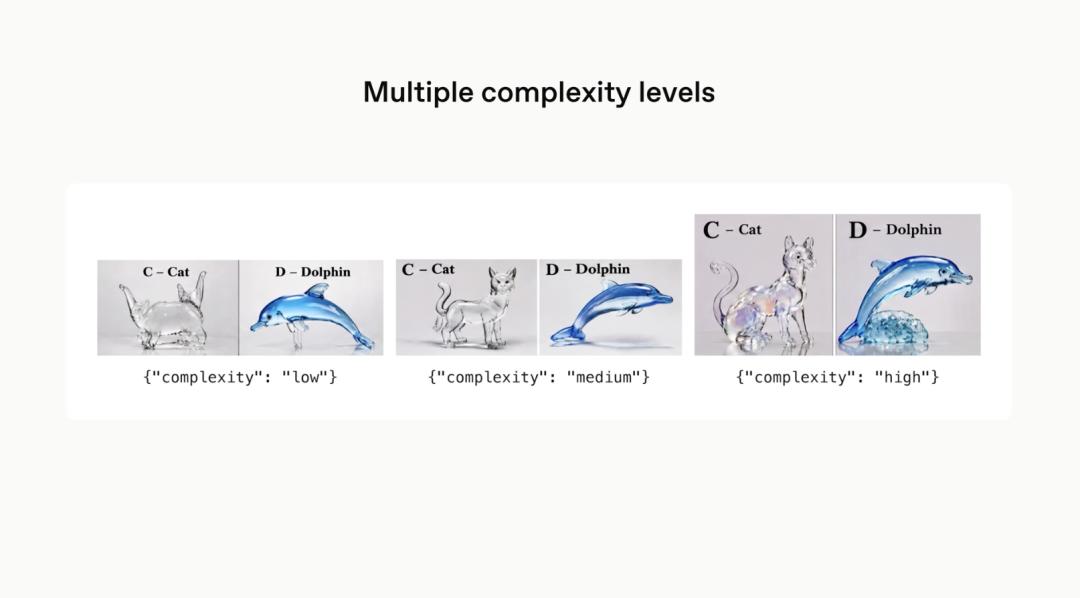
This saves the model the time to re-plan the overall layout, and only performs high-precision redrawing.
Only when encountering complex scenes with multiple elements in the same frame or extremely many constraints, do you need to increase the complexity.
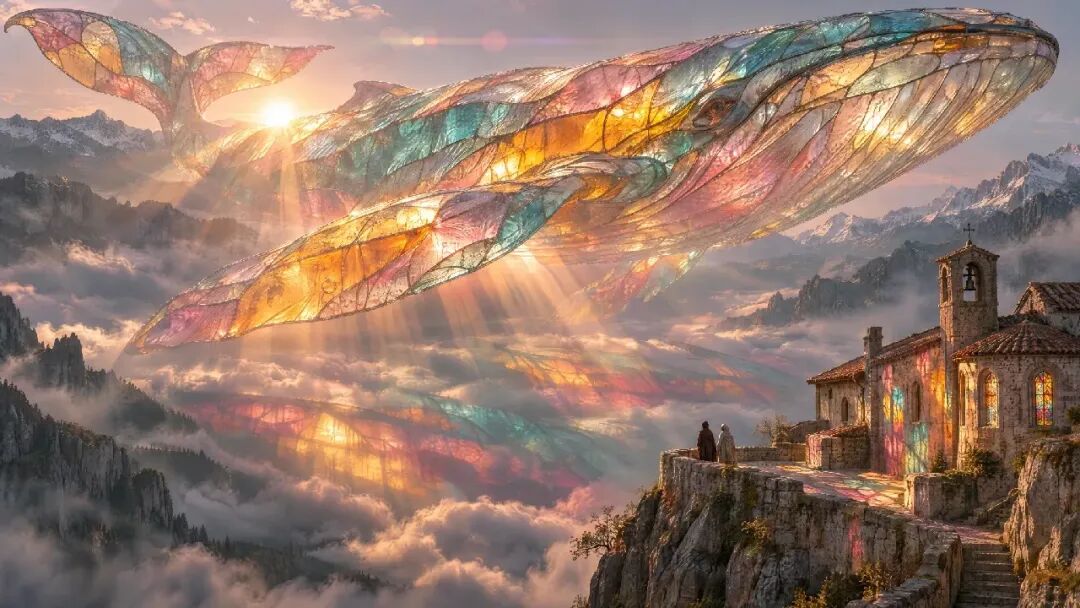
△ Images generated by AI
Using 3×2 sequence frames to achieve efficient generation, natively support GIF animations
Native support for GIF animations is the most intuitive new feature of Images 2.6.
Want to add small movements to brand mascots, make a few memes for social media, or just casually draw an owl on a lined notebook with a ballpoint pen...
After inputting to the model, the output dynamic stickers all have clean backgrounds and coherent movements.
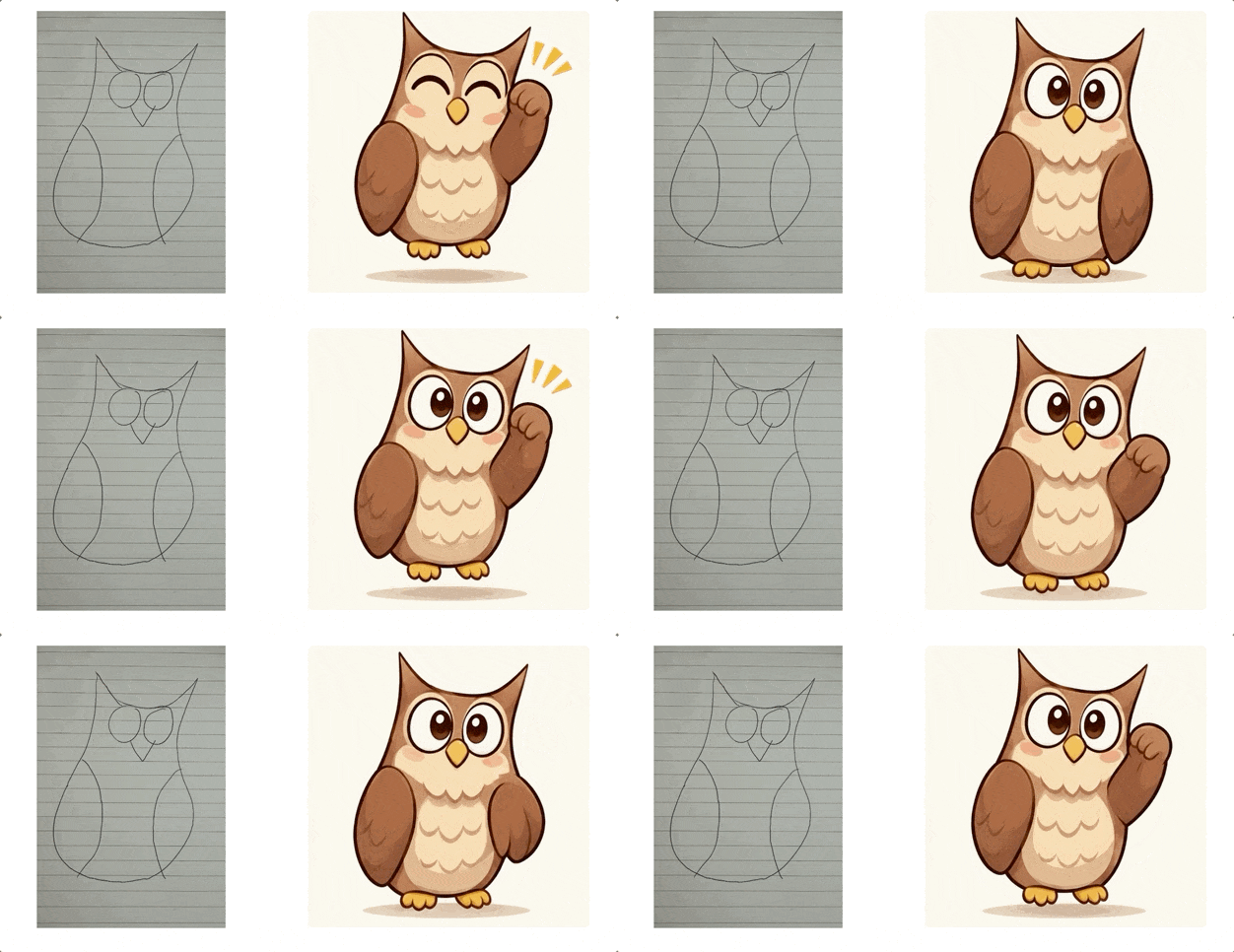
How can an image generation model quickly produce a smooth GIF without the help of a heavy-duty video generation model?
The answer is hidden in the prompt of the OpenArt cooperation case released by the official.
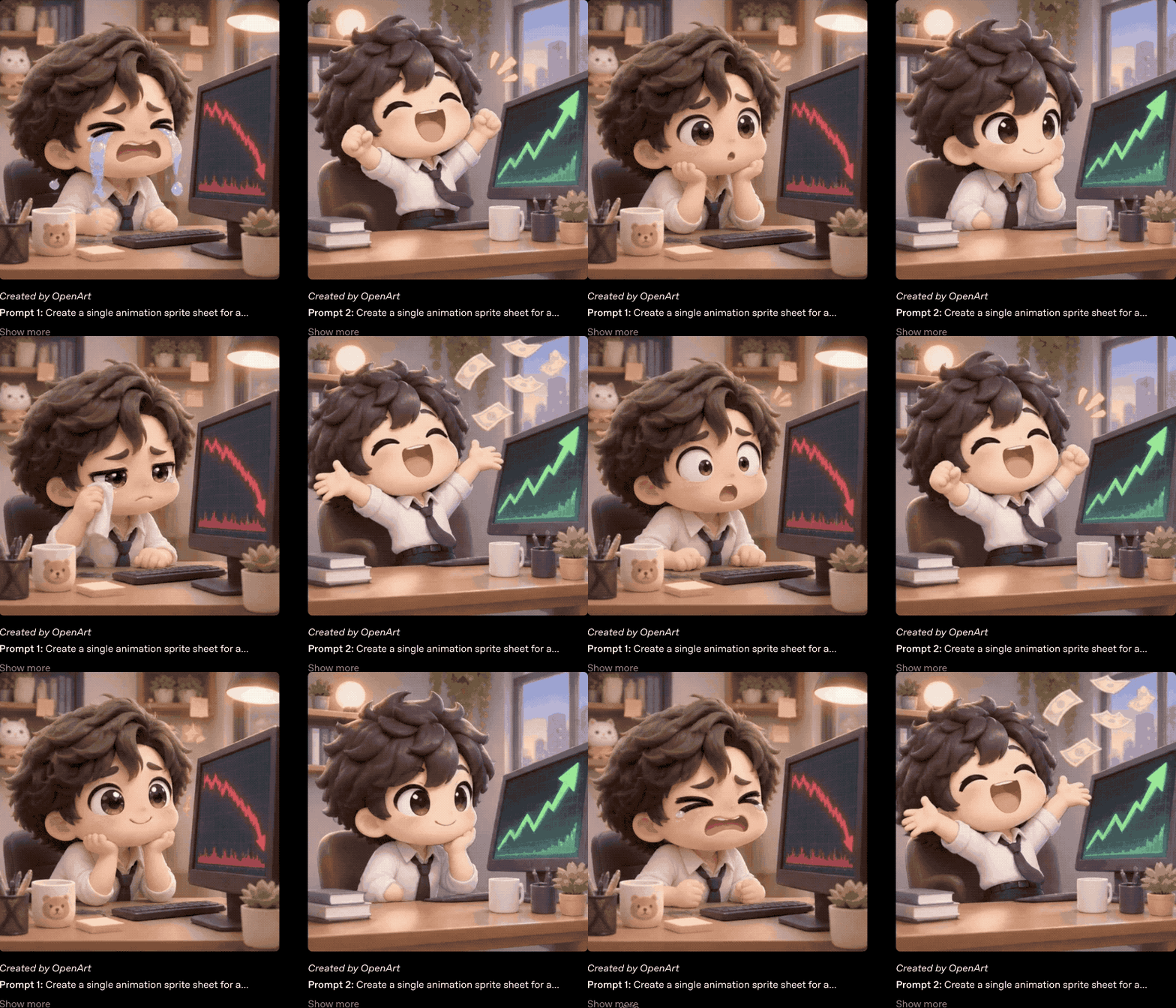
This set of animations of office workers crying bitterly at the plummeting stock market and celebrating by scattering coins when the stock market soars, the prompt fed to the model behind is actually as follows:
"Generate a single animation sequence image (sprite sheet) for a seamless loop GIF... Strictly contain 6 consecutive frames, arranged in an accurate 3 columns × 2 rows grid, read from left to right, top to bottom. Each panel is exactly the same size. Fix the 3/4 front camera angle, the same character, the same desk, monitor, clothing and background... The sixth frame transitions smoothly back to the first frame. No subtitles, no borders, no blank spaces."
Got it?
Images 2.6 does not use the complex spatio-temporal diffusion calculation for video at all, but adopts the sequence frame idea borrowed from the game industry, completing the drawing of 6 perfectly matched stop-motion animations (Sprite Sheet) in one single image.
Finally, slice and combine them, and the GIF is generated!

The advantage of this approach is that it avoids the high reasoning delay of the video model, and also ensures that the facial features of the characters, the folds of clothes and the relative positions of background objects in each frame are relatively fixed.
This capability has already been put into practical use by some companies.
For example, Town, a startup that develops AI office assistants, has integrated this capability through API, specifically generating real-time micro-expression animations such as typing and feedback for virtual assistants in work software.
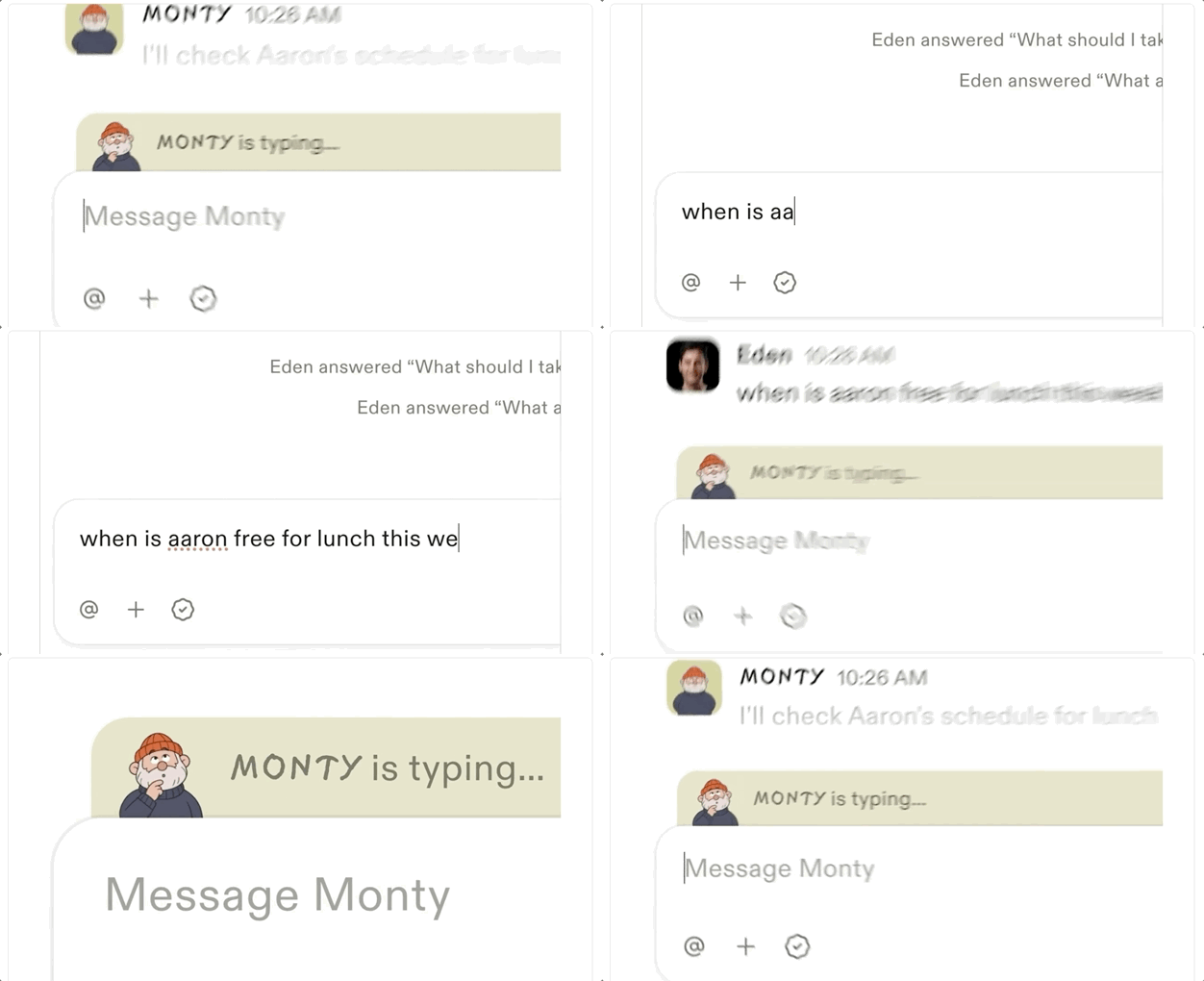
Directly output SVG, local markup capability is open to API
This update also brings two very practical engineering capabilities.
One is SVG vector image export, and the other is image markup on the API side.
Anyone who has done front-end or UI work knows that once the AI-generated bitmap is zoomed in, the edges will look terrible... If you want to embed it into a web page or App, the common operation is to find a third-party tool to convert it to vector format.
It is really troublesome.
Images 2.6 directly natively supports exporting SVG.
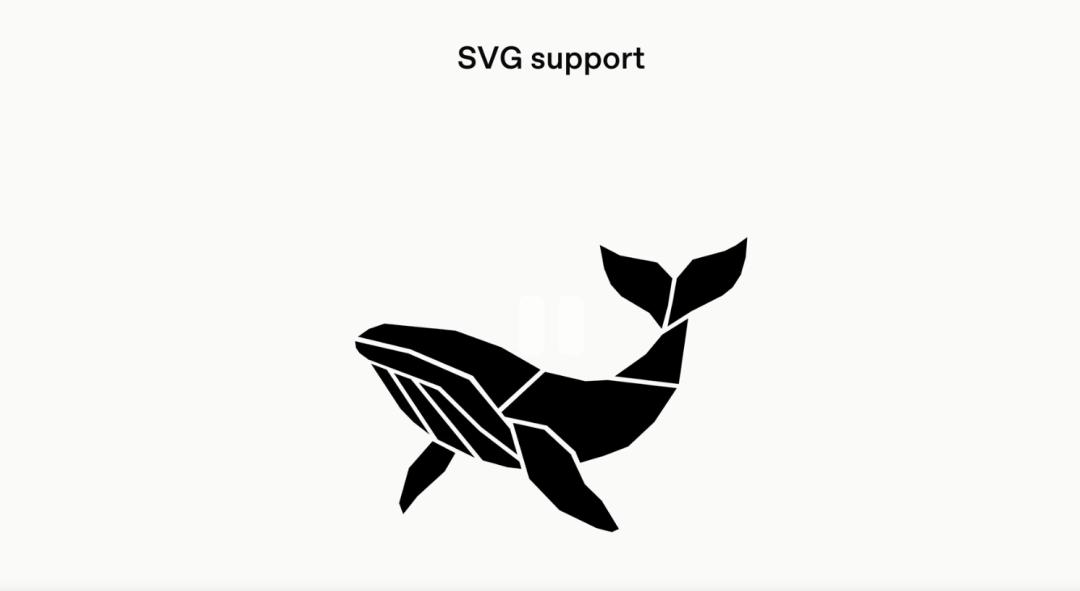
Originally, when programmers write front-end code in Codex, they can directly ask the model to generate infinitely scalable icons, components and illustrations, and add them to the code library directly.
All those intermediate conversion links are completely eliminated!
In addition, the partial redraw (Image markup) feature that was previously only available on the ChatGPT web page is now officially open to APIs.
Enterprise teams can directly use coordinates or masks to circle the area to be modified in their product background, and cooperate with the high consistency of the Sunburst model, so that batch image modification can run like an assembly line.
One More Thing
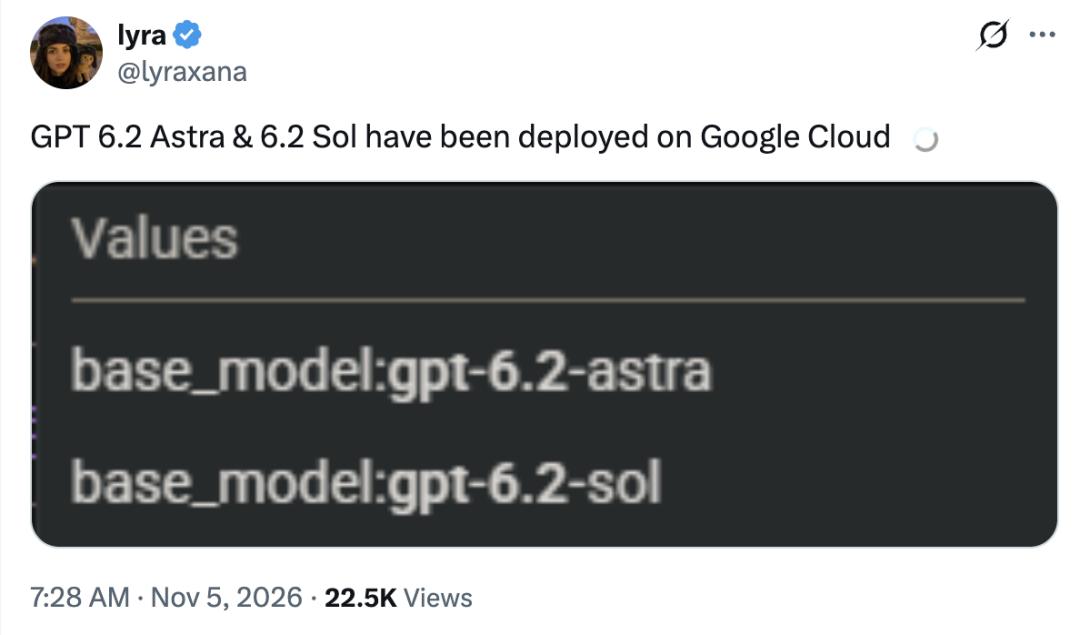
A small surprise discovered outside the image generation model:
GPT-6.2 Astra has now appeared on Google Cloud.
References:
[1]https://openai.com/index/introducing-images-2-6/
[2]https://x.com/lyraxana/status/2118123296738677133
This article is from WeChat Official Account "QbitAI", written by Heng Yu, published with authorization from 36Kr.