Personal Agent, Super Consensus or Super Bubble?
By the end of October, Mark Zuckerberg disclosed at Meta's earnings call that Muse had been launched for about a month and a half, with over 10 million people in the US and Canada having set up their personal agents. Muse launched in September, and Meta's stock price rose by about 27% that month, marking its best monthly performance since November 2022. This company, previously considered to be lagging behind in the model competition, has regained its say through a consumer-grade product.
Followers emerged intensively soon after. Alibaba, Tencent and ByteDance have all launched or are preparing their own products; OpenAI, Anthropic and xAI have successively released personal agents; entrepreneurs who have built successful products such as Xiao Hong and Qi Junyuan have also entered the market with new projects. Capital is also increasing its bets: Instinct, a company with only 14 employees, has reached a valuation of 10 billion US dollars.
However, there are several obvious anomalies in this boom.
First, there are almost no technical barriers. Two weeks after Muse went live, some people found that its workspace file name was the same as that of the open-source project OpenClaw, and Meta's product lead also admitted that it was "deeply inspired by it". Many practitioners said that similar products can be replicated in about three months.
Second, the valuation gap is huge. Manus, with an annualized revenue of 400 million to 500 million US dollars, has a valuation of about 4 billion US dollars; Instinct, which has not yet charged users, has a valuation two and a half times that of Manus.
Third, public attention has outpaced product development. Domestic major tech players have taken frequent actions, but most products have not yet entered the large-scale public use stage.
Why can a category that is easy to replicate and has no unified definition make almost all players enter the market at the same time? What are their respective strengths and weaknesses, and what common bottlenecks are they facing? Is this a real boom or a false hype, and who is more likely to stand out?
01. Major Tech Players, Large Model Companies and Entrepreneurs Are All Joining In
There is still no unified definition of Personal Agent. Meta says it can understand users' goals and complete tasks for users around the clock; Anthropic emphasizes that it knows when to take the initiative and when to act on behalf of users; Xiao Hong's Cue gives the most radical definition: an agent with an independent mobile phone number, email, payment method and computer. The definitions vary, but they all share one thing in common: users only need to put forward their demands, and the AI will take care of which service provider to choose, how to handle the process and how to pay.
The products discussed in this article refer to this type: products that can remember users' information for a long time, arrange things proactively, and complete tasks across multiple apps with user authorization. Chatbots that only respond to queries and tools that only complete single tasks are not the main focus of this discussion.
The reason why all players can't stay on the sidelines is that this type of product may change the way users find services. In the past, users opened apps, compared prices, placed orders, and all traffic and transactions stayed on the platforms. In the future, if users only say one sentence to the AI, and the AI decides which platform to go to and how to pay, many apps will move to the background and become called services. Previously, a user asked Muse to book accommodation, and instead of placing an order on Airbnb, it found a direct booking channel, which was about 60% cheaper than the platform price. This is a typical example.
Whoever can make choices for users will likely control the next stage of traffic distribution and transaction revenue sharing. The three types of players all want to occupy this position, but their starting points are different.
The first type is major tech companies, which are also the most favored by investors and practitioners in the short term. Meta's Muse has been launched; Alibaba has released Qwen Go; Tencent has deployed Xiaowei, and there are two other products, LightVela and Handy Bot; ByteDance is preparing for Spell.
The advantage of major tech companies lies in their ready-made ecosystems, where users, accounts and payments are all in their own systems, so they don't need to acquire new users from scratch or access third-party payment systems. For product implementation, one approach is to embed the Agent directly into existing apps, such as Tencent's Xiaowei which is built into WeChat; the other is to launch an independent app and then rely on its own ecosystem to divert traffic, such as Muse.
In terms of functions, major tech companies also start with their own ecosystems. Xiaowei is connected to WeChat's native functions, mini-programs and life services; Spell is regarded as an extension of the capabilities of the Doubao mobile assistant; Muse connects WhatsApp, Instagram and Messenger, also integrates Stripe payment, and expands to merchants such as Walmart, trying to cover the whole process from issuing instructions to completing payment.
For major tech companies, this initiative is both offensive and defensive. If they don't develop such products, users' demands may be taken over by other players' Agents. An investor said that it is difficult for domestic major tech companies to simply replicate Muse, but they must follow this direction: "Even if we can't be the first, we can't be absent."
The second type is large model companies, whose representative products include OpenAI's Dots, Anthropic's Duet and xAI's Grok Bot.
Their strongest advantage lies in their models, but their anxiety also comes from models. If users eventually call models in applications like Muse, model manufacturers will only become background suppliers, possibly only charging for computing power, while the interaction, data and subscription relationships remain in the application layer. For these companies, launching Personal Agent is a way to avoid being reduced to background suppliers.
The three companies' products all focus on work scenarios. Dots, relying on the ChatGPT plugin ecosystem, can connect to more than 4,000 applications, which is suitable for tracking materials, maintaining codes and synchronizing project documents; Duet provides more than 6,000 connectors, covering tools such as Gmail, Slack and QuickBooks, targeting emails, schedules, finances and customer affairs; Grok Bot emphasizes multi-agent collaboration and is deeply integrated with X, making it more suitable for content, operation and research tasks.
Choosing work scenarios is both a strength and a helpless choice. Most work software has open interfaces, so model companies' tool connection capabilities can be put into good use; but for daily life scenarios such as food ordering, travel and shopping, the entry and payment are all controlled by platforms. Model companies do not have their own consumer scenarios and payment systems, so it is difficult to cut in from these areas.
Source / Unsplash
The third type is startups. They do not have their own ecosystems, nor do they master the most powerful models. Their product forms vary the most, and they rely more on the judgment of their founders. Xiao Xiao, an AI investor, said he has two investment criteria: the team has relevant successful product experience, or it is a genius founding team. The top several startups fall exactly into these two categories.
Xiao Hong belongs to the first category. Manus was once sold to Meta for a valuation of more than 2 billion US dollars. After the transaction was called off and the company was redeemed to become independent, the team launched Cue. It configures each AI with an independent email, mobile phone number, wallet and cloud computer, allowing it to handle affairs for users as a digital entity, such as answering the landlord's renewal call or completing payment within the budget.
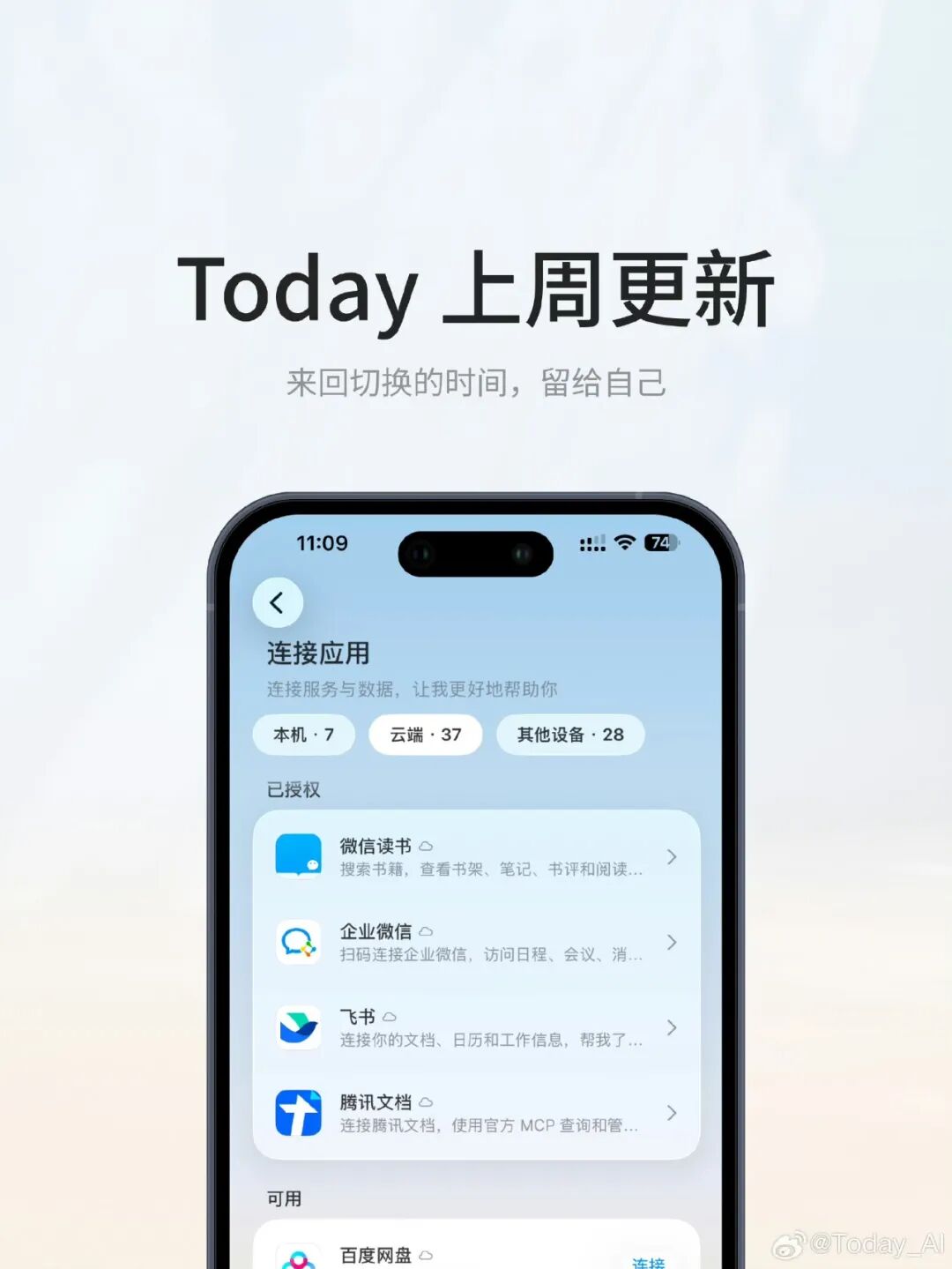
Qi Junyuan, the founder of Today AI, also belongs to the first category. He previously built Teambition, and served successively as the head of Alibaba Cloud Drive, Vice President of Feishu Products, and head of the PC version of Doubao, before leaving his job to start a business in November 2025. The global version of his Today AI was launched on the same day as Muse, focusing on living memory and initiative, generating morning and evening briefings and following up tasks by remembering users' projects, contacts and unfinished matters.
Noah Shinn belongs to the second category. He is 23 years old this year, studied chemistry and computer science at Northeastern University at the same time in the US, and dropped out to start a business in 2023. His Instinct does not have an independent app, and only uses existing channels such as SMS, phone calls, iMessage and WhatsApp for interaction, so anyone who can send text messages can use it. This company has only 14 employees and a valuation of 10 billion US dollars.
Apart from the top players, there are also a number of small teams cutting in from narrower scenarios. For example, UniCone, which targets content creators, sorts out materials and breaks down tasks from authorized screens and chat records; Li Dan converts voice, screenshots and chat records into to-do items. Some of these products are not yet fully developed, and the teams are very lean.
The three types of players have different starting points: major tech companies start from users and payments, model companies start from models and tool connections, and startups start from product design and specific scenarios. But to build a Personal Agent that can really handle affairs for users, they all face the same bottleneck.
02. General Technology, Three Unsolvable Challenges for the Whole Industry
There are already many products, but why no one has built a complete life assistant yet?
Many practitioners believe that the gap between different players does not lie in the underlying technology. Yang Zhiqin, a PhD from the Hong Kong University of Science and Technology, said that many Personal Agents adopt a similar basic technical paradigm to OpenClaw, that is, large language model-driven tool calling and multi-step execution. The differences between different players are reflected in tool and data access, memory and context management, execution reliability, permission mechanisms, and product design for different users. Developer Berkshi also said that from the perspective of engineering implementation, the underlying differences between different players are limited, and the differences are more reflected in which users they target and how they design their products.
The real difficulty is that Personal Agent needs to understand a person for a long time and take the initiative to handle affairs for him without supervision, and this step is still in the very early stage, mainly due to three challenges.
The first challenge is reliability.
Assuming that each step is independent and the success rate of each step is 95%, the probability that all 20 steps of a task are completed successfully is only about 36%. If a programming Agent writes wrong code, developers can correct it; if a task Agent deviates from the process, people can supervise it. The value of Personal Agent lies precisely in reducing human intervention. Once payment, transactions and private data are involved, errors will lead to real monetary losses.
Meta once hired human contractors to handle some phone tasks in internal tests, and then suspended this practice, indicating that the current technology cannot support users to completely let go of control.
Users' tolerance for risks is also limited. Xiao Yang, a senior AI product manager, even said that he is only willing to use such products when the convenience brought by the product is three or four times higher than his concerns about data security. No product has reached this critical point for him yet.
The second challenge is platform interoperability.
To handle affairs for users, the Agent needs to enter other companies' apps and call other companies' data, and large platforms have no reason to take the initiative to allow this. One of the major values of the Agent is to help users bypass intermediaries and find cheaper options, which exactly harms the interests of the platforms. The more the Agent can help users save money, the more unwilling the bypassed platforms are to let it access their systems.
Previously, the Doubao mobile assistant released a "rejected app operation list", more than 150 apps explicitly refused the AI agent on the Doubao mobile terminal to operate on them, including many national-level apps such as WeChat, QQ, Taobao, Tmall, Meituan and Alipay. Overseas, Amazon once banned Muse's purchasing access. A Today AI user told us that he asked the Agent to register for medical appointments, pay fees, book hotels and buy air tickets, but none of the operations could access the corresponding platforms.
The industry is looking for solutions at the protocol level. Led by Meta and Sierra, together with Stripe, Walmart and other companies, they are promoting the agent protocol, and domestic institutions are also promoting interconnection standards. But interoperability is not only a technical issue, but also involves data ownership, traffic distribution, commercial interests and security responsibilities, which is difficult to solve in the short term.
The third challenge is cost.
Personal Agent needs to be online for a long time, and continuously store and call personal context. More than one practitioner said that its reasoning cost may be higher than that of programming Agents.
Veteran investor Lao Qian said that his daily token consumption only for work and programming is close to 1 billion, and if all life scenarios are connected, the consumption will increase significantly. Moreover, the first two challenges will continue to push up costs: insufficient reliability requires additional human support; poor platform interoperability requires detour operations such as screenshot recognition, which is slow and consumes a lot of computing power. Lao Qian commented that at the current stage, Personal Agent "consumes a lot of tokens and is not accurate enough".
Before a general solution is found, all players are trying to minimize risks: some products first access low-risk to-do tasks; some products require key steps to be confirmed by real people; UniCone stores data locally and opens its code, allowing users to check it by themselves.
03. The Demand Is Real, But the Product Is Still in a Very Early Stage
Reliability, platform interoperability and cost have no general solutions in the short term, but players and capital are still pouring into this track in a swarm. Is this another round of false boom?
Based on the views of many practitioners, the demand has emerged, but the product is still in the early stage.
The real part lies in the demand. Muse attracted more than 10 million people to set up their accounts in one and a half months, but this number includes the traffic diversion from Meta's own applications. More convincing is that people are willing to pay for it. According to Instinct founder Shinn's self-statement on a podcast, the card binding rate of its users within three weeks of registration reaches 40%, the authorized user retention rate exceeds 80%, and the monthly average consumption of users who make purchases exceeds 1,300 US dollars, making the platform's annualized transaction volume close to 1 billion US dollars.
Xiao Yang said that card binding rate, retention rate and repurchase rate are important indicators to observe the demand for such products. If these data are true, it means that a group of users are already willing to hand over their wallets to AI.
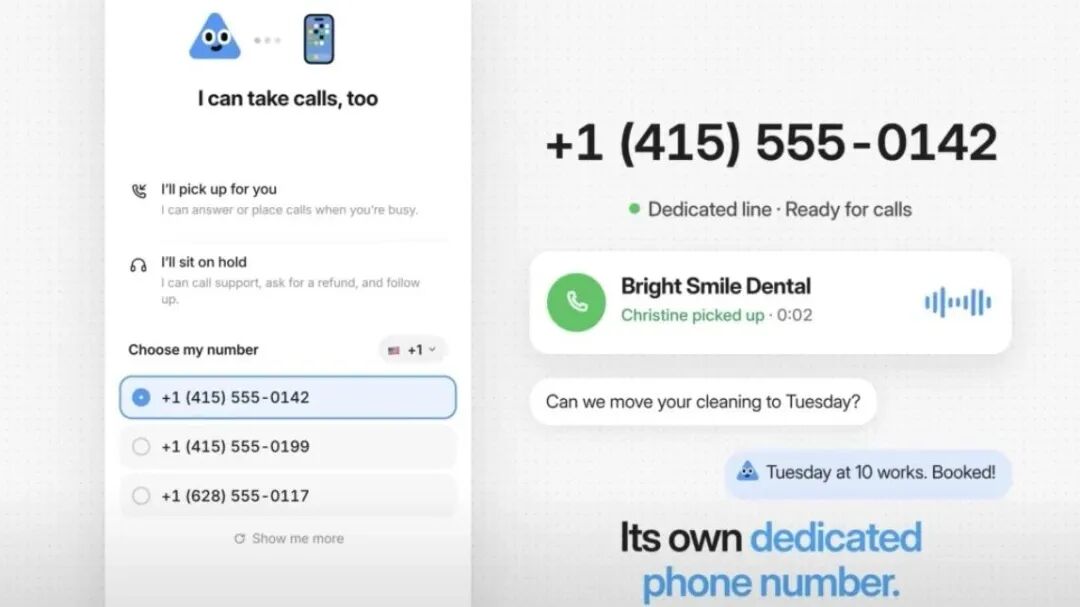
Cue Interface
The false part lies in valuation and product.
The demand has just emerged, but the valuation gap between companies is already huge.
Instinct has a valuation of 10 billion US dollars, two and a half times that of Manus, which has an annualized revenue of 400 million to 500 million US dollars. However, the two companies have different charging methods and revenue structures. What Manus focuses on is the annualized revenue run rate, while what Instinct discloses is the platform transaction volume, which is not equal to the company's revenue, and the commission rate and performance cost also need to be taken into account.