There is not enough electricity to power AI systems, and a computing power project has been deadlocked for half a year just over a difference of 2 cents.
News in Brief
1. It is estimated that by 2030, the power consumption of national computing centers will account for about 6% of the total social electricity consumption.
2. The construction of computing centers is first and foremost an energy project, and energy storage must be incorporated into the planning of new projects.
3. More than 100 green power direct connection projects have been approved, but only a few have actually started construction.
"24 cents or 26 cents?" In a green power direct connection project in western China, the power generator side and the computing power side have been deadlocked over a 2-cent electricity price for a full half year.
For data centers, 2 cents is no small sum. A 100-megawatt-level data center can consume hundreds of millions of kilowatt-hours of electricity annually. A 1-cent difference in electricity price means a cost difference of millions of yuan; a gigawatt-level data center can have monthly electricity bills reaching hundreds of millions of yuan, with electricity costs accounting for 60% to 70% of operating costs.
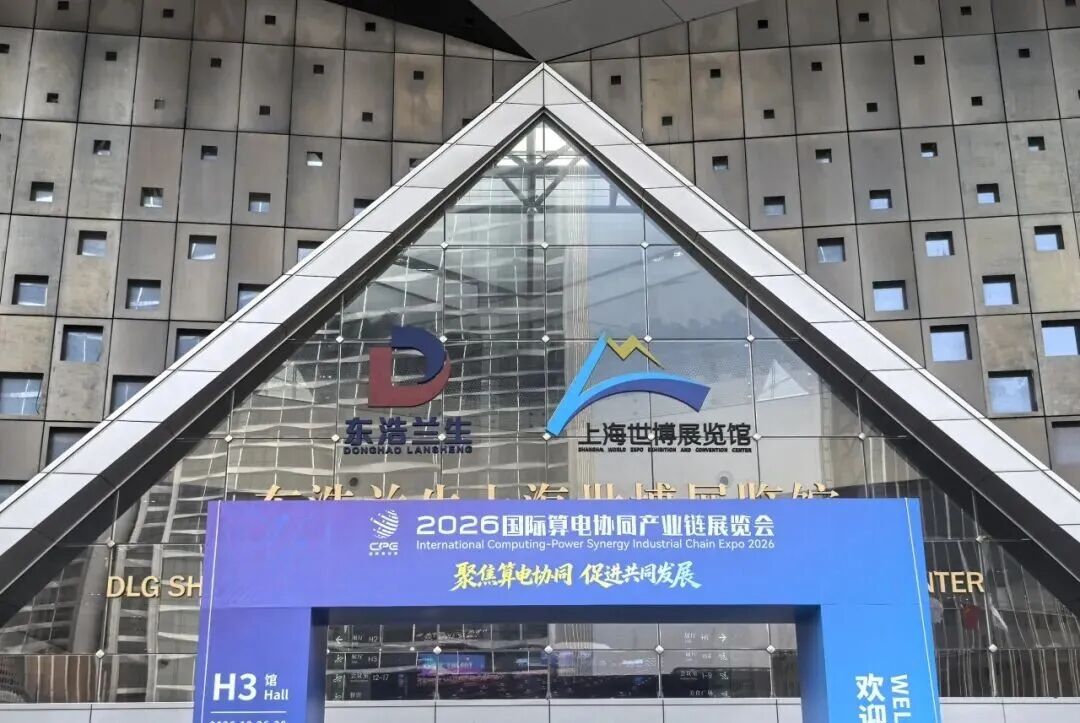
"It is almost equivalent to rebuilding the local power grid from scratch." At the 2026 International Computing-Power and Electricity Coordination Industry Chain Exhibition (CPE 2026), industry insiders pointed out that the local power grid is no longer able to support the new computing power demand, and breaking the deadlock of electricity price game requires the coordination of computing power and electricity.
In the end, it all comes back to the saying: the end of AI is computing power, and the end of computing power is energy.
Rebuilding the Power Grid from Scratch
Why has computing power suddenly become so power-hungry? Gartner predicted in 2026 that as we enter the agent era, the token consumption of a single task by an agent can reach 5 to 30 times that of standard generative AI, computing power demand is rising exponentially, and gigawatt (GW)-level intelligent computing centers will become popular.
In the past, 10 megawatts was considered a large data center; today, new projects are often planned with units of hundreds of megawatts or gigawatts.
Data from the National Energy Administration shows that the total power consumption of national computing centers in 2025 was about 170 billion kWh, accounting for 1.6% of the total social electricity consumption. The annual average growth rate of computing power electricity consumption in the eight hub nodes of the national integrated computing network reached about 39.5% in the past three years; it is expected that by 2030, the power consumption of national computing centers will reach 800 billion kWh, accounting for about 6%.
But the real contradiction does not lie in the insufficient total energy. "China's energy endowment is generally abundant." Jian Yumin, CEO of Shanghai Damao Technology, explained to the reporter of IT Times, but the crux lies in the uneven distribution of resources and loads, and the insufficient support of local power grids.
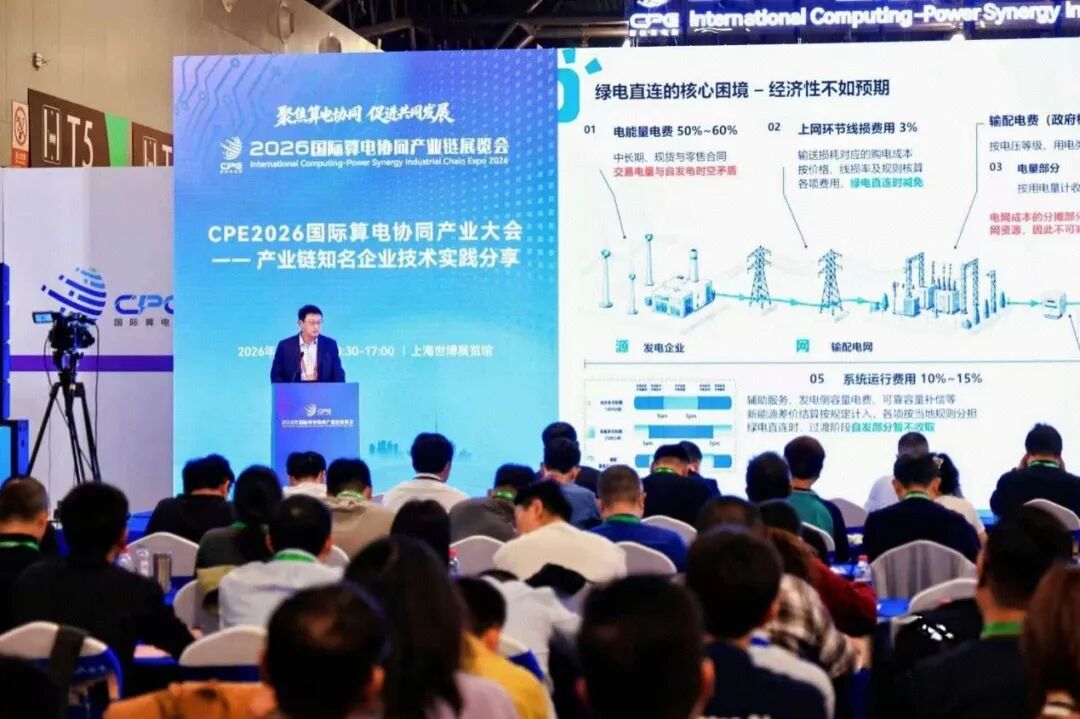
Jian Yumin gave an example: the power demand of a new intelligent computing project in a regional power grid in eastern China reaches 75% of the upper limit of power supply of that regional power grid. To meet the computing power demand, the local government has to invest huge sums of money to add new power grid nodes.
The west is no exception. Jian Yumin cited another example: in a city in western China with a high concentration of high-energy-consuming industries, more than 76% of the local total electricity consumption is occupied by traditional high-energy-consuming industries, and the existing computing power "eats up" another 20%, while it is planned to add twice the current computing power scale. According to the common 200% power grid redundancy requirement in the industry, the supporting power scale required for the new computing power is equivalent to the original power grid scale, "which is almost equivalent to rebuilding the local power grid from scratch", which is beyond the support capacity of the regional power grid.
In addition to the mismatch between supply and demand, the insufficient utilization of computing power facilities has also exacerbated the contradiction. During the MWC Shanghai event this year, Zhang Jin, General Manager of Operator Solutions of Tencent Cloud, said that the average GPU utilization rate of domestic intelligent computing centers is less than 30%. Some resources are "occupied but not used", which further raises the demand for power supporting facilities. At CPE 2026, some industry insiders also estimated that the effective utilization rate of data center capacity is usually only about 40%. As a result, "occupation without use" has further aggravated this structural contradiction.
Computing-Power and Electricity Coordination Breaks the Zero-Sum Game
Price differences of a few cents or tenths of a cent have trapped projects in a zero-sum game. How to break the deadlock?
The way to break the zero-sum game is to make the cake bigger. The solution proposed by the industry is computing-power and electricity coordination, which means that data centers learn to use electricity "carefully and cost-effectively" in every link of site selection, construction and operation. At present, three main paths have been explored.
The first path is to advance energy planning for new projects. Some green power direct connection projects in western China have been unable to start construction for a long time after approval because it is difficult for the power generator side and the computing power side to reach an agreement on electricity prices.
The western project mentioned at the beginning is a typical example. After Damao Technology got involved, it carried out simulation calculation for 12,000 scenarios and 20 open boundaries, comprehensively considered the electric energy, regulation capacity, capacity and carbon market value, tapped out a value space of more than 3 cents per kWh, and promoted the project to be signed. According to introduction, the internal rate of return (IRR) of investors has increased by about 20%, and the end-user electricity price has decreased by 10%.
"The construction of computing centers is first and foremost an energy project." Jian Yumin believes that to break the situation, we must first cross the cognitive barrier.
The second path is to optimize the electricity cost of existing computing centers. The composition of electricity price is far more complex than a single electricity price value. In addition to the main part of electricity quantity and electricity fee, there are dynamically adjustable cost and benefit spaces in links such as peak-valley price difference, capacity occupation, auxiliary services, and green power consumption, and these variable spaces give AI a place to play its role.
At the SenseTime Shanghai Lingang AI Computing Center, Damao Technology uses the energy large model and agents to optimize energy storage configuration and scheduling, increasing the reasonable investable capacity of energy storage from 7.5 MWh to 36 MWh; after operation, the comprehensive cost per kWh decreased by 9.73%, saving tens of millions of yuan in electricity bills annually.
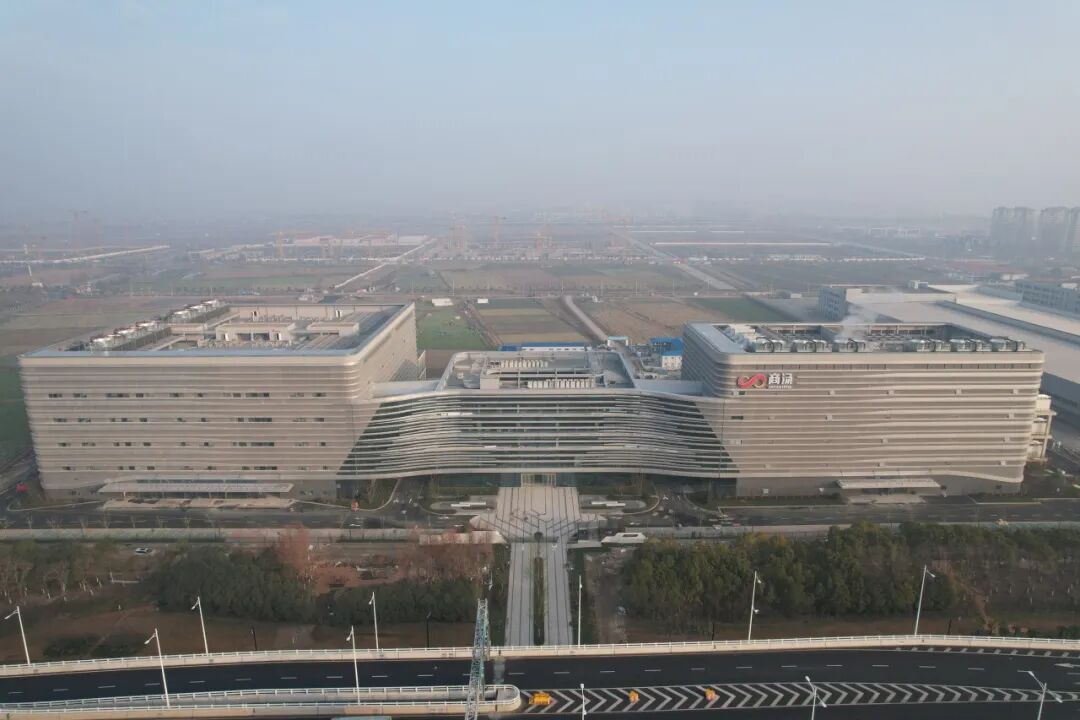
During this year's summer peak load period in Shanghai, under the overall coordination of the Shanghai Municipal Commission of Economy and Informatization, State Grid Shanghai Electric Power Company, Shanghai Telecom Lingang Computing Power Company and 15 other data centers participated in the centralized coordination of computing-power and electricity, with a maximum load reduction of 97,800 kW within 2 hours. In the three-day actual measurement, the computing centers in Shanghai, Xinjiang, Anhui and Hubei completed a total of 280,000 scheduling reasoning requests, output 33.03 million Tokens, the power consumption cost per unit Token of computing power decreased by about 31%, and the average utilization rate per card increased by 40%.
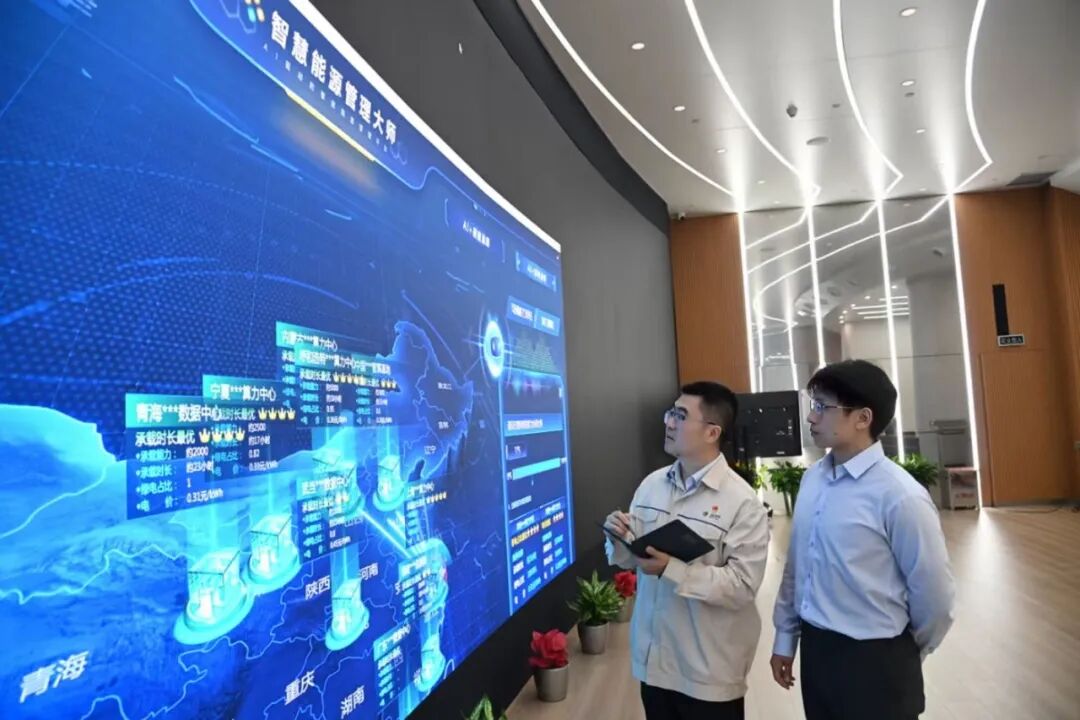
Damao Technology also participated in the special peak shaving and valley filling action for Shanghai data centers four times this summer. Jian Yumin said: "We are not connected to any new energy sources. Relying solely on energy storage scheduling, we can achieve arbitrage in multiple markets. For eastern provinces, this 10% may be the key point that determines their competitiveness against western cities."
The third path is to incorporate energy storage into the planning of new projects. "We spend more than 5 million yuan on electricity bills every month, and saving electricity costs is the core demand of operation." The person in charge of an intelligent computing center in Shanghai revealed that they plan to introduce energy storage in the second phase of construction to reduce electricity bills.
Whether it is advance planning for new projects or fine operation of existing projects, it will ultimately promote intelligent computing centers to upgrade from passive power loads to adjustable, tradable and value-added energy value units.
From Ulanqab to Shanghai
In recent years, large AI manufacturers have been flocking to a small western city known as the "Capital of Computing Power". Especially recently, because DeepSeek plans to place its training computing power here, Ulanqab has once again been pushed into the spotlight.
The most intuitive advantage is that Ulanqab has low electricity prices and a cool climate, which can significantly reduce cooling energy consumption. But low electricity price alone is not enough to support it to become the "Capital of Computing Power". After all, the top priority for computing centers is safety, followed by green compliance, and then economy. Ulanqab is exactly in the two-hour ecological supply circle of Beijing, where it can gather the complete ecosystem of telecom operators, equipment suppliers, spare parts and maintenance teams.
Eastern regions are facing different challenges from western regions. A large number of existing data centers in Shanghai and other places hope to be transformed into edge computing power nodes, but capacity expansion is extremely difficult, and electricity consumption has become a hard threshold. The "15th Five-Year Plan for Energy Conservation, Carbon Reduction and Circular Economy Development of Shanghai" issued by the Shanghai municipal government this year proposes to steadily and orderly promote the construction of green data centers, and support the integrated application of liquid cooling technology, AI-based energy-saving intelligent control models and other technologies.
At present, many parks in Shanghai coordinate and adjust the electric energy in the park through virtual power plants, distributed transactions and other methods. Jian Yumin explained that in the transformation of existing computer rooms, making full use of regulatory resources such as energy storage to discharge power during extreme high load in summer to reduce the demand for the upper limit capacity of transformers can realize "no transformer expansion, but incremental computing power facilities".
The west grabs speed with low electricity prices and new construction, while the east competes for stock through refined operation. The two paths are ultimately competing for the same thing: who can make more thorough use of the value of every kWh of electricity.
The End of Computing Power is Energy
From a broader perspective, energy is also a main line of AI competition between China and the United States. The expansion of computing power in the United States has turned to natural gas, while China has chosen green power direct connection. The judgment behind this is similar: the end of computing power is energy.
In 2026, nearly 40% of the data center projects planned to be completed in the United States are at risk of delay. American technology enterprises are breaking away from their dependence on traditional public power grids and turning to self-built power stations. At present, gas-fired power generation is still the main self-owned power source for American computing centers.
At the same time, giants such as Microsoft, Amazon and Google have invested in or cooperated with nuclear power projects, and selected sites near existing nuclear power plants to build computing centers. In addition, the giants are also seeking various ways such as energy storage and transforming Bitcoin mining farms to fill the power gap. However, Morgan Stanley estimates that by 2028, U.S. computing center developers will still face a net power gap of about 38 GW, accounting for about 33% of the demand.
The challenge in China lies in the mismatch between regional power resources and computing power layout. 80% green power consumption has become the compliance threshold for new data centers in national hub nodes, and energy consumption indicators and power grid access conditions have become the practical premise for project implementation.
Jian Yumin used the metaphor of "baking a big pancake": "We are now baking a big pancake, but this pancake has exceeded the overall space of the oven. How can we use the segmented method and dynamic rolling method to bake this pancake well? This is the core problem that computing-power and electricity coordination needs to solve."
In his view, the industry will see obvious changes in the next one to two years, with policies, technologies and cognition all keeping pace synchronously.
The top-level design is already clear. In 2026, "computing-power and electricity coordination" was written into the government work report for the first time and included in the outline of the 15th Five-Year Plan. In July 2025, the National Development and Reform Commission issued the "Notice on the Weight of Renewable Energy Power Consumption Responsibility for 2025 and Related Matters", clarifying that the green power consumption ratio requirement for new data centers in national hub nodes is 80%.
It still takes time to translate policies into implementation. As of the end of September 2026, more than 100 green power direct connection projects have been approved across the country. However, at CPE 2026, many industry insiders revealed that only a few projects have actually started construction and landed.
The technical path is gradually becoming clear. "In the past, energy for computing centers was a cost item. But after the transformation, computing power loads can become active supporting, flexible and adjustable resources for the power grid, and can even generate additional income." Jian Yumin said.
In the next decade of AI competition, beyond models and chips, the ultimate test is a country's ability to match computing power with electricity. The anxiety of insufficient electricity is exactly the most honest catalyst for the energy revolution.
Images from / Interviewee IT Times AI-generated
This article is from WeChat official account "IT Times" (ID: vittimes), written by Sun Yan, authorized for release by 36Kr.