Frontline | Bambu Lab Launches New-Generation 3D Printers Equipped With 9 Independent Print Heads, Switching in as Fast as 6 Seconds
On November 3, Bambu Lab released its third-generation flagship 3D printer H3C, with the standard kit starting at 16,499 yuan, and a direct price cut of 1,000 yuan during the launch period.
As Bambu Lab's new generation flagship product, the upgrade focus of the H3C this time is no longer limited to printing speed, but centers on multi-material printing. The new machine is equipped with three core technologies: the Swaptek™ Nine-head Quick-switch System, the top-mounted integrated AMS 3H material feeding system, and the variable line diameter extruder.
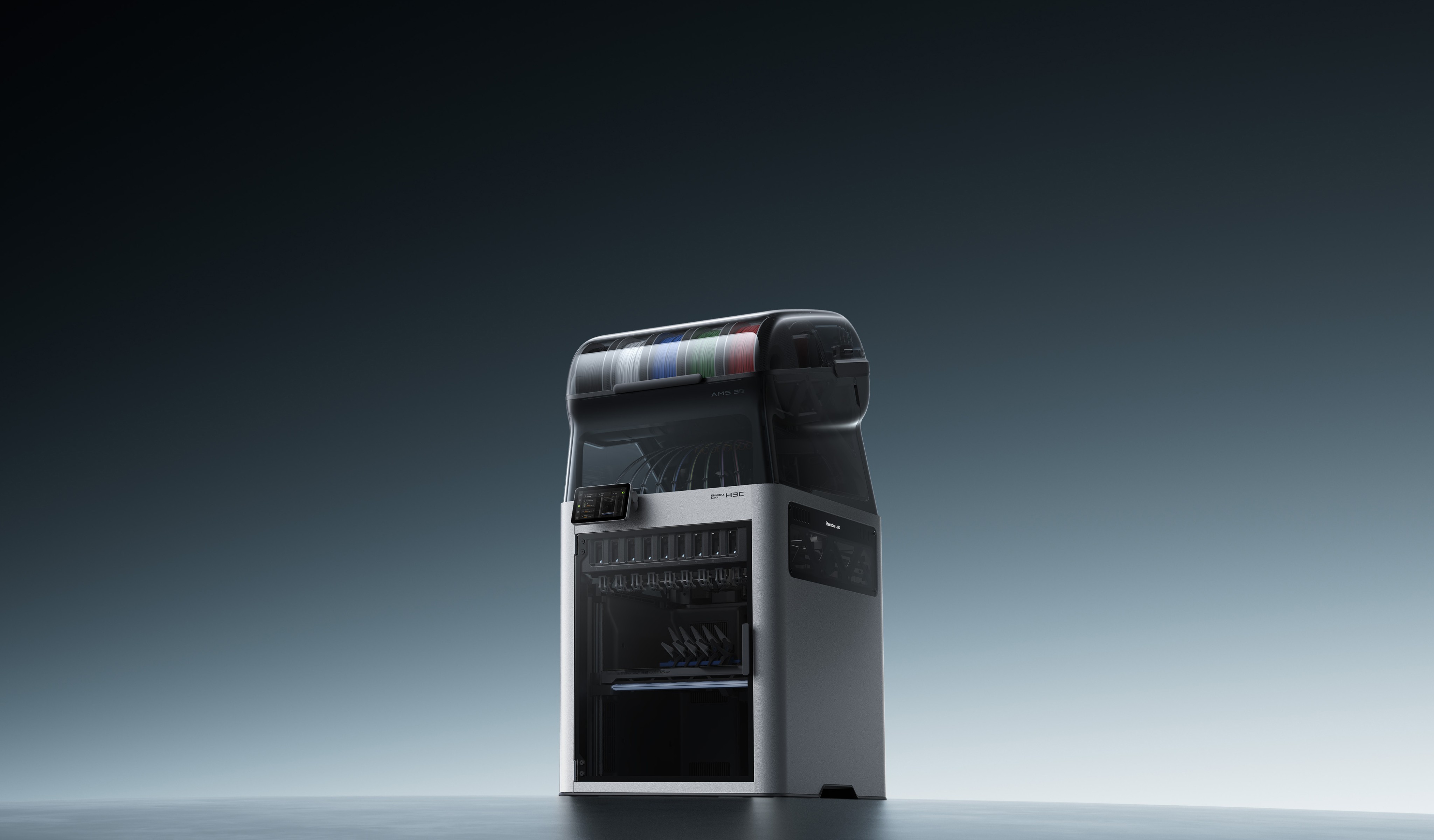
Full H3C Unit
Multi-head switching is the core of this upgrade. The H3C introduces 9 independent print heads in consumer-grade products for the first time, and can complete head replacement in as fast as 6 seconds. Official data shows that the waste generated by a single material change is only 38mg. The Swaptek™ Nine-head Quick-switch System enables each print head to have an independent feeding channel and active preheating function, so the consumables in each channel are always kept loaded, without the need for repeated material retraction, cutting and re-feeding.
To address the accuracy issues brought by nine-head switching, Bambu Lab has upgraded the tool head weight reduction design, micron-level accuracy compensation and fully automatic calibration system to reduce the impact of frequent switching on printing results.
Multi-material printing not only tests the printer itself, but also puts higher requirements on the consumable management system. In the past, the printer and multiple AMS modules needed to be placed separately. The H3C is equipped with the brand-new AMS 3H system, which integrates the functions of sealed consumable storage, automatic feeding and drying, and is mounted on the top of the printer body.
The variable line diameter extruder is designed to solve the material boundary problem. In addition to the conventional 1.75mm, a new 2.85mm line diameter extrusion channel is added, which gives the machine stronger buckling resistance, can withstand greater pushing force during the extrusion process, and provides higher melt flow. As a result, the H3C has become the first 3D printer that can stably print 75A TPU, the softest consumable for consumer-grade use.
This capability also makes mixed printing of soft and hard materials possible. For example, footwear products can use flexible materials in areas that require cushioning and hard materials in areas that require support, thus reducing the post-assembly process.
In addition, the H3C also supports CMYKW color-overlay printing, mixed use of nozzles of different sizes, and automatic switching of tool heads such as knife cutting, brush painting, embossing and cold stamping, further expanding the processing boundary of desktop 3D printers.
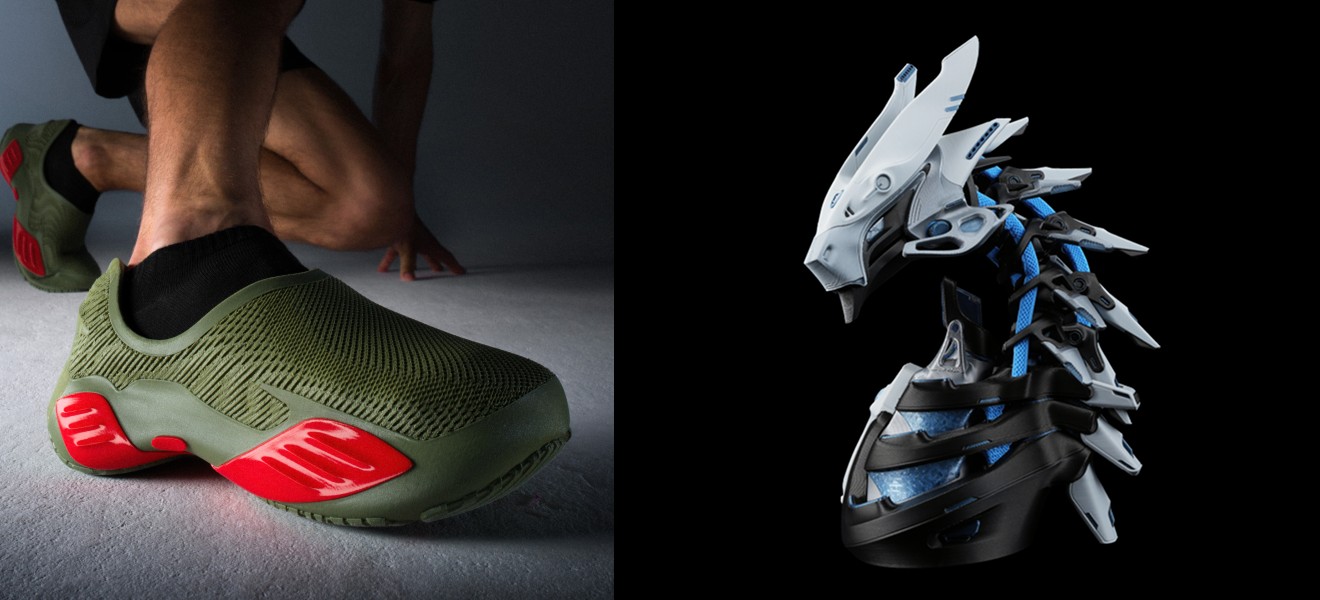
H3C Printed Works
Overall, the release of the H3C demonstrates Bambu Lab's aggressive move to further expand the product boundary of desktop 3D printers. Going forward, industry competition may shift from the past competition over speed and accuracy to competition over material compatibility, automation level and final product finish.
On the other hand, the 1,500-yuan price increase compared with the previous-generation H2C is also a test to see how much premium consumers are willing to pay for higher-end desktop manufacturing capabilities.