After 11 consecutive price hikes, the graphics card market has suddenly come to a halt, and Huaqiangbei merchants said: I can't make sense of this either.
The competition for storage chips driven by AI data centers is now rippling down to the storefront counters in Huaqiangbei, Shenzhen.
Graphics cards are the segment that has reacted most sharply along this transmission chain. Take the NVIDIA RTX 5080 as an example. In late October, the quotation for this graphics card on e-commerce platforms once surged to 20,000 yuan. As of October 27, the prices of RTX 50 series graphics cards had risen for 11 consecutive trading days.
However, starting from October 28, graphics card prices began to trend downward again. Price monitoring data from e-commerce platforms shows that on that day, the lowest price of the 5090D 32G dropped by about 4,500 yuan in a single day, marking the largest single-day drop on record. As of November 2, graphics card prices had fallen for 5 consecutive trading days, with the lowest price of the RTX 5080 dropping back to 16,000 yuan. By November 3, prices of some models had rebounded slightly again.
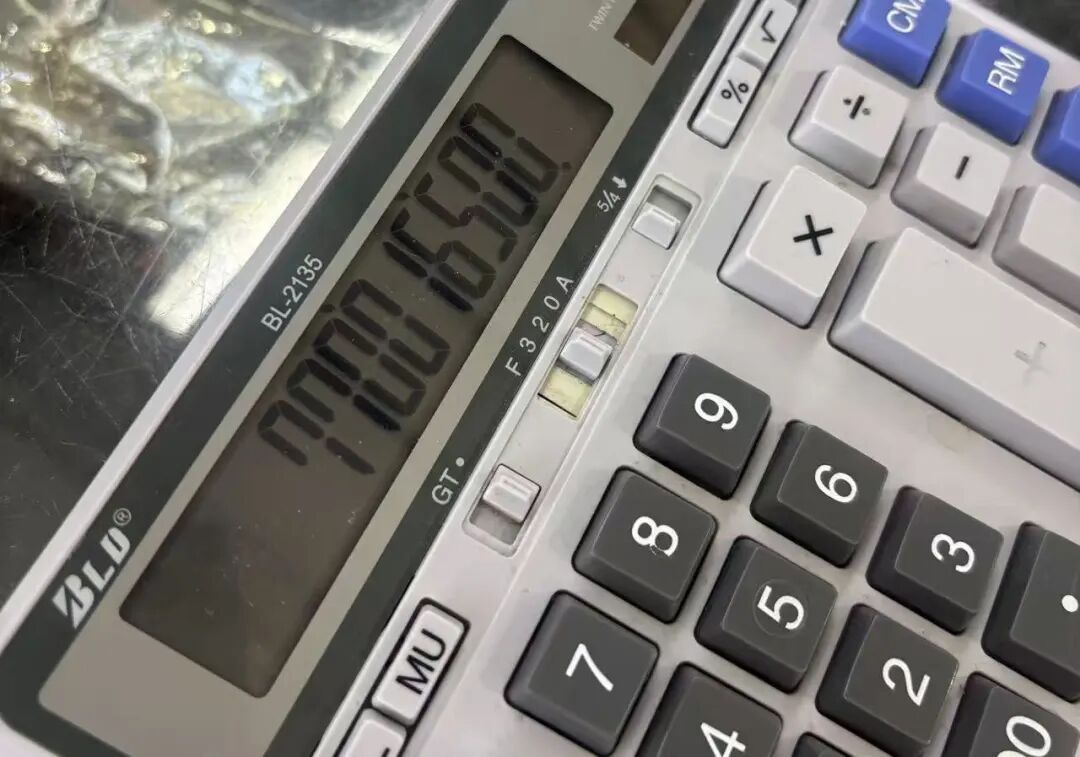
On-site quotation from a Huaqiangbei merchant / Photo by Lu Keyan
Even after a roughly 20% drop, the price of the 5080 is still nearly twice the official guide price of 8,299 yuan, while the average price of the entire RTX 50 series remains 1.7 times the suggested retail price.
"I can't make sense of (this market trend)", "I also find it totally surreal", a Huaqiangbei merchant commented to Jiemian News.
A Shenzhen-based server component wholesaler told Jiemian News that the sharp price hike in October was partly due to tight production capacity, but a large part of the reason was also the impact of various news reports, which gave room for middlemen with stock to speculate. "Most of the time, these players push up prices through speculation, but after prices go up, the market does not have enough demand to absorb them. Or after the price rises, complete machine manufacturers will not accept the high price, and wait until you can no longer hold the inventory before making purchases. So it is only natural that prices fall afterwards."
He believes that the current drop is driven by fading speculation sentiment. Since domestic substitution will not be realized that quickly and AI demand is growing steadily, the overall price of graphics cards will remain at a high level. The aforementioned Huaqiangbei merchant judges that this market trend will last for the next two years.
However, the high and volatile market has also made graphics card merchants cautious about hoarding inventory. The aforementioned wholesaler said: "Under this market situation, we can barely make any profit. Now we dare not hoard graphics cards at all."
This round of graphics card price hikes started in late July. Around July 24, NVIDIA issued a notice to graphics card manufacturers raising the prices of GPU kits. Factories of all brands immediately closed their warehouses and suspended bulk shipments, while distributors generally began to hoard inventory and hold back sales, making some models extremely difficult to obtain.
In October, a piece of news about the discontinuation of NVIDIA's flagship graphics card significantly accelerated the uptrend. In addition, foreign media cited NVIDIA's distribution channels as saying that the GV202 chip used for the 5090 had stopped being supplied to consumer gaming graphics cards, further fueling market panic. Although Jeff Fisher, Senior Vice President of NVIDIA's Personal Computing Business, explicitly denied the discontinuation of the 5090, the price hike of graphics cards did not stop, and the flagship models saw particularly sharp increases.
For example, the overseas version of the 5090 with 32G video memory saw its price on Taobao and JD platforms rise from around 35,000 yuan before September to around 54,000 yuan on October 14, an increase of more than 50%. As of November 2, the actual transaction price of this card in Shenzhen's distribution channels was still just over 50,000 yuan, more than 3 times its official launch price of 1,999 US dollars.
The market trend of consumer-grade graphics cards is directly related to NVIDIA's business priorities.
NVIDIA holds an absolute dominant position in the global discrete graphics card market. Data from market research firm Jon Peddie Research shows that 12.5 million units of global desktop discrete graphics cards were shipped in the second quarter of 2026, with products equipped with NVIDIA chips accounting for about 90% of the market share. In other words, NVIDIA's production capacity allocation basically determines the supply of the gaming graphics card market.
Of NVIDIA's $96 billion revenue in the second quarter of fiscal 2027, the data center business contributed $89 billion, accounting for more than 92.5%, while the personal GPU business only accounted for 5.45%. Research from TrendForce shows that to meet the demand for HBM (High Bandwidth Memory) for AI chips, original manufacturers have shifted more production capacity to HBM, which in turn squeezes the production capacity of consumer-grade video memory such as GDDR6 and GDDR7, leading to an increase in the quotation of video memory.
In addition to graphics cards, memory prices have also seen slight fluctuations recently. The aforementioned wholesaler mentioned that taking the DDR5 64G 5600 memory commonly used in servers as an example, its tax-inclusive price has dropped from 18,000 yuan to 16,000 yuan. "Since the price has stayed flat for a long time, this drop is not insignificant."
As for the reason behind this round of memory price fluctuations, he believes it may be the temporary pause in downstream demand. The project cycle of server complete machine manufacturers usually lasts for one to two months, and they can postpone memory purchases before the delivery deadline, or wait and see after making a budget based on low prices. He predicts that when the delivery pressure rises at the end of the quarter and demand is released in a concentrated manner, prices will be pushed up again.
Looking at the upstream contract price (the long-term supply price signed between storage manufacturers and computer and server manufacturers), data from TrendForce shows that the contract price of general-purpose DRAM in the fourth quarter is expected to rise by 10% to 15% month-on-month. Although the growth rate has narrowed for two consecutive quarters, upstream costs are still rising, so there is no basis for channel prices to continue to fall.
"Now the price of server components fluctuates very frequently. The price difference between morning and afternoon can eat up all the profits. It is very difficult to survive only by relying on information asymmetry, so making the right judgment is particularly important sometimes," the wholesaler said. "Of course you can also take a gamble. Many people have doubled their profit from this round of graphics card market, but many people dare not bet on this trend."
This is a capital-intensive bet, and the amount of chips determines who can stay at the gaming table. When the pricing power of graphics cards and memory has shifted to AI data centers, every rise and fall in Huaqiangbei is just a ripple caused by upstream production capacity allocation. For the vast majority of small and medium-sized trading merchants, maintaining cash flow is more important than betting on the next market trend.
This article is from the WeChat Official Account "Jiemian News", written by Lu Keyan, edited by Wen Shuqi, and published with authorization from 36Kr.