Is the end of computing power electricity? Viewing AI infrastructure from the first principles
A server cabinet the size of a refrigerator weighs more than a pickup truck; by 2027, its peak power consumption will equal that of 65 households using electricity at the same time; to prevent it from overheating, each cabinet needs to dissipate as much heat as 30 gas-fired boilers.
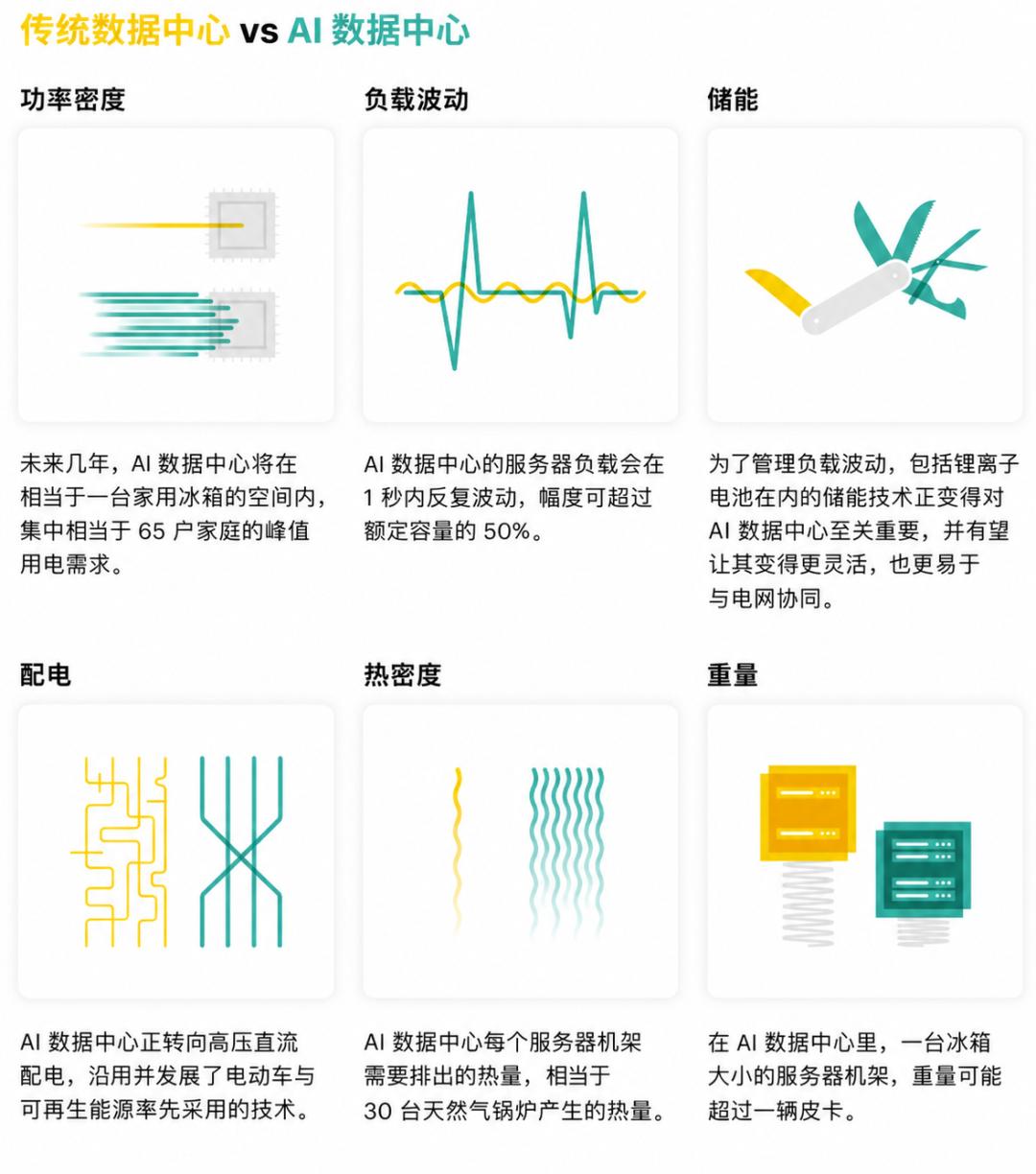
This seemingly sci-fi description is actually the characterization of next-generation AI data centers in the April 2026 report released by the International Energy Agency (IEA). The report presents another set of figures: in 2025, the capital expenditure of five tech giants exceeded 400 billion U.S. dollars, and the figure will rise by another 75% in 2026, an amount that has surpassed the total annual global investment in oil and gas extraction.
Over the past two years, the phrase "The end of computing power is electricity" has almost become a consensus across the industry. This statement is not wrong, but it only tells half the story. Electricity is certainly a necessary condition, but what actually restricts AI expansion is often not just "whether there is sufficient power", but a whole chain strung together by power generation, power grids, transformers, heat dissipation, storage, packaging and capital, as well as the vastly different construction speed of every link in the chain.
To get a clear view of this chain, the best way is to temporarily put aside the ready-made narratives such as "GPU arms race" and "power anxiety", return to the most basic physical facts, and recalculate the accounts from scratch.
How is intelligence "burned out"?
If we strip away all commercial packaging, from the physical level, what AI does is essentially: send electric energy into transistors, drive bit flips, complete matrix multiplication, and finally output Tokens.
Deconstructed in this way, the "effective intelligence" that a country or a company can produce can be roughly written as the product of four factors:
Available electricity × hardware energy efficiency (how many operations can be completed per joule) × algorithm efficiency (how many useful Tokens can be obtained per operation) × utilization rate (the proportion of time the machine is actually running tasks)
This formula is not precise, but its advantage is that each factor corresponds to a specific layer of infrastructure. Electricity corresponds to power plants and power grids, hardware energy efficiency corresponds to chips, memory, packaging and interconnection, algorithm efficiency corresponds to model architecture and inference software, and utilization rate corresponds to the reliability of scheduling systems, heat dissipation and power supply.
If any one factor fails, even if the other three are done perfectly, the whole system will be dragged down. For this reason, the bottleneck of AI infrastructure will keep "shifting": two years ago, the problem was that GPUs were unavailable; later, advanced packaging and high-bandwidth memory could not get sufficient production capacity; now, it is the turn of transformers, gas turbines and grid connection queuing.
First of all, let's look at two physical facts.
The first one is conservation of energy. The electricity consumed by the data center, except for a very small part converted into optical signals and mechanical vibration, almost all eventually turns into heat. This means that "power supply" and "heat dissipation" are essentially two sides of the same problem: no matter how many kilowatts of power you feed into the cabinet, you have to remove the same number of kilowatts of heat from it. As we will see later, the surge in cabinet power density is simultaneously overwhelming the traditional power distribution and air cooling systems.
The second one is "Moving data costs more than calculating data". There is a classic set of measurements in the chip design field: under the 45nm process, a 32-bit floating-point addition consumes about 0.9 picojoules, while reading data of the same length from off-chip DRAM consumes hundreds of picojoules, a gap of two to three orders of magnitude.
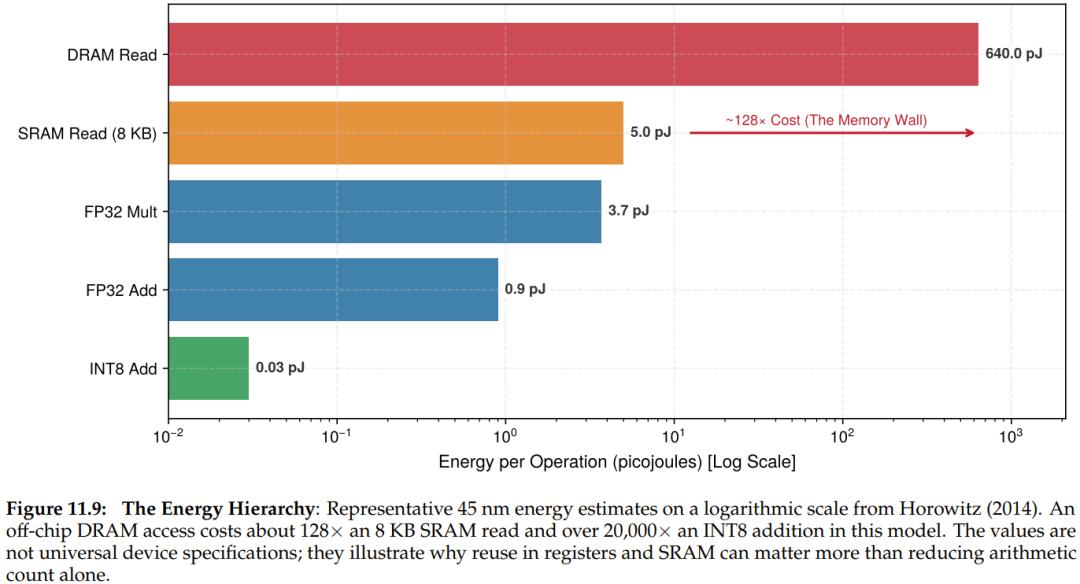
The absolute value has changed as process technology advances, but this order-of-magnitude relationship has not fundamentally changed. In other words, the main energy consumption of modern AI chips often does not lie in "calculation", but in "data movement". From High Bandwidth Memory (HBM) and CoWoS advanced packaging, to NVLink high-speed interconnection, co-packaged optics and "super nodes", the underlying logic of almost all hardware innovations in the past few years is the same thing: shorten the distance that data needs to travel.
So where is the physical limit? According to Landauer's principle, the minimum energy consumption to erase a bit at room temperature is about 3×10⁻²¹ joules. Taking NVIDIA's Rubin GPU as an example, its single package has about 50 PFLOPS of FP4 inference computing power and a power consumption of about 2 kilowatts, which roughly translates to dozens of femtojoules per FP4 operation. Even if one operation is split into hundreds of bit operations, today's chips still have multiple orders of magnitude of space away from the theoretical lower limit (rough estimate, for magnitude reference only).
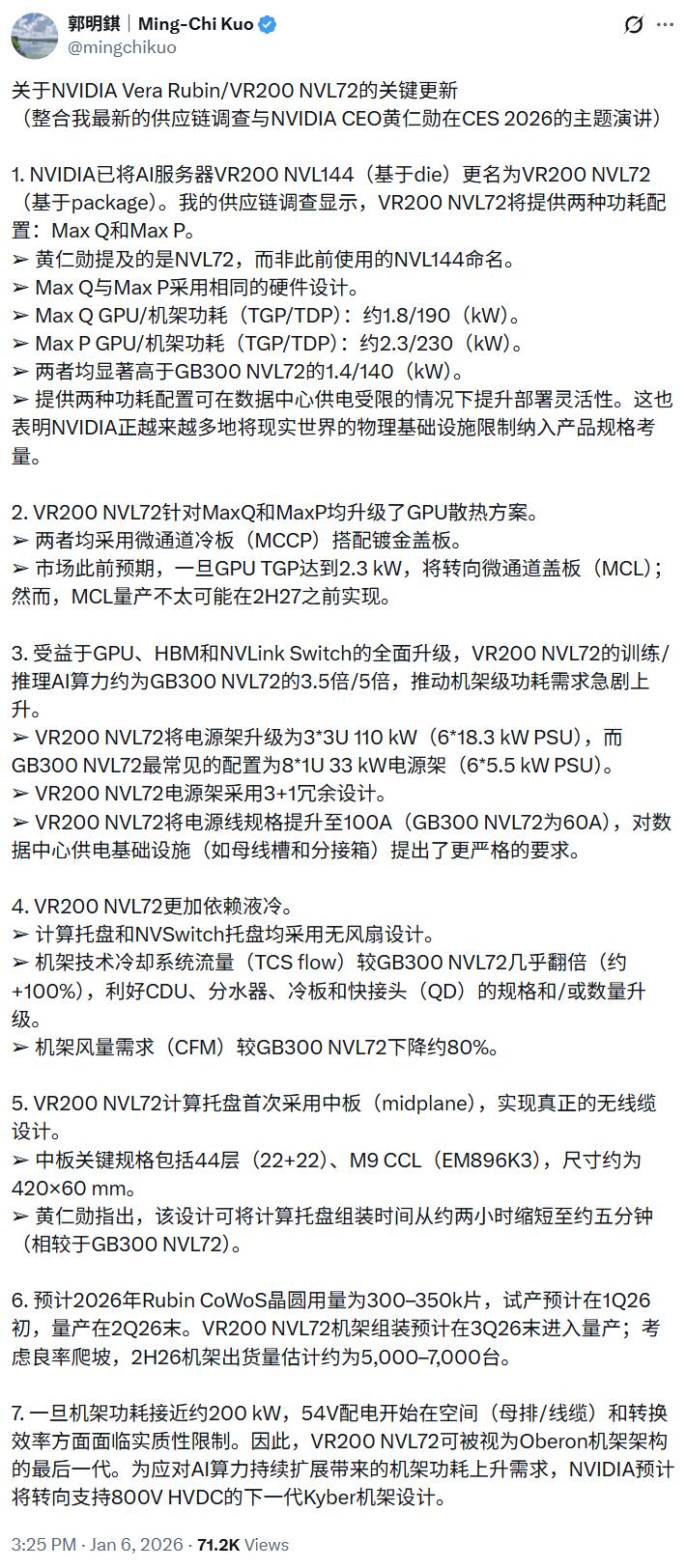
Tweet by Ming-Chi Kuo, analyst at TF International Securities in Hong Kong
Therefore, the energy consumption problem of AI is not "hitting a physical wall", but a problem of engineering, supply chain and institution. This judgment is very important, because it determines where we should look for solutions. After all, the real constraints lie in factory scheduling tables, power grid planning and meeting minutes of local councils.
Demand: Efficiency increases tenfold every year, why is power consumption growing instead?
Let's look at the other end of the account: demand.
The latest IEA calculation shows that global data center power consumption increased by 17% in 2025, among which the power consumption of AI-focused data centers surged by 50%, while the total global power consumption only increased by 3% in the same period. According to its baseline scenario, data center power consumption will double from 485 TWh in 2025 to 950 TWh in 2030, accounting for about 3% of global electricity consumption; the power consumption of AI-dedicated data centers will triple in the same period.
Paradoxically, the same report also points out that calculated per task, the energy efficiency improvement speed of AI is unprecedented in energy history. Advances in software and hardware have made the energy consumption of each AI task drop by at least an order of magnitude every year in recent years.
Efficiency is skyrocketing, but total consumption is also surging, which is the classic Jevons paradox. The IEA breaks it down into three simultaneously accelerating forces: efficiency improvement, sharp increase in usage, and new use cases unlocked by capability leaps.
For video generation, inference models and agent tasks, the energy consumption of a single request may be hundreds to thousands of times that of simple text generation. When AI evolves from "answering a question" to "spending half an hour completing a task for you", the computing power consumption of each interaction will no longer be in the same order of magnitude.
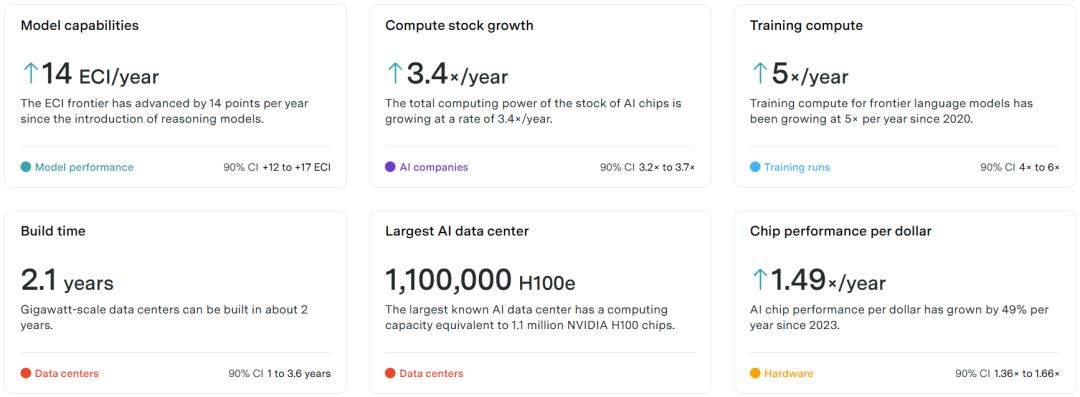
The training side is also expanding simultaneously. According to statistics from research institution Epoch AI, the training computing power of cutting-edge models has increased by about 4 to 5 times every year since 2020. After deducting the impact of hardware energy efficiency improvement and extended training duration, the power required for a single cutting-edge training task is still growing at a rate of about 2.2 times per year. The largest-scale training currently has exceeded 100 megawatts; if the trend continues, a single training task may require 4 to 16 gigawatts by 2030.
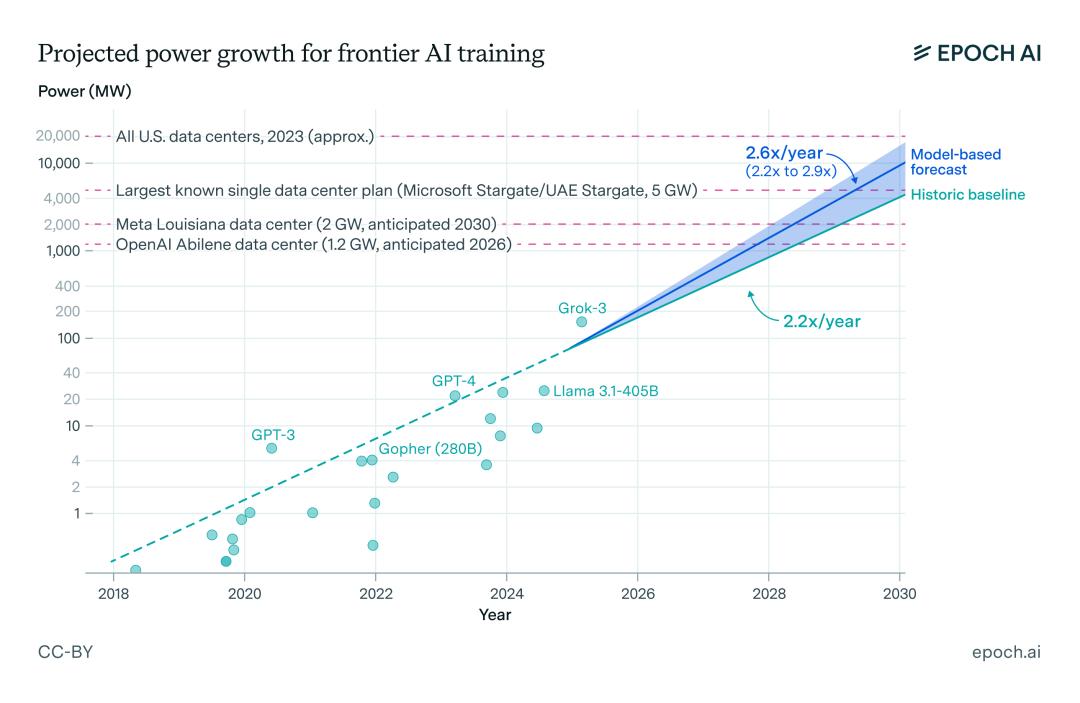
Another tracking by Epoch shows that the total computing power of the global AI chip stock is growing at a rate of about 3.4 times per year.
Data from China provides another annotation on the inference side. Yu Ying, Vice Director of the National Data Administration, disclosed in May 2026 that as of the end of March, China's daily average Token call volume had exceeded 140 trillion, an increase of more than 1000 times compared with the end of 2024; and in early 2024, this figure was only about 100 billion. The computing power supply has expanded simultaneously. As of the end of July 2026, the total scale of national intelligent computing power has reached 2.45 million PFLOPS.
It is worth noting that the 3% global share does not look scary. The real pressure comes from concentration. The IEA calculated in its 2025 report that by 2030, U.S. data centers will contribute nearly half of the country's total electricity consumption growth, and the electricity used by U.S. data centers will exceed the sum of all high-energy-consuming industries such as aluminum, steel, cement and chemicals.
Electricity: When quarterly-updated demand hits a power grid planned on a decade-long timeline
If you only ask "whether the world has enough electricity", the answer is yes. The problem lies in speed.
The construction cycle of AI data centers is shortening dramatically. Epoch AI's observation is that a gigawatt-level data center can be built in about two years; the IEA says it takes two to three years. But the rhythm of the power system is completely different: the delivery cycle of large power transformers in the United States has been extended to up to four years, the delivery period of gas turbines exceeds three years, and the construction of new nuclear power plants is calculated in decades.
The deepest contradiction of AI infrastructure is the mismatch of three types of clocks: chips iterate annually, data centers are built in two years, and power grids are planned on a ten-year timeline. The IEA report states: The contrast between the speed of the AI revolution and the speed of the physical, social and economic systems that support it is growing wider and wider.
Gas turbines are the most intuitive example of this mismatch. Global gas turbine orders surged by 70% in 2025. Industry leader GE Vernova disclosed in its second-quarter 2026 financial report that its backlog of gas equipment orders plus capacity reservations has reached 116 gigawatts, and it is expected to reach at least 125 gigawatts by the end of the year; at the same time, its annual capacity will not climb to 20 gigawatts until the third quarter of 2026, reach 24 gigawatts in 2028, and move towards 30 gigawatts in 2030.
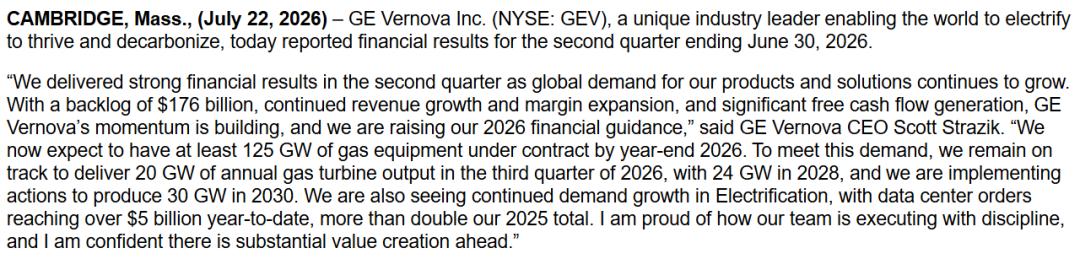
A simple division shows that the existing backlog is roughly equivalent to nearly six years of output. When large units are scheduled for delivery after 2028, some developers have turned to "sub-optimal solutions" such as reciprocating internal combustion units.
The story of transformers is more subtle. It accounts for a very small proportion of the total cost of the data center, but it may determine whether the entire project can be powered on on schedule. The delivery cycle of large power transformers in the United States is estimated by PwC analysts to be up to four years; further upstream, there is only one local producer of oriented silicon steel required for transformer cores in the United States, Cleveland-Cliffs. A supply chain scaled up for "basically no load growth for 20 years" suddenly has to serve a customer that raises expectations every quarter. According to a Bloomberg report, of the approximately 12 gigawatts of data center capacity scheduled to be put into operation in the United States in 2026, only about one-third is in the actual construction phase.

Facing grid connection queuing, the mainstream choice for U.S. developers is to "bring their own power supply". IEA satellite tracking shows that among a number of on-site gas power generation projects for data centers in the United States, about one-fifth have started site clearance or construction; by 2030, on-site gas power may provide 15 to 27 gigawatts of electricity for data centers. But this path is not cheap: AI load fluctuates violently, and to use on-site gas for stable power supply, the power generation capacity needs to be over-provisioned by 30% to 70% compared with actual demand.
Nuclear power is a longer-term bet. Microsoft signed a 20-year power purchase agreement with Constellation to restart Unit 1 of the Three Mile Island (now renamed Crane Clean Energy Center), which will resume power generation as early as 2027; Meta signed an agreement with Constellation to purchase 1.1 gigawatts of power from the Clinton Nuclear Power Plant from mid-2027; Amazon expanded its agreement with Talen to lock in up to 1.9 gigawatts of nuclear power. According to third-party tracking, several major cloud vendors have signed nuclear power-related agreements totaling about 9.8 gigawatts.
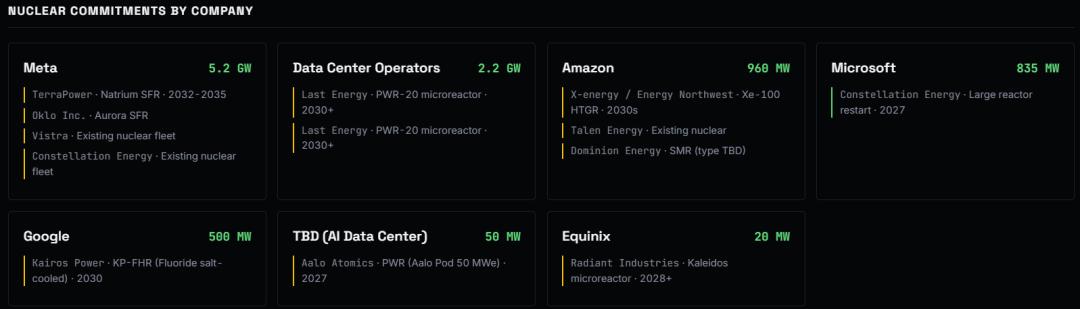
But the IEA reminds that the first batch of small modular reactors (SMRs) are not expected to be put into operation until around 2030. In other words, nuclear power solves the problems of the 2030s, not today's problems.