The collection cost is 5000 yuan per hour. The Wika open-source engineering dataset turns the experience of equipment operators into knowledge that can be understood by machines.
In the second half of 2026, WIKA Mobile Control has made frequent appearances at various industry exhibition events in the field of embodied intelligence. In September, WIKA was successively invited to attend Huawei Connect 2026 and Alibaba Yunqi Congress 2026. The themes of these two annual conferences of domestic tech giants have been continuously focused on Agentic AI, systematically presenting the complete path of AI from underlying technological breakthroughs to industrial value implementation.
On October 19, at the 10th Xuzhou Artificial Intelligence Conference 2026, General Manager Xue Lige released the "High-Quality Embodied Intelligence Empowered Construction Machinery Dataset" on site. There were no dazzling robot performances at the press conference, and the large screen presented real-scene footage of excavators operating on actual construction sites. This scientific research achievement has received extensive attention in the field of physical AI intelligence.
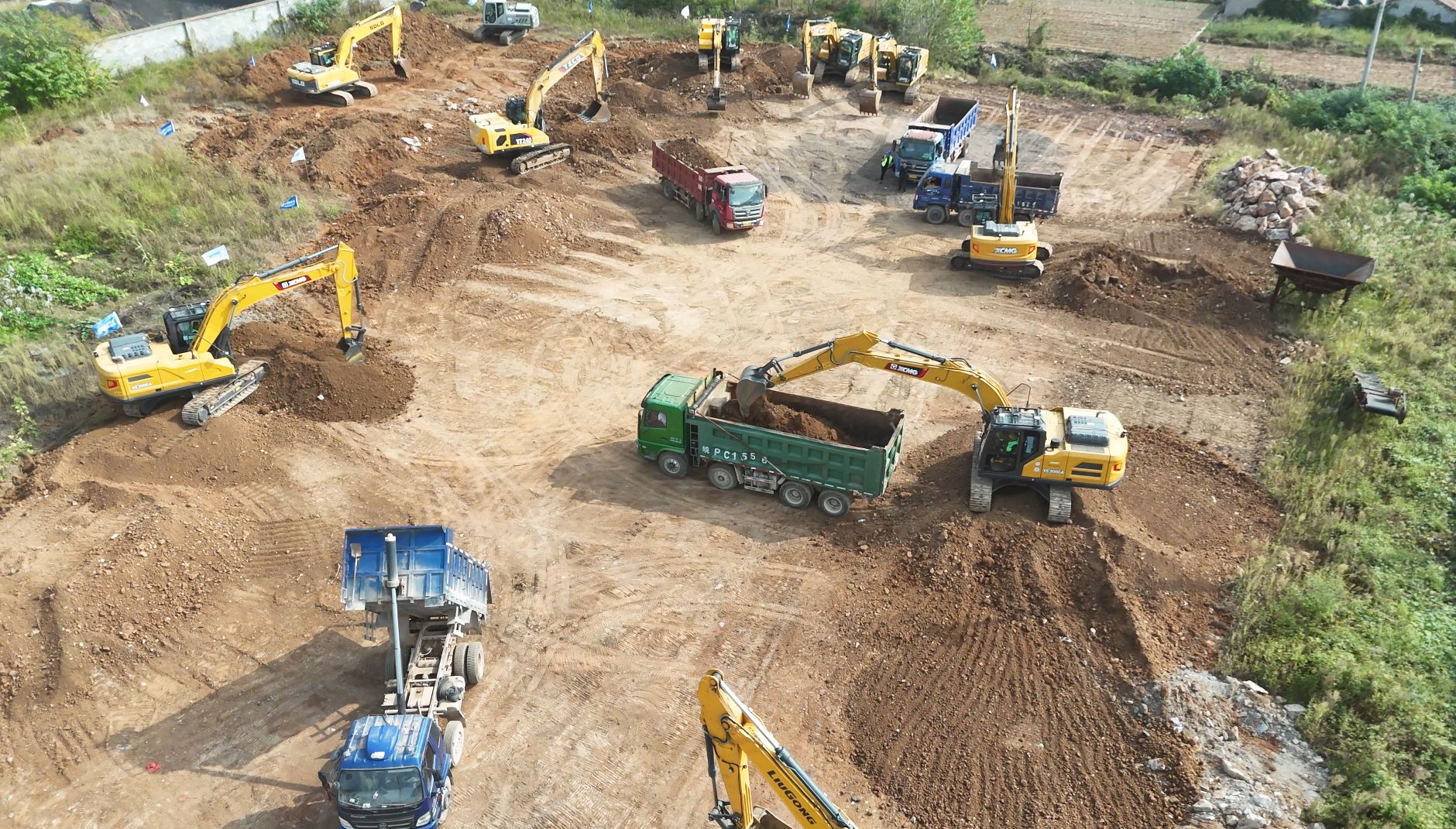
General Manager Xue Lige stated: This dataset opens up the channel for models to understand the accumulated human experience in engineering construction scenarios, serves as the core foundation for artificial intelligence to be implemented in extreme environments and large-scale projects, and will promote the transformation of traditional construction towards fewer operators and unmanned operation. Simultaneously with the release, WIKA has launched this dataset on multiple top international data repositories including Hugging Face, hoping to gather global scientific research forces based on the open-source model, jointly build a data flywheel for engineering construction scenarios, and realize continuous iterative innovation of technologies.
At present, the development of the embodied intelligence industry is facing bottlenecks such as scarce data and difficult scenario implementation. As an automation control enterprise deeply rooted in the fields of controllers, sensors and functional safety, WIKA promotes the deep integration of embodied intelligence technology and construction machinery, and opens up the closed-loop link from real operation scenarios to training data — which not only explores a feasible path for the intelligent upgrading of the traditional manufacturing industry, but also provides valuable high-quality datasets for cutting-edge research on embodied intelligence.
Data is the soil that nurtures the embodied brain
2026 is regarded by many industry practitioners as the first year of embodied intelligence application. Industry statistics show that in the first half of the year, domestic financing in the embodied intelligence sector reached about 935 billion yuan, a year-on-year increase of approximately five times. However, the industry heat driven by capital cannot be equated with the refined industrial implementation of technologies.
Why is it difficult to implement embodied intelligence scenarios? The core pain points are concentrated in insufficient real data supply, limited practicality of simulation, poor model implementation adaptability, and lack of safety guarantee systems. The WIKA dataset came into being precisely to address the above industry pain points. Furthermore, why was this dataset born at WIKA instead of a pure AI enterprise? The answer does not lie in the algorithm itself.
This is exactly where the value of the dataset product created by WIKA Mobile Control lies. When the industry is generally trapped in data shortcomings, WIKA shifts its R&D perspective to the real industrial scenario of construction machinery. Real scenario data accumulated in various operation and maintenance links on construction sites and mines can empower the transformation and upgrading of the real economy. WIKA does not chase conceptual gimmicks, and relies on solid technological accumulation to enable the "virtual brain" of embodied intelligence to truly connect with the "steel arms" of construction machinery that serve economic construction.
Earlier this year, Li Yan, Deputy Minister and Researcher of the Industrial Economy Research Department of the Development Research Center of the State Council, pointed out in a public interview that there are three major shortcomings in the current development of embodied intelligence: insufficient supply of high-quality physical world data, limited model generalization ability, and the immaturity of some hardware engineering, among which the data problem ranks first — data is not equivalent to an intelligent brain, but the training of an intelligent brain cannot be separated from the foundation of data.
Wu Bowen, Director of the Intelligent Innovation Center of WIKA Mobile Control, said: The foundation of a model does not lie in the algorithm framework, but in data. Human industry knowledge is embedded in data; only by building high-quality data first can we train adapted models, and then a series of subsequent technical applications can be realized. This logical order cannot be reversed.
Returning to the industrial reality, the real scenarios of engineering operations are highly unstructured environments, the standards of various hardware devices are not unified, the cost of data collection is high, and data reuse is difficult. Simulation materials and video materials can be used for pre-training, but there are migration barriers between them and the real operation environment, and the supply of effective data suitable for model training is far from keeping up with the actual demand of model iteration. Therefore, to realize the long-term development of embodied intelligence, enterprises must devote themselves to the collection, sorting and analysis of big data.
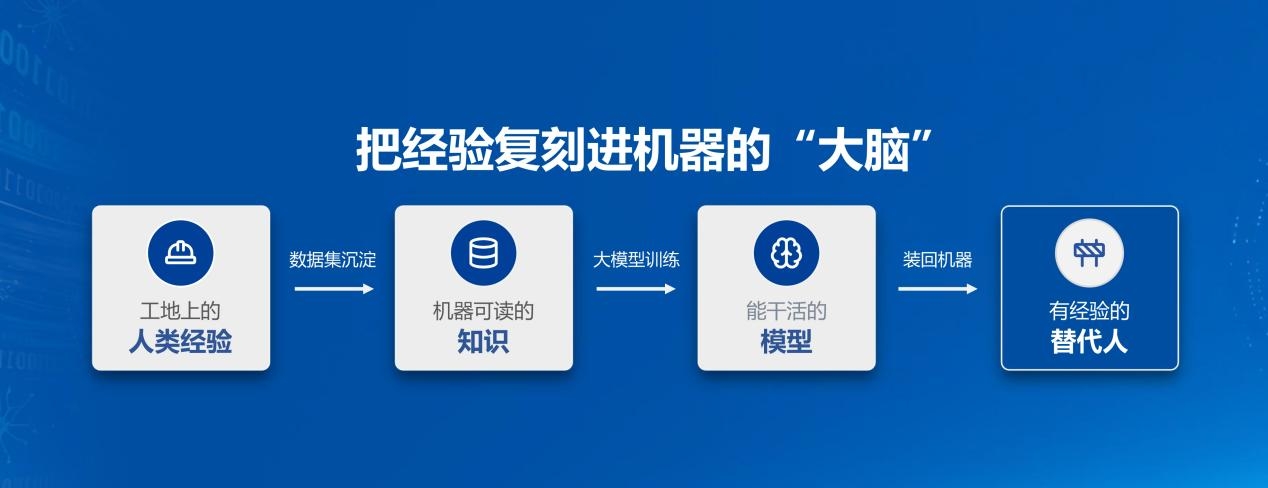
More critically, the dataset is by no means a collection of video files and original materials stored on hard drives, but operation data covering excavators of multiple scenarios and multiple models, which transforms the industry experience accumulated by frontline operators through practical operation into knowledge that machines can recognize and read. Only such data products can train the intelligent "brain" that is truly usable for construction machinery.
Driven by the dual wheels of "policy + market", the R&D of the dataset has not been easy
WIKA did not start the work related to the dataset in 2026. As early as five years ago, WIKA launched the preliminary preparation for the dataset. At that time, the enterprise had already predicted that in the engineering operation scenarios characterized by "danger, dirt, fatigue, complexity and heaviness", the market demand for intelligent machinery equipped with "brains" would become increasingly prominent.
In 2026, the Ministry of Industry and Information Technology explicitly proposed in the "15th Five-Year Plan for the Development of the Information and Communication Industry" to strengthen the collection, construction and governance of high-quality datasets; in the same period, with the listing of Unitree Robotics, the capital market's attention to the embodied intelligence concept continued to rise.
There are a wide variety of construction machinery categories, and WIKA chose excavators as the breakthrough point, which has strong scenario representativeness but the implementation difficulty should not be underestimated. Excavators operate under complex working conditions, with high degrees of freedom in operation actions such as ditching, loading, slope repairing, leveling and stacking, dynamic load changes, complex dust environment at the operation site, no preset reference for operation terrain, and very prominent unstructured features. Therefore, the collection of excavator datasets must not only cover equipment models of multiple brands, but also the output data must adapt to the learning logic of embodied intelligence.
It is well known in the industry that every set of operation actions learned by the model comes from the learning and replication of the operation trajectories of senior operators. WIKA went deep into the real operation site, and completed the synchronous alignment of data in five dimensions: vision, laser, pose, force feedback and handle input with the help of a unified timestamp: the vision and laser dimensions restore the operation environment where the operator is located; the pose and force feedback dimensions record the interaction state between the working tool and materials; the handle input dimension retains the decision-making intention of the operator. Multi-dimensional information is mutually verified and connected to completely restore the whole-chain logic of "operator observing the environment, interaction between equipment and materials, and actual operation of personnel". If any link is missing, what is obtained is only isolated observation materials or control signals, not reusable industry experience data.
The entire collection mode means high costs. According to Wu Bowen, the current data collection cost at the excavator information collection base is about 5,000 yuan per hour; training a usable model roughly requires data on the order of 100,000 hours, and the on-site collection with real machines alone will cost more than 100 million yuan. The upfront investment in simulation simulators is also relatively high, but after the construction is completed, the cost can be reduced to one-tenth of that of real machine collection.
Such a high R&D investment is undoubtedly a huge challenge for an enterprise like WIKA that is deeply rooted in the real manufacturing industry, but WIKA has always insisted on promoting the implementation of the project.
The confidence of the dataset comes from WIKA's 30-year accumulation of intelligent control systems
From the subdivision dimension of embodied intelligence technology, it can be decomposed into three parts: body, cerebellum and brain. The body refers to the main structure of the equipment produced by original equipment manufacturers; the cerebellum, namely motor controllers, drivers and hydraulic controllers, ensures stable and reliable operation of the equipment; while the "brain" of current construction machinery is mostly played by on-site operators. The "cerebellum" is a key hub that connects the preceding and the following, and the decision-making instructions output by the intelligent brain need to pass through the cerebellum to drive the equipment body to complete operations.
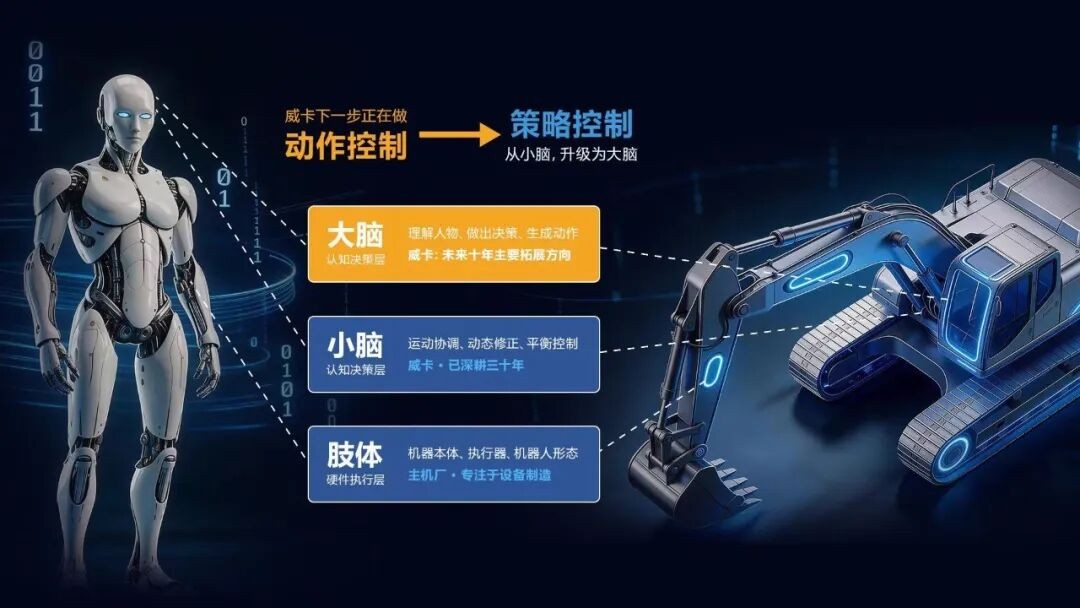
From this dimension, WIKA has more than 30 years of technical accumulation in the "cerebellum" field of embodied intelligence. The enterprise's product line covers five categories: controllers, displays, sensors, control devices, and new energy electronic controls, which are widely installed in more than ten types of equipment such as cranes, aerial work platforms, concrete machinery, earthmoving machinery, and mining equipment. According to the enterprise, its product customers include many leading construction machinery enterprises such as XCMG, SANY, Zoomlion, and Liebherr. That is to say, WIKA's control hardware is already built into various engineering equipment. This also determines that this dataset, from the very source, undertakes the role of connecting the cerebellum and the brain, and is developed based on a mature intelligent control hardware base, rather than a groundless idea divorced from industrial reality.
When visiting WIKA Xuzhou Intelligent Manufacturing Factory for on-site research, you can personally feel the solid manufacturing strength of the enterprise. The factory is divided into five functional areas: electronic manufacturing, electronic equipment, warehousing and picking, machining, and mechanical assembly. It has been successively rated as the advanced-level smart factory in Jiangsu Province and passed the level 3 certification of intelligent manufacturing maturity. The electronic manufacturing area is the core section of the factory, equipped with two SMT production lines, DIP production lines, spraying lines and an automated finished product warehouse. The workshop deploys the VALOR system to realize traceable control of the whole process of every product.
It is worth emphasizing that all the test assembly lines supporting the SMT production line are independently designed and assembled by WIKA, which are completely "WIKA-made". The on-site person in charge introduced that this assembly line is custom-developed based on customer needs and combined with product characteristics, and operates stably after being put into use. At present, in addition to ensuring the production of WIKA's own orders, the production line has nearly half of the surplus production capacity, which can undertake customized testing businesses for external parties. This independent manufacturing capability covering product R&D to production line construction is one of the core confidence that enables WIKA to promote the dataset project.
Conclusion: Providing a verified path for the intelligence and unmanned operation of construction machinery
The first phase of WIKA's dataset has reached 36 million frames, covering 12 typical operation scenarios — which is only a starting volume in the entire embodied intelligence industry. However, the R&D idea represented by this dataset is more noteworthy than the data volume itself.
First, the technical logic order is correct. First, precipitate a data base of reusable industry experience, then complete verified model training, and finally carry the model capability relying on engineering equipment. Many R&D teams take the opposite path: they prioritize building hardware carriers before supplementing intelligent capabilities. What is truly difficult to replicate is the practical experience embedded in real operation data; if the R&D order is reversed, even with a large amount of capital investment, the final output will only be demonstration effects.
Second, the scenario selection is precise. Instead of starting with simple scenarios that are easy to demonstrate, it chooses construction machinery scenarios with complex working conditions, dynamic load changes and prominent unstructured features as the breakthrough point. WIKA does not chase the hype of industry trends, nor does it compete head-on with general large models. What the embodied intelligence sector has no shortage of in the past two years is stories, and what the industry really lacks is participants who are willing to settle down to do meticulous and slow work such as data collection, alignment, annotation and quality control. WIKA chose the latter: positioning itself as a data production infrastructure, delivering not only data, but also methods and carriers. Only when the three are implemented in a coordinated manner can one-off projects be precipitated into replicable engineering capabilities and truly promote industrial implementation.
Third, the development positioning is clear. Many enterprises are busy raising financing, manufacturing hardware prototypes and telling stories; WIKA calms down to build a data base, consolidates the data foundation for the training of native construction machinery models, and finally installs the trained models back into construction machinery and equipment. For the embodied intelligence industry, especially the construction machinery industry, this is not a story on paper, but a verified and replicable implementation solution, which has special reference significance for the entire industry.