A 10-year-old and a 14-year-old reject Vibe Coding. The two teenagers teamed up to develop software and completed the Mac porting within 2 hours, triggering a heated debate among developers: there is no possibility that they did not use AI.
Nowadays, programmers seem to be increasingly accustomed to letting AI write code for them. But recently, two children aged 10 and 14 respectively sparked a discussion in the developer community for "not relying on Vibe Coding to write code".
The incident began when they jointly developed a software called DVR Doctor, which is specially designed to fix the annoying snowflakes, colored stripes and picture interference in FPV drone footage. Surprisingly, after YouTube creator Chase Momo mentioned that the software did not support Mac, they sent him the Mac version in less than two hours.
Such an astonishing development speed made Chase Momo immediately conclude: this must have been written by AI.
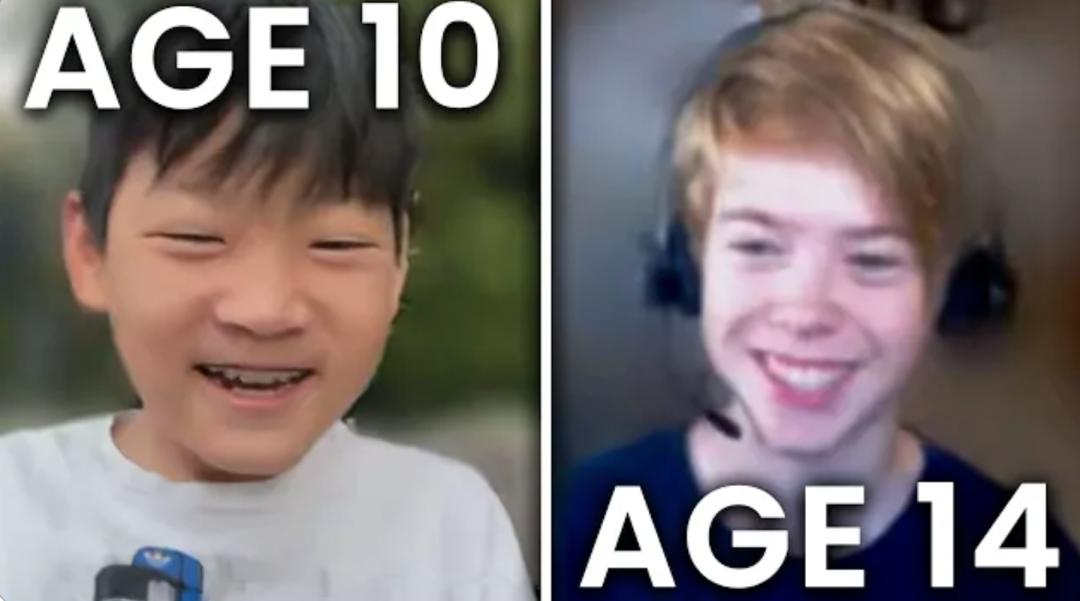
However, when he got in touch with the two young developers, he found that things were not so simple: the two admitted that they used AI, but insisted that the core code was written by themselves. 10-year-old Owen could even explain to him how to use machine learning and information from previous and subsequent frames of the video to restore damaged footage.
The long-standing problem plaguing FPV pilots was targeted by two children
For ordinary users, videos shot by drones usually mean high-definition, smooth performance, and even direct 4K footage output. But the situation faced by FPV drone (short for First Person View, this type of drone generally prioritizes speed, response and flexibility) players may be completely different.
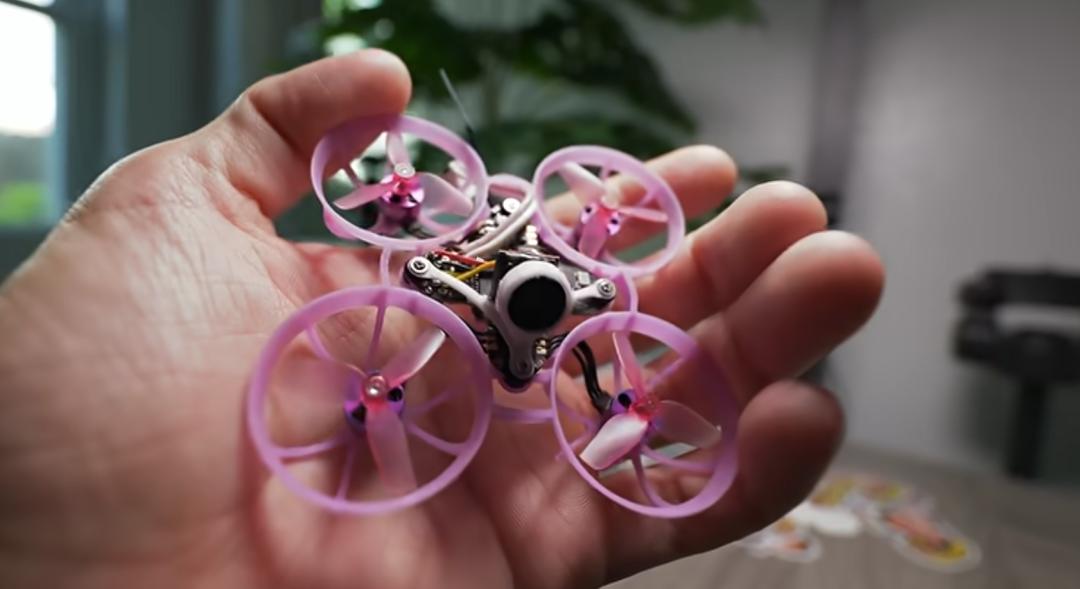
Especially for micro racing drones like Tiny Whoop, the fuselage is very small and extremely light. To reduce the load as much as possible, many models use traditional analog image transmission instead of being equipped with an independent high-definition recording system. Pilots wear FPV goggles to control the flight through the real-time footage transmitted back by the drone. The goggles can also record the received footage, and this type of recording is usually called DVR (Digital Video Recorder).
The problem is that analog signals are actually very susceptible to interference.
Once the drone flies over trees, buildings or other obstacles, the signal may suddenly deteriorate, and the picture will appear with snowflakes, colored stripes or even partial tearing. These interferences will also be directly saved in the recording. That is to say, a pilot may have just completed a wonderful cross-flight, but when he opens the video later, he finds the picture is as blurry as an old TV with a broken antenna.
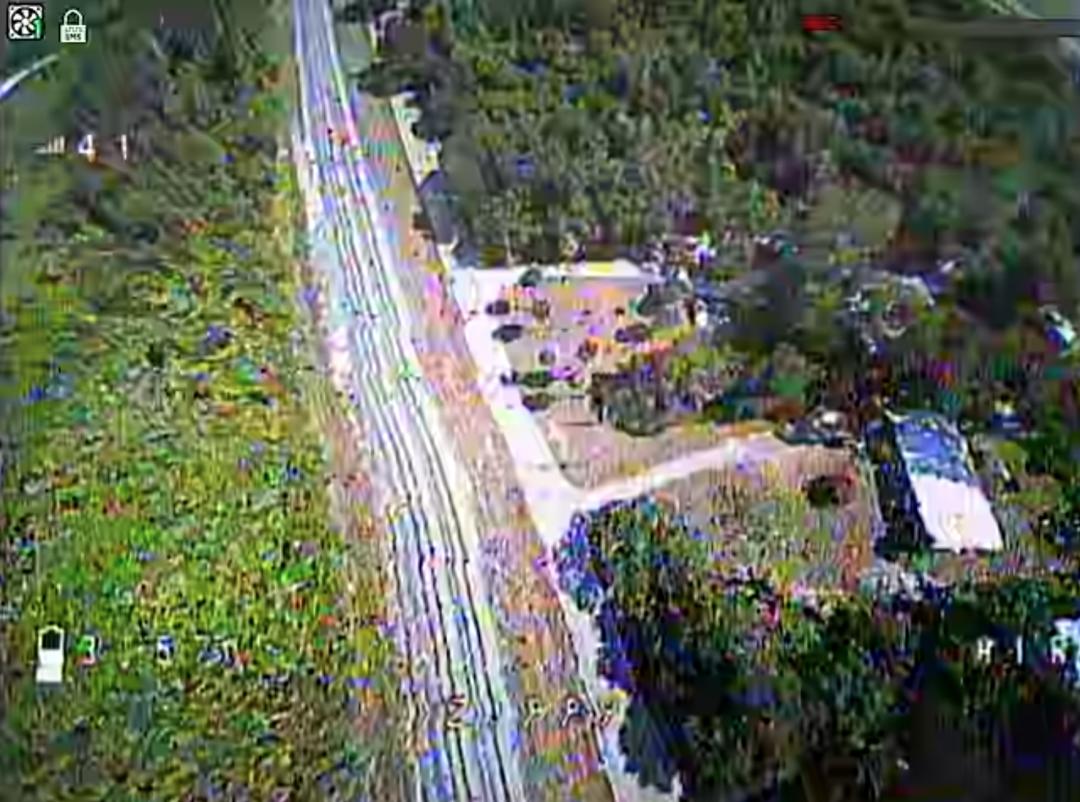
For many FPV pilots, this poor recording quality has long been a reality they have to accept — but 14-year-old Rory does not think so.
At the end of this summer, when he was browsing the FPV videos he shot, he found that the footage was full of strange lines and interference. He certainly knew that this was the inherent limitation of analog image transmission, but whenever he showed the video to others, the first reaction of the other party was often not how wonderful the flight was, but: "The image quality is too bad."
So Rory decided to solve the problem by himself. He already had some exposure to software development knowledge, and to realize this idea, he started learning Python and tried to write a video repair program. The initial version was quite crude and the effect was not ideal, but at least it could handle some abnormal footage.
Later, he met a like-minded partner: 10-year-old Owen.
The two met quite by chance: at that time, Owen was watching a video on YouTube about Tiny Whoop drone antennas and flight range, and happened to see Rory leaving a message in the comment area saying he wanted to test with video materials. Owen thought this was a good idea, so he took the initiative to ask if he could help together.
After that, Rory got in touch with Owen through GitHub, email and Discord, and the two began to cooperate in development. Interestingly, the two children had not met offline until they were interviewed by Chase Momo.
From optical flow method to machine learning, the 10-year-old boy speaks with great clarity about technologies
So how exactly does DVR Doctor repair videos? In Chase Momo's interview with them, Rory and Owen introduced in detail the technical evolution of the software.
At first, Rory adopted the optical flow method. In simple terms, the optical flow method can estimate the movement direction and position of objects in the picture by analyzing the changes between consecutive video frames. Rory's idea was to first use the information of the previous frame to predict what the next frame should look like, and then compare the prediction result with the actual picture.
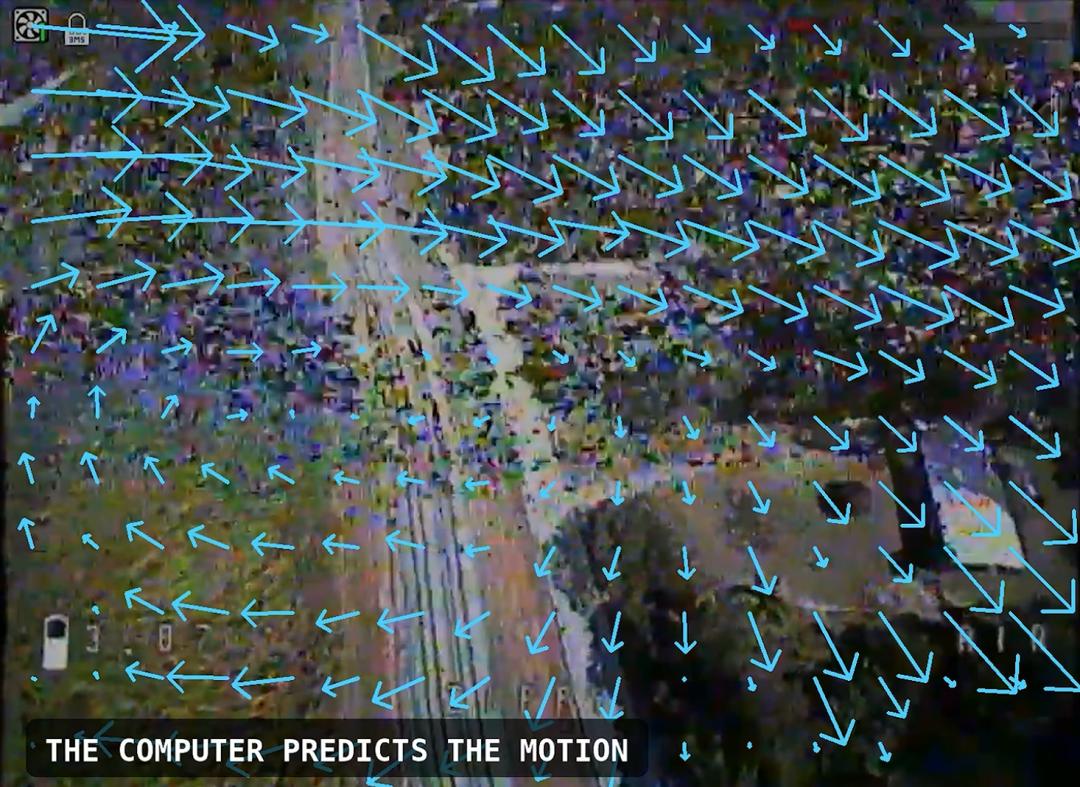
If there are obvious differences in certain areas that are likely to be caused by signal interference, the program will try to adjust the hue of these areas to reduce anomalies such as colored stripes — but the effect of this method is not very ideal.
Subsequently, the two began to try a new machine learning solution. 10-year-old Owen explained to Chase Momo that the program will first identify abnormal areas in the video, then refer to other video frames, analyze information such as the shape and texture of objects, and try to reconstruct the damaged footage.
For example, if a tree is covered by color interference in a certain frame, the program can refer to the appearance of this tree in adjacent frames to obtain more visual information, and then try to repair the abnormal part — this method works better, but the computational overhead is also greater. Owen even took the initiative to talk about the processing power of computer graphics cards and why machine learning solutions require more time.
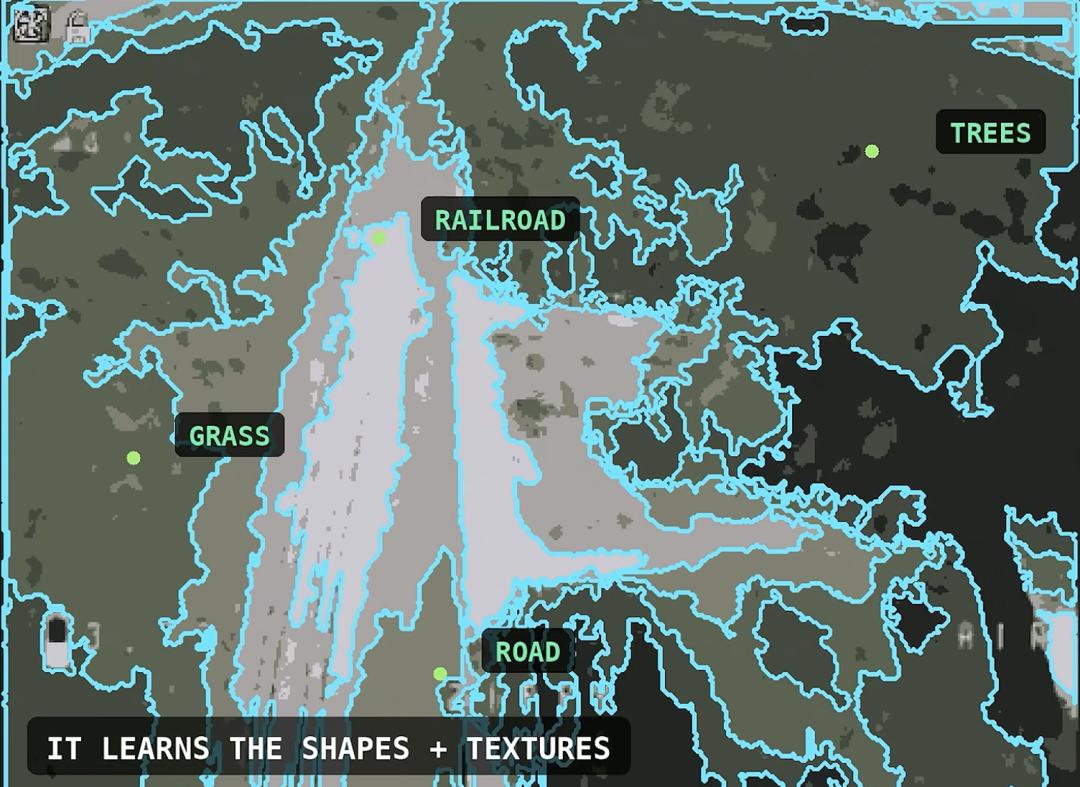
After listening to these explanations, Chase Momo felt a little "caught between laughter and tears": Owen spoke as if he had just completed a few ordinary operations, but he did not even understand half of the technical details.
According to the information currently disclosed on the official website of DVR Doctor, the software provides two processing engines: manual repair and machine learning, which can repair problems such as colored stripes, color tearing and flickering, and also supports GPU acceleration. In addition, it also supports analog image transmission and HDZero recording processing.
However, it should be emphasized that these functions are mainly used to improve the existing interference in the video, and cannot magically restore all lost picture details.
Completed the Mac version in two hours? Thought it was Vibe Coding, but guessed wrong
In fact, when Chase Momo first came into contact with DVR Doctor, he had no idea that the developers behind it were two children.
About a month ago, he received a promotional email from the DVR Doctor team. The other party introduced that they had developed a software that can clean up DVR recordings of FPV drones. Chase Momo was very interested and immediately replied to the email, but after opening the official website, he found that the software only had a Windows version, while he was using a Mac.
For him who is often exposed to independent developer tools, this situation is not unfamiliar: many softwares always support Windows first, and Mac users can only wait. He raised this issue with the developers, and the other party replied that the Mac version would be launched soon.
Originally, Chase Momo did not have much hope — unexpectedly, in less than two hours, the other party sent the Mac version over. He was shocked on the spot, and his first reaction was: it's so fast, it must be made with Vibe Coding.
And Chase Momo doesn't have a good impression of Vibe Coding: he once wanted AI to develop a button that can complete the editing of the entire YouTube video with one click, but it failed completely. So he decided to check the actual effect of DVR Doctor first, but later he went on a trip to Thailand and forgot about it.
It was not until two weeks later that someone promoted DVR Doctor in his Discord community that he remembered the project again.
At that time, there were only eight members in that channel, and during the chat, a developer suddenly mentioned that he was only 10 years old. Before Chase Momo could recover from the shock, he learned that the other developer was only 14 years old — the 27-year-old him couldn't help but tease: The sum of the ages of the two children is not even as old as me.
So he finally opened DVR Doctor for testing. The operation is very simple: drag in a video with obvious interference, click "Clean", and wait for the processing to complete. About three minutes later, the software output the repair result.
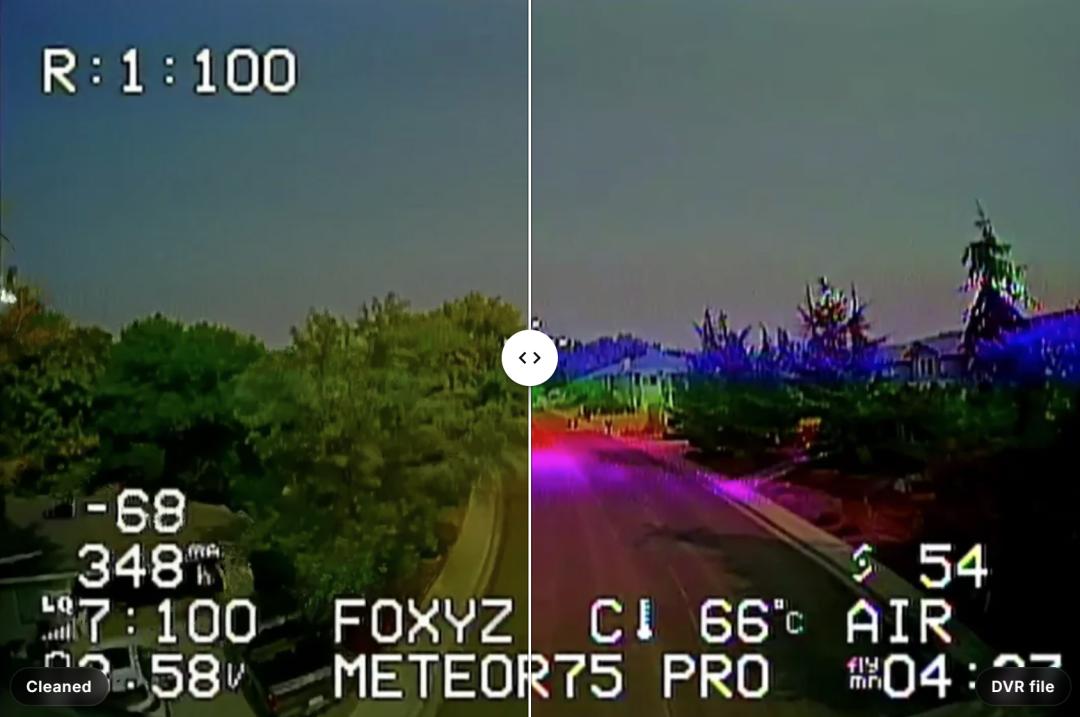
Through the before-and-after comparison function, Chase Momo found that the obvious color interference and abnormal stripes in the original video were indeed reduced a lot. He began to take this software seriously and took the initiative to contact the two developers to arrange an interview.
When Chase Momo asked if the two used AI for development, the two teenagers admitted without any evasion: yes, we did.
But they emphasized that the core code related to machine learning is mainly written by themselves, and AI is more used to solve auxiliary problems, such as accessing the Gumroad payment API, writing documents, and learning the purpose and parameters of certain functions. Rory also explained that when he first learned programming, he often asked AI what functions to use and what the functions do, but he would not simply copy and paste the entire piece of code generated by AI.
In other words, according to the two, they do not completely avoid using AI, but really treat AI as a learning and development auxiliary tool.
"So DVR Doctor wasn't made by Vibe Coding?" Chase Momo confirmed again, to which the two developers gave a negative answer: "We definitely did not do the so-called Vibe Coding."
The software starts at $4.99, but the promotion has repeatedly hit a wall
During the interview, Chase Momo also found that the two children not only have to be responsible for technical development, but also have to find ways to promote the product by themselves.
They sent emails to many YouTube creators in the FPV field, but most of them did not get a response: some emails were marked as read but no reply, and some were not even viewed. The two can only continue to find smaller channels, contact them one by one, hoping that someone is willing to try their software.
As of the time of the interview, apart from Chase Momo, there are very few creators who have actually got in touch with them.
Fortunately, both of their parents support this work. Rory said that his parents were very surprised after seeing the software and would give him suggestions, and his mother would also help him figure out how to promote the product.
Owen's experience is even more interesting. When he first told his parents that he met Rory online, his parents were worried that the other party might be an adult pretending to be a child. It was not until Owen showed them Rory's YouTube channel and they saw the video call between the two that his parents gradually felt relieved: "They are very lenient now, and they think it's very cool that I can complete a project with others. Because in real life, it's hard for me to find peers who can talk about drones, so it's really great to know Rory.
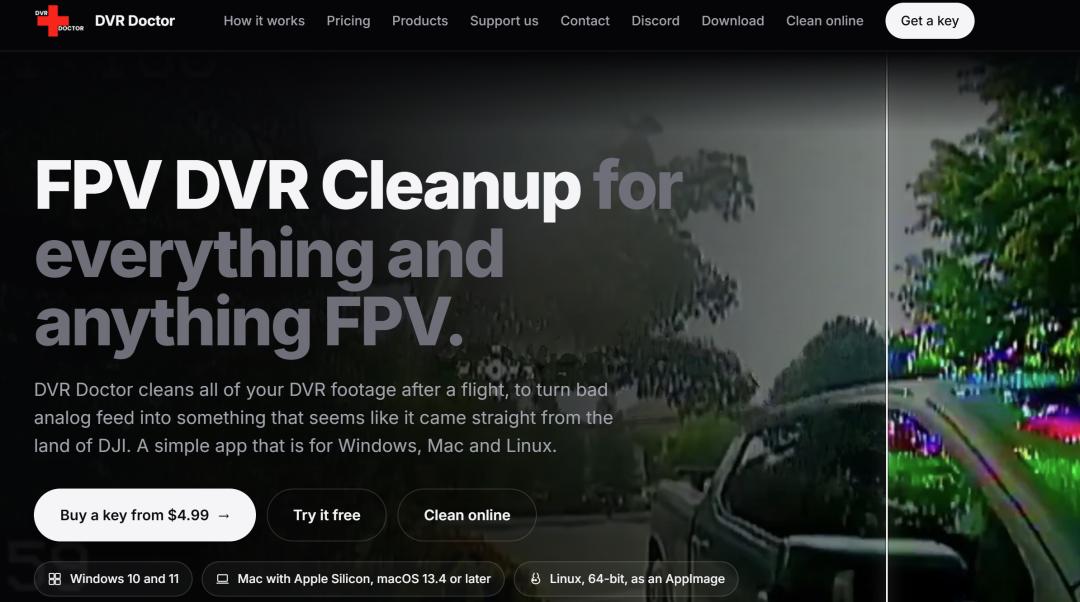
Today, DVR Doctor has become a officially sold software. The official website shows that its standard version is priced at $4.99, and the professional version is priced at $7.99, adopting a one-time purchase model, supporting Windows and Apple Silicon Mac. The professional version also adds functions such as OSD removal, AI upscaling and online cleaning.
"10-year-old and 14-year-old refuse Vibe Coding", but developers are arguing
With the spread of Chase Momo's video, the story of the two children also sparked discussions among Reddit developers: a post titled "10-year-old and 14-year-old refuse Vibe Coding" focused the debate on their programming methods.
Some people praised that they saw the shadow of the early hacker culture from the two: "These two children remind me of those people I knew in the hacker circle when I was young. Later, some of them became core figures in tech giants, and some started their own businesses and even became millionaires."
But some people think that the development method of two children cannot be simply required adult engineers to copy: "These children have not experienced the workplace pressure of adults. Once you enter a company, you will find that technical debts are endless, bugs are endless, and new feature requirements keep coming one after another."
Another netizen directly questioned the statement of "not relying on Vibe Coding": "This is really cool, but they also used AI during development. It is very likely that AI helped them know which algorithms to use and when to use them." — The two teenagers did show good technical abilities, but he does not believe that the software UI was completely developed without AI participation, nor does he believe that they could complete the Mac port in less than two hours without the help of AI.
There is also a comment that leads the topic to a sentence that developers often hear now: "If you keep going like this, you will be abandoned by the times." In response, a netizen mocked: "Abandoned where? Just because I still insist on thinking with my own brain? Sorry, I really don't think the technical ceiling of writing prompts is very high."
In fact, from the content of the interview, Owen and Rory did not reject AI. They will use AI to query materials, understand functions, handle auxiliary