The "Flood Theory" has suddenly gone viral. What on earth are the young people of this generation thinking about?
Back in the day, your parents kept telling you to drink more water, but you wouldn't listen. Now, "drinking plenty of water" has unexpectedly become a new form of social currency.
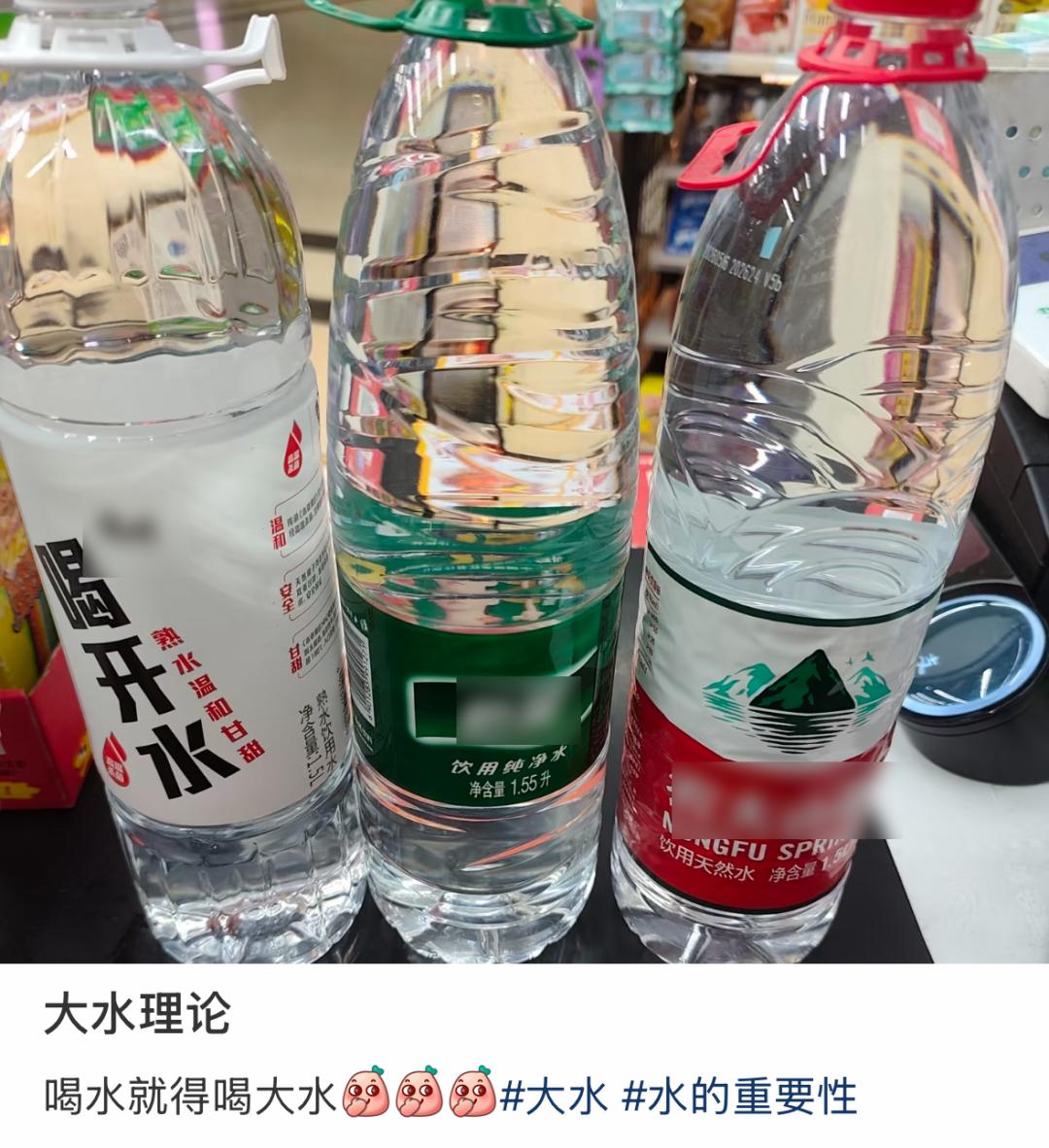
Since early October, the trend of "drinking large volumes of water" has surged in popularity across social media platforms, with internet users sharing photos of their "giant water bottles" and exchanging tips on drinking more water.
As of October 21, the total views of the #LargeWaterTheory hashtag on Douyin have reached 240 million.
What exactly is the "Large Water Theory"?
It refers to ditching "sweet drinks" like milk tea, coffee and sugary beverages, carrying a 1.5 to 2-liter large bottle of purified water or mineral water with you daily, and drinking it in big gulps. Its slogan goes: "The weak drink beverages, the strong drink large volumes of water."
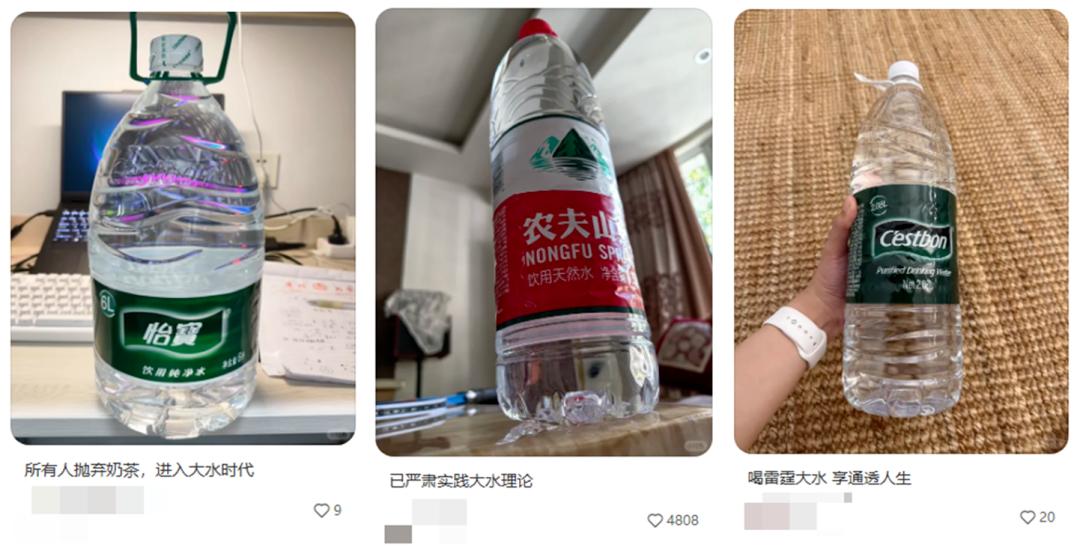
Some people may wonder, it's just drinking water, is it really necessary to coin a new term to ride the trend?
If you only treat it as an online joke, you are probably underestimating its spreading power.
After all, a single bottle of water alone cannot support such a heated discussion spanning multiple social circles. What makes it spread rapidly is the subtle shift in the life philosophy of today's young people hidden behind it.
And this trend has also spread from online to offline. On supermarket shelves, large-pack bottled water has begun to occupy prominent positions, and more people are queuing up at checkout counters carrying large bottles of water.
This large bottle of water is also disrupting the entire beverage industry chain.
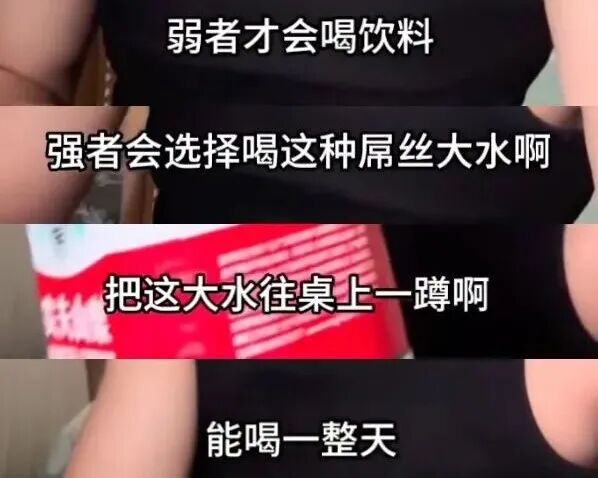
Giving up milk tea for "drinking large volumes of water" — what are today's young people really thinking about?
By switching to this large bottle of water, young people get three things that milk tea cannot offer: health benefits, cost-effectiveness and a sense of control.
The health benefit is the most straightforward. The Dietary Guidelines for Chinese Residents recommend that adult men drink about 1700ml of water per day, and adult women about 1500ml. A 1.5-liter large bottle of water provides an intuitive reference: once you finish one bottle, you have almost hit your daily hydration target.
In contrast, milk tea is not healthy, and excessive consumption can easily lead to diseases. China has 230 million diabetes patients, ranking first in the world! Worse still, from 2005 to 2023, the number of patients surged by 163% from 88.48 million, with the prevalence rate almost doubling every ten years.
The current "sugar boom" in China cannot be separated from the "contribution" of beverages such as milk tea, cola, fruit juice and sparkling water.
In addition, drinking large volumes of water can physically cool down your brain and act as an "emotions extinguisher". When you are seething with anger, you will unconsciously feel your mouth get dry. At that moment, chugging a few big gulps of water to calm down will help you see things in a more positive light.
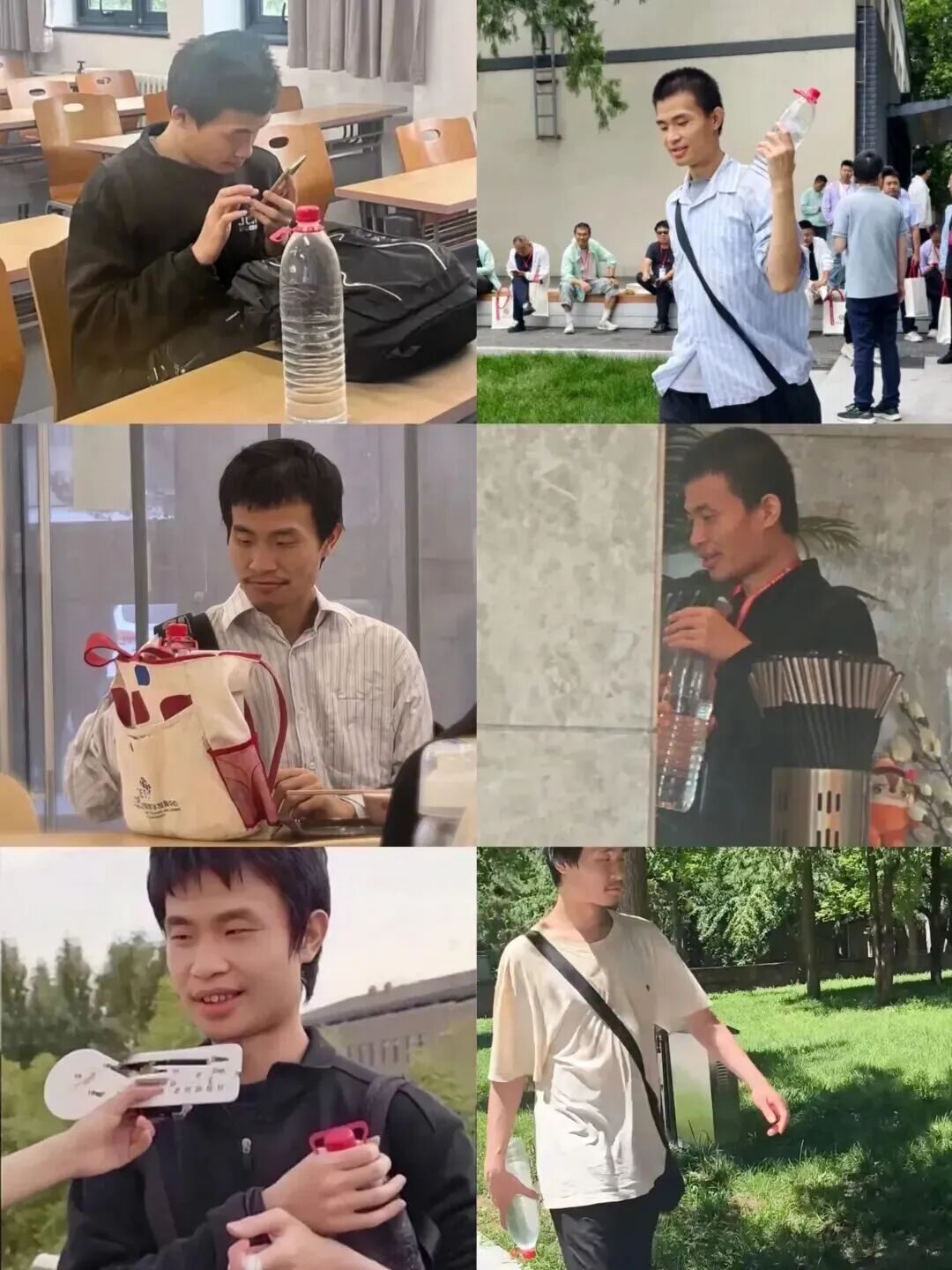
Wei Dongyi, the renowned mathematical genius from Peking University known as "God Wei", has long proven the value of this trend with his actions.
In countless photos taken by passersby, he is always seen carrying his 1.5-liter bottle of water, as if he had already figured out the essence of drinking large volumes of water long ago.
As a result, the Large Water Theory has even become a kind of self-help success textbook: "People who drink large volumes of water may not necessarily succeed, but successful people all have large bottles of water on their desks."
And the Large Water Theory really helps you save money, some people have worked out the accounts:
If you drink three small bottles of water every day plus a dozen-yuan milk coffee beverage, replacing all of that with large bottles of water will save you more than 6000 yuan a year. You can even collect the empty bottles and sell them for extra cash.
Finally, there is another layer of emotional value behind it, which is the "sense of control over the situation" that milk tea cannot provide.
In a life full of uncertainties, the small act of drinking water is endowed with the meaning of self-discipline, good health and leading efficiency. And "finishing this 1.5-liter bottle of water in front of you" is an extremely certain and quantifiable goal. Through some simple, actionable small things, people can regain a sense of control over themselves.
In addition, large bottles of water also easily solve the problem of choice paralysis. What to drink today, whether to buy another bottle in the afternoon — these trivial decisions consume a lot of energy. With a large bottle of water on the desk, you don't need to hesitate again until you finish it.
In fact, compared with complex theories and hierarchically divided standards, what people really want has always been very simple.
Get rid of complexity and return to daily life — drink enough water, get enough sleep, take more walks, and try your best to take good care of yourself.
Therefore, the "Large Water Theory", "Long Sleep Theory" and "Lean Muscle Theory" are collectively called the "Three-piece Set of Minimalist Health".
What does a large bottle of water mean to the beverage market?
This summer, many regions saw continuous high temperatures, which should have driven high sales of beverages, but traditional sugary beverages performed sluggishly across the board.
According to data from MaiShangYing:
In the second quarter of this year, the offline sales of carbonated drinks fell by 12.23% year on year, ready-to-drink fruit juice dropped by 14.84%, and only sugar-free ready-to-drink tea rose against the trend by 16.10%. Even Coca-Cola saw zero growth in its global case sales in 2025 for the first time in a decade.
The trend is very clear: Sugary beverages are struggling to survive, sugar-free tea takes up part of the market, and now the limelight has turned to plain water. The general direction is health, low price and simple ingredients.
But this does not mean that selling water has become a money-making business that you can get effortlessly. After all, the drinking water market has long been a red ocean with fierce competition.
Besides water source and packaging, there is hardly any differentiated story to tell for water, and brands can only compete on price and distribution channels in the end.
During the price war in 2024, brands like Nongfu Spring and Wahaha had other businesses to support their profits, so they dared to price their water below 1 yuan. While C'estbon's main business is selling water, it has limited room for price cuts. As a result, distributors in many regions could not make ends meet and quit the market, and its market share in some areas dropped by 10%. Once the price is pushed down, it is very difficult to raise it back up.
Now channel retailers such as Sam's Club, Freshippo, Pang Donglai and Haoxianglai have also entered the water selling business on their own.
Haoxianglai launched 0.6-yuan bottled water last May, and sold 120 million bottles by the end of the year, further squeezing the living space of traditional water enterprises.
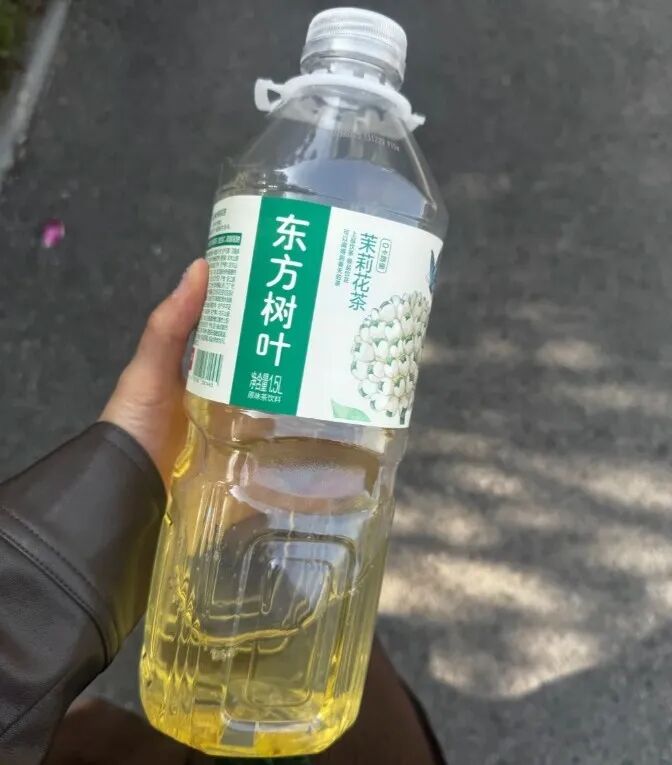
What consumption concepts of young people does the "Large Water Theory" reflect?
First, the return of cost-effectiveness.
Young people are not unwilling to spend money, but they are becoming more and more shrewd: they check ingredient lists, compare prices, and calculate the price per unit volume.
In the future, products with solid performance in raw materials, functions and cost-effectiveness will win favor from consumers.
While products that rely on marketing packaging and emotional premium to support their value will face increasingly difficult times.
To put it bluntly, consumers have begun to "disenchant". They no longer pay for stories, but only pay for "cost-effectiveness".
Second, the health industry is a long-term track with deterministic growth.
The logic behind the shift from sugary beverages to sugar-free tea and then to large bottles of water is the same: young people are willing to pay for health, and also willing to save money for health.
The entire industrial chain centered on "body management", including fitness equipment, light meals, sugar-free food, functional drinks, physical examination and health preservation, will have structural opportunities for a long time in the future.
This is not a fleeting trend, but a long-term trend jointly driven by population structure, younger onset of diseases and the awakening of health awareness.
Third, emotional value has not disappeared, it has just changed its form.
In the past, people relied on milk tea and coffee for comfort, but now they need a lighter, more sustainable outlet.
Drinking large volumes of water itself has become a form of emotional healing — "emotions extinguisher", "physical water cooling for the brain", the essence of which is to soothe yourself at the lowest possible cost.
In the future, whoever can provide low-cost, burden-free emotional value that conforms to health trends will be able to capture this generation of consumers.
Final Remarks
A 3-yuan large bottle of water held in the hand of young people seems to be a lighthearted internet meme. Looking deeper, it is the most simple choice made by this generation of young people in an uncertain economic environment:
Spend money where it matters most, take good care of your body, and bring your attention back to yourself.
They do not complain about others, nor do they completely lie flat. Instead, they live their lives in a somewhat self-deprecating but very pragmatic way. The moment they pick up the large bottle of water, what they are actually holding up is a sense of control over their life.
As for how long this trend will last, no one can tell for sure. But one thing is certain: when more and more young people start to carefully calculate cost-effectiveness, seriously study health, and focus on inner satisfaction, those industries that still harvest consumers with stories and premiums should wake up.
After all, plain water may have no taste, but it quenches your thirst.
This article is from the WeChat Official Account "Xiaofang Talks About Workplace" (ID: XF-SZC), written by Wang Xiaofang's team, and republished by 36Kr with authorization.