Anthropic scientists announced that the careers of doctoral students across the globe have been completely erased overnight.
Recently, researchers at Anthropic poured a bucket of cold water on doctoral students around the world —
Your entire careers have been reset to zero overnight!

This speech, titled The End of the Anthropocene, presented a series of staggering data points.
Over the past decade, the computing power required to train models has increased 10 million times;
The duration for which AI can independently complete tasks keeps doubling every few months;
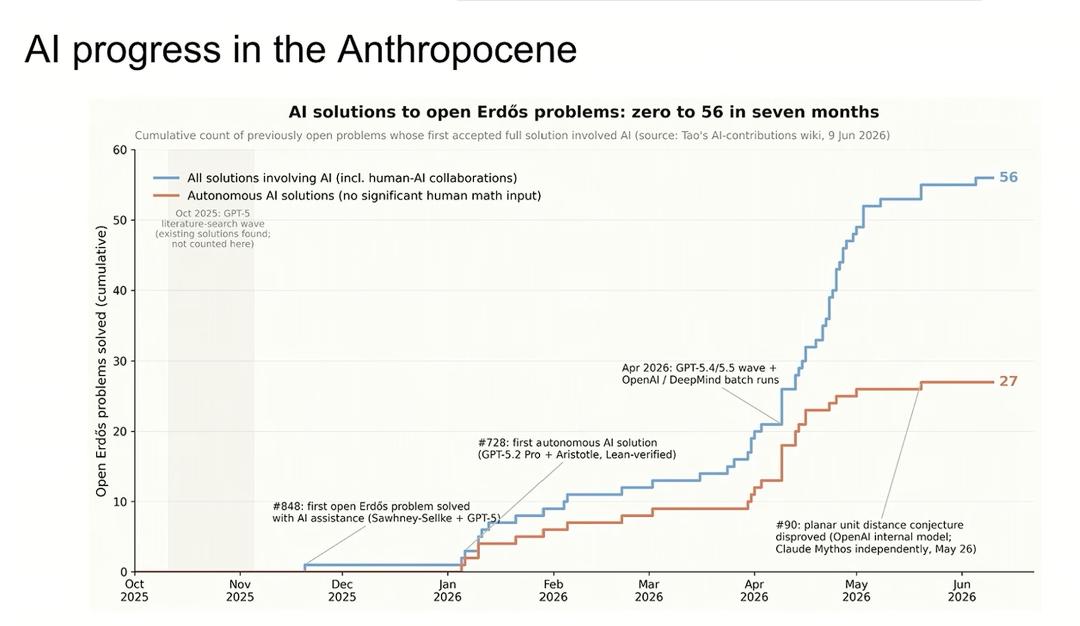
In the past 7 months, models have been continuously solving mathematical problems that mathematicians had not managed to crack before;
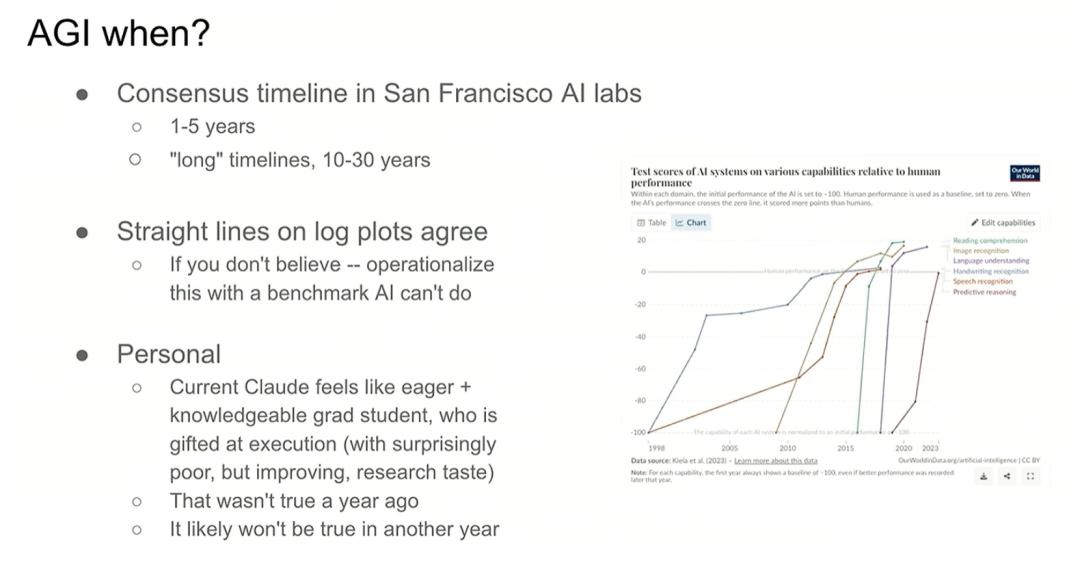
In Silicon Valley, having a "long timeline" view means believing AGI will arrive within 10 years.
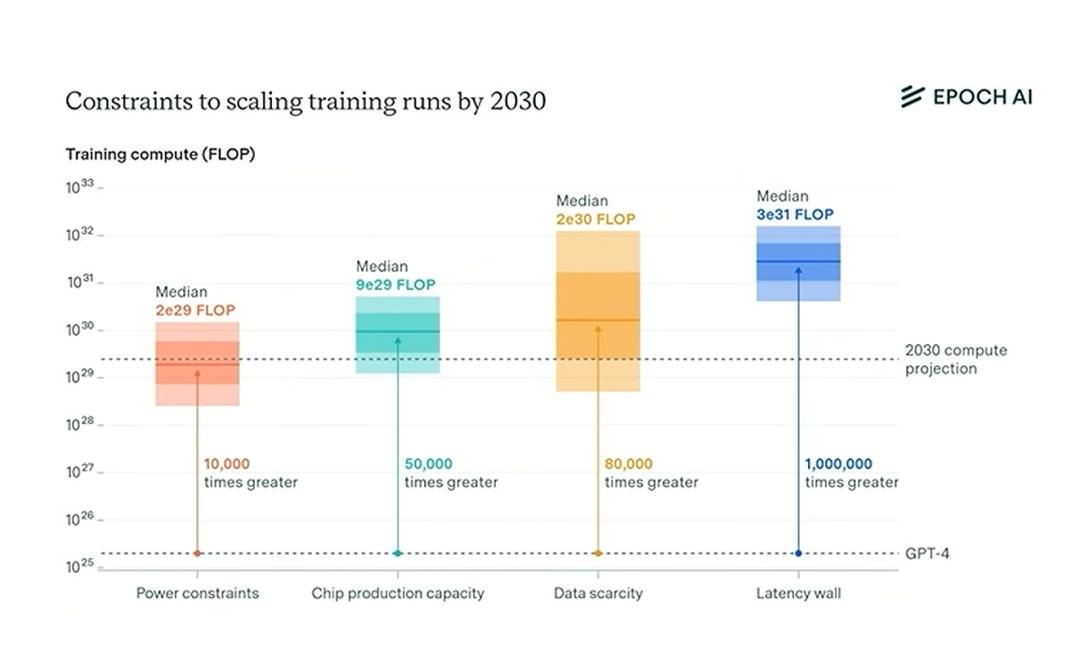
According to projections from EpochAI, by 2030, the total available computing power worldwide will be 10,000 times that of 2025!
Our current position on the chart will be so tiny that it cannot be distinguished by the naked eye. Right now, we have not even crossed the inflection point of this steep curve.
We are still at the very starting point of exponential growth!
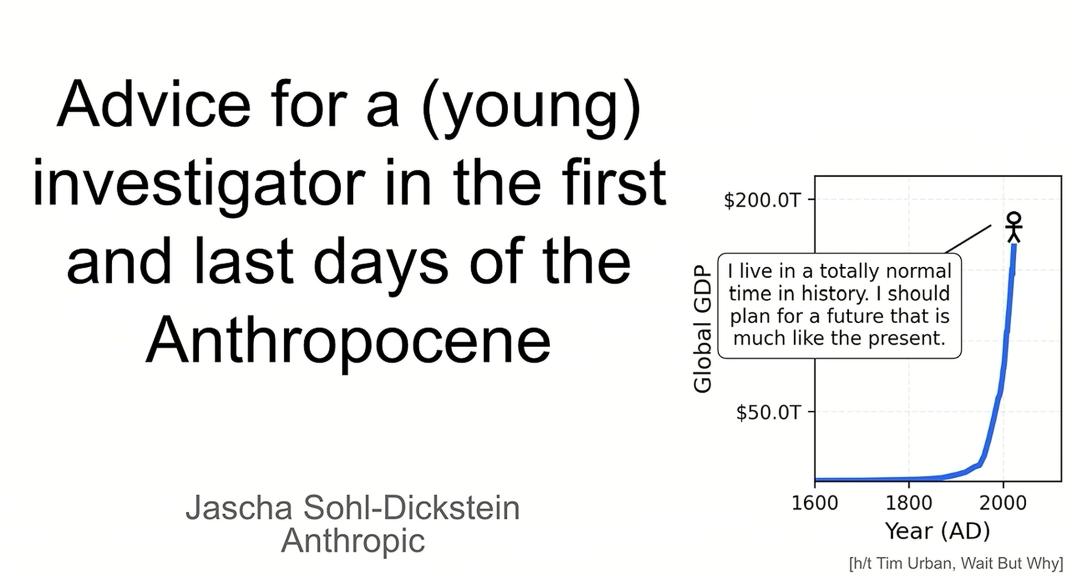
From start to finish, the speech kept putting forward cold, shocking technical data.
The core view of Anthropic researcher Jascha Sohl-Dickstein is: With AGI about to arrive, the traditional career plans you previously envisioned no longer exist at all.
The top doctoral students from leading universities in the audience kept lamenting: their careers may really be over.
We Are Standing on the Verge of Exponential Explosion
"Look at this chart showing GDP changes over time," Jascha pointed at the big screen.
"You are the person standing at the top of the curve. You think the world is normal, and the future is just a linear extension of the present. But that is completely wrong."
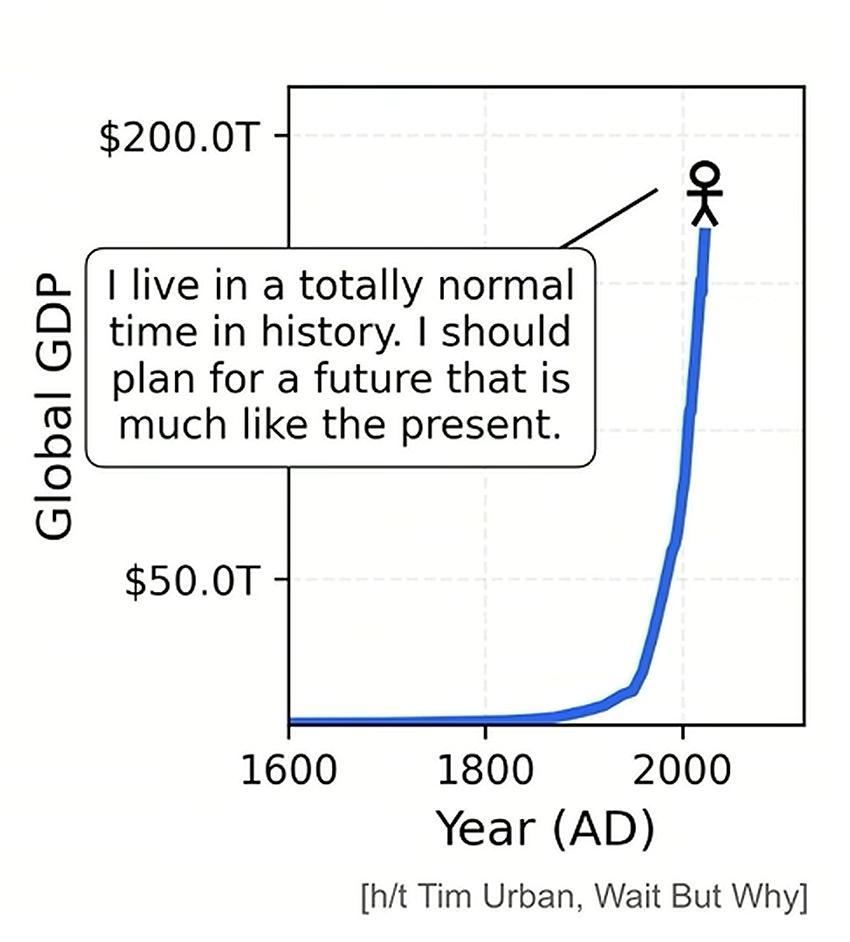
Chart of GDP changes over time, the curve rises extremely steeply in exponential form after 1950, and humanity is standing at the edge of the historical cliff
To break this "linear illusion", Jascha presented a set of astonishing data.
1. A Decade of 10-Million-Fold Surge in Computing Power
Starting from the so-called beginning of the "Anthropocene" in 1950, over the past decade, the computing power used to train top-tier AI models has skyrocketed by a full 10 million times!
He marked the upper limit of the total calculations the human brain can perform in a lifetime with a circle — approximately 1 trillion petaflops.
Now, the computing power for AI model training has approached, or even surpassed this value representing "the sum of human wisdom over a lifetime" in certain dimensions.
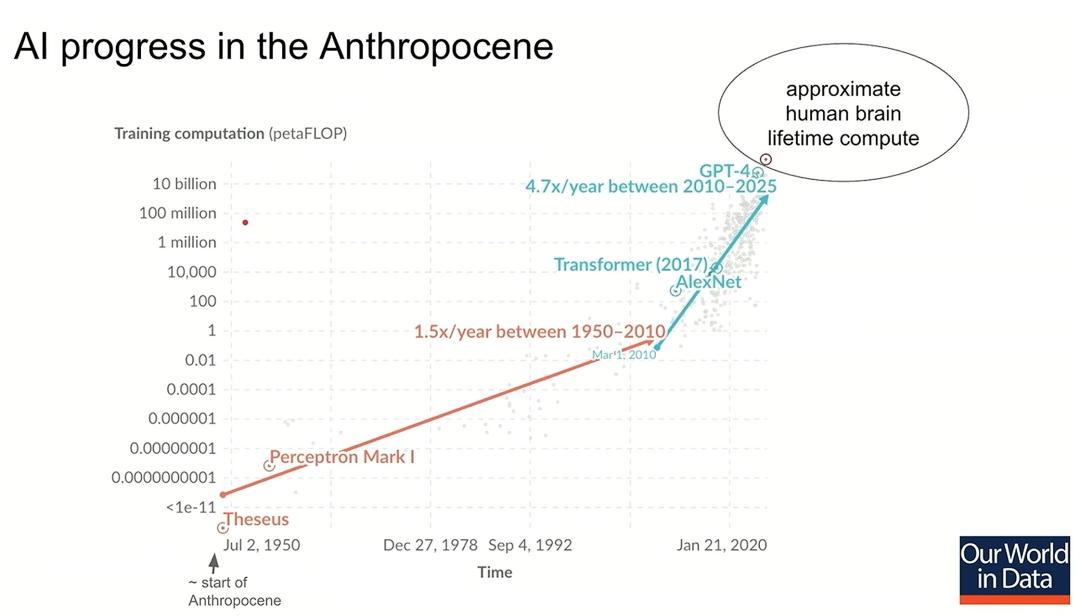
Logarithmic chart of AI model computing power scale, the circle in the upper right corner represents the upper limit of total calculations a human brain can perform in a lifetime
2. Exponential Leap in Task Completion Time
"The time scale here does not refer to how fast AI can finish a task, but how long it takes a human to complete the same software task when assigned to them."
Jascha showed a chart indicating the time span for AI to successfully complete tasks independently without assistance (with a success rate above 50%) is soaring exponentially.
"Less than a year ago when I gave this speech, I predicted that models would not be able to complete the full day's workload of a software engineer until 2026 or 2027."
"But now, less than a year later, this indicator has increased 10 times, and we have already passed that milestone!"
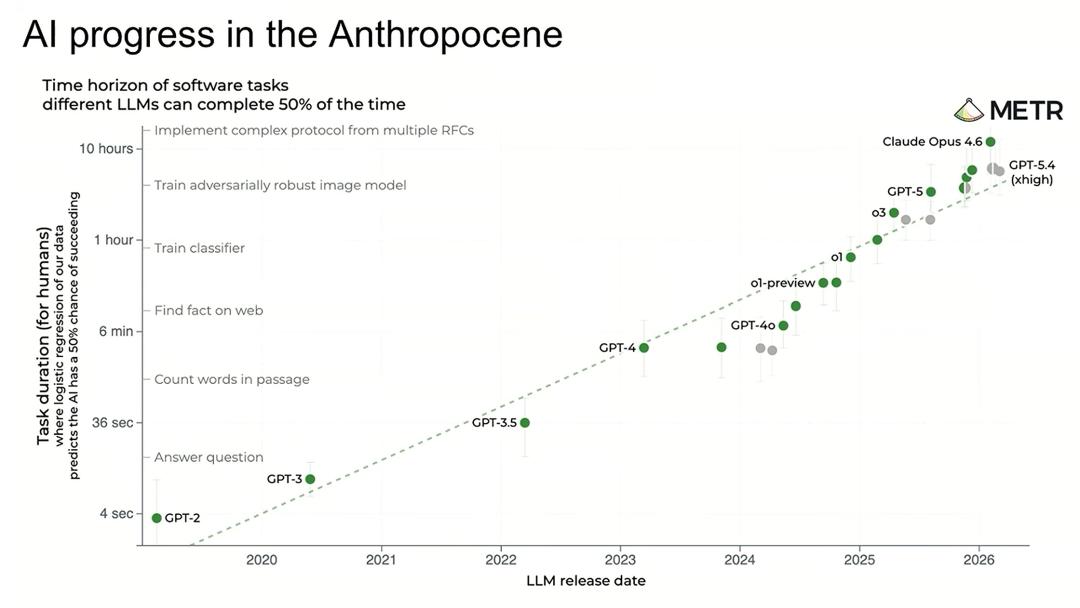
Chart of "AI's completion capability for different software tasks" released by the Meter organization (X-axis is the year of model release, Y-axis is the time scale required for humans to complete the corresponding task)
3. "AI Can Only Solve Problems in Its Training Set"? Stop Deceiving Yourself!
Many people console themselves: "AI has no real creativity, it can only solve problems it has seen before." But Jascha shattered this illusion.
Paul Erdős left a large number of unsolved mathematical conjectures, which top mathematicians around the world have been trying to crack.
"Just in the past 7 months, AI models have started solving these difficult problems left by Erdős. AI is pushing the boundaries of known human mathematics!"
In the core tech circle of Silicon Valley, the consensus on the arrival of AGI is that it will happen within a few years.
Some people say their timeline for AGI is relatively conservative, but when you ask them, you find that their so-called "conservative" view means AGI will arrive within 10 years.
Jascha made a striking prediction: by 2030, the total available computing power worldwide will be 10,000 times that of 2025!
The Rapid End of the Anthropocene and the "Crazy Overton Window"
In this speech, Jascha proposed a brand new concept: the "Anthropocene".
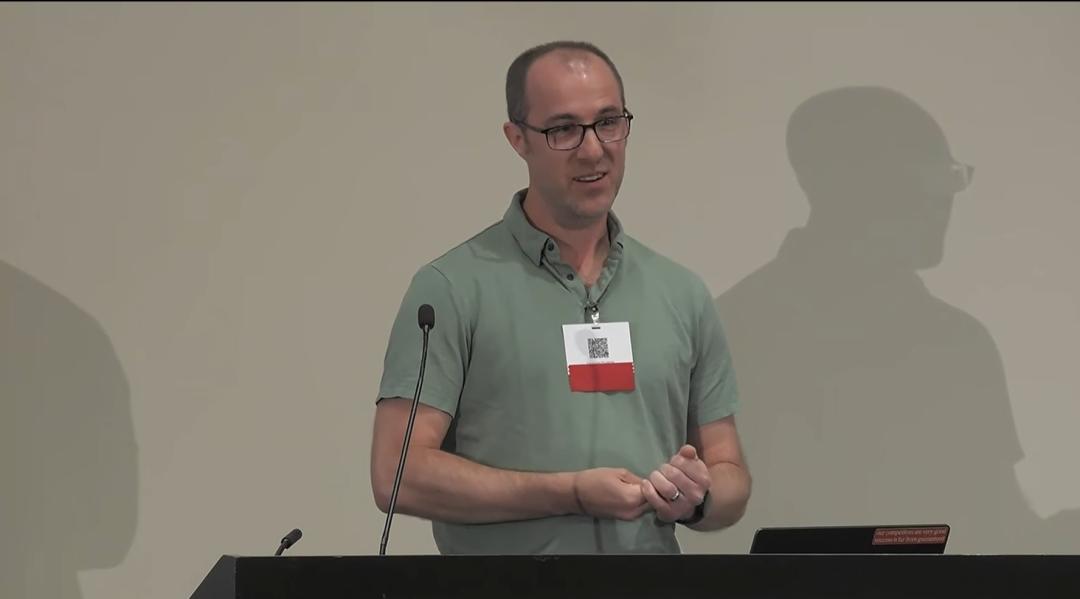
In geology, human activities have profoundly changed the Earth. Billions of years from now, radioactive isotopes from nuclear explosions in the strata will prove that we once existed.
But Jascha believes that the "Anthropocene", an era where humans as the main intelligent beings drive global changes, may be an extremely short geological epoch.
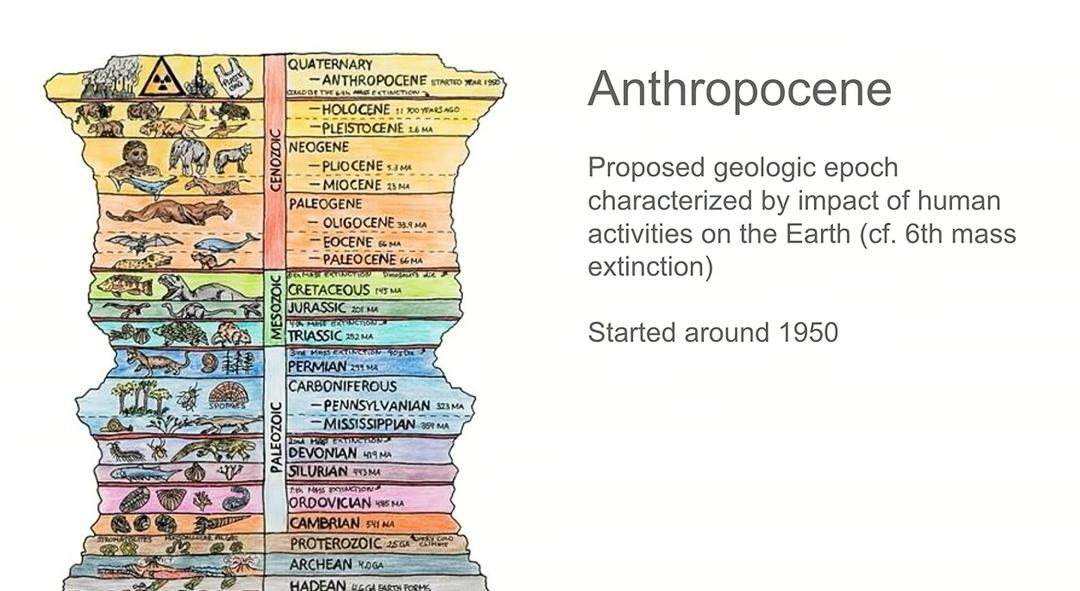
Less than a year ago, when he gave a similar speech at Harvard, he received a hostile email saying: "This is total madness!"
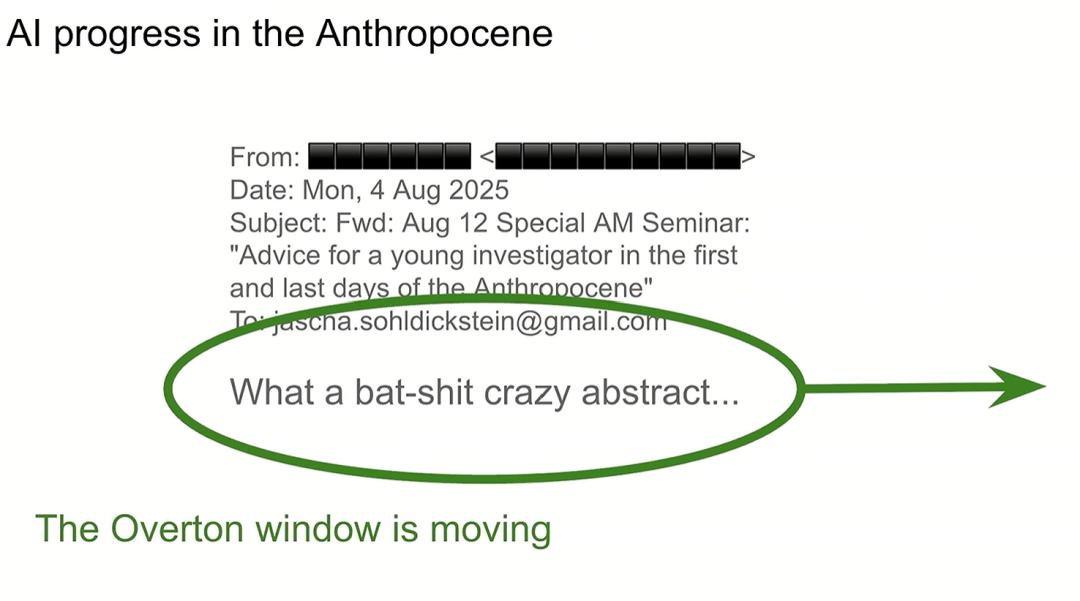
In sociology, there is a term called the "Overton Window", which refers to the range of viewpoints acceptable to the public.
A year ago, publicly talking about "AGI is coming soon and humans will be replaced" was considered crazy ideas outside the Overton Window.
But now, this view has become widely accepted.
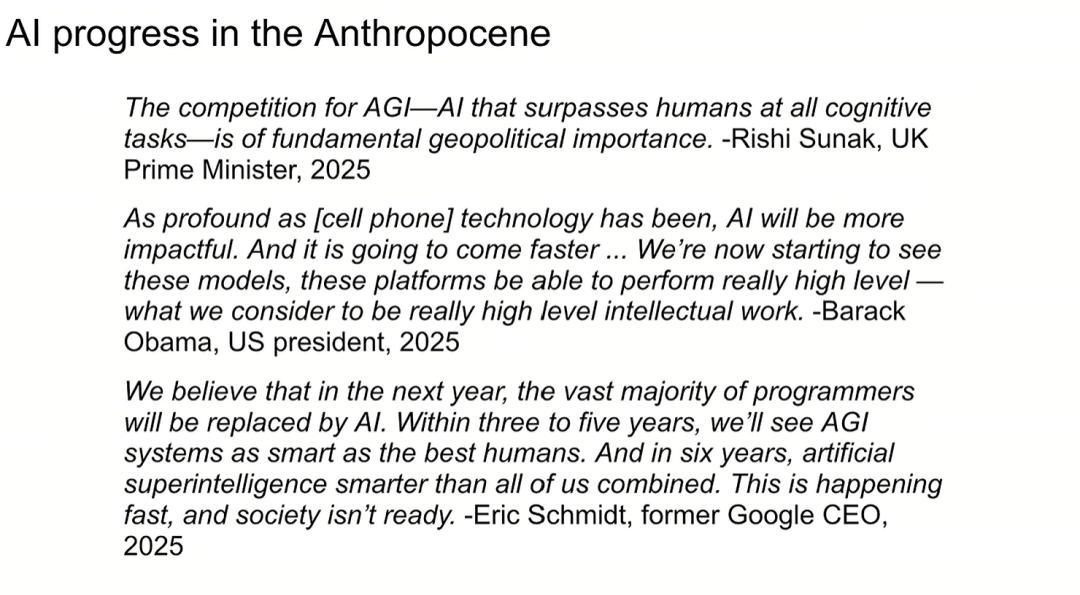
Jascha cited a series of endorsements from leading figures.
UK Prime Minister Rishi Sunak said: "The competition for AGI that surpasses human cognitive capabilities is of fundamental importance."
Barack Obama said: "AI is far more disruptive than mobile phone technology, and it is coming faster. It is replacing the advanced mental labor that we once thought was irreplaceable."
Former Google CEO Eric Schmidt even stated bluntly: "In the next 3 to 5 years, we will see AGI as intelligent as the top human experts; in 6 years, superintelligence that surpasses the sum of all human intelligence will emerge. Society is simply not prepared for this."
Political leaders and top capital forces around the world all fully believe this.
All the Doctors in the Audience Were Stunned: You Haven't Finished Your Proposal Yet, But AI Has Already Completed the Whole Task
In this speech, Jascha made a prediction to the doctoral students from top US universities present —
Your doctoral career plans are already over!
Once, he talked to a doctoral student. The latter agreed that AGI would be realized within 3 years, but said: "I plan to graduate with my doctorate in two years, then do a postdoc, and then apply for a university faculty position..."
Jascha was speechless on the spot.
"I don't know what academic jobs will look like in 10 or 20 years, I don't even know what any job will look like in 10 years, but I am very certain that it will absolutely not be the same as it is today."
No matter what their major is, the career plans of all the doctoral students present can be cleared overnight.
So what should you do?
He put forward three survival rules for all researchers and working professionals present.
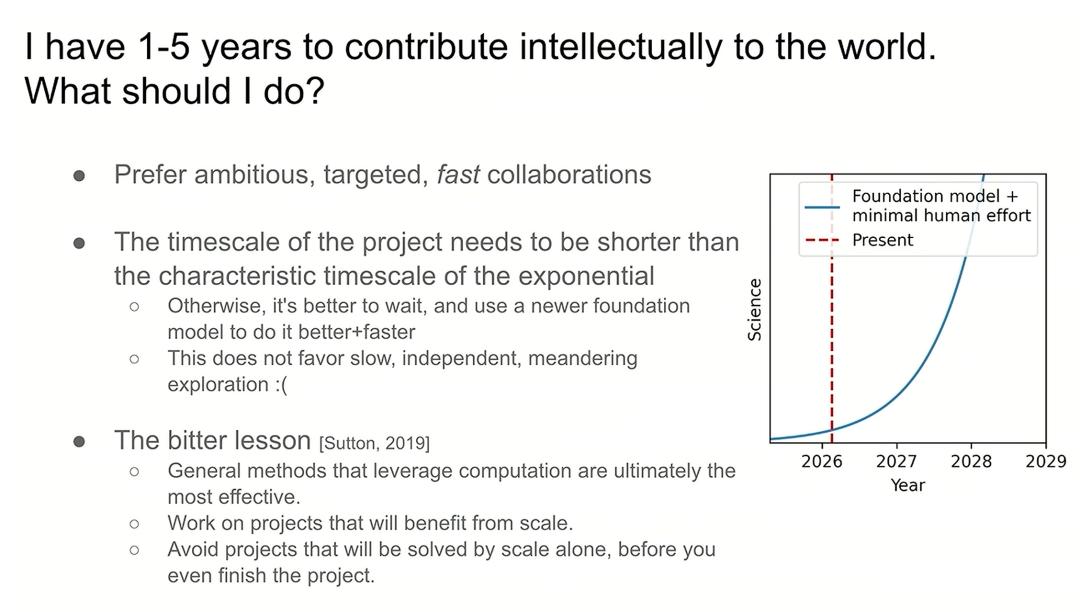
Survival Rule 1: Don't Do "Slow-paced Exploration", Do Things That Can Be Amplified by Computing Power!
There is a famous "bitter lesson" in the academic world: general methods that leverage powerful computing power will eventually defeat all sophisticated human designs.
Jascha warned: "The worst outcome you need to avoid is: you work hard for two years and only make linear progress, but before you finish, someone else just writes a simple prompt for a large model, and the result it produces is better than your two years of hard work!"
You must completely reorient your research topics, abandon those that can be easily crushed by large-scale computing power, and seek fields that can become stronger as computing power grows.
Survival Rule 2: Stop Dreaming of "Stable Careers", Sense of Security Can No Longer Be Bought
Many people, when making life choices, are accustomed to sacrificing high returns to reduce risks, for example, choosing government jobs or tenured faculty positions.
But Jascha pointed out sharply: "If AI will trigger large-scale social restructuring, the baseline risk of society is already too high to escape. The so-called 'safe choice' you think you are making is not safe at all. You are just sacrificing the potential of high returns in vain, without getting any real guarantee at all."
Since there is no way to retreat, you might as well do things that are truly interesting, even those with high risks and high returns.
