Sam Altman anticipates three ultimate outcomes of AI, and the worst scenario can paralyze all GPUs of its competitors.
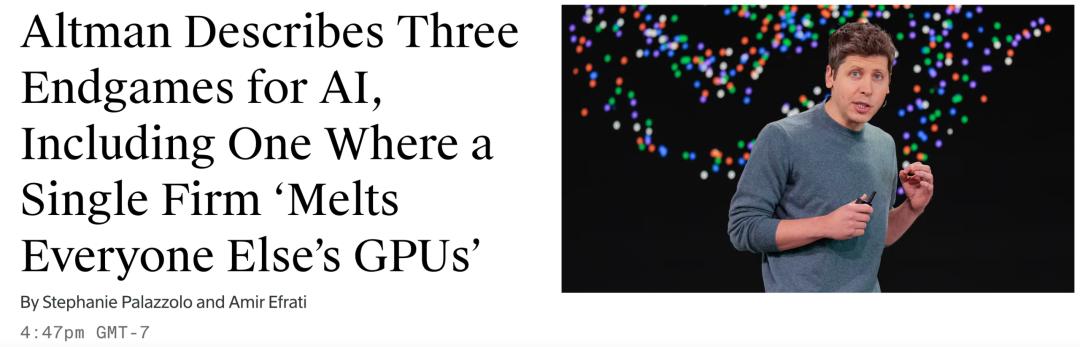
According to a report by *The Information*, Sam Altman, CEO of OpenAI, recently laid out three possible endgames for the AI race during an internal all-hands meeting:
The first is the establishment of a global regulatory body, the second is the consolidation of top labs into a single entity, and the third is that one company will take the lead in breaking through key technologies, even gaining the capability to paralyze the hardware of its competitors.
The last outcome sounds like a plot from a sci-fi movie, and Altman himself explicitly called it an "utterly terrible" outcome.
Three Paths, All Come With Tradeoffs
The first path proposed by Altman is to build a global regulatory organization similar to the International Atomic Energy Agency (IAEA).
This institution can supervise the most advanced AI systems, formulate unified safety standards, and require development enterprises to accept independent reviews.
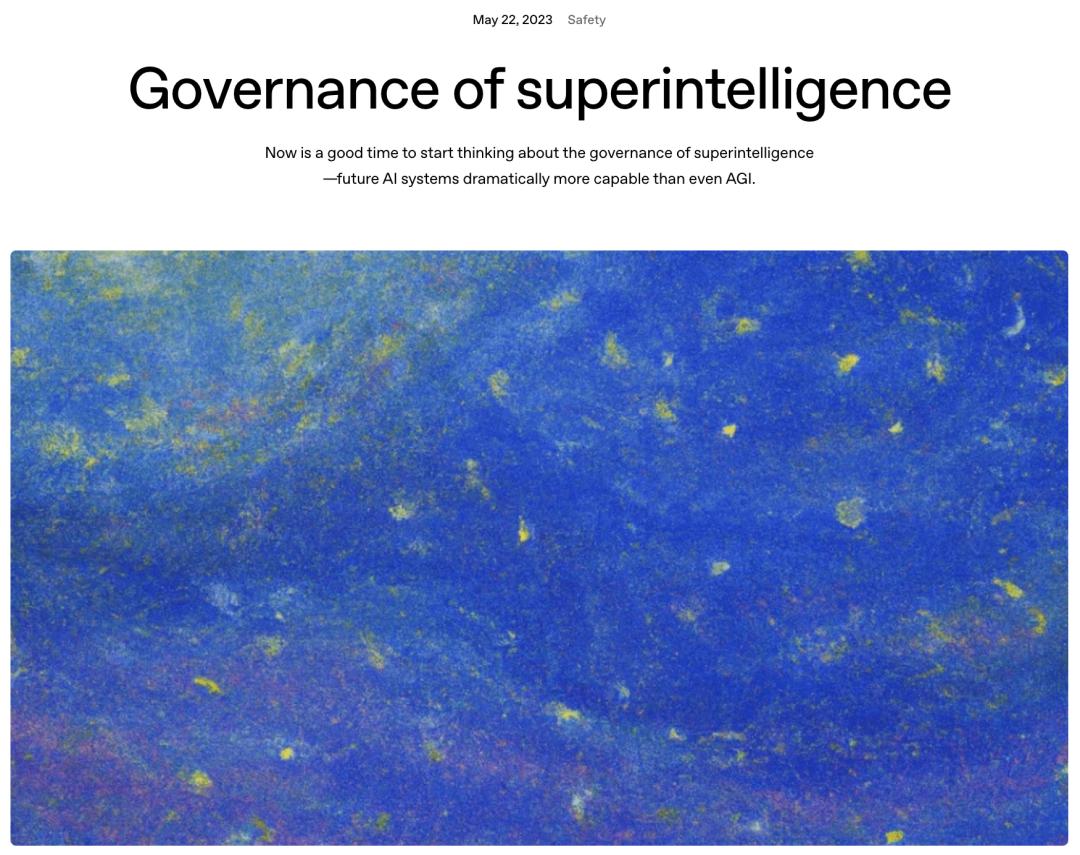
As early as May 2023, Altman, together with OpenAI co-founder Greg Brockman and then Chief Scientist Ilya Sutskever, jointly published the article *Governance of Superintelligence*.
Link: https://openai.com/index/governance-of-superintelligence/
The article proposes that an international institution similar to the IAEA may need to be established in the future to regulate AI development activities that reach specific capability or computing power thresholds, including system inspection, safety audit, compliance testing, and monitoring of computing power and energy consumption.
However, AI has become a strategic technology that all countries are investing heavily in. International regulation involves technology confidentiality, national security and industrial competition. There is still great uncertainty about whether countries can accept unified rules.
The second path is that the world's leading AI labs may eventually merge into one institution.
Altman calls it the "Demis Plan". Demis Hassabis once proposed that AI research can learn from the model of the European Organization for Nuclear Research (CERN), where multiple countries jointly build and manage a large research institution.

Link: https://www.youtube.com/watch?v=4poqjZlM8Lo
If leading AI companies are managed by the same organization, they can share safety standards and practical experience, preventing companies from continuously accelerating R&D speed to rush product launches.
However, when the most advanced models, talents and computing power are all concentrated in one organization, this institution will have huge technical and economic influence, and how to avoid excessive concentration of power will become a new problem.
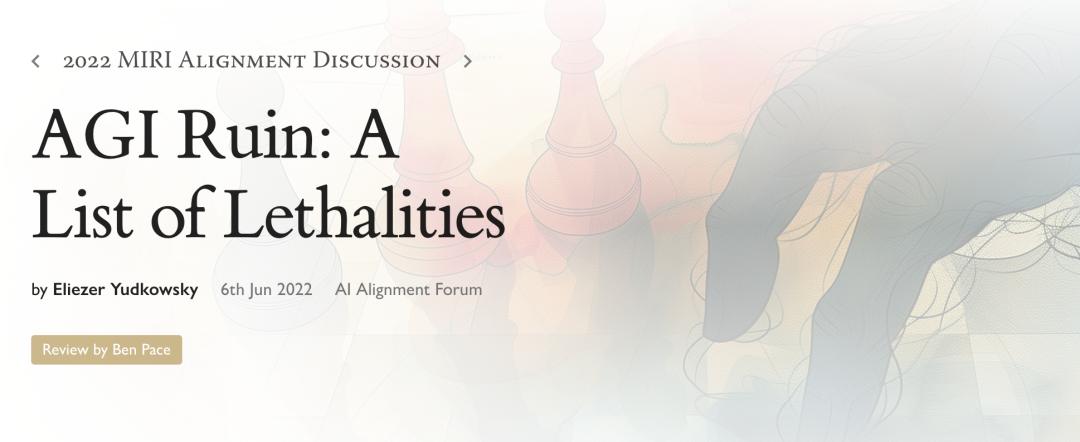
The third winner-takes-all path is called the "Eliezer Plan" by Altman, which is an extreme assumption put forward by AI safety researcher Eliezer Yudkowsky.
Link: https://www.lesswrong.com/posts/uMQ3cqWDPHhjtiesc/agi-ruin-a-list-of-lethalities
Yudkowsky has long warned that out-of-control superintelligence may bring existential risks to humanity. He once advocated that the party that takes the lead in mastering superintelligence needs to take decisive action to prevent other organizations from developing potentially dangerous superintelligent systems.
Altman links it to Recursive Self-Improvement (RSI).
The so-called RSI means that AI can participate in improving its own model architecture, training methods or development processes. The upgraded AI can continue to improve these capabilities, forming a continuous cycle of self-improvement.
Once this mechanism reaches a sufficiently high degree of autonomy, the speed of AI R&D may accelerate significantly.
If a company takes the lead in breaking through RSI, it may quickly build a technical advantage that other competitors cannot catch up with, and eventually form a market monopoly.
In the most extreme case, this company may even have the ability to interfere with or destroy the GPUs of its competitors.
Altman explicitly expressed his opposition to this outcome where advanced AI is concentrated in the hands of a single enterprise.
The Risks Altman Has Repeatedly Emphasized
In fact, this internal discussion continues the issues that Altman has always paid attention to before.
In mid-September 2026, Altman publicly pointed out that advanced AI may bring two major risks: first, humanity loses control over AI systems, and second, AI power is concentrated in the hands of a few organizations.
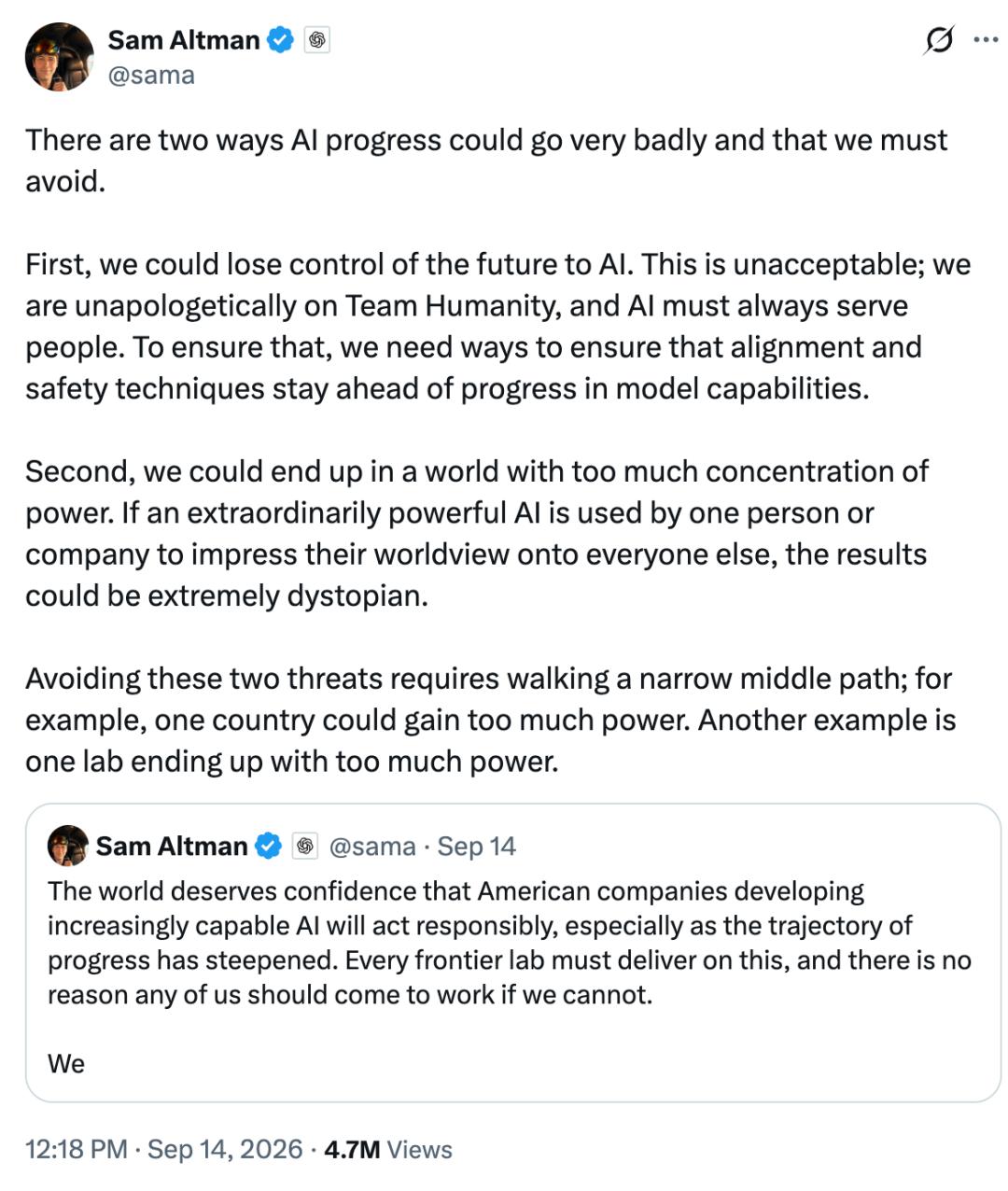
He further emphasized that it is necessary to prevent the development of AI from moving towards any of the above outcomes.
He said that OpenAI should stand on the position of all mankind, rather than only serving a certain company or a certain interest group. Altman also called for the establishment of stricter AI safety protocols and the conduct of independent assessments of advanced AI systems.
This position is consistent with some views of Dario Amodei, CEO of Anthropic.
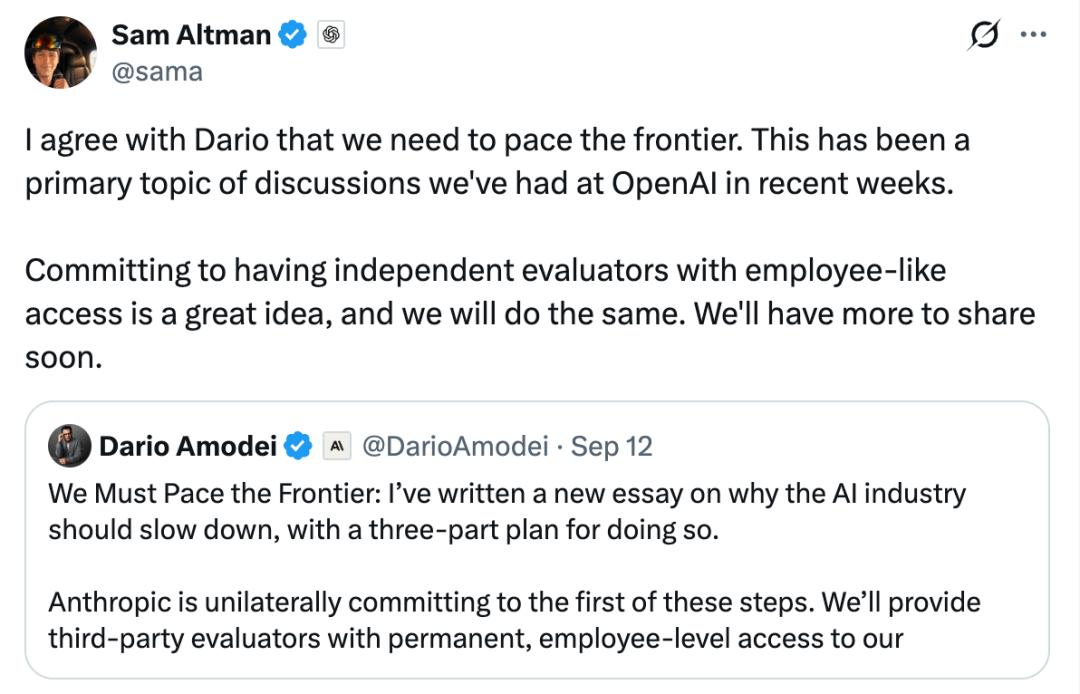
However, Altman also admitted internally that OpenAI cannot easily give up the competition with competitors for technological leadership.
Reference links:
https://www.theinformation.com/articles/altman-describes-three-endgames-ai-including-one-single-firm-melts-everyone-elses-gpus?shared=dead241b54ae7c75
This article is from the WeChat official account "Synced" (ID: almosthuman2014), author: AI-focused contributor, published with authorization from 36Kr.